Overview

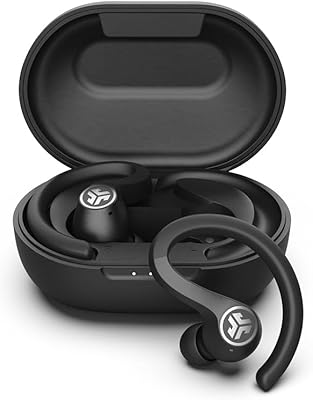
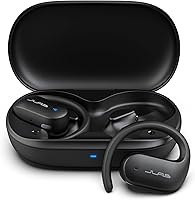
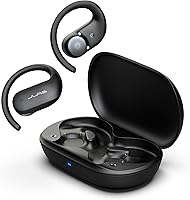
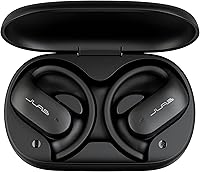
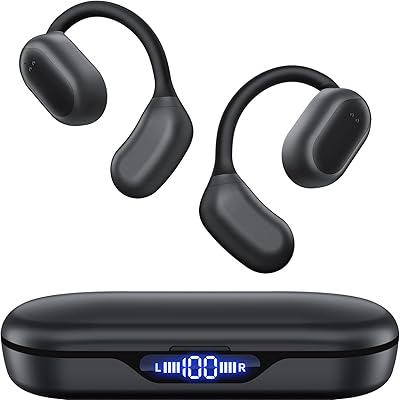
The JLab JBuds Open Sport Open-Ear Earbuds enter a crowded sport audio market as a mid-range option from JLab, a brand that has built its reputation on delivering accessible audio without premium pricing. Launched in September 2024, there is still a relatively limited pool of long-term user data to draw from, so early impressions should be taken with that in mind. The open-ear hook design is the defining choice here — it keeps you aware of your surroundings during runs, rides, or gym sessions. That awareness comes at a cost: like all open-ear formats, these buds trade deep bass and isolation for situational safety. Currently ranked in the top 250 open-ear headphones on Amazon, they are finding an audience, though expectations should be calibrated accordingly.

Features & Benefits

The 14.2mm hybrid drivers sit in front of the ear rather than inside it — a meaningful distinction from both in-ear designs and bone conduction models, delivering audio that feels open without the pressure of an in-canal fit. Battery life is a genuine strength: each bud runs up to 9 hours, with the case contributing another 17, totaling 26 hours of playback — competitive for this price tier. The IP55 rating handles sweat and light dust well enough for most workout scenarios. Bluetooth Multipoint keeps you connected to a laptop and phone simultaneously, which proves surprisingly practical day-to-day. The JLab app rounds things out with EQ presets, touch control remapping, and direct firmware update delivery.

Best For

These open-ear sport buds are a natural fit for outdoor athletes — runners and cyclists especially — who genuinely need to hear traffic or trail sounds without abandoning their playlist. Gym-goers who have wrestled with earbuds falling out mid-set will appreciate the earhook, which holds firmly without digging into the ear. If you regularly switch between a work laptop and your phone throughout the day, the dual-device connectivity makes that transition easy. Android users get the added convenience of Google Fast Pair. And if you have been curious about open-ear audio but found premium options hard to justify, the JBuds Open Sport offers a low-risk way to experience the format without overcommitting financially.

User Feedback

Since these ear-hook earbuds launched in late 2024, the review pool is still growing, so patterns are early but worth noting. On the positive side, users consistently highlight that the earhook stays secure even through intense workouts — a recurring win for a category where fit complaints are common. Call quality earns mixed reactions: the MEMS mics hold up indoors, but wind noise during outdoor use is a repeated concern. The charging time of 7 hours draws frustration from buyers accustomed to faster-replenishing cases. A handful of users flag thinner-than-expected sound, though that limitation is inherent to open-ear audio rather than a flaw specific to this model.

Pros

  • The earhook design holds securely during running, cycling, and high-intensity gym sessions without constant readjustment.
  • Total battery life stretches to 26 hours across buds and case, strong for this price tier.
  • IP55 sweat and dust resistance handles real workout conditions without babying the hardware.
  • Bluetooth Multipoint makes switching between a laptop and phone practical and genuinely useful day-to-day.
  • Open-ear positioning lets you stay aware of traffic, trail hazards, and conversation without removing the buds.
  • The JLab app gives meaningful control over EQ presets and touch commands, not just superficial customization.
  • Google Fast Pair simplifies the initial setup process significantly for Android users.
  • At their price point, the JBuds Open Sport offer a rare chance to try open-ear audio without heavy financial commitment.
  • MEMS microphones in both buds handle indoor calls clearly and reduce background noise reasonably well.
  • The earhook secures with a simple pinch mechanism that most users find intuitive and reliable from day one.

Cons

  • A 7-hour recharge time for the case lags noticeably behind faster-charging competitors in the same category.
  • Open-ear audio means bass response is thin — not a flaw exactly, but a real trade-off to understand before buying.
  • Wind interference during outdoor calls is a recurring complaint that makes the mic unreliable in breezy conditions.
  • The product launched in late 2024, so long-term durability data is still too limited to assess with confidence.
  • Bluetooth version 4.0 is aging, and some users may notice connectivity limitations compared to newer Bluetooth 5.x devices.
  • Sound quality, while acceptable for the format, will disappoint anyone comparing directly to sealed in-ear earbuds.
  • The app, while useful, has received scattered feedback about occasional reliability hiccups and inconsistent behavior.
  • At 5.6 ounces with the case, the overall kit is bulkier than some ultra-compact sport earbud alternatives.
  • Users expecting noise cancellation will find none — open-ear means everything around you stays audible by design.
  • Early adopters have a smaller community review base to consult, making it harder to predict edge-case performance issues.

Ratings

The scores below reflect an AI-driven analysis of verified global user reviews for the JLab JBuds Open Sport Open-Ear Earbuds, with spam, bot-generated, and incentivized feedback actively filtered out before scoring. Each category is rated independently to give you an honest picture of where these open-ear sport buds genuinely shine and where real buyers have run into friction. Both the strengths and the recurring complaints are transparently baked into every number you see here.

Fit & Stability
88%
The earhook design draws consistent praise from active users who have had earbuds fall out mid-run or during heavy lifts. The pinch mechanism keeps the bud locked in place across a wide range of ear shapes, and most gym and outdoor users report zero adjustment needed even during extended sessions.
A minority of users with unusually small or large ears report the hook feels either too loose or slightly rigid over time. Prolonged wear during multi-hour runs has led to a handful of comfort complaints around the outer ear where the hook makes contact.
Sound Quality
67%
33%
For an open-ear format, clarity in the mid and high frequencies is better than expected, making vocals in podcasts and spoken audio quite listenable. Users who adjusted their expectations away from sealed in-ear sound generally report satisfaction for casual listening during workouts.
Bass response is noticeably thin, which is a structural limitation of the open-ear design rather than a defect, but it still disappoints buyers expecting a fuller sound. Soundstage feels narrow compared to over-ear alternatives, and at higher volumes, audio can sound slightly harsh in the upper registers.
Battery Life
83%
The 9 hours per bud holds up well in real-world testing, with most users confirming they rarely need to touch the case during a full workday. For multi-day travel or back-to-back workout days, the 26-hour total capacity means recharging is not a daily concern.
The case itself takes around 7 hours to fully recharge, which is a genuine frustration when users forget to plug in overnight. A handful of reviewers noted that actual per-bud runtime fell closer to 7 to 8 hours under heavy usage with the mic active, slightly below the advertised figure.
Call Quality
62%
38%
Indoors and in calm office environments, the MEMS microphones do a decent job of isolating the speaker's voice, and call recipients generally report hearing clearly without significant complaints. The dual-mic setup in both buds adds some redundancy that is useful during hands-free calls.
Wind noise is the most cited issue in real-world feedback, with outdoor callers on bikes or at busy intersections reporting that background interference regularly bleeds through. Several users describe the microphone as acceptable for quick calls but unreliable for longer, more professional conversations in noisy outdoor settings.
Comfort Over Time
74%
26%
The open-ear positioning avoids the ear fatigue and pressure that many users associate with in-canal earbuds, making these a more comfortable option for extended listening sessions during commutes or desk work. The ear cushions included in the box help soften contact points for most users.
After 90 minutes or more, some users report the earhook creating mild soreness around the outer ear, particularly during high-intensity activities where the hook shifts slightly under movement. Users with glasses note occasional interference between the earhook and their frames, which can be an ongoing annoyance.
Water & Sweat Resistance
81%
19%
The IP55 rating holds up well in practice, with users reporting no issues after heavy sweat sessions at the gym or caught in light rain during outdoor runs. Several reviewers specifically tested these in humid conditions and found no performance degradation over multiple months.
IP55 does not cover submersion, so users who swim or train in heavy rain should be aware of the limitation. A small number of users reported that the charging contacts showed early signs of corrosion after frequent exposure to heavy sweat without wiping the buds down between sessions.
Bluetooth Connectivity
72%
28%
Multipoint connectivity works reliably for most users juggling a laptop and smartphone simultaneously, and the transition between devices is generally smooth enough for daily work routines. Android users who benefit from Google Fast Pair report the initial setup as notably effortless.
Bluetooth 4.0 is aging technology, and range limitations compared to newer 5.x devices are noticeable in larger spaces or when the connected device is more than a room away. A few users report occasional dropout during workouts when their phone is stored in a bag or pocket at some distance.
App Experience
69%
31%
The JLab App delivers genuinely useful functionality beyond surface-level customization — remapping touch controls and switching EQ presets are features that active users return to regularly. Firmware updates pushing through the app rather than requiring manual intervention is a practical convenience most users appreciate.
App reliability has generated scattered complaints, including occasional failures to save custom settings between sessions and intermittent connectivity issues between the app and the buds. The EQ adjustment range, while useful, is described by some users as narrower than expected, limiting how dramatically the sound signature can be shifted.
Value for Money
84%
At its price point, the JBuds Open Sport offers a feature set — Multipoint, IP55, app support, long battery — that would cost noticeably more from competing brands. For buyers entering the open-ear category for the first time, the price-to-feature ratio makes the risk of trying something new feel very manageable.
Buyers comparing these directly to premium open-ear options from Shokz or Sony will find a gap in audio quality and build refinement that is consistent with the price difference. Those who need top-tier call quality or deep bass and are stretching their budget to buy these may find the compromise frustrating.
Build Quality
71%
29%
The plastic construction feels solid enough for everyday sport use, and the overall assembly does not exhibit the cheap flex or creaking that sometimes plagues budget audio hardware. Most users report the buds surviving drops and rough handling without visible damage over the first few months of ownership.
The all-plastic build does look and feel less premium than competitors using matte-coated or rubberized materials, which matters to buyers who care about perceived quality. Long-term durability beyond six months remains an open question given the product's relatively short market history.
Touch Controls
66%
34%
The touch controls are responsive enough for basic playback and call management, and the ability to remap functions through the app adds flexibility that most earbuds in this price range do not offer. Users who keep their hands busy during workouts appreciate not needing to reach for their phone for basic actions.
Accidental touches during earhook adjustment or while pulling the buds on and off are a recurring complaint, triggering unintended pauses or skips. The touch surface sensitivity seems calibrated more toward light taps, which means users with sweaty fingers sometimes find the controls less reliable mid-workout.
Ambient Awareness
91%
This is the core promise of the open-ear format and the area where the JBuds Open Sport delivers most convincingly. Runners, cyclists, and commuters consistently highlight feeling genuinely safer during outdoor activity without sacrificing their listening experience. Street-level sounds, conversations, and hazard alerts all come through naturally.
In very loud environments like crowded gyms with pumping music, the open-ear design means your own audio can feel underpowered against competing background noise, requiring volume increases that partially defeat the safety purpose. There is no adjustable transparency mode, so awareness is entirely passive and cannot be tuned.
Pairing & Setup
79%
21%
Standard Bluetooth pairing is quick and consistent across both Android and iOS devices, and the setup process rarely requires more than a few taps. Google Fast Pair on compatible Android devices makes the first-time connection nearly instant, which is a small but appreciated touch.
Without NFC or Bluetooth 5.x multi-device memory, switching between more than two paired devices requires manual intervention through device settings, which can be clunky. A few users report that after app updates, the buds occasionally lose their custom pairing preferences and need to be re-paired from scratch.
Portability
73%
27%
Each bud is light enough that wearing one during a meeting or quick errand feels low-effort, and the case fits reasonably into a gym bag or backpack side pocket without much bulk. The earhook design means users rarely need a specific orientation to put them on quickly.
The case is noticeably larger than pod-style earbud cases, making it a poor fit for tight jean pockets or minimalist carry setups. At 5.6 ounces combined, the weight of the case is not heavy but is perceptibly bulkier than ultra-compact alternatives when tossed into a running vest or small bag.

Suitable for:

The JLab JBuds Open Sport Open-Ear Earbuds are best suited to active people who spend meaningful time outdoors and genuinely cannot afford to be cut off from their environment. Runners navigating busy streets, cyclists sharing roads with traffic, and hikers on unpredictable trails all benefit from the open-ear format, which lets ambient sound through without requiring you to pause your music or podcast. Gym-goers who have given up on in-ear buds after one too many mid-set drops will find the earhook design stays put during even high-intensity training. The dual-device Bluetooth connection makes these a practical daily companion for hybrid workers who bounce between phone calls and computer audio throughout the day. Android users get the added perk of Google Fast Pair, making setup almost effortless. Finally, anyone curious about the open-ear category but reluctant to spend premium prices on a first attempt will find these open-ear sport buds a sensible, low-stakes entry point.

Not suitable for:

The JLab JBuds Open Sport Open-Ear Earbuds are a poor fit for listeners who prioritize rich, full-spectrum sound above all else. Open-ear designs are physically unable to deliver the bass depth or stereo separation that sealed in-ear or over-ear headphones produce — that is a category-wide limitation, not a manufacturing shortcut, and buyers expecting otherwise will be disappointed. Commuters or office workers who need to block out background noise entirely should look elsewhere, as these buds offer zero passive isolation by design. If you regularly take calls outdoors in windy conditions, the microphone performance under those circumstances has drawn consistent criticism and may not meet professional standards. The 7-hour charging time for the case is also a real inconvenience for anyone used to faster-charging alternatives. And if long-term durability data matters to your decision, the late 2024 launch means there simply is not enough user history yet to draw confident conclusions about how these hold up over a year or more of heavy use.

Specifications

  • Driver Size: Each earbud uses a 14.2mm hybrid driver positioned in front of the ear canal rather than inside it.
  • Driver Type: The hybrid driver design combines elements to deliver broader frequency response than a single-driver setup in this open-ear format.
  • Ear Placement: The buds sit outside the ear canal using a secure earhook that wraps around the outer ear for a non-invasive fit.
  • Battery Per Bud: Each individual bud delivers up to 9 hours of continuous playback on a single charge.
  • Case Battery: The included charging case holds an additional 17 hours of battery capacity for recharging the buds on the go.
  • Total Battery: Combined bud and case capacity provides up to 26 hours of total playback before the case itself needs recharging.
  • Charging Time: The charging case requires approximately 7 hours to fully recharge from empty, which is longer than many competing cases in this category.
  • Water Resistance: The earbuds carry an IP55 rating, meaning they are protected against low-pressure water jets and dust ingress, making them suitable for sweaty workouts and light rain.
  • Bluetooth: The buds use Bluetooth 4.0 with Multipoint support, allowing simultaneous connection to two devices such as a smartphone and a laptop.
  • Microphone: Each bud contains a MEMS noise-canceling microphone designed to reduce ambient background noise during phone and video calls.
  • App Support: The JLab App is available on both iOS and Android, offering EQ preset customization, touch control remapping, and over-the-air firmware updates.
  • Controls: Playback, calls, and volume can be managed through touch controls on the buds or via the JLab App for deeper customization.
  • Fast Pair: Google Fast Pair is supported, enabling one-tap Bluetooth pairing for compatible Android devices without navigating settings manually.
  • Compatibility: The earbuds connect wirelessly to smartphones, tablets, and laptops via Bluetooth, and are compatible with both Android and iOS devices.
  • Dimensions: The charging case measures 3.62 x 1.54 x 5.43 inches, making it larger than ultra-compact pod-style cases common in the earbud market.
  • Weight: The total package including earbuds and charging case weighs 5.6 ounces.
  • In The Box: Each unit ships with the charging case, replacement ear cushions, and a user manual; no audio cable is included.
  • Material: The earbuds and case are constructed from plastic, which keeps weight low but should be handled with reasonable care to avoid cracking.

Related Reviews
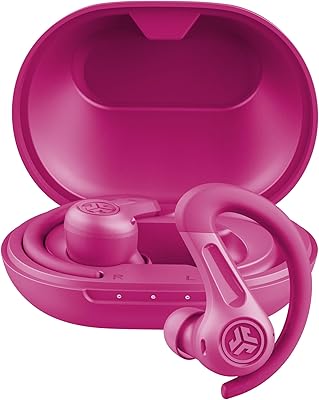
JLab JBuds Sport ANC 4 True Wireless Earbuds
86%
88%
Sound Quality
81%
Noise Cancellation
92%
Fit and Comfort
94%
Battery Life
83%
Ease of Use
More
JLab JBuds Air Sport Gen 3 True Wireless Bluetooth Earbuds
86%
91%
Battery Life
87%
Sound Quality
88%
Fit and Comfort
75%
Connectivity/Multipoint
94%
Durability (Sweat Resistance)
More
Nothing Ear (Open) Open-Ear Earbuds
79%
91%
Wearing Comfort
83%
Workout Stability
74%
Sound Quality
77%
Call Quality
49%
Sound Leakage
More
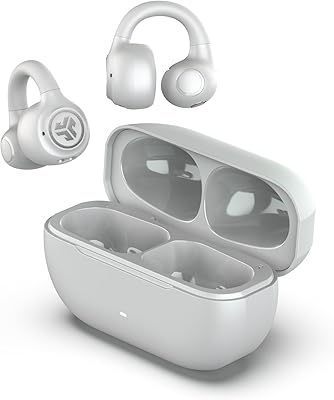
JLab Flex Open Earbuds
85%
85%
Sound Quality
89%
Comfort & Fit
92%
Battery Life
87%
Ease of Use
83%
Build Quality
More
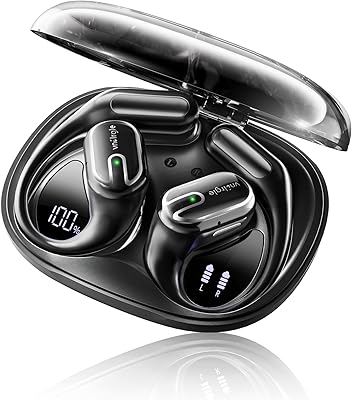
vnilrgle T15 Open-Ear Bluetooth Earbuds
76%
88%
Value for Money
84%
Battery Life
81%
Comfort & Fit
67%
Sound Quality
93%
Situational Awareness
More
Haowolf SP05 Open-Ear Bluetooth Sports Earbuds
80%
88%
Comfort & Wearability
83%
Fit & Stability
92%
Battery Life
67%
Sound Quality
71%
Call Quality
More
Skullcandy Xtplyo In-Ear Sport Earbuds
83%
88%
Fit & Comfort
85%
Sound Quality
90%
Build Quality
80%
Water Resistance
70%
Cable Durability
More
Htcmf O8 Open Ear Earbuds
84%
75%
Sound Quality
90%
Comfort & Fit
95%
Battery Life
88%
Waterproof Durability
84%
Bluetooth Connectivity
More
Monster AC338 Open-Ear Bluetooth Earbuds
75%
83%
Comfort & Fit
78%
Battery Life
61%
Audio Quality
86%
Water & Sweat Resistance
81%
Bluetooth Connectivity
More
EarFun Clip Open-Ear Earbuds
75%
88%
Wearing Comfort
83%
Audio Quality
71%
Call Quality
74%
Fit Stability
91%
Battery Life
More

FAQ

Most users report that the earhook holds surprisingly well even through vigorous activity. The pinch mechanism on the hook is designed to grip the ear without pressure points, and the general feedback on fit security is one of the more consistent positives for these open-ear sport buds. That said, ear shape varies, so if possible, try them on before committing.

Yes, and that is really the core purpose of this design. Because the drivers sit in front of your ear canal rather than inside it, ambient sound passes through freely. You will hear cars, other cyclists, and people talking to you without needing to remove the buds or pause your audio.

It does not, and it is important to go in with the right expectations. Open-ear designs cannot physically reproduce the bass depth or stereo separation that a sealed in-ear earbud delivers. The JLab JBuds Open Sport Open-Ear Earbuds sound clear and listenable for their format, but if rich, immersive audio is your priority, a traditional earbud will serve you better.

Indoors and in calm conditions, the MEMS microphones handle calls well enough for most purposes. Outdoors in windy conditions, however, several users have noted that wind noise becomes a real issue and the mic picks up interference. It is workable for quick calls, but probably not ideal for long professional conversations on a breezy day.

They pair with any Bluetooth-enabled device, including iPhones and iPads. The Google Fast Pair feature is Android-exclusive, so iPhone users just go through the standard Bluetooth pairing menu instead, which takes a few extra taps but works without issues.

IP55 means the earbuds are protected against dust and low-pressure water from any direction. In practical terms, they can handle heavy sweat during a workout and light rain without damage. They are not waterproof for swimming or submersion, so keep that distinction in mind.

Yes, Bluetooth Multipoint lets these ear-hook earbuds stay connected to two devices simultaneously. You can be on a podcast from your laptop and switch to a phone call without manually disconnecting and reconnecting each time. It works well for people who split their day between desk work and mobile use.

The case takes around 7 hours to fully charge, which is genuinely on the slower side compared to competitors. If you drain the case completely and need a quick turnaround, that wait is frustrating. Plugging it in overnight is the easiest workaround, but it is a legitimate inconvenience worth knowing about upfront.

It adds real functionality rather than being purely decorative. The ability to remap touch controls and switch between EQ presets is genuinely useful, especially if the default sound signature does not suit your taste. Firmware updates also come through the app, which means keeping the buds up to date is straightforward. Feedback on its reliability has been mostly positive, with occasional minor bugs reported.

Honestly, not yet. The review pool is still relatively small compared to products that have been on the market for a year or more, so long-term durability and consistent performance data are limited. What exists so far is encouraging, but if buying based on a proven track record matters to you, waiting another six months for more real-world feedback is a reasonable approach.