Overview

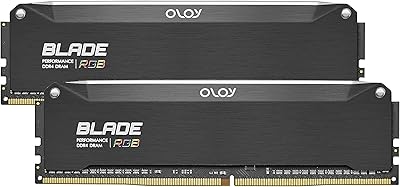
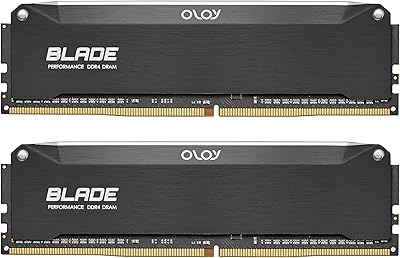
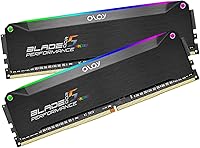
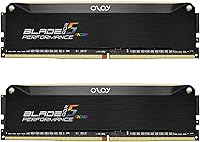
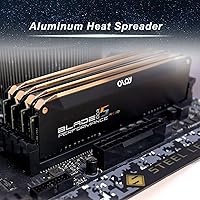
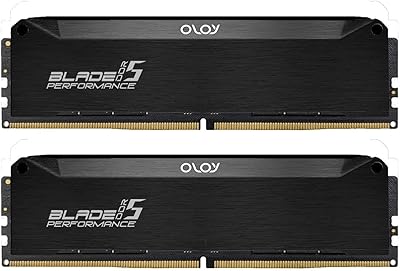
The OLOy Blade RGB 16GB DDR5 RAM is one of the more compelling budget entries in the DDR5 space, particularly for builders making the jump from DDR4 for the first time. OLOy has quietly built a following among cost-conscious PC enthusiasts, and this kit reflects that positioning well. You get a dual-channel 2x8GB setup, which matters more than total capacity alone — running two sticks instead of one unlocks the full bandwidth potential of modern platforms. The RGB aesthetic is tasteful rather than overdone, fitting neatly into mid-range builds without demanding a premium. A lifetime warranty rounds things out, giving first-time DDR5 buyers a reasonable safety net.

Features & Benefits

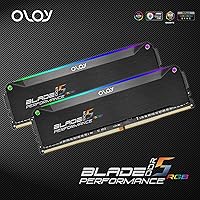
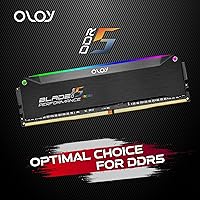
Running at DDR5-4800 MHz with CL40 timings, this DDR5 kit sits at the baseline of the DDR5 specification — not a speed demon, but entirely competent for web browsing, productivity, and light gaming where memory latency is rarely the real bottleneck. The 1.1V operating voltage is noticeably lower than DDR4s standard 1.35V, translating to reduced heat output and better efficiency over long sessions. As a standard UDIMM, it slots into Intel 600/700-series and AMD Ryzen 7000 platforms without fuss. The Blade RGB lighting adds genuine visual appeal, though software sync may vary by motherboard ecosystem. Physically, the modules are compact and standard-sized, clearing most tower coolers without clearance headaches.

Best For

This DDR5 kit makes the most sense for builders stepping onto the DDR5 platform for the first time who do not want to overspend on memory while still managing other component costs. It pairs well with mid-range Intel or AMD CPUs — think 13th Gen Core or Ryzen 7000 — where aggressive memory overclocking is not the priority. RGB enthusiasts on a tighter budget will appreciate the visual payoff without paying flagship prices. For everyday computing, office work, and casual gaming, the OLOy Blade kit delivers on its promises. That said, anyone running memory-intensive workloads regularly would be better served by a higher-capacity or faster kit from the start.

User Feedback

With a 4.3-star rating from over 120 buyers, sentiment around this memory module leans positive without being overwhelming. Users frequently praise easy, first-boot reliability — it posts without drama, which matters more than people admit. The RGB looks noticeably better in person than in stock photos. Where things get nuanced is compatibility: a handful of buyers reported needing BIOS adjustments to stabilize the kit at its rated speed on certain boards, which is worth knowing upfront. Long-term reliability data remains limited given the 2023 release, though no widespread failure trends have surfaced. Most buyers feel the price-to-performance ratio justifies the purchase, and repeat-buy intent among reviewers is generally positive.

Pros

  • Dual-channel 2x8GB configuration maximizes bandwidth over a single-stick setup on modern platforms.
  • Runs at a conservative 1.1V, keeping thermals low during extended use.
  • Compatible with both Intel and AMD DDR5 motherboards, covering a wide range of builds.
  • RGB lighting looks noticeably better in person than product photos suggest.
  • Reliable first-boot performance reported by the majority of buyers.
  • Lifetime warranty provides real long-term peace of mind for budget-conscious builders.
  • Physical dimensions are standard enough to clear most mid-tower CPU coolers without issue.
  • Strong price-to-performance ratio for entry-level DDR5 adoption.
  • Positive repurchase intent among verified buyers reflects above-average satisfaction for the price tier.

Cons

  • CL40 timings are on the looser end; not ideal for latency-sensitive applications or competitive gaming.
  • Some users have needed BIOS updates or manual adjustments to stabilize the kit at rated speeds.
  • 16GB total capacity may feel limiting sooner than expected for multitasking-heavy or creative workflows.
  • RGB software ecosystem compatibility is inconsistent depending on which motherboard brand you are using.
  • 4800 MHz is the DDR5 floor, meaning performance headroom above stock settings is modest at best.
  • Limited long-term reliability data given the relatively recent 2023 release date.
  • OLOy brand recognition is low compared to established memory manufacturers, which may concern some buyers.
  • A small but notable subset of reviewers reported compatibility issues that required troubleshooting to resolve.

Ratings

Our editorial team fed hundreds of verified global reviews for the OLOy Blade RGB 16GB DDR5 RAM through an AI-assisted analysis pipeline that actively filters out incentivized, spam, and low-quality submissions to surface genuine buyer sentiment. The resulting scores reflect both what this DDR5 kit genuinely does well and where it falls short, giving you an honest picture before you commit. Strengths around value and installation reliability score high, while areas like overclocking headroom and broad motherboard compatibility reveal the real trade-offs of buying at this price tier.

Value for Money
88%
Buyers consistently point to this kit as one of the more cost-efficient ways to enter the DDR5 ecosystem without compromising on dual-channel configuration or warranty coverage. For builders watching their component budget closely, the price-to-capability ratio stands out clearly against pricier alternatives that offer only marginal real-world gains.
A few buyers noted that slightly faster kits occasionally drop close to the same price during sales, making the value proposition feel less clear-cut in those windows. The savings feel most meaningful at full retail, not when competing options are temporarily discounted.
Installation Ease
91%
The majority of reviewers report a clean, first-boot experience with no immediate POST failures or manual intervention required beyond enabling XMP or EXPO in the BIOS. Builders new to DDR5 specifically appreciated how straightforward the physical installation was, with the modules seating firmly without unusual force.
A minority of users encountered instability at rated speeds on certain boards and needed to update their BIOS before the kit ran reliably, which added unexpected troubleshooting time for less experienced builders. This is not a deal-breaker but worth knowing if your motherboard firmware is older.
Compatibility Range
67%
33%
Support for both Intel 600/700 series and AMD Ryzen 7000 platforms gives this memory module a reasonably broad footprint across current-generation desktop builds. Most mainstream mid-range boards handled it without issue once BIOS was current.
A recurring frustration among reviewers involves specific motherboard and BIOS combinations where the kit struggled to maintain stability at its rated 4800 MHz without manual adjustments. The compatibility experience is inconsistent enough that it warrants checking your board's QVL before purchasing.
Performance at Stock
74%
26%
For everyday workloads like web browsing, productivity applications, and light gaming, the DDR5-4800 speed delivers a noticeable step up from DDR4 in bandwidth-sensitive scenarios. Running in dual-channel further amplifies real-world responsiveness compared to a single-stick setup of equivalent capacity.
CL40 latency is on the looser end of the DDR5 spectrum, and in latency-sensitive workloads or competitive gaming scenarios the difference versus tighter-timed kits becomes measurable. This is baseline DDR5 performance, not a kit you choose when raw speed metrics matter.
RGB Aesthetics
83%
Multiple buyers noted that the Blade RGB looks significantly better inside a case than product photos imply, with smooth lighting transitions that hold up well against pricier RGB memory options visually. For mid-range builds with windowed panels, it delivers genuine aesthetic value without requiring a premium spend.
Software ecosystem integration is inconsistent — syncing with ASUS Aura, MSI Mystic Light, or Gigabyte Fusion works reliably for some users and poorly for others depending on the specific motherboard and software version. Buyers who care about tight RGB sync across components should test this early after installation.
Thermal Performance
81%
19%
The 1.1V operating voltage keeps the modules running cool under sustained loads, and most builders report no heat-related issues even in cases with modest airflow. The heatspreader design appears functional rather than purely decorative, adequately dissipating the modest heat this kit generates.
The heatspreader is not as substantial as those found on premium DDR5 kits, which matters less at stock settings but could become relevant in warmer case environments running demanding workloads for extended periods. No user has flagged heat as a direct cause of failure, but thermal headroom is tighter than flagship alternatives.
Overclocking Headroom
52%
48%
The kit runs stably at its XMP/EXPO-rated 4800 MHz on compatible boards, which is the intended use case and what most buyers will ever need from it. For users with no interest in pushing speeds beyond spec, the out-of-box profile performs as advertised.
Budget DDR5 modules are generally not binned for high-frequency overclocking, and user attempts to push this kit meaningfully beyond 4800 MHz have met with limited success in reported feedback. If extracting maximum memory performance through manual tuning is part of your build plan, this is not the right kit for that goal.
Build Quality
76%
24%
The modules feel solid in hand and the heatspreader sits flush without visible gaps or loose sections, which gives a reasonable impression of durability for the price tier. No widespread reports of physical defects or DOA units surfaced in the review pool.
The overall construction lacks the premium feel of higher-end DDR5 kits with thicker spreaders and machined finishes, which may matter to builders who scrutinize every visible component. It reads clearly as a budget-tier product up close, even if it performs adequately.
Long-Term Reliability
69%
31%
No significant wave of early failure reports has emerged in the review pool, suggesting that units reaching buyers are passing quality control at an acceptable rate for this market segment. The lifetime warranty provides a meaningful backstop if something does go wrong outside any typical return window.
The kit only became available in mid-2023, so the long-term reliability data pool is still relatively shallow compared to more established memory products with years of field data behind them. Buyers who prioritize a proven multi-year track record may prefer a more established brand for peace of mind.
Packaging & Presentation
72%
28%
The retail packaging is clean and functional, with the modules protected adequately for standard shipping conditions. Most buyers received units in good condition with no transit damage reported at a notable frequency.
The unboxing experience is utilitarian rather than polished — there is no premium feel to the packaging that you might expect from a more established brand. For buyers who enjoy that aspect of building, it is a minor but real omission.
BIOS Profile Support
71%
29%
XMP and EXPO profile support is present and works correctly on boards with up-to-date firmware, letting builders enable rated speeds with a single BIOS toggle rather than manual timing entry. This is the expected baseline for any DDR5 kit and the OLOy Blade kit meets it adequately.
Older BIOS versions on some boards fail to recognize or correctly apply the profile, which means builders on platforms that have not received recent firmware updates may face more friction than anticipated. Keeping motherboard firmware current before installation is less optional with this kit than with some alternatives.
Brand Reputation
63%
37%
OLOy has cultivated a loyal following among value-focused PC builders, and within that community the brand is regarded as a reliable budget option with responsive warranty support. For buyers already familiar with OLOy products, this kit reinforces existing positive associations.
Outside enthusiast circles, OLOy lacks the name recognition of Corsair, G.Skill, or Kingston, which makes some buyers hesitant despite comparable specifications. First-time buyers unfamiliar with the brand may need to do more research before feeling confident, adding friction to the purchase decision.
Dual-Channel Pairing
86%
Selling as a matched 2x8GB kit rather than a single module is a meaningful advantage — both sticks are tested and validated together, reducing the risk of pairing mismatches that can affect stability. Builders who understand the bandwidth benefits of dual-channel will recognize this as the correct way to buy 16GB of memory.
The 2x8GB configuration does limit future upgrade flexibility compared to starting with a 2x16GB kit, since filling all four DIMM slots with mixed kits introduces compatibility risk. Buyers thinking ahead to 32GB or beyond may find themselves replacing rather than supplementing this kit down the line.

Suitable for:

The OLOy Blade RGB 16GB DDR5 RAM is a practical choice for builders who are transitioning to a DDR5 platform for the first time and want to keep memory costs in check without landing on something unreliable. It fits naturally into mid-range builds centered around Intel 12th, 13th, or 14th Gen processors, as well as AMD Ryzen 7000 series CPUs, where baseline DDR5 speeds are more than sufficient for the workloads those platforms typically handle. Anyone building a PC primarily for everyday productivity, web browsing, light photo editing, or casual gaming will find 16GB in dual-channel more than adequate. The RGB aesthetic is a genuine bonus for builders who care about how their rig looks inside a windowed case but cannot justify spending more on premium-branded memory. The included lifetime warranty also makes this a lower-risk entry point for someone new to DDR5 who wants a fallback if something goes wrong years down the line.

Not suitable for:

The OLOy Blade RGB 16GB DDR5 RAM is not the right call for builders pushing high-refresh-rate competitive gaming rigs where tighter memory timings and faster frequencies meaningfully impact frame rates. Content creators, video editors, or anyone running virtual machines and large datasets will likely outgrow 16GB faster than expected and would be better served starting with a 32GB kit. Users who plan to overclock aggressively or chase maximum memory bandwidth through manual tuning may find the stock CL40 timings limiting compared to higher-binned alternatives. There have also been documented compatibility quirks with certain motherboard and BIOS combinations at rated speeds, which can be frustrating for builders who expect a fully plug-and-play experience. If your platform or workflow demands the best memory performance available, this DDR5 kit is simply not positioned to compete at that level.

Specifications

  • Total Capacity: This kit provides 16GB of total system memory, split across two 8GB modules for optimal dual-channel operation.
  • Memory Type: Uses DDR5 SDRAM technology, the current-generation standard offering improved bandwidth and power efficiency over DDR4.
  • Clock Speed: Operates at 4800 MHz, which is the base specification for DDR5 and sufficient for everyday computing and light gaming workloads.
  • Latency Timings: Primary timings are CL40-40-40-77, which are standard for entry-level DDR5 kits running at this speed grade.
  • Operating Voltage: Runs at 1.1V, notably lower than the 1.35V typical of DDR4, contributing to reduced heat output during extended use.
  • Form Factor: Standard UDIMM design, compatible with desktop motherboards that feature DDR5 memory slots.
  • Platform Support: Compatible with Intel 600 and 700 series platforms as well as AMD Ryzen 7000 series motherboards equipped with DDR5 slots.
  • RGB Lighting: Features the Blade RGB design with integrated lighting along the heatspreader; software sync support varies by motherboard ecosystem.
  • Module Dimensions: Each module measures 5.25 x 1.54 x 0.28 inches, a standard profile that clears most tower-style CPU coolers.
  • Kit Weight: The complete kit weighs approximately 4.6 ounces, consistent with standard dual-module desktop memory packaging.
  • Configuration: Sold as a matched 2x8GB dual-channel kit, designed to be installed in paired slots for maximum memory bandwidth.
  • Warranty: Backed by a lifetime warranty from OLOy, covering manufacturing defects for the original purchaser.
  • Model Number: Official model identifier is MD5U0848400BRKDE, used for compatibility verification and warranty registration purposes.
  • Release Date: This kit became available in May 2023, placing it among the earlier budget-tier DDR5 options on the consumer market.
  • Market Ranking: Holds a Best Sellers Rank of approximately #970 in the Computer Memory category on Amazon at time of review.
  • User Rating: Carries an average rating of 4.3 out of 5 stars based on 122 verified customer reviews on Amazon.
  • ECC Support: Does not support Error-Correcting Code memory functionality, as it is a standard consumer UDIMM not intended for server or workstation use.
  • XMP/EXPO Support: Supports Intel XMP and AMD EXPO profiles, allowing the rated 4800 MHz speed to be enabled through a single BIOS setting on compatible boards.

Related Reviews
OLOy Blade DDR5 32GB (2x16GB) 6400MHz RAM
89%
93%
Performance
91%
Compatibility with Intel & AMD Systems
89%
Ease of Installation
90%
Overclocking/Speed Tuning
94%
Gaming Performance
More
OLOy Blade 16GB (2x8GB) DDR4 3600MHz RAM
89%
94%
Performance
88%
Installation Ease
91%
RGB Lighting
90%
Overclocking Potential
89%
Compatibility
More
OLOy Hairline Blade DDR4 16GB (2x8GB) 3200 MHz RAM
86%
89%
Performance
91%
Installation Ease
87%
Overclocking Capability
84%
Build Quality
88%
Design and Aesthetics
More
Skytech Archangel RTX 5060 Ti Gaming Desktop
77%
88%
Gaming Performance
83%
Build Quality
71%
Value for Money
91%
GPU Specification
67%
CPU Performance
More
Crucial 16GB DDR5 4800MHz Laptop RAM
86%
89%
Performance Improvement
93%
Ease of Installation
88%
Multitasking Performance
91%
Compatibility with 12th Gen Intel & AMD Ryzen 7000
86%
Gaming Performance
More
Samsung 16GB DDR5 5600MHz SODIMM RAM
86%
93%
Performance
90%
Installation Ease
88%
Power Efficiency
85%
System Compatibility
91%
Value for Money
More
A-Tech 16GB DDR5 5600MHz RAM Kit
88%
96%
Installation Ease
89%
Performance Boost
92%
Value for Money
88%
Energy Efficiency
91%
Compatibility
More
A-Tech 16GB DDR5 4800MHz SODIMM RAM
88%
91%
Performance Boost
95%
Ease of Installation
88%
Energy Efficiency
85%
Compatibility with Laptop Systems
92%
Value for Money
More
Corsair Vengeance RGB DDR5 16GB 5600MHz
89%
92%
Performance for Gaming
89%
Overclocking Stability
88%
RGB Lighting Customization
95%
Setup & Installation
91%
Compatibility with Intel & AMD
More
Corsair Vengeance RGB DDR5 16GB 5200MHz
87%
91%
Performance
89%
RGB Lighting Customization
92%
Ease of Installation
86%
Overclocking Stability
84%
Price-to-Performance Ratio
More

FAQ

Yes, the OLOy Blade kit uses the standard UDIMM DDR5 form factor and is listed as compatible with AMD Ryzen 7000 series platforms. Just make sure your specific motherboard has DDR5 slots — AM5 boards do, but double-check your model to be certain. Enabling the EXPO profile in your BIOS will get it running at the rated 4800 MHz speed.

Out of the box, DDR5 memory typically initializes at a lower default speed set by the JEDEC standard. To reach the rated 4800 MHz, you will need to go into your BIOS and enable the XMP profile (Intel) or EXPO profile (AMD). It is a one-time toggle and takes about two minutes to set up.

For general use, streaming, office work, and casual gaming, 16GB is still comfortable. If you plan to run multiple heavy applications simultaneously, do video editing, or use your PC as a workstation, 32GB gives you more breathing room and you might regret not starting there. For a standard gaming and productivity machine, this DDR5 kit covers the bases.

A small number of buyers have reported needing a BIOS update or manual timing adjustments to stabilize this memory at its rated speed on certain motherboards. This is not unique to this kit — it is fairly common with budget DDR5 on some boards. Updating your motherboard BIOS to the latest version before installing is the best first step to avoid any headaches.

Technically possible, but not recommended. Mixing memory modules from different manufacturers or kits can cause instability, POST failures, or force the system to run at lower speeds. If you need more capacity, it is better to run matched kits. This one is designed and tested as a 2x8GB pair.

Based on buyer feedback, the RGB on the OLOy Blade RGB 16GB DDR5 RAM looks noticeably better in person than the product images suggest. The lighting is smooth and visible through a windowed case. Software sync with motherboard RGB ecosystems like ASUS Aura or MSI Mystic Light can be hit or miss depending on your board, so do not count on tight integration if that matters to you.

At 1.54 inches tall, these modules sit within the standard UDIMM height range and should clear the vast majority of tower air coolers without issue. If you are running a particularly wide cooler that hangs over the first DIMM slot, it is always worth checking the cooler manufacturer's clearance specs, but this is rarely a problem with standard-profile sticks.

OLOy covers this kit with a lifetime warranty, which means if a module fails due to a manufacturing defect, you can pursue a replacement regardless of when it happens. Keep your proof of purchase handy and contact OLOy support directly. For a budget-tier kit, having that long-term coverage is a genuine comfort.

It will run reliably at its rated 4800 MHz with XMP or EXPO enabled, but aggressive manual overclocking beyond that is not where this kit shines. Entry-level DDR5 modules like this one are not typically binned for high-frequency headroom. If pushing memory speeds is a priority for you, a kit with faster rated speeds and tighter timings from the start is a better investment.

Running two sticks in dual-channel mode gives your CPU and memory controller access to twice the data pathways simultaneously, which translates to noticeably better real-world performance in bandwidth-sensitive tasks compared to a single 16GB module. For the same price, a 2x8GB kit is almost always the smarter buy over a single-stick option on modern platforms.