Overview

The NVX XQS65KIT 6.5″ Component Car Speakers are built for the kind of listener who treats their vehicle's audio system as a serious, intentional project. NVX occupies a well-regarded spot in the enthusiast car audio market, and this 6.5″ component system reflects that — separate tweeters, external passive crossovers, and a design that assumes you're pairing it with an aftermarket amplifier. Unlike coaxial speakers that stack everything onto a single driver, component systems like this give you real control over imaging and high-frequency placement throughout the cabin. There's also a 3-way upgrade path available by adding NVX's companion midrange drivers later. Be clear-eyed going in, though: this requires proper installation and is not a casual drop-in swap.
Features & Benefits

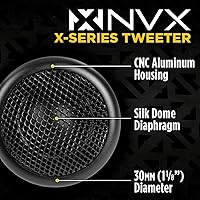
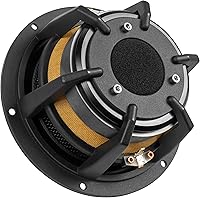
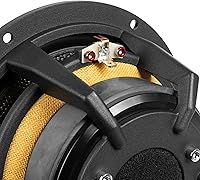
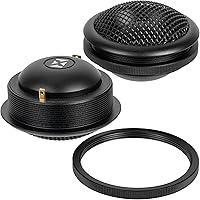
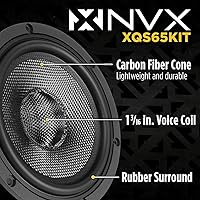
The power handling on these component speakers is genuinely substantial — 300W RMS per pair means you're not burning headroom if a real amplifier is behind them. The carbon fiber cone woofers are a standout here; that combination of stiffness and low mass translates directly into tighter, faster bass compared to standard paper or polypropylene cones. On the high end, the 1-1/8″ silk dome tweeters keep treble smooth and fatigue-free on long drives — none of the harshness you sometimes get from metal dome alternatives. The switchable external crossovers let you adjust tweeter and midrange attenuation independently, which is genuinely useful for dialing things in across different cabin acoustics. Ferrite magnets round out a build that prioritizes proven, consistent reliability.

Best For

This 6.5″ component system makes the most sense for someone already committed to a proper car audio build — think dedicated amplifier, planned tweeter pod locations, and some comfort with wiring. It's particularly well-suited to trucks and larger vehicles, where the higher power handling gives you the output needed to fill a bigger cab cleanly. Vocals and acoustic instruments are where these shine most; if soundstage accuracy and midrange clarity matter more to you than raw bass punch, this is a strong contender. It's also a smart buy for the staged builder — someone who wants to start at 2-way and grow into a full 3-way setup later without replacing the entire kit.

User Feedback

Since the NVX XQS65KIT set only launched in early 2024, the review pool is still relatively thin — so early impressions should be weighed with that context in mind. That said, buyers consistently highlight detail and clarity as standout qualities, especially in vocal and upper midrange frequencies. Experienced installers appreciate the crossover flexibility, noting that being able to tune attenuation independently makes a real difference in varied setups. On the downside, a few users point out that tweeter placement demands planning and effort, and those new to component installs may find the process more involved than anticipated. Long-term durability data is limited so far, though the rubber surrounds and carbon fiber construction are broadly seen as promising signs.

Pros

  • Carbon fiber cone woofers produce tight, accurate bass that holds up well across a wide range of music genres.
  • Silk dome tweeters keep high frequencies smooth and comfortable even on long drives.
  • Switchable crossover networks let you tune the sound to your specific vehicle rather than accepting a fixed factory curve.
  • The system is genuinely expandable — adding NVX midrange drivers later unlocks a full 3-way configuration without replacing anything.
  • Power handling is honest and substantial, pairing confidently with real aftermarket amplifiers.
  • Build materials — rubber surrounds, carbon fiber cones, ferrite magnets — inspire confidence in long-term durability.
  • Standard 6.5″ footprint fits a wide range of factory door locations in cars and trucks without custom adapters.
  • CEA-2031 compliant design means the power specs are measured to an industry standard, not inflated marketing figures.

Cons

  • Requires an external amplifier to perform properly — head-unit-only setups will leave these speakers sounding flat and uninspiring.
  • Separate tweeter mounting means more planning, more wiring runs, and a noticeably longer installation time than coaxial alternatives.
  • Crossover tuning options, while useful, add complexity that can trip up first-time component installers.
  • The companion midrange drivers needed for 3-way operation are sold separately, adding to the total system cost.
  • Crossover network housings are bulky enough to create routing challenges in vehicles with tight door cavities.
  • Long-term reliability data is limited given the product only launched in early 2024 — durability over several years remains unconfirmed.
  • Professional installation costs should be budgeted in from the start, which meaningfully raises the all-in price.
  • Not well-suited for listeners who prioritize heavy low-end output — these speakers are tuned for accuracy, not bass emphasis.

Ratings

The NVX XQS65KIT 6.5″ Component Car Speakers have been evaluated using AI-assisted analysis of verified buyer reviews collected globally, with spam, bot-generated, and incentivized submissions actively filtered out before scoring. The ratings below reflect a balanced picture of where these component speakers genuinely deliver and where they fall short, drawn from real-world installation experiences and long-term listening feedback across a range of vehicles and audio setups.
Sound Clarity
91%
Buyers consistently report that vocal reproduction and upper midrange detail are where these speakers genuinely stand out. On well-recorded tracks during daily commutes or highway drives, the separation between instruments feels distinct and precise — a quality that coaxial alternatives at this tier rarely match.
A small segment of listeners with highly sensitive ears note that at extreme volume levels, some edge creeps into the upper frequencies. This is rare and typically linked to crossover settings that haven't been dialed in for the specific cabin.
Bass Accuracy
87%
The carbon fiber cones deliver bass that feels controlled and articulate rather than loose or boomy — a noticeable difference in genres like jazz or acoustic rock where kick drum definition matters. Paired with a competent amplifier, the low end stays composed even when pushed hard.
These are not bass-heavy speakers by design, and buyers expecting the kind of thump usually reserved for subwoofers will be disappointed. The 6.5″ woofers prioritize accuracy over depth, which is the right call for a component system but may not suit listeners who favor a heavy low-end lean.
Treble Smoothness
88%
The silk dome tweeters earn consistent praise for keeping high frequencies pleasant over extended listening sessions — no ear fatigue on long road trips, which is a common complaint with metal dome alternatives in this power class. Strings and cymbals in particular come across with detail but no sting.
A few users who mounted tweeters directly on-axis at close range found the highs slightly forward in some listening positions. Tweeter placement and angling make a real difference here, so the final result depends on how carefully the install is executed.
Power Handling
84%
Owners running these with mid-grade aftermarket amplifiers in the 75–150W per channel range report that the speakers handle sustained output without complaint, and the headroom feels genuine rather than inflated. In larger truck cabs, this power capacity makes a meaningful difference in filling the space cleanly.
The 600W peak figure is a ceiling that most real-world setups will never approach, and it shouldn't factor into your amplifier matching decisions. A handful of users running underpowered head-unit-only setups noted that the speakers never quite came alive — these really do need external amplification to perform as intended.
Build Quality
89%
Buyers frequently comment on how the components feel substantial out of the box — the rubber surrounds, carbon fiber cones, and crossover housings all give an impression of durability that holds up to scrutiny. For a system in this price tier, the physical construction inspires genuine confidence before a single note is played.
The crossover network enclosures, while functional, aren't the most compact units to work with in tight door panels or kick panels. A few installers noted that routing them neatly required extra planning, particularly in vehicles with limited cavity space.
Crossover Flexibility
86%
The ability to switch between 2-way and 3-way modes and independently adjust tweeter and midrange attenuation is a feature that experienced builders genuinely appreciate. Being able to tune the crossover to match your specific cabin acoustics — rather than living with fixed factory settings — is a meaningful practical advantage.
Casual or first-time installers may find the crossover options more intimidating than helpful without some prior knowledge of how to set attenuation levels. There's a learning curve involved, and incorrect settings can actually make the system sound worse until properly dialed in.
Installation Complexity
58%
42%
For experienced DIY installers, the hardware included is complete and the instructions are clear enough to follow without much external reference. The standard 6.5″ woofer footprint fits a wide range of factory door locations without adapter rings in most cases.
Separate tweeter mounting, crossover placement, and the additional wiring runs make this a significantly more involved install than a coaxial swap. Total beginners attempting this without prior experience may run into real frustration, and professional installation costs should be factored into the budget from the start.
Upgrade Scalability
83%
The built-in 3-way capability — activated by adding the companion NVX XQS3 midrange drivers later — is a genuine long-term advantage for staged builders. It means you're not locked into replacing the entire system when you're ready to expand; the crossover infrastructure is already there.
The midrange drivers required for the 3-way upgrade are sold separately and represent an additional cost that adds up. If your goal from day one is a full 3-way system, that total investment needs to be planned for upfront rather than discovered mid-build.
Soundstage Imaging
82%
18%
Component systems inherently produce better stereo imaging than coaxials by allowing tweeter placement to be optimized for the listener's ear level. Buyers who took time with tweeter positioning reported a noticeably wider and more defined soundstage, particularly on well-mixed stereo recordings.
The quality of the soundstage is highly dependent on how carefully the tweeters are positioned and angled. Buyers who mounted tweeters in less-than-ideal locations — or skipped any angling adjustment — reported that the imaging benefit was less dramatic than expected.
Value for Money
74%
26%
At this price level, you're paying for genuine engineering choices — carbon fiber cones, silk dome tweeters, and a functional switchable crossover — rather than marketing aesthetics. Buyers who understand what they're getting relative to the competition generally consider the investment fair for a system of this spec.
For buyers who don't already have an amplifier or aren't committed to a full audio build, the total system cost can feel steep when factoring in installation and amplification. The value equation only really makes sense if you're going all-in on the setup.
Compatibility & Fitment
79%
21%
The standard 6.5″ mounting diameter fits a broad range of factory door speaker locations in cars and trucks, reducing the likelihood of needing custom adapter rings for common vehicle platforms. Most buyers report clean fitment without major modification to factory mounting points.
Tweeter size and mounting bracket options may not suit every A-pillar or sail panel configuration without some custom fabrication. Buyers in vehicles with unusually shallow door cavities have also noted that the woofer depth requires measurement before assuming a clean drop-in fit.
Long-Term Durability
77%
23%
The materials chosen — rubber surrounds and carbon fiber cones — are both well-regarded for longevity in car audio applications, where heat and humidity are ongoing stressors. Early owners have not reported premature degradation of either the cones or the surrounds under normal use conditions.
Because this system only launched in early 2024, the long-term track record is genuinely limited and early impressions should be treated with appropriate caution. Meaningful durability data over a two-to-three year ownership window simply does not exist yet.
Packaging & Included Accessories
72%
28%
The kit arrives with both woofers, both tweeters, and both crossover networks, which is the complete set needed to run a functioning 2-way system without additional purchases. Mounting hardware is included and adequate for standard installations.
Some buyers noted that the documentation included in the box could be more thorough — particularly around crossover tuning guidance for those new to component setups. A more detailed setup guide would reduce the guesswork during first-time installations.
Amplifier Pairing Range
80%
20%
The 150W RMS per side rating gives a usefully wide pairing window — these work well with everything from entry-level 4-channel amplifiers to more powerful mono or multi-channel setups. That flexibility makes them practical across a range of system budgets and configurations.
Pairing these with a factory head unit as the sole power source consistently produces underwhelming results based on buyer reports. The speakers are engineered around amplified signal and genuinely underperform without it, which is a hard limitation for listeners unwilling to invest in separate amplification.

Suitable for:

The NVX XQS65KIT 6.5″ Component Car Speakers are built for the kind of buyer who approaches car audio as a deliberate, planned investment rather than a casual upgrade. If you already own a dedicated aftermarket amplifier — or have one budgeted into your build — these speakers have the power handling and resolution to reward that commitment fully. They're especially well-matched to truck and SUV owners where cabin size demands higher output to fill the space with clean, controlled sound. Listeners who care about vocal clarity, soundstage width, and instrument separation over raw bass volume will find this 6.5″ component system genuinely satisfying. The built-in upgrade path to a 3-way configuration also makes these a smart choice for the staged builder who wants to grow the system over time without replacing the core hardware.
Not suitable for:

The NVX XQS65KIT 6.5″ Component Car Speakers are a poor fit for anyone looking for a quick, low-effort audio upgrade. If your plan is to pull the factory speakers and drop these in without touching the rest of the system, you will likely be underwhelmed — running them off a head unit alone consistently produces results well below what this system is capable of. These are also not the right pick for someone unfamiliar with component installs; separate tweeter placement, crossover mounting, and multi-run wiring require a meaningful time investment and at least some prior installation experience. Buyers on a tight total budget should also consider the full cost picture carefully, since amplification and professional installation can add considerably to the overall spend. Finally, if your primary goal is deep, chest-thumping bass rather than accuracy and imaging, a different speaker category — or a dedicated subwoofer investment — will serve you better.
Specifications

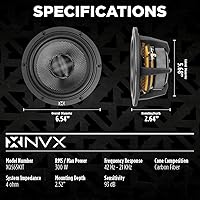
  • Speaker Size: The woofer measures 6.5 inches (6.54″ actual driver diameter), fitting standard factory door speaker locations across a wide range of cars and trucks.
  • Peak Power: The pair handles up to 600W peak total, rated at 300W peak per individual speaker.
  • RMS Power: Continuous RMS power handling is 300W per pair (150W per side), reflecting real-world sustained amplifier output capacity under CEA-2031 standards.
  • Tweeter Size: Each kit includes a 1-1/8″ silk dome tweeter, measuring 1.13 inches in dome diameter for smooth high-frequency reproduction.
  • Voice Coil: The midwoofer uses a 1-3/16″ diameter voice coil, contributing to precise control and efficient energy transfer from the magnet structure.
  • Cone Material: Woofer cones are constructed from carbon fiber, a material chosen for its combination of low mass and high rigidity to reduce distortion.
  • Surround Material: Rubber surrounds are used on the woofers, offering better longevity and environmental resistance compared to foam surround alternatives.
  • Magnet Type: Ferrite magnet motor structures power both the woofers and tweeters, providing consistent and reliable magnetic field performance over time.
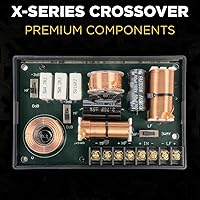
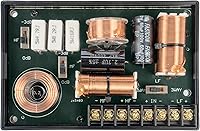
  • Crossover Type: External passive crossover networks are included, switchable between 2-way and 3-way operation with independent tweeter and midrange attenuation adjustment.
  • Speaker Type: This is a component speaker system, meaning the woofer, tweeter, and crossover are separate units rather than a single integrated coaxial driver.
  • Included Components: Each kit ships with two woofers, two silk dome tweeters, and two external crossover network units — everything needed for a complete 2-way install.
  • Expandability: The crossover network supports a 3-way configuration when NVX XQS3 3.5″ midrange speakers (sold separately) are added to the system.
  • Mounting Type: Designed for door-mount installation in standard 6.5″ factory speaker cutouts in cars, trucks, and SUVs.
  • Product Dimensions: Each unit measures approximately 2.64″ deep by 5.68″ wide by 2.64″ high — depth clearance in the door cavity should be verified before installation.
  • Total Weight: The complete kit weighs 11.47 pounds, accounting for both woofers, tweeters, and crossover hardware.
  • Connectivity: Wired connectivity only; no wireless or Bluetooth functionality is present, as these are passive speakers requiring physical speaker wire connections.
  • Compliance Standard: The system is CEA-2031 compliant, meaning power handling figures are measured against an independently verified industry standard rather than unaudited marketing claims.
  • Warranty: NVX provides a limited warranty on this product; buyers should confirm current warranty terms and duration directly with NVX at the time of purchase.

Related Reviews

NVX VSP65KIT2F 6.5″ Component Car Speakers
74%
88%
Sound Clarity
57%
Bass Performance
61%
Amplifier Compatibility
83%
Build Quality
67%
Installation Experience
More
NVX NSP65 6.5″ Car Speakers
88%
91%
Sound Clarity
88%
Bass Response
94%
High Frequency Detail
90%
Durability
85%
Power Handling
More
Rockville RVL6KIT 6.5″ Component Car Speakers
84%
88%
Sound Clarity
80%
Bass Performance
94%
Ease of Installation
86%
Build Quality
92%
Value for Money
More
NVX XSP652 6.5″ Coaxial Car Speakers
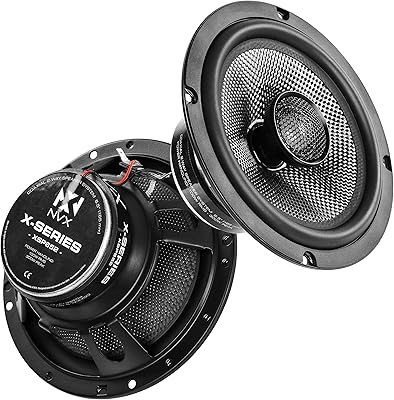
77%
88%
Sound Clarity
61%
Bass Performance
86%
Build Quality
84%
Installation Ease
79%
Value for Money
More
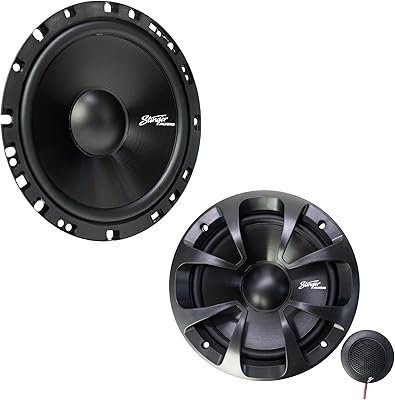
STINGER HC-65C 6.5″ Car Audio Component Speakers
85%
87%
Sound Quality
92%
Ease of Installation
88%
Build Quality
75%
Bass Performance
85%
Compatibility with Car Models
More
Cerwin-Vega V465C 6.5-Inch Component Car Speakers
83%
93%
Sound Quality
91%
Bass Performance
88%
Ease of Installation
87%
Build Quality
85%
Value for Money
More
H YANKA HCP-65 6.5 Component Car Speakers
84%
88%
Sound Clarity
85%
Installation Ease
82%
Build Quality
75%
Bass Performance
90%
Midrange Clarity
More
JBL Stage2 604C 6.5-inch Car Component Speakers
83%
91%
Sound Quality
88%
Bass Performance
87%
Ease of Installation
92%
Value for Money
80%
Build Quality
More
JBL GTO609C 6.5″ Component Speaker System
77%
88%
Sound Clarity
71%
Bass Performance
84%
Tweeter Quality
74%
Installation Ease
86%
Compatibility with Stock Radios
More
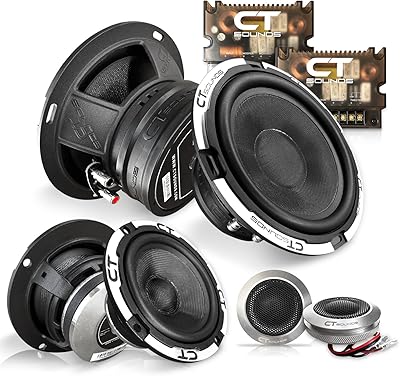
CT Sounds Meso 6.5” 3-Way Component Car Speaker Set
85%
89%
Sound Quality
91%
Volume Performance
85%
Ease of Installation
87%
Build Quality
90%
Power Output
More

FAQ

You really do need an aftermarket amplifier to get proper performance out of these. Factory head units typically output 15–20W RMS per channel, which is well below what these speakers are engineered to work with. Running them underpowered won't damage them immediately, but you'll never hear what they're actually capable of — and the sound will likely be flat and uninspiring compared to what buyers report when they're properly amplified.

Aim for an amplifier delivering somewhere between 75W and 150W RMS per channel at the speaker's impedance. That puts you comfortably within the 150W RMS per side rating without risking overpowering. A quality 4-channel amp in that output range is the most common pairing, and it leaves enough headroom to push the system hard without clipping.

In most cases, yes. The 6.5″ mounting footprint is one of the most common sizes in car audio, so these drop into factory cutouts in a wide range of vehicles without needing adapter rings. That said, the woofer depth of around 2.64″ means you should measure your door cavity depth before committing — shallow doors in some compact cars can cause clearance issues.

Notably more involved. With coaxials, you're replacing one driver in one location. With this component system, you're mounting woofers in the doors, finding locations for separate tweeters, routing additional wiring, and mounting and wiring the external crossover networks — each side. If you've done component installs before, it's a manageable Saturday project. If this is your first time, budgeting for professional installation is a smart call.

Common locations include A-pillars, sail panels near the mirrors, dash corners, or custom tweeter pods. The goal is to get the tweeters at or near ear level and angled toward the listening position for the best imaging. The specific spot depends on your vehicle's interior layout — some cars have dedicated factory tweeter locations that work perfectly, while others require fabrication or surface mounting.

Not out of the box — the 3-way capability requires adding the NVX XQS3 3.5″ midrange drivers, which are sold separately. The crossover networks included in the kit are already designed to support 3-way operation once those midrange units are added, so the infrastructure is there from day one. It's a genuine upgrade path rather than a marketing claim, but it does involve a separate purchase and additional installation work.

The external crossover networks have switchable settings that let you independently adjust how loud the tweeter and midrange channels are relative to the woofer. In practical terms, this means you can dial back harsh treble if your tweeters are mounted close to ear level, or boost them slightly if they're tucked in less ideal positions. It takes some experimentation to find the right setting for your specific cabin, but it's a meaningful advantage over fixed crossover designs.

No — these are not waterproof or water-resistant, and NVX has not rated them for outdoor or marine environments. They're designed exclusively for in-vehicle door-mount use where they're protected from direct moisture exposure. Exposure to rain, humidity, or spray would likely damage the carbon fiber cones, crossover electronics, and voice coils over time.

Component systems like this 6.5″ set generally outperform coaxials in soundstage accuracy, imaging, and high-frequency detail because the tweeter can be independently placed and aimed. Coaxials are simpler to install and can sound very good, but they physically can't match the stereo separation that comes from having the tweeter decoupled from the woofer. At the enthusiast price tier, most serious listeners consider the added installation effort worth the sonic payoff.

It's a fair concern. The review pool is still building, which means long-term reliability data is genuinely limited at this point. Early owner feedback on sound quality and build materials has been positive, but anyone buying now should understand they're among the earlier adopters. The construction choices — rubber surrounds, carbon fiber cones, ferrite magnets — are all proven materials in the broader car audio industry, which offers some confidence, but a few more years of ownership data would give a clearer picture.

Where to Buy