Overview

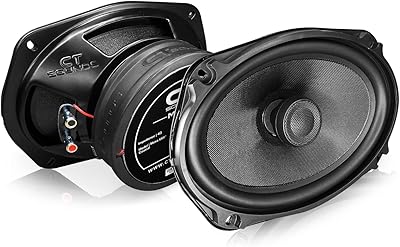
The CT Sounds Meso 6.5″ 3-Way Component Speakers sit in CT Sounds' mid-to-upper-tier lineup, a meaningful step above the budget coaxials that dominate most factory replacement aisles. Unlike a standard coaxial that stacks drivers on a single frame, a 3-way component setup separates the woofer, midrange, and tweeter into dedicated enclosures, giving each driver a focused job and producing noticeably better soundstage depth. CT Sounds includes passive crossover networks in the box, which simplifies installation considerably. That said, these component speakers reward careful setup — a clean amplifier signal and thoughtful driver placement will unlock what they're actually capable of, while a weak factory radio will leave you wondering what the fuss is about.
Features & Benefits

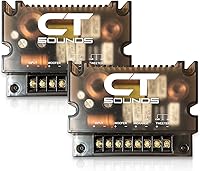
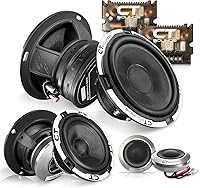
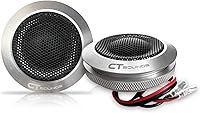
The main 6.5-inch woofer uses a glass fiber cone — stiff enough to maintain shape under heavy excursion, yet light enough to respond quickly to transient material. The 3.5-inch neodymium midrange is where these component speakers really earn their keep: neodymium magnets generate a stronger magnetic field for their size than conventional ferrite, which translates to tighter, more detailed vocal reproduction. Up top, the 25mm silk-dome tweeter handles high frequencies without the brittleness you get from cheaper metal-dome designs, sitting in a brushed aluminum bracket that doubles as a heat sink. The included 18 dB/octave crossover networks do solid work keeping each driver in its lane. With a 4-ohm load and 250W RMS handling, these play well with most aftermarket amplifiers — and that RMS figure is the one that actually matters for sustained listening.

Best For

The Meso 6.5-inch set is built for the enthusiast who has outgrown coaxials but isn't ready to jump into an active crossover system with its added complexity and cost. Listeners who prioritize vocals-heavy genres — acoustic guitar, R&B, or rap where the voice sits right in the mix — will notice the midrange separation immediately. Pairing this CT Sounds system with an external amplifier in the 75 to 200W RMS per channel range is where it truly shines; running it off a factory head unit is possible but leaves real performance on the table. The install is more involved than a coaxial swap, so plan for separate tweeter wire runs and deliberate midrange pod positioning. Trucks and SUVs with larger cabin space are particularly well-suited here.

User Feedback

Across 171 Amazon ratings, these component speakers hold a 4.4 out of 5 — a solid result that reflects genuine satisfaction without being unanimous. Buyers consistently highlight midrange clarity and tweeter detail, especially at higher volumes where cheaper speakers tend to compress and distort. Installation friction comes up repeatedly: several reviewers note that positioning separate drivers correctly takes more planning than a standard coaxial swap. There's also a clear pattern that these speakers reward amplifier power — listeners running a dedicated amp report noticeably better performance than those relying on a stock head unit. A handful of comments flag that mounting depth can be a tight fit depending on the door panel. No significant quality control patterns emerged, which is reassuring at this tier.

Pros

  • 3-way driver separation creates a noticeably wider, more natural soundstage compared to coaxial alternatives.
  • The neodymium midrange driver handles vocals with clarity and definition that cheaper speakers cannot match.
  • Silk-dome tweeter keeps high frequencies smooth and fatigue-free even at sustained high volumes.
  • Passive crossover networks are included, reducing the cost and complexity of the overall build.
  • Glass fiber woofer cone balances stiffness and low mass for accurate, responsive low-midrange reproduction.
  • 4-ohm impedance is broadly compatible with both aftermarket head units and external amplifiers.
  • 250W RMS handling gives real headroom for dynamic music without stressing the drivers.
  • Brushed aluminum tweeter bracket looks clean and handles heat dissipation better than plastic housings.
  • Holds a 4.4 out of 5 rating across 171 reviews — a reliable signal of consistent buyer satisfaction.
  • At this price tier, the component count and driver quality represent strong value for a dedicated audio build.

Cons

  • Installation is significantly more involved than a coaxial swap and requires comfort with multi-driver wiring.
  • Mounting depth can be a tight fit in certain door panels, particularly in compact cars.
  • Performance falls flat when driven by a factory head unit — an external amplifier is essentially a requirement.
  • No waterproofing at all, making these component speakers a poor fit for motorcycles, boats, or open-air vehicles.
  • The 171-review sample size is relatively modest, limiting confidence in long-term durability trends.
  • Crossover tuning may require adjustment depending on your amplifier and cabin acoustics, adding setup time.
  • These speakers do not extend meaningfully into low bass — a separate subwoofer is still needed for a full-range system.
  • Limited warranty coverage leaves some buyers uncertain about support if issues arise after purchase.

Ratings

The scores below were generated by AI after analyzing verified buyer reviews for the CT Sounds Meso 6.5″ 3-Way Component Speakers worldwide, with spam, bot activity, and incentivized feedback actively filtered out before scoring. Across 171 confirmed ratings, these component speakers earned strong marks in sound staging and midrange clarity, while installation complexity and amp dependency surfaced as consistent friction points. Both the highlights and the honest shortcomings are reflected in every category score.
Midrange Clarity
91%
The neodymium midrange driver is the standout performer in real-world listening conditions, particularly on vocal-heavy tracks where instruments and voices need to occupy distinct space in the mix. Buyers running jazz playlists or R&B-heavy commutes consistently called out this driver as the reason they would buy again.
A small number of buyers noted that the midrange can feel slightly forward in vehicles with acoustically reflective interiors, like hard-paneled trucks, where some equalization is needed to tame the presence. Without amp tuning, the character can tip toward aggressive on certain recordings.
Tweeter Performance
87%
The 25mm silk dome delivers high frequencies with a smoothness that stands apart from cheaper metal-dome alternatives, which tend to fatigue the ears on long drives. Reviewers frequently praised the lack of harshness even when volume was pushed well past comfortable conversation levels.
Tweeter placement requires thought — mounted in a poor position relative to the listening axis, the silk dome loses some of its detail and can sound rolled-off at high frequencies. A few buyers reported needing to experiment with tweeter angle before achieving the clarity others described.
Soundstage & Separation
88%
The 3-way component architecture genuinely delivers on its core promise of driver separation, with buyers describing a noticeably wider and more layered stereo image compared to their previous coaxial setups. Truck and SUV owners in particular found the imaging filled their larger cabin spaces convincingly.
Realizing the full soundstage potential requires deliberate driver positioning — midrange pods placed haphazardly or tweeters aimed at door panels rather than the listener will produce a noticeably collapsed image. The hardware can do it, but the installer has to put in the work.
Bass Response
63%
37%
The 6.5-inch glass fiber woofer handles low-midrange frequencies with reasonable authority, and on well-recorded acoustic or jazz content, the bass foundation feels natural and unforced. For listeners not chasing heavy sub-bass, the low-end is balanced and complementary to the midrange.
These component speakers are not a subwoofer replacement, and buyers who expected deep, pressurized bass were frequently disappointed. The woofer rolls off before it reaches the frequencies that give hip-hop or electronic music its physical impact, and a separate sub is essentially required for a complete full-range system.
Amplifier Dependency
58%
42%
When paired with a quality external amplifier in the 75 to 150W RMS per channel range, the Meso 6.5-inch set performs at a level that genuinely competes with speakers costing significantly more, with dynamic headroom and control that is difficult to achieve with passive setups.
Running this CT Sounds system off a factory head unit is a common mistake that results in underwhelming output and muted detail — a pattern that surfaces repeatedly in lower-rated reviews. The speakers are not amp-optional at this performance tier; they are amp-dependent, and that adds real cost to the total build.
Installation Complexity
54%
46%
Experienced DIY installers found the included passive crossover networks and mounting hardware to be well-organized and functional, reducing the number of additional parts needed before getting started. The hardware kit covers the essentials without requiring immediate aftermarket additions.
For anyone accustomed to coaxial swaps, the jump to a 3-way component install is a significant step up in time and planning. Running dedicated tweeter wires, sourcing midrange mounting locations, and integrating the crossover networks into the door or panel took several buyers multiple sessions to complete correctly.
Crossover Network Quality
79%
21%
The 18 dB per octave passive crossover networks do a solid job of keeping frequency bleed between drivers to a minimum, which directly contributes to the clean midrange and tweeter performance buyers described. Including matched networks in the box rather than leaving buyers to source their own is a practical advantage at this price tier.
Some buyers with more advanced setups found the fixed crossover points limiting compared to active crossover options, and a handful noted that the networks could benefit from more accessible tuning adjustment. Those feeding the system with high-power amplifiers occasionally reported needing to work around the passive network's ceiling.
Build Quality
82%
18%
The brushed aluminum tweeter housing is a tangible step up from the plastic brackets found at lower price points, and buyers handling the components out of the box generally described them as substantial and well-assembled. The glass fiber woofer cone felt rigid and consistent across multiple units reviewed.
The overall build is solid but not exceptional — a few buyers noted that some plastic components in the crossover housing and midrange frame feel less premium than the tweeter assembly suggests. No widespread durability failures emerged in the review pool, but the limited warranty does not inspire complete long-term confidence.
Value for Money
76%
24%
For buyers who already own an amplifier or planned to add one, the Meso 6.5-inch set represents genuine value given the driver count, crossover inclusion, and actual sound performance delivered. Enthusiasts comparing cost per component against purchasing drivers and crossovers separately found the bundled pricing competitive.
For buyers without an existing amplifier, the total system cost climbs quickly once a quality amp is factored in, which shifts the value calculation considerably. Those who purchased expecting satisfying performance from a stock head unit often felt the price was not justified by their actual listening experience.
Mounting Fitment
61%
39%
The 6.5-inch woofer fits the majority of standard factory speaker cutouts in cars and trucks, and the included mounting hardware covers most standard installations without requiring extra purchases. Buyers with late-model trucks reported straightforward fitment in door locations with factory 6.5-inch openings.
Mounting depth is a recurring complaint, particularly in vehicles with shallow door cavities where the woofer basket competes with window regulators or structural bracing. Several buyers had to source additional adapter rings or modify their door panels, adding unplanned time and cost to the installation.
Volume & Output
84%
With adequate amplification, these component speakers push to genuinely high volume levels without audible distortion creeping in — a quality that truck and SUV owners with larger cabin volumes specifically praised. The 250W RMS handling gives enough headroom to cover demanding listening conditions.
Output levels drop off noticeably when driven passively, and buyers in larger vehicles running factory radios found the speakers unable to fill the cabin with the authority they expected. Volume ceiling is directly tied to amplifier quality in a way that cannot be decoupled from the listening experience.
High-Frequency Fatigue
86%
Extended listening sessions were consistently described as comfortable by buyers who covered long highway stretches with these speakers running — a direct benefit of the silk dome material, which avoids the bright, piercing quality common in cheaper metal tweeters. Commuters logging daily hours found the tonal balance sustainable.
In acoustically bright cabins — particularly compact cars with large glass areas — a small number of buyers found the high-frequency presence slightly more prominent than preferred, requiring minor tone control adjustment. This is more a cabin variable than a speaker flaw, but it is worth noting for affected vehicle types.
Package Completeness
81%
19%
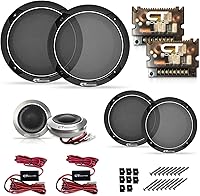
The kit arrives with everything needed for the speaker system itself — both crossover networks, all six drivers, and the mounting hardware — which means most buyers can move straight to planning the install without sourcing additional components. This is not universal at this price tier and adds genuine convenience.
Speaker wire, connectors, and vehicle-specific mounting adapters are not included, and first-time component installer buyers occasionally expressed surprise at needing these additions. The box contains what it promises, but the gap between what is included and what a complete install requires can catch newcomers off guard.

Suitable for:

The CT Sounds Meso 6.5″ 3-Way Component Speakers are built for the car audio enthusiast who knows the difference between coaxial and component and has decided to make the jump. If you already have — or plan to add — an external amplifier putting out somewhere in the 75 to 200W RMS per channel range, this is the tier where these speakers start to show what they can do. Vocally rich genres like acoustic, jazz, R&B, and rap benefit noticeably from the separated midrange driver, which handles the frequency range where voices and instruments sit most naturally. Truck and SUV owners dealing with larger cabin volumes will appreciate that the Meso 6.5-inch set has enough output headroom to fill the space without sounding thin or compressed. DIY installers who are comfortable running dedicated tweeter wire and thinking through driver placement will find the included passive crossover networks a practical inclusion that removes one major complexity from the build.
Not suitable for:

Buyers expecting a straightforward drop-in replacement for factory speakers should look elsewhere — the CT Sounds Meso 6.5″ 3-Way Component Speakers require separate mounting locations for the woofer, midrange, and tweeter, which demands real planning and, in some vehicles, custom fabrication work. If you are running a stock head unit without any amplification, you will likely be underwhelmed; these speakers reveal their character with clean, dedicated power, not the modest output of a factory radio. Listeners expecting deep, room-filling bass should also recalibrate: this is a midrange-focused component set, not a subwoofer substitute, and the low end reflects that design priority. Those with shallow door cavities may also encounter mounting depth issues that complicate installation. Anyone on a tight budget who cannot also invest in an amplifier will not hear what this CT Sounds system is genuinely capable of delivering.
Specifications

  • Speaker Size: The main woofer measures 6.5 inches in diameter, a standard size that fits most factory speaker locations in cars and trucks.
  • Configuration: This is a 3-way component set, meaning the woofer, midrange driver, and tweeter are separate units rather than stacked on a single frame.
  • Power Handling: Each set handles 250W RMS continuously and 500W at peak, with RMS being the more practically meaningful figure for everyday listening.
  • Impedance: Both the woofer and midrange drivers are rated at 4 ohms nominal, which is compatible with the vast majority of aftermarket and factory head units.
  • Tweeter: The 25mm silk-dome tweeter is housed in a brushed aluminum bracket that provides both a clean aesthetic and passive resonance damping.
  • Midrange Driver: A 3.5-inch driver with a neodymium motor assembly handles the critical midrange frequencies, producing stronger magnetic force in a compact form factor.
  • Woofer Cone: The 6.5-inch woofer uses a glass fiber cone that balances rigidity with low mass for accurate, responsive reproduction of low-to-mid frequencies.
  • Crossover Network: Two 18 dB per octave passive crossover networks are included, providing a steep roll-off that keeps each driver operating within its optimal frequency range.
  • Tweeter Diameter: The silk-dome tweeter measures 25 millimeters across, a size well-suited for smooth dispersion of high-frequency audio in a car cabin environment.
  • Connectivity: These component speakers use a standard wired connection and are powered by a corded electric source, with no wireless functionality involved.
  • Water Resistance: This system carries no water resistance rating and is not suitable for outdoor, marine, or open-air vehicle installations.
  • Package Contents: The complete set includes two 6.5-inch woofers, two 3.5-inch neo midrange drivers, two 25mm tweeters, two passive crossover networks, and all mounting hardware.
  • Package Weight: The full kit weighs approximately 12.4 pounds, reflecting the inclusion of multiple drivers and crossover hardware across the complete set.
  • Compatibility: Designed for use in cars and trucks, these component speakers are intended for in-vehicle cabin installations with standard door or panel mounting.
  • Warranty: CT Sounds provides a limited warranty with this product; buyers should confirm specific terms and duration directly with the manufacturer or point of purchase.
  • Color: The set is finished in black, with the tweeter bracket in brushed aluminum for a clean, understated appearance in most vehicle interiors.
  • Surround Config: The system is configured for 3.0 surround sound channel output, meaning it handles left, center, and right audio staging without a dedicated subwoofer channel.
  • Product Dimensions: The full packaged kit measures approximately 7.4 inches deep by 7.8 inches wide by 16.69 inches tall in its retail configuration.

Related Reviews
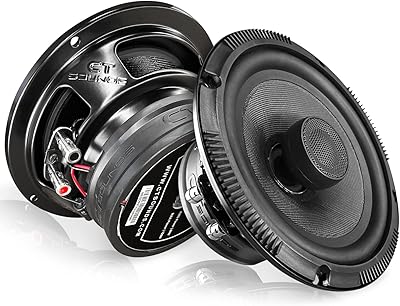
CT Sounds Meso 6.5″ Coaxial Car Speakers
79%
86%
Sound Clarity
71%
Bass Response
78%
Build Quality
91%
Ease of Installation
88%
Value for Money
More
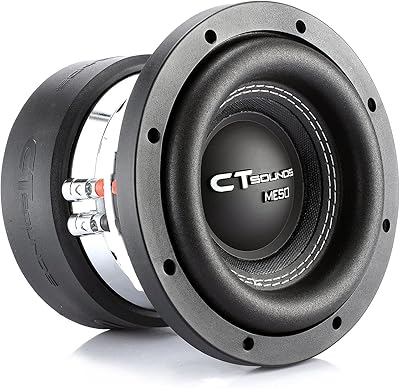
CT Sounds Meso-6.5-D4 6.5 Inch Dual 4 Ohm Car Subwoofer
83%
90%
Bass Performance
85%
Power Handling
88%
Build Quality
65%
Installation Ease
92%
Cooling System Effectiveness
More
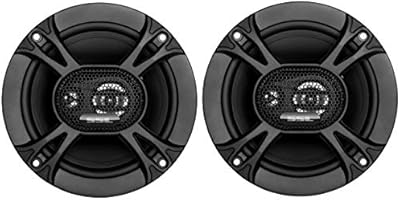
Sound Storm Laboratories EX365 6.5″ Car Speakers
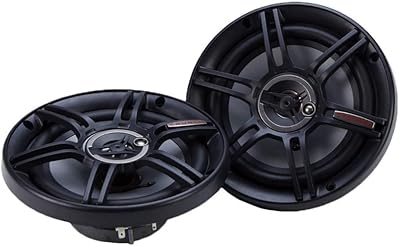
69%
83%
Value for Money
61%
Sound Quality
53%
Bass Response
88%
Ease of Installation
58%
Build Quality
More
CT Sounds Meso 5.25″ 2-Way Coaxial Car Speakers
82%
88%
Sound Clarity
67%
Bass Response
84%
Treble & High-Frequency Detail
82%
Build Quality
91%
Installation Ease
More
Focal 165AS3 6.5” 3-Way Component Kit
86%
91%
Sound Quality
88%
Build Quality
86%
Ease of Installation
90%
Durability
89%
Bass Performance
More
Crunch CS653 6.5-inch 3-Way Car Speakers
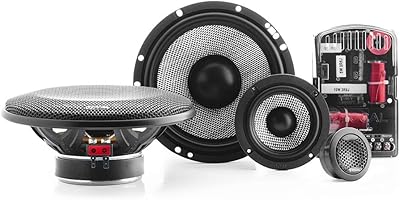
68%
83%
Value for Money
67%
Sound Quality
51%
Bass Performance
88%
Ease of Installation
58%
Build Quality
More
CT Sounds TROPO-6.5-D2 6.5″ Car Subwoofer
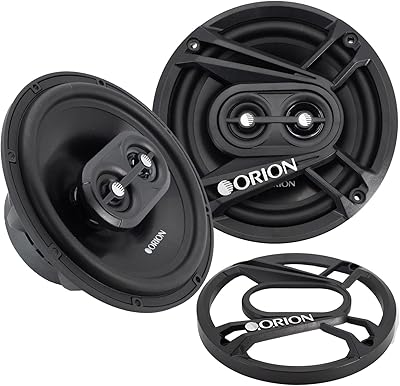
77%
83%
Bass Output for Size
88%
Value for Money
79%
Build Quality
76%
Thermal Management
84%
Installation Ease
More
Orion CB653 6.5″ 3-Way Coaxial Car Speakers
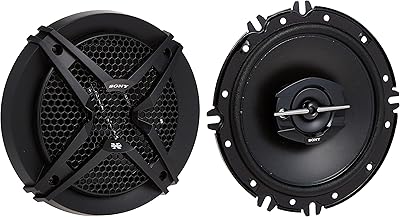
76%
78%
Sound Quality
84%
Mid-Range and Vocal Clarity
59%
Bass Performance
76%
Treble Clarity
74%
Build Quality
More
Rockford Fosgate R165X3 6.5″ Coaxial Speakers
79%
84%
Sound Clarity
58%
Bass Response
72%
Treble Quality
86%
Midrange Performance
91%
Installation Ease
More
JBL Stage 3637F 6.5″ Three-Way Car Speaker
78%
86%
Sound Clarity
54%
Bass Response
83%
High-Frequency Performance
89%
Installation Ease
81%
Value for Money
More

FAQ

You can wire the Meso 6.5-inch set directly to a factory head unit, but you will not get the best out of them that way. Factory radios typically output 15 to 20 watts RMS per channel in practice, which leaves most of the speakers' headroom untouched. Pairing them with a dedicated amplifier in the 75 to 150 watts RMS per channel range is where the difference becomes obvious — cleaner transients, better dynamic range, and noticeably more defined midrange detail.

It is meaningfully more involved. With coaxials, you are dropping a single driver into an existing hole and connecting two wires. With a 3-way component setup, you need to mount the woofer, find or fabricate a location for the midrange driver, run a separate wire to the tweeter, and integrate the passive crossover network into the signal path. Plan for a few hours if you are comfortable with car audio basics, or longer if this is your first component install.

The 6.5-inch woofer will drop into most standard factory locations, but mounting depth is where things get vehicle-specific. Several buyers have flagged that door panels with limited cavity depth can make a flush fit tricky. It is worth checking your vehicle's mounting depth spec against the woofer's dimensions before committing. Adapters are widely available and often solve fitment issues without any cutting or fabrication.

These component speakers are not the right tool for that job on their own. The Meso set is optimized for midrange clarity and high-frequency detail, and while the 6.5-inch woofer handles low-mids respectably, it is not designed to reproduce deep bass. For a full-range system with real low-end impact, you would want to add a separate subwoofer and dedicated amplifier channel alongside this CT Sounds system.

Anything that lives in the vocal and instrumental midrange will sound particularly good. Acoustic music, jazz, R&B, classic rock, and hip-hop with prominent vocal tracks all benefit from the separation and detail these drivers provide. Electronic music with heavy sub-bass content will expose the lack of a dedicated subwoofer, so if that is your primary genre, plan your build accordingly.

The included passive crossover networks are designed to work plug-and-play with the drivers in this set, so no crossover tuning is strictly required at the start. That said, if your amplifier has adjustable crossover settings or a built-in equalizer, dialing those in to match your cabin acoustics and listening preferences can make a noticeable difference. The passive networks handle the heavy lifting of frequency distribution, but some fine-tuning always helps in a real-world install.

No — these are not water-resistant in any capacity and are not rated for outdoor or marine environments. Moisture exposure risks damaging the silk-dome tweeter and the crossover network components quickly. If you need speakers for an open-air application, look specifically for marine-rated or IP-rated outdoor speakers designed for that kind of exposure.

At this price tier, you are generally getting more driver technology from CT Sounds than from mainstream consumer brands, which tend to spend more on packaging and marketing at the same price point. The neodymium midrange motor and 18 dB crossover networks are features that some competitors either omit or offer as upgrades at a higher cost. The trade-off is that CT Sounds is a smaller brand with less widespread service support, which is worth factoring in if after-sale support matters to you.

You get a complete, ready-to-install component set: two 6.5-inch main woofers, two 3.5-inch neodymium midrange drivers, two 25mm silk-dome tweeters, two passive crossover networks, and the screws and mounting brackets needed for installation. Everything required for the speaker system itself is included; you will still need your own speaker wire, connectors, and any vehicle-specific adapter rings if your mounting location needs them.

The 500W figure is the peak or maximum rating, meaning the absolute ceiling under ideal and brief conditions — it is not what you should plan your amplifier around. The number that actually matters for choosing an amp is the 250W RMS rating, which reflects what the drivers can handle continuously during real-world listening. Feeding them around 150 to 200W RMS per channel from a quality amplifier is a sensible target that gives you headroom without pushing the drivers toward their limits.

Where to Buy