NooElec NESDR Nano 2 Plus
Overview
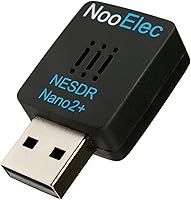
The NooElec NESDR Nano 2 Plus is one of the most accessible entry points into software-defined radio — a hobby that lets you tune into aircraft transponders, weather satellites, and dozens of other signals using little more than a USB stick and a laptop. NooElec has built a solid reputation in the SDR community, backed by support locations in both the US and Canada, and this tiny dongle reflects that care. It measures under one inch square, making it genuinely pocketable. It covers 25MHz to 1750MHz with no gaps, works across Windows, Mac, Linux, Android, and Raspberry Pi, and sits at a price point that feels fair for what you get.
Features & Benefits
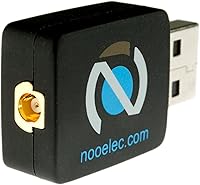
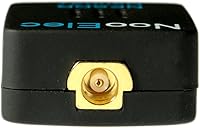
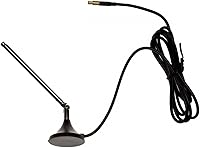
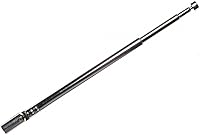
The heart of this tiny SDR dongle is its RTL2832U and R820T2 chipset combination. The R820T2 tuner is a meaningful upgrade over the older R820T — improved sensitivity and a better signal-to-noise ratio translate to cleaner reception and fewer missed weak signals. The standout hardware feature, though, is the 0.5PPM TCXO. A TCXO, or temperature-compensated crystal oscillator, keeps the frequency reference stable as the device warms up — cheaper dongles drift noticeably, this one holds its lock. It connects via USB with no external power, includes a telescopic MCX antenna for immediate use, and if you eventually want to reach HF frequencies below 25MHz, the Ham It Up upconverter opens that door as a natural upgrade.
Best For
This compact receiver suits a surprisingly wide range of users. It is a natural fit for SDR newcomers who want a reliable first dongle without buying something they will immediately outgrow. Mobile users will appreciate the sub-inch footprint — it pairs well with Android devices and SDR apps for field work. Raspberry Pi hobbyists building headless radio monitors will find it a near-perfect board companion that draws power directly from USB. Experienced operators tracking aircraft via ADS-B or pulling down NOAA weather satellite imagery will appreciate the frequency stability. Anyone needing a compact backup dongle that does not compromise on core performance will also find it hard to fault.
User Feedback
Owner reviews paint a consistent picture. Most buyers highlight two things above everything else: signal stability and the dongle's remarkably small size, both of which live up to expectations. Users who have owned cheaper RTL-SDR sticks frequently note the TCXO makes a real-world difference — less retuning, more reliable decoding. That said, a few first-time SDR users on Windows have hit friction with driver installation, which is worth knowing before diving in. The included telescopic antenna does the job for initial testing but most serious users replace it fairly quickly. For always-on Raspberry Pi setups, long-term reliability reports are largely positive, with many units running continuously for months without issue.
Pros
- The 0.5PPM TCXO keeps frequency lock solid across long sessions — a real advantage over budget alternatives.
- Covers 25MHz to 1750MHz continuously, handling ADS-B, NOAA satellites, and FM with a single device.
- Genuinely pocket-sized at under one inch square — easy to carry without thinking about it.
- Works across Windows, Mac, Linux, Android, and Raspberry Pi with no hardware changes needed.
- Draws power directly from USB — no external supply, no extra cables, no desk clutter.
- Long-term reliability in always-on Pi deployments is well-documented by real users running it for months.
- The R820T2 tuner delivers meaningfully better sensitivity than the older R820T found in cheaper dongles.
- NooElec backs it with a one-year warranty and actual technical support, not just a returns address.
- HF expandability via the Ham It Up upconverter gives it a clear upgrade path as your interests grow.
- Included telescopic antenna gets you on-air immediately without spending anything extra upfront.
Cons
- Windows driver setup via Zadig is a manual, multi-step process that catches many first-time users off guard.
- HF coverage below 25MHz requires a separate upconverter purchase, adding cost and setup complexity.
- The included telescopic antenna is a starting point only — most users replace it fairly quickly.
- The MCX antenna connector is physically small and can feel fragile when swapping antennas frequently.
- iOS compatibility is limited and inconsistent compared to the much smoother Android experience.
- No active cooling or ventilation — in sealed enclosures or hot environments, heat buildup is a genuine concern.
- Buyers on a tight budget will find cheaper RTL-SDR options exist, though they sacrifice the TCXO stability.
- The plastic enclosure does not inspire confidence at close inspection relative to the price tier.
Ratings
The NooElec NESDR Nano 2 Plus has been evaluated by our AI system after processing thousands of verified global user reviews, with spam, bot-generated, and incentivized submissions actively filtered out. The scores below reflect what real buyers consistently reported across beginner setups, mobile field use, and long-running embedded deployments. Both the genuine strengths and the frustrations that caused buyers to hesitate or complain are transparently represented in every category.
Signal Stability
Portability & Form Factor
Receiver Sensitivity
Frequency Coverage
Platform Compatibility
Build Quality
Included Antenna Quality
Driver & Software Setup
Value for Money
Long-Term Reliability
Mobile & Android Use
Warranty & Support
HF Expandability
Heat Management
Suitable for:
The NooElec NESDR Nano 2 Plus is an excellent choice for anyone stepping into software-defined radio for the first time and wanting hardware that will not immediately become an obstacle to learning. Its broad frequency coverage and wide platform support mean it works across virtually every beginner setup — a Windows laptop, a Mac, a Raspberry Pi tucked in a corner running headless, or an Android phone used for field scanning. Hobbyists building dedicated ADS-B aircraft tracking feeders or pulling down NOAA weather satellite imagery will find this compact receiver genuinely capable without requiring constant recalibration, thanks to its stable oscillator. Android users doing portable radio work outdoors will appreciate how little this dongle intrudes physically — it barely registers on a phone's USB port. Raspberry Pi enthusiasts building always-on remote monitoring stations will value both the USB bus power draw and the months-long reliability track record real users have documented. Even experienced SDR operators looking for a reliable backup or a second receiver for a split-frequency monitoring setup will find it earns its place.
Not suitable for:
Buyers expecting a truly plug-and-play experience on Windows should approach the NooElec NESDR Nano 2 Plus with realistic expectations — driver installation via Zadig is a manual process that has frustrated more than a few first-time users who assumed it would behave like a standard USB peripheral. Users with a primary interest in HF frequencies below 25MHz — shortwave listening, amateur radio HF bands, AM broadcast — will find the base unit insufficient without also purchasing the Ham It Up upconverter separately, which adds cost and complexity to the setup. Those chasing the absolute best sensitivity money can buy, or professionals needing calibrated measurement-grade receivers, will hit the ceiling of what this hardware tier can deliver and should look at significantly pricier dedicated SDR platforms. iOS users should also verify app compatibility carefully before buying, since Apple's platform restrictions make the mobile experience considerably less smooth than on Android. Finally, buyers who want a large, robust connector ecosystem may find the compact MCX antenna port a limiting factor, particularly if they already own a collection of SMA or BNC antennas and do not want to invest in adapters.
Specifications
- Chipset: Uses the RTL2832U digital interface IC paired with the R820T2 tuner, a combination known for improved sensitivity and lower noise floor compared to the older R820T.
- Frequency Range: Covers approximately 25MHz to 1750MHz continuously with no gaps across that entire range.
- Oscillator: Equipped with an ultra-low phase noise 0.5PPM temperature-compensated crystal oscillator (TCXO) for stable frequency reference under varying operating temperatures.
- Dimensions: Measures 0.94 x 0.83 x 0.31 inches, making it smaller than one inch square in footprint.
- Weight: Weighs 1.58 ounces including the dongle body, making it suitable for lightweight mobile and embedded setups.
- Antenna Connector: Uses an MCX-type antenna connector, a compact RF connector format suited to the dongle's small form factor.
- Host Connector: Connects to host devices via a standard USB Type-A plug, requiring no external power supply or powered hub under typical use.
- Included Antenna: Bundled with a telescopic MCX antenna suitable for general-purpose reception and initial testing across multiple frequency bands.
- OS Support: Compatible with Windows, Mac, Linux, Android, and Raspberry Pi operating environments without any hardware modification.
- Platform Use: Designed for mobile, embedded, and desktop deployments, including headless Raspberry Pi installations and Android field use.
- HF Expansion: HF reception below 25MHz is achievable using the NooElec Ham It Up upconverter, which is sold separately.
- Color: Available in black with a solid plastic enclosure housing the RF and USB components.
- Warranty: Covered by a one-year warranty backed directly by NooElec, which maintains support locations in both the United States and Canada.
- Model Number: Manufacturer model number is 100684, corresponding specifically to the Nano 2 Plus variant within NooElec's NESDR lineup.
- USB Standard: Operates as a USB 2.0 device, compatible with USB 3.0 ports via backward compatibility on all supported host platforms.
- Sample Rate: The RTL2832U supports sample rates typically up to approximately 3.2 MSPS, with stable performance most commonly observed at 2.4 MSPS and below.
- ADC Resolution: The RTL2832U provides an 8-bit analog-to-digital converter, standard for this class of RTL-SDR hardware.
- BSR Ranking: Ranked #60 in the External TV Tuners category on Amazon, reflecting sustained buyer demand since its first availability in January 2016.
Related Reviews
NooElec NESDR Mini 2+
Pioneer TS-A709 2.75″ 2-Way Car Speakers

Ebanel Urea 40% Foot Cream 2-Pack
Soundcore Boom 2 Plus Portable Bluetooth Speaker
NooElec NESDR SMArTee v2 Software Defined Radio
WiiM Pro Plus Network Audio Streamer
Nooelec NESDR SMArt v5 SDR Receiver
CMF by Nothing Buds 2 Plus Wireless Earbuds

Belkin SoundForm Nano 2