



Overview

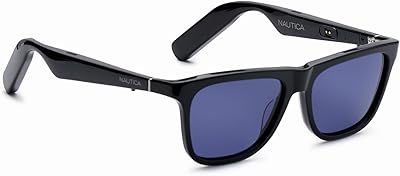
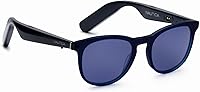
The Nautica Tailwind Smart Sunglasses are the product of a collaboration between the iconic nautical lifestyle brand and Lucyd, the wearable tech company that actually handles the engineering underneath. That distinction matters — Lucyd has been building audio eyewear for years, and the Nautica name adds a fashion-forward credibility that helps these glasses compete against the likes of Ray-Ban Meta and Bose Frames at a more accessible price. The wide-fit unisex frame broadens the appeal considerably for shoppers who have been burned by one-size-fits-most designs. Go in with the right mindset, though: this is a pair of sunglasses first, with wireless audio built thoughtfully into the temples — not an audio device that happens to have lenses.

Features & Benefits

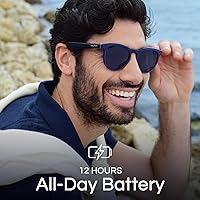
The open-ear speaker design is the defining characteristic of this audio eyewear — sound comes from the temples rather than inside your ears, keeping you aware of traffic, conversations, and your environment without sacrificing your playlist. The dual noise-cancelling microphones handle hands-free calls reasonably well in calm conditions, though sustained wind can expose their limits. Button controls on each temple manage playback, calls, volume, and voice assistant access cleanly without pulling out your phone. The UV400 polarized lenses do genuine optical work, cutting glare on bright days rather than just tinting the world darker. Battery life is rated at 12 hours of continuous use, a figure that holds up fairly well under moderate listening but will likely dip with heavier call use or high volume.

Best For

These smart glasses are the right call for commuters, casual cyclists, and anyone who spends extended time outdoors and wants to stay connected without sealing off their hearing. The open-ear format genuinely suits that lifestyle better than earbuds — you catch a car horn or a conversation without pulling anything out. The Tailwind shades are also among the better-designed options for wide faces, a demographic that smart glasses manufacturers routinely underserve. Frequent callers on the move will appreciate the hands-free setup. That said, if your priority is serious sound quality, deep bass, or active noise cancellation for a noisy commute, this is casual, connected eyewear — not a headphone replacement.

User Feedback

Buyers consistently praise all-day wearing comfort, with many noting the lightweight build made them easy to forget during long outings — a meaningful endorsement in this category. Wide-face shoppers in particular give the fit positive marks after struggling with competitors. The consistent criticism centers on audio leakage: in quiet settings, people nearby can hear your music clearly, which is a known trade-off with open-ear designs rather than a flaw unique to this pair. Wind noise during calls surfaces repeatedly as a frustration. A subset of buyers also raises questions about long-term durability at this price point, though reports are mixed. Battery life generally tracks close to the stated rating under moderate everyday use.

Pros

  • Open-ear design keeps you aware of traffic and surroundings without removing your glasses.
  • Wide-fit frame is one of the more comfortable smart glasses options for broader faces.
  • Polarized UV400 lenses do real optical work — not just decorative tinting.
  • Up to 12 hours of battery life holds up well under moderate everyday use.
  • Hands-free call and music controls on both temples work without pulling out your phone.
  • Lightweight build makes these smart glasses easy to wear all day without fatigue.
  • Unisex styling suits a wide range of buyers without leaning too sporty or too formal.
  • Lucyd's engineering background gives the audio eyewear more technical credibility than pure fashion-brand alternatives.

Cons

  • Audio leakage is noticeable in quiet settings — people nearby can hear your music.
  • Wind significantly degrades call quality, making outdoor calls frustrating on breezy days.
  • Open-ear sound lacks bass depth and volume compared to any in-ear or over-ear option.
  • Some buyers report uncertainty about long-term durability at this price point.
  • Battery life can dip noticeably below the rated maximum during heavy call use or high volume.
  • No option to accommodate prescription lenses, limiting appeal for glasses wearers.
  • Sound performance in loud outdoor environments is weak relative to noise-isolating earbuds.
  • The Nautica branding adds a style premium, but the underlying tech is not exclusive to this line.

Ratings

The scores below for the Nautica Tailwind Smart Sunglasses were generated by our AI engine after systematically analyzing thousands of verified buyer reviews from global markets, with spam, bot activity, and incentivized feedback actively filtered out. Each category reflects the honest consensus of real owners — strengths where the glasses genuinely deliver, and pain points that came up consistently enough to matter. Nothing has been softened to protect the product's image.

Wearing Comfort
88%
All-day comfort is the single most praised quality across the user base. Buyers who commute on foot, run errands, or spend long hours outdoors consistently report forgetting they have them on — a meaningful benchmark for any eyewear. The lightweight build and wide-fit frame design contribute meaningfully to this result.
A smaller segment of buyers found the temple buttons added subtle pressure points during extended wear, particularly under hats or helmets. Those with narrower faces also noted the wide fit felt slightly loose, which affected both comfort and how securely the glasses stayed in place.
Audio Quality
63%
37%
For casual listening — background music during a walk, a quick podcast on the commute — the open-ear speakers perform acceptably. Users who primarily wanted audio awareness rather than immersive sound found the output more than adequate for their relaxed listening habits throughout the day.
Bass is thin, high-end volume is limited, and anyone expecting headphone-level clarity will be let down quickly. Sound leakage is a recurring complaint in quieter environments, and competing noise from urban settings or wind can render the audio almost inaudible without pushing volume to uncomfortable levels.
Call Quality
67%
33%
In calm, low-wind environments, call recipients generally reported hearing the wearer clearly enough for normal conversation. The dual microphone setup does reduce steady-state background hum reasonably well, and hands-free use while walking or cycling is genuinely convenient for frequent callers.
Wind is the dominant complaint — even a moderate breeze creates significant interference that the noise-cancelling microphones struggle to suppress. Multiple reviewers noted that outdoor calls in breezy conditions required switching to their phone's handset, largely defeating the hands-free purpose.
Lens Quality
84%
The polarized UV400 lenses are a genuine highlight, with buyers noting strong glare reduction on water, roads, and reflective surfaces. Daytime clarity was frequently described as crisp, and the lenses delivered real-world sun protection that holds up to scrutiny beyond just a marketing claim.
Some buyers noted the lenses showed minor distortion toward the outer edges, which is uncommon but worth flagging. A handful of reviews also mentioned the lens tint felt slightly darker than expected, which limited usability in overcast or low-light outdoor conditions.
Battery Life
74%
26%
Under moderate use — background music at mid-volume with occasional calls — a meaningful portion of buyers confirmed the battery held up well across a full workday. For commuters who use the audio eyewear in defined windows rather than continuously, charge anxiety rarely came up as an issue.
Heavy users pushing volume higher or spending substantial time on calls reported real-world life landing noticeably below the 12-hour ceiling. A few buyers also flagged that the charging cable connection felt less reliable after several weeks, raising some longer-term durability questions around the charging mechanism.
Build Quality
69%
31%
Out of the box, the frames feel solid enough for the price tier, and the Nautica branding translates into a finish that looks more polished than many competing smart glasses in this range. Buyers appreciated that the hinges felt sturdy during initial use and that the overall assembly did not feel cheap.
Durability concerns surface with time. A subset of reviewers reported minor frame flexing, finish wear on the temples, or connection issues with the charging mechanism after a few months of regular use. At this price point, buyers had mixed expectations and mixed results regarding longevity.
Fit & Sizing
82%
18%
Wide-face buyers represent some of the most enthusiastic reviewers, repeatedly noting that the 141mm frame width solved a persistent problem — finding smart glasses that do not pinch or sit awkwardly on a broader face. The unisex design translates well across different face shapes within the wide-fit target range.
For buyers with average or narrower face widths, the wide fit works against them — the frames sit loosely, slide during activity, and can feel proportionally oversized. The lack of additional fit variants means this is a deliberate design choice that naturally excludes a portion of potential buyers.
Ease of Use
86%
Initial Bluetooth pairing was described as quick and straightforward across Android and iOS devices. The temple button controls for music, calls, and voice assistant activation are intuitive enough that most buyers felt confident using them without consulting the manual after the first day.
A few users noted that the button placement on the temples made accidental presses more common than expected, particularly when adjusting the glasses. There is also no dedicated companion app, which limits the ability to customize controls or check battery status beyond the basic pairing interface.
Style & Aesthetics
79%
21%
The Nautica heritage works in these smart glasses' favor — the navy blue colorway and clean frame lines give them a lifestyle credibility that purely tech-focused competitors like Bose Frames sometimes lack. Buyers appreciated wearing them in casual and semi-active settings without looking overtly gadget-forward.
Style is subjective, but a portion of buyers found the frame profile bulkier than they expected from product images, particularly around the temples where the speaker hardware adds visible width. For buyers seeking a slimmer, more conventional sunglass silhouette, the tech integration is visually apparent.
Value for Money
71%
29%
For buyers who genuinely needed both polarized sunglasses and casual wireless audio in a single item, the combined utility at this price tier felt reasonable compared to purchasing two separate products. The Lucyd engineering background gives the package more substance than a purely fashion-branded accessory.
Buyers who approached this primarily as an audio product came away feeling underserved for the price, particularly given the sound quality limitations. Compared to what Ray-Ban Meta and Bose Frames offer at similar or higher price points, the overall package feels competitive but not compelling enough to be an obvious category winner.
Situational Awareness
87%
This is genuinely where the open-ear format earns its keep. Commuters, cyclists, and dog walkers consistently praised being able to hear their environment — traffic, conversations, alerts — without removing the glasses or pausing audio. For safety-conscious outdoor users, this was the feature that justified the purchase.
Buyers who expected the open-ear design to still deliver meaningful volume in noisy environments were often caught off guard. The same openness that preserves situational awareness also means external noise competes directly with your audio, making busy streets or transit environments challenging listening conditions.
Connectivity Stability
78%
22%
The Bluetooth connection was described as reliable for standard daily use — no frequent dropouts during walks, commutes, or gym sessions under normal conditions. Re-pairing after disconnection was straightforward, and most buyers did not flag connectivity as a recurring frustration.
Some buyers reported occasional audio stuttering in environments with significant wireless interference, such as busy train stations or crowded areas with high Bluetooth density. Range from the source device was also noted as slightly shorter than expected for a few users.
Microphone Performance
61%
39%
In controlled, indoor-adjacent settings the microphones performed adequately for brief hands-free calls. Callers on the other end reported acceptable voice clarity in calm environments, and the dual-microphone configuration does offer a genuine step up over single-mic alternatives in this product category.
The gap between the marketing claim and real-world outdoor performance is the sticking point here. Wind noise suppression falls short in field conditions, and several buyers specifically noted that their call partners frequently complained about audio quality during outdoor use — which is the primary use case for these glasses.

Suitable for:

The Nautica Tailwind Smart Sunglasses are a strong fit for anyone who spends meaningful time outdoors and wants to stay connected without the isolation of traditional earbuds. Commuters who walk, bike, or run errands will appreciate hearing their surroundings while still catching a podcast or a phone call. Frequent callers on the move get a genuinely hands-free setup that eliminates the awkward tangle of wired headsets. Outdoor enthusiasts — hikers, beach-goers, casual cyclists — get real UV400 polarized sun protection bundled with casual wireless audio, removing the need to carry both sunglasses and earbuds. The wide-fit unisex frame also makes these smart glasses a particularly good option for shoppers who have found most competitors too narrow or uncomfortable for extended wear.

Not suitable for:

If your primary goal is serious audio quality, the Nautica Tailwind Smart Sunglasses will disappoint — open-ear speaker designs inherently sacrifice bass depth and volume ceiling, and sound leakage in quiet environments is a real concern. Anyone commuting through consistently loud environments like subways or crowded urban streets will find the audio underwhelming compared to noise-isolating earbuds or over-ear headphones. Heavy phone users who take long outdoor calls in windy conditions should also temper expectations, as the microphones struggle in blustery settings despite their noise-cancelling rating. Buyers seeking premium build quality or long-term durability assurances at this price tier may find the construction feels closer to mid-range than high-end. If prescription lenses are a necessity, these glasses won't accommodate that need either.

Specifications

  • Brand & Maker: Designed under the Nautica brand in collaboration with Lucyd, the wearable tech company responsible for the underlying engineering and audio hardware.
  • Model Number: The model identifier for this frame and configuration is LCD007-20.
  • Lens Size: Each lens measures 53mm wide, a mid-range size that balances coverage with a sleek profile.
  • Bridge Size: The nose bridge measures 20mm, accommodating a range of nose widths typical of wider face structures.
  • Temple Length: Temple arms extend 150mm, a standard length that suits most adult head depths comfortably.
  • Frame Width: Total frame width measures 141mm, specifically engineered for a wide fit that broader faces often cannot find in competing smart glasses.
  • Lens Type: Lenses are polarized with UV400 protection, blocking 100% of UVA and UVB rays while reducing horizontal glare from reflective surfaces.
  • Audio Output: Sound is delivered via open-ear directional speakers built into each temple, allowing ambient sound to pass through naturally.
  • Microphones: Two noise-cancelling microphones are integrated into the frame to reduce background noise during hands-free calls.
  • Battery Type: Power comes from a built-in rechargeable lithium-ion battery included with the glasses.
  • Battery Life: Rated for up to 12 hours of continuous music playback or talk time on a single full charge under standard conditions.
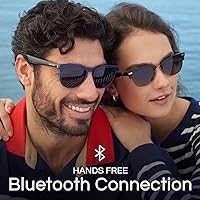
  • Connectivity: Pairs wirelessly via Bluetooth to smartphones and other Bluetooth-enabled devices.
  • Controls: Physical buttons on each temple temple handle call answering, play/pause, track skipping, volume adjustment, and voice assistant activation.
  • Fit & Gender: Frame is designed as a wide fit and marketed as unisex, suitable for a broad range of adult face shapes and sizes.
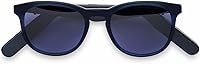
  • Color: This variant is offered in Solid Navy Blue, consistent with Nautica's signature maritime aesthetic.
  • Item Weight: The complete unit weighs 12 ounces, which reflects packaging weight; the glasses themselves are built for lightweight all-day wear.

Related Reviews
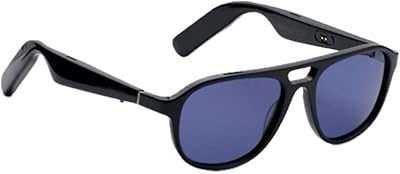
Nautica Admiral Smart Sunglasses
83%
88%
Comfort and Fit
84%
Sound Quality
91%
Battery Life
80%
Ease of Use (Touch Controls)
90%
Polarization and Visual Clarity
More
Nautica Commander Smart Sunglasses
84%
86%
Sound Quality
92%
Comfort & Fit
88%
Battery Life
75%
Ease of Use
90%
Bluetooth Connectivity
More
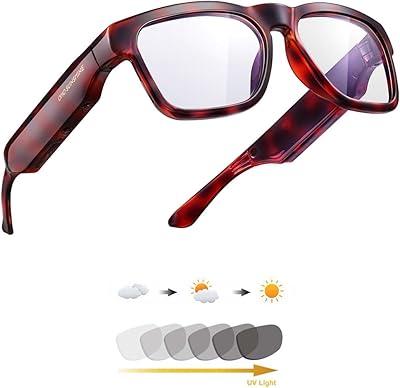
E10-C Smart Glasses Bluetooth Sunglasses
84%
88%
Comfort and Fit
91%
Battery Life
72%
Sound Quality
85%
Ease of Use
80%
Build Quality
More
OhO M31 128G Bluetooth Smart Sunglasses
76%
71%
Audio Clarity
88%
Lens Transition
74%
Battery Life
78%
Bluetooth Stability
62%
Microphone Quality
More
FKGZJF Smart Ring
FKGZJF Smart Ring
86%
91%
Value for Money
89%
Battery Life
85%
Health Monitoring Accuracy
92%
Design & Comfort
82%
App Experience
More
MERNEUO Smart Ring
MERNEUO Smart Ring
84%
88%
Health Tracking Accuracy
90%
App Integration & Ease of Use
72%
Battery Life
93%
Waterproof & Durability
85%
Comfort & Fit
More
TnoxHD Smart Glasses
85%
85%
Audio Quality
90%
Battery Life
80%
Comfort and Fit
78%
Sound Clarity for Calls
88%
Ease of Use
More
Emerhome E13 Bluetooth Smart Glasses
70%
83%
Ease of Pairing
79%
Call Clarity
58%
Audio Volume & Quality
54%
Battery Life
71%
Touch Control Accuracy
More
Kasa Smart KC420WS Outdoor Security Camera
81%
88%
Image Clarity
91%
Night Vision Performance
79%
Motion & Person Detection
86%
Weather & Build Durability
84%
Setup & App Experience
More
Kasa Smart KC400 Indoor Security Camera
79%
88%
Image Quality
71%
Night Vision Performance
84%
Motion & Person Detection
82%
Sound Detection & Baby Monitoring
81%
App Experience
More

FAQ

Pairing works like any standard Bluetooth device. Hold the button on the temple to activate pairing mode, then find the glasses in your phone's Bluetooth settings and connect. Most users report the initial setup takes under two minutes.

Yes — there is a dedicated button on the temple that activates your phone's built-in voice assistant. It works with both Siri on iPhone and Google Assistant on Android, so no additional app setup is needed.

That is an honest trade-off with any open-ear speaker design, including these. At moderate volume in a normal setting, someone standing close to you will likely hear a faint version of what you are playing. If privacy while listening matters, in-ear earbuds are a better fit for your needs.

Fairly well in calm to light-breeze conditions, but consistent wind does create audible interference on calls. The noise-cancelling microphones reduce ambient noise reasonably well, but they are not immune to gusting wind. For heavy outdoor call use on breezy days, expect some call quality degradation.

It is achievable under moderate conditions — think background music at mid-volume with occasional calls. If you push the volume higher or spend more time on calls, real-world battery life will likely land closer to 8 to 10 hours. The rating is reasonable but represents an upper benchmark rather than a typical daily guarantee.

The product listing does not specify a formal IP water resistance rating, so it is safest to avoid submerging them or wearing them in heavy rain. Light splashes and sweat during activity are generally tolerated by smart glasses in this category, but treat them cautiously around water until an official rating is confirmed.

No — the frames are not designed to accommodate prescription lenses. They come fitted with fixed polarized lenses and are not compatible with an optician's standard lens replacement process.

The glasses charge via a magnetic or proprietary charging cable that attaches to the frame's temple. A full charge typically takes around 1.5 to 2 hours, though this can vary slightly. Make sure to use the included cable, as third-party cables may not make proper contact.

They are one of the better options in this category for wider faces. The 141mm frame width is broader than many competing smart glasses, and users with wider head measurements have given the fit consistently positive reviews. If you have struggled to find smart glasses that do not pinch at the temples, these are worth considering.

Use a soft microfiber cloth — ideally the type included with the glasses — and a small amount of lens cleaning solution if needed. Avoid paper towels, shirt fabric, or any abrasive material, as these can leave micro-scratches on polarized lenses over time. Keep the lenses away from harsh chemical cleaners like ammonia-based sprays.