Overview

The Nady U-2100 Dual UHF Wireless Microphone System comes from a brand with decades of experience building affordable audio gear — dependable rather than flashy. This dual wireless mic system occupies an interesting middle ground: it’s a step above consumer-grade karaoke bundles, but it isn’t pretending to compete with professional broadcast equipment. You get two handheld transmitters with neodymium dynamic cartridges, a dual-channel receiver, and the flexibility of both XLR and 1/4-inch outputs. For anyone who needs two wireless mics simultaneously without a significant investment, that combination is a solid and practical starting point worth considering.
Features & Benefits

This two-channel UHF setup packs 200 selectable frequencies with an auto-scan function that finds clean channels quickly — genuinely useful in venues where multiple wireless systems compete for spectrum. Range extends up to 500 feet line-of-sight, which handles most small and medium-sized stages without issue. The receiver’s bar graph indicators let you monitor both RF signal strength and audio levels in real time, so problems are catchable before they hit the audience. Dual output options — balanced XLR and adjustable 1/4-inch — mean you can connect to everything from a professional mixing board to a basic home amplifier without needing adapters.

Best For

This dual wireless mic system was built for scenarios where two people need to hold mics and move around — church services, school ceremonies, small wedding receptions, and community theater productions are all natural fits. Karaoke hosts will get a real upgrade from tangled wired setups, and two-person podcast or livestream rigs benefit from the dual output flexibility. That said, professional touring musicians or anyone needing studio-quality audio should look elsewhere. The Nady U-2100 is a practical choice for low-stakes live events where reliability matters more than pristine sound reproduction — and for those use cases, it genuinely delivers.

User Feedback

With 92 ratings landing at 3.5 stars, the Nady U-2100 draws a genuinely mixed response — and the divide is instructive. Fans consistently cite the easy channel scanning, adequate operating range for small venues, and the straightforward value of two working wireless mics in a single purchase. Detractors point to inconsistent audio output levels, occasional RF dropouts in crowded wireless environments, and a plastic build that feels lightweight. A handful of reviewers expected condenser-style warmth from dynamic cartridges — an unfair comparison at this tier. Importantly, some of the harsher one-star reviews describe interference problems that point to environmental factors or setup errors rather than a broken product.

Pros

  • Getting two complete wireless handheld mics in one package is a genuine value for events needing dual presenters.
  • Auto-scan channel selection finds clear UHF frequencies quickly, reducing setup time before events.
  • The 500-foot line-of-sight range is more than enough for most small and mid-sized venues.
  • Both XLR and 1/4-inch outputs mean this dual wireless mic system connects to nearly any PA or amplifier setup.
  • Up to 10 simultaneous transmitters can operate in the same space without cross-interference.
  • RF and audio level bar graphs on the receiver let you catch signal problems before they reach the audience.
  • The system runs on standard AA batteries, making mid-event replacements fast and easy anywhere.
  • Setup is straightforward enough for non-technical users like school staff or community event organizers.
  • UHF operation provides more stable and interference-resistant performance than older VHF systems at this price point.

Cons

  • Audio consistency can vary between units, with some users reporting uneven output levels out of the box.
  • The plastic housing feels lightweight and may not hold up well under frequent handling or travel.
  • Dynamic cartridges lack the tonal richness needed for live music performance or critical vocal reproduction.
  • Occasional RF dropouts have been reported, particularly in environments with heavy wireless traffic.
  • Output level adjustments on the receiver can be finicky and may require trial and error to dial in correctly.
  • No carrying case or protective storage is included, which is an oversight for a two-piece transmitter system.
  • Battery life is not exceptional, and heavy use at events requires keeping spare AAs on hand.
  • Customer support and warranty experience with Nady has received mixed feedback from buyers who encountered issues.

Ratings

The scores below reflect our AI-driven analysis of verified buyer reviews for the Nady U-2100 Dual UHF Wireless Microphone System, collected from global sources and actively filtered to remove incentivized, bot-generated, and duplicate submissions. Each category is scored to honestly represent where this two-channel UHF setup earns genuine praise and where real users have run into frustration. Both the strengths and the recurring pain points are weighted equally so you can make a fully informed decision.

Value for Money
78%
22%
For buyers who need two functional wireless mics at a price that does not require serious budget planning, this dual wireless mic system consistently gets credit for delivering a complete, working setup out of the box. Church coordinators and school event staff in particular note that getting two independent UHF channels for this outlay is difficult to match from other brands.
A portion of buyers who expected professional-grade audio felt the value proposition eroded quickly when they encountered inconsistent output levels or dropouts during actual events. If your standards are higher than casual use, the money may be better spent stepping up to a more reliable tier.
Audio Quality
61%
39%
For speech, emceeing, and karaoke use, most users found the audio output clear enough to be fully intelligible through a PA system. In controlled small-venue environments with minimal RF interference, the dynamic cartridges produce a clean, usable signal that handles vocal projection well.
Users expecting studio-like warmth or the nuanced reproduction of a condenser microphone will be disappointed — dynamic cartridges at this price point have a noticeably compressed and sometimes thin sound. Audio consistency between the two transmitters was flagged as uneven by multiple buyers, which creates mixing headaches.
Wireless Range
74%
26%
The 500-foot line-of-sight range is one of the more frequently praised aspects of this two-channel UHF setup, with performers at small weddings and church services reporting confident freedom of movement across the stage or aisle. Most users never pushed the limits of the range in real settings and found it more than adequate.
Range performance degrades meaningfully when walls, crowds, or other wireless systems are present, which is the reality in most real-world venues. Some users reported signal instability at distances far shorter than the rated maximum when operating in buildings with thick concrete walls or active Wi-Fi networks nearby.
Build Quality
54%
46%
The system is light and easy to carry between events, which some users appreciated for its portability at small-scale productions. The transmitters feel balanced in hand during use, and the receiver sits stably on a shelf or table without needing rack mounting.
The ABS plastic housing drew consistent criticism from users who felt the construction felt fragile compared to similarly priced competitors. Several buyers reported cosmetic damage or functional issues after only moderate handling, and the overall material quality signals a system that was built to a price rather than built to last.
Setup & Ease of Use
76%
24%
The auto-scan channel selection was highlighted repeatedly as one of the smoothest parts of the setup experience, especially for non-technical users running a church service or school event for the first time. Plugging into a mixer via XLR is straightforward, and most users reported being operational within a few minutes of unboxing.
Getting the 1/4-inch output level calibrated correctly caused confusion for a meaningful number of buyers, particularly those connecting to amplifiers rather than mixers. A few users also reported that channel selections did not always store reliably in memory after a power cycle.
RF Interference Resistance
63%
37%
Operating across 200 selectable UHF frequencies gives users real flexibility in finding a clean channel, and the IF filtering helps when multiple wireless systems are sharing a venue. In lightly congested RF environments, the system performed without notable dropout issues during normal event durations.
In denser wireless environments — urban venues, convention halls, or rooms running multiple Bluetooth and Wi-Fi devices simultaneously — users reported more frequent dropouts than expected. Some of the harshest reviews were clearly tied to RF-heavy environments rather than product defects, but the system is not as resilient as higher-end UHF alternatives.
Microphone Handling
69%
31%
The handheld transmitters are a comfortable size and weight for extended holding during a ceremony or performance. Handling noise is kept reasonably low for a dynamic system at this tier, which matters for presenters who tend to move the mic frequently while speaking.
The plastic grip surface offers less tactile confidence than rubberized alternatives, and a few users noted that the mics felt slightly slippery during sweaty live performances. The cartridge grille also attracted criticism for feeling flimsy compared to all-metal competitors.
Receiver Features
72%
28%
The RF and AF bar graph displays on the receiver front panel are a genuinely useful addition that many comparable budget systems skip entirely. Being able to visually confirm signal strength and audio levels during a live event prevents a lot of guesswork and lets a single operator monitor both channels simultaneously.
The receiver controls are minimal and the interface is not particularly intuitive for first-time wireless mic users without a manual. The squelch adjustment, while useful, lacks fine-grain precision and can either mute too aggressively or not enough depending on the environment.
Channel Compatibility
81%
19%
The ability to run up to 10 transmitters simultaneously in the same location is a standout specification for a system in this class, giving event organizers meaningful scalability if they need to expand their wireless setup in the future. Channel memory retention keeps the configuration consistent across repeated uses in the same venue.
Coordinating multiple systems across a large frequency pool still requires some attention and planning, and users running many wireless devices simultaneously noted that finding enough clean channels took more time than expected. The channel count does not fully compensate for limited IF filtering sophistication compared to pro-tier systems.
Output Flexibility
79%
21%
Offering both a balanced XLR output and an adjustable 1/4-inch jack on the same receiver genuinely extends the range of compatible equipment this system can connect to. This is particularly helpful for users who move the system between a professional venue with a mixing board and a home setup with a basic amplifier.
The XLR output is fixed at microphone level rather than line level, which can cause gain-staging issues when connecting to some mixers or interfaces that expect a line-level signal. Users connecting to certain PA systems reported needing to make significant adjustments on their mixer to get a usable volume.
Battery Performance
67%
33%
Running on standard AA batteries means replacements are available anywhere, which is a practical advantage for event coordinators who cannot afford to hunt for specialty cells mid-show. Batteries are included in the box, so the system is ready to test immediately after unboxing.
Battery life under continuous use was shorter than some users expected, with a few reporting noticeable performance drops during events running beyond three hours. There is no battery level indicator on the transmitters, which means users have no warning before the signal begins to degrade.
Frequency Response
66%
34%
An 18kHz frequency response covers the full practical range of human vocal performance, which is appropriate for the speech and singing use cases this system targets. For presentations and karaoke, users generally found the tonal output sufficiently natural and easy to listen to over extended periods.
The frequency response ceiling falls slightly short of the 20kHz standard for full-range audio fidelity, and the dynamic cartridges do not fully exploit even the stated range at the low end. Users with discerning ears noticed a slight roll-off in brightness that affects vocal presence on busier mixes.
Portability
77%
23%
The combined 3-pound system weight makes it genuinely easy to transport between venues, and the compact receiver dimensions mean it fits on any surface without requiring dedicated equipment space. For event coordinators running the system across multiple locations in a week, the lightweight profile is a real everyday convenience.
The lack of any included carrying case or protective bag means users must source their own storage solution, which adds cost and friction. The lightweight ABS housing that makes portability easy also raises concerns about how well the components withstand repeated transport over time.

Suitable for:

The Nady U-2100 Dual UHF Wireless Microphone System is a practical pick for anyone who needs two wireless mics working simultaneously without spending a lot of money. Church audio teams running Sunday services with a pastor and a vocalist, school event coordinators managing dual presenters, and community theater groups on tight budgets will all find this two-channel UHF setup genuinely functional. Wedding emcees, karaoke hosts, and small venue performers benefit most here — the 500-foot operating range is more than adequate for a banquet hall or small stage, and the auto-scan channel selection removes a lot of the technical friction that frustrates first-time wireless mic users. Podcasters and livestreamers who need a simple two-host wireless solution will also appreciate that the receiver plugs directly into standard PA equipment via XLR or into a basic amp through the 1/4-inch jack, making hookup relatively painless.
Not suitable for:

The Nady U-2100 Dual UHF Wireless Microphone System is not the right tool if audio quality is your top priority. The included handheld transmitters use dynamic cartridges that do a decent job for speech and karaoke but fall short for live music applications where vocal nuance, warmth, and clarity under pressure really matter. Professional touring musicians, gigging bands, or anyone recording to multitrack should budget for a more capable system — the ABS plastic housing and budget-tier components are not built for the rigors of regular touring or high-demand production environments. If you are operating in an RF-dense urban venue — think a convention center or a large wedding hall running multiple wireless systems simultaneously — you may run into interference issues that a more sophisticated system with better shielding would handle more reliably. Buyers expecting studio-condenser audio quality from this two-channel UHF setup will almost certainly be disappointed.
Specifications

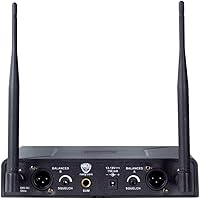
  • System Type: Dual-channel UHF wireless microphone system with one receiver unit and two handheld transmitters included.
  • Frequencies: Operates across 200 selectable UHF frequencies with automatic channel scanning to find interference-free operation.
  • Operating Range: Provides up to 500 feet of line-of-sight operating range between each transmitter and the receiver.
  • Cartridge Type: Each handheld transmitter uses a neodymium dynamic cartridge with a unidirectional polar pattern.
  • Dynamic Range: Delivers a 120dB dynamic range for clean audio reproduction across a wide range of input volumes.
  • Frequency Response: Covers a frequency response of up to 18kHz, suitable for voice and speech reproduction in live settings.
  • Signal-to-Noise: Signal-to-noise ratio is rated at 120dB, reducing audible background hiss during quiet passages.
  • XLR Output: Receiver includes a balanced XLR output at a fixed microphone level for direct connection to professional mixers.
  • 1/4-Inch Output: Receiver also features an adjustable unbalanced 1/4-inch jack output for connection to amplifiers and consumer audio gear.
  • RF Monitoring: Front-panel RF and AF bar graph displays on the receiver allow real-time monitoring of signal and audio levels.
  • Simultaneous Units: Supports operation of up to 10 transmitters simultaneously in the same location using IF filtering technology.
  • Power Source: Each handheld transmitter is powered by 2 AA alkaline batteries, which are included in the box.
  • Housing Material: Transmitter and receiver enclosures are constructed from ABS plastic, keeping the overall system weight low.
  • System Weight: Total system weight is approximately 3 pounds, covering both transmitters and the receiver unit combined.
  • Dimensions: The receiver unit measures approximately 8″ x 3″ x 6″, making it compatible with standard rack or shelf placement.
  • Compatibility: Works with amplifiers, PA mixers, karaoke machines, speakers, and other audio equipment via XLR or 1/4-inch connections.
  • Channel Memory: Selected UHF channels are stored in memory on the receiver so settings are retained between power cycles.
  • Squelch Control: A squelch adjustment (RF mute) on the receiver allows users to reduce noise when transmitters are inactive or out of range.

Related Reviews
Nady U-1100HT 100-Channel UHF Wireless Microphone System
68%
81%
Ease of Setup
61%
Audio Clarity
57%
Operating Range
48%
Build Quality
67%
Value for Money
More
Gemini UHF-02M S12 Dual Wireless Handheld Microphone System
74%
93%
Ease of Setup
71%
Wireless Range
74%
Audio Clarity
62%
Build Quality
88%
Value for Money
More
Nady DW-22-HT
Nady DW-22-HT
80%
88%
Audio Clarity
82%
Wireless Range
94%
Ease of Setup
91%
Value for Money
78%
Signal Stability
More
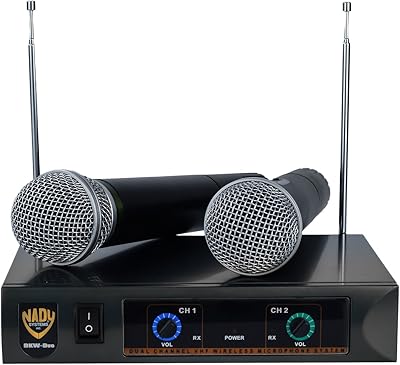
Nady DKW-DUO-HT-PR Dual Wireless Microphone System
77%
91%
Ease of Setup
83%
Wireless Range
66%
Audio Clarity
88%
Battery Life
58%
Build Quality
More
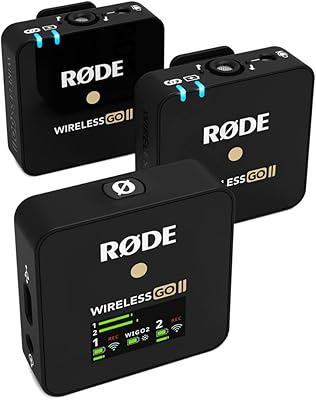
RØDE Wireless GO II
RØDE Wireless GO II
84%
92%
Audio Clarity
86%
Signal Reliability
97%
Internal Backup Recording
94%
Portability & Weight
91%
Setup Speed & Ease of Use
More
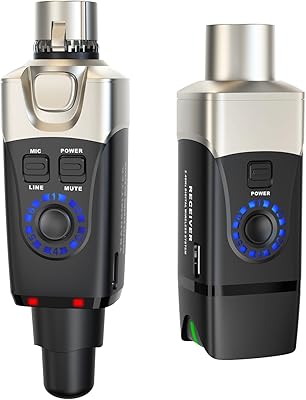
Gemini UHF-02M-S34 Wireless Microphone System
85%
88%
Performance & Signal Quality
93%
Ease of Setup & Use
85%
Sound Clarity & Audio Fidelity
87%
Durability & Build Quality
80%
Battery Life & Power Management
More
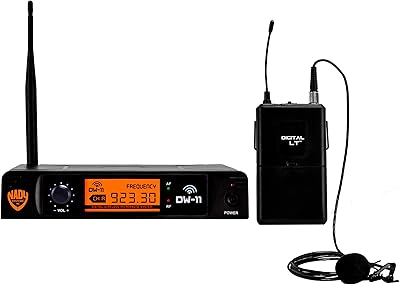
Nady DW-11 Digital Wireless Lavalier System
72%
83%
Audio Clarity
91%
Ease of Setup
63%
Wireless Range
58%
Interference Resistance
54%
Build Quality
More
Sennheiser AVX Digital Wireless Microphone System
81%
94%
Ease of Setup
89%
Audio Quality
91%
Interference Resistance
83%
Build & Portability
72%
Receiver Fit & Compatibility
More
Godox WEC Kit2
Godox WEC Kit2
81%
78%
Audio Clarity
73%
Noise Cancellation
82%
Wireless Range & Stability
71%
Build Quality & Durability
88%
Comfort & Wearability
More
NEEWER KM15 Wireless Lavalier Microphone System
87%
89%
Sound Quality
92%
Ease of Use
87%
Battery Life
83%
Build Quality
90%
Portability
More

FAQ

Both mics work simultaneously — that is the whole point of the dual-channel design. Each transmitter operates on its own independent UHF frequency, so there is no sharing or switching required. As long as both channels are tuned to separate, interference-free frequencies, two people can speak or sing at the same time without any issue.

If your PA system or mixer has an XLR input, use the balanced XLR output on the receiver for the cleanest connection. If you are plugging into a basic amplifier, home stereo, or karaoke machine, use the 1/4-inch jack output instead. The 1/4-inch output level is adjustable, so you can match it to whatever gear you are connecting to.

It should, yes. The system supports up to 10 transmitters operating simultaneously in the same space through its IF filtering, and the auto-scan function helps find clear frequencies away from any existing wireless traffic. That said, in very RF-dense environments you may need to experiment with channel selection to find the cleanest spots.

It handles speech and casual vocal performance well, but if you are a serious singer performing live music, you may notice its limitations. The dynamic cartridges are decent for the price but lack the warmth and clarity that a dedicated vocal microphone brings. For karaoke, emceeing, or wedding toasts, it is completely fine — for a gigging musician, it is a compromise.

Battery life varies depending on usage and battery brand, but most users report several hours of continuous operation on a fresh set of AA alkaline batteries. It is always smart to carry spare AAs to any event, especially if you are running the system for multiple hours without a break.

The receiver has a squelch control that mutes the output when the RF signal drops below a usable level, which prevents a loud burst of noise or static. In practice, moving out of range or behind a thick wall may cause the audio to mute rather than crackle, which is the safer failure mode for a live event.

The receiver is a fixed dual-channel unit, so you are limited to two transmitters at a time through this system. You cannot add a third channel to the same receiver. If Nady makes compatible transmitters in the same frequency range, some users have had success swapping transmitter types, but this is not officially guaranteed — check compatibility before purchasing separately.

This is one of the more common complaints with this two-channel UHF setup, and it is not always a defect. First, check that both transmitters are set to their correct gain levels and that the receiver output is dialed in properly on the 1/4-inch jack. Some inconsistency between units exists at this price tier, but many users resolve the issue simply by adjusting levels on their mixer or receiver rather than returning the product.

The receiver unit requires a standard AC power connection — it does not run on batteries. Only the handheld transmitters are battery powered. Plan to position the receiver near a power outlet, or use a power strip if your setup is on a stage or in a room with limited wall access.

No, a carrying case is not included in the box. You get the receiver, two handheld transmitters, and cables, but nothing to store or protect them during transport. If you plan to move this system between venues regularly, picking up a padded gig bag or small equipment case separately is a worthwhile investment to protect the plastic housings.

Where to Buy