Overview

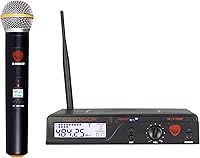
The Nady U-1100HT 100-Channel UHF Wireless Microphone System is an entry-level wireless setup built for casual performers, event hosts, and anyone who wants reliable cordless audio without a large investment. It arrives as two distinct units: a handheld transmitter with a neodymium dynamic cartridge, and a tabletop or rack-mountable receiver. That receiver offers both a balanced XLR output and an adjustable 1/4-inch jack, which gives you genuine flexibility when connecting to a mixer, PA, or interface. With 100 selectable UHF channels and a claimed 500ft operating range, the specs read well on paper — just walk in with honest expectations about what entry-level hardware can realistically deliver.
Features & Benefits

The Auto-Scan channel selection is one of the more practical touches here — rather than manually hunting for a clear frequency, the receiver identifies one automatically, which is genuinely useful in venues where wireless congestion is a real concern. The neodymium cartridge handles feedback rejection and handling noise reasonably well for live passing of the mic. On the receiver, an RF/AF bar graph lets you monitor signal strength in real time, while the squelch control trims background hiss whenever nobody is speaking. The system can share airspace with up to ten transmitters simultaneously, and the handheld runs on standard AA batteries — no proprietary charging hardware to track down or replace.

Best For

This UHF handheld setup is a natural match for occasional, low-stakes scenarios: karaoke nights, church services, school events, community presentations, or small ceremony hosting. It is not built for professional touring or critical recording work — but if you simply need to go wireless in a modest space without complicated configuration, it covers that ground well. The dual output options mean it can connect to nearly any audio gear you already own, from a basic mixer to a digital recorder. First-time buyers stepping into wireless for the first time will find the setup process far less intimidating than higher-end systems with steeper learning curves.

User Feedback

With just nine ratings averaging 3.6 out of 5, the feedback available for this wireless mic system is too limited to paint a definitive picture — treat any trend you notice as an early impression rather than a reliable verdict. Buyers who are satisfied tend to highlight the straightforward setup and the channel flexibility given the price point. Criticism, where it appears, focuses on build quality and audio clarity that does not quite match more expensive alternatives — hardly surprising at this price tier. A few users also report that indoor range falls meaningfully short of the 500ft advertised figure once walls and obstacles enter the equation. Suitable for casual use; approach cautiously for anything mission-critical.

Pros

  • One hundred selectable UHF channels give you real flexibility to avoid interference in busy RF environments.
  • Auto-Scan channel detection takes the guesswork out of frequency setup for non-technical users.
  • Both balanced XLR and adjustable 1/4-inch outputs mean it connects to a wide range of audio gear.
  • Supports up to ten simultaneous transmitters, making it viable for small multi-mic events.
  • Standard AA batteries power the transmitter — no proprietary chargers or battery packs to source.
  • The RF/AF bar graph on the receiver gives a quick visual read of signal health during use.
  • Squelch control keeps idle noise at bay when the mic is not actively being used.
  • Lightweight at 1.2 pounds, so carrying and repositioning the setup is effortless.
  • Plug-and-play experience is approachable enough for first-time wireless mic users.
  • Cardioid polar pattern helps reject off-axis noise in moderately loud environments.

Cons

  • Build quality feels entry-level; the hardware may not hold up well under frequent or rough use.
  • Real-world indoor range falls well short of the advertised 500ft once walls and obstacles are factored in.
  • Audio clarity has clear limitations compared to mid-range or professional wireless systems.
  • Only 9 user reviews exist, making it hard to trust any single feedback trend as representative.
  • The fixed mic-level XLR output offers no gain adjustment on the balanced side, limiting flexibility.
  • No carrying case or storage bag is included, which is an inconvenience for mobile event use.
  • Frequency response tops out at 18kHz, which is slightly below the 20kHz ceiling of better systems.
  • The plastic ABS construction does not inspire confidence for long-term reliability.
  • Users who need consistent range in large halls or outdoor spaces may find the performance unreliable.
  • The modest review score of 3.6 out of 5 suggests this UHF handheld setup does not fully satisfy all buyers.

Ratings

The scores below reflect our AI-assisted analysis of verified global buyer reviews for the Nady U-1100HT 100-Channel UHF Wireless Microphone System, with spam, bot activity, and incentivized feedback actively filtered out before scoring. Each category is weighted against real-world usage patterns reported by actual buyers across a range of casual and semi-professional settings. Both the genuine strengths and the honest frustrations are factored in — nothing is glossed over.

Ease of Setup
81%
19%
Most buyers found this wireless mic system surprisingly quick to get running, particularly first-timers who had never used a two-unit wireless setup before. The Auto-Scan feature removes the tedious manual frequency hunting that frustrates beginners, and the straightforward output connections mean you are rarely more than five minutes from being live.
A small number of users reported initial confusion about pairing the transmitter and receiver to the same channel, which is not clearly explained in the included documentation. Those coming from a wired mic background occasionally overlooked the need to manually sync both units before use.
Audio Clarity
61%
39%
For speech-heavy applications like presentations, ceremony hosting, and casual karaoke, the audio output is clear enough to get the job done in a small room with a cooperative PA system. The squelch control does a reasonable job of keeping idle noise from bleeding through when the mic is not actively in use.
Buyers with any prior experience using higher-quality wireless systems will notice the ceiling on clarity fairly quickly — especially during singing, where the dynamic cartridge lacks the detail and warmth that even moderately priced alternatives provide. A few users described a slightly thin or hollow character to the reproduced sound in larger spaces.
Operating Range
57%
43%
In small, open-plan venues — a community hall stage, a karaoke bar booth setup, or a classroom — the range is more than adequate and dropouts are not a frequent complaint under those controlled conditions. For the intended use cases, most buyers found the connection stable within a modest working area.
The advertised 500ft figure is a line-of-sight outdoor measurement, and real buyers found this number significantly optimistic indoors. Walls, other wireless devices, and crowded RF environments chip away at range noticeably, and a handful of reviewers reported unexpected dropouts even at moderate distances in multi-room venues.
Build Quality
48%
52%
The system is lightweight at 1.2 pounds, which makes it easy to transport between occasional events without adding burden to a gear bag. For purely stationary or carefully handled use, the ABS plastic construction holds together adequately over a reasonable number of sessions.
This is the most consistently flagged concern across buyer feedback — the plastic housing on both units feels noticeably insubstantial, and several users expressed doubt about long-term durability under regular handling. The Nady U-1100HT is clearly not engineered for the kind of repeated drops or rough transport that more rugged systems are designed to absorb.
Value for Money
67%
33%
Buyers who matched their expectations to the price point — using this UHF handheld setup for karaoke nights, church events, or school performances — generally felt they got fair return on their outlay. The included feature set, particularly the 100-channel flexibility and dual output options, would cost meaningfully more on a comparable branded system.
Those who pushed the system into more demanding scenarios, or who expected performance closer to mid-range competitors, came away feeling the value proposition fell short. A few buyers noted that after factoring in reliability concerns, the total cost of ownership did not look as attractive on a longer timeline.
Channel Flexibility
83%
Having 100 selectable UHF frequencies is a genuine advantage in environments where wireless congestion is a real possibility, such as events held alongside other wireless audio or video equipment. The Auto-Scan function actively identifies clean channels rather than relying on the user to identify interference manually, which buyers appreciated in unfamiliar venues.
While 100 channels sounds impressive, the UHF band allocation in this system may overlap with locally licensed broadcast or cellular signals depending on your region, and the manual does not clearly walk users through checking for local regulatory compliance. In practice this rarely causes problems, but it is worth being aware of.
Multi-Transmitter Support
74%
26%
The ability to run up to ten transmitters simultaneously in the same space is a standout capability at this price tier, making this wireless mic system genuinely useful for panel discussions, school productions, or small multi-presenter events. Buyers who tested multiple units together found the IF filtering kept channels from bleeding into each other under normal conditions.
In practice, coordinating ten units requires careful channel management that the basic documentation does not fully prepare buyers for. Users who tried running several units simultaneously without prior wireless audio experience reported more setup friction than expected.
Output Connectivity
78%
22%
The combination of a balanced XLR and an adjustable 1/4-inch output on the receiver is one of the more thoughtfully designed aspects of this system, giving it genuine compatibility with a wide range of gear from basic PA speakers to professional mixing consoles. Buyers connecting to existing home studio or small venue setups found they rarely needed additional adapters.
The XLR output is fixed at mic level with no gain adjustment, which can create headroom issues when connecting to devices that expect a line-level signal. A small number of users also found the 1/4-inch output volume control slightly imprecise, making fine gain adjustments fiddly in live environments.
Microphone Cartridge
59%
41%
The neodymium dynamic cartridge handles feedback rejection competently enough for casual live use, which is an important practical benefit when the mic is passed around a group or used close to a speaker. Handling noise is kept at a manageable level, so the inevitable bumps and grip shifts during energetic use do not translate into distracting thuds through the PA.
Dynamic cartridges at this price point have inherent frequency response limitations, and buyers using this UHF handheld setup for singing noticed a lack of upper-frequency detail that made vocals sound dull compared to condenser-based or higher-grade dynamic alternatives. It is functional for casual use but clearly not a cartridge designed to flatter a performance.
Signal Monitoring
72%
28%
The RF/AF bar graph display on the receiver gives users a quick at-a-glance reference for both wireless signal strength and audio output level, which is a genuinely useful feature for non-technical operators managing a live event without a dedicated sound engineer. Buyers running the system solo found it helpful for catching signal issues before they became audible problems.
The display is basic and does not provide the granular metering that more experienced audio operators might expect. In brightly lit environments, the visibility of the display can be limiting, and there is no accompanying alert or warning for critically low signal conditions.
Battery Practicality
77%
23%
Using standard AA batteries in the transmitter is a practical choice that many buyers appreciated — there is no proprietary charging dock to forget at home or replace if lost, and fresh batteries are available everywhere. For event-based use where the system might sit unused for weeks between sessions, standard alkalines hold their charge reliably in storage.
Batteries are not included, which catches some buyers off guard at first use. Battery life duration is not specified in the product documentation, so users heading into longer events have to rely on trial and experience rather than a firm runtime figure to know when to swap cells.
Portability
79%
21%
At 1.2 pounds total and packaged in a compact footprint, the system is easy to toss into a gear bag and carry to community events, school functions, or rehearsal spaces without adding meaningful weight to your load. The receiver is small enough to sit on a table without dominating the space around the PA.
No carry case or pouch is included, so protecting both units during transport falls entirely on the buyer. Given the lightweight plastic construction, investing in even a basic padded case is advisable for anyone moving the system regularly between locations.
Documentation & Support
53%
47%
Nady Systems has been in the budget wireless audio market for a long time, and basic support resources for their product lines are generally accessible. For straightforward setup questions, most buyers found the included materials sufficient to get started without needing to contact support.
Several buyers noted the included instructions are thin and do not adequately address common first-use questions, particularly around channel pairing and squelch adjustment. Buyers who encountered issues beyond basic setup found the support experience underwhelming, with limited troubleshooting guidance available.

Suitable for:

The Nady U-1100HT 100-Channel UHF Wireless Microphone System is a solid pick for anyone who needs a functional wireless mic without overcomplicating the setup or overspending. It is particularly well-matched for community event organizers, church AV volunteers, karaoke hosts, school drama departments, and hobbyist performers who use a microphone occasionally rather than nightly. The dual output options — balanced XLR and a 1/4-inch jack — mean it can plug into almost any PA, mixer, or recording interface a casual user is likely to own. The Auto-Scan feature removes one of the most frustrating parts of wireless setups for beginners: hunting for a clean frequency. If your priority is getting a working wireless system running quickly in a small-to-medium venue without a steep learning curve, this UHF handheld setup covers the basics reliably.
Not suitable for:

The Nady U-1100HT 100-Channel UHF Wireless Microphone System is not the right tool for professional touring, broadcast applications, or any context where audio fidelity is non-negotiable. The neodymium dynamic cartridge performs acceptably for live speech and casual singing, but it will not satisfy sound engineers or performers who are accustomed to higher-end wireless systems. The advertised 500ft range is a line-of-sight figure — in real indoor environments with walls, furniture, and competing RF signals, the effective range drops noticeably, which can be a genuine liability in larger or multi-room venues. Build quality is a recurring concern among early reviewers, so this wireless mic system is probably not durable enough for heavy daily use or rough handling. Buyers expecting studio-grade clarity, robust construction, or the kind of consistency that professionals require should look at a higher investment tier.

Specifications

  • Frequency Range: The system operates across 100 selectable UHF frequencies, with Auto-Scan available to identify the cleanest available channel automatically.
  • Operating Range: The transmitter and receiver maintain a line-of-sight operating range of up to 500ft, though real-world indoor range will be shorter depending on obstacles and RF conditions.
  • Dynamic Range: The system delivers a 120dB dynamic range and a 120dB signal-to-noise ratio, providing reasonably clean audio reproduction for live applications.
  • Frequency Response: Audio frequency response extends up to 18kHz, covering the full range of human speech and most live vocal performance needs.
  • Polar Pattern: The handheld transmitter uses a unidirectional (cardioid) pickup pattern to focus on the sound source in front of the mic while rejecting off-axis noise.
  • Microphone Type: The transmitter houses a neodymium dynamic cartridge, chosen for its feedback rejection characteristics and low sensitivity to handling noise.
  • XLR Output: The receiver provides a balanced XLR output at a fixed microphone level for connection to professional mixers and audio interfaces.
  • 1/4-inch Output: A secondary adjustable unbalanced 1/4-inch jack output is included on the receiver, offering variable line-level audio for less formal audio setups.
  • Simultaneous Units: IF filtering on the receiver supports operation of up to 10 transmitters simultaneously within the same location without significant interference.
  • Signal Display: The receiver features an RF/AF bar graph display that provides a real-time visual reference for both radio signal strength and audio output levels.
  • Squelch Control: A squelch (RF mute) adjustment on the receiver allows users to set a threshold below which background noise and weak signals are automatically silenced.
  • Power Source: The handheld transmitter is powered by two standard AA batteries, which are not included in the package.
  • Included Components: The package contains one receiver unit (RX) and one handheld transmitter (TX); no microphone stand adapter, case, or batteries are included.
  • Item Weight: The total package weight is 1.2 pounds, making the system easy to transport between small venues or events.
  • Dimensions: The packaged unit measures 14 x 12 x 3 inches, compact enough to store in a standard equipment bag or cabinet shelf.
  • Body Material: The housing is constructed from Acrylonitrile Butadiene Styrene (ABS) plastic, a lightweight thermoplastic commonly used in entry-level audio hardware.
  • Compatible Devices: The system is designed to work with audio mixers, audio interfaces, and digital recorders via its dual output connections.
  • Manufacturer: This system is manufactured by Nady Systems, Inc., a California-based audio brand with a long history in budget-tier wireless microphone products.
  • Availability: The product is listed as not discontinued by the manufacturer and has been available on the market since July 2015.

Related Reviews
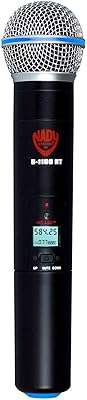
Nady U-2100 Dual UHF Wireless Microphone System
71%
78%
Value for Money
61%
Audio Quality
74%
Wireless Range
54%
Build Quality
76%
Setup & Ease of Use
More
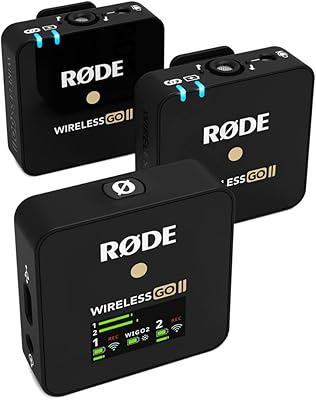
RØDE Wireless GO II
RØDE Wireless GO II
84%
92%
Audio Clarity
86%
Signal Reliability
97%
Internal Backup Recording
94%
Portability & Weight
91%
Setup Speed & Ease of Use
More
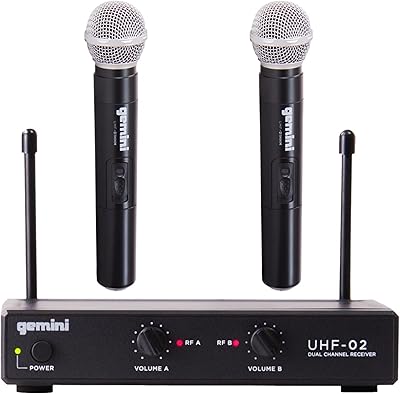
Gemini UHF-02M-S34 Wireless Microphone System
85%
88%
Performance & Signal Quality
93%
Ease of Setup & Use
85%
Sound Clarity & Audio Fidelity
87%
Durability & Build Quality
80%
Battery Life & Power Management
More
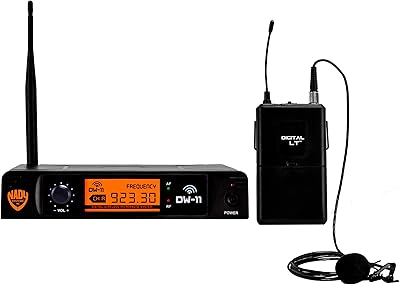
Nady DW-11 Digital Wireless Lavalier System
72%
83%
Audio Clarity
91%
Ease of Setup
63%
Wireless Range
58%
Interference Resistance
54%
Build Quality
More
Gemini UHF-02M S12 Dual Wireless Handheld Microphone System
74%
93%
Ease of Setup
71%
Wireless Range
74%
Audio Clarity
62%
Build Quality
88%
Value for Money
More
Nady DW-22-HT
Nady DW-22-HT
80%
88%
Audio Clarity
82%
Wireless Range
94%
Ease of Setup
91%
Value for Money
78%
Signal Stability
More
Comica Vimo Q 4-Channel Wireless Lavalier Microphone System
84%
92%
Sound Quality
89%
Ease of Setup
85%
Battery Life
80%
Range and Performance
75%
Portability
More
Nady DKW-DUO-HT-PR Dual Wireless Microphone System
77%
91%
Ease of Setup
83%
Wireless Range
66%
Audio Clarity
88%
Battery Life
58%
Build Quality
More
BOYA BY-XM6-S2
BOYA BY-XM6-S2
87%
93%
Ease of Setup
91%
Visual Interface Quality
86%
Battery Endurance
82%
Wireless Range Stability
94%
Portability & Weight
More
Behringer ULM302MIC Dual-Channel Wireless Microphone System
72%
78%
Value for Money
91%
Ease of Setup
63%
Audio Quality
59%
Wireless Stability
62%
Wireless Range
More

FAQ

It is designed to be straightforward. You connect the receiver to your mixer, PA, or audio interface using either the XLR or 1/4-inch output, load AA batteries into the handheld transmitter, use the Auto-Scan function to lock onto a clear channel, and you are ready to go. No special tools or software are needed.

The handheld unit you hold and sing or speak into is the transmitter — it broadcasts your voice wirelessly. The receiver is the separate box that sits on a table or is racked near your audio gear, picks up that wireless signal, and sends the audio out through its XLR or 1/4-inch jacks. Both units must be on the same channel for the system to work.

Realistically, no. The 500ft figure is a line-of-sight measurement in open-air conditions. Inside a room with walls, furniture, and other wireless signals competing for the same spectrum, expect noticeably shorter range. For most small-to-medium indoor venues it performs fine, but do not count on the maximum spec in a multi-room or large hall situation.

Yes, up to ten transmitters can operate simultaneously in the same space thanks to the IF filtering built into the receiver. Just make sure each unit is set to a different channel to prevent them from stepping on each other.

It handles both, though with limitations. The neodymium dynamic cartridge is capable enough for casual karaoke or community performance singing, but it is not the kind of cartridge that flatters a trained vocalist. For speech, presentations, or ceremony hosting it works well. For serious vocal performance, you would eventually want to upgrade to something with a higher-quality capsule.

The handheld transmitter takes two standard AA batteries, which are not included in the box. Battery life will vary depending on brand and usage, but in practice most users get several hours from a fresh set of alkaline AAs — enough for a typical event or rehearsal session.

It depends on your speaker. If your speaker or PA system has a 1/4-inch input or an XLR input, you can connect the receiver directly. Just be aware that the XLR output is at a fixed mic level, so you need a speaker or amp that can accept and amplify that signal properly. Powered speakers with built-in preamps tend to work best for direct connection.

The squelch setting tells the receiver to mute itself whenever the incoming signal drops below a certain strength — basically cutting out hiss and static when nobody is speaking into the mic. Out of the box the default setting is usually fine for most environments, but if you notice background noise when the mic is idle, turning the squelch up slightly will clean things up.

The housing is ABS plastic, which is light but not particularly rugged. Early buyers have flagged build quality as one of the weaker points of this wireless mic system. It holds up fine for occasional, careful use — think monthly events or community gatherings — but if it is going to be tossed in a bag and handled roughly on a weekly basis, the longevity may become a concern over time.

Nady Systems does offer manufacturer support, and the product is listed as not discontinued, which means parts and service lines should still be accessible. For specific warranty terms and duration, it is worth checking Nady's official website or contacting them directly, as warranty coverage details can vary by purchase channel and may have been updated since the product launched.

Where to Buy