Overview

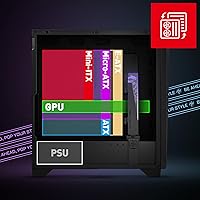
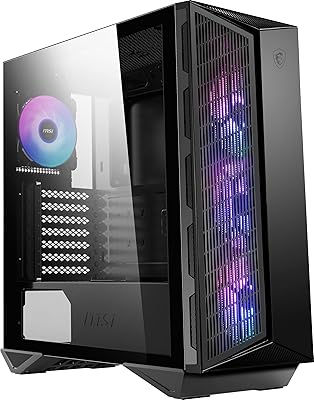
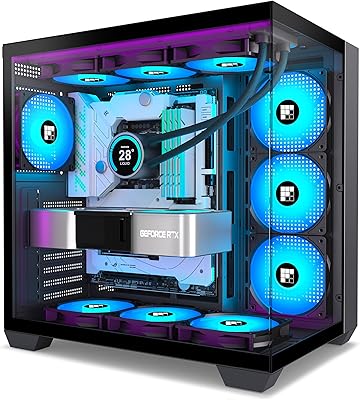
The MSI MPG GUNGNIR 300R Airflow PC Case enters the mid-tower market as something genuinely worth paying attention to — a chassis built for enthusiast builders who refuse to choose between cooling performance and a clean-looking build. What stands out immediately is the E-ATX motherboard support, which is surprisingly rare at this price tier among mid-towers. The white colorway makes it a natural fit for RGB-forward, modern aesthetics. At 505 x 235 x 510mm, it occupies a footprint that sits comfortably on most desks or beside them without dominating the space. This is not a stripped-down budget option — it is a feature-dense chassis aimed at builders who want room to grow.
Features & Benefits

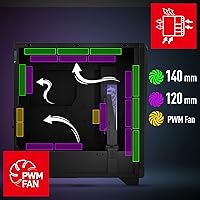
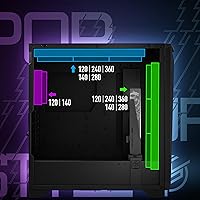
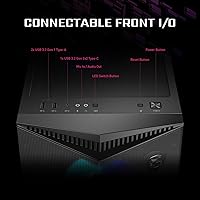
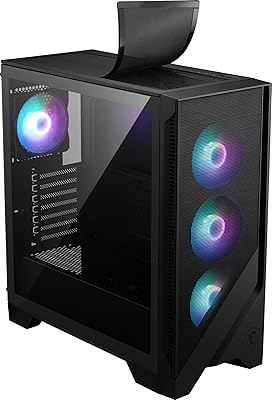
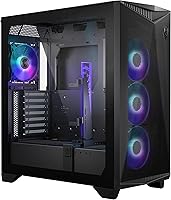
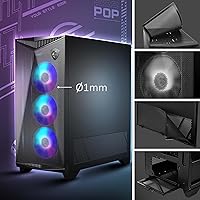
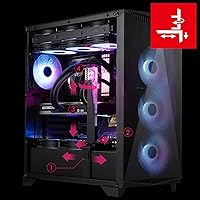
The airflow story starts with full-length mesh panels on both the front and top — a design choice that makes a real difference under load, keeping temperatures lower than cases with solid or partially vented fronts. The GUNGNIR 300R Airflow ships with four pre-installed ARGB fans and a 6-port hub, saving you the extra cost and hassle of sourcing fans separately. Both the front and top accommodate 360mm radiators, giving liquid cooling builds serious flexibility. The 4mm tempered glass side panel mounts slightly offset to allow passive airflow without sacrificing visibility. An adjustable GPU support bracket handles cards up to 360mm and keeps heavy hardware level. The front I/O rounds things out with a USB 3.2 Gen 2x2 Type-C port running at 20Gbps — a legitimately current addition.

Best For

This airflow-focused case is a strong match for builders running power-hungry graphics cards alongside 240mm or 360mm AIO coolers — the ventilation headroom is substantial enough to keep both components breathing freely. It also suits RGB-forward setups where lighting consistency matters; the Mystic Light ARGB ecosystem ties fans and accent lighting together without requiring separate controllers or extra software juggling. Builders working with E-ATX boards who struggle to find mid-towers that actually accommodate their hardware will appreciate the flexibility here. The white finish is particularly attractive for clean, showcase-style builds. That said, this case rewards builders with some experience — there is enough going on that a first-timer might find the configuration options initially a lot to take in.

User Feedback

Buyers have responded warmly to this MSI mid-tower, with consistent satisfaction around build quality and real-world cooling results. The most repeated praise covers how straightforward the installation feels and how well the included fans perform right away — many report noticeable temperature drops compared to their previous cases. The tempered glass panel draws frequent compliments for looking more premium than the price suggests. On the critical side, limited HDD bay options come up regularly, as the sliding 3.5-inch cage consumes space without offering much expansion. The missing riser cable for the vertical GPU mount is another sore spot, since that bracket only becomes useful after an additional purchase. Most buyers still consider the overall package a solid value for what it delivers.

Pros

  • Dual 360mm radiator support on the front and top gives liquid cooling builds exceptional flexibility.
  • E-ATX compatibility is a rare and meaningful advantage in a mid-tower at this price point.
  • Four pre-installed ARGB fans and a 6-port hub save real money and setup time right out of the box.
  • The offset 4mm tempered glass panel improves passive airflow while keeping the interior fully visible.
  • Full-length mesh front and top panels produce noticeably lower temperatures under sustained load.
  • The adjustable GPU bracket keeps heavy triple-fan cards level and adds a polished RGB accent to the build.
  • A USB 3.2 Gen 2x2 Type-C port at 20Gbps on the front I/O is a genuinely current and useful addition.
  • Dust filters on all four sides reduce maintenance burden and protect components in everyday environments.
  • The white finish and clean interior layout make this airflow-focused case a strong choice for showcase builds.
  • Buyers broadly agree that the combined feature set justifies the asking price against comparable competitors.

Cons

  • The single 3.5-inch HDD bay is a real limitation for anyone needing more than one or two mechanical drives.
  • The PCIe riser cable required for vertical GPU mounting is not included, adding an unexpected extra cost.
  • The white exterior shows fingerprints and smudges prominently during and after the build process.
  • Open mesh panels carry fan noise more directly into the room than dampened alternatives under full load.
  • Cable management behind the motherboard tray is tight with thick braided or non-modular PSU cables.
  • The ARGB lighting ecosystem works best within the MSI product family — non-MSI boards lose unified software control.
  • Clearance between a top-mounted 360mm radiator and tall RAM sticks can require careful component selection.
  • The included documentation is thin for the more advanced configuration options, which can frustrate new builders.
  • Filters on the front panel clog faster than average in dusty or pet-hair-heavy environments.
  • Builders who already own quality fans and no RGB preferences may feel they are over-paying for bundled extras.

Ratings

The MSI MPG GUNGNIR 300R Airflow PC Case earns its place near the top of the mid-tower shortlist for enthusiast builders, and these scores reflect exactly that — generated by AI after analyzing verified buyer reviews from global markets, with spam, bot submissions, and incentivized feedback actively filtered out. The result is an honest picture of where this case genuinely excels and where a handful of real frustrations tend to surface. Strengths and pain points are both represented without sugarcoating.
Airflow Performance
93%
The full-length mesh front and top panels make a tangible difference under sustained load. Builders running high-TDP GPUs alongside 360mm AIOs consistently report lower idle and peak temperatures compared to previous solid-panel cases — some noting drops of 5 to 10 degrees Celsius without changing any other hardware.
At very high fan speeds the open mesh design does let more ambient noise into the room than a dampened case would. Builders in dusty environments also note the filters need cleaning more frequently than expected, which adds a small but real maintenance overhead.
Build Quality & Materials
88%
The steel chassis feels solid and resists flexing during transport and installation. The 4mm tempered glass side panel in particular draws consistent praise for its thickness and the premium way it clips into place — it does not rattle or feel fragile the way thinner panels on cheaper cases often do.
A few buyers noted that some of the plastic interior trim pieces and cable management clips feel noticeably cheaper than the rest of the construction. The white paint finish, while attractive, is prone to showing fingerprints and smudges during the build process.
Cooling Versatility
91%
Supporting a 360mm radiator on both the front and top simultaneously is genuinely rare at this price point and gives custom loop builders real configuration flexibility. Builders running dual-radiator setups or planning future upgrades to more aggressive liquid cooling appreciate not having to replace the case down the line.
Fitting a 360mm radiator in the top while also using tall RAM with a high-profile CPU cooler can create tight clearance issues that require careful planning. The maximum CPU cooler height of 175mm means some larger air coolers sit uncomfortably close to the glass panel.
Included Fans & Hub
86%
Shipping with four 120mm PWM ARGB fans and a 6-port hub already installed removes a real cost and compatibility headache. The fans perform well out of the box — quiet at low speeds and capable of moving meaningful air at higher RPMs — which is not always the case with bundled fans on competing products.
The included fans, while solid for stock use, are not on par with premium aftermarket options from Noctua or Arctic if noise-normalized airflow is the top priority. Some builders eventually replace them, which partially undercuts the value of having fans included.
Motherboard Compatibility
89%
E-ATX support in a mid-tower is a meaningful differentiator. Builders working with larger HEDT or workstation boards that typically force a full-tower purchase find this case opens up options they did not expect at this size and price tier, keeping the overall desk footprint manageable.
While E-ATX is supported, the internal clearances with the largest E-ATX boards can be tight when also routing cables neatly. A few builders with oversized E-ATX layouts reported minor routing challenges around the 24-pin motherboard connector area.
GPU Support & Sag Prevention
84%
The adjustable ARGB GPU bracket is a thoughtful addition for anyone running a large, heavy card like a triple-fan flagship GPU. Builders with RTX 4080 or RX 7900 XT class cards note that the bracket holds the card level without any visible droop, and the RGB accent on the bracket itself fits the overall aesthetic well.
The vertical GPU mounting option requires a PCIe riser cable that is not included, which adds an extra purchase and introduces potential compatibility questions around PCIe bandwidth for riser cables. Not having it bundled feels like an oversight given that the bracket itself is already in the box.
Cable Management
79%
21%
The routed cutouts behind the motherboard tray are well-positioned for standard ATX builds, and the included velcro straps help keep bundles tidy. Builders report that achieving a clean rear panel result takes a reasonable amount of effort but is definitely achievable with standard-length cables.
The usable depth behind the motherboard tray is somewhat limited, which makes things tight when using thick braided modular cables or large power supply cable sets. Those building with non-modular PSUs will likely struggle more than average.
Front I/O & Connectivity
87%
The USB 3.2 Gen 2x2 Type-C port running at 20Gbps is a standout addition that many competing cases in this category still skip. Builders who frequently transfer large files or connect fast external SSDs directly to the front panel appreciate having a port that actually keeps up with modern storage speeds.
There is no USB 2.0 port on the front I/O, which is a minor inconvenience for anyone still using older peripherals or wireless receiver dongles that they prefer to keep at the front of the case for signal strength reasons.
Storage Options
61%
39%
The sliding 3.5-inch HDD cage provides a straightforward solution for builders who still rely on mechanical drives for mass storage. M.2 and 2.5-inch SSD mounting points are adequate for typical gaming builds that keep most storage on fast NVMe drives.
The single sliding HDD cage is a recurring pain point — builders coming from older cases with multiple drive bays find the storage expansion options quite limited. Anyone planning a media server or NAS-adjacent setup inside this case will hit a ceiling quickly and may need to consider external storage.
ARGB Lighting Integration
83%
The Mystic Light ARGB ecosystem ties the included fans, hub, and any additional MSI-compatible components together in one software interface. The manual LED switch on the I/O panel is a genuinely useful touch for quickly cycling lighting effects without opening software.
Builders using non-MSI motherboards lose some of the unified software control and may need to manage lighting through a separate app or rely solely on the manual switch. The ARGB ecosystem is at its best when the whole build stays within the MSI product family.
Installation Experience
85%
The overall build process receives consistently positive feedback for a case in this feature class. Tool-less expansion slot covers, clearly labeled connectors on the fan hub, and a spacious interior make the initial assembly feel organized rather than overwhelming, especially for intermediate builders.
The sheer number of pre-installed components and pre-routed cables means there is more to mentally track during a first build in this chassis. A small number of buyers found the documentation thin for explaining the more advanced configuration options like the top panel fan bracket positioning.
Dust Filtration
77%
23%
Filters covering the front, top, side, and bottom panels give comprehensive dust protection for an open-mesh design. The bottom filter in particular slides out easily for cleaning without moving the entire case, which is a quality-of-life detail that adds up over months of regular use.
The mesh filter material on the front panel can clog relatively quickly in environments with pet hair or high dust levels, requiring more frequent maintenance than a typical closed-front case. A few buyers noted the top filter is slightly fiddly to reseat correctly after cleaning.
Aesthetics & Design
91%
The white colorway is clean and genuinely sharp in person — it photographs well and stands up to the scrutiny of showcase builds. The offset tempered glass mounting adds a subtle design detail that makes the case look more considered than a standard flush-panel competitor at similar pricing.
The all-white exterior, while visually striking, makes any scuff or discoloration more visible over time. Builders who handle their systems frequently or move them between locations report that keeping the finish looking pristine requires active effort.
Value for Money
82%
18%
When factoring in four pre-installed ARGB fans, the 6-port hub, the GPU support bracket, and E-ATX compatibility together, the total value proposition holds up well against similarly priced competitors that ship bare. Most buyers conclude the combined package justifies the asking price without hesitation.
Buyers who do not need the RGB ecosystem or who already own quality fans may feel they are paying a premium for features they will not fully use. The missing riser cable also stings slightly at this price point, as it would have completed the vertical GPU mounting story cleanly.
Noise Levels
74%
26%
At low fan curves the included fans are quiet enough for most office or bedroom setups. Builders who configure a moderate fan curve through their motherboard BIOS or MSI Center report a comfortable balance between audible noise and thermal headroom during everyday workloads.
Under full load or when fan curves are set aggressively, the open mesh design carries fan noise into the room more directly than a dampened alternative. This case is built for airflow-first builders — those prioritizing silence above all else should look at cases with acoustic foam lining.

Suitable for:

The MSI MPG GUNGNIR 300R Airflow PC Case is built for enthusiast builders who want serious thermal headroom without giving up a clean, visually striking setup. If you are pairing a power-hungry GPU with a 240mm or 360mm AIO cooler, the full-mesh front and top panels combined with dual 360mm radiator mounting positions give you more cooling flexibility than most mid-towers at this price tier will allow. E-ATX motherboard users will find this one of the few mid-tower options that genuinely accommodates their board without forcing a move to a bulkier full-tower chassis. The white colorway and ARGB integration make it a natural fit for showcase builds where aesthetics matter as much as performance — builders who want their system to look intentional, not just functional. It also suits anyone who prefers an out-of-the-box experience: four fans and a hub already installed means you can focus on the rest of the build rather than sourcing and routing additional cooling hardware from scratch.
Not suitable for:

The MSI MPG GUNGNIR 300R Airflow PC Case is not the right call if you are primarily building a media server or storage-heavy workstation, since the single sliding 3.5-inch HDD bay leaves very little room for mechanical drive expansion. Builders chasing the absolute quietest possible system should also look elsewhere — the open mesh panels are designed for airflow first, and they carry fan noise into the room more directly than a case with acoustic dampening. If your GPU setup requires a vertical mount, be aware that the riser cable needed to actually use that bracket is sold separately, which is an extra cost and compatibility step many buyers do not anticipate. First-time builders may find the feature density and configuration options slightly overwhelming without a strong reference guide to lean on. Finally, if you are already well-stocked with quality ARGB fans and do not need Mystic Light integration, the value proposition softens — you are partly paying for an ecosystem you may not fully use.
Specifications

  • Form Factor: Mid-tower chassis compatible with E-ATX, ATX, Micro-ATX, and Mini-ITX motherboards.
  • Dimensions: The case measures 505 x 235 x 510mm (H x W x D), offering a footprint that fits comfortably on most desks or beside them.
  • Weight: Fully assembled unit weighs approximately 28.9 pounds before components are installed.
  • Side Panel: 4mm tempered glass panel mounted with a slight offset to allow passive airflow along the interior wall.
  • Included Fans: Ships with four pre-installed 120mm PWM ARGB fans and a 6-port fan and lighting hub.
  • Front Cooling: Front panel supports up to three 120mm fans or a radiator up to 360mm in length.
  • Top Cooling: Top panel supports up to three 120mm fans or a radiator up to 360mm in length.
  • Rear Cooling: Rear panel accommodates one 120mm fan or a 120mm radiator for exhaust configurations.
  • Max GPU Length: Graphics cards up to 360mm in length are supported, with an included adjustable ARGB anti-sag bracket.
  • Max CPU Cooler: Air CPU coolers up to 175mm tall are compatible before clearance with the side panel becomes an issue.
  • Max PSU Length: Power supply units up to 220mm in length fit in the bottom-mount PSU bay.
  • Front I/O Ports: Front panel includes one USB 3.2 Gen 2x2 Type-C port at 20Gbps and two USB 3.2 Gen 1 Type-A ports at 5Gbps each.
  • Audio I/O: Dedicated 3.5mm microphone and headphone jacks are included on the front I/O panel.
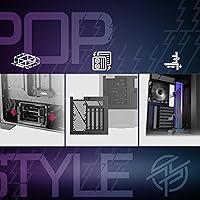
  • Expansion Slots: Seven rear PCIe expansion slots are included, with an optional swap to a 4-slot vertical PCIe bracket for vertical GPU mounting.
  • Dust Filters: Removable dust filters are present on the front, top, side, and bottom panel openings.
  • Drive Storage: Supports one 3.5-inch HDD via a sliding cage and multiple 2.5-inch SSD mounts for solid-state drives.
  • Lighting System: MSI Mystic Light ARGB lighting is pre-installed and controllable via the included hub or a manual LED toggle switch on the I/O panel.
  • Color: Available in a white exterior finish with matching interior accents designed for bright, showcase-style builds.
  • Panel Material: Primary structure is steel with a 4mm tempered glass side panel and plastic accent trim on interior components.
  • PCIe Riser Cable: A PCIe riser cable for vertical GPU mounting is not included in the box and must be purchased separately.

Related Reviews

MSI MPG GUNGNIR 111R Mid-Tower Gaming Case
80%
91%
Value for Money
84%
Build Quality
76%
Airflow & Thermal Performance
62%
Cable Management
88%
Included Fans
More
MSI MAG Forge 321R Airflow Mid-Tower Case
81%
91%
Airflow Performance
78%
Build Quality
74%
Included ARGB Fans
88%
Lighting & ARGB Ecosystem
87%
Cooling Flexibility
More
MSI MPG SEKIRA 100R Mid Tower Gaming PC Case
86%
94%
Cooling Performance
89%
Build Quality
91%
Ease of Installation
88%
Aesthetics & RGB Lighting
90%
Airflow & Ventilation
More
Raidmax X921 Mesh Airflow Gaming PC Case
84%
89%
Cooling Performance
91%
Build Quality
83%
RGB Lighting Effects
68%
Cable Management
90%
Airflow Design
More
Corsair 3000D Airflow Mid-Tower PC Case
81%
93%
Airflow Performance
88%
Build Quality & Materials
91%
Thermal Management Design
84%
Cable Management
61%
Included Fans Quality
More
FOIFKIN F600
FOIFKIN F600
77%
91%
Value for Money
78%
Airflow Performance
74%
Build Quality
93%
Aesthetics & RGB Lighting
63%
Cable Management
More
FOIFKIN F300 PC Case
86%
91%
Value for Money
88%
Cooling Performance
85%
Build Quality
94%
Ease of Assembly
87%
Design & Aesthetics
More
FOIFKIN K6 PC Case
FOIFKIN K6 PC Case
84%
94%
Cooling Performance
89%
Ease of Installation
85%
Build Quality
70%
GPU Compatibility
88%
Design & Aesthetics
More
FOIFKIN M9 PC Case
FOIFKIN M9 PC Case
83%
93%
Cooling Performance
88%
Design & Aesthetics
90%
Build Quality
85%
Ease of Access
80%
Motherboard Compatibility
More
Jonsbo N4 NAS PC Case
73%
83%
Build Quality
91%
Aesthetic Design
88%
Storage Flexibility
84%
Hot-Swap Functionality
47%
CPU Cooler Clearance
More

FAQ

Yes, the MSI MPG GUNGNIR 300R Airflow PC Case is designed to accommodate E-ATX boards natively, which is genuinely uncommon for a mid-tower at this price point. That said, with the largest E-ATX layouts you may find cable routing around the 24-pin connector area a bit snug, so planning your cable management before installing the board is a good idea.
It ships with four 120mm PWM ARGB fans pre-installed and includes a 6-port hub for controlling both fan speed and lighting. You do not need to buy additional fans to get started — they perform well right out of the box for most builds.

Both positions support radiators up to 360mm, so a dual-radiator configuration is technically possible. The main thing to watch is clearance between a top-mounted radiator and tall RAM modules — if you are using high-profile RAM with a top 360mm rad, double-check the stack height before committing to that layout.

No, and this catches a fair number of buyers off guard. The case includes the vertical PCIe bracket as an optional swap for the standard rear bracket, but the riser cable itself is a separate purchase. Make sure to factor that into your budget if vertical GPU mounting is part of your plan.

All four filters — front, top, side, and bottom — are designed to be removable without tools. The bottom filter slides out easily even with the case in its normal position, which makes routine cleaning straightforward. In dusty environments or homes with pets, plan on checking them every four to six weeks.

The maximum supported CPU cooler height is 175mm, so you are right at the limit. Most 175mm coolers fit, but the offset-mounted glass panel does provide a small amount of extra clearance compared to flush-mounted designs. If your cooler is even slightly over spec, the offset mount may save you, but it is worth confirming your specific cooler dimensions before purchasing.

Yes — there is a manual LED toggle switch on the front I/O panel that cycles through the pre-set lighting effects built into the hub. If you are using a non-MSI motherboard and do not want to install MSI Center, the manual switch gives you basic control without any software dependency.

The GUNGNIR 300R Airflow includes one sliding 3.5-inch HDD cage, so mechanical drive capacity is limited compared to cases with dedicated multi-drive bays. If mass storage is a priority, this case is not the strongest fit — it is designed around an SSD-primary setup with one HDD for overflow storage at most.

The glass panel uses a straightforward mounting system and comes off without much effort, which buyers consistently highlight as a plus during the initial build. The offset mounting means it sits slightly away from the frame, and resetting it after cleaning or component swaps is quick and does not require tools.

It does more than a darker case would. The white exterior is visually striking but picks up fingerprints and smudges during the build process and over time with regular handling. A microfiber cloth keeps it looking clean without scratching the finish, but if you move your system frequently or are not keen on occasional wipe-downs, it is worth keeping in mind.