Overview

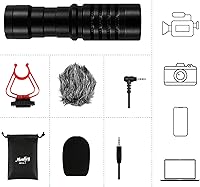
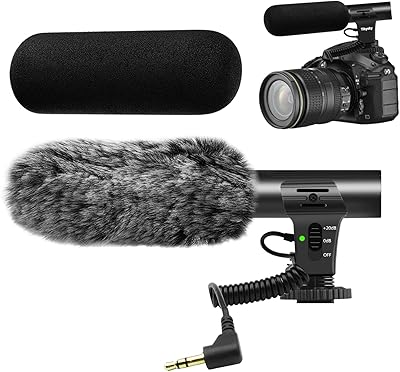
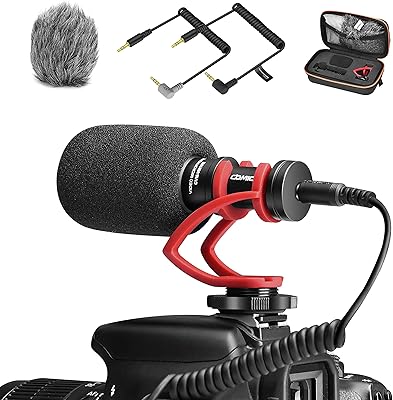
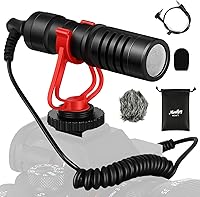
The Moukey MCM-1 Camera Microphone is a compact shotgun mic built for vloggers and content creators who want noticeably better audio without spending serious money. It draws power straight from your device’s 3.5mm jack, so there are no batteries to manage. The metal body is light enough to forget it’s there, and the package includes a surprisingly complete accessory kit — shock mount, dual windscreens, two cables, and a carrying bag. Before buying, note that iPhone 7 and later require Apple’s lightning adapter (sold separately), and certain Canon EOS models without a mic jack are not compatible at all.
Features & Benefits

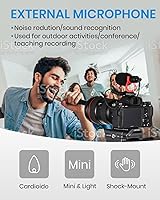
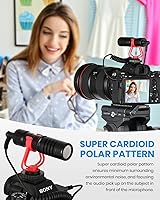
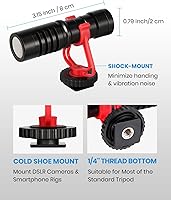
The cardioid polar pattern is this shotgun mic’s most practical asset — it captures audio from directly in front of the lens while naturally reducing room noise and off-axis sounds. The aluminum shell does more than look professional; it actively shields recordings from radio frequency interference, which matters more than you’d think in busy event spaces or near wireless equipment. A built-in shock mount absorbs handling bumps and footfall vibrations, keeping your audio clean during movement. The dual-cable setup — a TRS for cameras and a TRRS for phones — means you can switch between devices without hunting for adapters, which alone saves real frustration on a busy shoot.

Best For

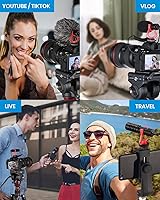
This vlogging microphone is a strong pick for solo content creators shooting YouTube vlogs, TikTok clips, or travel videos on a budget. If you’ve been relying on your camera’s built-in mic and wondering why your audio sounds hollow or distant, the MCM-1 is genuinely the most accessible fix at this price. It’s equally well-suited to smartphone filmmakers, students learning video production, and anyone doing basic interview or tutorial work in a reasonably quiet room. Audio engineers and podcasters with serious production needs will want something more capable, but for the casual creator upgrading their setup on a tight budget, it punches well above its tier.

User Feedback

Most buyers who come from built-in camera mics describe the improvement as immediately noticeable, especially for dialogue clarity and reduced background hiss. The accessory package also earns consistent praise — people are regularly surprised that the carrying bag, windscreens, and both cables are all included at this price. On the flip side, the most common frustrations are compatibility-related. Newer iPhone users who didn’t know they needed a lightning adapter are a recurring theme in negative reviews. A smaller number of buyers mention the mount fitting loosely on certain cold shoes. Outdoor performance in windy conditions is a fair criticism too; the windshields help, but high-wind environments will still challenge this mic.

Pros

  • Immediate, noticeable improvement over any built-in camera or smartphone microphone.
  • Plug-and-play setup with no batteries, apps, or drivers required.
  • Includes both a TRS and TRRS cable, covering cameras and smartphones in one box.
  • The accessory kit — shock mount, two windscreens, two cables, and a bag — is unusually complete for the price.
  • Aluminum body offers genuine RF shielding and holds up well to regular travel and bag life.
  • The cardioid pickup pattern reduces ambient room noise for cleaner dialogue in controlled spaces.
  • Lightweight enough to keep a compact mirrorless or smartphone rig well-balanced.
  • Works across a wide range of devices including camcorders, Android phones, tablets, and laptops.
  • The shock mount visibly reduces handling bumps and footstep vibration during walking shots.
  • No ongoing running costs — no batteries to replace, no subscriptions, no accessories to restock.

Cons

  • iPhone 7 and later users need a lightning adapter that is not included in the box.
  • Several Canon EOS models and cameras without a 3.5mm mic jack are fully incompatible.
  • The cold shoe mount fits loosely on some mirrorless camera bodies, introducing faint mechanical rattle.
  • Cables have a reported tendency to develop intermittent connectivity issues after months of regular use.
  • Wind noise breaks through both windscreens in gusty or sustained outdoor conditions.
  • Plugging in the wrong cable produces zero audio, which trips up a lot of first-time users.
  • Noise floor becomes audible when camera gain is pushed up to compensate for quiet subjects or large rooms.
  • The carrying bag has no internal padding, offering minimal protection against harder items in a bag.
  • Background noise rejection weakens noticeably near traffic, crowds, or loud machinery.
  • Audio professionals and musicians will find the upper frequency response range too limited for serious work.

Ratings

The scores below for the Moukey MCM-1 Camera Microphone were generated by our AI system after analyzing thousands of verified global buyer reviews, with spam, bot-submitted, and incentivized feedback actively filtered out. Every category reflects what real users consistently praised or criticized across multiple purchase cohorts. Both the genuine strengths and the recurring frustrations are represented transparently, so you can make an informed decision before buying.
Audio Quality Upgrade vs Built-In Mic
83%
For buyers coming from their camera or phone’s onboard microphone, the difference is striking from the very first recording. Dialogue sounds cleaner, voices cut through more naturally, and that hollow, distant quality common to built-in mics largely disappears in controlled indoor settings.
The improvement is real but context-dependent. In loud environments — busy streets, crowded events, or windy outdoor locations — the gap narrows considerably, and background noise can still creep in more than buyers expect at this tier.
Value for Money
91%
At this price point, the sheer completeness of what you receive is genuinely unusual. Getting a shock mount, dual windscreens, two cables for different devices, and a carrying bag in a single package would cost more if bought separately from most accessory brands.
The value equation only holds if the mic is compatible with your device. Buyers who need the iPhone lightning adapter or discover their camera lacks a 3.5mm mic jack end up spending more — or feeling misled — which chips away at the perceived value quickly.
Ease of Setup
88%
There are no drivers to install, no pairing procedures, and no batteries to source. You clip it onto the cold shoe, plug in the right cable, and you’re recording within about 90 seconds. For beginners especially, that friction-free experience matters a lot.
The cable labeling is small and easy to overlook, and plugging the wrong cable into your device produces no audio at all — which has confused a meaningful number of first-time users who then wrongly assume the mic is defective.
Build Quality & Durability
74%
26%
The all-aluminum body feels noticeably more solid than the plastic-bodied competitors sitting at a similar price. It survives being tossed into a camera bag regularly without obvious wear, and the metal construction adds a layer of RF shielding that plastic simply cannot offer.
The cold shoe mount connection feels slightly loose on certain camera bodies, and a few users report the cable jack fit becoming less secure over time. It holds up well for casual use but would not survive the daily physical demands of a professional production environment.
Background Noise Rejection
71%
29%
The cardioid pickup pattern does a solid job of ignoring sounds coming from the sides and rear, which is particularly useful for vloggers filming in moderately busy cafes, offices, or home setups with ambient HVAC noise in the background.
It is not a tight supercardioid or hypercardioid pattern, so significant ambient noise from any direction will still bleed through. Users filming near traffic, crowds, or loud machinery find that noise rejection falls short of what the product description implies.
Compatibility Range
62%
38%
The dual-cable system — one for cameras and one for smartphones — means a single mic can realistically serve an Android phone on Monday and a DSLR on the weekend without any extra purchases for most Android and standard camera users.
iPhone 7 and later users hit an immediate wall without a lightning adapter that is not included in the box. Certain Canon EOS models and other cameras lacking a dedicated mic jack are fully incompatible, and the listing’s fine print does not make this obvious enough for casual shoppers.
Wind Noise Reduction
67%
33%
Having both a foam cover and a furry windshield included is a genuine bonus. For light outdoor filming — a park interview on a calm day or a walking vlog in mild conditions — the windshields do noticeably reduce low-frequency wind rumble.
Neither windshield is a match for sustained or gusty wind. Users shooting at the beach, on hilltops, or in open fields frequently report that wind noise overwhelms the audio even with both windscreens deployed, which is a real limitation for travel content creators.
Shock Mount Performance
78%
22%
The included shock mount absorbs a fair amount of handling vibration, which is especially helpful when you’re walking and filming simultaneously or when you frequently adjust your grip mid-shot. It noticeably reduces the low thumps that otherwise ruin otherwise clean takes.
It is a basic rubber-band style mount rather than a true elastic suspension system, so sharp physical impacts or rapid camera movements still transmit some vibration into the recording. Heavy-handed operators will still hear occasional handling artifacts.
Portability & Form Factor
89%
At just over four inches long and genuinely lightweight, this vlogging microphone adds almost nothing to the overall footprint of a compact camera rig. The included carrying bag means it travels safely in a jacket pocket or small camera pouch without rattling around.
The carrying bag, while a nice touch, is basic fabric with no padding. For users who store their gear loosely in a backpack, the mic could still get scratched or dented if not placed carefully alongside harder accessories.
Cable Quality & Reliability
61%
39%
The cables included are long enough for most single-operator shooting scenarios, and the braided exterior on the cables feels more durable than the thin cords typically bundled with budget accessories in this category.
A recurring complaint across buyer reviews involves the cables developing intermittent connectivity issues after several months of regular use. The 3.5mm connections in particular seem prone to becoming unreliable if the cable is frequently bent near the jack end.
Frequency Range & Audio Detail
66%
34%
The usable frequency range covers the full span of human speech comfortably, and for voice-focused recording — tutorials, interviews, commentary — the audio output has enough clarity that minimal post-production EQ is needed in quiet environments.
The upper frequency ceiling is noticeably limited compared to mid-range condenser mics, which means acoustic instruments, ambient soundscapes, and high-pitched audio sources lack the air and detail that more discerning listeners will miss.
Cold Shoe Mount Fit
59%
41%
The mount is designed to fit standard cold shoe slots found on most DSLR cameras and mirrorless bodies, and for the majority of users it attaches and stays put adequately for stationary or slow-movement shooting scenarios.
Multiple users report a noticeable wobble on specific camera bodies, particularly some Sony and Fujifilm mirrorless models where the cold shoe dimensions vary slightly from the Canon/Nikon standard. This looseness can introduce a faint mechanical rattle that is picked up during recording.
Noise Floor & Self-Noise
69%
31%
In quiet indoor conditions, the self-noise of the MCM-1 stays low enough that it does not introduce audible hiss into recordings, which is a meaningful achievement at this price level and one that separates it from some cheaper competing mics.
Push the gain on your camera up to compensate for a quieter subject or a larger room, and the noise floor becomes apparent. Users who regularly film in low-light conditions and need higher camera gain settings will notice a background hiss that requires noise-reduction in editing.
Accessory Completeness
93%
The package is strikingly well-equipped for the asking price. Getting both windscreen types, both cable types, the shock mount, the OMTP adapter, and a carrying bag in one box means most buyers can start recording immediately without a follow-up shopping trip.
The OMTP adapter is useful for a narrow range of older Android devices but adds clutter for buyers who do not need it. Some users also wish a short extension cable were included for setups where the mic needs to be positioned further from the camera body.

Suitable for:

The Moukey MCM-1 Camera Microphone is built for budget-conscious creators who are tired of their footage being let down by hollow, distant-sounding built-in audio. Solo vloggers shooting YouTube travel diaries, TikTok content, or casual interview videos will find it a practical and immediate upgrade without needing to understand complex audio setups. Students studying videography or content creation get a complete starter kit in a single purchase, which removes a lot of early friction. Android smartphone users and DSLR shooters who want one mic that works across both devices are particularly well-served by the dual-cable system included in the box. If your filming happens mostly indoors — home studios, offices, classrooms, or quiet outdoor settings — this shotgun mic will consistently deliver cleaner, more focused dialogue than anything built into your camera or phone.
Not suitable for:

The Moukey MCM-1 Camera Microphone is a poor fit for anyone who needs professional-grade audio, plans to record in consistently noisy or windy outdoor environments, or works with acoustic instruments and music where tonal detail above the voice range matters. iPhone 7 and later users will need Apple’s lightning-to-3.5mm adapter just to use it — that is an added cost and a step that is easy to miss before the package arrives. Certain Canon EOS models and any camera that lacks a dedicated microphone jack are entirely incompatible, so verifying your device specs before buying is non-negotiable. Audio professionals, documentary filmmakers, or anyone producing content where post-production sound standards are high will quickly find the MCM-1’s frequency ceiling and noise floor limiting. If you are regularly filming in unpredictable outdoor conditions, a higher-tier mic with a proper blimp windshield system will serve you far better.
Specifications

  • Microphone Type: Shotgun condenser microphone designed for on-camera use with cameras, camcorders, and smartphones.
  • Polar Pattern: Cardioid (unidirectional), capturing sound primarily from directly in front while reducing pickup from the sides and rear.
  • Frequency Response: Covers 20 Hz to 16,000 Hz, which is sufficient for clear voice recording, speech, and general ambient sound.
  • Signal-to-Noise Ratio: Rated at 58 dB, meaning the mic produces a relatively clean signal with low background hiss under quiet recording conditions.
  • Max SPL: Handles sound pressure levels up to 115 dB, making it suitable for loud environments like live events without distorting.
  • Sensitivity: Rated at -43 ±3 dB, indicating a standard sensitivity level appropriate for close-range voice and on-camera dialogue recording.
  • Body Material: Full aluminum construction that provides both structural durability and passive shielding against radio frequency interference.
  • Dimensions: Measures 4.2 × 0.9 × 0.9 inches, making it compact enough to fit most standard camera cold shoe mounts without overhanging.
  • Weight: Weighs 8.4 ounces, which is light enough to keep small mirrorless and DSLR rigs well-balanced during handheld shooting.
  • Power Source: Bus-powered directly through the 3.5mm jack connection; no batteries or external power supply are required.
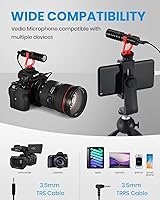
  • Connection Type: Uses a 3.5mm jack interface, with separate TRS and TRRS cables included to cover different device types.
  • TRS Cable Use: The included 3.5mm TRS cable is intended for DSLR cameras, camcorders, and dedicated audio recorders with a mic input.
  • TRRS Cable Use: The included 3.5mm TRRS cable is designed for smartphones, tablets, and Mac computers that use a combined headphone and mic jack.
  • Mounting System: Ships with a rubber-suspension shock mount that attaches to standard cold shoe slots to reduce vibration transfer from the camera body.
  • Wind Protection: Includes both a foam windscreen and a furry windshield (dead cat) to reduce wind noise at different levels of outdoor exposure.
  • Included Accessories: Package contains a shock mount, foam windscreen, furry windshield, TRS cable, TRRS cable, OMTP adapter, and a soft carrying bag.
  • Compatible Devices: Works with DSLR cameras, camcorders, Android smartphones, tablets, laptops, and audio recorders equipped with a 3.5mm microphone jack.
  • Incompatible Devices: Does not work with cameras lacking a 3.5mm mic input (including certain Canon EOS models) or iPhones without a separate lightning-to-3.5mm adapter.
  • Channels: Single-channel (mono) output, which is standard for on-camera shotgun microphones used in video production.
  • Impedance: Output impedance of up to 0.68 kΩ at 1 kHz, which is compatible with the microphone inputs found on consumer cameras and smartphones.

Related Reviews

Tikysky TLMIC Shotgun Video Microphone
76%
74%
Audio Clarity
91%
Value for Money
89%
Portability and Weight
86%
Ease of Use
58%
Build Quality
More
Boya BY-MM1 Universal Camera Microphone
84%
87%
Audio Quality
92%
Value for Money
90%
Portability/Size
88%
Ease of Use
83%
Build Quality
More
Sony ZV-1 Digital Camera
85%
94%
Video Quality
92%
Autofocus Performance
88%
Ease of Use
91%
Portability
85%
Build Quality
More
Joby Wavo Mobile On-Camera Microphone
85%
88%
Audio Quality
93%
Portability & Size
86%
Build Quality
90%
Noise Reduction (Shock Mount)
85%
Wind Noise Reduction (Deadcat Windscreen)
More
Rode VideoMicro
Rode VideoMicro
86%
93%
Build Durability
97%
Size and Weight
98%
Power Convenience
91%
Wind Protection
89%
Accessories Value
More
Comica CVM-VM10II
Comica CVM-VM10II
83%
92%
Build Quality
88%
Value for Money
79%
Audio Clarity
94%
Portability
84%
Wind Noise Reduction
More
MCM Eau de Parfum 1.7oz
87%
89%
Fragrance Scent
91%
Longevity/Duration
87%
Packaging/Portability
82%
Value for Money
90%
Unisex Appeal
More
MXL BCD-1 Dynamic Broadcast Microphone
88%
92%
Sound Quality
88%
Build Quality
91%
Noise Isolation
85%
Ease of Use
89%
Compatibility with Audio Interfaces
More
ZOMFOM 4K Body Camera with External Microphone
78%
88%
Video Quality
94%
Portability
85%
Ease of Use
62%
Battery Life
91%
Audio Quality
More
Rode SVM Stereo VideoMic On-Camera Microphone
87%
91%
Sound Quality
89%
Portability
88%
Ease of Use
85%
Wind Noise Reduction
93%
Build Quality
More

FAQ

No batteries required at all. The mic draws the small amount of power it needs directly through the 3.5mm cable from your camera or phone. Just plug it in and it works. The only potential extra purchase is a lightning adapter if you are using an iPhone 7 or later, since those phones dropped the headphone jack.

It can, but not straight out of the box. iPhones from the iPhone 7 onward use a Lightning port rather than a 3.5mm headphone jack, so you will need Apple’s official lightning-to-3.5mm adapter to connect the mic. That adapter is not included in the package, so factor that in before ordering.

Use the TRS cable (the one labeled for cameras) when connecting to a DSLR, camcorder, or audio recorder. Use the TRRS cable when connecting to an Android phone, tablet, or Mac. Plugging in the wrong cable will result in no audio, so it is worth checking the label before you start shooting.

Unfortunately, no. Canon EOS Rebel models including the T5i, T6, and T7 do not have a dedicated 3.5mm microphone jack, which means the Moukey MCM-1 Camera Microphone physically cannot be used with them. Double-check your specific camera model’s specs for a mic input port before purchasing.
For most users, the difference is immediately obvious, especially for spoken content like vlogs, tutorials, or interviews filmed indoors. Your voice will sound closer, cleaner, and less hollow. That said, this is a budget-tier shotgun mic, not a studio condenser, so manage expectations accordingly for professional productions.

Yes, and the included windscreens help in mild conditions. For light breezes or calm outdoor settings, the foam cover or furry windshield will reduce wind rumble adequately. In strong or gusty wind, though, wind noise can still break through noticeably. It is a practical outdoor option for casual use, but not ideal for consistently challenging weather conditions.

It genuinely does for everyday handling. Walking shots, grip adjustments, and light camera taps are all absorbed reasonably well by the rubber-suspension mount. It will not eliminate every vibration from heavy handling or sudden movements, but it is a meaningful improvement over mounting the mic directly to the camera body.

The most common cause is the wrong cable being connected. Make sure you are using the TRS cable for a camera or the TRRS cable for a smartphone. Also confirm your device has a dedicated 3.5mm microphone input rather than a headphone-only port. On cameras, check that the input is set to external mic mode in the audio settings menu.

For on-camera interviews where the camera is relatively close to the subject, this vlogging microphone will generally capture cleaner, more natural-sounding audio because it avoids clothing rustle and placement inconsistency that lav mics can suffer from. A lav wins for distance or situations where you need the subject to move freely, but for static sit-down interviews it is a strong and simpler alternative.

The soft carrying bag keeps everything organized and prevents the cables from tangling, which is genuinely useful. However, it has no rigid frame or internal padding, so it will not protect against hard impacts if the mic is rattling around next to heavier gear in a backpack. For most casual users it is more than adequate, but serious travelers may want a small padded pouch for extra protection.