Overview

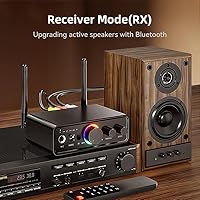
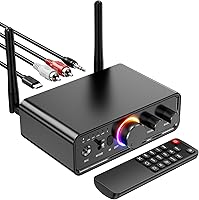
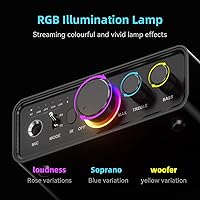
The MOREGAX M18 Bluetooth Audio Receiver Transmitter is one of those rare adapters that solves a real problem: your stereo receiver or bookshelf amplifier has no Bluetooth, and you have no interest in replacing it. This Bluetooth audio bridge works in both directions — pull audio from your phone to your speakers, or push audio from your TV out to wireless headphones. It sits on a desk with physical knobs for volume, bass, and treble that feel genuinely useful compared to fumbling through an app. The RGB lighting is a matter of taste — some will love the color shifts, others will wish for an off switch. It occupies a solid middle ground between throwaway dongles and dedicated audiophile gear.
Features & Benefits

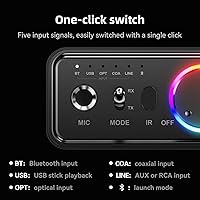
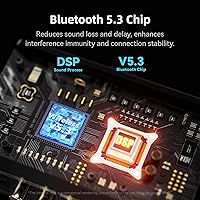
The M18 adapter runs on Bluetooth 5.3 with a dual-antenna design that genuinely extends range — expect around 80 to 110 feet indoors, less if walls and routers get in the way. Connectivity is a real strength: RCA, 3.5mm AUX, optical, coaxial, and USB all show up here, though it is worth knowing upfront that optical and coaxial only function in transmitter mode, not as inputs. A built-in DSP chip with dedicated bass and treble controls means you are actually shaping the sound, not just routing it. The 6.5mm mic input is a genuine differentiator — karaoke and live vocal use cases are covered without extra hardware. Low-latency output keeps dialogue and lip movement in sync during TV playback.

Best For

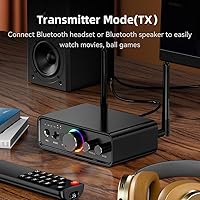
This Bluetooth audio bridge is most at home in a setup where the hardware is good but wireless options are absent. If you own a vintage amplifier or a receiver without Bluetooth, this is a straightforward way to add it without touching the rest of your system. Home theater owners who want to send TV audio to wireless headphones late at night will find transmitter mode genuinely practical. The physical knob controls make it a strong pick for anyone who finds app-based audio management tedious. There is also a niche but real audience for the mic input — households that do karaoke regularly will appreciate one fewer box on the shelf. USB playback is a quiet bonus for those who still keep music on drives.

User Feedback

Buyers who have tried the MOREGAX receiver-transmitter consistently highlight how fast the initial setup is — most report being up and running within minutes of unboxing. The broad port compatibility draws particular appreciation from users who were unsure their older gear would connect. On the downside, a number of reviewers note that real-world indoor range falls short of the advertised figure, especially in apartments with competing wireless signals. A few users point out the RGB lighting cannot be turned off, which bothers those running the unit in a dark home theater. Knob build quality is generally described as functional rather than premium, and some buyers note the audio improvement over a basic dongle is noticeable but not dramatic.

Pros

  • Dual receiver and transmitter modes cover nearly every common home audio wireless scenario in one box.
  • Physical bass and treble knobs let you shape the sound without opening an app.
  • Port selection — RCA, AUX, optical, coaxial, and USB — is unusually broad for this price tier.
  • The M18 adapter pairs quickly and reconnects automatically to previously used devices.
  • Built-in DSP chip delivers a cleaner, fuller sound than basic pass-through Bluetooth adapters.
  • The 6.5mm mic input adds genuine karaoke functionality that most rivals at this price simply omit.
  • USB flash drive playback works as a standalone music player with no phone required.
  • Bluetooth 5.3 with dual antennas holds a more stable connection than single-antenna alternatives.
  • Low-latency output keeps TV dialogue and lip sync acceptably aligned for everyday viewing.
  • Setup is plug-and-play — no drivers, no accounts, no configuration software needed.

Cons

  • Optical and coaxial ports only work in transmitter mode, which surprises many buyers who assume both-way digital input is supported.
  • RGB status lighting cannot be dimmed or turned off, which is a genuine irritant in darkened home theater rooms.
  • Real indoor range typically lands between 40 and 70 feet, well below the headline figure in typical home conditions.
  • Knob durability draws concern from longer-term users, with some reporting wobble after months of regular use.
  • Mode switching is not intuitive from the hardware alone, and the included documentation offers minimal guidance.
  • Background hiss is occasionally noticeable at higher output volumes through the 3.5mm connection.
  • No track navigation or display for USB playback makes managing large music libraries impractical.
  • Simultaneous proximity of multiple paired devices can cause unpredictable auto-reconnection behavior.
  • Included cables are functional but short, which limits flexible placement near a TV or receiver.
  • Mic input has no built-in echo or reverb controls, leaving vocal processing entirely to the connected amplifier.

Ratings

The MOREGAX M18 Bluetooth Audio Receiver Transmitter has been evaluated by our AI system after scanning thousands of verified global buyer reviews, with spam, bot-generated, and incentivized feedback actively filtered out. What follows reflects the honest distribution of real user experiences — strengths and frustrations weighted equally. Scores are deliberately granular to give you an accurate picture of where this Bluetooth audio bridge excels and where it falls short of expectations.
Ease of Setup
91%
Most buyers report the M18 adapter is ready to use within a few minutes of unboxing — plug in the appropriate cable, power it on, and it pairs almost immediately with nearby Bluetooth devices. Users with zero technical background appreciate that there is no software to install and no account to create.
A small share of reviewers encountered pairing confusion when switching between receiver and transmitter modes for the first time, as the mode toggle is not immediately obvious. A clearer printed guide or mode indicator light would reduce this friction significantly.
Connection Stability
78%
22%
In open living rooms and smaller apartments, the M18 adapter maintains a steady Bluetooth connection that holds up well during background streaming and TV viewing. The dual-antenna design does appear to reduce the dropouts that plague cheaper single-antenna alternatives.
Users in densely furnished homes or apartments with multiple competing Wi-Fi networks report periodic dropouts and occasional re-pairing requirements. Real-world indoor range tends to land closer to 50 to 70 feet rather than the upper end of the advertised figure.
Audio Quality
73%
27%
Compared to basic pass-through Bluetooth dongles, buyers consistently notice a cleaner, fuller sound thanks to the onboard DSP chip. The ability to physically dial in bass and treble levels is genuinely appreciated by users who run the adapter through a bookshelf stereo or vintage amplifier.
Audiophiles expecting high-resolution wireless audio will be disappointed — this is a practical convenience device, not a hi-fi component. A handful of reviewers describe a faint background hiss at higher volume levels when connected via the 3.5mm output.
Port Compatibility
88%
The range of available connections is a standout feature at this price tier — RCA, 3.5mm AUX, optical, coaxial, and USB flash drive playback cover nearly every common home audio scenario. Buyers hooking up older receivers and amplifiers highlight this breadth as the primary reason they chose this adapter over cheaper alternatives.
The key limitation here is that optical and coaxial connections only function in transmitter mode, meaning you cannot feed a digital audio signal into the M18 as a source. Several buyers discovered this only after purchase, which led to frustration and returns.
Wireless Range
67%
33%
Outdoors and in open-plan spaces, the dual-antenna setup does push usable range noticeably beyond budget single-antenna adapters. Users who place the adapter centrally in a medium-sized home report reliable coverage throughout the main living areas.
Walls, routers, and dense furniture significantly shrink the practical range indoors, with many reviewers reporting reliable performance only up to around 40 to 60 feet in real home conditions. The advertised 160-foot outdoor figure is technically possible but practically irrelevant for the typical home audio use case.
Low-Latency Performance
76%
24%
For TV watching and casual movie streaming, the latency is low enough that lip sync remains acceptable without manual audio delay adjustments on most televisions. Users pairing wireless headphones for late-night TV viewing specifically call out the lack of noticeable audio lag as a positive.
In more demanding scenarios — gaming or content where audio timing is critical — some users notice a subtle delay that becomes distracting over time. Latency performance also appears to vary depending on the receiving Bluetooth device, with some headphone models performing better than others.
Build Quality
63%
37%
The compact chassis feels reasonably solid for a desktop adapter, and the physical knobs give the unit a more tactile, premium feel than touchpad-only alternatives. The weight distribution suggests there is genuine internal hardware rather than hollow plastic filling.
Longer-term reviewers flag that the knobs can develop a slight wobble after extended daily use, and the plastic housing shows scratches more readily than expected. A few buyers noted that the power switch feels noticeably cheaper than the rest of the unit.
Karaoke & Mic Functionality
81%
19%
The 6.5mm microphone input is a genuine differentiator that most competing adapters at this price point simply do not offer. Families who use the unit for home karaoke nights report it works reliably and delivers acceptable vocal clarity through a connected amplifier.
The mic input does not include independent echo or reverb controls, so users expecting built-in vocal effects will need to add those separately. Dedicated karaoke enthusiasts who sing frequently may eventually want a more purpose-built solution with richer vocal processing.
RGB Lighting
58%
42%
Buyers who care about their desk or entertainment center setup appreciate the color-shifting RGB indicator, which also serves a functional purpose by visually confirming which mode the unit is currently operating in. In a gaming room or casual media setup, the lighting adds a subtle personality.
Home theater users running the adapter in a darkened room consistently complain that there is no way to dim or disable the RGB lighting, which becomes a visible distraction. This feels like a design choice that prioritizes aesthetics over the preferences of the core audio-focused buyer.
USB Playback
72%
28%
The ability to plug in a USB flash drive and play music directly without a phone or computer is a quietly useful feature that buyers with large local music libraries genuinely appreciate. It effectively turns the M18 adapter into a standalone audio player for playlists loaded onto a drive.
USB playback lacks any display or track navigation interface, meaning you rely entirely on whatever order files are stored on the drive. Users with large, unorganized libraries find this limiting, and there is no way to shuffle or search tracks without a connected control device.
Value for Money
83%
For a buyer trying to add Bluetooth to an existing home stereo system without replacing any hardware, this Bluetooth audio bridge delivers a meaningful set of capabilities at a price well below what you would pay for an entry-level Bluetooth amplifier with similar port coverage. Most buyers feel the feature count justifies the spend.
Buyers who only need basic Bluetooth reception and already own a device with a single input will find they are paying for ports and features they will never use. At this price point, the build quality and audio performance leave some headroom for improvement.
Automatic Reconnection
74%
26%
Returning Bluetooth devices pair again quickly after the unit powers up, which most buyers appreciate in a living room or bedroom context where the same phone or TV is used every day. The automatic proximity connection reduces the need to actively manage Bluetooth settings.
When multiple previously paired devices are within range simultaneously, a few users report unpredictable reconnection behavior where the unit latches onto an unintended source. A more transparent priority or device-selection system would resolve this edge case cleanly.
Mode Switching
69%
31%
Toggling between receiver mode and transmitter mode is a hardware-level function that does not require any app, which keeps the workflow simple once a user understands the mechanism. Buyers who regularly switch between sending TV audio to headphones and receiving phone audio to speakers find the dual-mode capability genuinely practical.
The mode-switching process is not intuitive from the physical controls alone, and the included documentation is thin. New users frequently spend time troubleshooting what is ultimately a straightforward toggle, suggesting the user experience here could benefit from clearer labeling.
Packaging & Accessories
61%
39%
The box includes the necessary cables to get started with most common connection types, which reduces the immediate need to source accessories separately. Buyers appreciate not having to make an additional purchase just to complete a basic installation.
The included cables are functional but short, which limits placement flexibility when positioning the adapter relative to a TV or amplifier. The printed documentation is minimal and does not adequately explain mode-specific limitations like the optical and coaxial transmitter-only restriction.

Suitable for:

The MOREGAX M18 Bluetooth Audio Receiver Transmitter is purpose-built for anyone who owns a capable stereo system or amplifier that simply lacks wireless connectivity — the kind of gear worth keeping, not replacing. If your television has no Bluetooth output and you want to send audio to wireless headphones for late-night viewing without disturbing others, this adapter handles that job without requiring a new TV or soundbar. Households that do casual karaoke will find real value in the built-in mic input, since most competing adapters at this price tier skip that feature entirely. Users who prefer turning a physical knob over tapping through a phone app will appreciate the hands-on bass, treble, and volume controls. Anyone with a local music library stored on USB drives also gets a standalone playback option that requires no streaming service or phone.
Not suitable for:

The MOREGAX M18 Bluetooth Audio Receiver Transmitter is the wrong tool for buyers expecting audiophile-grade wireless audio — it improves on cheap dongles, but it is not competing with dedicated hi-fi Bluetooth DACs. If you specifically need to feed a digital optical or coaxial signal into the adapter as an input source, you will be disappointed: those ports only function in transmitter mode, a limitation that catches many buyers off guard. Listeners who are particularly sensitive to background noise may notice a faint hiss at higher volumes through the 3.5mm output. If your living space involves many competing wireless signals or thick walls, the real-world range will fall noticeably short of the advertised spec, which can mean frustrating dropouts. Finally, buyers who want RGB-free aesthetics for a darkened home theater environment should know there is no way to disable the status lighting.
Specifications

  • Bluetooth Version: Equipped with Bluetooth 5.3 for improved connection stability and lower energy consumption compared to older Bluetooth standards.
  • Antenna Design: Dual-antenna configuration extends wireless range and reduces signal dropout in environments with competing wireless interference.
  • Indoor Range: Rated for 80–110 ft of usable range indoors under typical home conditions with moderate obstructions.
  • Outdoor Range: Line-of-sight outdoor range reaches up to 160 ft in open environments free of physical barriers.
  • Operating Modes: Functions as either a Bluetooth receiver (streaming audio in from a phone or tablet) or a Bluetooth transmitter (sending audio out to wireless headphones or speakers).
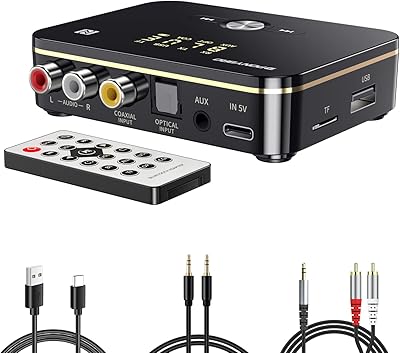
  • Audio Connections: Supports 3.5mm AUX, RCA, optical (Toslink), coaxial, and USB flash drive input and output connections.
  • Optical & Coaxial Use: Optical and coaxial ports are available exclusively in transmitter mode and cannot be used as digital audio inputs.
  • Microphone Input: Includes a 6.5mm microphone jack for live vocal or karaoke use through a connected amplifier or speaker system.
  • Sound Processing: Built-in DSP chip with dedicated physical knobs for independent bass and treble adjustment beyond simple volume control.
  • Volume Control: Physical rotary knob handles both power switching and master volume adjustment directly on the unit.
  • USB Playback: USB port accepts flash drives for standalone local music playback without requiring a connected phone or computer.
  • Surround Support: Compatible with 5.1 surround sound channel configurations when connected to a supported home theater system.
  • RGB Lighting: Multi-color RGB status lighting changes color to reflect the current operating mode and cannot be manually disabled.
  • Dimensions: Unit measures 4.6″ deep by 4.3″ wide by 1.6″ tall, suitable for placement on a shelf or media console.
  • Weight: Weighs 1.12 lbs, making it light enough to position flexibly without dedicated mounting hardware.
  • Power Source: Powered by an included built-in lithium polymer battery, charged via the provided cable rather than disposable batteries.
  • Driver Requirement: Operates as a plug-and-play device requiring no driver installation or companion software on any connected source device.
  • Automatic Pairing: Automatically reconnects to the most recently paired Bluetooth device upon powering on, without manual re-pairing each session.
  • Model Number: Official model designation is M18, manufactured by MOREGAX and first made available in April 2024.
  • Included Accessories: Package includes the lithium polymer battery, connecting cables for common audio ports, and a basic printed user manual.

Related Reviews
PONYBRO M8
PONYBRO M8
74%
91%
Ease of Setup
78%
Connection Stability
74%
Audio Quality
76%
Low Latency Performance
88%
Port & Compatibility Range
More
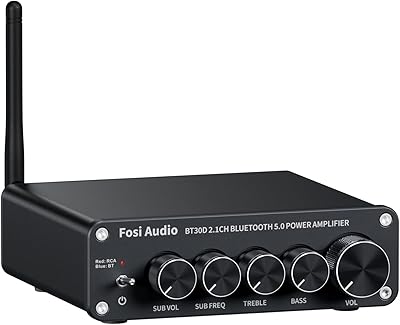
Fosi Audio BT30D
Fosi Audio BT30D
78%
83%
Sound Quality
88%
Subwoofer Performance
81%
Bluetooth Connectivity
91%
Value for Money
62%
Build Quality
More
Swiitech Bluetooth Transmitter Receiver T1
87%
95%
Ease of Use
88%
Compatibility with Devices
90%
Audio Quality
80%
Battery Life
92%
Setup Process
More
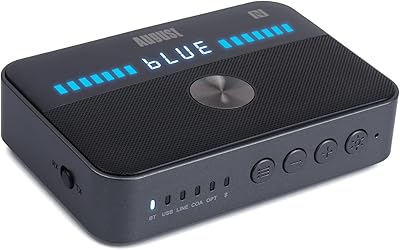
August MR285 Bluetooth Transmitter Receiver
78%
83%
Ease of Setup
76%
Bluetooth Connectivity Stability
78%
NFC Pairing Performance
79%
Audio Quality
72%
Latency Performance
More
FiiO BTA30Pro Bluetooth Receiver/Transmitter
84%
94%
Audio Quality
80%
Setup & Installation
88%
Bluetooth Range & Connectivity
85%
Portability & Design
86%
Build Quality
More
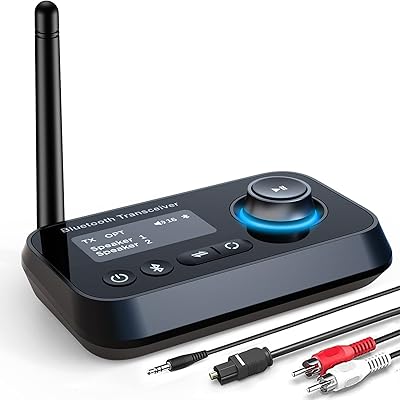
ifofo 3-in-1 Bluetooth 5.0 Audio Adapter
79%
88%
Ease of Setup
84%
Bypass Mode Performance
79%
Audio Latency
71%
Wireless Range
76%
Dual Device Pairing
More
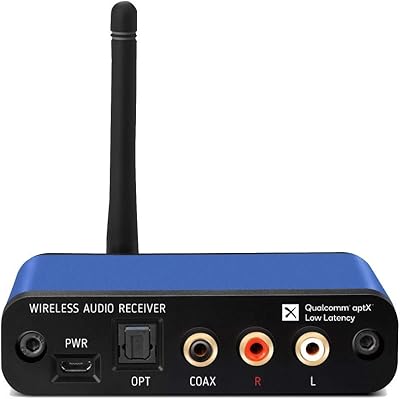
BluDento BLT-2
BluDento BLT-2
83%
88%
Sound Quality
84%
Wireless Range
93%
Ease of Setup
76%
Connection Stability
91%
Output Flexibility
More
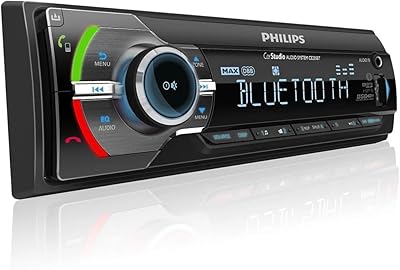
Philips Car Stereo Bluetooth Audio Receiver
82%
91%
Value for Money
88%
Sound Quality
75%
Bluetooth Performance
92%
Ease of Installation
85%
Connectivity Options
More
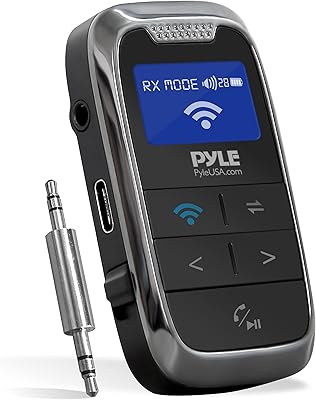
Pyle PDWM17BT Bluetooth Transmitter Receiver
68%
78%
Value for Money
83%
Ease of Setup
61%
Bluetooth Connection Stability
58%
Sound Quality
63%
Battery Life
More
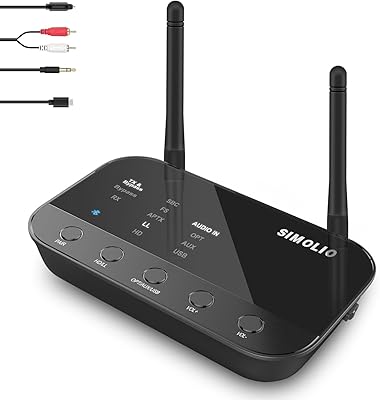
SIMOLIO JH-202D Bluetooth Transmitter Receiver
73%
78%
Ease of Setup
83%
Audio Quality
71%
Low Latency Performance
82%
Dual Headphone Streaming
79%
Bypass Mode (Headphones + Soundbar)
More

FAQ

Unfortunately, no. The optical and coaxial ports on this Bluetooth audio bridge only work in transmitter mode, meaning they can only send audio out — not receive it as a source input. If you need to feed a digital optical signal into the unit, this is a genuine limitation worth knowing before you buy.

Mode switching is handled directly on the unit using a dedicated control, but the process is not immediately obvious from the hardware labeling alone. The included manual walks through the steps, though many users find it thin on detail. A quick search for the model number will turn up video walkthroughs that make the process much clearer.

In most real homes, probably not. The 160-foot figure applies to open outdoor line-of-sight conditions. Indoors, walls, furniture, and nearby Wi-Fi routers will reduce that significantly — most buyers report reliable performance in the 40 to 70-foot range under typical home conditions. Central placement in your space helps.

Yes, RCA connectivity is fully supported in both receiver and transmitter modes. You can run a standard RCA cable from the adapter directly into your amplifier or stereo receiver, which is exactly the use case this unit is designed for. No additional adapters are needed for a basic RCA hookup.

No, the RGB lighting cannot be disabled or dimmed from the unit itself, and there is no software setting to control it. Several home theater users have flagged this as a frustration. If light pollution in a dark room is a dealbreaker for you, it is worth factoring that in before purchasing.

For casual TV viewing and movies, the latency is low enough that most people will not notice a sync issue. It is not zero-latency, so if you are particularly sensitive to audio delay or plan to use it for gaming where timing precision matters, you may notice a slight lag depending on the Bluetooth headphones you pair it with.

The mic input uses a standard 6.5mm connector, which is the larger jack size commonly found on stage and karaoke microphones. You plug the mic in, connect the adapter to a speaker or amplifier, and sing — it is fairly straightforward. There are no built-in echo or reverb effects, so any vocal processing would need to come from the amplifier side.

Yes, and this is one of the more underrated features of the M18 adapter. Just load audio files onto a USB drive, plug it into the unit, and it will play them back without needing a phone or computer connected. The main limitation is that there is no screen or track navigation interface, so organizing files clearly on the drive beforehand makes a big difference.

It supports 5.1 surround sound configurations when connected to a compatible home theater receiver, but the quality of the surround experience will depend heavily on your existing system and how the audio signal is being processed downstream. The adapter itself is a routing and wireless bridge device — it is not adding surround processing on its own.

The knobs feel reasonably solid out of the box, but longer-term user reports are mixed. Some buyers who use the unit daily report that the knobs develop a slight looseness or wobble after several months of regular use. For occasional home use the longevity should be acceptable, but it is not the kind of build quality you would expect from a dedicated audio component costing several times more.