Overview

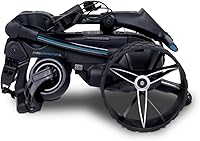
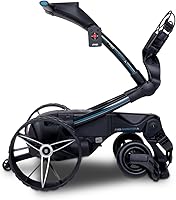
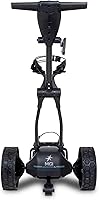
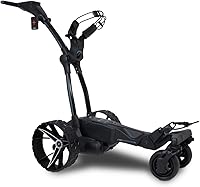
The MGI Navigator Ai GPS+ Electric Golf Cart sits firmly at the top end of the electric caddie market — built for golfers who want to walk the course without lugging 30-plus pounds on their back. What separates it from the crowd is the onboard GPS system baked directly into the cart itself, removing the need to juggle a separate device mid-round. The single-action zip-fold frame means setup takes seconds, and the inverted rear wheels shrink the footprint further for storage. This is not a weekend toy — it is a serious piece of kit that rewards the golfer who plays regularly enough to justify the investment. The twin-motor system and gyroscope straight-tracking are bold claims that deserve a closer look.
Features & Benefits

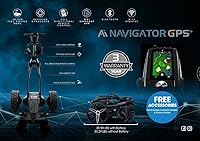
The 4-inch touchscreen GPS is the standout feature here — it draws from a library of 40,000 courses worldwide and automatically recognizes which one you are on within a 5-kilometer radius. Once you are playing, you get precise distances to the front, middle, and back of the green, interactive bunker edges, and a movable pin marker. That alone would satisfy most golfers, but the Navigator Ai GPS+ goes further with built-in scorecard and stat tracking across gross, net, and Stableford formats, including fairways hit and average putts per round. The gyroscope straight-tracker genuinely earns its place — on crossfall lies and uneven fairways, the cart holds its line without you chasing it, which lets you focus entirely on your next shot.

Best For

This electric golf caddie makes the most sense for golfers who walk the course two or more times a week and want to consolidate their GPS device and push cart into one piece of kit. If you regularly play hilly layouts, the hill-hold capability and straight-tracker combination are genuinely useful rather than just impressive on paper. Stat-conscious players will also find real value in having round summaries and trends built into the handle rather than buried in a phone app. That said, if you are pulling this out a handful of times per season, the math gets harder to justify. The compact fold is a genuine bonus for anyone working with a small car boot or a crowded garage shelf.

User Feedback

Owners consistently praise the GPS course recognition — most report it locks onto their home course automatically before they reach the first tee, and distance accuracy draws frequent comparisons to dedicated handheld units. The remote control gets high marks for practical course management. Where feedback turns more mixed is the touchscreen: a few reviewers note it can be harder to read in direct midday sun, and those who play in gloves sometimes find it less responsive than expected. Battery life holds up well for most 18-hole rounds, though claims of consistent 36-hole performance on hillier terrain appear less universal across verified reviews. MGI customer service is frequently flagged as a positive, which carries real weight when you are investing at this level.

Pros

  • Onboard GPS eliminates the need to carry a separate device, streamlining your entire pre-shot routine.
  • Automatic course recognition within 5 kilometers means the system is ready before you even reach the first tee.
  • The gyroscope straight-tracker holds the cart on line across uneven fairways without constant manual correction.
  • Built-in Stableford, gross, and net scoring keeps your round organized without reaching for your phone.
  • Remote control lets you send the cart ahead while you stay back to plan your shot undistracted.
  • The single-action fold and invertible rear wheels make post-round pack-up noticeably faster than most competitors.
  • Twin motors handle sustained inclines quietly and reliably on most real-world course gradients.
  • MGI customer support is consistently praised, which matters significantly at this investment level.
  • The click-and-go lithium battery system is fast, foolproof, and provides clear charge-level feedback before every round.
  • Round stat summaries covering fairways hit, greens in regulation, and average putts support genuine game improvement over time.

Cons

  • Touchscreen responsiveness drops noticeably for golfers wearing gloves, which disrupts scoring and GPS interaction mid-round.
  • Screen glare in direct midday sun is a recurring complaint that the display hardware does not fully resolve.
  • The 36-hole battery range claim does not hold consistently on hilly or mountain-grade courses, particularly in colder weather.
  • The plastic frame construction feels underwhelming relative to the premium price point — it works, but it does not inspire confidence.
  • Wi-Fi course updates can be temperamental, and the update process is not intuitive enough for less tech-comfortable users.
  • At nearly 39 pounds with the battery, solo loading into a high-boot vehicle requires real effort and may not suit every golfer.
  • The fold mechanism has a genuine learning curve — first-time setup catches more buyers off guard than the marketing implies.
  • Course map data for less common or recently redesigned layouts can lag, requiring a sync before those rounds.
  • The bundled phone holder feels redundant given the cart already has its own GPS screen, adding bulk without clear purpose.
  • Remote signal can drop when the cart crests a slope or moves behind a bunker lip, interrupting remote-control flow.

Ratings

The ratings below for the MGI Navigator Ai GPS+ Electric Golf Cart were generated by our AI system after systematically analyzing verified purchaser reviews from multiple global markets, with spam, incentivized, and bot-flagged submissions actively filtered out before scoring. Each category score reflects the honest distribution of real golfer experiences — frequent walkers, weekend warriors, and competitive club players alike — weighting both enthusiastic praise and recurring frustrations equally. Where this electric golf caddie earns high marks and where it falls short of its premium positioning are both reflected transparently here.
GPS Accuracy & Course Coverage
91%
Golfers consistently report that the onboard GPS locks onto their home course before they reach the first tee, requiring zero manual input. Distance readings to the front, middle, and back of greens are regularly described as spot-on, with several reviewers comparing accuracy favorably to standalone Garmin and SkyCaddie units they previously used.
A small but vocal subset of users on less common or recently redesigned courses found the maps slightly outdated, requiring a Wi-Fi sync before the round to get current layouts. International golfers also note occasional delays in course loading on first-time visits to unfamiliar clubs.
Touchscreen Usability
71%
29%
The 4-inch display is large enough to read distances at a glance while walking, and the interactive pin placement feature gets genuine praise from players who want to dial in exact yardages rather than relying on fixed front-middle-back numbers. Most users in overcast or morning conditions find the screen perfectly readable.
In direct midday sun, screen glare becomes a recurring complaint — enough reviewers mention squinting or repositioning their angle of view that it reads as a consistent design limitation rather than isolated incidents. Golfers who play in gloves also flag reduced touch sensitivity, which disrupts the flow of updating scores mid-round.
Battery Life & Range
78%
22%
For standard 18-hole rounds on relatively flat to moderately hilly courses, battery performance holds up well across verified reviews — most users finish with charge to spare. The click-and-go lithium system makes battery swaps fast, and the color-coded charge indicator removes any guesswork before heading out.
The advertised 36-hole range is treated with measured skepticism by owners who play hilly or mountain-grade layouts, where real-world range is noticeably shorter. A handful of reviewers doing back-to-back 18-hole days reported the battery running lean on the second round, particularly in colder ambient temperatures.
Straight Tracking & Terrain Handling
86%
The gyroscope-based straight-tracking technology draws some of the most enthusiastic feedback in the entire review pool. On crossfall fairways and mild slopes where other carts drift sideways, users report this caddie holds its intended line reliably, reducing the constant micro-corrections that break concentration between shots.
On very aggressive side slopes or wet, soft turf, a few reviewers note the tracking system can struggle to fully compensate, requiring brief manual steering input. It is not a flaw so much as a ceiling — the tech performs well within normal conditions but is not infallible on extreme terrain.
Remote Control Performance
83%
Sending the cart ahead to your ball while you hold your club and plan the shot is, according to multiple reviewers, a genuinely useful habit once you build it into your routine. Remote range is described as more than sufficient across the width of a standard fairway, and the controls are reported to be intuitive after minimal familiarization.
Some users note that the remote occasionally loses responsiveness when the cart is at maximum range or obscured by a slope or bunker lip. A small number of reviewers also felt the remote unit itself felt plasticky relative to the overall investment, though functionality was not cited as a persistent problem.
Fold System & Portability
84%
The single-action zip-fold mechanism consistently earns praise for making pre- and post-round pack-up faster than older dual-action competitors. With the rear wheels inverted, the folded footprint fits into compact car boots that would reject a standard electric trolley, which is a practical advantage reviewers with smaller vehicles specifically call out.
A portion of new users find the fold mechanism requires a short learning period before it becomes second nature — the initial assembly and first few fold cycles reportedly need careful attention to the instructions. Once learned, complaints drop off sharply, suggesting it is an onboarding issue rather than a lasting mechanical concern.
Scorecard & Stat Tracking
77%
23%
Golfers who care about tracking their game over time appreciate having gross, net, and Stableford scoring built directly into the unit, alongside fairway hit percentage and average putts per round. For anyone who previously kept stats manually or via a separate phone app, having everything in the cart handle feels like a natural consolidation.
The stat tracking interface is described by some reviewers as functional but not especially intuitive on first use — a few mention inadvertently skipping holes or resetting rounds before understanding the workflow. The round summary screen is also noted as a bit sparse compared to dedicated golf apps that offer deeper historical analysis.
Motor Power & Hill Climbing
81%
19%
Twin 230-watt motors give this GPS-integrated push cart enough grunt to handle sustained inclines without slowing visibly, which owners on hilly UK and Australian courses particularly appreciate. The whisper-quiet operation also draws consistent praise — it does not disrupt playing partners or the general atmosphere of a quiet morning round.
On the steepest inclines some clubs offer — think true mountain or links courses with sharp elevation changes — a handful of reviewers felt the motors worked noticeably harder and drew battery down faster. No mechanical failures were widely cited, but hill performance is not limitless.
Build Quality & Durability
74%
26%
The overall structure feels solid in regular use, and the frame handles the repetitive folding and unfolding of frequent play without reported structural fatigue over the short-to-medium ownership period covered by most reviews. Wheel quality and axle sturdiness are specifically called out positively by several long-term users.
The plastic frame construction is the most common reservation expressed by buyers at this price point — the material itself functions fine but does not inspire the premium tactile confidence some expect when spending at this level. Cosmetic scuffing from regular boot loading and unloading is also noted fairly often.
Setup & Assembly
79%
21%
Most buyers report getting the cart fully assembled and ready for a first round within 20 to 30 minutes, with the included instructions considered clear enough for confident setup. The click-in battery system is specifically praised for being obvious and foolproof, removing a potential friction point during the first unboxing experience.
A minority of reviewers found initial wheel attachment and axle configuration less straightforward than the marketing implies, particularly when inverting the rear wheels for storage for the first time. Video tutorial support from MGI is mentioned as helpful by those who sought it out, but it should arguably not be necessary for a premium product.
Accessories & Included Value
76%
24%
The included drink holder, umbrella holder, and GPS phone bracket cover the practical bases without requiring immediate aftermarket purchases. Reviewers who use all three confirm the mounting points are stable enough to hold accessories securely across bumpy terrain, which is not always a given with bundled add-ons.
The accessories are functional but described as basic by golfers used to premium caddie ecosystems. The phone holder in particular receives mixed feedback — it holds a phone adequately but feels like a secondary priority given that the cart already has its own GPS screen, making its inclusion feel slightly redundant for the target buyer.
Connectivity & Software Updates
68%
32%
Wi-Fi and Bluetooth connectivity allow for course map updates and firmware improvements without needing to send the unit anywhere, which is a meaningful long-term ownership advantage. Reviewers who proactively keep the device updated report a noticeably smoother GPS experience than those who leave it on factory firmware.
The update process is described by several users as unintuitive and occasionally temperamental — one reviewer described spending 40 minutes getting the Wi-Fi connection to complete a course database update. For golfers who are not particularly tech-confident, the connected features can feel more burdensome than beneficial.
Weight & Maneuverability
73%
27%
At just under 39 pounds with the battery installed, this GPS-integrated push cart is competitive within its motor and GPS class — golfers who have upgraded from heavier older-generation electric trolleys notice the difference when loading and unloading. The swivel front wheel behavior on smooth cart paths is described as agile and responsive.
Compared to lightweight manual push carts, the weight is still considerable, and a few reviewers mention that loading it solo into a high-loading estate car or SUV requires effort. For older golfers or those with shoulder concerns, the lift-and-load routine at the car park is a non-trivial daily consideration.
Value for Money
69%
31%
For golfers who walk four or more times per week and were previously spending on a separate electric trolley and a standalone GPS device, the consolidated cost argument holds up reasonably well. Frequent buyers in this review pool who made the switch from two separate devices report feeling the investment was justified within a single season.
For anyone playing fewer than two rounds per week, the value equation is genuinely harder to resolve — the premium sits well above mid-range electric caddies that cover the core motorized transport function without the GPS integration. Several one-star and two-star reviews come almost exclusively from infrequent golfers who found the outlay difficult to rationalize in hindsight.
Customer Support & Warranty Experience
82%
18%
MGI customer service is one of the more consistently praised non-product elements across the review pool — multiple reviewers describe helpful, prompt responses to warranty claims and technical questions, which carries real weight when a purchase at this level encounters a problem. Replacement parts availability is also noted positively.
A smaller cluster of reviewers had slower or less satisfying support experiences, particularly around software-related issues where remote troubleshooting was required. Response times appear to vary by region, with some international buyers noting longer resolution cycles than domestic customers in MGI's core markets.

Suitable for:

The MGI Navigator Ai GPS+ Electric Golf Cart is built for the golfer who walks the course regularly — ideally three or more times per week — and wants to stop managing two separate devices every round. If you have been carrying a standalone GPS unit while also pushing or pulling a manual trolley, the appeal here is straightforward: one piece of kit handles both jobs, and it handles them well. Golfers who play on hilly or mixed-terrain courses will find the gyroscope straight-tracking genuinely useful, since it reduces the low-level frustration of a drifting cart on crossfall fairways without demanding constant attention. Stat-conscious players who track greens hit, fairways, and putts over a season will also get real mileage from the built-in scorecard and round summary system — it is the kind of data that used to require a separate app or paper tracking. Anyone with limited boot space or a crowded garage will appreciate the inverted-wheel fold, which brings the footprint down to something a compact car can realistically accommodate. Competitive club golfers who play in Stableford formats regularly will find the scoring integration a natural fit for their existing routine.

Not suitable for:

If you play golf a handful of times per season, the investment behind the MGI Navigator Ai GPS+ Electric Golf Cart is genuinely difficult to justify — the value only compounds with frequent, consistent use, and occasional golfers will simply not log enough rounds to feel the difference. Golfers who already own a premium standalone GPS device and a mid-range electric trolley they are happy with should do the math carefully before upgrading, because the combined replacement cost is substantial and the on-course GPS performance gap may not be wide enough to compel a switch. Players who primarily ride in carts at their home club, or who play on courses that do not permit electric trolleys, will find no practical use case for this caddie at all. Those who are sensitive to screen readability issues should note that the 4-inch touchscreen has drawn consistent complaints in bright midday sun, which is a real limitation if your regular tee times fall in the middle of the day. Finally, golfers who prefer a lightweight, low-tech push-and-go experience — and who would rather keep a phone app for GPS — will likely find the feature set here more than they need, and the weight more than they want.

Specifications

  • GPS Display: The unit features a 4″ full-color high-resolution touchscreen that delivers hole maps, green views, and interactive distance markers directly on the cart handle.
  • Course Database: Over 40,000 golf courses worldwide come pre-loaded, with Wi-Fi updates available to keep course maps and firmware current.
  • Auto Recognition: The GPS system automatically identifies the nearest golf course within a 5-kilometer radius and advances holes without manual input.
  • Motors: Dual 230-watt electric motors provide quiet, continuous drive power across flat, hilly, and mixed-terrain golf courses.
  • Battery Type: A click-and-go lithium battery pack is rated for up to 36 holes per charge under manufacturer test conditions and attaches horizontally at the cart center.
  • Weight: The cart weighs 33.28 lbs without the battery and 38.99 lbs with the battery installed.
  • Folded Dimensions: With rear wheels inverted, the folded cart measures 24.40 x 18.11 x 15.35 inches, reducing its storage and transport footprint significantly.
  • Fold System: A single-action zip-fold mechanism allows the one-piece frame to collapse and expand quickly without multi-step disassembly.
  • Drive Modes: The cart operates in both remote control mode and standard manual mode, giving the golfer flexibility depending on course conditions or preference.
  • Tracking Tech: A patented gyroscope straight-tracker continuously monitors and corrects the cart's direction to maintain a consistent line across uneven or sloped terrain.
  • Connectivity: Built-in Wi-Fi and Bluetooth support course database updates, firmware upgrades, and optional device pairing.
  • Scoring Modes: The onboard digital scorecard supports gross, net, and Stableford scoring formats with a full round summary generated at completion.
  • Stat Tracking: The system records greens hit percentage, average number of putts per round, fairways hit percentage, and directional miss tendencies (left or right).
  • Accessories: A drink holder, umbrella holder, and GPS phone holder are included in the box, with a combined retail value of approximately 85 USD.
  • Frame Material: The cart frame is constructed from plastic, keeping overall weight low while maintaining the structural rigidity required for daily golf use.
  • Competition Mode: A dedicated competition mode can be toggled on or off to comply with club or tournament rules governing electronic device use during rounds.
  • Round Timer: An automatic round timer activates at the start of play and runs continuously, giving golfers a live view of their elapsed round time.
  • Clock & Display: A real-time clock is displayed on the GPS screen alongside course data, removing the need to check a separate watch or phone for the time.

Related Reviews
Rad Golf Hand+ Handheld Golf GPS
78%
74%
GPS Accuracy
81%
Touchscreen Responsiveness
93%
No-Subscription Value
78%
Shot & Stat Tracking
76%
Green View Quality
More
OHREX N900 9-Inch Truck GPS Navigator
68%
74%
Truck Routing Accuracy
81%
Screen Clarity
41%
Map Update Process
58%
Satellite Acquisition
79%
FM Transmitter
More
SkyCaddie SX400 Handheld Golf GPS
78%
91%
Screen Clarity & Display Quality
88%
Course Map Accuracy
86%
Course Database Breadth
89%
HoleVue Graphics & Visualization
83%
IntelliGreen Pro Putting Aid
More
SkyCaddie SX500 Handheld Golf GPS
77%
92%
Course Map Accuracy
89%
Screen Readability
88%
Target & Hazard Data Depth
86%
Battery Life
78%
Ease of Use & Interface
More
CANMORE TW353 Golf GPS Watch
78%
83%
GPS Accuracy
88%
Course Coverage
91%
Ease of Use
79%
Display Readability
76%
Battery Life
More
Canmore HG200 Plus Golf GPS
71%
61%
GPS Accuracy
68%
Course Database Coverage
74%
Display Readability
81%
Ease of Use
88%
No-Subscription Value
More
CANMORE TW410G GPS Golf Watch
70%
74%
GPS Accuracy
83%
Course Database
88%
Value for Money
79%
Ease of Use
71%
Display Readability
More
Liontru 7-Inch Truck GPS Navigator
70%
74%
Truck Routing Accuracy
67%
Map Coverage & Accuracy
78%
Lifetime Map Updates
83%
Screen Size & Readability
61%
Satellite Signal & Lock Time
More
Garmin DriveSmart 55 GPS Navigator
74%
88%
Screen Readability
83%
Routing Accuracy
79%
Live Traffic Updates
91%
Ease of Use
57%
Voice Recognition
More
CANMORE TW411 Golf GPS Watch
71%
78%
GPS Accuracy
86%
Course Database
63%
Battery Life
89%
Value for Money
84%
Ease of Use
More

FAQ

In most cases, the Navigator Ai GPS+ picks up your home course automatically before you reach the first tee — it scans for courses within a 5-kilometer radius and locks on without any manual searching. That said, if you are visiting a course for the first time, it helps to run a Wi-Fi sync beforehand to make sure the course data is fully up to date.

Yes, the cart works in both remote control and standard manual mode, so you can switch between them depending on how you like to play. Some golfers use the remote on longer stretches between shots and then just walk with the cart normally on shorter approaches.

The 36-hole rating is based on manufacturer test conditions, and real-world results vary. On flat to moderately hilly courses, most users comfortably finish 18 holes with charge remaining. However, on steep or mountain-grade terrain — especially in cooler temperatures — the range is noticeably shorter, and some golfers doing back-to-back 18-hole days report running lean on the second round.

The single-action fold is genuinely fast once you have done it a few times, but there is a short learning curve at the start. The trickiest part for most new owners is inverting the rear wheels to shrink the footprint — MGI has video tutorials available that make the process much clearer than the written instructions alone.

This is probably the most consistently mentioned limitation across owner reviews. The screen is perfectly readable in overcast conditions or morning light, but in direct midday sun the glare can make it difficult to read distances without adjusting your angle. It is not a dealbreaker, but it is a real limitation worth knowing about if your regular tee times are in the middle of the day.

Based on user feedback, the straight-tracking technology is one of the more genuinely useful features of this GPS-integrated push cart — particularly on courses with crossfall fairways where other carts drift sideways and require constant correction. It does not perform miracles on extreme side slopes, but for normal course conditions it holds its line reliably and reduces the mental load of cart management between shots.

If your course is missing or the layout reflects an older design, a Wi-Fi sync will usually pull the latest available data from MGI's course library. For courses that genuinely are not in the database, MGI has a course submission process, though turnaround time varies. It is worth checking before your first round at an unfamiliar club.

If you already own both and are happy with them, the upgrade math is tough unless your existing gear is aging or you want the stat tracking and remote control functionality. Where the combined unit earns its place is convenience — you remove one item from your routine entirely and free up handle space. For golfers buying from scratch at this tier, the consolidated approach is generally the better long-term value if you walk regularly.

This comes up fairly often in owner reviews and the honest answer is that it depends on your gloves. Standard golf gloves reduce touch sensitivity noticeably, which can make scoring updates and GPS interaction a bit fiddly mid-round. Some golfers remove their glove just for screen interaction and put it back on before the shot — slightly disruptive but manageable.

MGI customer service is one of the better-reviewed aspects of owning this electric golf caddie — the brand tends to respond promptly, and parts availability is considered solid compared to some competitors in the electric trolley space. A smaller number of international buyers have reported longer resolution times, so if you are outside MGI's core markets it is worth confirming local support options before purchasing.

Where to Buy