Overview

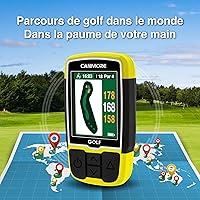
The Canmore HG200 Plus Golf GPS is a straightforward handheld device built for golfers who want reliable yardages without the hassle of a monthly subscription or squinting at a phone screen mid-round. It carries a 2-inch color display, a rubberized body that feels genuinely secure in hand, and comes preloaded with over 41,000 courses worldwide. Think of it as a focused, single-purpose tool — not a smartwatch, not a laser rangefinder. You turn it on, it finds your course, and it tells you where you stand. The no subscription model is genuinely appealing in a market where ongoing fees have become frustratingly standard.
Features & Benefits

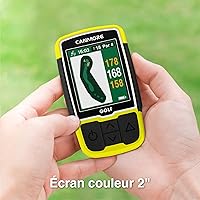
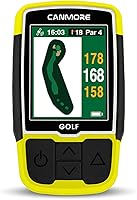
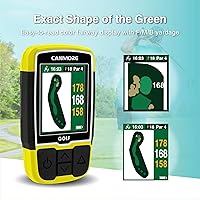
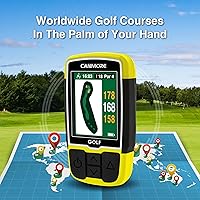
The color display showing the actual shape of the fairway and green is more useful than it might sound at first. When you can see that a green runs shallow left and deep right, you make a smarter club choice — that visual context separates this device from older black-and-white units. The auto hole advance updates on its own as you move to the next tee, so you are never hunting through menus mid-stride. Hazard distances and a built-in scorecard round out the essentials. The rubberized back and strong magnetic clip let you attach it to a cart rail in seconds — just do not drive off and leave it there.

Best For

This handheld golf GPS suits golfers who have grown tired of GPS watch screens that require reading glasses or subscription apps that charge year after year. The large physical buttons are a genuine comfort for anyone playing in gloves who does not want to fumble with a touchscreen. Cart golfers will appreciate the magnetic mounting — clip it to the upright and glance at it like a dashboard. International travelers benefit from the broad course database, where coverage holds up in regions competing units often miss. It is not the right pick for someone chasing strokes-gained analytics or slope-adjusted distance readings.

User Feedback

With a 3.2-star average across 75 reviews, sentiment around the HG200 Plus is genuinely divided, and that is worth addressing head-on. Satisfied buyers tend to highlight the easy initial setup, the readable display, and the refreshing absence of any app or account requirement. Critics, however, raise real concerns: GPS accuracy that drifts on certain courses, occasional gaps in course data, and a battery that some users feel does not consistently reach the advertised mark. Customer service gets mixed mentions — Canmore offers direct contact for course corrections, but response quality varies. Notably, Canmore's own H300 carries a higher average rating, which puts the HG200 Plus a step behind in overall buyer satisfaction.

Pros

  • No subscription fees — ever — which saves real money compared to app-based GPS rivals over multiple seasons.
  • Preloaded with over 41,000 courses worldwide, covering regions that many competing budget devices simply skip.
  • Large physical buttons work reliably with golf gloves on, removing a common mid-round annoyance.
  • Color display showing the actual green and fairway shape gives useful visual context for approach shots.
  • Auto hole advance keeps the round moving without requiring manual confirmation at every tee.
  • Magnetic clip attaches firmly to cart rails, belt loops, or any metal surface in seconds.
  • Hazard distances and a built-in scorecard cover everything a casual golfer needs in a single device.
  • At under 3 ounces, this dedicated course device is light enough to forget it is in your pocket.
  • Free firmware updates and direct course correction support mean the device can improve after purchase.

Cons

  • GPS accuracy complaints are frequent enough across reviews to be a genuine concern, not an isolated issue.
  • Course data quality varies widely — some layouts are outdated or missing key hazard information.
  • Battery life in cold conditions or with older units falls noticeably short of the advertised 10-hour mark.
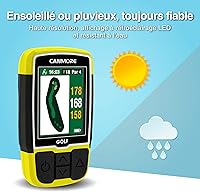
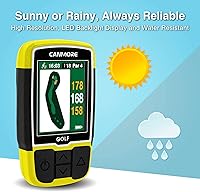
  • Screen washes out in direct midday sunlight, which is a real problem for an outdoor-only device.
  • Customer support response times are inconsistent, undermining the promise of lifetime service.
  • Scorecard data cannot be exported or synced anywhere, making it useless for handicap tracking.
  • The rubberized coating shows wear faster than expected with regular bag storage and handling.
  • Canmore's own H300 model carries a significantly higher buyer satisfaction rating, raising a fair question about whether this is the right choice within the brand's own lineup.
  • No slope adjustment, no strokes-gained data, and no connected app for golfers who want post-round analysis.

Ratings

The Canmore HG200 Plus Golf GPS scores shown below were generated by our AI review engine after systematically analyzing verified buyer feedback from global markets, with spam, bot-submitted, and incentivized reviews actively filtered out. The result is an honest picture of where this dedicated course device genuinely delivers and where real-world performance falls short of its promises. Both the strengths that loyal users praise and the frustrations that pushed others to return are transparently reflected in every category score.
GPS Accuracy
61%
39%
On well-mapped, popular courses, the front-middle-back yardages are generally reliable enough for club selection, and many users report the distances feel consistent hole to hole without major drift on familiar layouts.
A recurring complaint across reviews involves accuracy dropping on less common courses or in areas with weaker satellite signal. Some golfers reported distances that felt off by 5 to 15 yards, which is a meaningful margin when choosing between a 7-iron and a 6-iron.
Course Database Coverage
68%
32%
With over 41,000 courses preloaded worldwide, the breadth of coverage is genuinely impressive for a device at this price tier, and international golfers report finding courses in Europe and Southeast Asia that competing budget units completely missed.
Coverage quality is uneven — having a course in the database does not always mean the data is accurate or current. Users have flagged outdated hole layouts and missing hazard markers on courses that have undergone redesigns, requiring direct outreach to Canmore for corrections.
Display Readability
74%
26%
The 2-inch color screen showing the actual shape of the green and fairway is a standout feature that users genuinely appreciate. Even under moderate sunlight, the color contrast helps distinguish the fairway outline from hazard zones at a quick glance.
In direct midday sun on bright days, the screen can wash out enough to force users to shield it with their hand to read yardages clearly. The 240x320 resolution is adequate but not sharp enough to impress anyone coming from a modern smartphone display.
Ease of Use
81%
19%
The large physical buttons are a real advantage on the course — golfers wearing gloves consistently mention being able to scroll through holes and confirm distances without removing them. Setup out of the box is quick, with no account creation or app pairing required.
The menu navigation can feel a little dated compared to touchscreen competitors, and first-time GPS device users occasionally report a short learning curve understanding how to switch between distance modes and scorecard entry without consulting the manual.
No-Subscription Value
88%
The lifetime free course update model is one of the most compelling reasons buyers choose this device over rivals. Not paying an annual fee of 20 to 40 dollars year after year adds up meaningfully, and users frequently cite this as the primary reason they chose it over a connected GPS watch.
Free updates are only valuable if the update pipeline is active and timely. A handful of reviewers noted that requesting a specific course correction through Canmore took longer than expected, slightly undermining the promise of a fully maintained, always-current database.
Build Quality & Durability
72%
28%
The rubberized coating on the back and sides gives the device a firm, non-slip grip that holds up well through a full 18-hole round in humid or slightly wet conditions. The unit feels solidly constructed for its weight class at just 2.65 ounces.
Several users noted the rubberized coating showing wear faster than expected after regular bag contact, and a few reported button responsiveness degrading after months of play. It feels sturdy but not premium, which is appropriate for the price tier but worth knowing.
Battery Life
58%
42%
For a quick 9-hole round or a casual 18-hole walk, most users report no battery anxiety — it powers on and runs without issue through a single standard outing when starting with a full charge.
The advertised 10-hour GPS battery life does not consistently hold up in practice based on user reports. Cold-weather rounds and older units in particular see significantly shorter sessions, with some reviewers describing the battery draining before completing 18 holes in winter conditions.
Mounting & Portability
78%
22%
The magnetic clip is cleverly designed — strong enough to stay put on a cart rail throughout a bumpy ride across uneven fairways, and the option to clip it to a belt or pants pocket gives walking golfers a genuinely hands-free experience.
The magnet, while strong, is almost too good at attracting the device to unintended metal surfaces in a golf bag. The product listing itself jokingly warns users not to forget it on the cart, which is funny until it actually happens on the back nine.
Sunlight Visibility
63%
37%
Under overcast skies or in shaded areas around tree-lined fairways, the color display is bright and clear enough to read yardages comfortably without squinting or adjusting the viewing angle significantly.
Direct afternoon sun remains the device's most consistent weakness in user feedback. Unlike premium units with transflective or high-brightness displays, the HG200 Plus struggles in full sun, which is frustrating given that golf is predominantly an outdoor, daytime activity.
Hazard & Shot Distance Tracking
71%
29%
Having hazard distances layered into the same screen as green distances saves time and keeps decision-making simple — users appreciate not needing to switch modes just to check how far a bunker or water carry is from the tee.
The hazard data relies entirely on the quality of the uploaded course map, so accuracy varies. On courses with missing or outdated hazard markers in the database, the feature provides little practical value, leaving users to rely on course yardage guides instead.
Auto Hole Advance
77%
23%
This feature works reliably on courses with well-mapped data and is genuinely appreciated by golfers who dislike manually confirming hole changes while carrying their bag or chatting between shots. It keeps the round moving naturally.
On courses where GPS boundary data is imprecise, auto hole advance can trigger early or late, briefly showing yardages for the wrong hole. It is easy enough to manually override, but it undermines trust in the automation for those who rely on it most.
Scorecard Function
65%
35%
Having a built-in digital scorecard removes the need for a paper card and pencil, which is a minor but appreciated convenience — particularly for solo rounds where keeping score cleanly in a pocket notebook can be awkward.
Data entry is slow using physical buttons, and the scorecard cannot sync to any app or be exported after the round. For golfers who track handicap data or review performance history, this is a dead-end feature with no practical long-term value.
Customer Support Experience
54%
46%
Canmore does offer a direct contact channel for course data corrections and technical issues, and some users report having GPS connection and charging problems resolved through firmware guidance without needing to return the device.
Support responsiveness is inconsistent according to buyer feedback. Wait times for course update requests can stretch across weeks, and some users report receiving templated responses that did not address their specific issue — a gap that leaves a sour impression for a brand selling a lifetime service promise.
Weight & Form Factor
83%
At under 3 ounces and roughly the size of a thick credit card stack, the device disappears into a shirt pocket or clips neatly to a belt without adding any noticeable weight during a walking round. It is genuinely easy to forget it is there.
The compact size that makes it so portable also limits screen real estate. Golfers with larger hands or reduced fine motor control occasionally find the buttons feel cramped relative to the overall body size, even though they are marketed as glove-friendly.
Overall Value for Money
66%
34%
The no-fee model and solid feature set make it an appealing proposition on paper, and for golfers who primarily play well-documented courses in the US or Europe, the device can deliver reasonable round-to-round value without any recurring cost.
The 3.2-star overall rating tells a story that the spec sheet does not — reliability and data quality concerns have left a notable portion of buyers feeling the price did not match the experience. Canmore's own H300 model carries a meaningfully higher satisfaction rating, which raises a fair question about whether the HG200 Plus represents the brand at its best.

Suitable for:

The Canmore HG200 Plus Golf GPS was built for the kind of golfer who just wants to know how far they are from the pin — no app logins, no annual renewals, no fussing with a smartwatch that requires a PhD to configure. It is particularly well-matched for seniors and beginners who appreciate large, glove-friendly buttons and a straightforward menu that does not demand tech fluency to navigate. Cart golfers get a lot of mileage out of the magnetic clip, which locks onto a metal cart upright cleanly and lets you read yardages without picking the device up. If you travel internationally and play courses across different continents, the preloaded worldwide database means you are unlikely to show up somewhere and find the course missing entirely. Recreational players who are tired of paying subscription fees year after year for a GPS watch they barely understand will find the one-time cost model genuinely refreshing.
Not suitable for:

The Canmore HG200 Plus Golf GPS is a harder sell for golfers who prioritize pinpoint accuracy above all else, particularly if they play a mix of well-known and off-the-beaten-path courses where data quality is harder to guarantee. Competitive players who rely on GPS distances for precise shot-shaping decisions may find the occasional accuracy inconsistencies frustrating enough to affect their game. Anyone expecting the battery to reliably power through a cold-weather 18-hole round or back-to-back sessions should temper expectations — real-world battery performance falls short of the advertised ceiling for a meaningful number of users. The device also has no app connectivity, no performance tracking over time, and no slope correction, so golfers who have grown accustomed to feature-rich GPS units will feel the gaps quickly. With a 3.2-star average, this is not a product you buy with blind confidence — it rewards buyers who go in with realistic expectations and frustrates those who do not.
Specifications

  • Display Size: The device features a 2-inch color LED screen with a resolution of 240x320 pixels.
  • Dimensions: The unit measures 1.57 x 0.59 x 2.19 inches, making it compact enough to fit in a shirt pocket.
  • Weight: The device weighs 2.65 ounces, light enough to carry comfortably for a full 18-hole round.
  • Water Resistance: Rated IPX4, the device can handle splashes and light rain but is not designed for submersion or heavy downpours.
  • Battery Type: Powered by a built-in Lithium Polymer rechargeable battery, which is included and pre-installed.
  • Battery Life: Rated for up to 10 hours in active GPS mode under ideal conditions, though real-world results may vary.
  • Course Database: Comes preloaded with data for over 41,000 golf courses worldwide, with no purchase or download required to access them.
  • Update Policy: Free weekly course data updates and firmware upgrades are provided for the lifetime of the device with no subscription fee.
  • Mounting Options: Includes a strong magnetic clip compatible with belts, pants pockets, and metal cart uprights.
  • Connectivity: Charges via USB cable; there is no Bluetooth, Wi-Fi, or app pairing capability on this device.
  • Auto Hole Advance: The device automatically detects when a golfer moves to the next hole and updates the display without manual input.
  • Distance Functions: Displays front, middle, and back-of-green distances, along with hazard distances and shot distance measurement.
  • Scorecard: Built-in digital scorecard allows manual score entry during a round directly on the device.
  • Body Construction: The back and sides are wrapped in a rubberized coating designed to improve grip and absorb minor impacts.
  • In the Box: Package includes the GPS device, USB charging cable, metal clip, magnet, user manual, and quick start guide.
  • Clock Function: Displays a digital clock on-screen, functioning independently of the GPS mode.
  • Green Display: Shows the actual color-rendered shape of the green and fairway, not just a static yardage number.
  • Voice or Touch: The device uses physical buttons only — there is no touchscreen or voice control functionality.

Related Reviews
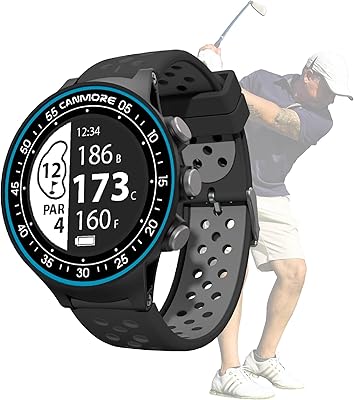
CANMORE TW353 Golf GPS Watch
78%
83%
GPS Accuracy
88%
Course Coverage
91%
Ease of Use
79%
Display Readability
76%
Battery Life
More
CANMORE TW410G GPS Golf Watch
70%
74%
GPS Accuracy
83%
Course Database
88%
Value for Money
79%
Ease of Use
71%
Display Readability
More
CANMORE TW411 Golf GPS Watch
71%
78%
GPS Accuracy
86%
Course Database
63%
Battery Life
89%
Value for Money
84%
Ease of Use
More
Canmore H300 Handheld Golf GPS
75%
83%
Value for Money
76%
Course Database Coverage
74%
GPS Accuracy
88%
Ease of Use
81%
Display Readability
More
Rad Golf Hand+ Handheld Golf GPS
78%
74%
GPS Accuracy
81%
Touchscreen Responsiveness
93%
No-Subscription Value
78%
Shot & Stat Tracking
76%
Green View Quality
More
SkyCaddie SX500 Handheld Golf GPS
77%
92%
Course Map Accuracy
89%
Screen Readability
88%
Target & Hazard Data Depth
86%
Battery Life
78%
Ease of Use & Interface
More
SkyCaddie SX400 Handheld Golf GPS
78%
91%
Screen Clarity & Display Quality
88%
Course Map Accuracy
86%
Course Database Breadth
89%
HoleVue Graphics & Visualization
83%
IntelliGreen Pro Putting Aid
More
Bushnell Neo Golf GPS Rangefinder
86%
91%
Ease of Use
89%
Battery Life
75%
Display Quality
94%
Accuracy of Yardage
90%
Portability
More
Izzo Swami Max Golf GPS
80%
93%
Screen Readability
88%
Magnet Mount
78%
GPS Accuracy
63%
GPS Signal Lock Speed
91%
Battery Life
More
Izzo Swami 6000i Golf GPS
82%
83%
GPS Accuracy
91%
Ease of Setup
78%
Display Readability
88%
Battery Life
74%
Build Quality & Durability
More

FAQ

No, and that is genuinely one of its strongest selling points. Once you buy it, the course data and updates are free for life. You never need to create an account or hand over a credit card again.

You can contact Canmore directly through their official website to request a new course or flag an error on an existing one. The turnaround time varies — some users report quick fixes, while others have waited several weeks, so patience helps here.

It carries an IPX4 water resistance rating, which means it can handle splashes and light rain without issue. That said, it is not waterproof in the full sense — do not submerge it or leave it out in a heavy downpour. Most golfers will find it holds up fine in typical wet-weather conditions.

It works well for both. Walking golfers typically clip it to a belt or drop it in a shirt pocket, while cart golfers tend to mount it magnetically on a metal cart upright. Just do not forget it on the cart when you walk to your ball — it happens more than you would expect.

GPS devices like this one give you good ballpark distances based on satellite positioning, but they are not as precise as a laser rangefinder that locks onto the flag. On popular, well-mapped courses the readings tend to be solid. On less common courses, you may notice discrepancies of several yards — something to be aware of if you play a lot of off-the-beaten-path layouts.

No, this is a fully standalone device with no Bluetooth, Wi-Fi, or app connectivity. It charges over USB, but there is no data sync, no post-round stat export, and no companion app. If you want that kind of integration, you will need to look at a different device category.

The spec says up to 10 hours in GPS mode, which sounds generous. In practice, many users report it holds up well through a single 18-hole round under normal conditions. Cold weather and older units tend to fall short of that ceiling, so always start a round fully charged if you can.

This is one of the more common complaints from buyers. Under overcast skies or in shade, the color display is clear and easy to read. In direct afternoon sun, it can wash out noticeably. Tilting the device or shielding it briefly helps, but it is not as sunlight-resistant as some pricier competitors.

The H300 is the lighter sibling, running on a monochrome display and carrying a higher overall buyer satisfaction rating. The HG200 Plus trades some of that reliability for a color screen and green shape display, but the mixed reviews suggest the upgrade does not pay off for every golfer. If accuracy and consistency matter more to you than the color visual, the H300 is worth a serious look.

Canmore offers direct support through their website for GPS connection issues, charging problems, and firmware questions. The experience is hit or miss based on user reports — some get quick, helpful responses while others receive templated replies that do not fully address their problem. For a device sold on a lifetime service promise, it is reasonable to expect more consistency there.