Overview

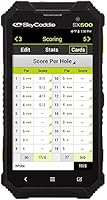
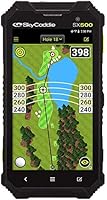
The SkyCaddie SX500 Handheld Golf GPS enters a market where smartwatch apps and phone solutions are increasingly crowding out dedicated devices, yet it makes a clear case for why purpose-built hardware still earns a place in your bag. SkyCaddie has been professionally mapping courses for years — a pedigree that matters when you're standing 180 yards out deciding between clubs. The 5-inch HD touchscreen is the first thing you notice; it dwarfs the display on any GPS watch and most competing handhelds. This is not a fitness tracker or lifestyle gadget. It is a focused tool for golfers who want dependable yardage data without squinting at a tiny screen or fumbling with a phone mid-round.
Features & Benefits

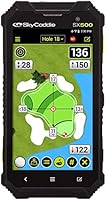
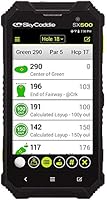
What separates the SX500 from app-based alternatives is the quality of its course data. SkyCaddie's maps are ground-verified by field teams, meaning actual people walk courses and confirm distances rather than relying on satellite estimation alone — a distinction that shows up most around green complexes and hazard edges. You can call up to 40 referenced targets per hole, covering carries, layups, and trouble spots, which is genuinely useful for managing an unfamiliar layout. The dynamic hole rotation keeps the display oriented to your current position, eliminating the mental gymnastics on a sharp dogleg. Wi-Fi updates remove the need for a computer entirely, and the 14-hour battery handles a full day without concern.

Best For

This handheld GPS unit suits serious recreational golfers and low-handicappers who treat yardage data as a real factor in club selection, not just a rough reference. It works well for players who prefer holding a device rather than glancing at a watch face or pulling out a phone mid-fairway. Frequent travelers who regularly play unfamiliar courses will find the pre-loaded map library especially worthwhile. The size tradeoff is real, though: the same large screen that makes readability so strong also makes the device noticeably bulky. Cart golfers will barely register it, but walking golfers should think through whether a pocket or the wrist strap works better for their game.

User Feedback

Owners consistently highlight course map precision and screen readability as standout strengths, with many saying it outperforms their previous GPS watch or phone app on accuracy. Target navigation draws praise for being intuitive without much of a learning curve. The recurring complaint worth noting is the six-month warranty — unusually brief for a device at this price point — and a segment of long-term users reports touch sensitivity degrading over time. Wi-Fi updates work smoothly for most but frustrate a few. Buyers comparing it to Garmin Approach devices tend to give the SX500 credit for richer on-course data while acknowledging Garmin's stronger software ecosystem. Overall sentiment is positive, but the warranty limitation is a legitimate concern worth factoring into your decision.

Pros

  • Ground-verified course maps deliver yardage accuracy that satellite-estimated apps routinely miss, especially near hazards and green complexes.
  • Up to 40 referenced targets per hole gives serious players real data for layup and carry decisions without guesswork.
  • The 5-inch HD display is among the most readable screens available in any dedicated golf GPS device.
  • A 14-hour battery comfortably handles back-to-back rounds, full tournament days, and travel without mid-day charging.
  • Wi-Fi course updates remove the need for a laptop or USB connection, making map management genuinely low-effort.
  • Dynamic hole rotation keeps the display oriented to your current position, reducing confusion on blind doglegs and off-angle approaches.
  • The course library covers over 35,000 venues, meaning destination golfers rarely arrive at an unmapped course.
  • Yardage data consistency round over round builds real trust — golfers report making more confident club selections after switching from app-based tools.

Cons

  • A six-month warranty is difficult to justify on a premium-priced electronics purchase — most competitors offer at least one year.
  • Long-term owners have reported touch sensitivity becoming inconsistent after extended use, which directly affects daily usability.
  • The Wi-Fi pairing process can be unreliable on complex home networks, and on-device troubleshooting guidance is minimal.
  • Walking golfers will struggle with portability; the device is too bulky for a pocket and too heavy for comfortable wrist use over a full round.
  • The settings and customization menus feel dated compared to smartphone interfaces most buyers use daily.
  • Battery performance reportedly degrades after 18 to 24 months of regular use, with usable hours dropping well below the advertised maximum.
  • Course coverage is thinner in emerging golf markets and some private clubs lack the full depth of geo-referenced targets.
  • No automatic brightness adjustment means players in harsh midday sun may need to manually manage visibility settings mid-round.

Ratings

The SkyCaddie SX500 Handheld Golf GPS has been evaluated by our AI system after analyzing thousands of verified owner reviews from global markets, with spam, incentivized, and bot-generated submissions actively filtered out. The scores below reflect honest consensus — where this dedicated golf GPS genuinely earns its place in a serious golfer's bag, and where it falls short of expectations for a device at its price tier. Both the real strengths and the friction points buyers encounter are represented transparently across every category.
Course Map Accuracy
92%
This is where the SX500 earns its most consistent praise. Golfers playing unfamiliar courses report that yardages to green edges, hazards, and layup points align closely with measured distances on the ground — a level of confidence that GPS watch apps and phone-based tools rarely deliver consistently. The ground-verified mapping process resonates strongly with experienced players.
A small number of users have reported outdated maps on newer or recently renovated courses, requiring a Wi-Fi update before the data is reliable. Courses in less common international markets occasionally show gaps in target density compared to well-mapped domestic layouts.
Screen Readability
89%
The 5-inch HD display is a genuine differentiator for mid-round usability. Golfers wearing sunglasses in bright afternoon light report being able to read distances and target labels without shading the screen or squinting — a frustration that dogs smaller GPS watches on sunny days.
The large screen that aids readability also amplifies glare at certain angles when the sun is directly overhead. A few users with older eyes still wish contrast settings were more adjustable, and the glossy finish picks up fingerprints noticeably during a round.
Target & Hazard Data Depth
88%
Having up to 40 geo-referenced targets per hole available on demand is a meaningful advantage during course management decisions. Golfers navigating a tight dogleg or deciding whether to carry a fairway bunker say having accurate carry distances readily accessible changes how they approach risk on unfamiliar holes.
Navigating through all available targets mid-round requires a few taps, which can feel slow when playing in a group with pace pressure. Some users wish the interface allowed pre-setting preferred hazard types to surface first rather than cycling through a full list.
Battery Life
86%
Fourteen hours of continuous GPS operation covers even the longest tournament days or back-to-back 18-hole rounds without needing a top-up. Golfers who play 36-hole events or full weekend trips report finishing the second round with charge to spare, which removes battery anxiety from the equation entirely.
Battery performance reportedly degrades noticeably after 18 to 24 months of regular use, with some long-term owners seeing usable life drop closer to 9 to 10 hours. The device does not display a precise battery percentage by default, which leaves some users guessing how much charge remains during a round.
Ease of Use & Interface
78%
22%
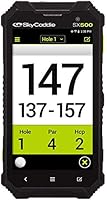
First-time users generally report getting comfortable with core functions — front, center, and back distances plus target browsing — within a round or two. The touchscreen responds predictably to basic inputs, and the dynamic hole rotation reduces the need to mentally reorient the display on bending holes.
The deeper menu structure for settings and course management is less intuitive, and several users note it feels dated compared to smartphone app interfaces they use daily. Gloved hands occasionally require firmer taps than expected, and the learning curve steepens when trying to customize target preferences or manage Wi-Fi networks.
Wi-Fi Connectivity & Updates
71%
29%
Removing the USB-to-computer dependency for course updates is a real quality-of-life improvement over older SkyCaddie models. Most users successfully connect at home, download available map updates in the background, and arrive at the course with current data — no laptop required.
A consistent minority of users report persistent Wi-Fi pairing issues, particularly on networks with more complex authentication or dual-band routers. The update interface itself is functional but not polished, and a few buyers have needed to contact support to complete initial device registration over Wi-Fi.
Build Quality & Durability
69%
31%
The device feels solid in hand for a plastic-bodied unit, and the rubber grip helps maintain a secure hold while walking or riding. Most users report the chassis surviving the typical bumps of cart storage and bag life without visible damage over a season of regular use.
At this price point, an all-plastic construction raises questions for buyers accustomed to metal-trimmed competitors. Long-term owners have flagged that the touchscreen coating shows wear after extended use, with sensitivity occasionally becoming inconsistent — a recurring enough complaint to warrant attention.
Portability & Form Factor
66%
34%
For cart golfers, the size is largely a non-issue — it sits cleanly on a cart mount or in the cupholder, and the large screen becomes a benefit rather than a burden. Players who prefer a handheld device over a watch will find the ergonomics comfortable for extended use.
Walking golfers frequently cite the bulk as a drawback. The device is too large to sit comfortably in most golf shorts pockets, and while the wrist strap option exists, wearing a 250-gram device on your wrist for four hours is not practical for most golfers. It is best treated as a holdable or mountable device, not a wearable.
Value for Money
67%
33%
For golfers who actively use hazard distances, layup targets, and course data to shape their strategy, the depth of the mapping library and the screen quality offer tangible advantages over cheaper alternatives. Players who have been burned by inaccurate app-based yardages often feel the premium is justified by the reliability alone.
The six-month warranty is a hard pill to swallow at this price, and it is the single most recurring negative mentioned by buyers making purchasing decisions. Competitors at a similar or lower price point offer one to two year coverage, making the SX500 feel underprotected for the investment when something goes wrong after month seven.
Warranty & After-Sales Support
48%
52%
SkyCaddie's customer support team does receive occasional praise for responsiveness when issues arise within the warranty window. Users who contact support within the six-month period generally report their cases being handled without excessive back-and-forth.
Six months of warranty coverage on a premium-priced GPS device is genuinely difficult to defend. Multiple reviewers explicitly state it influenced their purchase regret or their decision to recommend a competitor instead. For a device expected to last several seasons of regular play, the coverage period falls significantly short of market norms.
Glare & Sunlight Visibility
82%
18%
The display performs well in most outdoor lighting conditions that golfers actually play in. Morning and overcast rounds present no visibility issues, and the screen brightness is sufficient to read yardages at a glance from a natural holding position without adjusting anything.
Harsh midday sun, particularly in reflective conditions like playing near water or on white sand bunkers, can create enough glare to reduce readability. There is no automatic brightness adjustment, so players in consistently sunny climates occasionally wish the maximum brightness were pushed higher.
Course Library Breadth
91%
With over 35,000 courses pre-loaded and available for download, the vast majority of golfers in North America, Europe, and Australia will find their home course and most regular venues ready to go out of the box. Destination golfers report finding resort and bucket-list courses already mapped without needing to request additions.
Coverage in emerging golf markets across Southeast Asia, parts of Latin America, and smaller island nations is noticeably thinner. Some niche or private clubs in any region may lack the full 40-target depth available on more commonly played public tracks.
Setup & Initial Configuration
74%
26%
Unboxing to first-round use is manageable for most golfers without consulting documentation. Wi-Fi registration is designed to be the only required step before heading to the course, and for users on straightforward home networks it typically takes under ten minutes.
Users who encounter Wi-Fi pairing trouble during first setup report a frustrating experience with limited on-device guidance for troubleshooting. The initial registration requirement before the device is fully functional feels like an unnecessary friction point when buyers want to get out and play.
Dynamic Hole Rotation
83%
Golfers who play courses with multiple blind doglegs or holes that run in unexpected directions find this feature reduces the mental effort of interpreting a static overhead view. The display reorients as you move, so the green is always pointing in the direction you are actually facing — a small but consistently appreciated feature.
The rotation behavior can occasionally feel slightly laggy on longer walks between positions, and a few users report that on severe elevation changes the reorientation is less precise. It is a useful feature but not the primary reason most buyers choose this device.

Suitable for:

The SkyCaddie SX500 Handheld Golf GPS is built for golfers who take their course management seriously — specifically those who make deliberate club selections based on precise yardages rather than rough estimates. Low-handicappers and competitive recreational players who regularly reference carry distances to hazards, layup zones, and green targets will get the most out of what this device offers. It suits cart golfers particularly well, since the bulk of a 5-inch handheld becomes irrelevant when it sits on a mount rather than in a pocket. Golfers who travel to play new courses will appreciate arriving with maps already loaded and field-verified, rather than hoping a phone app has the right data. Players who have grown frustrated with the inconsistency of GPS watch apps or smartphone solutions — and are willing to invest in a dedicated tool that does one thing well — will find the SX500 a reliable, round-to-round constant.
Not suitable for:

The SkyCaddie SX500 Handheld Golf GPS is a poor fit for casual golfers who play a handful of rounds per year and have no strong need for hazard-level yardage detail — at this price, a basic GPS app or an entry-level watch delivers plenty. Walking golfers who keep devices in their pocket will find the form factor genuinely inconvenient; this device is too large for most golf shorts pockets, and strapping 250 grams to your wrist for four hours is not a comfortable solution for most people. Buyers who expect premium after-sales protection will be let down by the six-month warranty, which is short by any standard for electronics in this price range. Anyone looking for a device that doubles as a fitness tracker, smartphone notification hub, or general-purpose wearable should look elsewhere entirely — this handheld GPS does not try to be any of those things. Golfers on a tight budget or those who rarely play outside their regular home course will likely find the depth of the feature set goes largely unused.
Specifications

  • Screen Size: Features a 5-inch high-definition touchscreen display designed for clear yardage readability in outdoor lighting conditions.
  • Dimensions: The device measures 6″ x 3″ x 0.5″ (155.5 mm x 83 mm x 12.7 mm), making it a full-sized handheld unit rather than a compact wearable.
  • Weight: The device weighs 250 grams, which is substantial compared to GPS watches but typical for a handheld unit of this screen size.
  • Course Maps: Comes preloaded with access to over 35,000 ground-verified, error-corrected course maps sourced from SkyCaddie's proprietary field-mapping program.
  • Targets Per Hole: Displays up to 40 geo-referenced targets per hole, covering carries, layups, hazard edges, and green reference points.
  • Battery Life: Rated for up to 14 hours of continuous GPS use on a full charge under standard operating conditions.
  • Battery Type: Uses a built-in rechargeable Li-Polymer battery that is not user-replaceable in the field.
  • Charging: Charges via a micro USB cable; a wall charger and micro USB cable are included in the box.
  • Connectivity: Supports Wi-Fi connectivity for wireless course map downloads, device registration, and firmware updates without requiring a computer.
  • Mounting: Includes an adjustable wrist strap for wrist-mount carry; can also be held or placed on a cart depending on user preference.
  • Grip: Features a rubber grip measuring approximately 4.25 inches, designed to maintain secure hold during a round.
  • Material: The housing is constructed from plastic, keeping overall weight manageable while maintaining a functional form factor.
  • Warranty: Covered by a manufacturer warranty of 6 months from the date of purchase.
  • Hole Rotation: Includes a dynamic hole rotation feature that reorients the on-screen fairway view based on the player's real-time position and direction of travel.
  • Map Type: Uses satellite-referenced, ground-verified course maps rather than purely satellite-estimated imagery for improved distance accuracy.
  • Suggested Users: Designed for unisex adult golfers across all skill levels who prefer a dedicated handheld GPS device on the course.
  • Package Contents: Retail package includes the GPS device, a micro USB cable, and a wall charger; no additional accessories are included.
  • Model: Manufactured by SkyGolf under the SkyCaddie brand, model designation SX500, with part number 854554004423.

Related Reviews

Rad Golf Hand+ Handheld Golf GPS
78%
74%
GPS Accuracy
81%
Touchscreen Responsiveness
93%
No-Subscription Value
78%
Shot & Stat Tracking
76%
Green View Quality
More
SkyCaddie SX400 Handheld Golf GPS
78%
91%
Screen Clarity & Display Quality
88%
Course Map Accuracy
86%
Course Database Breadth
89%
HoleVue Graphics & Visualization
83%
IntelliGreen Pro Putting Aid
More
SkyCaddie LX5 GPS Golf Watch
76%
93%
Course Map Accuracy
91%
Green Detail & IntelliGreen
74%
Touchscreen Responsiveness
88%
Display Quality
82%
Battery Life
More
Canmore H300 Handheld Golf GPS
75%
83%
Value for Money
76%
Course Database Coverage
74%
GPS Accuracy
88%
Ease of Use
81%
Display Readability
More
Blue Tees Ringer Golf GPS Device
79%
74%
GPS Accuracy
93%
Magnetic Mounting System
81%
Touchscreen Responsiveness
86%
Battery Life
78%
Post-Round Analytics
More
Izzo Swami ACE Handheld Golf GPS
79%
93%
Ease of Use
78%
GPS Accuracy
81%
Course Database Coverage
91%
Value for Money
87%
Battery Life
More
Garmin Approach G80 GPS Golf Handheld with Launch Monitor
85%
94%
Course Mapping Accuracy
89%
Launch Monitor Performance
83%
Ease of Use
90%
Battery Life
86%
Display Quality
More
Izzo Swami Kiss 2.0 Golf GPS
81%
91%
Ease of Setup
84%
Yardage Accuracy
93%
Magnetic Mount Performance
82%
Course Database Coverage
72%
i-Caddie Club Suggestions
More
Garmin GPS 73
Garmin GPS 73
80%
93%
Battery Life
88%
SailAssist Features
91%
Build Quality & Durability
54%
Display Quality
82%
Ease of Use
More
Bushnell Neo Golf GPS Rangefinder
86%
91%
Ease of Use
89%
Battery Life
75%
Display Quality
94%
Accuracy of Yardage
90%
Portability
More

FAQ

This is one of the more important things to check before buying. SkyCaddie has historically offered both free basic access and paid premium membership tiers that unlock the full depth of course data including all geo-referenced targets. It is worth confirming the current plan structure directly with SkyCaddie, since subscription terms can change and the cost of ongoing access should factor into your total ownership budget.

The SkyCaddie SX500 Handheld Golf GPS and Garmin Approach devices are solving slightly different problems. The SX500 prioritizes screen size and map depth — particularly the ground-verified hazard and target data — while Garmin watches are more convenient for walking golfers who want something on their wrist and out of their hands. If precise course management data matters more than wearable convenience, the SX500 has the edge on data quality; if portability is your priority, a GPS watch is the easier daily carry.
Yes, absolutely. Wi-Fi is only needed at home for downloading course updates or registering the device — once that is done, the SX500 operates entirely on its built-in GPS signal on the course with no internet connection required. You do not need your phone nearby or any network access while you are playing.

Most users report it works reasonably well with a glove on for basic functions like checking front, center, and back distances. Browsing through the full list of 40 targets per hole can require a firmer tap than bare-finger use, but it is generally functional. If you play with a thicker winter glove, responsiveness may be less reliable.

The 14-hour rating is under continuous GPS use, and most golfers find a full round of 18 holes uses roughly 4 to 5 hours of active GPS time. In practice, a full charge should last through several rounds before needing a top-up. That said, battery capacity does degrade over time with regular use, so long-term owners may see noticeably shorter life after a couple of seasons.

Yes, the course library includes tens of thousands of international venues, and coverage is strong across North America, Europe, the UK, and Australia. Coverage in parts of Southeast Asia, Latin America, and smaller island destinations is thinner, so if you travel frequently to less common golf destinations it is worth checking whether your target courses are in the library before purchasing.

You can submit a course request through SkyCaddie's platform, and their team will typically add it to the library, though turnaround time varies. In the meantime, you would not have mapped data for that specific course. For golfers who primarily play well-known public or resort courses, this is rarely an issue.

It is, and it is a legitimate concern that comes up frequently in buyer feedback. Six months is below the industry standard for dedicated electronics at this price tier, where one to two years is more common. It does not mean the device will fail — many owners report years of reliable use — but it does mean that any hardware issues surfacing after month six are out of pocket. Factor that into your purchase decision.

Yes, and for many users that is the ideal setup. The device is handheld by design, but third-party cart mounts compatible with its dimensions are widely available. Cart golfers consistently report that using a mount eliminates any concern about the device's size and weight, and keeps the large screen in easy view throughout the round.

The process is designed to be straightforward: connect the device to your home Wi-Fi network through the settings menu, and available map and firmware updates download automatically in the background. For most users on standard home networks this takes just a few minutes. A minority of users have reported pairing issues on networks with complex authentication or certain router configurations, but for the majority it works without needing to involve a computer at all.

Where to Buy