Overview

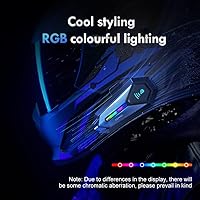
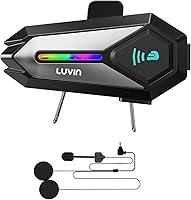
The LUVIN G8 Motorcycle Helmet Bluetooth Intercom is one of the more accessible entry points into rider-passenger communication, sitting comfortably in the budget tier without asking you to compromise on the basics. It supports two-rider intercom up to 100 meters — enough for city commutes or weekend leisure rides with a passenger. The compact ABS housing feels solid for daily use, and the RGB accent lighting adds passive visibility on night runs. Since its mid-2024 launch, it has climbed into the top 100 of Powersports Bluetooth Headsets on Amazon, which reflects a reasonable value-to-feature ratio for everyday riders who want intercom basics without overspending.
Features & Benefits

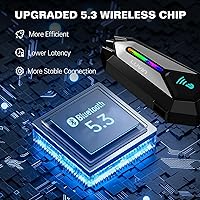
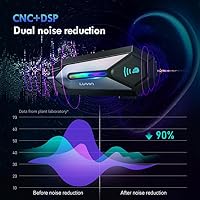
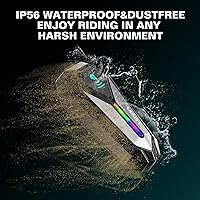
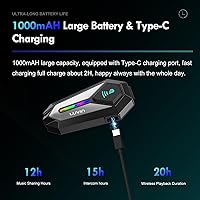
Bluetooth 5.3 keeps the connection to your phone or GPS stable even in stop-and-go traffic, with low audio lag when switching tracks or taking a call. The noise reduction relies on CVC and DSP processing rather than true active noise cancellation hardware — worth knowing before you expect total silence on a highway run. Battery life is a genuine strength: a full charge via Type-C takes roughly two hours, and a full day of mixed music and intercom use is realistic on one charge. Worth noting: the listing references both IP56 and IP65 ratings inconsistently, so treat the weather resistance as dependable for light rain, not submersion.

Best For

This helmet intercom makes the most sense for rider-passenger pairs who want to stay connected on commutes or leisure rides without committing to a premium brand. It is also a solid pick for anyone buying their first intercom — setup is straightforward with no steep learning curve. Keep in mind this is strictly a two-device system with no multi-rider mesh networking, so group rides of three or more will need a different solution entirely. Snowboarders and cyclists benefit too, since the weather resistance handles light precipitation well, making the LUVIN G8 more versatile than a typical entry-level headset.

User Feedback

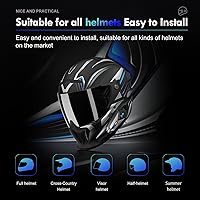
Buyers consistently highlight quick installation as a standout experience — most report having the unit mounted and paired within minutes, which riders who dread tech setup genuinely appreciate. On the downside, noise filtering expectations are frequently the sore spot: at highway speeds, wind intrusion becomes noticeable and real-world performance falls short of what the marketing implies. Battery feedback is mixed — some users confirm near full-day runtime while others report shorter figures depending on volume level and temperature. A handful of verified reviewers also flag occasional Bluetooth drop-outs during longer rides, which is worth factoring in if connection reliability is a priority for you.

Pros

  • Installation is genuinely quick and straightforward, with most riders reporting a ready-to-use setup in just a few minutes.
  • Bluetooth 5.3 provides a stable, responsive connection to phones and GPS devices across everyday riding conditions.
  • The 1000mAh battery holds up well for full-day mixed use, making it practical for longer leisure rides.
  • Type-C fast charging means you can top up quickly between rides rather than waiting hours.
  • Works with other helmet headset brands, so both riders are not locked into buying the same system.
  • RGB accent lighting passively improves visibility during low-light and nighttime riding.
  • Voice assistant support keeps hands on the bars when answering calls or switching navigation.
  • Compact and lightweight enough that it does not feel intrusive once mounted inside the helmet.
  • The price point makes it a genuinely low-risk first intercom for riders who are new to the category.

Cons

  • Real-world noise filtering falls noticeably short of what the marketing implies, especially at highway speeds.
  • The listing inconsistently cites two different waterproof ratings, which creates legitimate doubt about actual wet-weather durability.
  • Strictly limited to two riders — no group intercom or mesh networking of any kind.
  • Some verified buyers report intermittent Bluetooth drop-outs during longer continuous rides.
  • Actual battery performance varies depending on volume level and ambient temperature, and may not match advertised figures.
  • The title references active noise cancellation, but the hardware only uses CVC and DSP processing — a meaningful difference at speed.
  • Intercom clarity at speeds above 60 mph degrades noticeably as wind intrusion increases.
  • ABS plastic housing feels functional but does not inspire confidence for riders who are rough on gear.

Ratings

The ratings below for the LUVIN G8 Motorcycle Helmet Bluetooth Intercom were generated by our AI system after analyzing verified purchase reviews from buyers worldwide, with spam, bot-generated, and incentivized feedback actively filtered out. Scores reflect the full picture — where this helmet intercom genuinely delivers and where it falls short — so you can make an informed call before buying.

Value for Money
88%
For a budget-tier intercom, buyers consistently feel they are getting more than they paid for. The combination of Bluetooth 5.3, voice control, and cross-brand compatibility at this price point is hard to argue with, and most first-time intercom buyers report feeling pleasantly surprised by how much works out of the box.
A handful of buyers who upgraded from this unit to a premium brand noted the gap in real-world performance is wider than the price difference alone might suggest. If you ride daily at highway speeds, the value equation shifts noticeably once wind noise becomes a persistent frustration.
Ease of Installation
91%
This is consistently the most praised aspect across buyer feedback. Most riders report having the unit physically mounted and Bluetooth-paired within five to ten minutes, even without consulting the manual. The compact form factor slots into standard helmet speaker pockets without requiring any drilling or permanent modification.
A small number of buyers with non-standard or full-face racing helmets found the fit less intuitive, requiring some repositioning before the speakers sat flush. The included documentation is minimal, so riders who prefer step-by-step written guidance may find the setup slightly less obvious than advertised.
Intercom Clarity
67%
33%
At city speeds and on quieter suburban roads, the two-way intercom between rider and passenger is clear enough for casual conversation and basic navigation check-ins. Buyers who primarily ride at speeds under 50 mph report that voice exchanges are easy to follow without straining to hear.
Once highway speeds come into play, wind intrusion overwhelms the DSP filtering and conversations become fragmented. Multiple verified riders specifically flag that above 60 mph, the passenger side of the intercom degrades faster than the rider side, making sustained communication impractical without shouting.
Noise Reduction
59%
41%
The CVC and DSP processing does make a tangible difference in call quality during urban commutes, where engine rumble and stop-and-go traffic are the primary noise sources. Callers on the receiving end of phone calls generally report voices coming through clearly enough for normal conversation.
The product title references active noise cancellation, which sets an expectation the hardware simply cannot meet — there is no ANC chip in this unit. Buyers expecting hardware-grade noise blocking are routinely disappointed, and this disconnect between marketing language and real-world performance is the single most frequent complaint across reviews.
Battery Life
78%
22%
For most commuter and leisure riders, the battery holds up well across a full riding day without needing a mid-ride top-up. The Type-C charging port means a two-hour turnaround is realistic, and buyers who do multi-day trips appreciate that a standard cable they already carry works fine.
The advertised 20-hour figure applies to solo music playback at moderate volume — active intercom use with music running simultaneously drains the battery significantly faster. Cold-weather riders in particular report noticeably shorter runtimes, sometimes falling well below what fair-weather testing suggests.
Bluetooth Stability
73%
27%
Day-to-day pairing with a phone is reliable and reconnection after stopping or removing the helmet is generally automatic. The Bluetooth 5.3 chip handles most real-world riding environments — including urban areas with high wireless interference — without frequent drops during shorter rides.
On longer continuous rides exceeding two to three hours, a portion of buyers report intermittent drop-outs that require manually re-pairing. This is not universal, but it is frequent enough across reviews to be a legitimate concern for riders who depend on the intercom staying active throughout extended journeys.
Sound Quality
71%
29%
Music playback through the dynamic drivers has more bass presence than buyers typically expect from a budget helmet headset. For casual listening during commutes — podcasts, GPS directions, or background playlists — the audio quality is more than adequate and rarely draws complaints from new users.
At higher volumes, some distortion creeps into the upper frequency range, which affects vocal clarity in music and audiobooks. Riders who are accustomed to premium in-ear audio will notice the sonic limitations quickly, particularly in the midrange where detail starts to flatten out.
Weather Resistance
64%
36%
Light rain, road spray, and mist have not caused issues for the majority of buyers who have ridden in mixed weather. For everyday commuters in regions with occasional drizzle, the unit holds up well enough across a typical riding season without visible damage or performance degradation.
The product listing cites two different IP ratings — IP65 in the title and IP56 in the description — which creates genuine ambiguity about the actual protection level. Buyers who have tested it in heavier or sustained rain report inconsistent outcomes, and several note they would not trust it through a prolonged storm without protective covering.
Build Quality
62%
38%
The ABS plastic shell feels solid enough for everyday use and does not rattle or flex during normal riding vibration. For a unit in this price bracket, the physical construction meets basic durability expectations and shows no obvious corner-cutting in the housing assembly.
Compared to mid-range or premium intercom units, the tactile quality of the buttons and the overall finish feel noticeably cheaper. Buyers who have owned higher-end systems tend to describe the LUVIN G8 as feeling disposable rather than durable, which raises some doubt about long-term reliability beyond a single season.
Voice Assistant Integration
74%
26%
Triggering Siri or Google Assistant hands-free works reliably in most conditions, which is genuinely useful for riders who want to reroute navigation or change a playlist without pulling over. Buyers who commute solo and rely heavily on voice commands rate this feature positively and use it regularly.
The voice assistant is entirely dependent on the paired phone — there is no onboard assistant capability. In louder riding environments where wind noise is already a problem, the microphone pickup for voice commands also degrades, making hands-free control less dependable precisely when you need it most.
Comfort & Fit
76%
24%
The lightweight profile means most riders forget the unit is attached once underway, and the speaker placement in standard helmet pockets keeps ear pressure to a minimum during long rides. Buyers with a wide range of helmet types report a comfortable fit without significant modification.
Riders with smaller helmet speaker cavities occasionally find the unit sits slightly proud of the pocket, creating minor pressure points on longer rides. The over-ear design also means that those with particularly narrow helmet interiors may need to experiment with placement to avoid discomfort after the first hour.
Button Controls
69%
31%
The physical button layout is simple enough that most riders learn the core commands — play, pause, call answer, intercom toggle — by feel within a day or two of use. Gloved operation works for the primary functions without needing to look at the unit.
The button travel and tactile feedback are on the softer side, making it harder to confirm a press with thick winter gloves. A few buyers also note that the button labeling on the unit itself is small and wears off quickly, which can create confusion if you need to reference which button does what after a few months.
Cross-Brand Compatibility
82%
18%
The ability to pair with headsets from other brands via standard Bluetooth is a practical advantage that removes the pressure of both rider and passenger buying identical units. Music sharing across different helmet headsets works consistently according to buyers who have tested mixed-brand setups.
Intercom functionality specifically — as opposed to audio sharing — can be inconsistent when connecting with non-LUVIN units, since dedicated intercom protocols vary between manufacturers. Buyers expecting full two-way intercom with a premium brand headset may find only basic audio sharing works reliably rather than true voice communication.
Visibility & Lighting
77%
23%
The RGB breathing lights are genuinely noticed by other road users in twilight and nighttime conditions, and several buyers mention receiving comments from other riders about the visual effect. For commuters who frequently ride in low-light urban environments, the added passive visibility is a real safety benefit.
The lighting is purely aesthetic and safety-adjacent — it does not substitute for proper helmet visibility gear on high-speed roads. Some riders also find the breathing light pattern distracting for passengers or nearby cyclists at stops, and there is no option to disable the lights without powering down the unit entirely.

Suitable for:

The LUVIN G8 Motorcycle Helmet Bluetooth Intercom is a practical fit for rider-passenger pairs who want reliable two-way communication on daily commutes or weekend leisure rides without spending a lot. If you are buying your first helmet intercom and want a low-stakes entry point to understand how the technology works before committing to a premium system, this motorcycle headset makes a sensible starting choice. Riders who rely heavily on GPS navigation will appreciate the hands-free voice control, which keeps attention where it belongs — on the road. It also works well beyond motorcycling: snowboarders and cyclists who ride in light rain or mixed weather conditions can benefit from the decent weather resistance and wireless audio. For two people who simply want to chat, share music, or stay coordinated on shorter rides without worrying about brand compatibility, this helmet intercom covers the fundamentals at a price that removes the anxiety from the purchase.
Not suitable for:

The LUVIN G8 Motorcycle Helmet Bluetooth Intercom is not the right tool for group rides involving three or more riders, since it supports only a single two-device pairing with no mesh networking capability whatsoever. Riders who regularly cruise at highway speeds and expect wind noise to be largely filtered out will likely be disappointed — the CVC and DSP noise reduction helps at moderate speeds, but it is not a substitute for the active noise cancellation hardware found in higher-end systems. Serious touring riders logging long days on the road should also weigh the inconsistency in the waterproofing claims carefully, as the listing references two different IP ratings, and relying on it through heavy, sustained rain carries real risk. If Bluetooth connection stability is critical to your ride experience — for instance, if you use intercom continuously over multi-hour stretches — some verified buyers have reported drop-outs that could prove frustrating. Anyone expecting audiophile-grade sound or the build quality of established intercom brands will find this motorcycle headset falls short of those benchmarks.
Specifications

  • Bluetooth Version: Equipped with Bluetooth 5.3, providing stable wireless pairing, low latency, and improved interference resistance compared to older Bluetooth standards.
  • Intercom Range: Supports rider-to-passenger two-way intercom communication at distances of up to 100 meters in open conditions.
  • Riders Supported: Designed for a maximum of two users simultaneously — one rider and one passenger — with no multi-rider mesh networking capability.
  • Battery Capacity: Houses a built-in 1000mAh rechargeable lithium battery that supports up to 20 hours of continuous audio playback or up to 15 hours of active intercom use.
  • Charging: Charges via a Type-C USB port with a full charge cycle completing in approximately 2 hours under normal conditions.
  • Noise Reduction: Uses CVC (Clear Voice Capture) and DSP (Digital Signal Processing) dual-layer noise filtering to reduce ambient wind and engine noise during calls and intercom use — not hardware-based active noise cancellation.
  • Water Resistance: Listed as waterproof in product materials, with the title referencing IP65 and the product description referencing IP56 — verified protection against light rain and dust, though submersion resistance is not confirmed.
  • Driver Type: Uses dynamic audio drivers with a 32-ohm impedance, tuned for a bass-forward sound profile during music playback.
  • Dimensions: The main unit measures 1.57 x 0.79 x 3.54 inches, keeping the profile compact enough for most standard helmet speaker pockets.
  • Weight: The complete unit weighs 9.9 oz (0.28 kg), which is light enough to avoid adding noticeable bulk to a helmet setup.
  • Housing Material: Outer shell and casing are constructed from ABS (Acrylonitrile Butadiene Styrene) plastic, a common and impact-resistant material used in consumer electronics housings.
  • Lighting: Features built-in RGB breathing lights designed to add passive rider visibility during low-light and nighttime riding conditions.
  • Control Method: Operated via physical buttons on the unit as well as a compatible AI voice assistant for hands-free control of calls, music, and navigation.
  • Connectivity: Wireless Bluetooth only — there is no 3.5mm headphone jack or wired input option on this unit.
  • Compatibility: Compatible with most standard helmet speaker setups and can also pair and share audio with headsets from other brands without requiring matching hardware.
  • Model Identifier: Officially designated as model G8 by the manufacturer LUVIN, first made available in August 2024.

Related Reviews

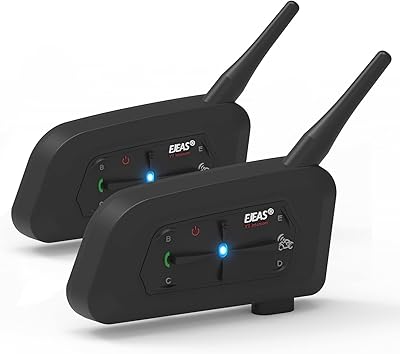
EJEAS V7 Motorcycle Helmet Bluetooth Intercom 2-Pack
78%
83%
Audio Clarity
71%
Intercom Range
91%
Battery Life
86%
Pairing & Setup
63%
Build Quality & Durability
More
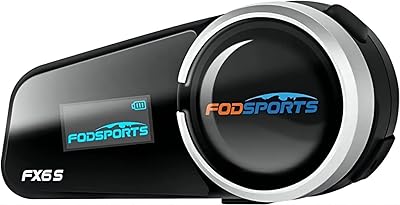
Fodsports FX6S Motorcycle Helmet Communication System
74%
83%
Sound Clarity
61%
Intercom Range
78%
Battery Life
88%
Ease of Use & Controls
57%
Cross-Brand Pairing
More
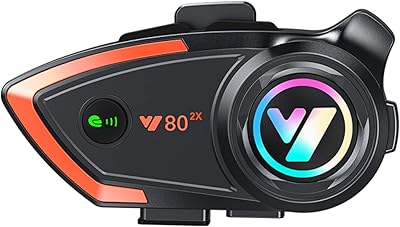
Khptop Y80 Bluetooth Motorcycle Helmet Intercom Headset
86%
88%
Communication Range
91%
Noise Cancellation
95%
Battery Life
86%
Waterproof Durability
89%
Ease of Installation
More
EJEAS E1+ Motorcycle Helmet Bluetooth Headset
70%
88%
Value for Money
91%
Battery Life
83%
Bluetooth Connectivity
61%
Noise Reduction
74%
Audio Quality
More
Khptop X7 Motorcycle Helmet Bluetooth Headset
87%
88%
Audio Quality
94%
Battery Life
90%
Ease of Installation
82%
Noise Cancellation
87%
Build Quality
More
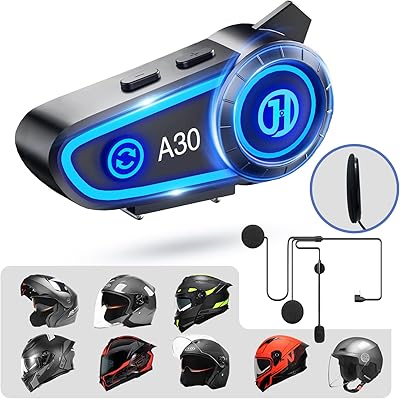
JZAQ A30 Bluetooth Motorcycle Helmet Speakers
85%
88%
Sound Quality
91%
Battery Life
89%
Ease of Installation
84%
Comfort During Use
78%
Noise Cancellation Effectiveness
More
Syphon SoundPro Bluetooth Motorcycle Helmet Headphones
80%
91%
Helmet Fit & Comfort
84%
Glove-Friendly Controls
86%
Volume & Wind Noise Performance
73%
Audio Quality
61%
Microphone Quality
More
JZAQ BT40 Helmet Bluetooth Headset
71%
83%
Value for Money
71%
Battery Life
78%
Waterproof Performance
61%
Sound Quality
67%
Helmet Compatibility & Fit
More
SCSETC S-8X Motorcycle Bluetooth Intercom
84%
87%
Battery Life
91%
Audio Quality
88%
Noise Cancellation
85%
Ease of Use
83%
Build Quality
More
Wipeeyes E1 Motorcycle Helmet Intercom Headset
71%
84%
Value for Money
71%
Sound Quality
62%
Microphone & Call Clarity
58%
Intercom Range & Reliability
83%
Waterproofing & Weather Resistance
More

FAQ

Most riders find the setup genuinely straightforward. The unit is designed to fit into standard helmet speaker pockets, and pairing it to a phone follows the usual Bluetooth process — hold the button until it enters pairing mode and connect through your phone settings. The majority of buyers report being fully set up within a few minutes, even without reading the manual.

No — the LUVIN G8 Motorcycle Helmet Bluetooth Intercom is strictly a two-device system connecting one rider and one passenger. There is no mesh networking or multi-rider chain capability, so if your group ride involves three or more helmets, you will need a different solution.
The noise handling is handled by CVC and DSP processing, which filters out some wind and engine noise during calls and intercom use. Despite the word appearing in some product materials, there is no active noise cancellation hardware in this unit. At moderate city speeds it performs reasonably well, but at highway speeds wind intrusion becomes noticeable and the filtering cannot fully compensate.

The listing is a bit inconsistent here — the product title references IP65 while the description mentions IP56, which are different levels of protection. In practice, light rain and road spray should be fine, but we would not recommend relying on it through a sustained heavy downpour or any kind of submersion. Treat it as weather-resistant rather than fully waterproof.

The rated figures are up to 20 hours for audio playback and around 15 hours for continuous intercom use. Real-world results vary — volume level, temperature, and how actively the intercom is being used all affect runtime. Some users confirm near-full-day performance, while others report shorter durations. Expect somewhere between 12 and 18 hours under typical mixed-use conditions.

Yes, this motorcycle headset is designed to pair with headsets from other brands via standard Bluetooth, so your passenger does not need to own the same unit. Music sharing also works cross-brand in most cases, though intercom features may be more reliable when both units are the same model.

At higher speeds, wind noise is the main challenge, and the DSP filtering only does so much. Intercom clarity at 60 mph and above is noticeably reduced compared to slower urban riding. Some riders manage by adjusting their position or using a better wind-sealed helmet, but it is a real limitation to factor in if highway riding is your primary use case.

The unit supports hands-free voice control to trigger your phone's native assistant — Siri or Google Assistant depending on your device. It works reliably for basic commands like making calls, playing music, or getting navigation directions. It is not a standalone AI assistant built into the hardware; it simply activates whatever assistant is already on your paired phone.

The lights are positioned on the exterior of the unit rather than inside the helmet, so they are not in your line of sight while riding. They function more as a visibility aid for other road users in low-light conditions rather than an interior display, so distraction is generally not an issue in practice.

For a first intercom, this helmet headset is a reasonable pick precisely because the stakes are low. It covers the core use case of rider-passenger communication, pairs easily, and does not require a complicated app or configuration process. If you later decide you need longer range, multi-rider capability, or stronger noise filtering, you will have a clear idea of what to look for in an upgrade.