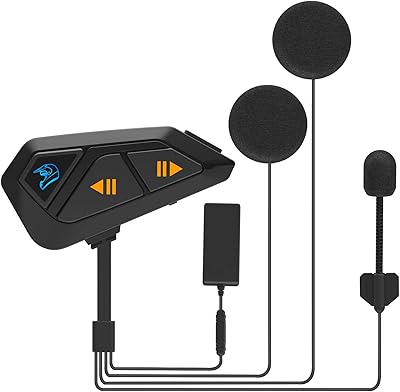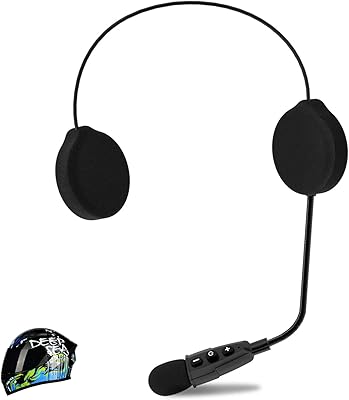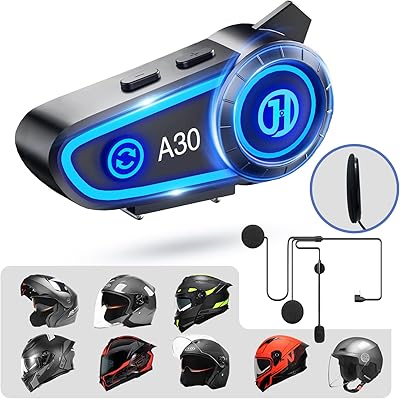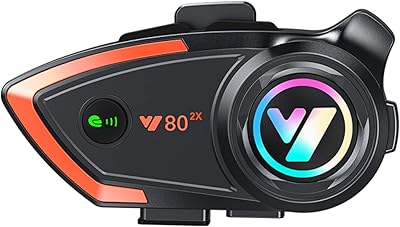

Overview

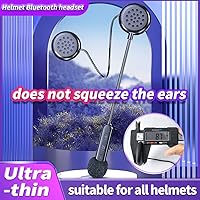
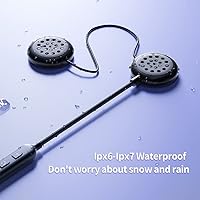
The JZAQ BT40 Helmet Bluetooth Headset is a budget-conscious option for riders who want wireless audio without cutting into their helmet foam or spending serious money. At just 0.35 inches thick, it slides into most helmets without creating pressure points against your ears — a real concern with bulkier units. The velcro mounting system means you can pull it out and move it to a different helmet in minutes, no tools required. Bluetooth 5.0 handles dual-device pairing, so you can stay connected to both your phone and a GPS unit simultaneously. The IPX7 waterproof rating via nano-coating adds weather resilience that riders in wetter climates will genuinely appreciate.

Features & Benefits

The claimed 80-hour playtime is the headline spec, and while real-world use will vary depending on volume and ambient temperature, battery anxiety on multi-day trips should not be a serious concern here. The DSP noise cancellation won't silence roaring highway wind entirely, but it does take the edge off enough to make phone calls intelligible at moderate speeds. Touch controls on the unit keep interaction simple — a tap rather than a button hunt while riding. The 20-meter Bluetooth range is adequate for keeping your phone in a bag or jacket pocket. A small reflective sticker is included, which is a thoughtful touch for anyone riding at dusk or dawn.

Best For

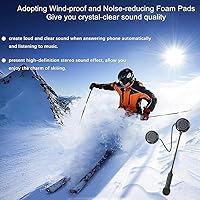
This helmet headset makes the most sense for riders who want functional audio at an accessible price — not audiophiles chasing frequency response curves. Casual cyclists commuting around town, skiers who need weatherproof audio that survives a powder day, and motorcycle riders on trips where battery life matters more than sonic depth will all find it fits their needs well. The detachable velcro design is a genuine plus for anyone with multiple helmets — full-face, open-face, or ski — since swapping takes seconds. If your priority is crystal-clear, high-fidelity sound at speed, this in-helmet Bluetooth unit will likely leave you wanting more.

User Feedback

Buyers generally respond well to the thin profile and ease of installation, with many noting it sits comfortably inside helmets where chunkier units would press uncomfortably. Battery life draws more mixed reactions — some riders report numbers close to the marketed figure, while others find it falls short under cold conditions or at higher volumes. Wind noise at speed is a consistent point of criticism; calls stay workable at city speeds but become harder at highway pace. A handful of buyers mention Bluetooth reconnection hiccups after long pauses, and a few note the fit is tighter in certain full-face helmets than the spec sheet suggests.

Pros

  • Ultra-thin 0.35-inch profile fits inside most helmets without creating ear pressure during long rides.
  • IPX7 waterproofing via nano-coating holds up reliably through rain, snow, and sweaty summer sessions.
  • Velcro mounting lets riders swap this helmet headset between multiple helmets in under a minute.
  • Dual-device Bluetooth pairing allows simultaneous connection to a phone and GPS unit at once.
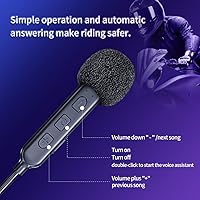
  • Touch controls work cleanly in dry conditions, removing the need to fumble for physical buttons mid-ride.
  • Battery longevity is strong enough for multi-day trips without daily charging becoming a concern.
  • Quick two-hour charge time fits easily into a lunch break or overnight routine.
  • Included reflective sticker is a practical safety bonus for low-light commutes and early morning rides.
  • Bluetooth 5.0 provides stable signal across the typical distances between a rider and a pocketed phone.
  • At this price point, the overall feature set represents genuinely good value for casual and recreational riders.

Cons

  • Wind intrusion at highway speeds makes hands-free calls difficult for the person on the other end.
  • Real-world battery life in cold conditions falls significantly short of the marketed 80-hour figure.
  • Touch controls lose responsiveness with gloved hands, which is a problem for most motorcycle and ski use.
  • Velcro adhesion weakens over repeated attach-detach cycles, particularly on smoother helmet liner materials.
  • The JZAQ BT40 can shift position inside certain helmet shapes during more dynamic riding.
  • Bluetooth reconnection after pausing a ride or locking a phone sometimes requires manual re-pairing.
  • Plastic construction feels budget-level and raises questions about durability beyond a single riding season.
  • The USB charging port is awkwardly positioned in some mounting configurations, requiring partial removal to access.
  • DSP noise cancellation handles steady low-level ambient noise but struggles against aggressive wind at speed.
  • Full-face helmet compatibility is not guaranteed — ear cavity depth varies enough to cause fit issues in some models.

Ratings

The JZAQ BT40 Helmet Bluetooth Headset has been scored by our AI system after analyzing verified buyer reviews from global markets, with spam, bot-submitted, and incentivized feedback actively filtered out. The scores below reflect honest composite sentiment — strengths and frustrations weighted equally — so you get a clear picture of where this in-helmet Bluetooth unit genuinely delivers and where it falls short. Riders at this price point tend to be practical rather than precious, and the ratings reflect exactly that mindset.

Value for Money
83%
For the asking price, most buyers feel they are getting more than a fair deal — a functioning wireless helmet headset with waterproofing and a solid battery claim is not easy to find at this tier. Commuters and weekend cyclists in particular tend to be pleasantly surprised by the feature set relative to cost.
A small but vocal group of buyers feel the build materials telegraph the price point too obviously, with plastic components that don't inspire long-term confidence. If you're expecting mid-range durability for a budget price, you may end up a little disappointed after a season of regular use.
Battery Life
71%
29%
Many riders report getting well beyond 40 hours of real use on a single charge, which is genuinely impressive for a unit this thin and affordable. For weekend trips and daily commutes, the charge cycle is rarely something buyers say they think about.
The 80-hour headline figure is treated with healthy skepticism by experienced buyers, and cold-weather riders in particular report notable drop-off in playback time during winter sessions. At high volumes in sub-zero conditions, real-world performance can feel significantly shorter than advertised.
Waterproof Performance
78%
22%
The IPX7 nano-coating holds up well in practical riding scenarios — light rain, snow spray, and sweaty summer sessions don't seem to cause issues for the majority of buyers. Skiers especially appreciate that the unit survives a full day on the mountain without any protective measures needed.
A handful of buyers report connection or audio issues after prolonged exposure to heavy, sustained rain rather than brief showers. The IPX7 rating technically covers submersion, but real-world seam durability over many wet rides is less certain than the spec implies.
Sound Quality
61%
39%
At city speeds and during moderate cycling, the audio is clear enough for music and podcasts without obvious distortion. Buyers using it primarily for navigation prompts and casual listening tend to rate the sound positively, since the bar for that use case is reasonably low.
At highway speeds, wind intrusion becomes a genuine problem, and the DSP noise cancellation doesn't fully compensate for the acoustic chaos inside a full-face helmet at pace. Audiophiles or anyone expecting rich bass response will find the dynamic drivers underwhelming, which is an honest trade-off at this price.
Helmet Compatibility & Fit
67%
33%
The 0.35-inch profile fits comfortably inside most open-face and ski helmets without creating noticeable pressure against the ear. Riders who own several helmets appreciate that the velcro system makes swapping between them a genuinely quick process.
Full-face helmet users report a tighter fit situation, with the ear cavity depth in some models leaving barely enough room for even this slim unit. A few buyers note the earpiece positioning doesn't align perfectly with their ear canal in certain helmet shapes, which affects both comfort and audio clarity.
Bluetooth Connectivity
74%
26%
Initial pairing is straightforward and dual-device connection works reliably when set up correctly, letting riders have GPS audio and music running from separate sources simultaneously. Most buyers report stable signal within typical riding distances from a phone in a jacket pocket.
Reconnection after pausing a ride or locking a phone is where the unit shows inconsistency, with some buyers reporting they need to manually re-initiate pairing after longer breaks. Range claims of 20 meters are broadly achievable in open air, but real-world obstacles can trim that noticeably.
Noise Cancellation
58%
42%
The DSP processing does reduce some of the mid-frequency wind rumble that makes hands-free calls difficult, and at urban cycling speeds buyers generally say call quality is acceptable to the person on the other end. It handles steady ambient noise reasonably well.
At highway speeds above 60 mph, the noise cancellation struggles to keep up, and callers frequently report difficulty hearing the rider clearly. It works well enough for city use but was never going to match active noise cancellation systems found on units costing several times more.
Build Quality & Durability
62%
38%
The plastic housing is lightweight and the TPE elements add a degree of flexibility that helps it survive the minor drops and knocks typical of helmet use. Most buyers don't report structural failure within the first few months of regular use.
The overall construction feels budget-level in hand, and the velcro patch shows signs of wear after repeated attach-detach cycles on some units. Long-term durability beyond a single riding season is a real question mark based on available buyer feedback.
Touch Controls
69%
31%
The touch interface works cleanly in dry conditions, and being able to skip tracks or answer calls with a single gesture while riding is genuinely useful compared to fumbling with physical buttons. Most buyers pick up the control gestures quickly without needing to consult the manual.
Gloved hands — a near-universal reality for motorcyclists and skiers — reduce touch responsiveness noticeably, which somewhat defeats the purpose of a touch interface for those riders. Cold temperatures can compound this issue, making the controls feel unreliable exactly when you need them most.
Installation & Setup
81%
19%
The velcro mounting system is one of the most praised practical aspects of this unit — no drilling, no adhesive mess, just press and ride. Most buyers report getting the headset installed and paired to their phone in under ten minutes on the first try.
The velcro backing can lose grip over time, particularly in helmets with smoother inner lining materials that don't bond as securely. A small number of buyers report the unit shifting slightly inside the helmet during more dynamic riding, which is distracting mid-session.
Call Quality
63%
37%
For light-traffic commuting and low-speed cycling, call quality is clear enough that most buyers say they regularly use it for hands-free conversations. The microphone picks up voice adequately in calm outdoor conditions.
Wind intrusion into the microphone at higher speeds makes calls noticeably harder for both parties, and there's no physical wind shield on the mic that would help in exposed riding positions. Riders who depend on hands-free calls at speed will find this a recurring frustration.
Charging & Power Management
76%
24%
The two-hour charge time is fast enough that topping up overnight or during a lunch break fits easily into a riding routine. Battery level display on the connected phone is a practical feature that removes guesswork about remaining ride time.
The USB charging port placement can be awkward to access depending on how the unit is mounted inside the helmet, occasionally requiring partial removal to connect the cable. There's no wireless charging option, which isn't a surprise at this price but is worth noting.
Weight & Profile
84%
At under four ounces the unit adds virtually nothing to the feel of a helmet during a long ride, and the slim form factor means it doesn't create the hotspot pressure that bulkier helmet audio systems are notorious for. Lightweight design is one of the most consistently praised physical attributes.
The slim profile does come with limits — there's only so much speaker driver you can fit into a 0.35-inch package, and the physical constraints of the design directly contribute to the audio quality ceiling. It's a trade-off buyers accept knowingly, but it's a real one.

Suitable for:

The JZAQ BT40 Helmet Bluetooth Headset is a strong fit for riders who want functional wireless audio without committing serious money upfront. Casual cyclists and urban commuters who primarily need navigation prompts and hands-free calling will get solid daily use out of it without feeling like they overspent. Skiers and snowboarders are a particularly good match — the IPX7 waterproofing handles mountain weather reliably, and the slim profile doesn't interfere with helmet fit the way bulkier units can. Motorcycle riders who take shorter to mid-length trips and aren't chasing audiophile-grade sound will find the battery longevity and touch controls genuinely convenient. The detachable velcro system also makes this in-helmet Bluetooth unit appealing for anyone who rotates between two or three different helmets across different activities, since swapping takes less than a minute.

Not suitable for:

The JZAQ BT40 Helmet Bluetooth Headset is not the right call for riders who spend serious time at highway speeds and depend on clear hands-free communication — wind intrusion at pace is a recurring complaint that DSP alone can't fully fix. Buyers who prioritize sound fidelity will hit the ceiling of what a budget dynamic driver can deliver fairly quickly, especially compared to mid-range alternatives. Riders with full-face helmets that have shallow ear cavities should measure carefully before buying, as the unit doesn't fit every shell despite its slim profile. If you're planning to ride through extended heavy rain rather than occasional showers, long-term seal reliability is less certain than the spec rating implies. Anyone expecting the 80-hour battery figure to hold up through cold-weather winter sessions should temper expectations, as real-world cold performance falls noticeably short of that headline number.

Specifications

  • Bluetooth Version: The unit uses Bluetooth 5.0, which provides a more stable connection and faster pairing compared to older Bluetooth standards.
  • Battery Capacity: A built-in 600mAh Li-ion rechargeable battery powers the headset without requiring battery replacements.
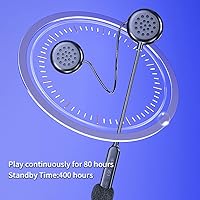
  • Claimed Playtime: The manufacturer rates continuous audio playback at up to 80 hours on a full charge under optimal conditions.
  • Standby Time: Standby time is rated at up to 500 hours, meaning the unit can sit idle in a helmet for extended periods without full discharge.
  • Charging Time: A full charge from empty takes approximately 2 hours via the included USB cable.
  • Waterproof Rating: The headset carries an IPX7 rating achieved through nano-coating technology, providing protection against rain, snow, and splash exposure.
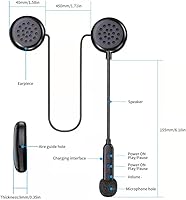
  • Unit Thickness: The earpiece profile measures 0.35 inches (approximately 9mm) thick, designed to fit inside helmet ear cavities without significant pressure.
  • Bluetooth Range: Wireless range is rated at up to 20 meters in open-air conditions between the headset and the paired device.
  • Driver Type: Audio output is handled by a dynamic driver with an impedance of 8 Ohm, tuned for spoken word and general music playback.
  • Noise Cancellation: DSP (Digital Signal Processing) noise cancellation is applied to reduce ambient and wind noise during calls and audio playback.
  • Dual-Device Pairing: The headset supports simultaneous connection to two Bluetooth devices, allowing a phone and a GPS unit to be paired at the same time.
  • Control Method: All playback and call functions are managed via touch controls on the surface of the unit rather than physical buttons.
  • Mounting System: The headset attaches inside a helmet using a detachable velcro system that requires no tools and allows transfer between helmets.
  • Weight: The complete unit weighs 3.84 ounces, adding negligible mass to a standard motorcycle, cycling, or ski helmet.
  • Certifications: The headset holds CE and FCC certifications along with Bluetooth Association certification, confirming compliance with standard wireless regulations.
  • Package Contents: Each unit ships with the helmet headset, a USB charging cable, a user manual, and a reflective safety sticker.
  • Materials: The housing is constructed from plastic with Thermoplastic Elastomer (TPE) elements for flexibility and durability at the contact points.
  • Compatible Devices: The headset is compatible with any Bluetooth-enabled smartphone, as well as standalone GPS devices and MP3 players with Bluetooth output.

Related Reviews
JZAQ BT30 Motorcycle Helmet Bluetooth Headset
74%
88%
Battery Life
84%
Value for Money
54%
Wind Noise & Noise Cancellation
83%
Waterproofing & Weather Resistance
86%
Ease of Installation
More
LUVIN G8 Helmet Bluetooth Headset
85%
88%
Sound Quality
91%
Battery Life
84%
Noise Cancellation
89%
Ease of Installation
87%
Comfort and Fit
More
JZAQ A30 Bluetooth Motorcycle Helmet Speakers
85%
88%
Sound Quality
91%
Battery Life
89%
Ease of Installation
84%
Comfort During Use
78%
Noise Cancellation Effectiveness
More
FreedConn FG Motorcycle Bluetooth Helmet Headset
75%
86%
Ease of Setup
57%
Intercom Range
78%
Call Audio Quality
61%
Music Audio Quality
83%
Battery Life
More
EJEAS E1+ Motorcycle Helmet Bluetooth Headset
70%
88%
Value for Money
91%
Battery Life
83%
Bluetooth Connectivity
61%
Noise Reduction
74%
Audio Quality
More
LEXIN G2P Motorcycle Helmet Bluetooth Headset
78%
83%
Audio Clarity
61%
Intercom Range
88%
Battery Life
66%
Noise Cancellation
81%
Build Quality
More
Khptop X7 Motorcycle Helmet Bluetooth Headset
87%
88%
Audio Quality
94%
Battery Life
90%
Ease of Installation
82%
Noise Cancellation
87%
Build Quality
More
Touch Two C9 Motorcycle Helmet Bluetooth Headset
73%
88%
Value for Money
84%
Ease of Installation
71%
Audio Quality
59%
Intercom Performance
62%
Microphone Clarity
More
Khptop Y80 Bluetooth Motorcycle Helmet Intercom Headset
86%
88%
Communication Range
91%
Noise Cancellation
95%
Battery Life
86%
Waterproof Durability
89%
Ease of Installation
More
FreedConn R3 PRO Motorcycle Helmet Bluetooth Headset
79%
83%
Intercom Range & Stability
88%
Audio Quality
74%
Camera Video Quality
91%
Battery Life
87%
Waterproofing & Weather Resistance
More

FAQ

It depends on your specific helmet model. The unit is only 0.35 inches thick, which clears most ear cavities, but some full-face helmets have shallow recesses that make the fit tight or uncomfortable. Before buying, measure the depth of your helmet's ear pocket and compare it to the headset dimensions shown in the product images. Open-face and ski helmets tend to be more accommodating.

Take that number as a best-case ceiling rather than a realistic average. In warm conditions at moderate volume, many riders report getting 40 to 60 hours of actual playback, which is still excellent. Cold weather — common for skiers and winter riders — can noticeably reduce that figure, sometimes by 30 percent or more. It is still a strong battery for the price tier, just don't plan around the maximum claim.

Yes, the IPX7 nano-coating handles snow and rain spray without issue for the vast majority of users. It is not designed for submersion, but ordinary mountain weather conditions including powder days and light rain should not cause problems. Just make sure you dry the charging port area before plugging in after a wet session.

This is honestly where the unit shows its budget limitations most clearly. At city speeds, call quality is generally acceptable for both parties. Above 60 mph, wind noise becomes a real problem and callers on the other end will likely struggle to hear you clearly. The DSP processing helps with steady ambient noise but isn't aggressive enough to fully counter high-speed wind intrusion.

For most helmets with a standard textile inner lining, the velcro grip is solid enough that the unit doesn't shift during normal riding. The issue comes with smoother liner materials where velcro doesn't bond as firmly, or after many repeated attachment and removal cycles that gradually wear down the hook-and-loop strength. If you're swapping it between helmets frequently, check the grip periodically.

The JZAQ BT40 Helmet Bluetooth Headset supports dual-device pairing, so you can connect to your phone and a GPS unit simultaneously. The process involves pairing the first device normally, then putting the headset back into pairing mode to add the second device. The manual walks through the exact steps, and most buyers find it straightforward after the first attempt.

In dry conditions with thin gloves, there is some responsiveness, but it's inconsistent. With standard motorcycle gauntlets or ski gloves, touch control reliability drops significantly — the capacitive surface just doesn't register reliably through thick material. If you plan to ride primarily in gloves, this is worth factoring into your decision.

Charging from empty to full takes roughly two hours via the included USB cable, which matches the spec. One genuinely useful feature is that the battery level displays on your phone screen once paired, so you're not guessing how much ride time is left. There's no wireless charging option, but at this price that's not a realistic expectation.

Yes, dual-device pairing is designed exactly for that scenario. You can have turn-by-turn audio coming from a GPS unit and music streaming from your phone simultaneously, with GPS prompts interrupting music when a direction change is coming. The practical execution works reliably in stable conditions, though some users report occasional hiccups when switching audio priority between devices.

It is supposed to reconnect automatically when your phone is back in range, and for many users it does. However, reconnection reliability is one of the more commonly flagged issues in buyer feedback — particularly after longer stops where a phone has locked or gone into a power-saving state. In those cases, a manual re-pair from the phone's Bluetooth menu is sometimes needed, which is mildly inconvenient but not unusual for budget Bluetooth devices.