Overview

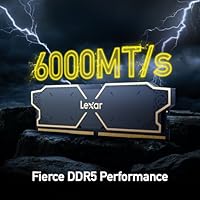
The Lexar THOR OC 32GB DDR5 Desktop RAM arrived in late 2023 as Lexar's push into the enthusiast memory segment — a space long dominated by G.Skill, Corsair, and Kingston. Rather than competing on brand recognition alone, it leads with substance: 6000MT/s at CL32, a frequency-timing combination that aligns precisely with AMD Ryzen 7000 and Intel 13th and 14th gen platform sweet spots. The Norse mythology branding and heavy heatsink aesthetic make clear this isn't a budget play. That said, the positioning is mid-to-upper tier rather than top-shelf, which for many builders is exactly the right balance. With nearly 400 verified ratings sitting at 4.8 out of 5, early real-world reception is genuinely hard to dismiss.

Features & Benefits

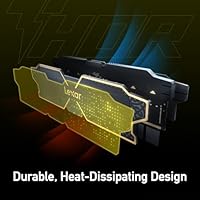
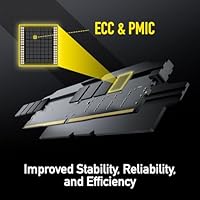
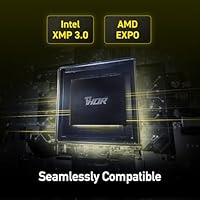
What makes this DDR5 kit stand out isn't just the headline speed — it's how the overall package holds together. Running at 1.35V operating voltage keeps things sensible even at 6000MT/s, which matters for VRM longevity during sustained workloads. The 1.6mm anodized aluminum heatspreader covers a meaningful surface area, and while DDR5 rarely throttles under normal use, thicker spreaders do help during extended memory-intensive sessions. XMP 3.0 and AMD EXPO support means one BIOS toggle activates the rated profile on virtually any modern board. On-die ECC corrects errors within the chip passively — you won't notice it until you need it, which is exactly the point. The lifetime limited warranty rounds the package out convincingly.

Best For

This Lexar dual-channel set is a natural fit for anyone building around AMD Ryzen 7000 — Zen 4's memory fabric runs best at this exact frequency, so you're not paying for speed the platform can't actually use. Intel 12th through 14th gen builders benefit too, particularly with XMP 3.0 dialing in the profile without manual intervention. Content creators handling video editing or 3D rendering will appreciate the bandwidth, and high-refresh-rate gamers will find the latency profile competitive. It's also a practical choice for DDR4 upgraders who want to skip the tedium of manual timing adjustments. If RGB lighting is a priority, look elsewhere — the THOR OC memory keeps things functional and aggressive-looking, not decorative.

User Feedback

With a 4.8-star average across roughly 400 ratings, this DDR5 kit earns genuine praise — but that sample size, while encouraging, isn't large enough to call definitive. Buyers consistently highlight plug-and-play EXPO activation and timing stability under sustained load as the clearest positives. Thermal behavior under prolonged stress draws favorable comments too, suggesting the heatsink delivers without drama. On the critical side, a handful of users have noted compatibility questions with certain older BIOS revisions, worth verifying against your specific board. There are no widespread DOA or reliability complaints, and the lifetime warranty provides reasonable long-term reassurance. Compared to alternatives like the G.Skill Flare X5, buyers appear satisfied with the value-to-performance ratio this kit delivers.

Pros

  • XMP 3.0 and AMD EXPO profiles activate cleanly with a single BIOS toggle on most modern boards.
  • 6000MT/s at CL32 hits the Ryzen 7000 memory fabric sweet spot without overpaying for diminishing returns.
  • The 1.35V operating voltage is conservative for this speed class, reducing long-term strain on motherboard VRMs.
  • On-die ECC corrects DRAM errors passively — no configuration needed, just quiet reliability.
  • The aluminum heatspreader is genuinely thick at 1.6mm, not a cosmetic add-on.
  • Lifetime limited warranty is a meaningful long-term commitment from a brand still building credibility in this segment.
  • Nearly 400 verified ratings at 4.8 out of 5 points to consistent real-world satisfaction, not just launch-day hype.
  • Dual-channel configuration ships ready to install — no single-stick guesswork.
  • Pricing sits in the mid-to-upper tier rather than flagship territory, making the performance-per-dollar ratio reasonable.
  • The heatsink aesthetic reads as aggressive and purposeful without requiring RGB to look the part.

Cons

  • Lexar lacks the long-standing enthusiast reputation of G.Skill or Corsair, which may give cautious buyers pause.
  • Compatibility with certain older motherboard BIOS versions is not guaranteed and requires pre-purchase verification.
  • No RGB lighting option exists for builders who want illuminated memory as part of their aesthetic.
  • The ~400-review sample size, while positive, is still relatively modest for drawing firm long-term reliability conclusions.
  • Manual overclocking headroom beyond the rated 6000MT/s profile is not well-documented by the community yet.
  • 32GB total capacity may feel limiting for professional workloads involving large virtual machines or 4K multi-stream editing.
  • Heat dissipation area claims are theoretical maximums — real-world temperatures in cramped cases may vary noticeably.
  • Brand warranty support and RMA responsiveness from Lexar remain less battle-tested than more established competitors.

Ratings

The scores below for the Lexar THOR OC 32GB DDR5 Desktop RAM were generated by our AI after analyzing verified buyer reviews from multiple global markets, with spam, bot-submitted, and incentivized feedback actively filtered out. This DDR5 kit earned a strong aggregate reception, and these ratings reflect both what users genuinely praised and where friction or disappointment surfaced. Nothing has been smoothed over — the pain points are here alongside the strengths.

Raw Performance
91%
Buyers running Ryzen 7000 builds consistently report that enabling EXPO delivers an immediate and tangible uplift in memory-bandwidth-sensitive workloads like large file transfers and 3D rendering previews. The CL32 timings at 6000MT/s hold stable under prolonged stress, which is exactly what enthusiast users care about.
A small segment of users on Intel platforms noted marginal gains compared to slightly slower DDR5 kits, suggesting the performance ceiling is most meaningfully reached on AMD platforms. Those expecting transformative gains in purely CPU-bound tasks came away with more modest impressions.
Ease of Setup
88%
The vast majority of buyers describe the XMP and EXPO activation as a two-minute BIOS job — install the sticks, flip the profile toggle, save and reboot. For DDR4 upgraders nervous about DDR5 complexity, this kit consistently earned praise for removing that anxiety entirely.
A recurring minority of users on certain ASUS and MSI boards reported the EXPO profile not sticking cleanly on the first attempt, requiring a BIOS update before stability was achieved. Builders on older firmware versions should update before installing to avoid a frustrating first boot experience.
Compatibility
83%
Coverage across Intel 12th through 14th gen and AMD Ryzen 7000 is broad enough to suit most current desktop builds, and buyers rarely reported needing to manually adjust sub-timings to get the kit running at rated specs. It works as advertised on the vast majority of Z790, X670, and B650 boards.
Compatibility is notably narrower on less mainstream boards, and a few builders using budget B660 Intel boards hit instability that required manual voltage nudges to resolve. The EXPO and XMP profiles are not a universal guarantee — specific board and BIOS pairing still matters.
Thermal Management
79%
21%
The thick aluminum heatspreader does its job quietly in open-air mid-tower builds, and buyers in well-ventilated cases report no temperature-related instability even during extended gaming or rendering sessions. The spreader design makes direct contact with the module effectively, which matters more than surface area alone.
In compact cases with restricted airflow near the DIMM slots, a handful of users noted warmer-than-expected module temperatures after hours of memory-intensive load. The 9000 sq mm dissipation figure is a theoretical ceiling, and real-world performance in thermally challenged enclosures will fall short of that.
Build Quality
86%
The anodized aluminum finish feels premium to the touch and shows no flex or manufacturing slop when handling the sticks. Several buyers specifically mentioned that the physical construction feels closer to flagship kits than the price bracket might suggest, which sets a positive first impression at installation.
The black anodized finish, while clean, is a fingerprint magnet during handling, and a few users noted minor surface scratches visible under direct light after unboxing. These are cosmetic issues that don't affect performance, but they are worth noting for buyers who photograph their builds.
Value for Money
84%
At its price point, this Lexar dual-channel set offers a genuinely competitive combination of speed, timings, dual-platform OC support, and on-die ECC — features that, on rival kits, often push the cost noticeably higher. Buyers repeatedly described it as feeling like more kit than they expected for the money.
The value equation shifts slightly for buyers who ultimately find themselves on platforms where 6000MT/s yields limited real-world gains over cheaper 5600MT/s kits. For those use cases, the price premium over slower DDR5 alternatives is harder to justify based on measurable outcomes alone.
Stability Under Load
89%
Long-term stability under stress testing and real-world workloads is where this DDR5 kit has drawn some of its most consistent praise. Buyers running Prime95, MemTest, and Cinebench loops report clean passes with the rated profile active, which is a meaningful reliability indicator for mission-critical builds.
A small number of users reported occasional instability when attempting to push frequencies beyond the rated 6000MT/s ceiling, suggesting the chips don't have significant overclocking headroom beyond the factory profile. For buyers interested in manual tuning past rated specs, the results appear inconsistent.
Aesthetics
74%
26%
The aggressive, no-nonsense black heatspreader design fits naturally into dark-themed builds and doesn't look out of place next to more expensive components. Buyers who prefer clean, understated hardware consistently appreciated that the kit looks purposeful rather than toy-like.
The complete absence of RGB is a genuine dealbreaker for a meaningful portion of the DDR5 buyer market, particularly gamers who synchronize lighting across their builds. No lighting modes, no software integration, no customization — for that audience, the THOR OC memory simply isn't in contention regardless of its performance merits.
Brand Confidence
72%
28%
Lexar's storage credentials (flash storage, SD cards, SSDs) give it enough of a technology foundation that buyers don't feel they are taking a risk on an unknown manufacturer. The lifetime limited warranty also provides a tangible backstop that partially offsets the brand's thinner track record in RAM specifically.
Compared to G.Skill or Corsair, Lexar simply doesn't have the community history or enthusiast forum presence in the memory segment, which makes some buyers hesitant. The RMA process and post-sale support responsiveness remain less documented, and that gap in confidence is real for buyers who have had to claim warranties before.
Documentation & Packaging
76%
24%
The kit arrives in secure, retail-ready packaging that protects the sticks adequately through shipping, and buyers report no damage-on-arrival issues in the vast majority of cases. Installation guidance, while minimal, is sufficient for anyone with basic PC building experience.
The included documentation is thin — there is no detailed guide for manual tuning, sub-timing references, or platform-specific compatibility notes. More experienced builders won't care, but first-time DDR5 adopters who encounter a BIOS issue may find themselves searching forums rather than consulting anything in the box.
Long-Term Reliability
81%
19%
Across the review pool, there are no widespread patterns of early failure or degradation, and the on-die ECC adds a layer of passive resilience that helps with data integrity over time. The conservative 1.35V operating voltage is a positive long-term indicator compared to kits that push higher voltages for the same speeds.
The kit is still relatively new to market — September 2023 means there simply isn't a multi-year track record to draw from yet. The early signs are encouraging, but buyers prioritizing proven long-term reliability above all else may prefer kits with years of community data behind them.
Overclock Headroom
67%
33%
For buyers content to run the rated 6000MT/s EXPO or XMP profile, the kit delivers exactly what is promised with strong stability. The factory profile itself represents solid value, and most buyers in this price range are not pushing beyond rated specs anyway.
Users who attempted to manually push the kit past 6400MT/s or tighten sub-timings beyond the factory settings reported mixed results, with some experiencing instability that required backing down. Compared to kits built around binned Samsung or Hynix A-die, the overclocking ceiling here is more limited.
Noise & Vibration
93%
RAM is passive hardware and generates no operational noise, which this kit handles perfectly — no coil whine, no vibration artifacts, and no electromagnetic interference issues noted across the review pool. This is expected, but worth confirming for buyers who have experienced issues with lower-quality modules in the past.
There is nothing meaningful to criticize here by nature of the product type, though a very small number of users in highly sensitive audio workstation builds noted minor signal interference near the RAM slots — an issue that is almost certainly board-level, not module-level.
Platform Optimization
87%
The dual-profile approach means this Lexar dual-channel set is genuinely usable across both major desktop platforms without compromise, which is increasingly important as builders swap platforms between builds. The EXPO profile in particular is well-tuned for Ryzen 7000's interconnect architecture.
The optimization story is stronger on AMD than Intel in practice — on some Intel boards, users found the XMP 3.0 profile required a manual voltage adjustment to run fully stable, slightly undermining the plug-and-play promise. It works on Intel, but the experience is cleaner on AMD.

Suitable for:

The Lexar THOR OC 32GB DDR5 Desktop RAM is a strong pick for PC builders who want to extract real performance from their platform without obsessing over manual overclocking. It's particularly well-suited to AMD Ryzen 7000 series builders, where 6000MT/s is the documented sweet spot for the memory fabric — meaning you're buying speed the CPU can actually translate into gains, not just a higher number on a spec sheet. Intel 13th and 14th gen users will find the XMP 3.0 support equally convenient, since a single BIOS toggle activates the full rated profile on most current motherboards. Content creators doing video editing, 3D rendering, or working with large asset libraries will benefit from the high bandwidth, and gamers chasing high frame rates on memory-sensitive titles will find the CL32 timings competitive. It's also a practical option for first-time DDR5 upgraders who want a capable kit that doesn't demand hours of BIOS tinkering to perform as advertised.

Not suitable for:

The Lexar THOR OC 32GB DDR5 Desktop RAM is not the right choice for every builder, and being clear about that matters. If your motherboard is older or running an outdated BIOS, there's a real possibility the XMP or EXPO profile won't activate cleanly — a small but genuine compatibility risk worth checking before purchasing. Buyers who want RGB lighting as part of their build aesthetic should look elsewhere, since this kit offers an aggressive industrial look but no addressable lighting whatsoever. Enthusiasts who enjoy pushing memory beyond rated specs through manual sub-timing adjustments may find the kit serviceable but will likely prefer chips with more documented overclocking headroom. Users who need more than 32GB for heavily threaded professional workloads — such as large-scale virtual machines or high-resolution video production — should consider higher-capacity kits instead. Finally, if you're still on an older Intel or AMD platform that doesn't support DDR5 natively, this kit is simply incompatible.

Specifications

  • Capacity: This kit includes two 16GB DDR5 DIMM sticks for a total of 32GB in dual-channel configuration.
  • Memory Type: Uses DDR5 SDRAM technology, which offers higher bandwidth and improved power efficiency compared to DDR4.
  • Clock Speed: Rated at 6000MT/s, which is the transfer rate achieved when XMP 3.0 or AMD EXPO profiles are enabled in BIOS.
  • CAS Latency: Primary timings are CL32-38-38-76 at the rated 6000MT/s speed, which is competitive for this frequency class.
  • Voltage: Operates at 1.35V under the rated overclocking profile, keeping power draw and VRM thermal load within sensible limits.
  • Heatsink Material: Each stick is fitted with a 1.6mm-thick aerospace-grade anodized aluminum heat spreader designed to maximize surface contact and dissipation.
  • Dissipation Area: The heatspreader design provides a total heat dissipation area of up to 9000 sq mm per stick.
  • OC Profiles: Supports both Intel XMP 3.0 and AMD EXPO dual-platform overclocking profiles for one-click activation on compatible motherboards.
  • Error Correction: On-die ECC is built into the DRAM chip itself, passively correcting internal memory errors without any user configuration required.
  • Form Factor: Standard DIMM form factor designed exclusively for desktop motherboards; not compatible with laptops or small-form-factor SO-DIMM slots.
  • Dimensions: Each stick measures 5.43 x 0.28 x 1.57 inches, which falls within typical clearance requirements for most CPU air coolers.
  • Weight: Each individual DIMM weighs approximately 2.07 oz, consistent with a full-size heatspreader-equipped DDR5 module.
  • Color: The heatspreader finish is black anodized aluminum with no RGB or lighting elements of any kind.
  • On-die ECC: On-die ECC is present and active at the hardware level, providing passive error correction within the DRAM die itself.
  • Warranty: Covered by Lexar's lifetime limited warranty, which applies to manufacturing defects under normal operating conditions.
  • Compatibility: Compatible with Intel 12th, 13th, and 14th gen platforms via XMP 3.0 and with AMD Ryzen 7000 series platforms via EXPO.
  • Release Date: First made available in September 2023, positioning it among the earlier mainstream high-speed DDR5 kits targeting enthusiast builders.
  • Model Number: The official model identifier for this specific black 2x16GB variant is LD5U16G60C32LG-RUD.

Related Reviews
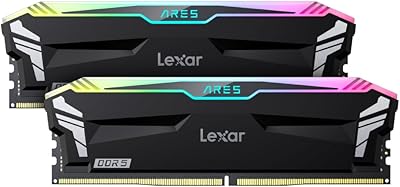
Lexar ARES RGB 32GB DDR5 Desktop RAM
83%
91%
Raw Performance
93%
XMP & EXPO Setup
89%
System Stability
74%
Motherboard Compatibility
78%
Value for Money
More
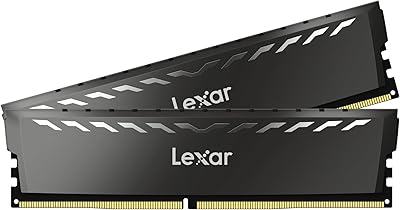
Lexar THOR DDR4 32GB Desktop RAM
80%
91%
Value for Money
94%
Installation Ease
88%
XMP Profile Stability
86%
Platform Compatibility
85%
Dual-Channel Performance
More
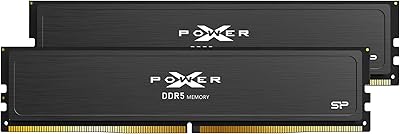
Silicon Power Value Gaming DDR5 32GB RAM
76%
84%
Value for Money
81%
Performance at Rated Speed
58%
Compatibility
89%
XMP & EXPO Activation
83%
Thermal Management
More
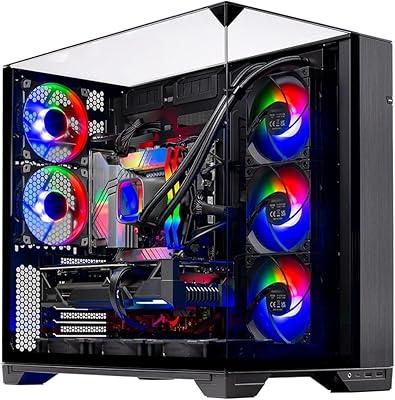
Skytech Gaming Azure 3 Desktop PC, Ryzen 7 7700X, NVIDIA RTX 5070 12GB, 32GB DDR5 RAM, 1TB SSD
86%
94%
Gaming Performance
88%
Build Quality
91%
Cooling Efficiency
85%
Value for Money
89%
Ease of Setup
More
Skytech Gaming O11 Vision Desktop PC, Ryzen 7 9800X3D, AMD RX 9070 XT, 32GB DDR5 RAM, 2TB SSD
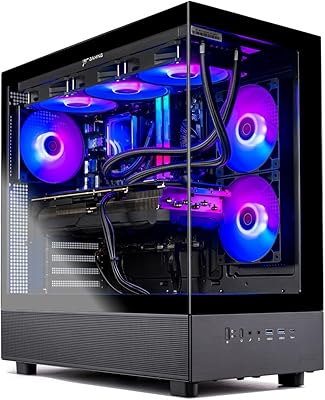
87%
94%
Gaming Performance
93%
Graphics Quality
88%
Build Quality
96%
Ease of Setup
85%
Cooling Performance
More
Skytech Gaming Chronos 3 Gaming Desktop PC
77%
91%
GPU Performance
78%
Value for Money
93%
Out-of-Box Experience
72%
CPU Performance
88%
RAM & Memory Speed
More
DATO 32GB DDR5 4800MHz Desktop RAM
71%
74%
Value for Money
88%
Installation Ease
79%
System Stability
71%
Memory Speed
63%
Latency Performance
More
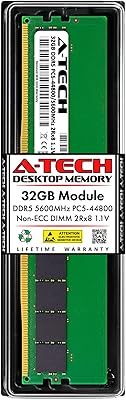
A-Tech 32GB DDR5 5600MHz RAM
87%
93%
Performance
91%
Ease of Installation
89%
Reliability
78%
Compatibility
94%
Gaming Performance
More
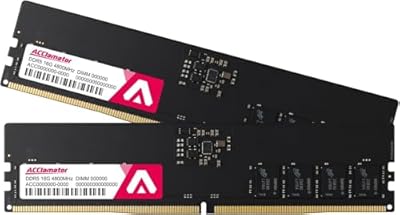
Acclamator DDR5 32GB 4800MHz Desktop RAM Kit
75%
88%
Value for Money
91%
Installation Ease
86%
System Stability
74%
Compatibility
41%
Overclocking Headroom
More
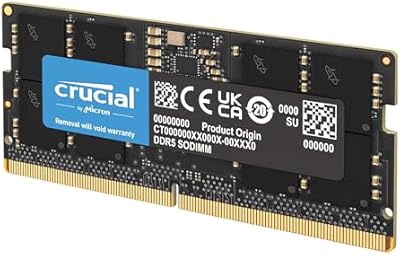
Crucial 32GB DDR5 SODIMM Laptop RAM
83%
88%
Platform Compatibility
91%
Installation Experience
71%
Real-World Performance Gains
83%
Value for Money
93%
Long-Term Reliability
More

FAQ

It won't hit 6000MT/s automatically — DDR5 defaults to a lower JEDEC speed on first boot. You'll need to go into your BIOS and enable either the XMP 3.0 or AMD EXPO profile, which takes about 30 seconds. After that, the kit runs at its rated speed and timings without any further tweaking.

Yes, this DDR5 kit is a natural fit for Ryzen 7000 on X670 or B650 boards. The AMD EXPO profile is specifically designed for that platform, and 6000MT/s happens to be the frequency where Ryzen 7000's memory fabric runs most efficiently. Just make sure your board's BIOS is updated before installing.

At 1.57 inches tall, these sticks are within the standard height range for DDR5 modules and shouldn't conflict with most tower coolers. That said, if you're using an oversized cooler with a wide base that hangs over the first DIMM slot, it's worth checking that cooler's clearance spec before buying.

Technically yes, but you'd be running in single-channel mode, which cuts available bandwidth significantly. DDR5's performance advantage over DDR4 is most apparent in dual-channel, so for anything beyond basic use, running both sticks from the start is the right call.

Both are one-click overclocking profiles that load the rated speed and timings automatically — XMP 3.0 is Intel's standard, and EXPO is AMD's equivalent. Use XMP 3.0 if you're on an Intel platform and EXPO if you're on Ryzen 7000. The Lexar THOR OC 32GB DDR5 Desktop RAM supports both, so you're covered regardless of which platform you choose.

Not exactly. On-die ECC corrects errors within the DRAM chip itself, which is a standard DDR5 feature, but it's different from registered or fully-buffered ECC used in enterprise servers. This kit is designed for consumer desktop platforms and won't function as a server ECC module.

Both target the same 6000MT/s CL32 sweet spot for Ryzen 7000. The G.Skill Flare X5 has a longer track record and more community overclocking data behind it, while this Lexar dual-channel set is newer and trades slightly on price positioning. Real-world performance at rated specs is likely to be very similar between the two.

No, there's no lighting at all. The THOR OC memory uses a purely functional black anodized aluminum heatspreader. If RGB synchronization with your motherboard software is important to your build, you'll need to look at a different kit.

Lexar's lifetime limited warranty covers manufacturing defects under normal use, so a legitimately defective stick should qualify for an RMA. The process itself — turnaround time, ease of communication — is less documented than with more established brands, so it's worth keeping your purchase receipt and registering the product if Lexar offers that option.

The heatspreader does add passive thermal management, but it's not a substitute for reasonable airflow. In a well-ventilated mid-tower case, thermal behavior should be fine under sustained workloads. In a compact or poorly ventilated case running extended memory-intensive tasks, temperatures may creep higher than the theoretical figures suggest — something a few buyers have flagged in feedback.