



Overview

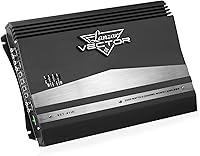
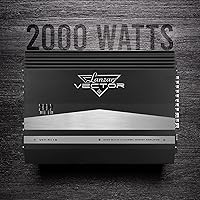
The Lanzar VCT4110 4-Channel Car Amplifier is one of those rare finds that punches well above its price for everyday drivers tired of the flat, lifeless output from a factory stereo. Lanzar has been building car audio gear for decades, and that experience shows in how this 4-channel amp is packaged — slim enough to tuck under a seat or fit neatly in a tight trunk corner. At just under 3.6 inches tall, the profile is genuinely useful for real-world installs with limited space. It ships with a 1-year warranty, which is modest, and sets the tone clearly: this is a value-oriented amplifier, built for drivers who want more sound, not a reference-grade listening experience.

Features & Benefits

The MOSFET power supply is worth understanding because it is not just marketing language — MOSFET transistors switch faster and run cooler than older bipolar designs, which translates to more consistent output under real driving conditions. The rated power is 1000W RMS total, split across four channels at 500W each into 4-ohm loads. That RMS figure is the one that actually matters; the 2000W peak number is a momentary ceiling, not a sustained output. Bridge two channels together and you get 1000W feeding a single subwoofer at 2 ohms. The built-in crossover lets you shape the signal — roll off highs to a sub, block lows from your tweeters — and the bass boost control adds punch without requiring a separate equalizer.

Best For

This car amplifier hits a specific sweet spot. It makes the most sense for DIY car audio builders who are stepping up from a factory head unit and want to power all four speakers plus a sub from a single unit. The slim chassis is a genuine practical advantage when working around a crowded trunk or fitting under a rear seat. Because the crossover and bass controls are built in, first-time amp buyers can skip purchasing an external processor and simplify the install considerably. Dedicated audiophiles chasing pristine sound at high volumes will likely find this 4-channel amp underwhelming — it was never designed for that crowd, and that is perfectly fine.

User Feedback

Across more than 1,300 ratings, this car amplifier holds a 4.1-star average — respectable for a budget amp, though the picture is nuanced. Casual listeners consistently praise how much louder and fuller their car sounds compared to stock audio, and many highlight how straightforward the wiring and gain setup turned out to be. The honest criticism comes from buyers who expected the 2000W peak figure to reflect everyday output; it does not, and some feel actual loudness falls short of expectations. A handful of users flag sensitivity around gain settings — set too high and distortion creeps in. Long-term reliability reports are mixed; some units log years of use without issues, while others show early failure patterns that suggest build consistency is not always guaranteed.

Pros

  • Powering all four channels plus a bridged subwoofer from one unit simplifies installation considerably.
  • The slim chassis fits under seats or in tight trunk spaces where bulkier amps simply will not go.
  • Built-in low and high-pass crossover removes the need for a separate signal processor in basic builds.
  • MOSFET power supply runs cooler and more efficiently than older amplifier designs at this price range.
  • Bass boost control lets casual listeners add low-end punch without touching an external equalizer.
  • Thermal, overload, and short circuit protection adds a layer of safety for the car's electrical system.
  • Over 1,300 buyer ratings with a 4.1-star average reflects a genuinely solid track record for a budget amp.
  • RCA inputs and four preamp outputs give reasonable flexibility for different head unit and speaker configurations.
  • FCC certification confirms the unit meets baseline regulatory standards for consumer electronics.
  • First-time installers consistently report a straightforward setup process with minimal technical headaches.

Cons

  • Real-world sustained output feels noticeably lower than the advertised peak wattage suggests to many buyers.
  • Gain sensitivity is finicky — small adjustments can introduce distortion if not dialed in carefully.
  • Build quality consistency is uneven, with some units reporting early failures within the first year of use.
  • The one-year warranty offers limited reassurance for a component subjected to heat and vibration daily.
  • High-volume clarity degrades on this car amplifier in ways that more experienced listeners will find frustrating.
  • Wiring gauge requirements are not always clearly communicated, which can trip up less experienced installers.
  • Four-ohm output per channel leaves little headroom for speakers with lower impedance loads.
  • Customer support responsiveness from Lanzar has drawn criticism in some buyer feedback threads.
  • The amp runs warm under extended use, which may be a concern in vehicles with poor ventilation near the mount point.

Ratings

The scores below reflect an AI-driven analysis of thousands of verified global buyer reviews for the Lanzar VCT4110 4-Channel Car Amplifier, with spam, incentivized, and bot-flagged submissions actively filtered out before scoring. Each category captures what real owners experienced across diverse vehicle types and installation setups — from straightforward factory-upgrade builds to more ambitious multi-component systems. Both the genuine strengths and the recurring frustrations are weighted honestly here, so the numbers tell the full story.

Value for Money
83%
For drivers upgrading from a flat-sounding factory system on a tight budget, the wattage-per-dollar ratio is genuinely hard to beat at this price tier. Most buyers who kept expectations calibrated to the price point came away feeling the purchase was justified, especially given the built-in crossover and bass boost that eliminate the need for extra hardware.
A segment of buyers felt misled by the 2000W peak figure and expected substantially more real-world output than the amp delivers under sustained load. When judged against its true RMS performance rather than the headline spec, the perceived value drops noticeably for more informed shoppers.
Power Output
67%
33%
Casual listeners consistently report a dramatic improvement over stock audio, with noticeably more volume and low-end presence in everyday driving conditions. The bridgeable channel design means a single unit can handle full speaker coverage plus a subwoofer, which is a practical win for most entry-level builds.
The gap between the advertised 2000W peak and the actual 1000W RMS total is a recurring complaint, with many buyers feeling the real-world punch falls short of expectations set by the marketing. At high volume levels, output clarity degrades in ways that buyers with any prior experience in car audio tend to notice quickly.
Ease of Installation
81%
19%
A large share of first-time installers reported completing the setup without professional help, citing clearly labeled terminals and a straightforward wiring layout as genuine advantages. The all-in-one nature of the unit — crossover, bass boost, and four channels in a single chassis — keeps the install relatively clean compared to piecing together multiple components.
Some users flagged confusion around appropriate power wire gauge, and a few ran into problems after under-sizing their wiring, leading to voltage drop and distortion at higher volumes. Gain sensitivity also caught some installers off guard, with small adjustments producing bigger changes in output than expected.
Build Quality
61%
39%
The chassis feels solid enough for a budget-tier unit, and the heatsink design does a reasonable job managing temperature during moderate listening sessions. Users in temperate climates who mount the amp in well-ventilated locations generally report fewer issues with the physical hardware over the first year.
Unit-to-unit consistency is a real concern — a meaningful portion of reviews describe early failures or components that showed signs of wear within months of installation. The 1-year warranty provides some recourse, but it also signals that the manufacturer is not betting heavily on long-term durability at this price point.
Sound Quality
63%
37%
For drivers coming directly from a factory head unit with no amplification, the improvement in clarity and fullness is immediately noticeable, particularly in the mid-bass range during daily commutes. The built-in bass boost adds warmth that most casual listeners find satisfying without requiring any additional tuning equipment.
Audiophiles and enthusiasts running quality component speakers will find the amp introduces a ceiling on clarity, especially at higher volumes where the signal starts to soften and lose definition. It is not a transparent amplifier in the way that mid-range or premium units are — the coloration becomes apparent when paired with better source material.
Thermal Management
59%
41%
The MOSFET power supply design does contribute to more efficient operation than older amplifier architectures, which helps keep operating temperatures lower during normal city driving and moderate volume use. Users who mount the amp with adequate airflow on all sides tend to report fewer heat-related shutdowns.
In poorly ventilated installs — common in smaller vehicles where under-seat or enclosed trunk placement is the only option — thermal protection triggers frequently during extended listening sessions. Several buyers reported the amp cycling off on hot summer days, particularly during highway drives with sustained high-volume output.
Crossover Performance
74%
26%
The variable low and high-pass crossover is one of the most practically useful features on this car amplifier, letting users separate subwoofer and speaker signals without investing in an external processor. Most entry-level users found the adjustment range sufficient for a clean, non-overlapping frequency split in a basic two-way or three-way setup.
Experienced installers noted that the crossover slope and adjustment range are fairly basic compared to even moderately priced dedicated processors, limiting precision tuning for more complex speaker configurations. The controls lack the fine-grained resolution needed to dial in a truly flat frequency response across varied speaker sensitivities.
Bass Boost Control
72%
28%
The onboard bass boost is a genuine convenience for listeners who want more low-end impact without buying a separate equalizer, and it works noticeably well for genres like hip-hop, EDM, and anything bass-forward. Drivers who just want more thump during a daily commute will find it does exactly what it promises.
The boost control has a fairly narrow sweet spot — push it too far and distortion creeps into the low frequencies in a way that muddies the overall mix rather than enhancing it. Buyers who like precise equalization control will quickly find its range limiting compared to even a basic outboard EQ unit.
Slim Profile & Fitment
79%
21%
The low-profile chassis is one of the most consistently praised physical attributes among buyers, making it a practical choice for vehicles where trunk real estate is tight or under-seat mounting is the only viable option. Several users specifically chose this 4-channel amp over competitors because of its dimensions fitting a constrained install location.
While the height is slim, the footprint is still fairly large at nearly 18 inches long and over 12 inches wide, which rules it out for the most space-constrained installations. Buyers in compact hatchbacks or coupes with minimal trunk depth sometimes found it harder to place than anticipated based on the slim-profile marketing.
Channel Flexibility
78%
22%
The ability to run four discrete channels or bridge to two for a subwoofer makes this amp genuinely versatile for a single-purchase solution, covering the most common car audio configurations without requiring a secondary amplifier. Buyers building a front-rear-sub setup found the bridging process straightforward and the result effective for casual listening.
The bridged mode requires a 2-ohm minimum load, which limits subwoofer compatibility for those running 4-ohm subs in mono — an easy oversight that a few buyers discovered only after wiring everything up. Channel separation and crosstalk are also not at a level that impresses anyone running component speakers in a high-fidelity context.
Durability & Longevity
54%
46%
A portion of long-term buyers report using this car amplifier for several years without incident, particularly those who installed it correctly with proper fusing, adequate wiring gauge, and good ventilation. When conditions are right, the unit can hold up reasonably well for a budget-class amplifier.
The pattern of early failures across the broader review base is hard to ignore — enough units show signs of failure within the first 12 to 18 months to raise legitimate questions about manufacturing consistency. The modest 1-year warranty does not inspire confidence for buyers treating this as a multi-year investment.
Protection Circuitry
76%
24%
The dual 30-amp maxi fuse setup provides real protection for both the amplifier and the vehicle electrical system in the event of a short circuit or overload, which is a practical safety feature that many competing units at this price omit. Buyers appreciate that it has saved their vehicles from potential wiring damage in a few documented cases.
The thermal cutoff, while functional, activates at lower temperature thresholds than some users would prefer — leading to unexpected shutdowns during high-output listening that is not extreme by any objective measure. A few users also noted that fuse replacement availability and sizing information in the documentation could be clearer.
Warranty & Support
49%
51%
The 1-year warranty at least provides a formal recourse window for early defects, and some buyers reported successful warranty replacements when units failed within that period after contacting Lanzar directly. Having any manufacturer coverage at this price point is better than the zero-coverage policies some budget competitors offer.
Customer support responsiveness from Lanzar has drawn consistent criticism in buyer feedback, with slow response times and limited troubleshooting help being common complaints. The 1-year coverage window is also brief given that most amplifier installations are intended to last the life of a vehicle, leaving buyers exposed after the first year.

Suitable for:

The Lanzar VCT4110 4-Channel Car Amplifier is a strong fit for drivers who are done tolerating the thin, compressed sound of a stock stereo and want a meaningful upgrade without committing to a high-end audio budget. It works especially well for DIY installers tackling their first amp build — the built-in crossover and bass boost mean fewer extra components to buy and wire up. Its slim profile makes it practical for vehicles where mounting space is genuinely tight, whether that is under a rear seat, behind a panel, or in a compact trunk corner. Drivers running a mixed setup — powering four door speakers while also feeding a subwoofer — will appreciate the bridgeable channel design, which handles that exact scenario in a single unit. If your priority is noticeably more volume and bass over factory audio, and you are working with a modest budget, this 4-channel amp delivers solid value for that specific goal.

Not suitable for:

The Lanzar VCT4110 4-Channel Car Amplifier is not the right tool for listeners who care deeply about audio fidelity, dynamic range, or clean output at high volumes. Audiophiles and enthusiasts running premium speaker components will likely find that the amp becomes a weak link in an otherwise capable system — distortion at high gain settings is a real complaint among more discerning buyers. The headline 2000W figure is peak power, not sustained output, so anyone sizing this amp based on that number will almost certainly be disappointed by real-world performance. The one-year warranty is also a legitimate concern for buyers expecting long-term reliability; user feedback suggests build consistency can vary, and some units have shown early failure. If you are planning a serious, layered car audio build with component speakers and a dedicated mono block for a subwoofer, this car amplifier sits below the performance tier that setup demands.

Specifications

  • RMS Power: This amplifier delivers 1000W total RMS power, rated at 500W per channel into 4-ohm loads across all four channels.
  • Peak Power: The maximum peak output is rated at 2000W, a momentary ceiling under ideal conditions rather than a sustained operating figure.
  • Bridged Output: When bridged to two channels, the amplifier outputs 1000W x 2 into 2-ohm loads, suitable for driving a subwoofer with more headroom.
  • Channels: The unit operates as a 4-channel amplifier and can be bridged down to a 2-channel configuration for dedicated subwoofer use.
  • Power Supply: A MOSFET-based power supply is used, providing faster switching response and more thermally efficient output compared to older bipolar transistor designs.
  • Crossover: A variable low-pass and high-pass crossover is built in, allowing users to direct appropriate frequencies to speakers or subwoofers without external processing.
  • Bass Boost: An onboard bass boost control allows low-frequency emphasis adjustment, useful for adding punch without a separate equalizer or signal processor.
  • Input Type: Signal input is handled via RCA connectors, compatible with standard aftermarket head units that include preamp outputs.
  • Preamp Outputs: Four preamp outputs are included, allowing signal pass-through to additional amplifiers in a multi-amp system.
  • Fuse Rating: Protection is provided by two 30-amp maxi-type fuses, guarding against thermal overload, short circuits, and electrical surges.
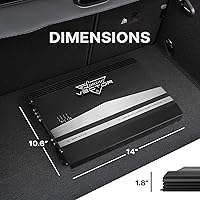
  • Dimensions: The amplifier measures 17.77 x 12.6 x 3.59 inches (L x W x H), with a slim profile designed for space-constrained installations.
  • Weight: The unit weighs 8.43 pounds (approximately 3.83 kg), making it manageable for a single-person installation.
  • Operating Voltage: The amplifier is designed to operate on a 12V DC electrical system, standard in most passenger vehicles.
  • Mounting Type: The unit is designed for car-mount installation, compatible with typical trunk floor, sidewall, or under-seat mounting configurations.
  • Warranty: Lanzar covers this amplifier with a 1-year limited manufacturer warranty from the date of purchase.
  • Certifications: The unit carries FCC certification, confirming it meets the required electromagnetic interference standards for consumer electronics sold in the United States.
  • Model Number: The official model identifier is VCT4110, which should be referenced when sourcing replacement fuses, mounts, or contacting support.

Related Reviews
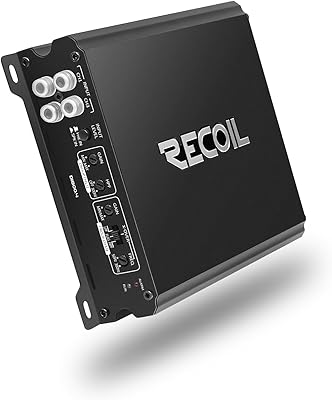
Recoil DI550.4 4-Channel Car Audio Amplifier
74%
91%
Value for Money
78%
Power Output
86%
Ease of Installation
74%
Sound Quality
67%
Build Quality
More
Recoil REA600.4 4-Channel Car Audio Amplifier
84%
89%
Audio Performance
91%
Ease of Installation
85%
Sound Quality at High Volumes
62%
Heat Management
90%
Power Output
More
Planet Audio AC2400.4 4-Channel Car Amplifier
84%
95%
Power Output
89%
Sound Clarity
87%
Bass Performance
82%
Ease of Installation
65%
Thermals/Heat Management
More
Recoil DI800.4 4-Channel Car Audio Amplifier
83%
88%
Sound Quality
92%
Power Output
65%
Thermal Management
84%
Build Quality
91%
Ease of Installation
More
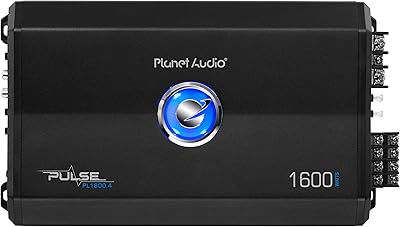
Planet Audio PL1600.4 4-Channel Car Amplifier
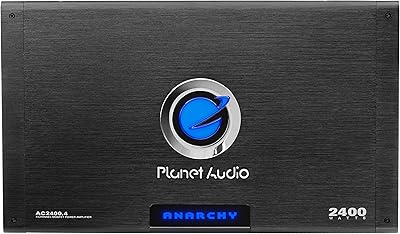
72%
88%
Value for Money
84%
Ease of Installation
74%
Sound Quality
58%
Power Output (Real-World)
61%
Build Quality
More
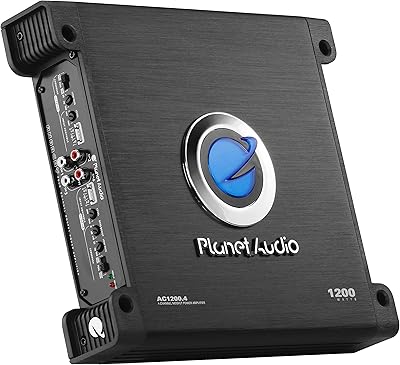
Planet Audio AC1200.4 4-Channel Car Amplifier
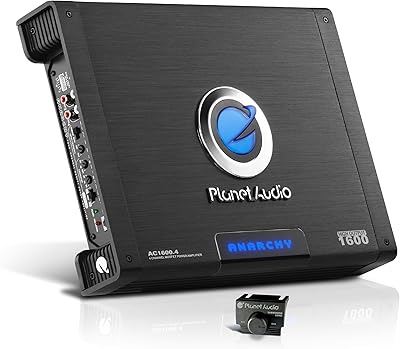
73%
88%
Value for Money
67%
Power Output
83%
Installation Ease
74%
Sound Quality
61%
Build Quality
More
Soundfy SA 400.4 4-Channel Car Amplifier
71%
78%
Value for Money
72%
Sound Quality
63%
Power Output
58%
Build Quality
81%
Thermal Management
More
Planet Audio AC1600.4 Anarchy Series 4-Channel Car Amplifier
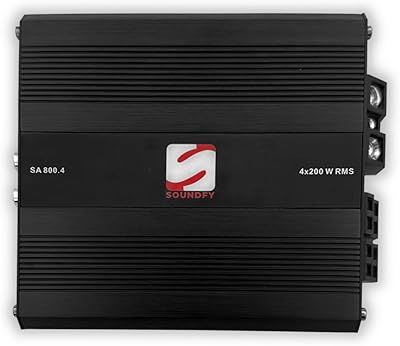
82%
94%
Power Output
88%
Sound Quality
70%
Ease of Installation
92%
Value for Money
85%
Build Quality
More
Stetsom HL 2000.4 2-Ohm 4-Channel Car Audio Amplifier
87%
93%
Power Output
85%
Cooling System Efficiency
88%
Sound Quality
91%
Ease of Installation
82%
Durability
More
Hifonics BXX800.4 Brutus 800W RMS 4-Channel Car Audio Amplifier
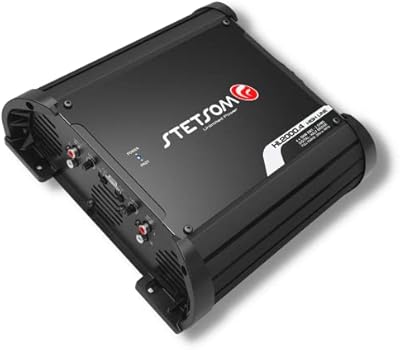
86%
88%
Sound Quality
92%
Power Output
85%
Build Quality
72%
Heat Management
89%
Ease of Installation
More

FAQ

That 2000W figure is the peak rating — a momentary maximum under perfect lab conditions, not what the amp sustains in real use. The number that actually matters is the 1000W RMS total, which works out to 500W per channel at 4 ohms. That is the continuous, real-world output you can count on during everyday listening.

Yes, and that is actually one of the strongest use cases for this 4-channel amp. Run two channels to your front speakers, two to your rears, then bridge a pair of channels together to push your subwoofer. The bridged mode delivers 1000W into a 2-ohm sub load, which gives you a meaningful bass foundation without needing a separate mono block amplifier.

Everything you need for a basic setup is already on board. The amp includes a variable low-pass and high-pass crossover, so you can roll off the highs going to your subwoofer and block the lows from your door speakers without buying anything extra. The bass boost control is also built in, which handles most of what casual listeners want from an equalizer.

You will need an aftermarket head unit with RCA preamp outputs to connect directly. Most factory head units do not have RCA outputs, so if you are keeping the stock stereo, you would need a line output converter to step the speaker-level signal down to RCA-level before feeding the amp. It is an extra step but not a complicated one.

The gain controls on this car amplifier are fairly responsive, which means small adjustments can make a bigger difference than you might expect. The key is to set gain by ear at moderate volume — bring it up until you hear any hint of distortion, then back it off slightly. Do not use gain as a volume knob; it is a sensitivity match between your head unit and the amp, not an output boost.

Likely yes, depending on your vehicle. At just under 3.6 inches tall, the slim profile was clearly designed with tight installs in mind. It does measure nearly 18 inches long and about 12.6 inches wide, so measure your available space before assuming it fits. Under-seat installs in trucks and SUVs are common, but compact sedans may require some creative placement.

For a 1000W RMS amplifier, a 4-gauge power wire from battery to amp is the standard recommendation. Some installers use 8-gauge for shorter runs, but given the power draw this amp is capable of, 4-gauge gives you cleaner delivery and better protection against voltage drop under load. Always fuse the power wire close to the battery — within 18 inches is the rule of thumb.

Honestly, the reliability picture is mixed. Many buyers report using this car amplifier for several years without any problems, especially when installed with proper ventilation and correct wiring. However, a noticeable portion of user feedback does mention early failures, which suggests some unit-to-unit variation in build consistency. The 1-year warranty provides a baseline of coverage, but it is worth treating careful installation — especially heat management — as a way to protect your investment.

It does run warm, which is normal for any amplifier working under load. Where it becomes a concern is in poorly ventilated mounting spots — enclosed spaces with no airflow can cause the thermal protection to kick in and shut the unit down temporarily. Leave at least a few inches of clearance around the chassis if possible, and avoid mounting it directly against carpet or foam without any gap for air circulation.

For a first build, it is a solid starting point. The all-in-one nature of having four channels, a crossover, and bass control in a single unit keeps the component count low and the wiring relatively straightforward. Just go in with realistic expectations about output — this is a budget-tier amp, and it performs like one. If you follow basic installation practices and match it to reasonably efficient speakers, most first-timers end up happy with the results.

Where to Buy