Overview

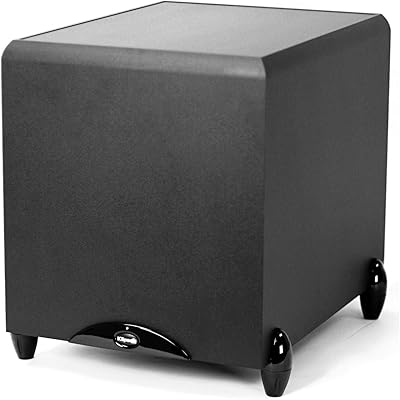
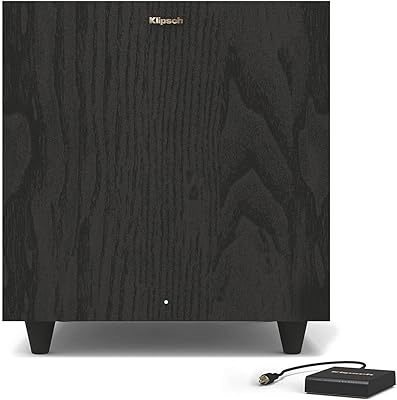
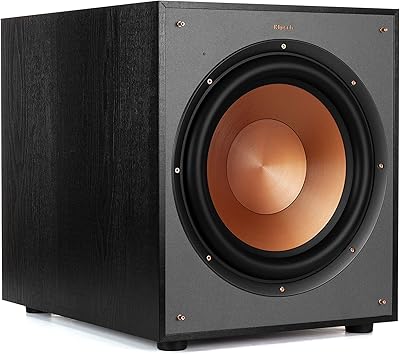
The Klipsch R-121SW 12-inch Subwoofer sits firmly in Klipsch's Reference lineup, aimed at home theater buyers who want real performance rather than just a name on the box. The two defining choices here are the 12-inch front-firing driver and the built-in all-digital amplifier — decisions that shape both how this sub sounds and where you can physically put it. At this price, you're in direct competition with SVS's entry-level sealed boxes and Polk's better offerings, so expectations should be high. This is a wired, floor-standing unit designed for a dedicated AV room, not a casual desktop setup.
Features & Benefits

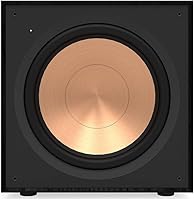
The cone material here deserves attention: the spun-copper thermoformed crystalline polymer is noticeably lighter than standard paper or composite cones, which means it responds faster and holds together better when the R-121SW is pushed hard during action sequences. The all-digital 400W amplifier isn't about brute force — it's tuned for efficiency and source accuracy, so bass lines stay controlled rather than bloated. Front-firing placement means you can tuck this 12-inch sub against a wall or into a corner without muddying the low end. The onboard low-pass crossover and phase control make integration with an AV receiver straightforward, and both Line and LFE inputs cover virtually any receiver on the market.

Best For

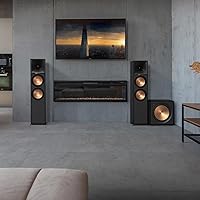
This Klipsch subwoofer makes the most sense for someone building or upgrading a 5.1 home theater system, particularly if they're already running Klipsch Reference speakers — the tonal matching is hard to argue with. The front-firing design is a genuine practical advantage for anyone dealing with constrained placement options; you don't need optimal room positioning to get solid results. If your priority is clean, tight bass that supports dialogue and music without overwhelming the room, this 12-inch sub delivers that character well. It's less suited to buyers chasing raw slam or those setting up in very large, open-plan spaces where its output ceiling may feel limiting.

User Feedback

Owners consistently highlight build quality and bass accuracy as genuine strengths, especially those running matched Klipsch systems where the tonal balance clicks into place almost immediately. The cabinet feels solid and doesn't rattle at reasonable listening levels, which longer-term owners appreciate. That said, a recurring frustration surfaces around setup complexity for buyers less familiar with crossover tuning, and a small number of users report a faint amp hum in quiet rooms. In larger spaces, some feel the output headroom falls short compared to SVS options at similar price points. After-sales support feedback is mixed, with warranty experiences varying noticeably by region.

Pros

  • Bass stays tight and controlled even during extended loud playback — no bloom or muddiness.
  • Front-firing design allows flexible wall or corner placement without compromising low-end quality.
  • The reinforced MDF cabinet stays genuinely quiet at volume — no rattling or panel flex.
  • Broad input compatibility via both Line and LFE connections covers virtually any AV receiver.
  • The all-digital amplifier runs cool and clean, avoiding the compression artifacts of less efficient designs.
  • Tonal integration with other Klipsch Reference speakers is notably cohesive in matched systems.
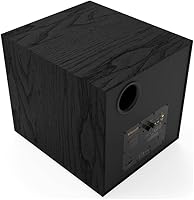
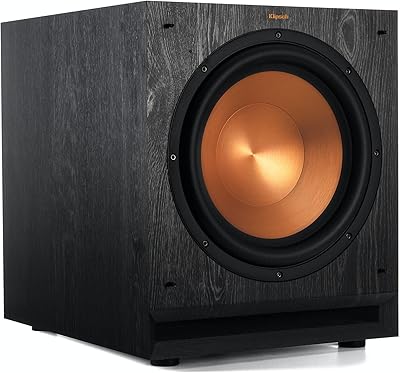
  • The copper-accented driver and matte black finish look distinctly premium in a dedicated theater room.
  • At small-to-medium room sizes, the R-121SW delivers consistent, satisfying bass without strain.
  • Onboard phase control and low-pass crossover give experienced users meaningful tuning flexibility.

Cons

  • A faint amplifier hum during idle or silent passages is a recurring complaint in quiet listening rooms.
  • No auto-calibration or app control makes dialing in the crossover frustrating for less experienced buyers.
  • Output headroom in rooms larger than 400 square feet feels constrained during peak cinematic moments.
  • The limited warranty coverage compares unfavorably to SVS and other rivals at a similar price tier.
  • Wired-only connectivity forces a cable run across the room in layouts where the sub sits far from the receiver.
  • Value is harder to justify as a standalone purchase outside of a matched Klipsch Reference system.
  • After-sales support experiences are inconsistent, with some buyers reporting slow resolution for warranty claims.
  • The manual documentation is thin and provides little practical help for first-time subwoofer calibration.
  • Sub-bass extension falls short for music genres that rely heavily on deep, floor-level frequencies.

Ratings

The scores below for the Klipsch R-121SW 12-inch Subwoofer were generated by our AI engine after systematically analyzing verified global buyer reviews, actively filtering out incentivized, bot-generated, and unverified feedback to surface genuine ownership experiences. Every category reflects both the consistent praise and the recurring frustrations real users reported across long-term use. You will find no inflated averages here — the pain points are weighted just as seriously as the strengths.
Bass Accuracy & Tightness
88%
Users repeatedly describe the low end as controlled and musical rather than loose or one-note — a quality that becomes obvious when switching from action movie explosions to bass-heavy music tracks. In matched Klipsch Reference systems, the integration feels particularly cohesive, with bass arriving on cue rather than lagging behind the rest of the soundstage.
A minority of users coming from ported subwoofers find the tighter character underwhelming at first, expecting more visceral impact on initial playback. Those watching primarily blockbuster content in larger rooms occasionally push the sub beyond its comfort zone, at which point the controlled character begins to feel restrained rather than refined.
Build Quality & Cabinet Rigidity
86%
The reinforced MDF cabinet earns consistent praise from hands-on buyers who note it feels substantially heavier and more inert than similarly priced competitors. At moderate-to-high volume levels, the cabinet stays quiet — no creaking, no panel resonance — which matters a great deal during long home theater sessions.
A few long-term owners have flagged minor finish imperfections on arrival, particularly around the grille attachment points. At 34.2 pounds, the unit is dense enough that solo unboxing and placement can be awkward, and the feet provided offer only basic floor protection.
Amplifier Performance
83%
The all-digital 400W amplifier runs noticeably cool compared to class A/B alternatives, and buyers appreciate that it does not introduce audible compression during sustained loud passages. The efficiency-first design translates to consistently clean bass reproduction, whether the content is a single bass guitar note or a dense film score.
A recurring complaint involves a faint but persistent hum from the amplifier module in very quiet rooms during idle moments — not universally reported, but consistent enough across reviews to flag. Users expecting the amplifier to deliver the physical chest-slam associated with higher-wattage class D competitors may find the output character more reserved than anticipated.
Room Integration & Crossover Control
81%
19%
Having both a low-pass crossover dial and a phase switch on board gives buyers the tools to dial in the transition between this sub and their main speakers without needing an external processor. Users with calibrated AV receivers report that fine-tuning takes around 20 to 30 minutes and the result holds up consistently across different content types.
Buyers less familiar with subwoofer calibration describe the process as confusing without prior experience, and the manual provides only basic guidance. There is no app or digital interface for adjustment, which feels like an omission at this price point given how many competitors now offer at least basic room correction.
Placement Flexibility
84%
The front-firing driver orientation is a genuine practical asset for buyers in apartments or living rooms where furniture limits where a subwoofer can realistically go. Users consistently report that placing this 12-inch sub directly against a wall — or even tucked into a corner — does not produce the muddy, boomy bass that rear-firing designs often suffer from in the same positions.
Despite the front-firing advantage, the physical footprint at nearly 20 inches deep means it still occupies meaningful floor space, which can be problematic in compact rooms. A small number of buyers in open-plan living spaces note that the directional low-end character requires more careful positioning than they initially expected.
Output for Room Size
71%
29%
In rooms up to roughly 300 to 350 square feet, most users report that the R-121SW fills the space comfortably without strain, delivering satisfying bass presence for both movies and music at social listening volumes. Small-to-medium dedicated theater rooms are where this sub performs most consistently based on user feedback patterns.
Buyers in larger open-plan spaces — particularly those above 450 square feet — frequently note that the sub begins to feel underpowered during demanding content, with output appearing to compress before reaching truly room-filling levels. Compared to SVS options at a similar investment, the output ceiling in large rooms comes up as a notable competitive weakness.
System Compatibility
87%
Both Line and LFE inputs mean buyers can connect the R-121SW to virtually any AV receiver on the market without adapters or workarounds. Users across a range of receiver brands — from Denon and Yamaha to Marantz — consistently report plug-and-play connectivity with no signal compatibility issues.
The wired-only connectivity is a hard constraint for buyers hoping to place the sub away from their AV rack without running a cable across the room. While Bluetooth subwoofers remain controversial in audiophile circles, several buyers note this as a meaningful limitation compared to newer hybrid designs entering the market.
Driver Material & Cone Performance
82%
18%
The spun-copper thermoformed crystalline polymer cone draws genuine curiosity from technically-minded buyers, and real-world feedback supports the engineering rationale — distortion at high excursion levels is noticeably lower than what many users experienced with their previous paper-cone subs. The cone visually distinguishes the unit and holds up well after extended use without obvious wear.
The sonic benefits of the cone material are difficult for casual listeners to isolate in a real home environment, meaning the design premium is largely imperceptible without direct A/B comparison. A small portion of buyers feel the cone material advantage is overstated in marketing relative to its practical audible impact.
Value for Money
74%
26%
Buyers who purchased this sub as part of a full Klipsch Reference system tend to rate value highly, arguing that the tonal cohesion across the matched system justifies the price better than a standalone purchase. The build quality and Klipsch brand reliability also factor into long-term value calculations for buyers thinking beyond the initial purchase.
Standalone value assessment is where opinions diverge sharply — SVS and Polk offer compelling alternatives at comparable price points that some users argue deliver more raw output or better room correction tools. A consistent thread in critical reviews suggests the price feels difficult to justify unless you are already invested in the Klipsch Reference ecosystem.
Setup & Installation Experience
68%
32%
Physically installing the R-121SW is straightforward for anyone with basic AV setup experience — connections are clearly labeled, and the front-mounted power indicator provides instant visual confirmation the unit is active. Users upgrading from an older subwoofer typically report having the unit operational within 15 minutes of unboxing.
The optimization process beyond basic connectivity is where frustration surfaces, particularly around setting the crossover frequency correctly without measurement tools. The included documentation is considered thin by users who expected more detailed guidance, and the lack of an auto-calibration feature is a notable gap compared to some rival products.
Long-Term Durability
79%
21%
Owners who have lived with the R-121SW for a year or more generally report no mechanical degradation — the driver remains tight and the cabinet shows no structural changes under regular use. Klipsch's history of building durable speaker products carries genuine credibility among experienced buyers who factor brand track record into their assessment.
The limited warranty coverage creates anxiety for some buyers, particularly given the price tier — several users describe the warranty terms as underwhelming relative to what SVS offers with its more generous coverage policies. A small number of longer-term owners have reported amplifier module issues after the 18-month mark, with mixed experiences navigating after-sales support.
Noise Floor & Idle Behavior
66%
34%
During active playback, the R-121SW is effectively silent beyond its intended output — no mechanical noise, no driver artifact — which is the baseline expectation at this tier and one the unit meets reliably. Users who watch late-night content at lower volumes appreciate that the sub does not introduce any audible artifacts at low listening levels.
The idle hum issue — while not universal — surfaces frequently enough in verified reviews to be treated as a design characteristic rather than an isolated defect. In very quiet rooms, typically between content or during silent film sequences, a faint 60Hz hum from the amplifier section is perceptible to sensitive listeners at close range.
Aesthetic & Finish Quality
77%
23%
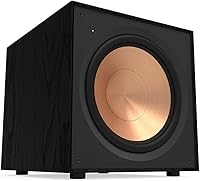
The matte black cabinet and copper-accented driver create a visually distinctive combination that buyers across several rooms describe as looking premium relative to the all-black-plastic competition in this category. The front-mounted power LED is subtle and does not create distraction in a darkened theater environment.
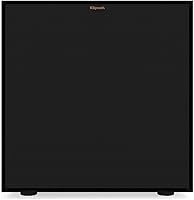
The scratch-resistant finish, while functional, can show smudges and dust accumulation more readily than buyers expect given the dark matte surface. A handful of reviews mention that the grille cloth fit felt slightly imprecise out of the box, requiring minor adjustment before the unit looked fully presentable.
Music Listening Performance
76%
24%
For buyers who use their home theater setup for serious music listening, the R-121SW holds up better than average — the tight, accurate bass character translates well to acoustic bass, jazz, and rock content where timing precision matters more than sheer weight. Users who stream hi-res audio through their AV receivers report a noticeably cleaner low-frequency floor than they experienced with their previous sub.
Genres that rely heavily on sub-bass extension — electronic music, hip-hop, pipe organ recordings — expose the R-121SW as a sub tuned more for precision than depth, and several music-focused buyers have noted this limitation. For a dedicated two-channel music system, most experienced users would look at alternatives optimized specifically for music reproduction rather than home theater.

Suitable for:

The Klipsch R-121SW 12-inch Subwoofer is built for home theater enthusiasts who want accurate, controlled bass as part of a dedicated AV setup — not a casual listener looking for a quick plug-and-play upgrade. It makes the most sense for buyers already invested in or planning to build a Klipsch Reference speaker system, where the tonal character across the full range locks in with minimal fuss. If your room is small-to-medium sized — roughly up to 350 square feet — this sub will fill the space confidently without being pushed into uncomfortable territory. The front-firing driver design is a genuine advantage for anyone dealing with constrained placement options, particularly in living rooms or apartments where tucking a sub against a wall or into a corner is often the only realistic option. Buyers who care more about bass precision — the kind that lets you hear individual notes in a film score or a bass guitar line — rather than raw, room-shaking volume will find the R-121SW well-suited to that priority.
Not suitable for:

The Klipsch R-121SW 12-inch Subwoofer is a harder sell for buyers with large, open-plan living spaces where the output ceiling becomes a real limitation during demanding content. If your primary goal is maximum physical impact — the kind of visceral, chest-pressuring bass that enthusiasts often describe as feeling the room — competing options from SVS at a comparable investment deliver more of that character. Buyers who want a genuinely hands-off setup experience, including auto-calibration or app-based room correction, will find the manual-only controls frustrating, particularly without prior subwoofer tuning experience. This is also not the right choice for anyone hoping to go wireless; the wired-only design requires running a cable from your AV receiver to wherever the sub sits, which can be a dealbreaker in open room layouts. Music listeners whose libraries lean heavily into sub-bass-heavy genres — electronic, hip-hop, pipe organ recordings — may find the R-121SW too focused on precision over depth for those specific use cases.
Specifications

  • Driver Size: The subwoofer uses a 12-inch woofer as its primary bass driver.
  • Driver Material: The cone is constructed from spun-copper thermoformed crystalline polymer, chosen for its low mass and high rigidity under excursion.
  • Firing Orientation: The driver is front-firing, allowing the unit to be placed against a wall or in a corner without significant bass degradation.
  • Amplifier Type: An onboard all-digital amplifier powers the driver with a peak output rated at 400 watts.
  • Frequency Response: The R-121SW is rated for frequency response up to 120 Hz, covering the full subwoofer bass range for home theater use.
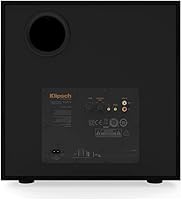
  • Inputs: Both Line-level and LFE (Low Frequency Effects) inputs are provided for broad AV receiver compatibility.
  • Controls: Onboard controls include a continuously variable low-pass crossover filter and a phase adjustment switch for system integration tuning.
  • Cabinet Material: The enclosure is built from 3/4-inch MDF with an internal bracing system designed to minimize panel resonance at high output levels.
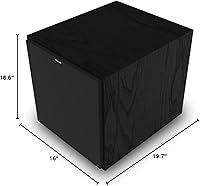
  • Dimensions: The unit measures 19.7″ deep by 16″ wide by 16.6″ tall.
  • Weight: The subwoofer weighs 34.2 pounds, reflecting the dense MDF cabinet construction.
  • Connectivity: Connection is via wired speaker-level or line-level inputs only; there is no wireless or Bluetooth transmission option.
  • Surround Config: The R-121SW is designed for use in 5.1 surround sound configurations as the dedicated bass channel.
  • Mounting Type: The unit is floor-standing and is not designed for wall or ceiling mounting.
  • Power Source: The subwoofer operates on corded electric power and requires a standard AC wall outlet.
  • Power Indicator: A front-mounted LED indicator provides visible confirmation of power status without requiring the user to access the rear panel.
  • Color & Finish: The cabinet is finished in matte black with a scratch-resistant surface treatment.
  • Warranty: Klipsch includes a limited warranty with this product; specific terms and duration should be confirmed directly with Klipsch at time of purchase.
  • Surround Channel: The subwoofer handles the LFE (.1) channel in a 5.1 or compatible multi-channel surround system.
  • Model Number: The official model designation is R-121SW, part of the Klipsch Reference speaker series.
  • Included Components: The package includes the subwoofer unit only; cables and mounting hardware are not included.

Related Reviews

Klipsch R-80SWi 8-Inch Wireless Subwoofer
81%
88%
Wireless Reliability
83%
Bass Quality & Accuracy
93%
Ease of Setup
87%
Audio Latency
81%
Build Quality
More
Klipsch Sub-12HG 12-Inch Subwoofer
78%
88%
Bass Performance
84%
Amplifier Quality
86%
Integration & Tuning
79%
Build Quality
67%
Ease of Setup
More
Klipsch SPL-120 12-inch Powered Subwoofer
80%
91%
Bass Performance
88%
Build Quality
89%
Amplifier Headroom
87%
System Integration
83%
Value for Money
More
HYANKA BSC-12-2 12-Inch Car Subwoofer
70%
84%
Value for Money
79%
Bass Output & Low-End Extension
72%
Build Quality
81%
Magnet & Motor Strength
66%
Installation Experience
More
Audiopipe TS-PP2-12-D4 12-inch Car Subwoofer
70%
74%
Value for Money
71%
Bass Output
67%
Build Quality
58%
Power Handling
73%
Voice Coil Quality
More
CT Sounds STRATO-12-D4 12-Inch Car Subwoofer
78%
89%
Bass Output & Volume
91%
Build Quality
88%
Thermal Durability
86%
Value for Money
74%
Installation Experience
More
Acoustic Audio PSW500-12 12-Inch Powered Subwoofer
73%
83%
Bass Output for Price
88%
Ease of Setup
86%
Value for Money
67%
Build Quality
71%
Sound Quality
More
CT Sounds STRATO-12-D2 12 Inch Dual 2 Ohm Car Subwoofer
86%
93%
Bass Performance
89%
Durability
91%
Power Handling
88%
Sound Clarity
84%
Ease of Installation
More
CT Sounds TROPO-12-D4 12-inch Car Subwoofer
77%
93%
Value for Money
81%
Bass Output Quality
86%
Build Quality
78%
Thermal Performance
84%
Installation Ease
More
Klipsch R-120SW Subwoofer
80%
91%
Bass Performance
88%
Value for Money
84%
Build Quality
92%
Ease of Setup
79%
Room Integration & Tuning
More

FAQ

The Klipsch R-121SW 12-inch Subwoofer is fully receiver-agnostic — it works with any AV receiver that has a subwoofer pre-out or line-level output, which covers virtually every modern receiver from brands like Denon, Yamaha, Marantz, Sony, and Onkyo. The inclusion of both LFE and standard Line inputs gives you flexibility regardless of how your receiver is configured.
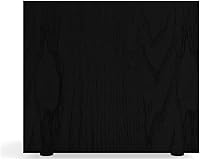
Corner placement works well with the R-121SW because the driver fires forward rather than downward or backward. You will generally get a natural bass boost from corner loading, so you may need to dial back the volume or crossover slightly after repositioning, but the sub handles it without producing the muddiness that rear-firing designs sometimes suffer from in corners.

Some owners do report a faint 60Hz hum from the built-in amplifier during quiet passages or idle moments, particularly in very quiet rooms. It is not universal, but it is consistent enough across reviews to be worth knowing about in advance. If you sit close to your sub or have a very low ambient noise floor, this could be noticeable.

If your AV receiver handles crossover management — which most modern receivers do through their room calibration system — it is generally best to set the sub's onboard crossover dial to its highest or bypass position and let the receiver do the work. Running two crossover filters in series can cause unwanted roll-off and muddy the transition between your main speakers and the sub.

Honestly, it depends on how large we are talking. In rooms up to roughly 300 to 350 square feet, the R-121SW performs confidently. In larger open-plan spaces above 450 square feet, some users find the output starts to feel strained during peak cinematic moments. For genuinely large spaces, a dual-subwoofer setup or a higher-output alternative may serve you better.

No, the subwoofer ships without cables. You will need a standard RCA subwoofer cable — single-ended mono — to connect from your receiver's subwoofer pre-out to the sub's LFE input. These are widely available and inexpensive, so it is not a major inconvenience, but worth picking one up before your setup day.

Yes, this is genuinely one of the strongest use cases for the R-121SW. Klipsch designs the Reference series to work as a system, and the tonal balance between the sub and other Reference speakers tends to click into place with minimal tuning. Buyers running matched Klipsch setups consistently report better integration than those mixing brands.

The physical installation is straightforward — connect a cable, set the volume, plug it in. The trickier part is calibrating the crossover and phase correctly, and the included documentation does not offer much practical guidance on that front. If your AV receiver has an auto-calibration feature like Audyssey or YPAO, let it run first — that will handle most of the heavy lifting automatically.

The main difference comes down to character and output. The R-121SW leans toward tight, accurate, controlled bass — it prioritizes sonic precision. SVS sealed subs in the same price bracket tend to offer deeper extension and more headroom in larger rooms, but with a different tonal personality. If you are in a matched Klipsch system, the R-121SW makes more sense; if you want raw output ceiling or deeper extension as a standalone purchase, SVS deserves a serious look.

Klipsch includes a limited warranty, though the specific duration and coverage terms are worth confirming directly with Klipsch or your retailer before purchasing. Owner experiences with after-sales support are mixed in long-term reviews — some report smooth warranty resolutions, while others describe slower or more frustrating processes. Keeping your proof of purchase well organized is advisable regardless of which brand you buy.

Where to Buy

Bigeasymart.com
In stock $371.92
ABC Warehouse
In stock $449.00
Accessories4less
In stock $449.00
Abt Electronics & Appliances
In stock $449.99
PC Richard & Son
In stock $449.99
Parts Express
In stock $449.99