Overview

The Kingston FURY Impact 32GB DDR5 SODIMM RAM sits at the sharper end of the current laptop memory market, targeting enthusiasts and professionals who want more than what factory configurations typically offer. Running at 6400MT/s, it occupies a genuinely fast tier in the DDR5 SODIMM space — not the absolute ceiling, but well above the baseline 4800MHz kits that ship in most systems. The dual-channel 2x16GB configuration matters practically: it gives your CPU's memory controller more bandwidth to work with, which shows up noticeably in multitasking and memory-intensive workloads. Kingston's FURY sub-brand has earned credibility in the enthusiast space over several generations, and this kit reflects that pedigree.
Features & Benefits

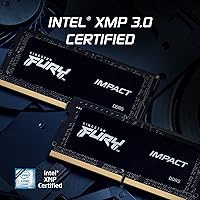
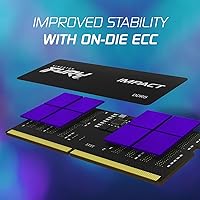
The standout feature for Intel laptop users is XMP 3.0 support, which lets the kit automatically clock up to its rated 6400MT/s speed without any manual BIOS configuration — you install it, boot up, and the profile kicks in. Even on boards that lack XMP support, the Plug N Play design allows it to run at speeds beyond JEDEC standard without user intervention. On-Die ECC quietly works in the background to catch and correct memory errors before they affect system stability, which is genuinely useful during long rendering sessions or overnight batch jobs. Operating at 1.35V, it pulls less power than you might expect for this speed tier, helping with thermal behavior in slim chassis designs.

Best For

This DDR5 SODIMM kit is most at home in laptops running Intel 12th or 13th Gen processors with DDR5 SODIMM slots and XMP 3.0 support — that is where you will see the full rated speed without any workarounds. Creative professionals doing video editing or 3D rendering will appreciate having that memory bandwidth available when projects get demanding. Gamers upgrading a thin-and-light or mid-range gaming laptop will notice the difference compared to slower stock memory, particularly in titles sensitive to memory throughput. It also suits users who want to install and forget, with no overclocking experience required. If your platform is AMD or an older Intel board without XMP 3.0, temper expectations slightly on reaching peak speeds.

User Feedback

Across verified buyer reviews, the Kingston FURY Impact kit holds a 4.3-star average from over 120 ratings, reflecting consistent satisfaction rather than universal enthusiasm. The most common praise centers on hassle-free installation and reliable compatibility with Intel XMP-supported laptops, with several users confirming stable operation at rated speeds straight out of the box. A smaller but notable group flagged compatibility hiccups — primarily on non-Intel platforms or certain laptop models where the kit defaulted to lower speeds. Few complaints touch on physical fit or thermals, which is encouraging for a high-frequency SODIMM. Overall, this laptop memory upgrade delivers on its promises for the intended audience, with platform mismatch being the main risk rather than any fault in the product itself.

Pros

  • Hits 6400MT/s on compatible Intel XMP 3.0 laptops without any manual configuration required.
  • Dual-channel 2x16GB setup meaningfully improves memory bandwidth for multitasking and demanding workloads.
  • On-die ECC adds a layer of data integrity protection that most competing kits at this speed tier skip.
  • At 1.35V, the kit runs efficiently for its speed class, which matters in slim chassis with limited thermal headroom.
  • Installation is straightforward — standard SODIMM dimensions fit most DDR5-compatible laptops without clearance issues.
  • Verified buyers consistently report stable operation at rated speeds right out of the box on supported platforms.
  • Kingston FURY has a well-established reputation in enthusiast memory, giving buyers confidence in long-term reliability.
  • Plug N Play behavior provides a speed improvement even on boards that do not formally support XMP profiles.

Cons

  • Reaching the advertised 6400MT/s speed is only guaranteed on Intel XMP 3.0 platforms — a significant limitation for AMD laptop users.
  • CL38 latency is competitive but not class-leading; some rival kits offer tighter timings at similar speeds.
  • A minority of buyers report compatibility issues with specific laptop models, making pre-purchase research essential.
  • No heatspreader or thermal solution is included, which may be a concern in chassis with poor airflow near memory slots.
  • The kit defaults to lower JEDEC speeds on non-XMP boards, eroding the value proposition for non-Intel buyers.
  • 32GB may feel like overkill for general productivity users who would get equal satisfaction from a cheaper 16GB kit.
  • No official AMD EXPO support is listed, leaving AMD Ryzen laptop users without a guaranteed auto-overclocking path.
  • At its price point, buyers who do not need 6400MT/s speeds are paying a premium that slower, cheaper DDR5 kits do not require.

Ratings

The Kingston FURY Impact 32GB DDR5 SODIMM RAM earns a nuanced scorecard built from AI analysis of verified global buyer reviews, with spam, bot activity, and incentivized feedback actively filtered out before scoring. Across more than a hundred real-world installations — from creative workstations to gaming laptops — both the genuine strengths and the legitimate frustrations are reflected without bias. The result is a transparent, category-by-category breakdown that helps you judge whether this DDR5 SODIMM kit fits your specific setup before you commit.
Raw Performance
88%
At 6400MT/s, this DDR5 SODIMM kit lands well above the baseline speeds most laptops ship with, and buyers running video exports or large Photoshop projects consistently report noticeably shorter processing times. On Intel XMP 3.0 platforms, the jump from stock 4800MHz memory is tangible enough that users mention it without prompting.
The performance ceiling is real but platform-dependent — users on non-XMP boards see the kit fall back to JEDEC speeds, which makes the high speed rating feel conditional. CL38 latency is also not class-leading; a handful of buyers noted that rival kits at the same speed offer slightly tighter timings.
XMP 3.0 Compatibility
83%
For Intel 12th and 13th Gen laptop owners, XMP 3.0 auto-configuration works reliably — the kit clocks up to rated speed on first boot without touching BIOS settings, which buyers describe as refreshingly friction-free. The automatic profile detection removes a barrier that previously made memory overclocking intimidating for non-technical users.
Compatibility confidence drops sharply outside the Intel XMP ecosystem. AMD Ryzen laptop users frequently report the kit defaulting to lower speeds since there is no EXPO certification, and a small but consistent group of Intel users encountered models where XMP required manual activation in BIOS despite the kit theoretically supporting it.
Stability & Reliability
91%
Long-term stability is one of the most praised aspects across buyer reviews — users running sustained workloads like overnight renders or extended gaming sessions report clean operation with no unexpected crashes or memory errors. On-Die ECC quietly earns its keep here, catching low-level errors before they propagate into system instability.
The stability praise is strongest on Intel platforms; a minority of buyers on edge-case laptop models — particularly some thinner ultrabooks — reported initial instability that required BIOS updates to resolve. These cases appear isolated, but they highlight that even a reliable kit can behave unexpectedly depending on the specific motherboard implementation.
Installation Experience
93%
Physical installation is consistently described as painless — standard SODIMM dimensions mean the modules drop into compatible slots without modification, and the lack of a heatspreader actually helps in tight chassis where clearance is limited. Most buyers report the entire swap taking under ten minutes including a BIOS check.
While the hardware side is simple, a portion of first-time upgraders were caught off-guard by needing to verify DDR5 SODIMM slot availability in their specific laptop model beforehand. A few users also noted that some laptops require a battery disconnect during installation, which is not immediately obvious from the product packaging.
Value for Money
74%
26%
For users who can fully unlock 6400MT/s on a compatible Intel platform, the price premium over slower DDR5 kits is easier to justify — the real-world performance difference in bandwidth-heavy workloads makes it feel like money well spent, particularly for content creators who bill hourly.
For buyers on non-XMP platforms or those doing light workloads, the cost gap between this kit and a mid-speed DDR5 alternative is hard to rationalize. Several reviewers explicitly noted that they felt they overpaid once they discovered their laptop could not run the kit at its advertised speed.
Plug N Play Functionality
79%
21%
The Plug N Play behavior gives the kit a meaningful edge on boards that sit between full XMP support and strict JEDEC compliance — buyers in this gray zone report running at above-baseline speeds without any manual intervention, which is a genuine convenience.
The term Plug N Play creates expectations that do not always hold up in practice; some buyers interpreted it as a universal guarantee of reaching 6400MT/s on any laptop, leading to disappointment when their non-XMP system settled at a lower speed. Clearer communication from retailers about what Plug N Play actually means in this context would prevent most of these complaints.
Power Efficiency
84%
Running at 1.35V, this laptop memory upgrade draws less power than many buyers expected for a high-frequency kit, and a few users specifically noted that battery runtime did not meaningfully change after the upgrade compared to their original memory.
While the voltage is low for its speed class, DDR5 at 6400MT/s still consumes more power than a standard-speed DDR5 kit would, and users with older battery hardware or degraded cells may notice a slight hit to unplugged longevity under heavy workloads.
Physical Build Quality
81%
19%
The modules feel solid and well-manufactured, with no reports of bent pins or physical defects across the reviewed buyer pool. Kingston's production consistency comes through here — the matched kit pairing means both modules behave identically under stress, which matters for dual-channel stability.
The no-frills black PCB design looks dated compared to some competing kits that include subtle aesthetic touches. More practically, the absence of any thermal interface material means the modules rely entirely on ambient airflow inside the chassis, which could be a concern in particularly thermally constrained ultrabooks.
Thermal Behavior
76%
24%
Most buyers report that the kit runs at acceptable temperatures under typical use — video calls, browser-heavy multitasking, and moderate gaming do not push the modules to concerning levels. The slim profile without a heatspreader also avoids the physical heat concentration that some thicker enthusiast modules can create.
Under extended sustained loads — think hour-long 4K renders or prolonged stress testing — a handful of users noted the modules getting noticeably warm to the touch. Laptops with poor internal airflow routing near the memory slots are more susceptible, and there is no heatspreader to redistribute that heat.
Dual-Channel Benefit
87%
Buyers who upgraded from single-channel configurations or mismatched memory notice the dual-channel improvement clearly — particularly in integrated graphics performance and in applications that hammer memory bandwidth continuously. The matched kit format ensures both modules are tuned identically, avoiding the compatibility guesswork of mixing separate purchases.
The dual-channel gain is only accessible on laptops with two open SODIMM slots, and buyers on single-slot systems cannot use this kit as intended. A few users also noted that their laptop's BIOS did not properly confirm dual-channel mode post-installation, requiring a settings check to verify the configuration was active.
Brand Reputation & Trust
89%
Kingston's FURY sub-brand carries real weight with experienced buyers — reviewers with previous Kingston memory experience frequently cite long-term reliability as a reason they returned to the brand. The lifetime warranty backing reinforces that trust and removes some of the financial risk from a premium purchase.
Brand reputation does not fully offset the compatibility frustrations that some buyers experienced, and a few negative reviews specifically expressed that they expected more from a well-known manufacturer in terms of clearer platform guidance. Kingston's own compatibility checker tool is helpful but not always surfaced prominently enough at point of purchase.
Latency Profile
71%
29%
CL38 at 6400MT/s is a reasonable latency figure for this speed tier, and in practical workloads — gaming, content creation, general productivity — the absolute latency difference between CL38 and CL36 kits is small enough that most buyers will never consciously perceive it.
Enthusiasts who researched competing kits before purchasing were occasionally disappointed to find that CL36 alternatives exist at comparable price points. For buyers focused on benchmark performance rather than real-world feel, the latency profile is a mild but legitimate drawback worth factoring into a purchase decision.
Packaging & Unboxing
77%
23%
The kit arrives in protective anti-static packaging that keeps both modules secure during transit, and buyers rarely report physical damage on arrival. The matched kit presentation makes it clear both modules are intended to be installed together, which helps first-time upgraders avoid a common mistake.
The packaging includes minimal setup documentation beyond a basic install guide, which leaves less experienced users to figure out BIOS configuration steps on their own. A quick-start card specifically addressing XMP activation across common laptop brands would noticeably reduce the setup confusion that appears repeatedly in buyer feedback.

Suitable for:

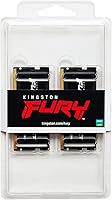
The Kingston FURY Impact 32GB DDR5 SODIMM RAM is purpose-built for laptop owners who want a genuine performance upgrade rather than a marginal spec bump. It makes the most sense on systems running Intel 12th or 13th Gen processors with DDR5 SODIMM slots and XMP 3.0 support, where the kit can reach its full 6400MT/s rated speed automatically. Creative professionals — video editors exporting large timelines, 3D artists handling complex scene files, or data analysts working across multiple heavy applications — will feel the most tangible benefit from the extra bandwidth and 32GB total capacity. Gamers upgrading a mid-range or thin-and-light laptop will also see meaningful gains over the slower stock memory that most manufacturers install by default. Perhaps most appealing is how little effort the upgrade requires: no manual overclocking, no risky BIOS tweaking, and reliable stability backed by on-die ECC error correction.
Not suitable for:

The Kingston FURY Impact 32GB DDR5 SODIMM RAM is a poor fit if your laptop runs an AMD Ryzen processor or an Intel platform without XMP 3.0 support, as it will likely fall back to slower JEDEC speeds and the premium you pay for 6400MT/s becomes hard to justify. Users with laptops that have soldered or non-upgradeable memory obviously cannot use it at all, so verifying your model before purchasing is critical. If your workloads are light — web browsing, document editing, basic media playback — the performance difference between this kit and a more affordable DDR5 option will be largely invisible in practice. Budget-focused buyers who simply need more capacity without prioritizing speed will find better value elsewhere in the DDR5 SODIMM market. Anyone expecting desktop-grade overclocking headroom or heatspreaders should also look elsewhere, since the SODIMM form factor and laptop thermal constraints set a natural ceiling.
Specifications

  • Capacity: The kit provides 32GB of total memory split across two 16GB modules for dual-channel operation.
  • Memory Type: Uses DDR5 SDRAM, the current-generation memory standard offering improved speed and efficiency over DDR4.
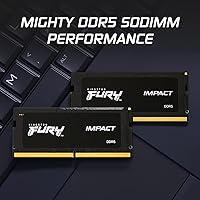
  • Form Factor: SODIMM form factor measuring 5.25 x 0.15 x 1.18 inches, designed specifically for laptops and compact systems.
  • Speed: Rated at 6400MT/s, placing it in the upper tier of currently available DDR5 SODIMM speeds.
  • Latency: Operates at CL38 primary latency timings at the rated 6400MT/s speed.
  • Voltage: Runs at 1.35V, which is within the standard low-voltage range for high-performance DDR5 SODIMM modules.
  • XMP Support: Certified for Intel XMP 3.0, allowing automatic speed and timing configuration on compatible Intel platforms.
  • Error Correction: Equipped with On-Die ECC to detect and correct single-bit memory errors internally without OS-level intervention.
  • Plug N Play: Includes Plug N Play functionality that enables operation above JEDEC baseline speeds on boards without XMP support.
  • Module Count: Sold as a matched kit of two modules, optimized for dual-channel memory configurations.
  • Weight: Each kit weighs approximately 1.42 ounces total, consistent with standard unheatspreaded SODIMM modules.
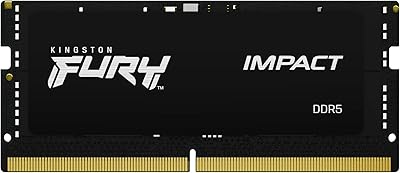
  • Color: Modules feature a black PCB finish with no heatspreader, keeping the profile slim for tight laptop slots.
  • Compatibility: Designed for DDR5 SODIMM-equipped laptops; Intel 12th and 13th Gen XMP 3.0 platforms are the primary supported targets.
  • Model Number: Official Kingston part number is KF564S38IBK2-32, identifying this specific speed, capacity, and kit configuration.
  • Release Date: First made available in May 2023, positioning it among the early high-speed DDR5 SODIMM options on the market.

Related Reviews
Kingston Fury Impact 32GB DDR5 SODIMM RAM
81%
84%
Performance
73%
Compatibility
93%
Installation Ease
78%
Value for Money
89%
Stability & Reliability
More
Crucial 32GB DDR5-5600MHz SODIMM Kit (CT2K16G56C46S5)
90%
94%
Multitasking Performance
97%
Ease of Installation
92%
Value for Money
89%
Compatibility
86%
Gaming Stability
More
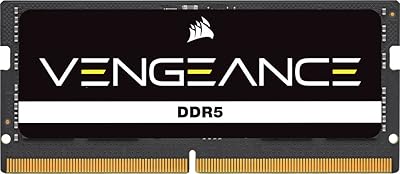
Corsair Vengeance SODIMM DDR5 32GB Laptop RAM
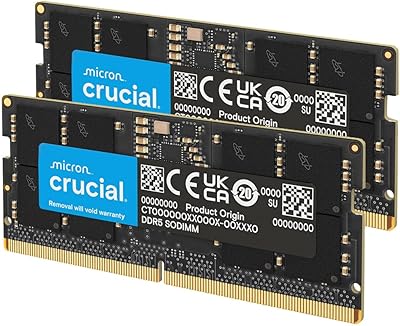
80%
93%
Installation Ease
89%
Speed Detection & XMP
84%
Real-World Performance
76%
Platform Compatibility
67%
Latency & Timings
More
Samsung 32GB DDR5 4800MHz SODIMM Laptop RAM
79%
71%
Platform Compatibility
84%
Installation Ease
88%
Performance Stability
76%
Speed & Bandwidth
79%
Brand Trust & Chip Authenticity
More
Patriot Signature 32GB DDR5 SODIMM Laptop RAM
84%
88%
Value for Money
93%
Ease of Installation
91%
System Stability
84%
Real-World Performance
79%
Memory Speed Rating
More
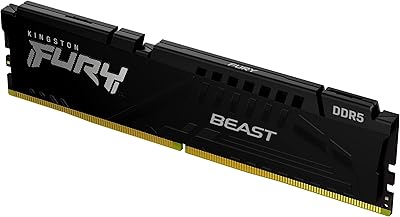
Kingston FURY Beast 32GB 5600MT/s DDR5 Memory
89%
89%
Performance for Gaming
93%
Ease of Installation
85%
Thermal Management
91%
Overclocking Support
87%
Compatibility with Desktop Systems
More
KLEVV DDR5 32GB (2x16GB) 5600MHz SODIMM Laptop RAM
88%
94%
Performance for Gaming
91%
Speed and Responsiveness
87%
Compatibility with Laptops
88%
Energy Efficiency
89%
System Stability
More
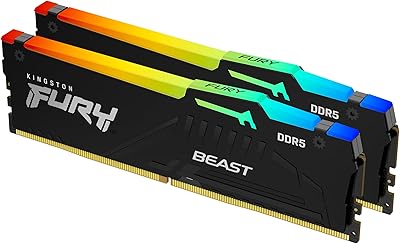
Kingston Fury Beast RGB 32GB DDR5 Desktop RAM
84%
91%
Ease of Setup
88%
Performance at Rated Speed
86%
Platform Compatibility
83%
RGB Lighting Quality
89%
Build Quality & Design
More
Kingston FURY Beast 32GB DDR5 Memory Kit
86%
88%
Real-World Performance
91%
Installation & Setup
74%
Platform Compatibility
93%
Stability & Reliability
83%
Value for Money
More
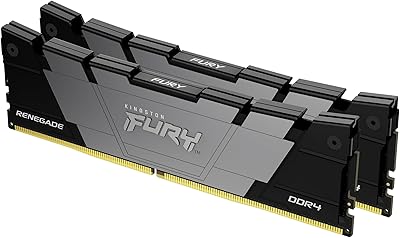
Kingston Fury Renegade 32GB DDR4 RAM Kit
82%
91%
XMP Setup Experience
88%
Speed Performance
86%
Stability & Reliability
63%
Value for Money
67%
AMD Compatibility
More

FAQ

It depends on your platform. If your laptop has an Intel 12th or 13th Gen processor with XMP 3.0 support, the kit should automatically engage the XMP profile and hit 6400MT/s. On boards without XMP 3.0, it will fall back to the JEDEC standard speed, which is considerably lower. Always check your laptop's memory specification page before purchasing.

On XMP 3.0 compatible systems, no manual BIOS changes are needed — the profile loads automatically. That said, some laptops with XMP support still require you to manually enable the XMP profile in BIOS settings the first time. It takes about thirty seconds if needed, and Kingston's documentation covers the steps clearly.

Not ideally. This kit is certified for Intel XMP 3.0, and AMD platforms use a different overclocking standard called EXPO. The modules will likely work in an AMD DDR5 laptop, but they will probably run at base JEDEC speeds rather than 6400MT/s, which reduces the value proposition significantly.

Technically yes, but you would lose the dual-channel benefit, which is a meaningful part of why this kit performs well. Running a single 16GB module puts the memory controller in single-channel mode, noticeably reducing bandwidth. Unless your laptop only has one slot, installing both is strongly recommended.

No. Apple Silicon MacBooks and other ARM-based systems use soldered, unified memory that cannot be upgraded or replaced. This kit is strictly for laptops with user-accessible DDR5 SODIMM slots.

On-die ECC is an error correction mechanism built directly into the memory chips themselves. It silently detects and fixes single-bit errors before they reach the rest of the system. For most general use you will never notice it working, but during long rendering jobs or sustained compute workloads it can prevent rare but frustrating crashes or data corruption.

In most cases yes — the standard SODIMM dimensions mean it slots into any DDR5 SODIMM-compatible socket without modification. There is no heatspreader adding height, which actually works in its favor for slim chassis designs where clearance between the module and the chassis lid can be tight.

CL38 at 6400MT/s is competitive and within the typical range for this speed tier. Some kits offer CL36 at the same speed, which is marginally tighter, but the real-world difference in most workloads is small. If you are chasing benchmark numbers, it is worth comparing; for everyday and creative workloads the difference is unlikely to be noticeable.

It is not recommended. Mixing different memory kits — even if both are DDR5 — can lead to instability, speed mismatches, or the system defaulting to the lowest common denominator speed. If you want to use this kit, replace both slots with these modules and remove whatever was installed previously.

Kingston typically backs its FURY memory with a lifetime warranty, which is one of the better coverage offerings in the consumer memory market. For specific warranty terms and the claims process, it is best to verify directly with Kingston's official support page, as regional conditions can vary.

Where to Buy