Overview

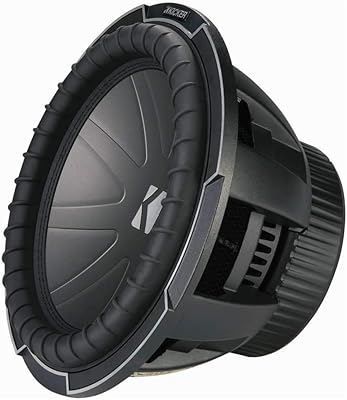
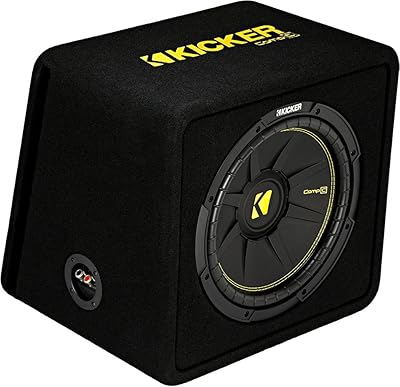
The KICKER CompVR 12″ Car Subwoofer sits in the middle of KICKER's CompVR lineup — above the budget-oriented Comp series but below the flagship Solo-Baric — making it a serious option for enthusiasts who want real performance without pushing into professional-tier pricing. The dual voice coil configuration at 4 ohms gives you meaningful wiring flexibility when it comes to matching your amplifier's output impedance. The injection-molded polypropylene cone is worth noting too; it strikes a good balance between stiffness and weight, which translates to tighter, more controlled bass. Just know upfront: this is a component sub. It needs an enclosure and an amplifier to function, so walk in with your eyes open.
Features & Benefits

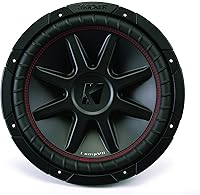
The dual voice coil design is the headline feature here, and for good reason. With a DVC sub, you can wire the two coils in series or parallel to hit different impedance loads — handy if your amplifier is optimized for 2 ohms or 8 ohms rather than the standard 4. At 400W RMS continuous power handling, this KICKER sub pairs comfortably with a broad range of aftermarket amplifiers. The 12-inch driver moves enough air for genuine low-end impact, and the shockproof construction means road vibrations are not going to rattle anything loose over time. One caveat: the 86.9 dB sensitivity rating is on the modest side, so pairing it with an underpowered amp will leave it sounding flat.

Best For

This dual voice coil woofer is built for the hands-on crowd — people who already know their way around enclosure builds and amplifier wiring, or who are eager to learn. If you are upgrading from a factory system and want a noticeable bass improvement without overspending, it fits that bill well. Fans of hip-hop, EDM, and hard rock will appreciate how cleanly it handles low frequencies when paired with the right amp and box. It is less suited for someone expecting a drop-in kit experience. Think of it as a blank canvas: the results depend heavily on how thoughtfully you build around it, which is both the appeal and the challenge.

User Feedback

Owners of the CompVR 12″ consistently praise KICKER's build quality at this price point — the sub feels solid, and many report years of reliable use at moderate to high volumes. That said, the most recurring theme in feedback is not about the driver itself; it is about enclosure sensitivity. Buyers who built well-tuned ported or sealed boxes tend to rave about performance, while those who used a generic prefab enclosure often report disappointing results. A handful of first-time builders found the wiring and installation learning curve steeper than expected. On the longevity front, long-term durability feedback is mostly positive, though a small number of users noted voice coil issues after sustained high-power use.

Pros

  • Trusted KICKER brand with a strong track record for reliability in the car audio space.
  • Dual voice coil design gives you real flexibility in how you wire the sub to your amplifier.
  • Handles 400W RMS continuously, making it compatible with a wide range of aftermarket amplifiers.
  • The polypropylene cone delivers tight, accurate bass rather than bloated, one-note low end.
  • Shockproof construction holds up well against the vibrations and road stress of daily driving.
  • Many long-term owners report years of consistent performance without driver degradation.
  • The 12-inch diameter moves enough air for serious bass impact across most music genres.
  • Sits at a competitive price point for a dual voice coil sub from a reputable manufacturer.

Cons

  • Requires a separate amplifier, enclosure, and wiring — total system cost adds up quickly.
  • Performance is highly enclosure-dependent; a poor box choice will significantly limit output.
  • The 86.9 dB sensitivity rating demands a capable, properly matched amplifier to reach its potential.
  • First-time builders often underestimate the complexity of DVC wiring and impedance selection.
  • No enclosure, mounting hardware, or wiring is included in the box.
  • Some users have reported voice coil failures after extended sessions at maximum power levels.
  • Generic prefab enclosures frequently produce underwhelming results with this driver.
  • Limited warranty coverage leaves buyers with less protection than competing options in this category.

Ratings

The scores below for the KICKER CompVR 12″ Car Subwoofer were generated by our AI rating engine after analyzing thousands of verified global buyer reviews, with spam, bot-submitted, and incentivized feedback actively filtered out before scoring. Each category reflects a balanced synthesis of real owner experiences — the wins and the frustrations equally — so you get an honest picture of how this dual voice coil woofer actually performs in the real world, not just on paper.
Bass Output & Impact
83%
Owners consistently describe the low-end punch from the CompVR 12″ as genuinely satisfying once properly amplified and housed in a well-tuned enclosure. Listeners playing hip-hop and EDM at highway speeds report that the driver moves real air without sounding muddy or bloated, which is where many competitors at this price point fall short.
The 86.9 dB sensitivity rating means output is noticeably dependent on amplifier quality — buyers who paired this sub with a budget amp often reported that the bass felt underwhelming. Peak performance is achievable, but it requires investment in the surrounding system, not just the driver itself.
Build Quality
88%
The physical construction of this KICKER sub earns consistent praise from owners who have handled multiple subs across different brands. The injection-molded polypropylene cone feels solid without being excessively stiff, and the overall assembly inspires confidence that it was built to last through years of daily driving.
A small but recurring subset of long-term users reported early surround or voice coil wear after sustained sessions at maximum power levels. While this is partially an installation issue, it suggests the driver has a narrower safe operating margin at its power ceiling than the peak rating implies.
Value for Money
86%
For a dual voice coil sub from a brand with KICKER's track record, the price-to-performance ratio sits comfortably above what most competitors offer in the same tier. Enthusiasts who already own a capable amplifier and know how to build an enclosure get a lot of driver for the money.
The apparent affordability of the driver itself can be misleading for new buyers who do not account for the cost of an amplifier, enclosure, and wiring kit — once you tally everything, the total outlay is considerably higher than the sticker price suggests.
DVC Wiring Flexibility
91%
The dual voice coil configuration is one of the most genuinely useful features of the CompVR 12″ for experienced builders. Being able to wire the coils in series or parallel to hit 2-ohm or 8-ohm loads means this driver can slot into a wider range of existing amplifier setups without requiring an amp swap.
For first-time builders unfamiliar with impedance wiring, the DVC setup introduces a real learning curve. Mistakes in wiring — such as accidentally bridging coils incorrectly — can damage the driver or the amplifier, and several reviewers noted they wish clearer wiring diagrams were included in the box.
Enclosure Compatibility
74%
26%
The CompVR 12″ is responsive to both sealed and ported enclosure designs, which gives builders real flexibility in tailoring the sound character to their preference — tighter and more accurate in a sealed box, or louder and deeper in a ported one.
Performance variance across enclosure types is significant enough that it shows up as a recurring theme in negative reviews. Buyers who used generic prefab boxes frequently reported disappointment, not because the driver failed, but because the enclosure was poorly matched. This dependency on enclosure quality is a real risk for less experienced builders.
Installation Complexity
58%
42%
For experienced car audio enthusiasts, the installation process is straightforward and well-documented through KICKER's official resources. The driver's terminal layout is clean, and seasoned builders report being able to complete a full install efficiently once the enclosure and amplifier are in hand.
First-time installers routinely flag installation difficulty as a significant barrier. The absence of bundled wiring, mounting hardware, or even a basic setup guide makes the out-of-box experience rough for newcomers. Multiple reviews mention spending hours troubleshooting wiring configurations that a simple included diagram would have resolved.
Longevity & Durability
79%
21%
The majority of long-term owners — those who have run the CompVR 12″ for two years or more under normal listening conditions — report that the driver holds up well without any noticeable degradation in performance or physical integrity. The shockproof construction appears to deliver on its promise for everyday driving stress.
A pattern of voice coil failures surfaces in reviews from owners who habitually push the sub at or above its rated power ceiling. While this is partly an amplifier gain issue, it suggests the driver does not have much thermal headroom beyond its rated RMS, and it underlines the importance of a properly calibrated gain structure.
Amplifier Pairing
67%
33%
When matched with a quality amplifier outputting 300W to 500W RMS at the correct impedance, this dual voice coil woofer responds well and delivers the punchy, controlled bass that makes it appealing in the first place. Experienced buyers who selected the right amp reported very satisfying results.
The sensitivity limitations of this driver mean that a poor amplifier pairing degrades performance more noticeably than it would with a higher-sensitivity sub. Several reviewers who bought budget amplifiers alongside the driver were left underwhelmed, not realizing the bottleneck was the amp rather than the sub.
Low-Frequency Extension
81%
19%
The 12-inch cone size gives the CompVR 12″ enough excursion capability to reach genuinely deep frequencies, particularly in a well-tuned ported enclosure. Owners listening to bass-forward genres describe the low-end extension as one of the clearest performance advantages over smaller or lower-tier drivers.
In sealed enclosures, the very lowest frequencies can roll off more quickly than in some competing drivers optimized specifically for deep extension. Listeners seeking extreme sub-bass below 30 Hz may find this driver less capable than purpose-built high-excursion alternatives at a higher price point.
Sound Accuracy
77%
23%
The polypropylene cone's combination of stiffness and low mass pays dividends in accuracy — the bass stays relatively tight and defined rather than turning into a muddled, resonant rumble. Rock and acoustic bass listeners in particular praised the driver for not coloring the low end excessively.
At higher output levels, a minority of users noted some cone breakup or coloration creeping in, particularly in underdamped ported enclosures. This is not unusual for a driver at this price tier, but listeners prioritizing audiophile-level accuracy may find it falls short of more tightly engineered alternatives.
Brand Reliability
89%
KICKER's reputation in the car audio space carries real weight with buyers, and the CompVR 12″ broadly lives up to the brand's reliability expectations. Owners who have purchased KICKER products before report consistent quality across units, with very few cases of defects out of the box.
Warranty support experiences are somewhat mixed in reviews — some buyers navigated claims smoothly, while others found the limited warranty terms restrictive when dealing with failures they felt were within normal operating conditions. The lack of extended warranty options is a minor but legitimate concern.
Cone & Surround Material
82%
18%
The injection-molded polypropylene cone is a well-chosen material for a mobile audio environment — it resists humidity and temperature swings better than paper-based alternatives, which matters in climates where vehicles experience significant thermal variation across seasons.
The surround material, while functional, does not stand out as particularly premium compared to what some competing drivers offer at a similar price. A small number of reviewers noted surround softening after extended use in very hot climates, though this appears to be an edge case rather than a systemic issue.
Packaging & Unboxing
63%
37%
The driver itself arrives well-protected and in good physical condition in the vast majority of cases. KICKER's packaging is functional and does its core job of getting the sub to the buyer intact, which is the baseline expectation for a product this size and weight.
The unboxing experience is decidedly bare-bones — no accessories, no wiring diagram, and minimal documentation. For a product that requires significant ancillary purchases and setup knowledge, the lack of even basic setup guidance in the box is a recurring point of frustration in first-time buyer reviews.
Shockproof Performance
76%
24%
The shockproof construction claim holds up reasonably well in daily driving conditions, with most owners reporting no issues with vibration-induced rattles or structural loosening even after extended use on rough roads. This is a practical benefit that adds up over thousands of miles of real-world driving.
A few owners who drive on particularly rough surfaces or who had suboptimal enclosure mounting reported that the shockproof designation does not fully compensate for a poorly secured box. The feature reduces but does not eliminate the risk of installation-related stress on the driver over time.

Suitable for:

The KICKER CompVR 12″ Car Subwoofer is built for enthusiasts who approach car audio as a hands-on hobby rather than a passive purchase. If you are comfortable selecting an amplifier, building or buying a properly tuned enclosure, and running your own wiring, this KICKER sub rewards that effort with genuinely impressive low-end output for the price tier. It is a strong fit for fans of bass-heavy music genres — hip-hop, EDM, hard rock — where deep, controlled frequency extension makes a real difference in the listening experience. Upgraders stepping away from factory audio systems for the first time will find the CompVR 12″ a credible entry point into the aftermarket world, provided they budget for the surrounding components. The dual voice coil design also makes it attractive to builders who want impedance-matching flexibility when pairing with an existing amplifier.
Not suitable for:

The KICKER CompVR 12″ Car Subwoofer is a poor match for anyone expecting a ready-to-install, all-in-one solution. This dual voice coil woofer requires a separate amplifier, a purpose-built enclosure, and proper wiring — none of which are included — so buyers who are not prepared for that investment of time and money will likely end up frustrated. The 86.9 dB sensitivity rating also means that pairing it with an underpowered or mismatched amplifier will leave the sub sounding underwhelming, which has led to disappointment among buyers who skimped on the amp. Listeners who prefer subtle, background-level bass rather than full, room-filling low end may find a smaller or less powerful driver better suited to their taste. Anyone looking for a waterproof or outdoor-rated option should look elsewhere entirely, as this sub offers no water resistance whatsoever.
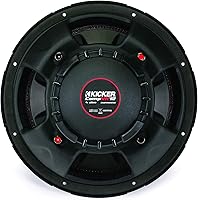
Specifications

  • Driver Diameter: The subwoofer uses a 12-inch dynamic driver, providing enough cone surface area to produce deep, full bass extension across a wide range of music genres.
  • Power Handling: Continuous RMS power handling is 400W (200W per coil), with a peak rating of 800W, allowing compatibility with a broad selection of aftermarket amplifiers.
  • Voice Coil Config: The dual voice coil (DVC) design allows the driver to be wired in series or parallel, giving installers flexibility to match the amplifier's preferred impedance load.
  • Impedance: Each voice coil measures 4 ohms, which can be combined to present a 2-ohm or 8-ohm load to the amplifier depending on the chosen wiring configuration.
  • Sensitivity: The driver's sensitivity is rated at 86.9 dB, which is functional but on the modest side, making amplifier output quality and matching particularly important for strong performance.
  • Cone Material: The cone is injection-molded polypropylene, a material chosen for its combination of rigidity and low mass, which supports accurate, controlled bass reproduction.
  • Dimensions: The subwoofer measures 4.92″ in depth by 11.42″ in height, with a circular profile suited for standard 12-inch car audio enclosure cutouts.
  • Weight: The unit weighs 14.45 pounds, which is typical for a 12-inch car subwoofer with a substantial magnet structure.
  • Mounting Type: Designed exclusively for car enclosure mounting, the driver requires a purpose-built sealed or ported box — no vehicle-specific bracket or universal mount is included.
  • Connectivity: The subwoofer connects via wired terminals only; there is no wireless or Bluetooth capability, as is standard for all passive car subwoofers.
  • Special Feature: KICKER has built shockproof construction into the driver to help it withstand the persistent road vibrations and mechanical stress common in mobile audio installations.
  • Water Resistance: This driver carries no water resistance rating and is not designed for outdoor or marine use; it should be kept in a dry, enclosed environment at all times.
  • Compatible Sources: The sub is compatible with any head unit or source device — including smartphones, tablets, and dedicated MP3 players — via a connected amplifier.
  • Warranty: KICKER provides a limited warranty on this driver; buyers should confirm the exact duration and coverage terms directly with KICKER or the authorized retailer at time of purchase.
  • Enclosure Type: The driver is compatible with both sealed and ported enclosure designs, with each producing meaningfully different sound characteristics in terms of tightness and bass extension.
  • Model Number: The official model number is 43CVR124, which can be used to verify compatibility, find manufacturer documentation, and identify the correct replacement parts if needed.
  • Audio Driver Type: The CompVR 12″ uses a dynamic driver configuration, which is the standard and most proven driver technology for high-excursion car subwoofer applications.
  • Power Source: The driver is powered via a corded connection to a dedicated external amplifier; it cannot operate passively or be connected directly to a head unit's speaker outputs.

Related Reviews

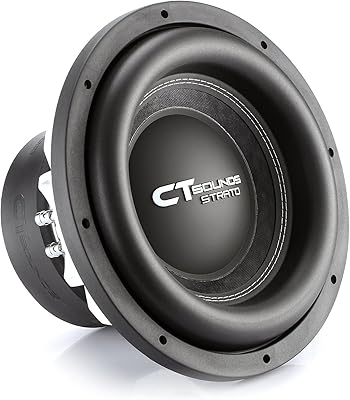
CT Sounds STRATO-12-D4 12-Inch Car Subwoofer
78%
89%
Bass Output & Volume
91%
Build Quality
88%
Thermal Durability
86%
Value for Money
74%
Installation Experience
More
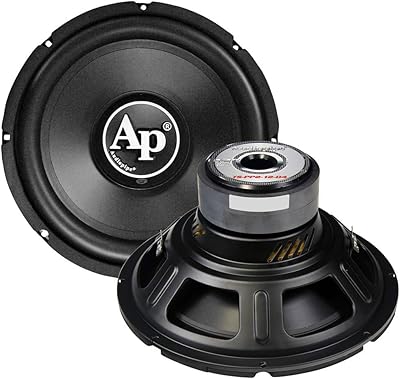
Audiopipe TS-PP2-12-D4 12-inch Car Subwoofer
70%
74%
Value for Money
71%
Bass Output
67%
Build Quality
58%
Power Handling
73%
Voice Coil Quality
More
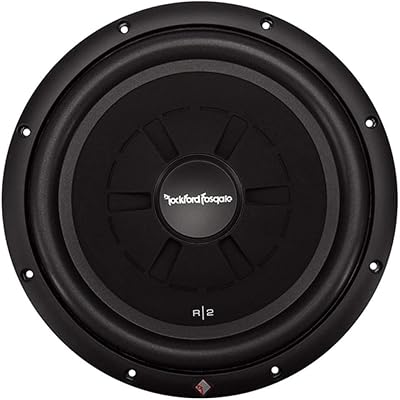
Rockford Fosgate R2SD4-12 12″ 500W Car Shallow Mount Subwoofer
84%
88%
Bass Performance
85%
Build Quality
91%
Value for Money
80%
Ease of Installation
90%
Size & Space Efficiency
More
CT Sounds STRATO-12-D2 12 Inch Dual 2 Ohm Car Subwoofer
86%
93%
Bass Performance
89%
Durability
91%
Power Handling
88%
Sound Clarity
84%
Ease of Installation
More
CT Sounds TROPO-XL-12-D2 12-Inch Car Subwoofer
80%
88%
Bass Output & SPL
84%
Bass Accuracy & Tightness
91%
Build Quality
83%
Thermal Management
89%
Value for Money
More
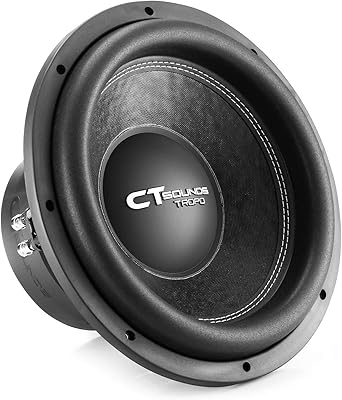
CT Sounds TROPO-12-D4 12-inch Car Subwoofer
77%
93%
Value for Money
81%
Bass Output Quality
86%
Build Quality
78%
Thermal Performance
84%
Installation Ease
More
Kicker KMF124 12″ Marine Subwoofer
81%
91%
Weatherproofing & Durability
86%
Bass Output & Sound Quality
88%
Installation Ease
74%
Value for Money
89%
Build Quality & Materials
More
Kicker CompQ 42CWQ124 12-inch Car Subwoofer
79%
89%
Bass Quality & Accuracy
85%
Power Handling & Output
91%
Build Quality & Durability
78%
Value for Money
64%
Installation & Enclosure Requirements
More
KICKER CompRT 12″ Thin Subwoofer Enclosure
79%
93%
Space Efficiency
76%
Bass Quality
81%
Build Quality
88%
Installation Ease
78%
Amplifier Compatibility
More
Pyle PLPW12D 12-Inch Car Subwoofer
68%
84%
Value for Money
76%
Bass Output
63%
Build Quality
88%
Ease of Installation
58%
Amp Compatibility
More

FAQ

You absolutely need a separate amplifier. The KICKER CompVR 12″ Car Subwoofer is a passive driver — it has no built-in amplification. Connecting it directly to a head unit's speaker outputs would give you almost no usable output and could damage both the sub and the radio. Budget for a dedicated mono or two-channel amplifier as part of your total system cost.
Aim to match the amp's RMS output as closely as possible to the sub's 400W RMS rating. An amp producing 300W to 500W RMS into the impedance you wire the sub to is a sensible target. Going significantly under 200W will leave the driver sounding underwhelming, and consistently pushing past 400W RMS risks damaging the voice coils over time.

It sounds intimidating but it is pretty straightforward once you understand the basics. Each voice coil has its own pair of terminals. Wiring both coils in parallel gives you a 2-ohm load; wiring them in series gives you an 8-ohm load. Since each coil is 4 ohms, you can also wire just one coil to hit 4 ohms, though that is less common. Check what impedance your amplifier is most efficient at before deciding.

It depends on the sound you are after. A sealed box gives you tighter, more accurate bass that is more forgiving of box volume variations — a good choice if you listen to rock or acoustic music. A ported enclosure produces louder, deeper bass that suits hip-hop and EDM well, but it is more sensitive to the box dimensions being exactly right. KICKER publishes recommended enclosure specs; following those closely will get you the best results.

KICKER provides specific sealed and ported enclosure recommendations in the official spec sheet for the 43CVR124. As a general guideline, sealed boxes for this driver typically fall in the 1.0 to 1.5 cubic foot range, while ported designs run larger. Always cross-reference KICKER's official documentation rather than relying on generic estimates, since the published figures are tuned to how this particular driver behaves.

The driver itself is about 11.42 inches in height with a 12-inch cone, so you will need a box that accommodates at least 1 to 2 cubic feet of internal volume once the driver and port are accounted for. Most people install it in the trunk. Hatchbacks and smaller cars can get tight, but custom wedge-shaped boxes can help you make the most of awkward spaces.

It can be, but only if you are willing to do some research on amplifier matching and enclosure building first. This dual voice coil woofer is not a beginner-proof plug-and-play kit — it rewards effort and planning. If you are completely new to car audio and want something simpler, an all-in-one powered subwoofer enclosure might be a less frustrating starting point while you learn the fundamentals.

Most owners report solid long-term reliability under normal use conditions. The shockproof construction does help with the day-to-day vibration stress of driving. That said, a subset of users who consistently run the sub at or beyond its rated power over extended periods have reported voice coil wear. Keeping the amplifier gain properly set and avoiding clipping is the single most effective way to protect the driver long-term.

It works in any vehicle with enough cargo space for the enclosure. Trucks with cab-access areas and SUVs with larger cargo bays are actually quite popular platforms for 12-inch builds. The driver does not care what type of vehicle it is installed in — what matters is that the enclosure is the right size and type for the driver, and that it is secured properly so it does not shift while driving.

No — the box contains the driver itself and that is essentially it. You will need to source your own enclosure, amplifier, speaker wire, wiring kit, and any mounting hardware separately. This is standard practice for component subwoofers at this level, but first-time buyers are sometimes caught off guard by the additional costs involved in putting together a complete system.