Overview

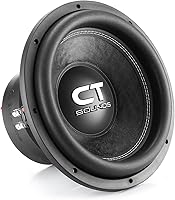
The CT Sounds TROPO-XL-12-D2 12-Inch Car Subwoofer sits one rung above the standard TROPO-12-D2 in CT Sounds' lineup, making it the brand's mid-range step-up for enthusiasts who want real output without paying competition-level prices. CT Sounds operates direct-to-consumer, which tends to keep costs honest and has earned them a dedicated following in car audio circles. This sub lands at a price point that signals serious intent without intimidating a hobbyist budget. Expect a driver built for reliable daily performance — solid construction, meaningful power handling, and the kind of durability that makes it worth installing once and not thinking about again.
Features & Benefits

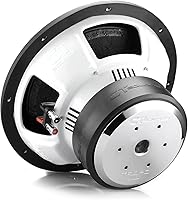
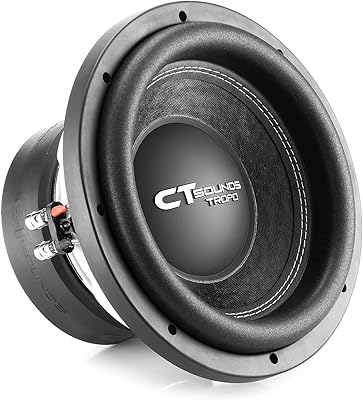
Rated at 1000 watts RMS, this is the number that actually matters — the 2000-watt peak figure is a ceiling, not a promise, and the RMS rating tells you what the driver can sustain continuously. The 3-inch, 4-layer copper voice coil runs dual 2-ohm, meaning each coil measures 2 ohms independently; wire them in parallel for a 1-ohm load or in series for 4 ohms, giving you genuine amp-matching flexibility. A carbon fiber-reinforced cone keeps moving mass low without sacrificing rigidity, which contributes to quick, accurate bass hits. The air cooling system and chrome-plated low-carbon iron bottom plate handle heat management when you push the driver hard over long listening sessions.

Best For

This 12-inch sub makes the most sense for someone who has outgrown a budget driver and knows exactly what they want next. If your listening diet runs heavy on hip-hop, trap, or EDM, the TROPO-XL-12-D2 delivers the punchy, pressurized low-end those genres demand. DIY installers will appreciate the dual 2-ohm configuration for its flexibility when pairing with a mono amplifier. One thing worth knowing upfront: enclosure choice matters enormously here. In a well-tuned ported box, this sub hits hard and reaches low; a quality sealed build keeps things tight and controlled. Either works well, but an undersized or poorly tuned box will noticeably limit its potential.

User Feedback

Buyer sentiment around CT Sounds' mid-range subwoofer skews positive, with most owners highlighting tight, clean bass as the standout quality — particularly at moderate volumes where the driver stays composed rather than turning muddy. Build quality also draws consistent praise; people seem to open the box expecting a typical online-brand driver and come away impressed by how solid it feels. That said, the review pool here is smaller than CT Sounds' more established models, so individual experiences carry extra weight. A recurring sticking point: amp pairing. Some buyers found themselves underpowered or mismatched, which is less a flaw with the sub and more a reminder that proper amp selection is non-negotiable at this power level.

Pros

  • 1000 watts RMS is a credible, sustained power rating — not an inflated peak number used for marketing.
  • Dual 2-ohm coil configuration gives real flexibility when matching to mono amplifiers at 1 or 4 ohms.
  • The carbon fiber-reinforced cone keeps bass response punchy and quick rather than slow and bloated.
  • Buyers consistently report being impressed by the build quality right out of the box.
  • The advanced air cooling system helps the driver stay composed during long, loud listening sessions.
  • 8-gauge push terminals make wiring clean and straightforward for DIY installers.
  • Performs well in both sealed and ported enclosures, giving builders more flexibility in design choices.
  • CT Sounds sells direct, which means you get more driver for your money compared to retail-marked alternatives.
  • The high-foam surround handles excursion smoothly without audible distortion at moderate power levels.
  • Weighing in at 27.5 pounds, the motor assembly feels substantial — a sign of a properly built magnetic circuit.

Cons

  • Requires a properly tuned enclosure to perform well — a generic prefab box will noticeably hold it back.
  • Amp pairing is non-negotiable; buyers who underpower or mismatch impedance will be frustrated with results.
  • Fewer user reviews exist compared to other CT Sounds models, making it harder to gauge long-term reliability trends.
  • Not a plug-and-play solution — newcomers to car audio will face a learning curve getting the setup right.
  • At 27.5 pounds, installation in tight trunk spaces can be physically awkward without a second set of hands.
  • The limited warranty offers less peace of mind than brands with more established post-sale support infrastructure.
  • Peak power figures on the packaging can mislead buyers into pairing with undersized amplifiers.
  • Those upgrading from a truly budget sub may also need to budget for a new amp and box simultaneously, raising total cost.
  • Shipping via flat-free packaging has raised occasional concerns among buyers about protective cushioning during transit.

Ratings

The scores below reflect an AI-driven analysis of verified buyer reviews for the CT Sounds TROPO-XL-12-D2 12-Inch Car Subwoofer, sourced globally and filtered to remove spam, incentivized submissions, and bot activity. Each category is scored independently to surface both the genuine strengths and the real friction points that owners encounter — nothing is smoothed over to protect the rating.

Bass Output & SPL
88%
Owners consistently describe the low-end output as punchy and authoritative, particularly during hip-hop and EDM playback on daily commutes. At moderate amplifier power, the driver fills a mid-size sedan or SUV cabin with controlled, pressurized bass that most budget subs simply cannot replicate.
A handful of buyers running undersized amplifiers reported output that felt underwhelming compared to expectations — a pairing issue rather than a driver flaw, but one that affects real-world impressions. Peak performance is also enclosure-dependent, meaning buyers who skip proper box tuning will not hear what this sub is genuinely capable of.
Bass Accuracy & Tightness
84%
The carbon fiber-reinforced cone keeps the driver responsive and accurate, avoiding the slow, one-note bass bloom that plagues cheaper paper-cone alternatives. In a sealed enclosure, bass notes stay defined and track the music rather than hanging in the air after the transient has passed.
In larger ported builds tuned too low, some owners noted a looseness in the upper bass range that required crossover adjustment to tame. The sub rewards careful setup — those who skip EQ tuning may find the low-end character less controlled than the driver is actually capable of.
Build Quality
91%
Owners frequently comment on the physical heft and solid feel of this driver straight out of the box — the chrome-plated bottom plate, substantial motor, and quality tinsel leads all give a premium impression that exceeds what the price point might lead you to expect. At 27.5 pounds, the chassis feels like it was built to last through years of daily use.
A small number of buyers noted minor cosmetic inconsistencies on the chrome plating upon arrival, which do not affect function but are noticeable on close inspection. The FFP shipping format drew some criticism for providing less protective cushioning than a traditional double-boxed approach, leading to occasional cosmetic arrival issues.
Thermal Management
83%
Buyers who run the sub at high volumes for extended periods — long road trips, tailgate listening sessions — report that it stays composed without any audible signs of thermal stress like power compression or distortion creep. The 4-layer copper voice coil and air cooling system together appear to handle sustained heat loads noticeably better than single-layer alternatives at this price.
No driver is immune to heat under truly sustained abuse, and buyers who consistently run near the RMS ceiling without adequate amplifier headroom will eventually stress even a well-cooled driver. A few owners who used aggressive gain settings reported occasional warmth after long sessions, which is a gain structure issue but still a practical concern.
Value for Money
89%
CT Sounds' direct-to-consumer model means the TROPO-XL-12-D2 delivers hardware that competes with retail-priced drivers costing meaningfully more. Buyers who have owned big-brand subs at similar price points frequently note that the CT Sounds unit gives more per dollar in both power handling and build quality.
The value calculation changes if you factor in the total system cost — a 1000-watt RMS sub demands a capable amplifier and a proper enclosure, which can push the full outlay considerably higher than the sub's asking price alone. First-time buyers who do not budget for the complete system sometimes feel the investment was larger than anticipated.
Enclosure Compatibility
76%
24%
The driver is genuinely versatile across enclosure types — owners running it in both sealed and ported configurations report satisfying results when the box is properly sized and tuned to the driver's parameters. Ported builds in particular unlock impressive low-frequency extension for bass-heavy genres.
This sub is more enclosure-sensitive than beginner-friendly alternatives, and buyers who drop it into a generic prefab box are consistently disappointed. The sub does not forgive poor enclosure design the way some more forgiving budget drivers do, which makes setup knowledge a real prerequisite rather than a nice-to-have.
Amplifier Compatibility
78%
22%
The dual 2-ohm coil configuration gives installers genuine flexibility — wiring to 1 ohm suits most modern 1-ohm stable mono amps, while a 4-ohm series wiring option keeps it compatible with amplifiers that do not run stable at low impedances. Experienced installers appreciate not being forced into a single load option.
The dual-coil wiring math trips up less experienced buyers more often than CT Sounds probably intends — several reviews mention confusion about impedance loads and series versus parallel wiring. This is not a flaw in the sub itself, but it does represent a real barrier for newcomers who skip research before purchase.
Installation Experience
81%
19%
The 8-gauge push terminals are a practical choice — they accept bare wire cleanly and feel secure once seated, with no fiddly spring clips to wrestle with in tight spaces. DIY installers with moderate experience report a straightforward wiring process once the enclosure build is sorted.
At 27.5 pounds, maneuvering this sub into position inside a trunk or under a cargo floor without a helper is genuinely awkward, and buyers working solo in tight spaces noted the weight as a real frustration. The mounting cutout dimensions also require verification against the enclosure before purchase, as fit is not always guaranteed with third-party box brands.
Low-Frequency Extension
82%
18%
In a well-tuned ported enclosure, the TROPO-XL-12-D2 reaches convincingly low, producing the kind of chest-pressuring sub-bass that makes genres like trap and cinematic movie audio genuinely immersive inside a vehicle cabin. Several owners note it handles 30-40 Hz content with more authority than competitors at this price.
In a sealed enclosure, the driver rolls off higher than in a ported design, which is expected behavior but can disappoint buyers who want maximum low-frequency extension without building a ported box. Getting the best extension requires correct enclosure tuning, and buyers without that knowledge may underestimate how much the box affects the perceived bottom end.
Durability & Longevity
79%
21%
Early ownership impressions are consistently positive, with the physical construction suggesting this driver is built for the long haul — the foam surround, copper leads, and robust terminal block all appear to be quality components rather than cost-cut substitutes. Buyers running the sub at reasonable power levels report no degradation in performance over months of regular use.
The review pool for this specific model is smaller than CT Sounds' more established entries, so long-term durability data beyond the first year of ownership is limited. Buyers who push the driver hard without proper gain structure risk voice coil fatigue, and the limited warranty means post-purchase support is not as clearly defined as it could be.
Packaging & Unboxing
63%
37%
The driver arrives looking the part and some buyers noted that despite the flat-free packaging format, their units came through without issue — a credit to CT Sounds' preparation process in most cases.
FFP packaging is the most commonly flagged concern in negative reviews, with several buyers reporting cosmetic marks, loose components, or minor surround scuffs on arrival. While most issues are cosmetic rather than functional, it is a consistent enough pattern to flag as a genuine weak point in the ownership experience that CT Sounds should address.
Brand Support & Warranty
67%
33%
CT Sounds has cultivated a genuine enthusiast community and their direct-to-consumer model means there is a real human presence behind the brand rather than an anonymous retail middleman. Online forums reflect a generally accessible support experience for buyers who reach out through official channels.
The limited warranty lacks the specific terms that buyers can easily compare — duration and covered defects are not clearly spelled out in the product listing, which creates uncertainty. For a sub at this price and power level, buyers reasonably expect more transparent after-sale protection, and this ambiguity is a recurring frustration in community discussions.
Crossover & Tuning Flexibility
77%
23%
The sub responds predictably to low-pass crossover adjustments, allowing installers to blend it cleanly with a wide range of factory or aftermarket speaker setups. Buyers who take time to dial in subsonic filter settings alongside crossover frequency report a noticeably cohesive soundstage.
Getting the crossover and subsonic filter settings dialed in correctly requires either a basic knowledge of driver tuning or willingness to experiment, which is not a barrier for enthusiasts but does add friction for buyers who expected a more hands-off experience. Without proper subsonic filtering in a ported enclosure, over-excursion risk at very low frequencies is real.

Suitable for:

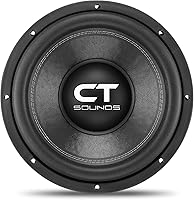
The CT Sounds TROPO-XL-12-D2 12-Inch Car Subwoofer is built for the enthusiast who has already been down the budget sub road and is ready to do things properly. If you spend a meaningful portion of your commute listening to hip-hop, EDM, trap, or any genre where bass texture and punch matter, this driver will reward that habit. It suits DIY installers who are comfortable calculating amplifier loads and understand that wiring dual 2-ohm coils in parallel gives a 1-ohm final load, or in series for 4 ohms — that flexibility makes amp pairing far less restrictive than single-coil alternatives. Buyers planning a dedicated ported or sealed enclosure build will get the most out of this sub, especially those willing to put some thought into box volume and tuning frequency. It also makes strong sense for anyone who wants a daily driver that can handle sustained high-volume use without thermal issues creeping in over time.
Not suitable for:

If you are brand new to car audio and have no experience selecting amplifiers, building enclosures, or reading impedance specifications, the TROPO-XL-12-D2 will likely underperform through no fault of its own — the setup demands some know-how to get right. Buyers hoping to drop this into a generic prefab box and call it a day may be disappointed; this sub genuinely needs a properly tuned enclosure to operate near its potential, and a mismatched box can make even a good driver sound mediocre. It is also not the right choice for anyone on a tight overall system budget, since a 1000-watt RMS driver requires a capable amplifier to match — cutting corners on the amp undermines the whole investment. On the other end of the spectrum, serious competitors chasing SPL records will find this sits below dedicated competition-grade hardware. And anyone needing plug-and-play simplicity should look at a powered subwoofer system instead.

Specifications

  • Woofer Size: The driver measures 12 inches in diameter, a standard size that balances deep bass extension with enclosure flexibility.
  • RMS Power: Continuous RMS power handling is rated at 1000 watts, representing what the driver can sustain reliably during normal listening.
  • Peak Power: Maximum peak power is rated at 2000 watts, reflecting short-burst headroom rather than a sustainable operating level.
  • Impedance: Each voice coil carries a 2-ohm impedance, allowing the driver to be wired to a final load of 1 ohm (parallel) or 4 ohms (series).
  • Voice Coil: The 3-inch diameter voice coil uses a 4-layer high-temperature copper winding, which improves power handling and reduces heat buildup under load.
  • Coil Config: The dual voice coil configuration provides two independent winding terminals, giving installers flexible amplifier matching options.
  • Cone Material: The cone is constructed from a 3% carbon fiber reinforced composite, balancing light moving mass with the rigidity needed for accurate bass transients.
  • Surround: A flexible high-foam surround absorbs excursion smoothly at both low and high output levels, helping maintain linear movement across the driver's range.
  • Motor: The double slug Y30 grade optimized motor structure increases magnetic flux density, allowing the driver to move more efficiently per watt of input power.
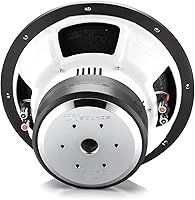
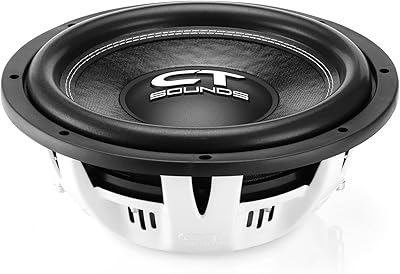
  • Bottom Plate: The signature chrome-plated low-carbon iron bottom plate contributes to the motor's magnetic circuit efficiency while also serving as a primary heat dissipation surface.
  • Cooling System: An advanced air cooling system channels airflow through the motor assembly to manage sustained heat during extended high-volume use.
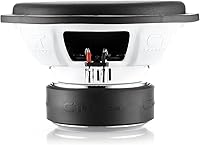
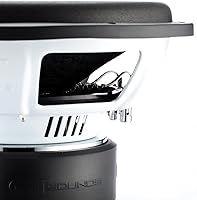
  • Terminals: The sub uses 8-gauge push-style terminals, which accept bare wire or pin connectors and are sized to handle high-current amplifier outputs without resistance buildup.
  • Tinsel Leads: Dual round weaved copper tinsel leads connect the voice coil to the terminals, offering durability and flexibility through repeated cone excursion cycles.
  • Item Weight: The assembled driver weighs 27.5 pounds, reflecting the substantial motor and chassis construction used at this power level.
  • Package Dims: The shipping package measures 14.9 x 14.9 x 10.6 inches and ships in a flat-free package (FFP) format.
  • Warranty: CT Sounds covers this driver under a limited warranty; buyers should confirm current terms directly with CT Sounds at the time of purchase.
  • Enclosure Type: The TROPO-XL-12-D2 is compatible with both sealed and ported enclosure designs, with enclosure volume and tuning frequency significantly affecting output character.
  • Connectivity: The subwoofer connects via wired input only, with no wireless or Bluetooth capability, and is intended for use with a dedicated mono or multi-channel amplifier.

Related Reviews
CT Sounds TROPO-12-D4 12-inch Car Subwoofer
77%
93%
Value for Money
81%
Bass Output Quality
86%
Build Quality
78%
Thermal Performance
84%
Installation Ease
More
CT Sounds STRATO-12-D2 12 Inch Dual 2 Ohm Car Subwoofer
86%
93%
Bass Performance
89%
Durability
91%
Power Handling
88%
Sound Clarity
84%
Ease of Installation
More
CT Sounds TROPO-8-D2 8-Inch Car Subwoofer
77%
91%
Value for Money
83%
Bass Quality
88%
Build Quality
67%
Enclosure Compatibility
71%
Amplifier Pairing
More
CT Sounds TROPO-6.5-D2 6.5″ Car Subwoofer
77%
83%
Bass Output for Size
88%
Value for Money
79%
Build Quality
76%
Thermal Management
84%
Installation Ease
More
CT Sounds STRATO-12-D4 12-Inch Car Subwoofer
78%
89%
Bass Output & Volume
91%
Build Quality
88%
Thermal Durability
86%
Value for Money
74%
Installation Experience
More
CT Sounds STRATO-10-D2 10 Inch Dual 2 Ohm Car Subwoofer
87%
91%
Bass Performance
89%
Build Quality & Durability
92%
Power Handling
88%
Sound Clarity
83%
Ease of Installation
More
CT Sounds OZONE-10-D4 10″ Car Subwoofer
80%
88%
Build Quality
83%
Sound Quality
91%
Value for Money
79%
Thermal Durability
84%
Installation Experience
More
CT Sounds Hydro 12″ Dual 2-Ohm Shallow-Mount Car Subwoofer
85%
88%
Sound Performance
91%
Bass Quality
75%
Installation Ease
84%
Build Quality
89%
Power Handling
More
CT Sounds Hydro 12″ Car Subwoofer
80%
91%
Ease of Installation
88%
Enclosure Versatility
83%
Bass Quality & Accuracy
86%
Value for Money
67%
Low-Frequency Extension
More
CT Sounds TROPO-10-D4 10″ Dual 4 Ohm Car Subwoofer
82%
88%
Bass Quality
75%
Installation Ease
90%
Durability
92%
Value for Money
85%
Sound Clarity
More

FAQ

You want a mono amplifier that can deliver close to 1000 watts RMS at your chosen wiring impedance — either 1 ohm (coils wired in parallel) or 4 ohms (coils wired in series). Avoid oversized amps running at full clip, and equally avoid undersized amps that clip trying to keep up. Matching the amp to the sub's RMS rating, not its peak figure, is the right approach here.

Each voice coil has its own set of positive and negative terminals. Wire both coils in parallel — connecting positive-to-positive and negative-to-negative across coils — to achieve a 1-ohm final load at the amplifier. Wire them in series — positive of coil one to negative of coil two, then use the remaining terminals — to get a 4-ohm final load. Most installers use parallel wiring when running a 1-ohm-stable mono amp.

Technically it will fit if the cutout diameter and depth are compatible, but you will likely be leaving a lot of performance on the table. Generic prefab boxes are rarely tuned to suit a specific driver's parameters, and this sub rewards a properly sized and tuned enclosure. If you want to hear what the TROPO-XL-12-D2 can actually do, a custom or carefully chosen enclosure is worth the extra effort.

Both work, but they sound quite different. A sealed enclosure gives you tighter, more accurate bass that holds together at higher volumes — good for rock, acoustic, or music where clarity matters. A ported enclosure goes louder and extends deeper at the tuned frequency, which suits hip-hop, EDM, and bass-heavy genres well. Think about what you listen to most and build accordingly.

CT Sounds typically recommends a sealed enclosure in the range of 1.0 to 1.5 cubic feet net internal volume for this driver, but always verify against the current spec sheet from CT Sounds directly, as recommendations can be updated. Going too small tightens the suspension excessively; too large and bass control suffers.

The XL variant steps up in power handling (1000 watts RMS versus 650 watts RMS on the standard model) and uses a larger 3-inch voice coil compared to the standard 2.5-inch unit. That larger coil handles heat better and sustains higher output for longer. If your amplifier is capable of pushing more power and you want more headroom, the XL is the logical move up within the same lineup.

It is designed and rated for car audio use, but some enthusiasts do adapt car subs for home use with a suitable power supply and amplifier. That said, it is not optimized for home use and the project requires additional components and know-how. For a straightforward home theater application, a purpose-built home subwoofer will be easier and more predictable.

No, and this is one of the most common misunderstandings in car audio. The 2000-watt peak figure is a short-term ceiling, not a continuous operating target. You want an amplifier that matches the 1000-watt RMS rating, not the peak number. Chasing the peak with an oversized amp is unnecessary and risks damaging the driver if the amp is mismatched or the gain is set incorrectly.

CT Sounds uses a flat-free package (FFP) format, which some buyers have noted offers minimal cushioning compared to boxed alternatives. Most drivers arrive without issue, but if yours shows any signs of rough handling on delivery, inspect the cone, surround, and terminals carefully before installation. Document any damage with photos immediately in case a claim is needed.

Underpowering signs include an amp that clips regularly, thin or weak bass output, or a driver that runs warm without playing loud. Overpowering is usually audible as distortion before mechanical damage occurs, though sustained clipped signals from an undersized amp pushing too hard can actually cause more damage than a clean signal from a well-matched larger amp. Use a multimeter, set gain with a clip light or by ear at moderate volume, and never max out the gain control as a volume substitute.

Where to Buy