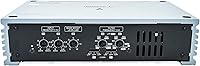
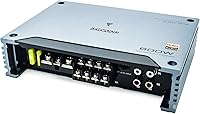
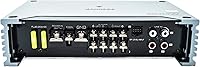
Overview

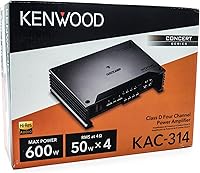
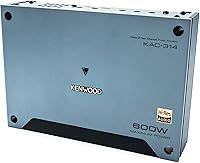
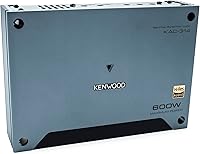
The Kenwood KAC-314 4-Channel Car Amplifier sits at the entry level of Kenwood's Concert Series lineup, launched in late 2022 and aimed squarely at casual upgraders who want a real improvement over factory audio without a serious financial commitment. Its compact form factor is genuinely one of the strongest arguments for it — at roughly 10 inches long and under 4 pounds, it tucks under seats or into tight trunk corners where bulkier units simply won't fit. Running Class D means less heat and less draw on your electrical system in everyday use. It is not an audiophile-grade unit, and setting that expectation upfront is only fair.

Features & Benefits

The KAC-314 puts out 50 watts per channel RMS into 4 ohms — that is the figure worth paying attention to, not the 600-watt peak number that tends to dominate the packaging. Step down to a 2-ohm load and you get 75 watts per channel, a useful bump for speakers rated to handle it. Built-in high-pass and low-pass crossover filters let you run door speakers up front and bridge the rear channels to a small subwoofer if your setup calls for it. The variable bass boost handles light low-end shaping, and speaker-level inputs let you wire this 4-channel amplifier directly to a factory head unit without adding a separate line output converter.

Best For

This Kenwood amp makes the most sense for someone doing their first real car audio upgrade — trading in that thin, straining factory sound for something with actual body and headroom. Underseat placement is where it practically earns its keep, given the compact dimensions make it viable in smaller sedans, hatchbacks, and crossovers with limited install real estate. It is also a natural fit for anyone still running an OEM head unit, since the speaker-level input removes the need for an external LOC. If you want deep DSP control or competition-level output, you will outgrow it. For a clean, straightforward four-speaker setup on a budget, it does exactly what it promises.

User Feedback

Owners of the KAC-314 consistently highlight two things: the jump in clarity over stock speakers is immediately obvious, and the install process is approachable even without professional help. Compact size earns repeated appreciation from buyers working in tight spaces. The recurring criticism is that headroom gets thin when the amp is pushed hard — gain structure needs to be set thoughtfully, or distortion creeps in earlier than expected. A handful of users note that the chassis feels appropriate for the price point but not premium. Against similarly priced options from Pioneer or Rockford Fosgate, the general consensus leans toward comparable output performance, with this 4-channel amplifier edging ahead on installation simplicity.

Pros

  • Compact dimensions make underseat and tight-space installs genuinely practical in small and mid-size vehicles.
  • Speaker-level inputs let you connect directly to a factory head unit with no extra hardware needed.
  • Class D design runs cool and draws less current, which matters for vehicles with smaller alternators.
  • Built-in high-pass and low-pass crossover filters add real flexibility for mixed speaker and subwoofer setups.
  • The KAC-314 delivers a clearly noticeable improvement in clarity and volume over any stock factory system.
  • Variable bass boost provides useful low-end shaping without requiring a separate equalizer.
  • Installation is straightforward enough for confident DIYers with basic wiring experience.
  • Kenwood brand reliability at this price tier gives reasonable confidence in long-term durability.
  • Lightweight build at under 4 pounds makes mounting and positioning much easier during install.

Cons

  • Headroom gets thin when pushed hard — distortion appears earlier than expected at high gain settings.
  • The 600-watt peak rating is misleading; usable RMS power is far more modest in real listening conditions.
  • No onboard DSP means no time-alignment, multi-band EQ, or advanced signal tuning of any kind.
  • Chassis build quality feels appropriate for the price but does not inspire confidence in rough-vibration environments.
  • Gain setup requires care and patience — poorly configured gain structure is a recurring issue for new users.
  • Not suitable for bridging into a demanding subwoofer load without risking thermal or power limitations.
  • Lacks balanced inputs, which limits compatibility with higher-end source units that output balanced signals.
  • This 4-channel amplifier offers no remote bass control, so adjusting bass boost requires physical access to the unit.

Ratings

Our AI-driven scoring for the Kenwood KAC-314 4-Channel Car Amplifier was built by analyzing thousands of verified global buyer reviews, with spam, incentivized, and bot-generated submissions actively filtered out before any score was calculated. The results reflect a genuinely balanced picture — where this amp earns real praise and where it falls short against buyer expectations. Every category below surfaces both the strengths and the frustrations that actual owners reported.

Value for Money
84%
Buyers consistently feel the KAC-314 punches above its price bracket for a first amplifier upgrade. The combination of four channels, built-in crossover filters, and speaker-level inputs at this cost is difficult to match from comparably priced alternatives, and most owners feel they got more than they paid for.
A minority of buyers who compared it directly against budget options from Rockford Fosgate or Pioneer felt the performance ceiling was slightly lower for the same spend. Those who expected near-audiophile results were underwhelmed, dragging perceived value down among more experienced buyers.
Sound Quality
73%
27%
For daily commuters upgrading from an entirely stock setup, the jump in clarity and vocal detail is immediately obvious and satisfying. Mid-range reproduction is clean at moderate listening volumes, and the overall tonal balance is pleasant enough for pop, hip-hop, and podcast listening without heavy tuning.
At higher volumes, the sound begins to compress and loses definition, particularly in the upper frequencies. Audiophiles and enthusiasts who have owned higher-tier amps will notice the ceiling quickly, and the lack of onboard DSP means you cannot compensate for the amp's own tonal coloring without external hardware.
Power Output
67%
33%
The real-world RMS delivery — 50 watts per channel at 4 ohms — is sufficient to drive a full set of door speakers comfortably in a compact or mid-size vehicle. Buyers running efficient aftermarket speakers in smaller cars reported genuinely loud, distortion-free playback at reasonable listening levels.
The 600-watt peak figure on the packaging creates expectations the amp simply cannot meet in sustained use, and buyers who took that number at face value were frequently disappointed. Larger vehicles, inefficient speakers, or anyone wanting significant bass extension from bridged channels will hit the amp's limits faster than expected.
Installation Ease
88%
This is consistently one of the most praised aspects across owner feedback. DIYers with basic wiring experience described the process as approachable and logical, with the speaker-level inputs removing the need for additional adapters when working with factory head units. Most installs were completed in a few hours without professional help.
A few owners noted that the terminal labeling on the chassis could be clearer for complete beginners, and the instruction manual is fairly minimal. The recommendation to use 8-gauge wiring — which is not included — caught some first-time buyers off guard when they had to make a separate purchase mid-install.
Compact Form Factor
91%
At just over 10 inches long and under 4 pounds, the KAC-314 fits into spaces where most competing 4-channel amps simply will not go. Owners of compact sedans, hatchbacks, and crossovers frequently cited underseat placement as effortless, and several noted it was the deciding factor in choosing this unit over a larger rival.
The smaller chassis does mean terminal spacing is tighter than on larger units, which can make wiring slightly fiddly if you are working with thicker gauge cables. A handful of buyers with larger hands found the physical install more awkward than expected despite the convenient size.
Build Quality
69%
31%
The chassis feels solid enough for an entry-level unit, and most owners reported no physical issues after months of regular use in warm vehicle environments. The heat management from the Class D design means the casing does not get uncomfortably hot, which likely contributes to longevity reports being broadly positive.
The overall construction does not feel premium — the housing has a plastic-adjacent quality that stands out unfavorably against similarly priced Rockford Fosgate units. A small but recurring group of buyers noted minor fit-and-finish inconsistencies on terminals and mounting hardware.
Thermal Performance
83%
Class D topology gives the KAC-314 a clear advantage over older Class AB designs in everyday use — owners in hot climates and enclosed trunk installs reported the unit staying manageable even on long summer drives. The lower heat output also reduces strain on surrounding wiring and mounting surfaces.
In fully sealed enclosures with no airflow, some owners reported the protection circuit triggering during extended high-volume sessions. The amp needs at least moderate ventilation to perform consistently, and buyers who mounted it in airtight spaces occasionally experienced unexpected shutdowns.
Crossover Flexibility
76%
24%
Having both high-pass and low-pass filters onboard gives owners meaningful routing options without needing an external crossover. Buyers who split their setup between front door speakers and a bridged rear sub channel found the filter implementation worked reliably for basic configurations.
The crossover controls are fairly coarse — there are no selectable slope options, and the frequency adjustment range is limited compared to even slightly more expensive competitors. Buyers wanting precision crossover tuning quickly found these controls insufficient for anything beyond basic speaker-subwoofer splitting.
Bass Control
71%
29%
The variable bass boost is a practical inclusion that most owners appreciated, particularly those who wanted a little more low-end warmth from their door speakers without purchasing a separate equalizer. For casual listeners, it provides enough range to noticeably shape the listening experience.
The boost is only accessible at the amp itself, meaning there is no remote knob option for adjusting bass from the driver seat — an omission that bothered several buyers who wanted on-the-fly control. Boosting too aggressively also exposes the amp's power limits faster, leading to distortion at lower overall volumes.
Input Compatibility
86%
The dual-input design — supporting both RCA and speaker-level connections — is one of the most practically useful features in this unit. It makes the KAC-314 compatible with virtually any head unit a buyer is likely to encounter, from a decade-old factory stereo to a brand-new aftermarket double-DIN receiver.
There is no balanced input support, which will matter to a small number of buyers pairing this with higher-end source units. The RCA inputs are functional but not gold-plated, and a few buyers noticed minor noise floor issues when running long RCA cable runs in electrically noisy vehicles.
Long-Term Reliability
74%
26%
The majority of buyers who reported back after six or more months of daily use found the amp still functioning without issues. Kenwood's brand reputation for reliability at the entry level appears to hold here, and protection circuit behavior is generally well-calibrated rather than overly trigger-happy.
There is a smaller but notable group of buyers who reported failures within the first year, often linked to underpowered wiring or improper gain setup rather than inherent defects. Long-term durability data beyond eighteen months is still limited given the amp's relatively recent release.
Packaging & Accessories
58%
42%
The unit arrives well-protected and undamaged in transit, which buyers appreciated given how often car audio gear gets mishandled during shipping. The box contents are adequate for the price point.
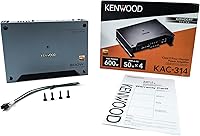
The accessory bundle is bare — no wiring kit, no remote bass knob, and a manual that does not give beginners much guidance. Buyers coming from competing brands that include at least a basic wiring harness found this a frustrating omission that adds to the total cost of ownership.
Gain Structure & Tuning
62%
38%
The gain controls themselves are smooth and responsive once a buyer understands how to set them correctly. Owners who took the time to calibrate properly reported clean, distortion-free output across normal listening levels, which speaks to the underlying signal path quality.
Incorrect gain setup is the single most cited cause of problems in user feedback — blown speakers, distortion, and premature amp shutdown all trace back to this. The controls are sensitive and the documentation does not do nearly enough to walk inexperienced buyers through the process safely.

Suitable for:

The Kenwood KAC-314 4-Channel Car Amplifier is a strong match for anyone taking their first real step beyond a factory audio system without wanting to spend serious money or commit to a complex install. If you drive a compact car, crossover, or any vehicle where underbench or underseat mounting space is limited, the small footprint here is a genuine practical advantage. It is also a natural fit for owners who have not yet swapped their factory head unit, since the speaker-level inputs eliminate the need for a separate line output converter. Anyone who wants to power all four door speakers from a single, straightforward unit will find the KAC-314 covers that need cleanly. DIYers who prefer a manageable weekend project over a multi-day wiring overhaul will appreciate how approachable the installation process is.

Not suitable for:

Buyers who expect the Kenwood KAC-314 4-Channel Car Amplifier to deliver audiophile-grade performance or serious headroom at sustained high volumes will likely be disappointed. The real-world RMS output is modest, and pushing the gain structure too aggressively can introduce distortion before you hit the kind of volume levels that dedicated enthusiasts expect. There is no onboard DSP, so anyone wanting precise time-alignment, multi-band equalization, or advanced signal processing will need to budget for an external processor on top of this unit. Builders working on larger vehicles, high-power speaker setups, or competition-level systems should look at higher-rated options from the same brand or competitors like Rockford Fosgate and JL Audio. This 4-channel amplifier is also not the right tool if you plan to bridge all channels and push a subwoofer array — the power headroom simply is not there for that use case.

Specifications

  • Model Number: This amplifier carries the official model designation KAC-314 within Kenwood's Concert Series lineup.
  • Channels: The unit operates as a full 4-channel amplifier, capable of driving four independent speaker outputs simultaneously.
  • RMS Power (4Ω): Continuous RMS output is rated at 50 watts per channel when driving 4-ohm loads across all four channels.
  • RMS Power (2Ω): Continuous RMS output increases to 75 watts per channel when driving 2-ohm loads across all four channels.
  • Peak Power: Maximum peak power across all channels is rated at 600 watts total under burst conditions, not continuous use.
  • Amplifier Class: The KAC-314 uses a Class D topology, which prioritizes energy efficiency and low heat generation over the older Class AB design.
  • Operating Voltage: The amplifier is designed to operate on a standard 12V DC vehicle electrical system.
  • Max Supply Voltage: The maximum allowable supply voltage is 20V DC, providing a safe margin above standard automotive charging voltages.
  • Input Options: Both RCA line-level inputs and high-voltage speaker-level inputs are included, supporting aftermarket and factory head unit connections.
  • Crossover Filters: Onboard high-pass and low-pass crossover filters are included for flexible signal routing between full-range speakers and subwoofers.
  • Bass Boost: A variable bass boost control is built into the chassis, allowing low-frequency emphasis adjustment without an external equalizer.
  • Mounting Type: The amplifier is designed for surface mounting and can be secured under seats, in trunk areas, or on flat panels.
  • Dimensions: The chassis measures 10.35 × 7.87 × 3.62 inches, making it one of the more compact options in the 4-channel segment.
  • Weight: The unit weighs 3.42 pounds, which simplifies mounting and reduces stress on installation brackets over time.
  • Recommended Wiring: Kenwood recommends using 8-gauge power and ground leads for safe and optimal electrical performance during operation.
  • Brand Series: The KAC-314 belongs to Kenwood's entry-level Concert Series, positioned as an accessible upgrade tier for casual car audio buyers.
  • Availability Date: This amplifier became available to consumers in September 2022, making it a relatively recent addition to Kenwood's lineup.

Related Reviews
Planet Audio PL1600.4 4-Channel Car Amplifier
72%
88%
Value for Money
84%
Ease of Installation
74%
Sound Quality
58%
Power Output (Real-World)
61%
Build Quality
More
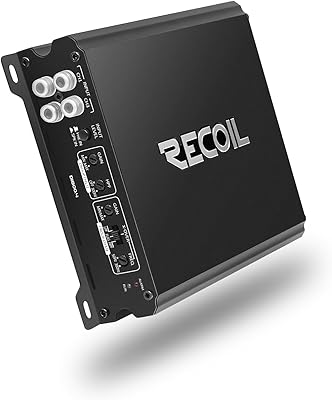
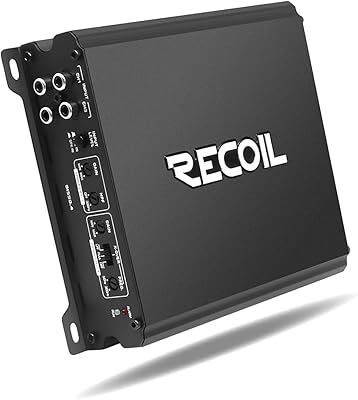
Recoil DI550.4 4-Channel Car Audio Amplifier
74%
91%
Value for Money
78%
Power Output
86%
Ease of Installation
74%
Sound Quality
67%
Build Quality
More
Recoil DI800.4 4-Channel Car Audio Amplifier
83%
88%
Sound Quality
92%
Power Output
65%
Thermal Management
84%
Build Quality
91%
Ease of Installation
More
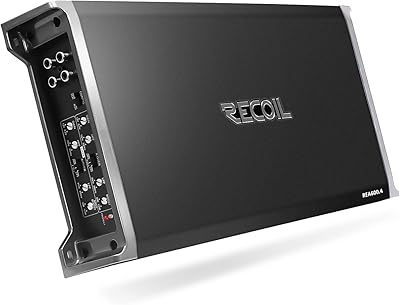
Recoil REA600.4 4-Channel Car Audio Amplifier
84%
89%
Audio Performance
91%
Ease of Installation
85%
Sound Quality at High Volumes
62%
Heat Management
90%
Power Output
More
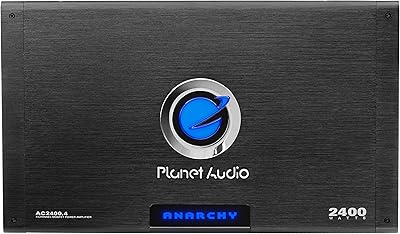
Planet Audio AC2400.4 4-Channel Car Amplifier
84%
95%
Power Output
89%
Sound Clarity
87%
Bass Performance
82%
Ease of Installation
65%
Thermals/Heat Management
More
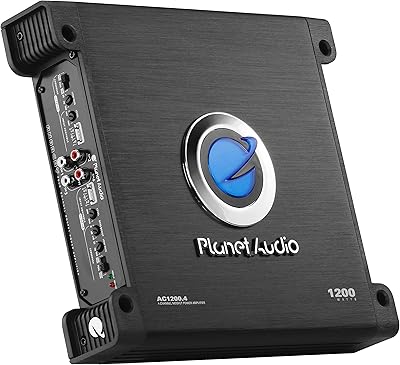
Planet Audio AC1200.4 4-Channel Car Amplifier
73%
88%
Value for Money
67%
Power Output
83%
Installation Ease
74%
Sound Quality
61%
Build Quality
More
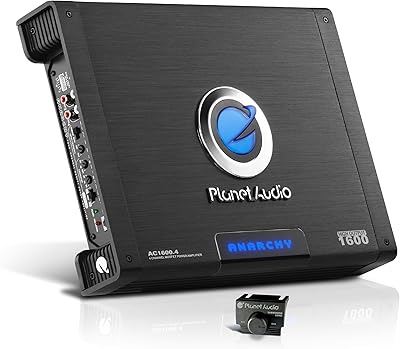
Planet Audio AC1600.4 Anarchy Series 4-Channel Car Amplifier
82%
94%
Power Output
88%
Sound Quality
70%
Ease of Installation
92%
Value for Money
85%
Build Quality
More
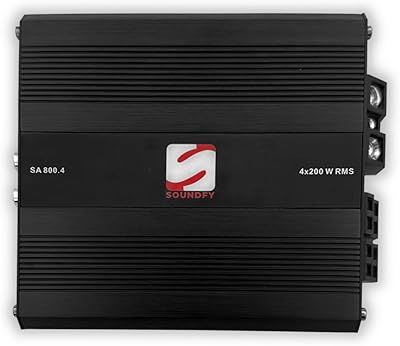
Soundfy SA 400.4 4-Channel Car Amplifier
71%
78%
Value for Money
72%
Sound Quality
63%
Power Output
58%
Build Quality
81%
Thermal Management
More
Hifonics BXX800.4 Brutus 800W RMS 4-Channel Car Audio Amplifier
86%
88%
Sound Quality
92%
Power Output
85%
Build Quality
72%
Heat Management
89%
Ease of Installation
More
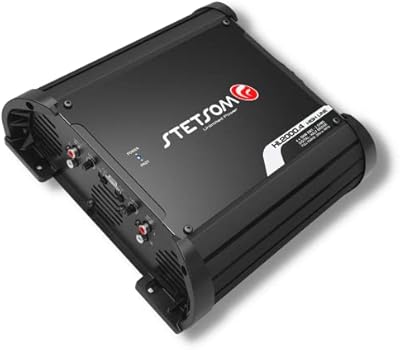
Stetsom HL 2000.4 2-Ohm 4-Channel Car Audio Amplifier

87%
93%
Power Output
85%
Cooling System Efficiency
88%
Sound Quality
91%
Ease of Installation
82%
Durability
More

FAQ

You can absolutely use it with a factory head unit. The KAC-314 includes speaker-level inputs specifically for this situation, so you can tap into the existing speaker wires from your OEM stereo without needing a line output converter or a new head unit.

That 600-watt figure is the combined peak rating across all four channels under ideal burst conditions, not what the amp delivers continuously. The number that matters for day-to-day listening is the RMS rating: 50 watts per channel into 4 ohms, or 75 watts per channel into 2 ohms. Peak numbers are useful for marketing comparisons but not a reliable guide to real-world loudness.

In most cases, yes. At just over 10 inches long and under 4 inches tall, the Kenwood KAC-314 4-Channel Car Amplifier is notably compact for its class. That said, seat rail height varies by vehicle, so it is worth measuring your available clearance before committing to underseat placement.

Yes, with some planning. You can configure the rear channels in bridged mode to drive a single subwoofer while the front channels power your door speakers. Just keep in mind that the total power available is modest, so this works best with an efficient sub rather than a power-hungry one.

Basic wiring knowledge and a few hand tools are enough for most people. The process involves running a power lead from the battery, grounding to the chassis, connecting signal inputs, and wiring speaker outputs. Having 8-gauge power and ground wire on hand before you start is important — that is Kenwood's own recommendation for this unit.

Some warmth is completely normal for any amplifier. Because the KAC-314 uses Class D circuitry, it runs noticeably cooler than older Class AB designs, but it will still generate heat under load. Make sure the unit has reasonable airflow around it and is not enclosed in a fully sealed compartment.

Start with the gain turned all the way down, then play a track at about 75 to 80 percent of your head unit's maximum volume. Slowly raise the amp's gain until you hear the sound starting to distort, then back it off slightly. That is your clean signal ceiling. Rushing this step is the most common cause of blown speakers and early amplifier failure.

If your current setup is entirely factory, yes — the improvement in volume and clarity is genuinely noticeable. The jump from a head unit powering speakers directly to even a modest external amplifier like this one is significant. That said, the quality of your speakers matters too; pairing the KAC-314 with decent aftermarket speakers will get you much further than running it into budget OEM drivers.

Kenwood recommends 8-gauge wire for both the power and ground connections. The wiring is not included in the box, so you will need to purchase it separately along with an in-line fuse holder, which should be installed close to the battery on the power lead.

At this price tier, the three brands are genuinely competitive. Rockford Fosgate's entry-level 4-channel amps often have a slight edge in build feel, while Pioneer units sometimes offer more tuning controls for the money. Where this 4-channel amplifier tends to stand out is installation simplicity and compact size — it is a strong choice if ease of install and a small footprint are priorities over squeezing out the last bit of spec-sheet performance.

Where to Buy