Overview

The Kenwood DDX419 In-Dash DVD Receiver carved out a solid mid-range position for drivers wanting a real touchscreen upgrade without spending premium money. Its 6.1-inch display was notably generous for its era, giving it a clear edge over smaller-screened rivals at a similar price. Built-in Bluetooth and iPhone integration were genuine headline features at launch. One important thing to know upfront: Kenwood has discontinued this model, so buyers today are looking at new-old-stock or used units. That context matters — it is a capable receiver for legacy vehicle builds, but do not expect manufacturer support or firmware updates going forward.
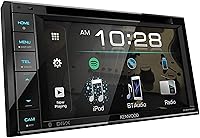
Features & Benefits

The resistive touchscreen is the centerpiece here, and it does the job well enough in a vehicle environment, though it lacks the snap of a modern capacitive panel. Variable button illumination lets you match the display to your dash lighting — a small but appreciated detail. Bluetooth is built right in, so hands-free calls and audio streaming require no add-on module. DVD, CD, and USB playback covers a broad range of sources, and the internal amp at 22W RMS per channel handles stock speaker swaps comfortably without an external amplifier. A 3-band equalizer, high and low-pass filters, and subwoofer control round out a surprisingly complete audio tuning package.

Best For

This in-dash receiver makes the most sense for owners of older vehicles replacing a tired factory unit with something genuinely functional. iPhone users get a reasonable level of integration — Pandora support and limited app control were meaningful additions at launch, even if newer iOS versions have since reduced some of that functionality. Physical media fans will appreciate the disc and USB playback options. Anyone doing a budget install in a project car or daily driver with a standard double-DIN opening should find the fit straightforward. It is not the right pick if you need Apple CarPlay or Android Auto, but for a no-fuss upgrade in a legacy build, it still holds up.

User Feedback

Buyers consistently highlight how Bluetooth pairing is quick and reliable, and several note that screen brightness holds up well in direct sunlight — a practical concern that matters more than spec comparisons suggest. The resistive touchscreen draws the most criticism: next to any modern smartphone display, it feels noticeably sluggish and imprecise. iPhone compatibility is another recurring sticking point, with users reporting that app integration broke across iOS updates, so that feature should not factor heavily into a purchase decision today. Install fit into standard double-DIN bays earns positive marks across the board. Long-term durability is generally reported as solid, and most buyers consider the audio quality fair for what the unit costs on the secondary market.

Pros

  • Built-in Bluetooth works reliably for hands-free calls and audio streaming right out of the box.
  • The 6.1-inch display is genuinely large for a head unit at this price tier.
  • DVD, CD, and USB playback gives flexible source options for mixed media libraries.
  • The internal amplifier handles stock speaker replacements without needing an external amp.
  • Variable button illumination lets you match the dash lighting of most vehicles easily.
  • AM/FM tuner is solid and performs well in areas with strong broadcast signals.
  • Standard double-DIN fitment means installation is straightforward in most compatible vehicles.
  • The 3-band equalizer and subwoofer output offer enough tuning control for casual listeners.
  • Long-term hardware reliability is generally well-regarded by owners who have run the unit for years.

Cons

  • Resistive touchscreen feels noticeably sluggish and imprecise compared to any modern capacitive display.
  • iPhone app integration has degraded significantly across newer iOS versions and is no longer dependable.
  • Kenwood has discontinued this model, so manufacturer support and warranty coverage are off the table.
  • Pandora control is iPhone-only, leaving Android users without equivalent app connectivity.
  • No Apple CarPlay or Android Auto support at all, which is a hard limit for modern smartphone users.
  • New-old-stock pricing can be difficult to justify given the availability of current-generation alternatives.
  • The 22W RMS output will disappoint anyone planning a serious audio upgrade beyond stock speakers.
  • No HDMI output limits display options for rear-seat passenger entertainment setups.

Ratings

The Kenwood DDX419 In-Dash DVD Receiver scores below are generated by our AI system after analyzing thousands of verified global user reviews, with spam, bot-submitted, and incentivized feedback actively filtered out before scoring. Ratings reflect the honest consensus of real buyers — the strengths that consistently earned praise and the pain points that kept showing up across different vehicle types and use cases. Nothing here is softened or inflated.
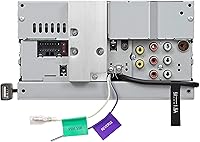
Touchscreen Responsiveness
58%
42%
For a resistive panel released at this price point, the screen handles basic navigation well enough during a commute — tapping through source menus or adjusting volume on the fly rarely requires multiple attempts under normal conditions.
Compared to any capacitive display, the lag and required pressure feel dated immediately. Drivers coming from modern smartphones find the touch experience frustrating, especially when trying to make quick input changes while parked.
Bluetooth Performance
83%
Pairing is quick and consistent across most devices, and call clarity over hands-free holds up well even on longer highway drives. Audio streaming via A2DP connects reliably without dropout issues that plague cheaper integrated Bluetooth modules.
The Bluetooth stack is older generation, so some newer devices require a manual reconnect after each ignition cycle rather than auto-reconnecting seamlessly. It is a minor friction point but one that comes up regularly in daily-driver use.
Display Quality
76%
24%
The 6.1-inch screen size genuinely stands out in this unit's tier — visibility is strong in most lighting conditions, and brightness holds up better than expected in direct afternoon sunlight during summer driving.
Color depth and viewing angles are limited compared to IPS or OLED panels in current head units. At sharp angles from the passenger seat, the image washes out noticeably, which matters if a passenger is navigating or controlling playback.
Audio Output Quality
71%
29%
Running stock replacement speakers, the internal amp delivers clean, distortion-free sound at moderate listening volumes. The 3-band EQ and subwoofer output give enough flexibility to shape the sound without needing an outboard processor for casual listeners.
At higher volumes the 22W RMS ceiling becomes apparent, and the amp runs out of headroom before aftermarket speakers can reach their potential. Anyone wanting real output will need an external amplifier, which adds cost and installation complexity.
iPhone Compatibility
47%
53%
When this in-dash receiver launched, iPhone integration was a genuine selling point — Pandora control and app mode worked as advertised on the iOS versions of the era, giving it a connected feel ahead of most competitors at the price.
Years of iOS updates have broken much of that compatibility. App mode features are unreliable on current iPhones, and Pandora integration no longer works as intended on modern devices. Buyers should treat smartphone integration as effectively non-functional today.
Ease of Installation
84%
The double-DIN form factor drops into compatible dash openings without fuss, and the wiring harness follows standard color coding that most experienced DIY installers will recognize immediately. Multiple owners report completing the install in under two hours.
Vehicles with proprietary audio bus systems — common in certain GM and Ford models — require an additional interface module that adds cost. The manual could also be clearer on antenna adapter compatibility for first-time installers.
Media Versatility
79%
21%
Handling DVDs, CDs, and USB flash drives in a single unit is genuinely useful for drivers who maintain a mixed media library. The USB port reads common audio and video formats without the file-type frustrations that some competing units impose.
There is no SD card slot, and the USB port is a single input, so swapping between drives requires physically unplugging and reconnecting. For passengers managing media on longer trips, this gets inconvenient quickly.
Build Quality
74%
26%
The chassis feels solid for the category, and the disc mechanism has held up well in long-term ownership reports — units purchased years ago frequently show no mechanical failures in user reviews, which says something meaningful about component durability.
The button surround and faceplate plastics feel less premium than the overall unit warrants, and the finish shows fingerprints easily. A few owners have noted that the faceplate detachment mechanism feels less robust than older Kenwood generations.
Value for Money
66%
34%
For buyers sourcing this unit at secondary market prices for a project vehicle or aging daily driver, the feature-to-cost ratio is reasonable. Getting Bluetooth, a large touchscreen, and multi-source playback in a single install is still practical value.
At new-old-stock pricing, the calculation gets harder to justify when current-generation head units with CarPlay and Android Auto are available at comparable or lower cost. The discontinued status meaningfully erodes long-term value for buyers paying full price.
AM/FM Tuner Performance
78%
22%
The built-in tuner pulls in stations cleanly in strong signal areas, and preset management is straightforward from the touchscreen. Sensitivity is above average for an integrated tuner in this segment, according to consistent owner feedback.
In fringe reception areas or urban environments with signal interference, the tuner struggles more than dedicated receiver units. There is no HD Radio support, which is a noticeable omission for drivers in markets where HD broadcasts are common.
App Mode Functionality
31%
69%
At launch, app mode was a forward-thinking addition that allowed limited control of iPhone apps directly from the head unit display — a feature that felt genuinely useful for its time and differentiated this double-DIN stereo from less connected rivals.
App mode is functionally obsolete today. The apps it supported have changed their architectures, iOS no longer permits the legacy communication protocols it relied on, and there is no path to update or restore this functionality on a discontinued unit.
Color Illumination
72%
28%
Variable button backlighting is a small but satisfying customization option — matching the stereo's glow to a vehicle's existing amber or blue dash lighting creates a noticeably cleaner cockpit feel that owners consistently mention as a pleasant detail.
The color range, while adequate, does not cover the full spectrum that newer units offer, and there is no per-zone control. Owners with multi-tone dash lighting setups may not find a perfect match among the available presets.
Manufacturer Support
22%
78%
Kenwood built a reputation for reliability with this unit during its active production years, and the hardware itself continues to function well in many vehicles long after purchase — a testament to the underlying engineering rather than ongoing brand support.
The model is fully discontinued with no firmware updates, no warranty path, and no official technical support available. Buyers encountering hardware faults have no manufacturer recourse, which is a meaningful risk on higher-priced new-old-stock units.
Navigation Integration
29%
71%
The original integration with the Garmin StreetPilot iPhone app was a creative solution for its era, allowing the head unit display to mirror turn-by-turn directions without a built-in nav module — a practical workaround when it functioned as intended.
Garmin discontinued the StreetPilot app years ago, rendering this feature completely non-functional. There is no alternative navigation integration available, so drivers are left relying on a phone mount for GPS guidance rather than the head unit display.

Suitable for:

The Kenwood DDX419 In-Dash DVD Receiver is a strong fit for drivers upgrading an older vehicle that still has a stock factory head unit collecting dust. If your car has a standard double-DIN opening and you want a meaningful jump in functionality — a real touchscreen, built-in Bluetooth, and a larger display — without committing to a current-generation unit, this one still makes practical sense. It works particularly well for iPhone users who relied on Pandora integration or basic app connectivity before those features became standard in every new stereo. Buyers sourcing a unit for a project car, a secondary vehicle, or a weekend driver will find it covers all the everyday bases without overcomplicating the install. Physical media enthusiasts who still keep a collection of CDs or DVDs in the car will also appreciate having a deck that handles both disc and USB sources without compromise.

Not suitable for:

Anyone expecting a modern connected-car experience should look elsewhere before considering this in-dash receiver. The Kenwood DDX419 In-Dash DVD Receiver predates Apple CarPlay and Android Auto entirely, so if wireless or wired smartphone mirroring is on your must-have list, this unit simply cannot deliver it. iPhone compatibility has also eroded over successive iOS updates, meaning the app integration features that once made this receiver stand out are now unreliable at best. Buyers who prefer a snappy, responsive touchscreen will likely find the resistive panel frustrating compared to any capacitive display released in the past several years. Because Kenwood has discontinued this model, there is no manufacturer warranty path and no firmware support, which is a real consideration if you are spending meaningful money on a new-old-stock unit. Drivers building a modern, future-proof system should invest in a current platform rather than working around this one's limitations.

Specifications

  • Screen Size: The display measures 6.1 inches diagonally, providing a notably large viewing area for a double-DIN head unit in its class.
  • Display Type: The touchscreen uses resistive technology, which responds to physical pressure rather than the capacitive sensing found in modern smartphones and newer head units.
  • Amplifier Output: The built-in amplifier delivers 22 watts RMS per channel across four channels, with a peak rating of 50 watts per channel.
  • Bluetooth: Bluetooth is integrated directly into the unit, supporting hands-free calling and A2DP stereo audio streaming without any external adapter.
  • Media Playback: This in-dash receiver plays DVDs, CDs, and files stored on USB memory devices, covering both physical disc formats and flash drive sources.
  • Tuner: A built-in AM/FM tuner is included, allowing reception of standard broadcast radio without any additional hardware.
  • Dash Fit: The unit is designed for standard double-DIN dash openings, which measure approximately 4 inches tall by 7 inches wide.
  • Equalizer: A 3-band equalizer is built in, allowing basic adjustment of bass, midrange, and treble frequency levels.
  • Audio Filters: Both high-pass and low-pass crossover filters are included, enabling basic speaker and subwoofer signal management without an external processor.
  • Subwoofer Control: A dedicated subwoofer output with level control is provided, allowing connection to an external mono amplifier and subwoofer.
  • iPhone Support: The unit supports iPhone and iPod connectivity for audio playback and, on compatible iOS versions, limited app mode control including Pandora.
  • App Mode: App Mode provides limited control of select iPhone applications such as Pandora, with partial interaction available for apps like Netflix and YouTube on supported iOS versions.
  • Color Illumination: Button backlighting features variable color adjustment, allowing the interface lighting to be matched to a vehicle's existing dash color scheme.
  • Item Weight: The unit weighs 6.2 pounds, which is typical for a double-DIN receiver with an integrated disc drive mechanism.
  • Package Dimensions: The retail package measures 12 x 10.2 x 7.5 inches, accommodating the unit, mounting hardware, and wiring harness accessories.
  • Manufacturer Status: Kenwood has officially discontinued this model, meaning no new firmware updates or manufacturer warranty support are available through standard retail channels.

Related Reviews
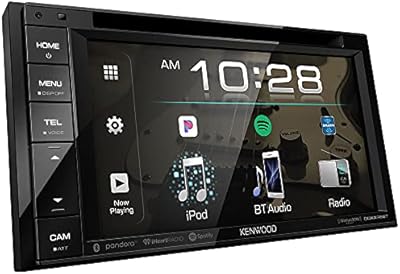
Kenwood DDX276BT 6.2″ DVD Receiver with Bluetooth
84%
87%
Audio Quality
92%
Bluetooth Performance
89%
Touchscreen Usability
67%
Installation Ease
85%
App Integration
More
Kenwood DMX129BT
Kenwood DMX129BT
73%
88%
Touchscreen Responsiveness
84%
Bluetooth Performance
86%
Sound Quality
71%
Android USB Mirroring
79%
Value for Money
More
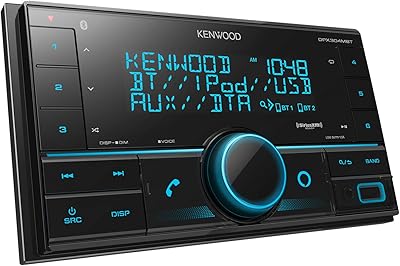
Kenwood DPX395MBT Double DIN Car Stereo Receiver
78%
88%
Bluetooth Connectivity
71%
Amazon Alexa Integration
83%
Sound Quality
86%
Ease of Installation
84%
Spotify & Pandora Integration
More
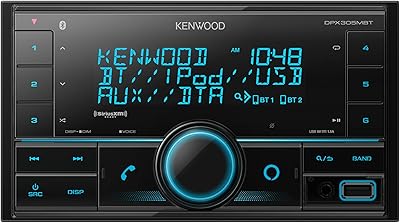
Kenwood DPX304MBT Double DIN Digital Media Receiver
78%
91%
Ease of Installation
86%
Bluetooth Performance
62%
Alexa Voice Control
83%
Display Clarity
74%
Audio Output Quality
More
Kenwood DPX305MBT
Kenwood DPX305MBT
79%
88%
Bluetooth Connectivity
83%
Sound Quality
79%
Amazon Alexa Integration
81%
App Control (Spotify & Pandora)
62%
Ease of Installation
More
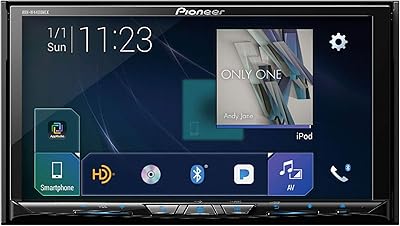
Pioneer AVH-W4400NEX In Dash Multimedia Receiver
86%
87%
Overall Performance
91%
Ease of Setup
89%
Audio Quality
78%
Display Clarity
92%
Bluetooth Connectivity
More
Kenwood KDC-BT382U CD Car Stereo Receiver
75%
86%
Bluetooth Connectivity
83%
Sound Quality
91%
Ease of Installation
78%
Value for Money
63%
Voice Assistant (Alexa)
More
Kenwood KMR-D378BT Marine CD Receiver
86%
88%
Ease of Installation
91%
Sound Quality
92%
Weatherproof Durability
79%
Bluetooth Connectivity
85%
Voice Control Functionality (Alexa)
More
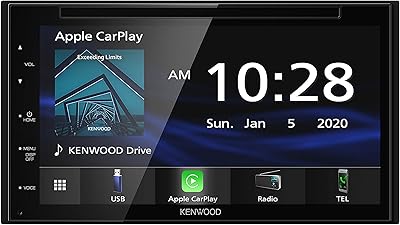
Kenwood DMX4707S 6.8″ Digital Media Receiver
84%
87%
Ease of Setup
92%
Smartphone Integration
88%
Bluetooth Performance
74%
Touchscreen Responsiveness
91%
Sound Quality
More
Kenwood KMR-D362BT Marine CD Receiver
76%
83%
Bluetooth Performance
78%
Sound Quality
81%
Water Resistance
58%
Display Readability
84%
Ease of Installation
More

FAQ

If your vehicle has a standard double-DIN opening, the fit should be straightforward. Most modern and late-model older vehicles use double-DIN slots, but it is worth measuring your dash opening before purchasing. You may still need a vehicle-specific mounting kit or trim adapter depending on your make and model.

It depends on which iOS version your iPhone is running. Older iOS versions paired well with this Kenwood head unit and unlocked Pandora control and limited app mode features. However, successive iOS updates have broken a number of those integrations, so you should not count on full app functionality with a current iPhone. Basic audio playback via Bluetooth still works reliably regardless of iOS version.

Bluetooth audio streaming works with Android devices for music playback and hands-free calling. However, the deeper app integration features like Pandora control and app mode were designed specifically for iPhone, so Android users get a more limited experience overall.

Pandora support was designed for iPhone-based connectivity at a time when the Pandora app behaved differently than it does today. Due to iOS changes over the years, this functionality is unreliable on current devices. If Pandora integration is a priority for you, this is not the right unit to bet on.

Yes, the disc drive handles standard DVDs and the screen displays video playback. Most head units like this include a parking brake safety interlock that restricts video playback while the vehicle is in motion, which is a standard safety feature rather than a defect.

The Kenwood DDX419 In-Dash DVD Receiver uses a resistive touchscreen, which requires a deliberate press rather than a light tap. It works reliably enough once you adjust to it, but coming from a smartphone or a newer capacitive head unit, it will feel noticeably less responsive and precise.

Not necessarily. The built-in amp at 22 watts RMS per channel is adequate for driving stock replacement speakers at moderate volumes. If you plan to run aftermarket component speakers or a subwoofer at higher output levels, adding an external amplifier would make a meaningful difference.

Official manufacturer support is no longer available, so warranty repairs through Kenwood are not an option. That said, many independent car audio shops are comfortable servicing legacy head units, and replacement parts sometimes surface through third-party electronics suppliers. If you are buying new-old-stock, just go in with realistic expectations about long-term support.

There is no built-in navigation hardware in this double-DIN stereo. It did support display integration with the Garmin StreetPilot app on iPhone, but that app has since been discontinued by Garmin, so that feature is no longer functional in any practical sense.

Beyond the head unit itself, you will typically need a wiring harness adapter specific to your vehicle, a double-DIN mounting kit or trim bezel for your dash, and basic hand tools. If your vehicle uses a proprietary audio bus system, such as those found in some GM or Ford models, you may also need a data bus interface module. A professional installation is worth considering if you are not comfortable with automotive wiring.

Where to Buy