Overview

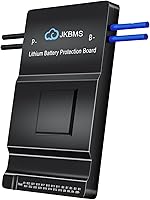
The JKBMS JK-B2A24S15P 150A Smart BMS sits in a genuine sweet spot for serious DIY builders who need real capability without enterprise-level pricing. It supports cell configurations from 8S all the way to 24S, covering system voltages between 24V and 72V — broad enough to suit the vast majority of lithium battery projects out there. What sets this smart BMS apart at this price tier is the combination of built-in Bluetooth and a dedicated RS485 port, both of which come standard rather than as costly add-ons. JKBMS has built a solid reputation in the hobbyist and prosumer battery community over recent years, and this board reflects that standing.
Features & Benefits

The 2A active balancing is probably what draws most builders to this board over cheaper passive-balance alternatives. Instead of burning off excess cell energy as heat, active balancing transfers energy between cells continuously, slowing voltage drift and extending pack longevity in meaningful ways. The JK BMS app — available on both Android and iOS — gives you a clean real-time view of individual cell voltages, temperatures, and state of charge, and lets you adjust protection thresholds without digging through menus. The RS485 port is where things get interesting for advanced setups: it allows the board to communicate directly with compatible inverters and platforms like Home Assistant, turning raw battery data into actionable automation. The board also fits neatly in most enclosures at just over 6 by 4 inches.

Best For

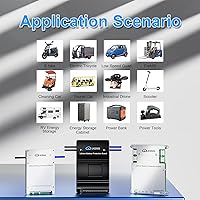
This battery protection board makes most sense for builders who already know their way around lithium chemistry and are not intimidated by a bit of configuration work. Solar energy storage is perhaps the most common use case — 24V or 48V LiFePO4 packs paired with a compatible inverter are where this board truly earns its keep. It also fits well in electric scooter and light EV builds, where the 150A continuous rating provides real headroom. Off-grid van life setups benefit from the smartphone monitoring angle. And for anyone running Home Assistant or a similar platform, the RS485 integration makes this one of the more capable options available at this price tier.

User Feedback

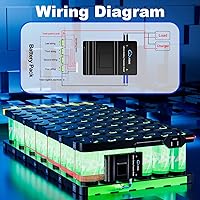
With 139 ratings averaging 4.2 out of 5 stars, the JK active balancer board lands in solidly positive territory. Buyers consistently praise the app experience — most find it intuitive once past the initial pairing step — and report that active balancing performance holds up well after extended cycling. On the critical side, the included documentation is thin. Non-native English manuals and sparse wiring diagrams catch some buyers off guard, particularly around RS485 configuration. Worth flagging: the RS485 converter is not included in the box, which surprises buyers who missed that detail in the listing. Bluetooth range and stability are generally reported as reliable in real-world installations.

Pros

  • Active balancing at 2A actually transfers energy between cells rather than wasting it as heat, which matters for long-term pack health.
  • Bluetooth is built in natively — no dongle, no adapter, no extra cost.
  • The JK BMS app is genuinely well-designed and gives per-cell voltage visibility in real time.
  • RS485 support enables direct integration with inverters and home automation platforms like Home Assistant.
  • Covers 8S to 24S cell configurations, making it usable across a wide range of project voltages.
  • Compatible with LiFePO4, Li-ion, and LTO chemistries, so it is not locked to a single battery type.
  • Protection coverage is comprehensive: overcharge, overdischarge, overcurrent, short circuit, and temperature are all handled.
  • At 15.2 ounces and roughly 6.4 by 4 inches, it fits into most DIY enclosures without forcing a redesign.
  • A one-year support window from the manufacturer is available if issues arise post-installation.

Cons

  • The included manual is thin and poorly translated, making first-time configuration harder than it needs to be.
  • The RS485 converter is not included in the box, which catches many buyers off guard at checkout.
  • RS485 setup requires external research and community support — official guidance alone is not sufficient for most users.
  • Bluetooth pairing can require some troubleshooting on certain Android devices before it works reliably.
  • No native desktop software is available; all configuration must be done through the mobile app.
  • Parameter defaults are not always appropriate for every battery chemistry out of the box and need manual adjustment.
  • Community support is spread across forums rather than consolidated in official documentation, so troubleshooting takes time.
  • The one-year support period may feel short for a component installed in a long-term off-grid or EV system.

Ratings

The JKBMS JK-B2A24S15P 150A Smart BMS has been evaluated by our AI rating system after analyzing verified global buyer reviews, with spam, bot activity, and incentivized feedback actively filtered out. Across 139 real-world ratings, this board lands at a 4.2-star average — a result that reflects genuine strengths in balancing performance and app usability, but also consistent friction points around documentation and RS485 setup. Both sides of that picture are represented transparently in the scores below.
Active Balancing Performance
88%
Buyers running long-term solar storage builds consistently report that cell voltage spreads tighten noticeably after extended cycling, which they attribute directly to the 2A active balancing. Unlike passive balancers that waste energy as heat, the energy-transfer approach here keeps cells more uniform across the pack over time.
At 2A, balancing current is adequate for most DIY packs but may feel slow when dealing with severely mismatched cells during initial pack assembly. Users with heavily imbalanced second-hand cells report that the board takes considerably longer to equalize than they expected.
Mobile App Experience
84%
The JK BMS app earns consistent praise for its per-cell voltage readout, which gives builders a clear live picture of pack health without needing a separate monitoring device. Parameter adjustments — including protection thresholds and balance triggers — are accessible through clearly labeled screens that most experienced users find intuitive.
Some Android users report intermittent pairing failures on first connection, requiring a Bluetooth reset or phone restart before the app connects reliably. The app also lacks a desktop version, which limits usability for builders who prefer managing settings from a workbench computer rather than a phone.
RS485 Integration
76%
24%
For builders running Home Assistant or compatible inverters, the RS485 port opens up persistent data logging, automated alerts, and dashboard visibility that Bluetooth alone cannot provide. Community-built integrations exist specifically for this board, making it one of the more automation-friendly options in its price range.
The RS485 converter needed to actually use this feature is not included in the box, which frustrates buyers who only discover this after delivery. Official documentation on RS485 configuration is thin, and getting reliable communication requires leaning heavily on community forums rather than any manufacturer-provided guide.
Protection Reliability
86%
The board's protection suite handles overcharge, overdischarge, overcurrent, short circuit, and temperature events without hesitation in reported real-world use, including accidental shorts during assembly that buyers say the board survived cleanly. Most protection events reset automatically once the fault clears, which avoids unnecessary downtime.
Default protection thresholds are not always calibrated appropriately for every battery chemistry and need manual adjustment before the first use — a step that the manual does not clearly walk users through. A small number of users report that temperature protection tripped prematurely in warm ambient environments before they recalibrated the sensor offset.
Documentation & Setup Guidance
41%
59%
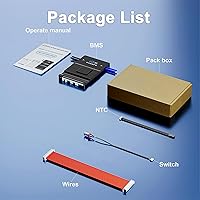
The physical package is complete enough to get started — wiring harness, switch, NTC sensor, and a manual are all included. Builders who have configured a BMS before can work through initial setup using the app alone without consulting the manual at all.
The included manual is widely criticized as poorly translated and light on detail, particularly around wiring diagrams and RS485 configuration steps. First-time BMS builders almost universally report needing to seek out YouTube tutorials or forum threads to fill the gaps, which is a notable friction point for a component this technically significant.
Build Quality & Hardware
79%
21%
The board feels solid for its class — component placement is clean, solder joints look consistent on inspection, and the form factor is compact enough to fit neatly into most DIY enclosures without modification. Buyers who have handled multiple BMS brands report that this one sits above the typical budget tier in fit and finish.
A small percentage of buyers report receiving units with connection issues on the balance leads, suggesting quality control is not perfectly consistent across production batches. The board also lacks any conformal coating, which limits its resilience in humid or condensation-prone installations without additional protection.
Bluetooth Connectivity
77%
23%
Once paired correctly, Bluetooth range and stability are reported as reliable in typical garage or van installations. iOS users in particular tend to have a smooth pairing experience with no additional steps beyond the standard app setup process.
Android compatibility is uneven across devices, with some users needing multiple pairing attempts or a specific sequence of steps before the connection holds. Bluetooth is also not a substitute for persistent monitoring — the connection drops when the phone goes to sleep unless the app is actively kept in the foreground.
Chemistry Compatibility
83%
Supporting LiFePO4, Li-ion, and LTO in the same hardware is a practical advantage for builders who work across different chemistries or who source second-hand cells of varying types. Switching between chemistries is handled through parameter changes in the app rather than hardware swaps.
The board does not automatically detect chemistry type, so incorrect threshold configuration is possible if a builder does not manually update the settings for their specific cells. There is no explicit warning in the app if configured thresholds fall outside safe ranges for a given chemistry, which puts the responsibility entirely on the user.
Value for Money
81%
19%
At its price point, combining active balancing, Bluetooth, and RS485 in a single board is genuinely difficult to match from competing brands. Builders who have priced out enterprise-grade BMS options with equivalent feature sets find the cost difference significant.
The omission of the RS485 converter from the package effectively adds an unannounced cost for anyone intending to use that feature. Factoring in the additional sourcing time and converter cost, the total landed cost is higher than the listing price suggests.
Cell Configuration Range
87%
The 8S to 24S range covers the vast majority of real-world DIY lithium pack configurations without requiring different hardware for different builds. A builder scaling from a 24V home storage pack up to a 72V EV pack can use the same board family across both projects.
The wide configuration range does mean the board is somewhat overspecified for simpler low-cell-count builds, where a smaller, cheaper BMS would be a more proportionate fit. There is no variant officially supporting configurations below 8S, which excludes some small 12V battery projects from this lineup.
Thermal Management
69%
31%
The included NTC temperature sensor provides active thermal monitoring, and the board will cut discharge or charge if temperatures exceed configured limits — a meaningful safety layer for packs operating in hot enclosures or during high-current use.
The board itself generates some heat at sustained high-current loads, and without a heatsink or forced airflow, thermal performance in tightly enclosed builds can become a concern. A small number of users report the board running warmer than they expected during extended 100A-plus discharge cycles.
Physical Footprint
82%
18%
At 6.38 by 4.02 by 0.8 inches and under a pound, the board slots into most DIY battery enclosures cleanly without dominating the internal layout. Builders working in compact van or scooter battery boxes specifically appreciate that the profile does not require a custom mounting solution.
The board does not ship with any mounting hardware, so builders need to source appropriate standoffs or brackets themselves. The balance connector layout may also conflict with certain enclosure geometries, requiring some creative cable routing to avoid tight bends near the connectors.
After-Sales Support
62%
38%
JKBMS offers a one-year support window and is reachable through the order platform, which is a reasonable baseline for a component at this price tier. Some buyers report receiving helpful responses to technical questions when they reached out directly.
Response times from manufacturer support are inconsistent, and several buyers note that community forums and third-party content creators have been far more useful than official channels for solving real configuration problems. One year is also a relatively short support commitment for a component installed in a long-term energy storage system.
Included Accessories
71%
29%
The package includes a practical set of accessories — a 70cm wiring harness, a 50cm switch lead, an NTC sensor, and a manual — that is sufficient to get a basic installation running without a separate trip to the hardware store. The wiring lengths are adequate for most enclosure sizes encountered in typical builds.
Wire gauge and connector quality on the included harness are functional but not impressive, and some builders prefer to replace them with heavier-gauge alternatives for high-current applications. The absence of any mounting hardware or a balance connector protector is a minor but noticeable gap in the accessory bundle.

Suitable for:

The JKBMS JK-B2A24S15P 150A Smart BMS is built for experienced DIY builders who are serious about protecting and monitoring their lithium battery packs. It fits particularly well in solar energy storage setups running 24V or 48V LiFePO4 configurations, where the active balancing and smartphone monitoring add genuine long-term value. Off-grid van dwellers and cabin builders who need to keep tabs on battery health remotely will appreciate the Bluetooth app without needing to wire in a separate monitoring device. Electric scooter and light EV builders working with higher-voltage packs up to 72V will find the 150A continuous rating provides comfortable headroom for real-world loads. Anyone already running a home automation platform like Home Assistant will find the RS485 port opens up powerful integration options that most competing boards at this price simply do not offer.

Not suitable for:

This battery protection board is not a good match for beginners who have never configured a BMS before or who expect a plug-and-play experience straight out of the box. The included documentation is sparse and not always clearly translated, so first-time builders may struggle with wiring, parameter setup, and especially RS485 integration without leaning heavily on community forums and third-party guides. Buyers who need RS485 connectivity right away should also know upfront that the required converter is sold separately and is not included in the package, which adds cost and a sourcing step. Anyone building a small, low-voltage pack — say, a 12V system or a simple 4S configuration — will find this board overspecified and awkward to apply. If you need a certified, commercially validated BMS for a product going into regulated sale or industrial use, this prosumer-tier board is not the right tool regardless of its technical capability.

Specifications

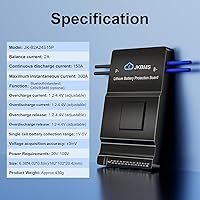
  • Brand: Manufactured by JKBMS, a recognized name in the DIY battery management system market.
  • Model: The exact model identifier is JK-B2A24S15P, which encodes its key configuration parameters.
  • Cell Configuration: Supports 8S through 24S cell series configurations, covering a wide range of lithium pack designs.
  • Voltage Range: Compatible with system voltages from 24V up to 72V, spanning the most common DIY and light EV pack configurations.
  • Continuous Current: Rated for 150A continuous discharge current, providing substantial headroom for high-draw applications.
  • Active Balance: Delivers 2A of active balancing current, transferring energy between cells rather than dissipating it as heat.
  • Communication: Equipped with both built-in Bluetooth and an RS485 port for local app monitoring and external system integration.
  • Battery Chemistry: Supports LiFePO4, Li-ion, and LTO battery chemistries without requiring hardware modifications.
  • Dimensions: The board measures 6.38 x 4.02 x 0.8 inches, keeping it compact enough for most DIY enclosures.
  • Weight: Weighs 15.2 ounces (0.95 lb), light enough to mount without structural reinforcement in typical builds.
  • App Support: Pairs with the JK BMS mobile app, available for both Android and iOS devices.
  • Protection Features: Provides hardware-level protection against overcharge, overdischarge, overcurrent, short circuits, and temperature extremes.
  • In-Box Accessories: Package includes wiring harness (70cm), power switch (50cm), NTC temperature sensor (40cm), and an operator manual.
  • RS485 Converter: An RS485-to-USB or RS485-to-TTL converter is required for RS485 use and is sold separately, not included in the box.
  • Warranty Support: JKBMS provides one year of after-sales support, accessible through the order page on the purchase platform.
  • Availability: This board became available in April 2024, making it a relatively recent release within the JKBMS product lineup.

Related Reviews
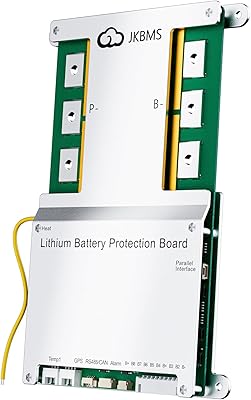
JKBMS JK-B2A8S30P-HC 300A Active Balance BMS
77%
88%
Active Balancing Performance
83%
Build Quality
86%
Bluetooth Connectivity
71%
App Usability
79%
Cold Weather Heating
More
Kasa Smart KC420WS Outdoor Security Camera
81%
88%
Image Clarity
91%
Night Vision Performance
79%
Motion & Person Detection
86%
Weather & Build Durability
84%
Setup & App Experience
More
MERNEUO Smart Ring
MERNEUO Smart Ring
84%
88%
Health Tracking Accuracy
90%
App Integration & Ease of Use
72%
Battery Life
93%
Waterproof & Durability
85%
Comfort & Fit
More
TnoxHD Smart Glasses
85%
85%
Audio Quality
90%
Battery Life
80%
Comfort and Fit
78%
Sound Clarity for Calls
88%
Ease of Use
More
Emerhome E13 Bluetooth Smart Glasses
70%
83%
Ease of Pairing
79%
Call Clarity
58%
Audio Volume & Quality
54%
Battery Life
71%
Touch Control Accuracy
More
FKGZJF Smart Ring
FKGZJF Smart Ring
86%
91%
Value for Money
89%
Battery Life
85%
Health Monitoring Accuracy
92%
Design & Comfort
82%
App Experience
More
aaboRing Smart Ring
aaboRing Smart Ring
85%
88%
Heart Rate Monitoring
91%
Sleep Tracking Accuracy
92%
Build Quality (Titanium)
85%
Battery Life
90%
Waterproof Performance
More
TIAZUUX Smart Ring Health Activity Tracker
74%
91%
Value for Money
87%
Sleep Tracking
88%
Comfort & Wearability
83%
Build Quality
79%
Battery Life
More
MorePro Smart Watch
MorePro Smart Watch
84%
88%
Value for Money
90%
Health Monitoring Accuracy
84%
Battery Life
85%
Display Quality
87%
Usability/Interface
More
Kasa Smart KC400 Indoor Security Camera
79%
88%
Image Quality
71%
Night Vision Performance
84%
Motion & Person Detection
82%
Sound Detection & Baby Monitoring
81%
App Experience
More

FAQ

It works with LiFePO4, Li-ion, and LTO chemistries. You just need to configure the correct cell voltage thresholds for your chemistry in the app before use — the defaults are not always set appropriately for every chemistry out of the box.

It is sold separately and is not in the box. This catches a lot of buyers off guard, so make sure to source a compatible RS485-to-USB converter before you plan to use that feature. The Bluetooth app works immediately without any additional hardware.

Yes, and this is one of the stronger use cases for the RS485 port on this board. With a compatible RS485 converter and the right integration — there are community-built Home Assistant integrations specifically for JKBMS boards — you can pull live cell data, state of charge, and protection events directly into your automation platform.

Passive balancing bleeds excess energy from higher-charged cells as heat, which wastes energy and generates warmth inside your pack. Active balancing, which this board does at 2A, transfers that energy to lower-charged cells instead. Over hundreds of cycles, this leads to more consistent cell voltages and slower capacity degradation across the pack.

Yes, a 16S configuration falls comfortably within the supported 8S to 24S range. Whether you are building a 24V (8S), 48V (16S), or 72V (24S) LiFePO4 pack, this board covers it without any hardware changes.

If you have built a battery pack before and are comfortable reading wiring diagrams, setup is manageable — but expect to spend time in the app configuring voltage cutoffs, balance start thresholds, and protection settings. The manual is not great, so community resources like YouTube build videos and the JKBMS forum threads will save you significant time.

It is a reasonable fit for light EV applications, particularly where your pack sits in the 48V to 72V range and your motor draws are within the 150A continuous rating. Just be aware that peak surge currents in aggressive acceleration scenarios can exceed rated continuous limits, so check your motor controller's draw profile before committing.

Most users report stable Bluetooth once the initial pairing is done, though some Android devices require a few attempts to connect cleanly. iOS users tend to have a smoother pairing experience. The connection range is typical for Bluetooth — fine for bench monitoring, but not a substitute for RS485 if you need always-on remote data logging.

It handles both. The board controls separate charge and discharge MOSFETs, so it can cut off charging if cells go over voltage and cut off the load if cells drop below the discharge cutoff — all independently and configurable through the app.

Most protection events, like overcurrent or short circuit trips, will reset automatically once the fault condition clears. Voltage-based protections, such as overdischarge lockout, typically require the charger to be reconnected before the board will re-enable the discharge path. You can review event history and current state in the app after any trip to understand what triggered it.