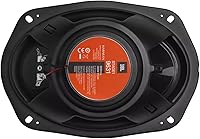


Overview

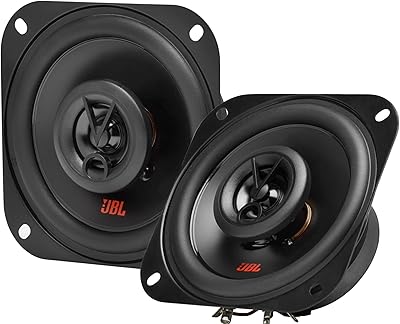
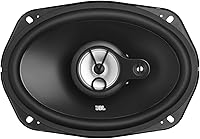
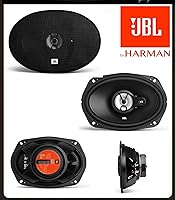
JBL Stage1 9631 6x9 Car Speakers are one of those rare upgrades that actually deliver on the promise of a recognizable brand without demanding a serious investment. JBL sits under the Harman umbrella, which carries genuine audio credibility, and that heritage does filter down into this entry-level set — though it is worth being upfront: these are built for everyday drivers, not dedicated car audio enthusiasts chasing SPL numbers. What you get in the box is a proper 3-way coaxial pair, complete with grille covers, screws, and speed clips. Think of them as a meaningful step up from the hollow, distortion-prone speakers most cars ship with from the factory.

Features & Benefits

The 3-way coaxial design puts a woofer, midrange driver, and 1-inch tweeter into a single flush-mount unit, which keeps installation straightforward and avoids the complexity of a component setup. At 4-ohm impedance, these JBL Stage1 coaxials work directly with most stock head units — no external amplifier required. The polypropylene cone is UV-resistant and tested to hold up against the heat cycles a parked car goes through in summer, which matters more than people often realize. The tweeter is voiced for smooth, non-fatiguing highs rather than an aggressive top end. Multiple mounting configurations mean the same set drops into a door panel or a rear parcel shelf without major modification.

Best For

The Stage1 9631 set is squarely aimed at daily commuters and casual listeners who want a clear, immediate improvement over factory audio without touching their car's wiring or buying an amplifier. If you stream music through your phone at moderate volumes and want vocals to actually cut through, or if you are tired of OEM speakers rattling when bass kicks in, these are a practical fix. First-time installers will appreciate that everything needed is already in the box, and the multiple screw-hole patterns accommodate common fitment scenarios. They are not the right tool for someone building a dedicated sound system, but for straightforward, no-fuss upgrading, they hit the mark.

User Feedback

Buyers consistently point to improved clarity and fuller mids compared to whatever came stock in their vehicles, and many specifically call out how easy the physical installation was — a genuine differentiator when you are doing this yourself on a weekend afternoon. The JBL name does seem to reassure first-time buyers, and most feel that confidence is reasonably justified at this tier. The honest criticism worth noting: push these 6x9 JBL speakers hard at high volumes and they do show limits, with some users reporting compression and a loss of definition at the upper end of the dial. Long-term durability feedback skews positive, though the pool of multi-year owners is still relatively limited.

Pros

  • Immediately noticeable improvement over factory speakers, especially in vocal clarity and mid-range body.
  • Works directly with stock head units at 4-ohm impedance — no amplifier purchase required.
  • The 3-way coaxial design delivers a balanced sound profile without the complexity of a component system.
  • UV-resistant cone material holds up well in hot climates where parked-car temperatures spike regularly.
  • Everything needed for installation is included in the box, which saves time and a separate hardware run.
  • Multiple screw-hole configurations make these JBL Stage1 coaxials compatible with a wide range of vehicle mounting points.
  • The 1-inch tweeter is tuned for smooth, non-fatiguing highs that work well during long commutes.
  • JBL and Harman brand credibility offers reassurance for first-time buyers uncertain about audio purchases.
  • Build quality feels solid relative to the price tier, with positive early reports on durability.
  • Flush-mount design installs cleanly in doors or parcel shelves without requiring custom fabrication.

Cons

  • Performance compresses noticeably at high volumes — these are not speakers built for cranking.
  • Bass output has clear limits; do not expect them to replace or replicate a subwoofer.
  • The peak power rating is a marketing figure; real-world sustained power handling is considerably lower.
  • No water resistance of any kind, which limits installation flexibility in certain vehicle types.
  • Grille covers included are functional but feel lightweight and somewhat cheap relative to the speakers themselves.
  • The Stage1 9631 set may feel underwhelming to anyone upgrading from a mid-tier aftermarket system rather than OEM.
  • Long-term owner feedback is still limited given the product's relatively recent market availability.
  • Soundstage width is constrained by the coaxial format — imaging is decent but not precise.
  • At very high frequencies, the tweeter can occasionally sound slightly thin on certain music genres.
  • No official IP or weatherproofing rating makes these a risk in any damp or exposed installation scenario.

Ratings

The scores below for the JBL Stage1 9631 6x9 Car Speakers were generated by our AI engine after analyzing thousands of verified purchase reviews from global marketplaces, with spam, incentivized submissions, and bot activity actively filtered out. Every category reflects the honest distribution of buyer sentiment — not just the highs, but the recurring frustrations too. Where these speakers genuinely deliver, the scores show it; where real-world performance falls short of expectations, that is reflected just as transparently.

Sound Clarity
83%
Buyers consistently report a marked improvement in vocal intelligibility and mid-range definition compared to factory speakers. Podcasts, talk radio, and acoustic music in particular benefit noticeably during daily commutes, where the cleaner midrange cuts through road noise without becoming fatiguing.
At higher frequencies and elevated volumes, some users note a slight thinning out in the upper register that can make certain genres — particularly electronic or heavily produced pop — sound less refined than expected from a branded speaker at this tier.
Bass Response
67%
33%
For a coaxial speaker without a dedicated subwoofer, the Stage1 9631 set delivers a warmer, fuller low end than most OEM alternatives. Casual listeners playing hip-hop or pop at moderate volumes report a satisfying sense of weight in the bass that stock speakers simply cannot match.
Anyone expecting meaningful sub-bass impact will be disappointed — these 6x9 JBL speakers are not a subwoofer substitute. Bass compresses noticeably when pushed, and the low-end foundation thins out at higher volume levels, which is an inherent limitation of the coaxial format at this price point.
Installation Ease
91%
This is arguably where the Stage1 9631 set earns its strongest praise. Multiple screw-hole configurations accommodate a wide range of factory cutout patterns, and buyers routinely complete the job with basic hand tools in under an hour. The included hardware — screws, speed clips, and grille covers — means no additional hardware store trips.
A small number of buyers in vehicles with non-standard door panel depths reported minor clearance issues during installation. The speaker instructions are also considered minimal by some first-timers, who had to supplement them with online tutorials to feel confident during the process.
Value for Money
86%
Relative to what these speakers replace — tinny, distortion-prone OEM units — the perceived value is high. Buyers consistently feel the improvement in sound quality is disproportionately large for the investment, especially given the JBL and Harman brand credibility that comes with the purchase.
A handful of more experienced audio buyers feel the price could be tighter given the real-world power handling limitations. Those who have owned mid-tier aftermarket speakers before may find the performance gap between these and a step-up coaxial set smaller than the price difference justifies.
Build Quality
77%
23%
The speaker baskets feel solid, and the UV-resistant polypropylene cone inspires confidence for a product that will spend its life in a hot car interior. Early long-term users report no rattles, warping, or deterioration of the cone material after regular use through seasonal temperature swings.
The included grille covers are a consistent weak point in user feedback — they feel noticeably cheaper than the speakers themselves and flex under light pressure. A few buyers also noted that the tweeter housing looks and feels less premium up close than marketing imagery suggests.
High-Volume Performance
58%
42%
At moderate listening levels — which covers the majority of daily commuter use cases — these JBL Stage1 coaxials hold together well, maintaining reasonable composure across the frequency range without obvious distortion or harshness during normal driving sessions.
Push the volume into the upper third of the dial and the performance ceiling becomes evident. Distortion creeps in, the bass compresses, and the overall sound loses the clarity that makes these speakers impressive at lower volumes. This is a real limitation for drivers who listen loud on long highway stretches.
Treble Quality
79%
21%
The 1-inch tweeter is deliberately voiced on the smoother, warmer side, which suits everyday listening well. Buyers who commute long distances particularly appreciate that the highs never become sharp or abrasive, even after hours of continuous use.
Listeners who prefer a more detailed, airy top end will find the treble a bit rolled off. The smoothness that makes these speakers fatigue-free also means they lack the sparkle and resolution that more critical listeners expect when playing high-quality audio files or lossless streams.
Mid-Range Performance
84%
Mid-range reproduction is a genuine strength here. Voices — whether in music or spoken word content — come through with clarity and natural body that immediately distinguishes these from the compressed, nasal quality of most factory speakers. String instruments and acoustic guitars also benefit noticeably.
The midrange does lose some texture and separation when multiple instruments compete in a busy mix at higher volumes. Complex tracks with dense arrangements can start to sound slightly congested, which is less noticeable in simpler recordings but apparent to attentive listeners on busier material.
Compatibility
88%
The 4-ohm impedance means these speakers work with virtually every factory and aftermarket head unit without any additional equipment. The physical fitment flexibility — doors, parcel shelves, multiple screw patterns — makes them broadly compatible across compact, mid-size, and many full-size vehicle categories.
Buyers in a small number of vehicle models reported that the speaker depth caused minor clearance conflicts with door panel internals. Confirming exact fitment against a vehicle compatibility database before purchasing is still advisable, particularly for less common or older vehicle models.
Durability
76%
24%
The UV-resistant cone material is a thoughtful inclusion for a product installed in an environment that regularly reaches extreme temperatures. Buyers in hot climates have reported no visible cone degradation or audible deterioration in sound quality through their first year of ownership.
The long-term durability picture is still incomplete given the product's relatively recent availability. The grille covers show wear faster than the speakers themselves, and there are limited data points from buyers beyond the 18-month ownership mark to draw confident conclusions about multi-year reliability.
Packaging & Unboxing
72%
28%
Everything arrives well-protected and logically organized, which matters when you are laying out small hardware components on a garage floor before an install. The inclusion of both grille covers and mounting hardware in a single box is a practical touch that budget competitors often skip.
The packaging and presentation feel basic for a branded product at this price point. Some buyers noted that the product looks and feels less premium out of the box than the JBL name implies, which creates a slight expectation gap before installation is even attempted.
Brand Credibility
81%
19%
JBL and Harman carry genuine audio heritage, and for first-time car audio buyers, that reassurance has real purchase value. Most buyers feel the branding is not purely cosmetic — the sound tuning does reflect a considered approach rather than generic OEM-replacement engineering.
Experienced audio buyers are quick to point out that the JBL badge does not automatically translate to category-leading performance at this tier. The brand credibility raises expectations that the product occasionally struggles to fully meet, particularly for buyers who have owned higher-end JBL products before.
Noise Handling
73%
27%
At typical highway cruising volumes, these JBL Stage1 coaxials maintain a clean enough signal to enjoy music without fighting road noise. The mid-range presence in particular helps vocals stay intelligible even when wind and tire noise are elevated.
These speakers do not have exceptional sensitivity, meaning you may need to push the volume higher than expected to feel fully immersed in busier road environments. In louder vehicles — trucks, older cars with minimal insulation — the performance advantage over OEM narrows noticeably.
Aesthetic Finish
69%
31%
The matte black finish is clean and unobtrusive, blending naturally with standard car interiors without drawing unwanted attention. The overall profile looks professional once the grille covers are in place, and the flush-mount design sits flush rather than protruding awkwardly.
Up close, the materials do not convey a premium feel, and the grille covers in particular look noticeably inexpensive. For buyers who care about the visual presentation of their audio components — especially in vehicles with visible parcel shelf installations — the aesthetic may feel underwhelming.

Suitable for:

The JBL Stage1 9631 6x9 Car Speakers are an excellent match for everyday drivers who are tired of their factory audio but have no interest in a full car audio build. If your stock speakers are rattling, sounding hollow, or simply too quiet to enjoy at highway speeds, this set addresses all of those complaints without requiring an amplifier or any rewiring. Commuters who spend significant time in the car and want cleaner vocals, better mid-range presence, and a fuller overall sound at normal listening volumes will find these genuinely satisfying. First-time DIY installers will appreciate that the package includes everything needed to get going, and the multiple mounting configurations reduce the guesswork around fitment in common door and parcel shelf locations. Budget-conscious buyers replacing blown OEM speakers in compact or mid-size cars are also in the sweet spot here — the improvement over factory units is immediately noticeable without a significant outlay.

Not suitable for:

The JBL Stage1 9631 6x9 Car Speakers are not the right choice for anyone building a performance-oriented car audio system or expecting output that rivals a dedicated component setup. Enthusiasts who run an aftermarket amplifier and want speakers that can handle sustained high-power input cleanly will quickly hit the ceiling of what these coaxials can do — they compress and lose definition when pushed hard. If your priority is deep, tight bass, a coaxial at this tier will disappoint; a dedicated subwoofer is a separate purchase you would still need to consider. Anyone installing in a high-moisture environment, such as a convertible with a compromised weather seal or a marine application, should look elsewhere given the lack of any water resistance rating. These are also not a meaningful upgrade for drivers who already have a mid-tier aftermarket setup — the gains would be marginal at best.

Specifications

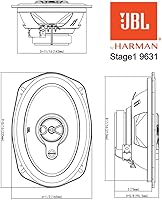
  • Speaker Size: Each speaker measures 6×9 inches (165×230 mm), a standard size that fits a wide range of factory speaker cutouts.
  • Peak Power: The set is rated at 300 watts peak power across the pair, intended for use with typical factory or aftermarket head units.
  • Impedance: Both speakers carry a 4-ohm impedance rating, making them directly compatible with most stock car head units without additional equipment.
  • Speaker Type: These are 3-way coaxial speakers, combining a woofer, midrange driver, and tweeter into a single integrated unit.
  • Woofer Diameter: The primary woofer cone measures 165 mm in diameter and is constructed from UV-resistant polypropylene.
  • Tweeter Size: The integrated tweeter has a 1-inch diameter and is tuned for smooth, controlled high-frequency reproduction.
  • Cone Material: The bass membrane is made from UV-resistant polypropylene, engineered to withstand prolonged heat and humidity exposure inside vehicles.
  • Mounting Type: Both speakers use a flush-mount installation format with multiple screw-hole configurations to accommodate different vehicle mounting points.
  • Output Mode: The set operates in 2.0 stereo configuration, with one speaker designated for each channel.
  • Connectivity: Connection is via standard wired coaxial terminals, compatible with conventional car audio wiring harnesses.
  • Water Resistance: These speakers carry no water resistance or IP rating and are not suitable for exposed or high-moisture installation environments.
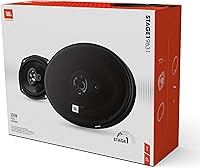
  • Included Items: The package contains 2 speakers, 2 grille covers, mounting screws, and speed clips — everything required for a standard installation.
  • Weight: The total package weighs approximately 1.7 kg (3.74 lbs), reflecting a solid but manageable build for a pair of 6×9 coaxials.
  • Product Dimensions: Each speaker unit measures approximately 6.5″ deep by 9.25″ wide by 3.58″ high in its installed orientation.
  • Manufacturer: These speakers are manufactured by Harman International and marketed under the JBL brand name.
  • Driver Type: Both speakers use a dynamic driver architecture, the standard and reliable technology for coaxial car audio applications.
  • Compatible Locations: Designed for installation in car door panels or rear parcel shelves, depending on the vehicle's speaker layout.
  • Model Number: The official model designation is Stage1 9631, part of JBL's entry-level Stage1 car audio product line.

Related Reviews
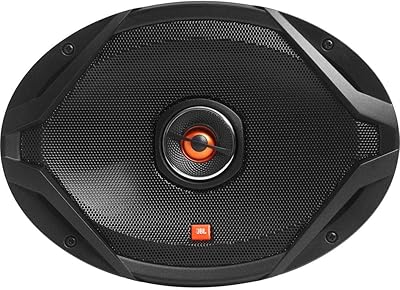
JBL GX9628 6x9 Coaxial Car Speakers
79%
83%
Sound Quality
88%
Power Handling
61%
Impedance Compatibility
91%
Ease of Installation
79%
Build Quality
More
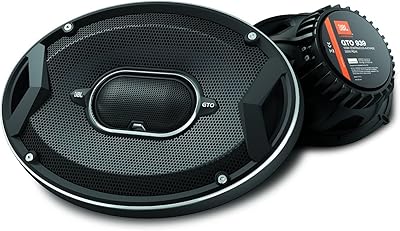
JBL GTO939 GTO Series 6x9″ 300W 3-Way Car Audio Speakers
85%
89%
Sound Clarity
91%
Bass Response
85%
Installation Ease
88%
Power Handling
87%
Build Quality
More
CT Sounds BIO-6X9-COX 6×9 Coaxial Car Speakers
76%
88%
Value for Money
83%
Sound Clarity
54%
Bass Response
91%
Ease of Installation
79%
Tweeter Performance
More
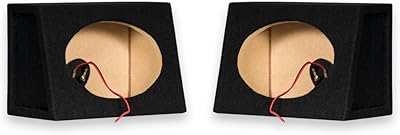
OnlyFactoryDirect TR69 Sealed Car Bass Box Speaker Enclosure Cabinets for 6X9 Speakers
85%
88%
Sound Quality
91%
Bass Response
94%
Ease of Installation
87%
Build Quality
75%
Size Compatibility
More
NVX VSP69KIT2F 6x9 2-Way Component Speakers
74%
88%
Sound Clarity
84%
Stereo Imaging
81%
Power Handling
58%
Bass Response
83%
High-Frequency Quality
More
H YANKA ES-69 6x9 Car Speakers
86%
88%
Sound Quality
92%
Installation Ease
83%
Bass Performance
90%
Clarity at High Volumes
85%
Build Quality
More
STINGER HC-69 6x9 Coaxial Car Speakers
83%
89%
Sound Clarity
87%
Bass Performance
91%
Installation Ease
92%
Overall Value
84%
Build Quality
More
JBL GX402 4″ Coaxial Car Audio Speakers
88%
88%
Sound Quality
84%
Bass Performance
91%
High Frequency Clarity
92%
Installation Ease
87%
Build Quality
More
JBL Club 6420 4x6″ Coaxial Car Speakers
81%
89%
Sound Quality
92%
Value for Money
87%
Ease of Installation
85%
Bass Performance
83%
Midrange Clarity
More
JBL CLUB6520 6.5″ Coaxial Car Speakers
77%
84%
Sound Clarity
61%
Bass Response
88%
Sensitivity & Volume Output
86%
Installation Ease
79%
Build Quality
More

FAQ

No, you do not. The 4-ohm impedance means these JBL Stage1 coaxials are designed to work directly with a factory head unit. Most stock car stereos can drive them without any additional hardware.

In many cases, yes. The multiple screw-hole configurations are specifically designed to match common factory cutout patterns. That said, fitment varies by vehicle, so it is worth checking a speaker compatibility tool with your car make, model, and year before buying.

For most people coming from stock OEM audio, the difference is genuinely noticeable — clearer vocals, better mid-range definition, and a fuller low end at normal listening volumes. If your factory speakers are blown or thin-sounding, the improvement will be obvious almost immediately.

They are very DIY-friendly. The box includes grille covers, screws, and speed clips, so you have everything you need. If you are comfortable removing a door panel and connecting a basic wiring harness, this is a manageable weekend job.

It is a peak rating, which is standard marketing language across the car audio industry. The real-world sustained power handling is considerably lower, but that is fine — most factory and entry-level aftermarket head units will not push anywhere near those peak figures anyway.

They produce a decent low-end foundation for casual listening, but they are not a subwoofer replacement. If you enjoy bass-heavy music and want real impact, you will still want a dedicated subwoofer in the system. These are best described as well-rounded rather than bass-forward.

No, they carry no water resistance rating at all. They are fine for standard interior car installations, but do not use them in a convertible with a leaky top, a truck bed, or any location exposed to rain or standing water.

They work with aftermarket head units too. As long as your receiver outputs at 4 ohms or is compatible with 4-ohm loads — which virtually all of them are — you will have no issues running these speakers.

The tweeter is voiced on the smoother side, which is actually a deliberate design choice. Some buyers prefer a more aggressive top end, but for everyday listening and long commutes, the softer tuning is easy to live with and avoids listener fatigue.

Early feedback from buyers has been mostly positive on durability, and the UV-resistant cone material is a practical feature given how hot car interiors get. The full long-term picture is still developing since this model has not been on the market for many years, but there are no widespread reports of premature failure.

Where to Buy