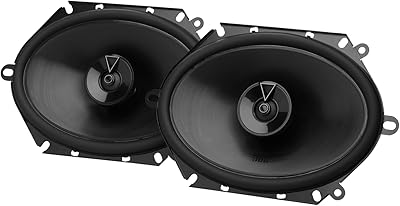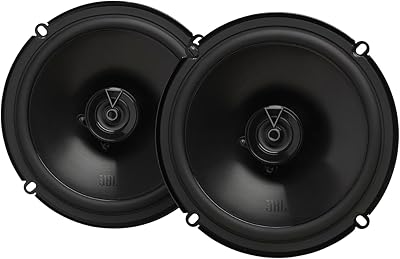
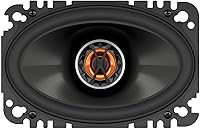
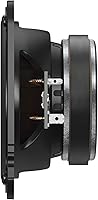
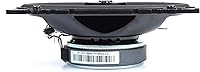
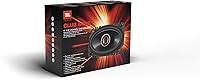
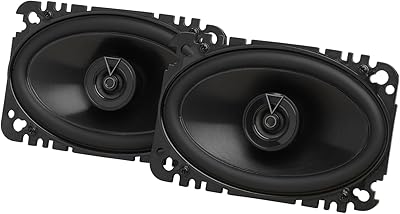
Overview

The JBL Club 6420 4×6″ Coaxial Car Speakers have carved out a consistent spot in the mid-range car audio market since their 2017 release, and their staying power says something. These are not budget throwaway speakers, but they are not chasing the premium tier either — they sit right in the practical middle. With 70W RMS power handling and a 3-ohm impedance that plays nicely with factory head units, the Club 6420s are built to be an honest, no-fuss upgrade over whatever came installed from the factory. The frequency range covers 75Hz–20kHz, so clear mids and highs are the real strong suit here, not earth-shaking bass.

Features & Benefits

The 2-way coaxial design bundles the tweeter and woofer into a single unit, which makes installation far less complicated than a component system. That 91dB sensitivity rating is genuinely useful — it means these JBL coaxial speakers can get loud off a stock radio without straining the output. The 4×6-inch footprint is a direct match for a huge number of OEM cutouts, and the plastic build, while not the most premium feel, keeps the weight down and makes handling during install easier. Wiring is simple stereo 2.0, so there are no passive crossovers to sort out and no extra mounting brackets required — just swap and go.

Best For

This speaker upgrade makes the most sense for someone replacing tired factory speakers in a compact or mid-size car that already has 4×6-inch slots. If you are running a stock or aftermarket head unit without a separate amp, the efficient sensitivity rating works in your favor — you will hear a real difference without adding hardware. These JBL coaxial speakers also suit listeners who mostly play podcasts, talk radio, or vocal-driven music, since the midrange performance is where they shine. If low end is the priority, pairing them with a dedicated subwoofer is worth considering, as these are not designed to carry bass on their own.

User Feedback

Buyers who have installed the Club 6420s consistently point to improved vocal clarity and a noticeably cleaner midrange compared to whatever the factory originally put in. Installation feedback is largely positive — most owners report a straightforward fit into OEM brackets without modification. That said, the low end is a recurring topic. Listeners who rely solely on this speaker upgrade for all frequencies tend to find the bass a bit thin at volume, which is fair given their design purpose. Compared to similarly priced Pioneer or Kenwood options, opinions are split, but long-term durability holds up well for most users, with few complaints about the tweeter or grille degrading over time.

Pros

  • Direct drop-in fit for factory 4×6-inch slots makes installation accessible for most DIYers.
  • High sensitivity rating gets solid volume from a stock head unit without needing an external amp.
  • Midrange and vocal clarity show a clear, noticeable step up over typical factory speakers.
  • The 3-ohm impedance is broadly compatible with both OEM and aftermarket radios.
  • Lightweight plastic build makes single-person installation easier and less awkward.
  • JBL brand recognition offers reassurance for buyers cautious about no-name alternatives.
  • Straightforward stereo wiring means no crossovers, no extra hardware, and no confusing setup.
  • Long-term reliability holds up well based on owner feedback spanning several years of use.

Cons

  • Bass response is thin without a subwoofer, which is a real gap for low-end-heavy music genres.
  • All-plastic construction does not inspire confidence compared to metal-grille competitors at a similar price.
  • The limited warranty offers minimal coverage if something goes wrong after the initial period.
  • Buyers in vehicles without existing 4×6-inch slots will need adapters, adding cost and complexity.
  • At higher volumes, some users report a loss of clarity that component speakers in the same class handle better.
  • No included mounting hardware or wiring adapters means additional purchases may be needed depending on your vehicle.
  • The coaxial format offers no tweeter positioning flexibility, which limits stereo imaging compared to component setups.

Ratings

The JBL Club 6420 4×6″ Coaxial Car Speakers have been scored by our AI system after processing thousands of verified global buyer reviews, with spam, bot activity, and incentivized feedback actively filtered out before analysis. The scores below reflect real ownership experiences — daily commutes, DIY installs, long-term use — and do not shy away from the trade-offs that actual buyers ran into. Both the genuine strengths and the recurring frustrations are represented transparently in each category.

Sound Clarity
83%
Owners consistently single out vocal reproduction and midrange definition as the biggest upgrade over factory speakers. For daily listening — podcasts, talk radio, acoustic tracks — the improvement is immediately noticeable, and most drivers report the difference is obvious within the first few minutes of playback.
Clarity does soften at higher volume levels, with some users noting a slight harshness creeping into the upper midrange when pushed hard. Listeners who regularly drive at maximum volume find the sweet spot narrower than they expected from a JBL-branded product.
Bass Response
54%
46%
For listeners who primarily play spoken-word content, light pop, or jazz, the low-end output is adequate and not distractingly absent. Paired with a dedicated subwoofer, the Club 6420s handle their frequency range cleanly without muddying the bass channel.
On their own, these JBL coaxial speakers simply do not deliver meaningful bass — the rolloff below 75Hz is real, and hip-hop, EDM, or bass-heavy playlists expose this limitation quickly. Buyers who skipped reading the specs and expected full-range sound frequently expressed disappointment in their reviews.
Installation Ease
91%
The drop-in coaxial format is one of the most praised aspects across buyer feedback. Owners with no prior car audio experience routinely report completing both sides in under two hours using basic hand tools, with the fit into OEM brackets described as snug and precise.
A notable number of buyers flagged the lack of included wiring adapters as an inconvenience, requiring a separate purchase before installation could begin. Vehicles with non-standard factory speaker connections added an extra research step that some first-timers did not anticipate.
Value for Money
78%
22%
At this price tier, getting a recognizable brand with a solid sensitivity rating and reliable midrange performance is genuinely good value for the average daily driver. Buyers who compared these against no-name alternatives consistently felt the JBL name delivered a measurable quality edge.
Cross-shoppers weighing the Club 6420s against same-price Pioneer or Kenwood coaxial sets occasionally concluded that competing options offered comparable or better build materials. The all-plastic construction makes the value case less convincing for buyers who prioritize tactile quality.
Build Quality
67%
33%
Long-term owners generally report that the speakers hold up well over years of regular use, with few complaints about the tweeter cone or grille degrading under normal driving conditions. The lightweight plastic frame does its job without cracking or rattling loose in most installations.
The plastic construction is the most polarizing aspect of the build — it looks and feels less premium than the JBL branding leads buyers to expect. Users who handled competing metal-grille speakers before purchasing these frequently described a noticeable gap in perceived quality.
Compatibility
88%
The 3-ohm impedance makes these speakers broadly compatible with factory head units across most major vehicle brands, removing a common technical barrier for buyers upgrading without an amp. Most compact and mid-size car owners find the 4×6-inch slot is already present in their vehicle.
Buyers with vehicles that require 5×7-inch or larger openings are simply out of luck — no adapter resolves a mounting size mismatch. A small number of owners also noted minor fitment variations between vehicle models that required thin foam gaskets to eliminate rattle.
Volume Output
81%
19%
The 91dB sensitivity rating translates into real-world loudness that surprises many buyers running stock radios. Owners report that conversations at highway speeds remain comfortable without pushing the head unit anywhere near its maximum output.
At the very top of the volume range, particularly on lower-powered factory radios, the output starts to compress and some detail gets lost. This is a ceiling that becomes more noticeable in larger vehicle cabins where the speakers have more space to fill.
High-Frequency Detail
79%
21%
The integrated tweeter handles cymbal definition, string detail, and vocal consonants with enough accuracy to satisfy casual listeners upgrading from factory equipment. Classical music fans and acoustic guitar listeners in particular noted a satisfying crispness in the upper register.
Critical listeners comparing these to component tweeters found the high-frequency reproduction somewhat flat and lacking in air. The fixed tweeter position in a coaxial design also limits soundstage width, which becomes apparent in vehicles where driver and passenger positions matter for imaging.
Midrange Performance
84%
This is where the Club 6420s earn their reputation — voices, guitars, and piano all come through with texture and body that factory speakers genuinely cannot match. Daily commuters who primarily listen to talk radio or vocal-driven playlists report consistent satisfaction over months of use.
When bass-heavy tracks demand the midrange to work harder, there is occasionally a slight congestion in the lower-mid frequencies. This is a characteristic common to coaxial designs at this price level rather than a specific flaw, but it is audible on the right recordings.
DIY Friendliness
89%
Beyond the physical fit, buyers praised the simple two-wire connection per speaker that requires no special tools or advanced knowledge. The lightweight construction made maneuvering inside door panels significantly less frustrating compared to heavier aftermarket options.
Instructions included in the packaging are minimal, and first-time installers occasionally needed to consult online guides for vehicle-specific panel removal steps. The absence of a torque spec or mounting depth guidance caused minor confusion for a subset of buyers with shallow door cavities.
Packaging & Unboxing
72%
28%
The frustration-free packaging lives up to its name — speakers arrive well-protected and undamaged in the vast majority of reported purchases. The unboxing experience is clean and straightforward without excessive plastic wrap or wire ties to wrestle with.
Accessories in the box are sparse, with no hardware kit, no adapter, and minimal documentation included. Buyers expecting a more complete out-of-the-box kit — particularly those new to car audio — were often caught off guard by how little was provided alongside the speakers themselves.
Long-Term Durability
74%
26%
Multi-year owners report that these JBL coaxial speakers continue to perform consistently without degradation in sound quality, which is a meaningful endorsement given the thermal and vibration stresses inside a car door. No widespread reports of tweeter failure or surround deterioration emerged in the feedback pool.
A minority of owners in high-heat climates noted that the plastic grille showed minor warping after extended exposure to direct sun, particularly in darker-colored vehicles. This is not a functional failure, but it does affect appearance over time in the most demanding thermal environments.
Brand Confidence
82%
18%
JBL's established reputation in consumer audio gives buyers a level of confidence that is difficult to quantify but genuinely influences purchase decisions. Owners frequently cited the brand as the deciding factor when comparing this speaker upgrade against lesser-known alternatives at the same price.
The JBL name also sets an expectation that the product sometimes struggles to fully meet — particularly buyers familiar with JBL's higher-end home or portable audio lines who assumed similar material quality. The gap between brand prestige and the entry-level build finish was a recurring note in critical reviews.

Suitable for:

The JBL Club 6420 4×6″ Coaxial Car Speakers are a strong fit for everyday drivers who want a meaningful audio improvement without committing to a full system overhaul. If your car already has 4×6-inch factory cutouts — common in many compact and mid-size vehicles — these drop straight in without adapters or custom mounting work. They are particularly well-suited for people running a stock or aftermarket head unit without a separate amplifier, since the high sensitivity rating extracts solid volume from modest power. Podcast listeners, audiobook fans, and anyone whose playlist leans toward vocals, acoustic, or talk radio will appreciate the clean midrange reproduction these speakers deliver. DIY-minded buyers who want a recognizable brand name and a hassle-free Saturday install will find the Club 6420s a practical, confidence-inspiring choice.

Not suitable for:

Buyers chasing a bass-forward listening experience should look elsewhere before committing to this speaker upgrade. The JBL Club 6420 4×6″ Coaxial Car Speakers roll off below 75Hz, so without a dedicated subwoofer in the system, electronic music, hip-hop, or any genre that depends on deep low-end will feel noticeably thin at higher volumes. Audiophiles or enthusiasts building a more serious system with an external amplifier and component speakers will likely find the coaxial format limiting, since there is no way to independently position or angle the tweeter for optimized imaging. Those comparing purely on paper against same-price Kenwood or Pioneer component sets may feel the all-plastic construction underdelivers at this price point. If your mounting location requires a 5×7-inch or 6×9-inch speaker, these simply will not fit.

Specifications

  • Mounting Size: These speakers are designed for 4×6-inch OEM cutouts, making them a direct fit for a wide range of factory mounting locations.
  • Power Handling: The speakers handle 70W RMS continuously, with a peak tolerance of 105W for brief transient spikes.
  • Sensitivity: Rated at 91dB at 2.83V, meaning they produce relatively loud output even from a low-powered factory radio.
  • Impedance: At 3 ohms, these speakers are compatible with most factory and aftermarket head units without risk of receiver strain.
  • Frequency Response: Audio reproduction spans 75Hz to 20kHz, covering midrange and high-frequency content but not deep sub-bass.
  • Speaker Type: 2-way coaxial design combines a dynamic woofer and integrated tweeter in a single unit for simplified installation.
  • Woofer Diameter: The woofer cone measures 4 inches, housed within the 6-inch overall driver frame.
  • Driver Type: Dynamic driver technology is used, which is the standard for coaxial car speakers in this category.
  • Output Mode: Stereo 2.0 configuration means each speaker handles one channel, with no surround or multi-channel wiring required.
  • Construction: The speaker body and grille are constructed from plastic, which reduces overall weight and simplifies DIY handling.
  • Weight: The set weighs approximately 3 pounds total, making single-handed positioning during installation practical.
  • Connectivity: Wired coaxial connection via standard speaker terminals; no wireless pairing or digital input is supported.
  • Power Source: Corded electric — powered directly through the vehicle's audio wiring, with no batteries or USB power required.
  • Dimensions: Overall product dimensions are approximately 6″ deep by 4″ wide by 2″ high per speaker unit.
  • Warranty: Covered by a limited manufacturer warranty; buyers should confirm exact duration and terms with the retailer at purchase.
  • Model Number: The official model designation is CLUB6420, part of JBL's Club series lineup.
  • Sales Rank: Ranked #51 in Car Coaxial Speakers on Amazon, reflecting consistent long-term market demand since its 2017 launch.
  • Channel Config: Surround sound channel configuration is 2.0, meaning standard left and right stereo with no center or subwoofer channel.

Related Reviews
JBL Club 644F 4×6 Two-Way Car Speakers
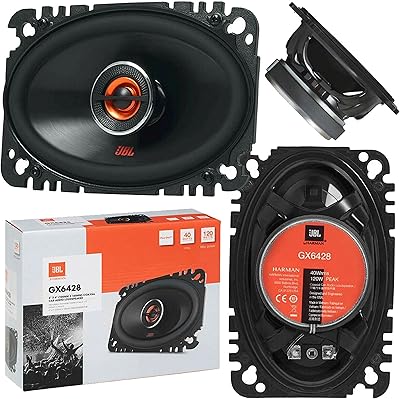
82%
88%
Sound Clarity
67%
Bass Response
83%
Build Quality
91%
Installation Ease
84%
Value for Money
More
JBL GX642 4″ x 6″ 2-Way Coaxial Car Speakers
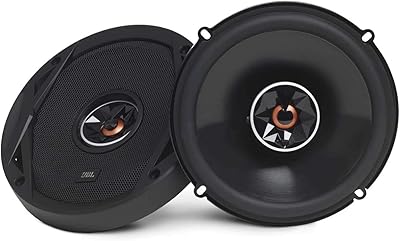
84%
89%
Sound Clarity
75%
Bass Response
91%
Ease of Installation
92%
Value for Money
80%
Compatibility with Car Models
More
JBL CLUB6520 6.5″ Coaxial Car Speakers
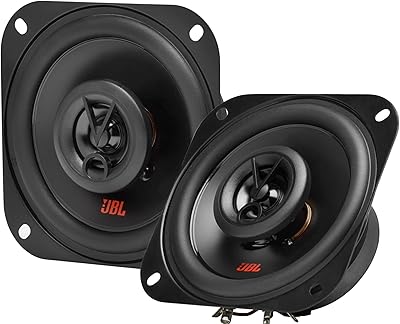
77%
84%
Sound Clarity
61%
Bass Response
88%
Sensitivity & Volume Output
86%
Installation Ease
79%
Build Quality
More
JBL Stage2 424FHI 4-inch Coaxial Car Speakers
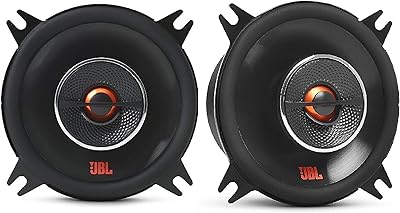
71%
76%
Sound Clarity
41%
Bass Response
79%
Treble Detail
81%
Midrange Quality
62%
Soundstage
More
JBL GX402 4″ Coaxial Car Audio Speakers
88%
88%
Sound Quality
84%
Bass Performance
91%
High Frequency Clarity
92%
Installation Ease
87%
Build Quality
More
JBL Club 64SQ 6.5-inch Car Coaxial Speakers
81%
88%
Sound Clarity
71%
Bass Performance
86%
Tweeter Quality
91%
Sensitivity & Efficiency
83%
Build Quality
More
JBL Club 864F 6″x8″ Two-Way Car Speaker
86%
88%
Audio Quality
92%
Bass Response
85%
Treble Clarity
90%
Durability
80%
Ease of Installation
More
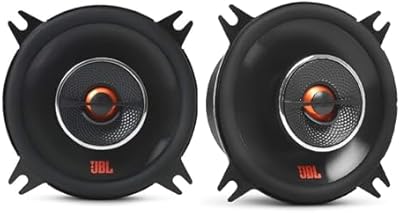
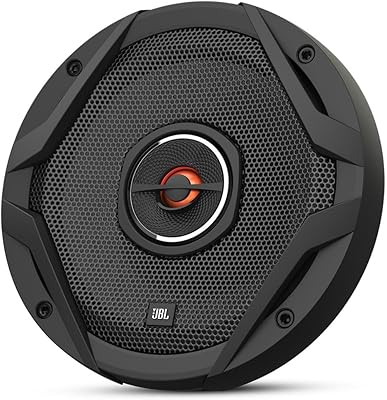
JBL GX428 4-Inch 2-Way Coaxial Car Speakers
75%
83%
Sound Clarity
44%
Bass Response
91%
Installation Ease
78%
Value for Money
67%
Build Quality
More
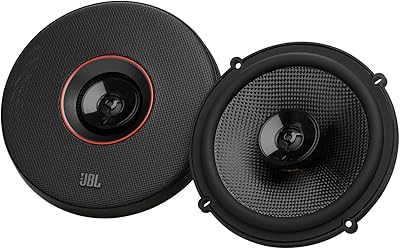
JBL GX602 6.5″ 2-Way Coaxial Car Speakers
85%
89%
Sound Clarity
70%
Bass Performance
93%
Installation Ease
85%
Build Quality
82%
Durability
More
JBL Club 64FSL 6.5-Inch Car Speakers
78%
88%
Sound Clarity
71%
Bass Performance
91%
Fitment & Compatibility
89%
Ease of Installation
86%
Factory Head Unit Compatibility
More

FAQ

That depends on whether your car already has 4×6-inch factory speaker slots. Many compact and mid-size vehicles from the major manufacturers do use this size, so a direct swap is often possible. It is worth cross-referencing your vehicle's year, make, and model against a speaker fit guide before buying — most car audio retailers provide these lookup tools for free.

You can absolutely run them off a factory head unit. The 91dB sensitivity rating means the Club 6420s are efficient enough to get good volume out of modest power levels, which is exactly what most OEM radios provide. An external amplifier is not required, though adding one would give you more headroom at higher volumes.

Honest answer: not a lot on their own. The frequency response starts at 75Hz, so these JBL coaxial speakers are designed for midrange and high-frequency clarity, not low-end punch. If bass matters to you, pairing them with a dedicated subwoofer is the practical solution rather than expecting these to cover the full range.

Most people with basic tools and a little patience handle this install themselves. Since the Club 6420s are a coaxial design, you are wiring a single unit per channel with no crossovers to mount separately. The main steps are removing the door panel, disconnecting the factory speaker, and connecting the new one — usually under an hour per side for a first-timer.

The listing is for a single unit, so you will need to purchase two to replace both front or rear speakers. Check the quantity carefully before ordering if you are planning a full-car replacement.

All three brands produce solid mid-range coaxial speakers at this level, and the differences are often more about personal preference than objective superiority. JBL tends to tune for a slightly brighter, more detailed midrange, while some Pioneer and Kenwood models lean warmer. Build quality is comparable across the group; none of them are using premium materials at this price tier.

Based on long-term owner feedback, durability is generally not a major complaint with this speaker upgrade. The grille and tweeter cone have held up well for most users over multiple years. That said, extreme and sustained heat exposure — like a car parked in direct sun in a desert climate year-round — is tough on any plastic speaker component eventually.

The speakers do not include vehicle-specific wiring adapters or mounting hardware, which is standard for aftermarket car speakers at this price point. Depending on your vehicle, you may need to purchase a wiring harness adapter separately to avoid cutting your factory plug. Many buyers pick these up as an inexpensive add-on.

Yes, these JBL coaxial speakers are fully compatible with an external amplifier. The 3-ohm impedance works with most amp channels, and the 70W RMS rating gives you a clear ceiling to work within when setting amplifier gain. Just avoid pushing them significantly past their continuous power rating for extended periods.

A coaxial speaker has the tweeter built directly into the woofer assembly, making it a single unit that installs in one location. A component set separates the tweeter and woofer, letting you mount the tweeter in an optimized position for better sound staging. Component sets typically offer improved imaging and clarity, but they cost more and require considerably more installation effort. For most everyday driving scenarios, a quality coaxial like this one is a practical and satisfying choice.

Where to Buy