Overview

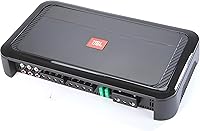
The JBL CLUB-704 4-Channel Car Amplifier sits comfortably in the mid-range car audio space — capable enough to satisfy enthusiasts, approachable enough for first-time upgraders. A 4-channel amp like this one powers each of your four main speakers independently, giving you far more headroom and clarity than a head unit alone can deliver. What makes the Club-704 stand out practically is its slim low-profile chassis, which opens up mounting options that chunkier amps simply cannot match. Having launched in 2016, it carries nearly a decade of real-world user data behind it. This is not a boutique audiophile piece — it is a reliable workhorse built for real cars and real listeners.

Features & Benefits

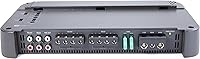
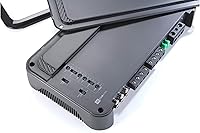
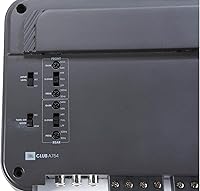
The numbers that actually matter here are the RMS power ratings: 70 watts per channel into 4 ohms, climbing to 100 watts per channel at 2 ohms. That is real, sustained output — not the splashy 1,000-watt peak figure that marketers lead with. Peak power reflects a momentary ceiling under ideal lab conditions; what you hear day-to-day is the RMS number. The Club-704 also bridges down to two channels, delivering 200 watts RMS each — useful if you want to run a compact subwoofer alongside your full-range speakers. At 12.01 x 9.02 x 4.02 inches, the footprint is manageable, and the slim build means under-seat mounting is a genuine, not just theoretical, option.

Best For

This JBL 4-channel amp makes most sense for someone stepping up from factory audio for the first time, or for a DIY builder who wants a proven brand without venturing into specialty territory. If you are running four full-range speakers and want clean, balanced power from a single unit, it is a natural fit. The slim chassis is a real advantage for anyone mounting under a front or rear seat — no custom brackets or extra fabrication needed. It also handles a two-speaker-plus-sub setup cleanly when bridged. If you are chasing extreme output or building a competition system, you will need more amp. But for a practical daily build, it covers the bases well.

User Feedback

With a 4.3-star average across 275 ratings and a product history stretching back to 2016, this Club Series amplifier has enough real-world feedback to form a reliable picture. Buyers consistently mention clean sound quality at normal listening levels and straightforward wiring — two things that matter during a first install. Where opinions diverge is around heat management at sustained high volumes, and some users find gain calibration a bit fiddly without a multimeter or tone generator handy. A handful of comparisons to rivals like Rockford Fosgate and Alpine surface, usually noting that JBL brand reliability tips the decision. Not a perfect amp, but a consistently dependable one.

Pros

  • Genuine RMS ratings give you honest, usable power that matches real-world listening conditions.
  • The slim chassis fits under seats cleanly, making installs far less complicated for DIYers.
  • Bridgeable to two channels, so adding a subwoofer to your setup is a straightforward option.
  • JBL brand reliability gives buyers confidence that this is not a fly-by-night product.
  • Nearly a decade on the market means real long-term ownership feedback exists, not just launch reviews.
  • A 4.3-star average across hundreds of ratings reflects consistently positive real-world performance.
  • Single-unit solution for four speakers keeps wiring and install complexity manageable.
  • Clean sound quality at moderate to high volumes is a recurring theme in owner feedback.
  • Compact footprint of 12.01 x 9.02 x 4.02 inches suits a wide range of mounting locations.
  • Supports both 4-ohm and 2-ohm speaker loads, giving you flexibility when pairing with aftermarket speakers.

Cons

  • Gain calibration can be frustrating without a multimeter or tone generator on hand.
  • Heat buildup at sustained high volumes has been flagged by some owners as a concern.
  • The 70W RMS per channel ceiling will disappoint anyone expecting serious high-output performance.
  • No accessories or wiring kit included — budget separately for install hardware.
  • Peak power marketing figures can mislead buyers who do not know to focus on RMS specs instead.
  • Not well suited to larger vehicles where you need substantially more headroom per channel.
  • Buyers comparing it to similarly priced Rockford Fosgate or Alpine options may find the decision close.
  • Limited to four channels, so complex multi-zone or 5-plus-channel builds will require additional hardware.
  • No onboard digital signal processing means you will need an external DSP for fine-tuned tuning.
  • Longevity data exists but the design has not been refreshed since 2016, so it lacks newer amp features.

Ratings

The JBL CLUB-704 4-Channel Car Amplifier has been scored by our AI system after analyzing verified owner feedback from buyers worldwide, with spam, bot-generated, and incentivized reviews actively filtered out before scoring. The ratings below reflect a honest composite of real installation experiences, daily listening sessions, and long-term ownership reports — strengths and frustrations alike are represented transparently. Where the Club-704 earns strong marks, it genuinely earns them; where scores dip, real buyer pain points are the reason.

Sound Quality
83%
At moderate to high listening volumes, owners consistently describe the output as clean and well-controlled, with no obvious harshness or distortion creeping in during everyday commutes or highway drives. The amp stays composed across a range of music genres, which matters when you are powering four speakers from a single unit.
Buyers with more critical listening habits note that the Club-704 does not quite match the transparency of pricier audiophile-grade amplifiers. At the top end of its output range, some listeners detect a slight compression in dynamics that more demanding ears will notice.
Power Output
77%
23%
The 70 watts RMS per channel at 4 ohms is honest and usable power for a four-speaker daily setup, and the ability to push 100 watts per channel into 2-ohm loads gives it useful flexibility when pairing with a wider range of aftermarket speakers.
Buyers expecting transformative volume levels from the 1,000-watt peak figure are often disappointed once they understand that RMS — not peak — is what you hear. Those running power-hungry speakers in larger cabins may find the per-channel ceiling limiting for their needs.
Installation Ease
81%
19%
The slim profile is a genuine advantage during install — most owners report it drops under a front seat without requiring custom brackets or major interior disassembly. Wiring connections are logically laid out, and the overall process is described as manageable even for first-time DIY installers.
Gain calibration is a recurring friction point, particularly for buyers doing their first amplifier install without a multimeter or tone generator. Without proper tools, setting gain by ear leads to distortion that gets blamed on the amp rather than the setup process.
Build Quality
79%
21%
The chassis feels solid and consistent with JBL's mid-range build standards — there is nothing flimsy about the casing or terminal connections. Owners who have run this amp for several years report it holding together without corrosion or connector degradation in typical under-seat environments.
It is not a premium build by any objective measure — the finish and component feel are functional rather than impressive. Buyers stepping up from entry-level amplifiers will notice the quality bump, but those coming down from flagship units will spot the compromises.
Heat Management
61%
39%
During normal daily listening at moderate volumes, the amp runs at an acceptable temperature and thermal shutdown is not a common complaint among typical users. The slim form factor allows at least some passive airflow when mounted under a seat with reasonable clearance.
Extended high-volume listening sessions push the thermals noticeably, and a subset of owners report the unit running uncomfortably warm in enclosed mounting positions. Buyers who regularly listen at maximum output in warm climates should plan their mounting location with ventilation in mind.
Value for Money
84%
Given the JBL brand behind it and the feature set on offer — four channels, bridging capability, and a slim form factor — the Club-704 lands at a price point that is difficult to argue with for a mid-budget build. Buyers consistently note they got more amp than they expected for the investment.
A handful of competing brands offer comparable or slightly higher RMS figures at similar prices, so the value case relies somewhat on brand trust rather than outright spec dominance. For purely spec-focused buyers, the numbers alone do not tell the whole story in JBL's favor.
Compatibility
86%
Support for both 4-ohm and 2-ohm loads covers the vast majority of aftermarket speakers on the market, and the bridging configuration works well for buyers who want to add a modestly sized subwoofer without buying a dedicated mono amp. Factory head unit compatibility, via a line output converter, is also well-documented by the owner community.
Buyers with high-impedance or unusual speaker configurations may find the supported load range limiting. There is also no onboard digital signal processing, which means owners who want precise crossover control will need to budget for an external DSP unit.
Longevity & Reliability
88%
A product launched in 2016 that still earns a 4.3-star average in 2024 is doing something right — the Club-704 has a longer verified ownership track record than most competitors in its class. Multiple owners report years of trouble-free daily use, which is the most meaningful reliability data point available.
A small number of long-term owners report unit failures after several years, particularly in vehicles driven in high-heat environments. As with most electronics, longevity is closely tied to how well the install location manages thermal stress.
Channel Flexibility
82%
18%
The ability to bridge channels 1 and 2 separately from channels 3 and 4 gives installers meaningful flexibility — you can run two full-range channels plus a bridged subwoofer channel without losing speaker coverage elsewhere. This makes it a versatile single-amp solution for a wide range of system configurations.
Four channels is the ceiling, and buyers with more complex builds — like those wanting separate amplification for front stage, rear fill, and a subwoofer — will find the channel count limiting. Expanding beyond this amp means adding a second unit and additional wiring complexity.
Gain Controls
63%
37%
The gain adjustment range is adequate for matching a variety of head unit output levels, and experienced installers will dial it in without issue using standard calibration tools. Once properly set, the amp holds its calibration reliably over time.
For less experienced buyers, the gain controls are a known frustration point. Without clear guidance in the documentation, it is easy to set gain too high, which leads to distortion that is easily mistaken for a faulty unit — a recurring theme in negative reviews.
Form Factor
91%
At 12.01 x 9.02 x 4.02 inches, this is one of the more genuinely compact four-channel amplifiers in its power class. The low-profile height is the critical dimension for under-seat mounting, and it clears the gap in most passenger vehicles without issue.
While slim for its category, it is still a substantial footprint for very compact cars or vehicles where under-seat space is particularly tight. Buyers with small hatchbacks or sports cars should measure carefully before assuming it will fit without any modification.
Documentation & Support
67%
33%
JBL provides a functional setup manual, and the amp's long market presence means there is a reasonable amount of third-party installation guidance, forum discussions, and YouTube walkthroughs available online to supplement the official documentation.
The included documentation is considered basic by most technically inclined owners, and gain calibration instructions in particular are thin. Buyers new to car audio amplifiers often need to turn to online communities for guidance that should reasonably be included in the box.
Brand Trust
89%
JBL carries genuine credibility in the audio market, and that brand recognition translates to real buyer confidence at the point of purchase. Owners frequently cite the JBL name as a deciding factor over lesser-known competitors at similar price points.
Brand reputation does create expectations that the product does not always fully meet at this mid-range price tier. Buyers who associate JBL with their higher-end consumer products may find the Club Series build and feature set a step below what the name implies.

Suitable for:

The JBL CLUB-704 4-Channel Car Amplifier is a strong fit for anyone making their first serious upgrade from a factory head unit to a dedicated amplifier setup. If you are running four full-range speakers and want clean, consistent power from a single compact unit, this amp handles that job without overcomplicating the install. DIY enthusiasts will especially appreciate the slim chassis, which fits neatly under a front or rear seat without requiring custom brackets or major interior work. It also appeals to builders who want to run a modest subwoofer alongside their main speakers, since bridging two channels frees up dedicated power for a sub. The Club Series name carries real credibility built over years in the car audio market, which matters when you want reliability without paying boutique prices. Having been available since 2016, it has a long enough track record that you are not taking a chance on an unproven design.

Not suitable for:

The JBL CLUB-704 4-Channel Car Amplifier is not the right choice for builders chasing serious output levels or planning a competition-grade system. At 70 watts RMS per channel into 4 ohms, the sustained power is honest and usable, but it will not satisfy anyone who needs to push high-sensitivity speakers in a large vehicle or wants to run multiple subwoofers with authority. Buyers who crank their system for extended periods at high volumes may also find heat management becomes a concern, and gain calibration can be tricky without the right tools. Audiophiles who prioritize signal purity above all else and are willing to spend significantly more for a dedicated high-end amplifier will likely find this Club Series unit underwhelming by comparison. If your build calls for more than four amplified channels or very high per-channel wattage, you will need to look at more specialized or higher-tier hardware.

Specifications

  • Brand: Manufactured by JBL, a well-established name in both consumer and car audio equipment.
  • Series: Part of the JBL Club Series, positioned as a mid-range line balancing performance and everyday reliability.
  • Model Number: The official model designation is CLUB704, also referenced as CLUB-704 in retail listings.
  • Channels: Four-channel amplifier that can be bridged down to two channels for subwoofer or dedicated speaker use.
  • RMS Power (4Ω): Delivers 70 watts RMS per channel when driving 4-ohm speaker loads across all four channels simultaneously.
  • RMS Power (2Ω): Output increases to 100 watts RMS per channel when paired with 2-ohm speaker loads.
  • Bridged Power: In bridged mode, the amp produces 200 watts RMS per channel into a 4-ohm load across two channels.
  • Peak Power: Total peak power is rated at 1,000 watts, a figure representing momentary ceiling output under controlled conditions.
  • Dimensions: The unit measures 12.01 x 9.02 x 4.02 inches (length x width x height), giving installers a clear footprint to plan around.
  • Chassis Profile: Slim, low-profile chassis design allows for more flexible mounting options including under-seat installations.
  • In Box: Package includes the amplifier unit only; wiring kits, RCA cables, and mounting hardware are not included.
  • Availability: Actively manufactured and sold as of the latest available data; not discontinued by JBL.
  • First Released: The CLUB704 was first made available to buyers in July 2016, giving it a substantial real-world track record.
  • ASIN: Amazon Standard Identification Number for this unit is B01IXZH1PU.
  • User Rating: Holds a 4.3 out of 5 star average rating based on 275 customer reviews on Amazon.
  • Impedance Support: Compatible with both 4-ohm and 2-ohm speaker loads, providing flexibility when selecting aftermarket speakers.
  • Bridging Config: Channels 1 and 2 can be bridged together, and channels 3 and 4 can be bridged together, to power two loads at higher wattage.
  • Power Type: Designed for 12-volt DC vehicle electrical systems, standard in passenger cars and light trucks.

Related Reviews
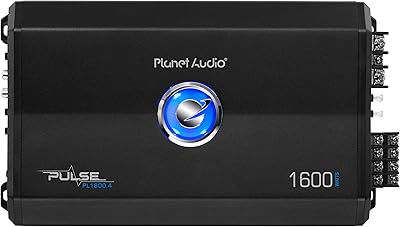
Planet Audio AC2400.4 4-Channel Car Amplifier
84%
95%
Power Output
89%
Sound Clarity
87%
Bass Performance
82%
Ease of Installation
65%
Thermals/Heat Management
More
Recoil DI800.4 4-Channel Car Audio Amplifier
83%
88%
Sound Quality
92%
Power Output
65%
Thermal Management
84%
Build Quality
91%
Ease of Installation
More
Recoil REA600.4 4-Channel Car Audio Amplifier
84%
89%
Audio Performance
91%
Ease of Installation
85%
Sound Quality at High Volumes
62%
Heat Management
90%
Power Output
More
Recoil DI550.4 4-Channel Car Audio Amplifier
74%
91%
Value for Money
78%
Power Output
86%
Ease of Installation
74%
Sound Quality
67%
Build Quality
More
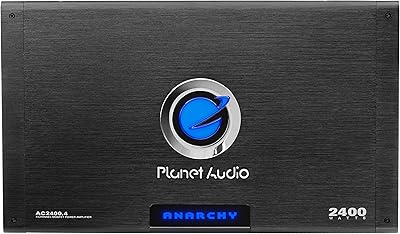
Planet Audio PL1600.4 4-Channel Car Amplifier
72%
88%
Value for Money
84%
Ease of Installation
74%
Sound Quality
58%
Power Output (Real-World)
61%
Build Quality
More
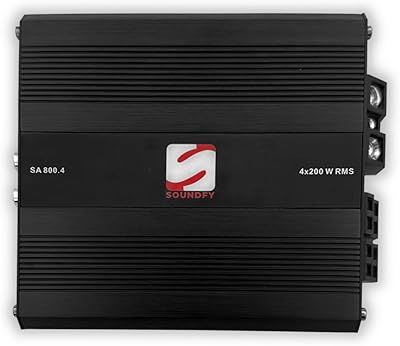
Planet Audio AC1600.4 Anarchy Series 4-Channel Car Amplifier
82%
94%
Power Output
88%
Sound Quality
70%
Ease of Installation
92%
Value for Money
85%
Build Quality
More
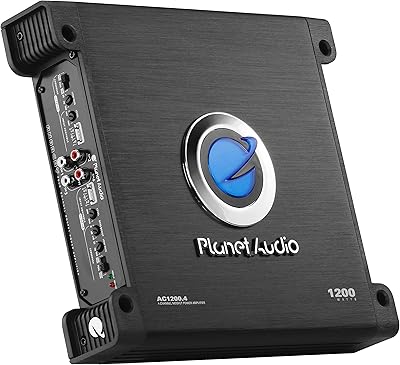
Soundfy SA 400.4 4-Channel Car Amplifier
71%
78%
Value for Money
72%
Sound Quality
63%
Power Output
58%
Build Quality
81%
Thermal Management
More
Planet Audio AC1200.4 4-Channel Car Amplifier
73%
88%
Value for Money
67%
Power Output
83%
Installation Ease
74%
Sound Quality
61%
Build Quality
More
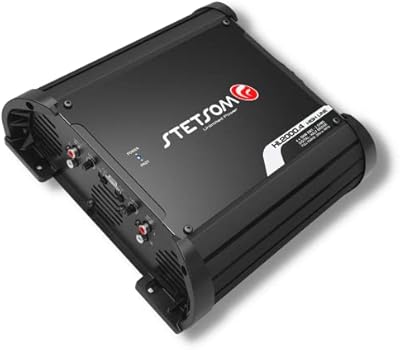
Stetsom HL 2000.4 2-Ohm 4-Channel Car Audio Amplifier
87%
93%
Power Output
85%
Cooling System Efficiency
88%
Sound Quality
91%
Ease of Installation
82%
Durability
More
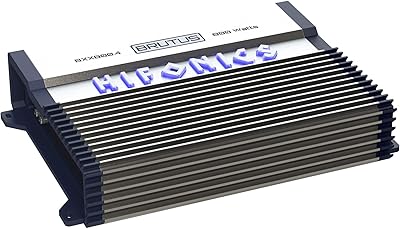
Hifonics BXX800.4 Brutus 800W RMS 4-Channel Car Audio Amplifier
86%
88%
Sound Quality
92%
Power Output
85%
Build Quality
72%
Heat Management
89%
Ease of Installation
More

FAQ

In most standard passenger vehicles, yes. The slim chassis measures just over 4 inches tall, which clears the under-seat gap in the majority of cars and trucks. That said, you should measure your available space before committing — some lower-sitting sport seats leave less clearance than you might expect.

RMS power is the continuous, real-world output the amp delivers during normal listening — that 70 watts per channel figure is what you will actually hear day to day. Peak power reflects a brief maximum under ideal lab conditions and is rarely sustained in practice. When comparing amplifiers, always focus on RMS ratings; peak figures are largely a marketing convention.

Yes, you can. By bridging two of the four channels together, you get 200 watts RMS into a 4-ohm load on that pair, which is enough to drive a modest subwoofer cleanly. You would then use the remaining two channels for your front or rear full-range speakers. It is a practical setup for someone who wants a single amp handling both duties.

The box includes only the amplifier itself. You will need to source a separate wiring kit that includes power cable, ground wire, remote turn-on wire, RCA cables, and speaker wire. Many audio shops sell complete amp wiring kits sized to match the Club-704s power requirements — budget for that as part of your total install cost.

It can work with a factory head unit, but you will likely need a line output converter to turn the head unit's speaker-level outputs into RCA-level signals the amp can read. If your head unit already has RCA preamp outputs, the connection is much more straightforward. Either way, it is a solvable wiring challenge rather than a dealbreaker.

Like any amplifier, the Club-704 generates heat under load, and some owners report it running warm during extended high-volume sessions. Make sure your mounting location has some airflow around the unit — avoid boxing it in completely. Under-seat mounting typically allows enough passive airflow for normal listening use.

Gain is best set using a multimeter and a test tone, not by ear. A common mistake is turning gain up high thinking it adds volume — it actually just matches the amp's input sensitivity to your head unit's output level. If you set it by ear, you risk distortion and potential speaker damage over time. There are good step-by-step guides online for gain setting with a multimeter, and it is worth the extra twenty minutes to do it right.

Yes, 4-ohm speakers are actually the amp's primary design target, and you will get 70 watts RMS per channel in that configuration. Most quality aftermarket component and coaxial speakers are rated at 4 ohms, so compatibility is rarely an issue. If you happen to have 2-ohm speakers, output bumps to 100 watts RMS per channel, which is a solid bonus.

All three brands compete honestly at this level, and the differences come down to personal preference and specific features. JBL leans on its brand recognition and consistent quality control; Rockford Fosgate often edges ahead on raw power density; Alpine tends to attract buyers focused on sound refinement. The Club-704 holds its own and has the track record to back it up — nearly a decade of real owner feedback is a meaningful advantage when evaluating reliability.

As of the latest available information, this Club Series amplifier is not discontinued and remains in active production. Having launched in 2016, it has outlasted many competitors in the same category, which is itself a reasonable sign of continued manufacturer confidence in the product.

Where to Buy