Overview

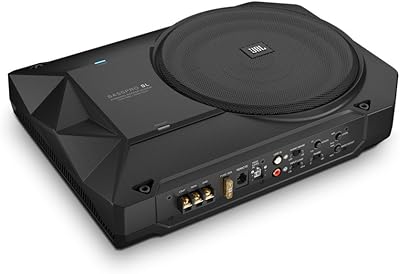
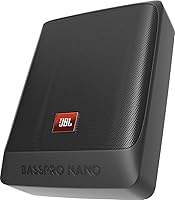
The JBL BassPro Nano 6″ Powered Subwoofer is one of the more practical answers to a problem most car audio enthusiasts know well — factory speakers just can't deliver real low-end, and fitting a traditional subwoofer setup isn't always realistic. This compact powered sub uses a shallow 6×8-inch woofer in a die-cast aluminum enclosure that handles heat and vibration without flexing. It covers 30–150Hz, which is exactly where most stock systems fall flat. At roughly ten inches wide, it slides under most seats without issue, making it a genuinely space-conscious upgrade rather than a compromise.
Features & Benefits

The standout practical advantage here is the built-in 100W RMS amplifier — you wire it directly to your head unit and you're done. No separate amp, no extra mounting brackets, no second power run. The rectangular enclosure is clearly designed with real vehicle interiors in mind, not just spec sheets. A Bass Boost control lets you add a bit more punch without touching your head unit's EQ, which is handy for dialing things in by ear. At moderate volumes, the output stays clean and controlled. Push it hard, though, and you'll notice the headroom ceiling fairly quickly.

Best For

This under-seat subwoofer really shines for a specific kind of buyer: someone who commutes daily, drives a sedan or compact car, and just wants noticeably better bass without tearing the interior apart. It's also a solid fit for car audio beginners who find the idea of a full amplifier-and-subwoofer build overwhelming. If you prefer bass that sounds tight and musical over the kind that rattles mirrors, the BassPro Nano tends to suit that preference well. It's not the right call for anyone chasing concert-level output — but that's not really what it's designed for, and that's fine.

User Feedback

Owners rate this sub very highly overall, and the most consistent praise centers on easy installation and how musical the bass sounds for a unit this size. Several buyers mention being genuinely surprised by how well-controlled the low end feels. That said, a recurring note among more critical reviewers is that output at high volumes has a ceiling — if you frequently listen loud, you may eventually want more. Reliability and build quality haven't drawn meaningful complaints. For what it is — a tidy, self-contained bass upgrade for everyday drivers — most owners feel it delivers exactly what was promised.

Pros

  • No separate amplifier needed — the built-in 100W RMS amp makes installation dramatically simpler than traditional setups.
  • The shallow rectangular enclosure slides under most car seats without eating into passenger legroom.
  • Die-cast aluminum build feels premium and handles heat far better than plastic-bodied competitors.
  • Bass character is tight and musical, making it a strong fit for listeners who want accuracy over boom.
  • The onboard Bass Boost lets you fine-tune low-end response without touching your head unit EQ.
  • Wired signal connection keeps audio clean and free from interference common in crowded RF environments.
  • Owners report no meaningful build quality or reliability issues even after extended daily use.
  • Works directly with factory head units, so you don't need to replace your OEM stereo to install it.
  • At its price tier, the BassPro Nano delivers a noticeable and immediate upgrade over any stock speaker system.

Cons

  • Output headroom runs out quickly at high listening volumes, frustrating drivers who push their systems hard.
  • Documentation included in the box is thin — beginners may need to seek installation guidance elsewhere.
  • The Bass Boost control has no precision markings, making it difficult to return to a preferred setting after adjustment.
  • At nearly 10 pounds, it is heavier than plastic alternatives, which can complicate secure mounting.
  • Very compact cars with low seat rails may not accommodate under-seat placement, forcing a trunk install instead.
  • Vehicles with factory DSP audio systems may require additional signal calibration to avoid phase or EQ issues.
  • Sub-bass below 35Hz is reproduced weakly — deep cinematic rumble and very low electronic tones are noticeably thin.
  • The limited warranty lacks clear documentation on duration and exact coverage, which is a concern for long-term buyers.
  • Buyers willing to research separate amplifier and subwoofer combinations can find more raw output at the same budget.

Ratings

The scores below for the JBL BassPro Nano 6″ Powered Subwoofer were generated by our AI system after analyzing verified owner reviews from multiple global markets, with spam, incentivized, and bot-flagged submissions actively filtered out. The results reflect a genuine cross-section of real-world experiences — from daily commuters in compact sedans to first-time car audio upgraders — and don't shy away from the limitations buyers have flagged alongside the praise.
Ease of Installation
93%
Owners repeatedly call this one of the simplest sub installs they've done. The self-contained amp means no separate wiring runs for external hardware, and most buyers report getting everything connected in under an hour with basic tools and a wiring diagram.
A small number of users found the included documentation sparse for true beginners, requiring them to look up additional guidance online. Wiring can also feel tight in vehicles with limited under-seat clearance or complex factory harnesses.
Bass Quality & Accuracy
88%
The bass this unit produces is consistently described as tight and musical rather than loose or boomy. At moderate listening volumes during daily commutes, it fills in the low-end frequencies that stock speakers completely ignore, making a noticeable difference on bass-heavy tracks.
Audiophiles or listeners accustomed to larger dedicated subs may find the overall bass character a bit restrained. It prioritizes accuracy over raw impact, which is a trade-off some buyers weren't fully expecting at this price tier.
Output at High Volumes
64%
36%
For everyday moderate listening, the 100W RMS amplifier handles its job cleanly without audible distortion creeping in. Drivers who keep their volume at conversational or commute-level settings rarely push the unit anywhere near its ceiling.
This is the most cited disappointment among critical reviewers. Those who listen loud — particularly on highway drives or with bass-heavy genres like hip-hop and EDM — consistently report hitting the output ceiling faster than expected, leaving them wanting a more powerful option.
Build Quality & Durability
91%
The die-cast aluminum enclosure feels genuinely solid and premium when you handle it. Unlike plastic-bodied budget subs, it doesn't flex or rattle when mounted, and long-term owners report no degradation in structural integrity or sound quality over extended use.
The unit is notably heavier than plastic alternatives at just under 10 pounds, which can make secure mounting slightly more involved. A few buyers also wished the finish were more scratch-resistant given how often it may be repositioned during install.
Fit & Placement Versatility
87%
The shallow rectangular profile was clearly designed with real vehicle interiors in mind. It slides cleanly under the seats of most sedans, hatchbacks, and compact SUVs, leaving enough clearance that front-seat passengers don't notice it underfoot.
In very small city cars or vehicles with particularly low seat rails, fitment can be tight. A handful of reviewers in compact European cars noted they had to mount it in the trunk instead, which slightly undercut the convenience factor.
Value for Money
79%
21%
Relative to buying a separate subwoofer plus a standalone amplifier, the all-in-one pricing makes solid sense for buyers who want a plug-and-play solution. The JBL brand name also carries genuine reassurance for first-time buyers wary of off-brand audio gear.
Buyers who research deeper into the car audio market realize that separates can offer significantly more output per dollar at this budget level. For purely price-sensitive shoppers, the convenience premium may not feel entirely justified.
Bass Boost Control
82%
18%
The onboard Bass Boost lets users tune the low-end response by ear without touching their head unit EQ or buying additional processors. Most buyers find two or three turns from the default position hits a satisfying sweet spot for everyday music.
The boost control lacks precision markings, so replicating a preferred setting after adjustment is essentially guesswork. Some users also note that pushing the boost too far introduces a subtle muddiness that the default setting avoids.
Heat Management
84%
The aluminum housing acts as a passive heat sink, and sustained listening sessions — even during summer commutes — haven't produced notable heat complaints from owners. The enclosure stays warm but never alarmingly hot under normal use conditions.
In vehicles parked in direct sunlight with the sub installed under a seat, ambient cabin temperatures can compound the heat load. A small number of southern-climate owners mentioned being mindful of this during peak summer months.
Wiring & Connectivity Quality
81%
19%
The wired signal path keeps audio quality consistent and free from the interference issues that can plague wireless audio systems in EMF-heavy vehicle environments. Signal-to-noise performance is clean at typical listening levels.
There is no wireless option, which limits placement flexibility if your head unit is awkwardly positioned. Running wiring neatly through a cabin without visible cable clutter does require some patience and, ideally, a set of trim removal tools.
Size-to-Performance Ratio
89%
For its footprint, this sub punches noticeably above its weight class. Buyers consistently express surprise that something so compact can add meaningful, audible bass to a vehicle without any acoustic treatment or enclosure tuning.
It still hits a physical ceiling that no amount of engineering can fully escape — a 6-inch driver in a shallow enclosure simply cannot move the air that an 8-inch or 10-inch unit in a full-depth box can. Expectations need calibrating accordingly.
Frequency Response Range
77%
23%
The 30–150Hz response range covers the full subwoofer band competently, reaching low enough to reproduce kick drum weight and bass guitar fundamentals that most factory systems roll off well above 80Hz.
At the very low end of its range, output diminishes noticeably. True sub-bass below 35Hz — the rumble in cinematic soundtracks or deep electronic music — is more suggested than fully reproduced, which is a fair limitation for a driver this size.
Long-Term Reliability
86%
Across the verified review pool, there are no meaningful patterns of early failure or component degradation. Owners who have used the unit for over a year report consistent performance with no notable change in output or enclosure integrity.
The warranty coverage is described only as limited, and JBL's documentation on exactly what is covered and for how long is not especially clear. Buyers who prioritize strong after-purchase support may want to verify coverage specifics before committing.
Compatibility with Factory Head Units
83%
The BassPro Nano is specifically designed to integrate with factory-installed head units, which makes it unusually accessible for buyers who don't want to replace their OEM stereo. Signal inputs accommodate both low-level and speaker-level connections.
In vehicles with proprietary OEM audio systems — particularly those with DSP processing baked in — some signal calibration is needed to prevent phase or EQ conflicts. This requires a bit more setup knowledge than pure beginners may initially anticipate.

Suitable for:

The JBL BassPro Nano 6″ Powered Subwoofer is built for a very specific kind of driver, and if you fit that profile, it's a genuinely smart buy. Daily commuters who are tired of their factory stereo's thin, bassless sound — but have no interest in pulling their dashboard apart or running a separate amplifier — will find this compact powered sub hits exactly the right balance of convenience and performance. It's particularly well-suited to owners of sedans, hatchbacks, and compact SUVs where trunk space is limited or already spoken for, since the shallow under-seat form factor keeps things tidy without sacrificing cabin utility. Beginners entering the car audio world for the first time will also appreciate that the self-contained design removes most of the complexity: there's no amp to size, no separate enclosure to source, and wiring is kept to a minimum. Listeners who value tight, controlled bass over sheer volume — the kind of low-end that makes acoustic bass and kick drums feel present without rattling every panel in the car — will find the BassPro Nano delivers exactly that character.
Not suitable for:

If you listen at high volumes regularly, drive a larger vehicle with a big cabin to fill, or have any experience with dedicated subwoofer setups, the JBL BassPro Nano 6″ Powered Subwoofer is likely to leave you wanting more. The 100W RMS amplifier and 6-inch shallow driver have a real output ceiling, and buyers who push their systems hard — especially on bass-heavy genres like hip-hop, trap, or EDM — have consistently noted that this sub runs out of headroom before they run out of volume. Enthusiasts who are comfortable building a traditional amp-plus-sub setup can get noticeably more output per dollar by going that route, so the convenience premium here only makes sense if simplicity genuinely matters to you. This under-seat subwoofer also isn't the right answer for anyone chasing deep sub-bass below 35Hz — the kind of low rumble in film scores or deep electronic music — since the shallow enclosure and small driver can only suggest those frequencies rather than fully reproduce them. Finally, anyone in a vehicle with very low seat rails or a complex proprietary OEM audio system with built-in DSP processing should verify fitment and compatibility carefully before purchasing.

Specifications

  • Woofer Size: The unit uses a 6-inch dynamic driver mounted in a shallow 6×8-inch oval profile to maximize output within a minimal depth footprint.
  • Amplifier Power: A built-in Class D amplifier delivers 100 watts RMS of continuous power, eliminating the need for any external amplification hardware.
  • Frequency Response: The system is rated to reproduce frequencies from 30Hz to 150Hz, covering the full subwoofer band where most factory speakers roll off significantly.
  • Dimensions: The enclosure measures 3″ deep by 8″ wide by 10″ high, designed specifically for under-seat or trunk-corner placement in passenger vehicles.
  • Weight: The unit weighs 9.68 pounds due to its die-cast aluminum enclosure, which is heavier than plastic-bodied alternatives but contributes to structural rigidity.
  • Enclosure Material: The housing is constructed from die-cast aluminum, which resists flexing under pressure and passively dissipates heat generated during extended listening sessions.
  • Audio Driver Type: A dynamic driver design is used, which is the standard transducer technology for subwoofer applications requiring high excursion and reliable low-frequency output.
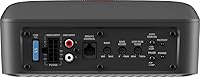
  • Connectivity: Signal input is wired only, accepting both speaker-level and low-level RCA inputs to ensure compatibility with factory and aftermarket head units alike.
  • Power Source: The subwoofer draws power directly from the vehicle's electrical system via a corded connection, requiring a standard 12V automotive power supply.
  • Bass Boost: An onboard Bass Boost control is included, allowing users to increase low-frequency output by ear without requiring a separate equalizer or signal processor.
  • Shape: The enclosure is a rectangular prism, a form factor that makes it easier to secure flat against vehicle floor surfaces compared to traditional cylindrical enclosures.
  • Color: The unit is finished in matte black, which keeps it visually unobtrusive when installed under a seat or in a trunk corner.
  • Water Resistance: The BassPro Nano carries no water resistance rating and should not be exposed to moisture, making it unsuitable for open-air or marine vehicle applications.
  • Warranty: JBL covers this product under a limited warranty; buyers should contact JBL directly to confirm the precise duration and terms applicable in their region.
  • Remote Control: A wired remote control is included, allowing the user to adjust volume or settings from the driver's seat without reaching the unit directly.
  • Compatible Use: Designed exclusively for in-car audio system use, it is not intended or optimized for home, marine, or portable audio applications.
  • Surround Config: The unit is listed as compatible with 5.1 surround sound channel configurations when integrated into a broader in-car multi-channel audio setup.

Related Reviews
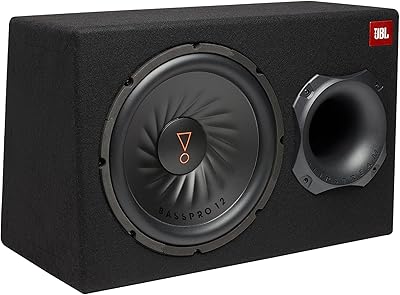
JBL BassPro SL 8-inch Powered Subwoofer
85%
88%
Bass Performance
94%
Ease of Installation
90%
Sound Quality for Size
82%
Build Quality
87%
Value for Money
More
JBL BassPro Go Powered Subwoofer & Bluetooth Speaker
84%
88%
Audio Quality
91%
Bass Performance
77%
Portability
85%
Battery Life
84%
Ease of Installation
More
JBL SUBBP12AM 12-inch Powered Subwoofer
75%
86%
Bass Output Quality
81%
Ease of Installation
78%
Amplifier Performance
67%
Long-Term Durability
73%
Value for Money
More
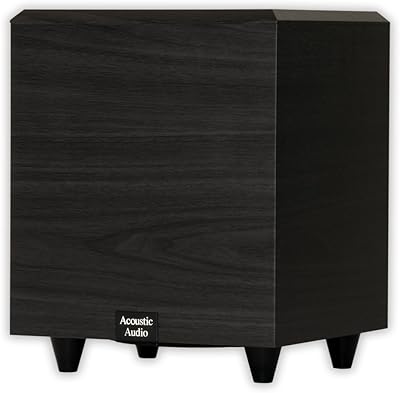
Acoustic Audio PSW-6 Powered Subwoofer
84%
85%
Sound Performance
80%
Bass Depth
91%
Setup Ease
88%
Build Quality
92%
Value for Money
More
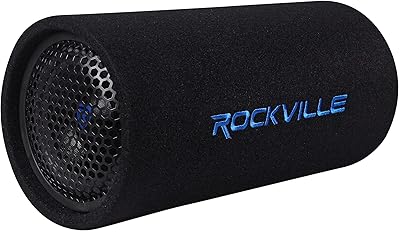
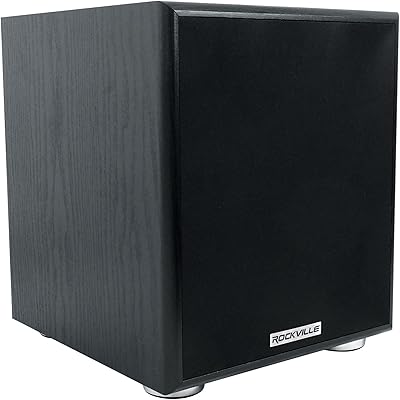
Rockville RTB65A 6.5″ Powered Car Subwoofer
69%
83%
Ease of Installation
71%
Bass Performance
54%
Build Quality
67%
Value for Money
81%
Input Compatibility
More
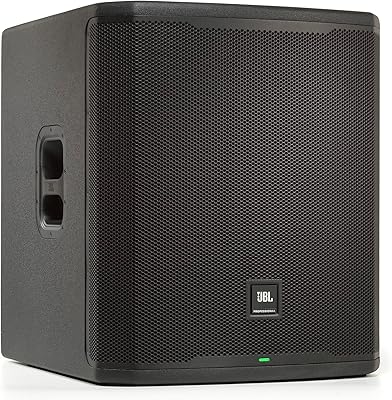
JBL PRX918XLF 18-Inch Powered Subwoofer
86%
94%
Sound Quality
85%
Portability
90%
Build Quality
88%
Bluetooth Control Functionality
87%
Ease of Setup
More
Rockville Rock Shaker 6.5
69%
67%
Bass Performance
83%
Value for Money
61%
Build Quality
78%
Sound Tuning & Controls
88%
Setup & Installation
More
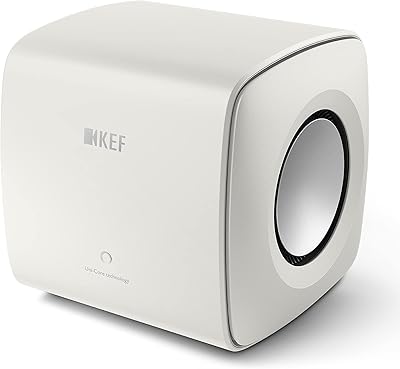
KEF KC62 Compact Powered Subwoofer
82%
93%
Bass Extension & Depth
61%
Output Level & Loudness
91%
Accuracy & Tonal Precision
88%
Build Quality & Materials
96%
Form Factor & Size
More
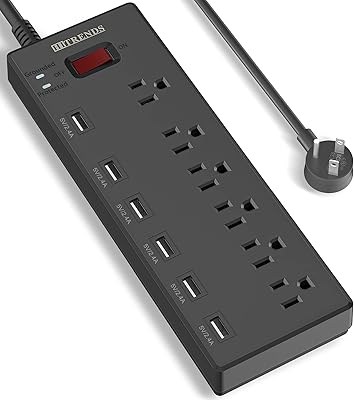
HITRENDS 6-Outlet 6-USB Surge Protector Power Strip
81%
88%
Build Quality
79%
Surge Protection
91%
Outlet Spacing & Layout
72%
USB Charging Performance
61%
USB Port Compatibility
More
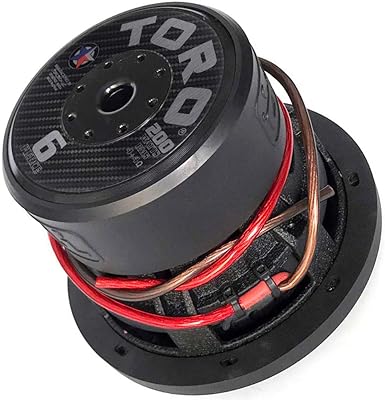
TORO TECH Fierce 6 6.5-Inch Car Audio Subwoofer
86%
90%
Bass Performance
87%
Build Quality
85%
Size and Compactness
88%
Ease of Installation
91%
Durability
More

FAQ

No — that is actually one of the main reasons people choose this particular unit. The amplifier is built directly into the enclosure, so you connect it straight to your head unit and power it from your vehicle's 12V system. No external amp required.

It fits under the seat of most standard sedans and compact cars, but clearance varies by vehicle. The enclosure is 3 inches deep, 8 inches wide, and 10 inches long, so the critical measurement to check is the vertical gap between your seat rail and the floor. If that gap is tighter than about 3.5 inches, you may need to mount it in the trunk instead.

Yes, the BassPro Nano accepts speaker-level inputs, which means it can tap directly off the existing speaker wiring from your stock head unit. You do not need an aftermarket stereo to make it work, which is a genuine advantage for anyone who wants to keep the OEM dashboard intact.

Most buyers with basic DIY confidence manage it without professional help. The trickiest part is usually running the power wire from the battery and finding a clean ground point — neither is complicated, but both require a bit of patience. JBL includes a wiring diagram, though a few users found it a little sparse and supplemented it with online guides.

Most owners describe it as controlled and musical rather than boomy. It adds weight and presence to bass frequencies without making everything sound like a car show competitor. If you prefer tight, accurate low-end over exaggerated thump, this sub tends to suit that preference quite well.

At moderate listening levels it stays clean, but if you regularly listen at high volumes, you will likely hit the output ceiling before you hit your preferred loudness. A few reviewers who listen loud on highway drives mentioned wanting more headroom. It is honest to say this sub is optimized for everyday listening levels, not for those who want club-level bass in their car.

It can work, but proprietary OEM systems with built-in digital signal processing sometimes require extra tuning to avoid phase conflicts or EQ mismatches. If your car has one of these systems, expect to spend some time adjusting the crossover and phase settings rather than plugging it in and calling it done.

The aluminum enclosure does warm up during extended listening, but the material is specifically good at conducting heat away from the amplifier components. Owners who commute daily in warm climates haven't flagged overheating as a problem under normal use. Just make sure there is reasonable airflow around the unit and it is not completely enclosed on all sides.

Absolutely — the rectangular shape makes it easy to tuck into a trunk corner or mount flat against the spare tire well. The remote volume control becomes especially useful in that scenario since reaching the unit directly would be inconvenient while driving.

JBL describes the coverage as a limited warranty, but the exact duration and specific terms are not clearly spelled out in the product listing or included documentation. Your best move is to contact JBL support directly before purchasing if warranty coverage is important to your decision, so you know exactly what you are getting.

Where to Buy