ipolex Gigabit Multimode LC Fiber Media Converter
ipolex Gigabit Multimode LC Fiber Media Converter — image 1
ipolex Gigabit Multimode LC Fiber Media Converter — image 2
ipolex Gigabit Multimode LC Fiber Media Converter — image 3
ipolex Gigabit Multimode LC Fiber Media Converter — image 4
ipolex Gigabit Multimode LC Fiber Media Converter — image 5
ipolex Gigabit Multimode LC Fiber Media Converter — image 6
ipolex Gigabit Multimode LC Fiber Media Converter — image 7
80%
20%

Overview

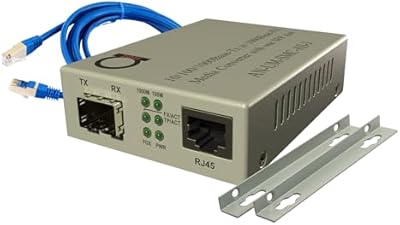
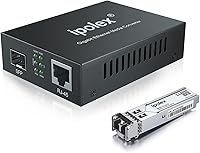
The ipolex Gigabit Multimode LC Fiber Media Converter solves a specific but surprisingly common problem: you have multimode fiber infrastructure in place, and you need to hand off that connection to a copper-based switch or device without buying a fiber-native switch. What makes this LC-to-RJ45 converter kit stand out at its price point is that it ships with a pre-matched 1000Base-SX SFP module already included, so you are not left hunting for a compatible transceiver separately. Enterprise solutions for this job can cost several times more. The included 3-year warranty adds a meaningful layer of confidence for something that will likely sit in a wiring closet and run continuously.

Features & Benefits

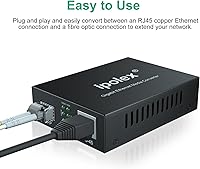
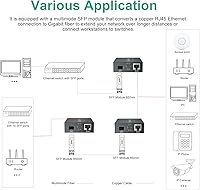
The most practical thing about this fiber media converter is how little it demands of you at installation. Plug in fiber on one side, RJ45 on the other, connect power, and the link negotiates on its own — no CLI, no drivers, no configuration file to wrestle with. The hot-swappable SFP slot means if you ever need to swap out the included module for a different wavelength or reach, you do not have to shut the unit down. On the copper side, auto-negotiation with Auto-MDI/MDIX means any cable type works, and it will bridge 10, 100, or 1000 Mbps connections. For multimode runs, you get up to 550 meters over OM3 or OM4 fiber — more than enough for most cross-building scenarios.

Best For

This LC-to-RJ45 converter kit is a natural fit for IT admins who need to tap into an existing multimode fiber backbone to feed a copper-only switch, NAS, or server. Home lab users who have picked up used fiber patch panels or switches will find this an affordable on-ramp to proper gigabit speeds without replacing their fiber runs. Surveillance and AV installers extending IP camera feeds across a campus or between floors will appreciate hitting distances that copper simply cannot cover. One thing to be clear about upfront: single-mode fiber users should look elsewhere. The included SFP operates at 850 nm and is designed exclusively for multimode OM3/OM4 links — it is not a long-haul solution.

User Feedback

Across a healthy volume of reviews, this gigabit converter holds a strong average rating, which is notable given how technically demanding network hardware can be to set up correctly. Most buyers highlight quick link establishment and consistent uptime as the standout positives — many report plugging the unit in and watching the link come up within seconds. The SFP module interoperability with third-party switches and fiber patch cables draws frequent praise as well. On the critical side, some users raise concerns about the power adapter quality, noting it feels less robust than the converter itself. A small number of buyers mention compatibility quirks with specific legacy hardware. Customer support responsiveness and warranty follow-through appear to be generally positive, which matters when gear lives in a production environment.

Pros

  • Ships as a complete kit with a matched 1000Base-SX SFP module included — no separate transceiver sourcing required.
  • Plug-and-play setup: the link comes up automatically with no drivers, software, or command-line configuration needed.
  • Hot-swappable SFP slot lets you swap modules without powering down, which simplifies future upgrades and live troubleshooting.
  • Auto-MDI/MDIX on the RJ45 port eliminates cable type headaches — straight-through or crossover cables both work fine.
  • Supports OM3 and OM4 multimode fiber runs up to 550 meters, covering most inter-floor and inter-building scenarios comfortably.
  • Auto-negotiation handles 10, 100, and 1000 Mbps on the copper side, so mixed-speed environments are not a problem.
  • The 3-year warranty is meaningfully above average for a converter at this price point.
  • Real-world buyers consistently report stable, long-running link uptime after a simple out-of-the-box installation.
  • The included SFP module plays well with third-party switches and standard LC fiber patch cables in most tested setups.
  • Compact footprint and included power supply make it easy to place in a wiring closet, on a desk, or on a rack shelf.

Cons

  • The external power brick feels noticeably cheaper than the converter unit itself and is a recurring weak point in buyer feedback.
  • No management interface of any kind — port status, error counters, and link statistics are completely invisible remotely.
  • Single-port design means one unit per fiber link, and costs accumulate quickly in multi-link or high-density deployments.
  • LED indicators are reported by some users as dim and difficult to read clearly in well-lit or bright rack environments.
  • Strictly multimode-only — anyone with single-mode infrastructure in place will need an entirely different product.
  • The 550-meter distance ceiling applies only to OM3/OM4 fiber; older OM1 or OM2 cabling will deliver noticeably shorter reliable reach.
  • No redundant or failover power input, which can be a dealbreaker in uptime-critical or production network environments.
  • A small but consistent subset of buyers report edge-case compatibility issues with certain legacy or non-standard copper-side devices.
  • No link-loss alarm or fault output means silent failures require physical inspection to discover, rather than any automated alert.

Ratings

The ipolex Gigabit Multimode LC Fiber Media Converter carries a notably strong rating across a meaningful volume of verified real-world purchases, making it one of the more reviewed products in its niche category. These scores were generated by AI after analyzing authenticated global user reviews, with spam, bot activity, and incentivized submissions actively filtered out. Both the genuine strengths that earned buyer loyalty and the recurring frustrations that tempered scores are transparently reflected in each category below.

Ease of Setup
94%
Most buyers describe installation as taking under five minutes — no drivers, no CLI commands, and no configuration menus at all. Plug fiber into the SFP side, connect copper to the RJ45 port, attach power, and it negotiates on its own. For admins deploying multiple units across a site, that friction-free experience is a real time-saver.
If the link does not come up, troubleshooting is entirely hands-on — there is no management interface to consult, so users must check fiber polarity, SFP seating, and cables manually. Buyers unfamiliar with LC connector orientation occasionally hit this snag and have no software feedback to guide them.
Link Stability
91%
Buyers running this converter in always-on environments — office NAS connections, continuous IP camera feeds, cross-building backbone links — consistently report rock-solid uptime over months of use. The link negotiates cleanly on startup and stays up without periodic drops or renegotiation cycles, which is exactly what you need from passive infrastructure.
A minority of buyers report link instability tied to specific third-party switches or older copper-side devices, particularly when running at 10 or 100 Mbps rather than full gigabit. These edge cases appear to be compatibility-related rather than a core flaw, but they do surface occasionally in real-world deployments.
Value for Money
88%
The kit format — converter plus a matched 1000Base-SX SFP module in one box — is where the value argument is strongest. Comparable functionality from enterprise brands can run several times the price, and most buyers in small office or home lab contexts find this LC-to-RJ45 converter kit hits the cost-to-performance mark convincingly.
Buyers who need multiple links will find the per-unit cost adds up without the benefit of a multi-port chassis or rack-mount form factor. The included power adapter also feels like a corner was cut relative to the converter itself, which chips slightly at the perceived value in production deployments.
Build Quality
73%
27%
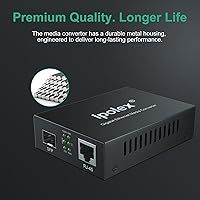
The converter housing itself is solid and feels appropriately dense for a device that will likely spend years in a wiring closet. The SFP cage has positive retention — modules seat firmly and do not rattle — and the RJ45 port withstands repeated cable insertions without any noticeable loosening.
The external power adapter is the clear weak link — multiple buyers describe it as noticeably flimsy compared to the converter unit, with a cable and connector that do not inspire long-term confidence. For a device intended to run continuously, a more robust power solution would meaningfully improve the overall package.
SFP Compatibility
83%
The included 1000Base-SX SFP module follows standard MSA specifications and works reliably with a wide range of third-party switches, not just inside this converter. Buyers frequently report successful interoperability with common switch brands, and the module behaves predictably with standard OM3 and OM4 LC fiber patch cables from various vendors.
Enterprise switches with strict vendor lock-in policies — certain Cisco and HPE models, for example — may refuse to initialize non-OEM transceivers, which can catch buyers off guard. A small number of users also report unexpected behavior in third-party SFP slots at full gigabit speed, though this is not the typical outcome.
Fiber Reach
87%
For inter-building and cross-floor installations running OM3 or OM4 cable, the 550-meter ceiling comfortably covers the vast majority of real-world scenarios buyers encounter. Campus IT teams connecting equipment between buildings separated by a few hundred meters consistently report hitting the rated distance without signal degradation.
The 550-meter limit is strictly tied to OM3/OM4 fiber — users on older OM1 or OM2 infrastructure will see that ceiling shrink considerably, sometimes to under 200 meters. Buyers with longer campus runs or single-mode plant will find this fiber media converter falls short of their distance requirements entirely.
Power Adapter
54%
46%
For most buyers, the included adapter does what it is supposed to — it keeps the unit running, and there are no widespread reports of immediate failures or units arriving dead on arrival. In low-stakes or occasional-use scenarios, it is adequate for the task.
The adapter is easily the most criticized component in buyer feedback — its cable feels thin, its construction feels mismatched against the converter housing, and several users report it failing before the converter itself does. For always-on production deployments, sourcing a backup adapter upfront is a precaution many experienced buyers strongly recommend.
Port Flexibility
86%
The copper side auto-negotiates across 10, 100, and 1000 Mbps and handles MDI/MDIX automatically, meaning it bridges legacy and modern devices without any manual configuration. Installers working in mixed-speed environments — where some devices are older 100 Mbps gear and others are gigabit — find this genuinely useful in practice.
The fiber side is fixed at 1000 Mbps — there is no 100Base-FX mode, so if your fiber switch only supports 100 Mbps fiber links, this unit will not bridge the connection. It is also a single-port device, so any need for more than one fiber-to-copper link means purchasing additional units.
Warranty & Support
82%
18%
A 3-year warranty is meaningfully better than what most competing products at this price point offer, and buyers who have contacted ipolex support report reasonably responsive assistance. For a device that lives in a wiring closet and runs continuously, that coverage window reduces the risk of being stranded after an unexpected hardware failure.
Warranty support experience varies — some buyers describe smooth replacements, while others mention slower response times or difficulty getting help with more nuanced technical questions. The adapter as a separate accessory can feel like an ambiguous area when it comes to what the warranty actually covers in practice.
Form Factor
79%
21%
The desktop footprint is compact enough to tuck into tight spaces — on a rack shelf, behind a patch panel, or on a utility shelf in a wiring closet. Its flat profile and manageable weight make repositioning straightforward, which surveillance and AV installers working in confined equipment spaces tend to appreciate.
Without native rack ears or an included mounting kit, keeping the unit tidy inside a rack cabinet requires improvised solutions like adhesive pads or aftermarket shelf brackets. The dangling external power adapter cord also adds cable management complexity in organized installations where a clean wiring run matters.
LED Indicators
61%
39%
The LEDs do provide basic link and activity status at a glance, which is enough to confirm the connection is up and traffic is flowing. For most users performing a quick visual check during installation or routine maintenance, the indicator coverage is sufficient given the unit's unmanaged nature.
The LEDs are frequently described as dim — not just in direct sunlight, but even in typical indoor lighting conditions, making them hard to read at a glance. In equipment rooms with multiple active units, distinguishing status between this converter and neighboring gear at a distance becomes genuinely awkward.
Documentation
76%
24%
For the target audience — IT admins and experienced home lab users — minimal documentation is rarely a stumbling block, since the setup process is self-explanatory. The product ships with enough basic instruction to orient a first-time user, and ipolex provides accessible technical support for less obvious edge cases.
The included documentation does not address single-mode versus multimode differences, fiber polarity troubleshooting, or OM-grade compatibility nuances — topics that trip up buyers newer to fiber networking. Users who encounter a non-obvious setup issue have to rely on web forums or ipolex's support channel rather than any packaged resource.
Long-term Reliability
84%
When deployed within its rated operating parameters — stable power, clean fiber connections, appropriate ambient temperature — this gigabit converter has a strong track record of running continuously for extended periods without failure. Buyers who have kept units in production for a year or more consistently report no degradation in link quality over time.
The power adapter remains the most common failure mode over time — several buyers report the converter unit outlasting the adapter and requiring a replacement to keep things running. Thermal management is fully passive, so units deployed in poorly ventilated enclosures or high-ambient-temperature environments could see shortened service life.

Suitable for:

The ipolex Gigabit Multimode LC Fiber Media Converter is purpose-built for anyone who already has multimode fiber infrastructure in place and needs a straightforward, low-effort bridge to copper-based gear. IT admins in small offices or campus environments will find it particularly useful when switches, NAS devices, or servers only have RJ45 ports but the backbone runs fiber. Home lab enthusiasts who picked up used fiber patch panels or switches at a discount can use this kit to bring those assets into a working gigabit setup without a significant hardware investment. Surveillance and AV installers will appreciate it for extending IP camera feeds or signals between floors or buildings, where copper runs would fall well short on distance. Because the kit ships with a matched 1000Base-SX SFP module, buyers skip the extra step of sourcing and verifying a compatible transceiver — it is genuinely ready to deploy out of the box.

Not suitable for:

The ipolex Gigabit Multimode LC Fiber Media Converter is strictly a multimode solution, and that distinction is the single most important thing to confirm before purchasing. If your fiber plant uses single-mode cable — common in longer campus runs or leased building infrastructure — the included 850 nm SFP module will not function, and you would need either a different converter or a separate single-mode transceiver entirely. Buyers who need enterprise-grade reliability features such as redundant power inputs, managed port statistics, or remote fault monitoring should look elsewhere, as this is a fully unmanaged, single-port device with no visibility tools built in. Those running fiber distances beyond 550 meters, or relying on older OM1 or OM2 multimode cabling, should verify compatibility carefully before committing, since the distance rating applies specifically to OM3 and OM4 fiber. High-density deployments where multiple links need converting will also find the single-port design and per-unit cost add up quickly compared to a fiber-capable switch.

Specifications

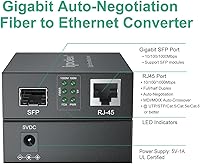
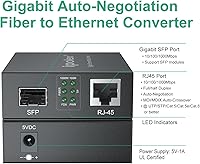
  • Fiber Interface: Connects via a 1000Base-SX LC duplex port designed exclusively for multimode fiber at an 850 nm wavelength.
  • Copper Interface: The RJ45 port supports 10/100/1000Base-T Ethernet with automatic speed negotiation to match the connected device.
  • Included SFP: Ships with a pre-matched 1000Base-SX SFP transceiver module operating at 850 nm, ready to install out of the box.
  • Fiber Reach: Maximum rated transmission distance is 550 meters, achieved over OM3 or OM4 duplex multimode fiber only.
  • Compatible Fiber: Rated for OM3 and OM4 multimode fiber; OM1 and OM2 cables will function but cannot reliably reach the 550-meter maximum.
  • Auto-Negotiation: The RJ45 port automatically negotiates link speed at 10, 100, or 1000 Mbps to match the connected copper device.
  • MDI/MDIX: Automatic MDI/MDIX crossover detection is built into the RJ45 port, so straight-through and crossover cables both work without manual adjustment.
  • Duplex Support: Operates in both half-duplex and full-duplex modes on the copper side, accommodating legacy as well as modern network equipment.
  • SFP Slot: The SFP cage is hot-swappable, allowing the transceiver module to be replaced without powering down the unit.
  • Port Count: Provides one SFP fiber port and one RJ45 copper port, functioning as a dedicated single-link point-to-point converter.
  • Setup: Plug-and-play by design — no software installation, drivers, web interface, or command-line configuration is required.
  • Power Supply: Includes an external power adapter in the box; no PoE input or DC terminal block option is available on this model.
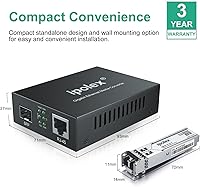
  • Dimensions: The unit measures 6.3 x 4.53 x 1.57 inches, compact enough for desktop placement or positioning on a rack shelf.
  • Weight: Weighs 10.41 oz, keeping it light enough for flexible mounting and easy repositioning during installation.
  • Warranty: Covered by a 3-year manufacturer warranty with technical support included, which is above average for this product category and price tier.

Related Reviews
H!Fiber.com BiDi Gigabit SC Fiber Media Converter
79%
83%
Ease of Setup
91%
Fiber Reach & Signal Reliability
88%
Throughput Performance
79%
Build Quality & Durability
86%
Value for Money
More
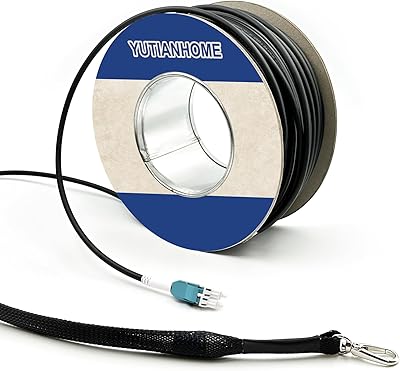
YUTIANHOME 500ft Industrial TPU OM3 Fiber Optic Cable LC to LC Duplex with Pulling Eye Kit
84%
89%
Durability
91%
Ease of Installation
90%
Build Quality
85%
Performance
88%
Protection Against Environmental Factors
More
ADnet Fiber to Ethernet Converter with Open SFP Slot
86%
95%
Setup & Installation
88%
Performance & Speed
80%
Build Quality
90%
Compatibility
92%
Ease of Use
More
Koramzi CB-107 ATSC Digital TV Converter Box
73%
88%
Ease of Setup
74%
Channel Reception
91%
Value for Money
61%
USB Recording
63%
Remote Control
More
Equate Daily Fiber Multi-Benefit Fiber Powder, 29 Oz
87%
88%
Effectiveness for Digestion
93%
Ease of Use
91%
Value for Money
95%
Mixability with Drinks
62%
Bloating or Discomfort
More
THICK FIBER Hair Fibers for Thinning Hair & Bald Spots - Auburn, 25g
83%
88%
Ease of Application
92%
Natural Appearance
84%
Longevity/Durability
90%
Sweat and Water Resistance
89%
Effectiveness for Thinning Hair
More
Janryzone Janry-304-1 Cassette to MP3 Converter
66%
71%
Value for Money
58%
Audio Playback Quality
52%
MP3 Conversion Experience
79%
Ease of Setup
47%
Build Quality
More
Schiit Modi+ Digital-to-Analog Converter
82%
88%
Sound Quality
91%
Build Quality
93%
Value for Money
89%
Input Flexibility
86%
Ease of Setup
More
MYPIN Mini 1080p HDMI Media Player
78%
91%
Ease of Setup
83%
Format Compatibility
78%
Build Quality & Portability
76%
Video Playback Quality
58%
Remote Control & Navigation
More
Carhartt Convertible Backpack Tote
80%
91%
Build Quality
88%
Convertible Functionality
83%
Carrying Comfort
71%
Storage & Organization
76%
Water Resistance
More

FAQ

No, it does not. The included SFP module is an 850 nm multimode transceiver, which is physically and electrically mismatched for single-mode cable. If your cabling plant uses single-mode fiber — OS1 or OS2 — you will need a separate converter paired with an appropriate single-mode SFP module.

Not at all. Plug your duplex LC fiber into the SFP side, connect a copper cable to the RJ45 port, attach the power adapter, and the link comes up on its own. There is no web interface, no driver installation, and no CLI to touch — it genuinely just works.

In most cases, yes. The 1000Base-SX SFP follows the industry-standard MSA specification and is widely compatible with third-party switches. The main exception is enterprise switches with strict vendor lock-in that actively reject non-OEM transceivers, so it is worth checking your switch documentation before assuming it will work.

You need a duplex LC multimode patch cable. OM3 or OM4 is the right choice if you want to reach the full 550-meter distance rating. Older OM1 or OM2 multimode cable will establish a link at shorter distances, but you will not get the maximum rated range out of it.

No, it does not matter at all. The RJ45 port has automatic MDI/MDIX detection built in, so it identifies and compensates for cable type on its own — no need to think about it.

The fiber side is fixed at 1 Gbps since the included SFP is a 1000Base-SX module and cannot negotiate down. The copper RJ45 side, however, will auto-negotiate to 10 or 100 Mbps if the connected device runs at those speeds, so slower copper-side equipment is not a problem.

Yes. The SFP slot is hot-swappable and accepts standard MSA-compliant SFP modules, so you could install a different transceiver if your needs change — for example, swapping to a longer-reach or single-mode module down the line. Just confirm any replacement is a 1000 Mbps module since the unit is rated for gigabit fiber.

The converter unit itself earns consistently strong marks for link stability, but the included power adapter is the most frequently mentioned weak point by buyers who feel it does not match the build quality of the converter. It functions reliably for most users, but if this unit is going into a production or always-on environment, keeping a spare adapter on hand is a reasonable precaution.

It does not fit directly into a standard 19-inch rack bay — it is a desktop form factor device. That said, its compact footprint makes it easy to sit on a rack shelf, and some installers use adhesive pads or small shelf brackets to keep it tidy inside a cabinet.

The warranty covers manufacturing defects under normal operating conditions for three years, and ipolex includes technical support alongside it. Physical damage, misuse, or damage caused by incompatible equipment would not typically be covered. Buyer feedback on warranty claims and support responsiveness is generally positive, which is a reasonable indicator for a product in this category.

Where to Buy