Overview

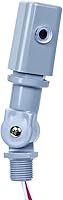
The Intermatic EK4236S Electronic Photocontrol is a stem-and-swivel mount dusk-to-dawn switch built for outdoor and commercial lighting that needs to run reliably for years, not just months. Intermatic has been making lighting controls and timers for decades, and this photocell sits squarely in their professional-grade lineup. It works with both traditional HID fixtures and modern LED setups, which makes it genuinely versatile for retrofits or new installations. The price sits in a range that feels reasonable for a component with commercial-grade specs. One important heads-up: this photocontrol connects via wire leads, so it is best installed by someone comfortable working with line-voltage wiring.
Features & Benefits

The sensor inside this dusk-to-dawn switch uses a non-drift silicon design with an infrared filter, which means it stays reliably calibrated over time — unlike older cadmium sulfide cells that can drift and trigger at the wrong light levels. The relay incorporates zero-crossing circuitry, a technique that switches power at the exact moment the AC waveform crosses zero volts, which reduces wear on the relay contacts and extends the unit's working life. A conformal coating on the circuit board shields it from moisture, dust, and temperature extremes. On top of that, built-in surge protection components guard against voltage spikes that could otherwise take out a standard photocell prematurely.

Best For

This photocontrol is a natural fit for commercial property managers who need reliable automated lighting on parking lots, building perimeters, or signage. Electricians swapping out aging HID systems for LED will find the wide voltage range and load capacity genuinely useful — it can handle a substantial wattage load across 277VAC circuits common in commercial settings. Homeowners with outdoor security or landscape lighting can absolutely use it too, though they should be comfortable with basic wiring or hire someone who is. Any facility that requires documented compliance with ANSI or UL standards will appreciate that this Intermatic photocell meets those benchmarks out of the box.

User Feedback

Buyers generally rate this dusk-to-dawn switch well, and the most consistent praise centers on accurate triggering and straightforward wiring — the wire-lead connection is familiar territory for anyone who has done basic fixture work. Several owners report that it simply works as expected right from the first install, without fussing with adjustments. That said, not every review is glowing. A handful of buyers have noted sensitivity issues in certain environments, where the 1.5 footcandle turn-on threshold either trips too early on bright cloudy days or stays on longer than expected near competing light sources. Long-term durability is harder to judge from reviews alone, since the manufacturer's lifespan targets require years to validate in real-world conditions.

Pros

  • Accurate dusk-to-dawn triggering holds up well across seasons without needing recalibration.
  • The non-drift sensor technology means you are not chasing phantom on/off cycles as the unit ages.
  • Compatible with both HID and LED fixtures, making it genuinely useful for retrofits and new installs alike.
  • Conformal PCB coating adds real-world weather resistance beyond what bare-board photocells offer.
  • Built-in surge protection guards against voltage spikes that commonly kill cheaper photocells prematurely.
  • Meets ANSI, UL, and CSA standards, which matters for commercial and municipal installations.
  • The stem-and-swivel mount allows angle adjustment so the sensor faces the right direction for your site.
  • Fail-safe design defaults to the on position, so your lights stay on if the unit ever malfunctions.
  • Wire-lead installation is straightforward for anyone with basic electrical experience.
  • Load capacity is substantial enough to run multiple fixtures from a single control point.

Cons

  • No twist-lock NEMA socket option means it cannot drop into fixtures designed for that style without additional work.
  • Wire-lead connections require comfort with line-voltage wiring, ruling out true DIY installs for many homeowners.
  • The turn-on light threshold is fixed, so fine-tuning sensitivity for unusual site conditions is not possible.
  • Some buyers have reported inconsistent triggering near bright competing light sources such as streetlamps or signage.
  • Long-term lifespan targets are manufacturer-stated and difficult to verify without years of real-world use.
  • The gray plastic housing looks purely functional and may stand out on fixtures where aesthetics matter.
  • Short six-inch wire leads can be awkward to work with inside tight junction boxes or fixture housings.
  • No smart-home integration or timer override means scheduling flexibility is essentially zero.
  • A small number of users report units arriving non-functional, suggesting occasional quality control inconsistencies.
  • Warranty terms are not spelled out clearly on the product listing, which makes after-purchase support harder to navigate.

Ratings

Our AI-generated scores for the Intermatic EK4236S Electronic Photocontrol were produced by analyzing verified buyer reviews from multiple global markets, with spam, bot activity, and incentivized feedback actively filtered out before scoring. The results reflect a balanced picture — genuine strengths are recognized, but real friction points from actual installers and property managers are weighted in as well. Scores are category-specific, so you can quickly spot where this dusk-to-dawn switch earns its reputation and where it falls short of expectations.

Sensor Accuracy
83%
Most buyers report that the photocell triggers reliably at dusk and shuts off cleanly at dawn, with very little erratic cycling once installed correctly. Installers who positioned the swivel sensor toward open sky — away from competing light sources — found the detection remarkably consistent across seasons.
A recurring complaint involves sites with nearby streetlamps or bright signage, where the fixed sensitivity threshold causes the unit to stay on longer than expected or trigger prematurely on overcast days. Since there is no manual adjustment, buyers in light-polluted areas have limited recourse.
Installation Ease
71%
29%
Electricians and experienced DIYers consistently describe the wire-lead hookup as clean and uncomplicated, especially compared to twist-lock units that can loosen over time. The stem-and-swivel mount gives useful flexibility for positioning the sensor head without awkward fixture modifications.
Buyers expecting a plug-and-play experience are regularly caught off guard — this is a hardwired unit requiring line-voltage connections, not a drop-in replacement for twist-lock sockets. The six-inch leads also feel short to some installers working inside deep junction boxes or tight fixture housings.
Build Quality
76%
24%
The conformal-coated circuit board gives buyers confidence that internal components are shielded from the kind of moisture and condensation that kills cheaper photocells within a season or two. The overall construction feels appropriately solid for a commercial-grade component at this price point.
The gray plastic housing is purely utilitarian and feels less robust than the internals it protects — a few buyers noted that the outer shell looks and feels inexpensive relative to the electronics inside. There is no indication of an IP weatherproofing rating, which leaves some uncertainty for fully exposed mounting positions.
Long-Term Reliability
78%
22%
Buyers who have had this photocontrol installed for several years report continued consistent performance without replacement, lending real-world credibility to the manufacturer's extended lifespan targets. The fail-safe on-mode is specifically praised by property managers who cannot afford a dark parking lot overnight.
Verifying decade-long durability claims from buyer reviews is genuinely difficult — most feedback reflects one to three years of use at most. A small but notable number of reviewers received non-functional units, which adds a layer of uncertainty around manufacturing consistency.
Compatibility
74%
26%
The wide operating voltage range and NEMA 410 testing make this Intermatic photocell a reliable match for both legacy HID systems and newer LED driver setups, which is a real advantage for electricians managing mixed or transitional fixture inventories.
The stem-and-swivel format is not universally compatible — fixtures designed specifically for twist-lock NEMA sockets require a different unit entirely, and buyers who overlook this detail before purchasing face a frustrating return experience. Multi-fixture wiring configurations also require some upfront load math to stay within rated limits.
Value for Money
81%
19%
At a mid-range price point, buyers consistently note that the commercial-grade specs — including surge protection, conformal coating, and certified load ratings — represent meaningful engineering that cheaper alternatives simply skip. For property managers replacing photocells repeatedly on the same fixtures, the longer service target makes the cost easy to justify.
Buyers who only need a basic residential photocell for a single porch light may feel the specs here exceed their needs and the price reflects features they will never use. The value proposition weakens somewhat for anyone who receives a defective unit and faces unclear warranty support.
Surge Protection
86%
The integrated MOV components absorb transient voltage spikes that routinely damage lower-end photocells during storms or grid fluctuations — several electricians specifically called this out as a differentiating feature when recommending this unit for exposed commercial sites.
While the surge protection components are rated at meaningful energy levels, buyers have no way to confirm whether those components have degraded after a significant surge event, since there is no indicator or reset mechanism built into the unit.
Weather Resistance
73%
27%
The conformal PCB coating and plastic housing perform reasonably well across a broad temperature range, and buyers in wet northern climates report multi-year operation without moisture-related failures when the unit is installed inside a fixture housing rather than fully exposed.
The lack of a published IP rating makes it harder to confidently specify this photocontrol for installations in driving rain, coastal salt air, or extreme freeze-thaw cycles where a higher-rated enclosure would be warranted. Some buyers in harsh climates have reported housing discoloration and brittleness after extended UV exposure.
Trigger Speed
79%
21%
Buyers note that the on/off response at dawn and dusk is smooth and prompt, without the sluggish lag that can make older cadmium-cell photocells frustrating — particularly useful on sites where lights are expected to respond quickly to changing natural light conditions.
A handful of reviewers mention brief flickering behavior during transitional light conditions — particularly at dawn when clouds intermittently raise and lower the ambient light level near the trigger threshold. This is not unique to this unit but is worth knowing if rock-solid stability at marginal light levels is critical.
Load Capacity
88%
The ability to control a substantial combined wattage across 277VAC circuits makes this dusk-to-dawn switch genuinely useful in commercial contexts where a single control point needs to manage multiple fixtures, reducing hardware costs and wiring complexity on larger installations.
Residential buyers running standard 120VAC single-fixture setups are paying for load headroom they will never need — the high capacity is a strength in context, but it is not a differentiator for simpler use cases where a less specified unit would serve equally well.
Certifications & Standards
91%
Meeting ANSI C136.10, ANSI C136.24, UL, CSA, and NEMA 410 requirements gives procurement teams and facilities managers a clear compliance paper trail — something that genuinely matters when specifying lighting controls for municipal contracts, schools, or industrial sites.
The warranty terms are poorly communicated on the product listing, which undermines confidence in the otherwise strong certification profile. Buyers who need to make a warranty claim have reported difficulty finding clear guidance on the process directly from the manufacturer.
Packaging & Delivery
67%
33%
The unit arrives in straightforward packaging with the basic installation information needed to get started, and most buyers report the hardware arriving in good physical condition without signs of damage from shipping handling.
Documentation included in the box is minimal — there is no detailed wiring diagram or troubleshooting guide, which leaves less experienced installers searching online for guidance. A small percentage of buyers have received units that were dead on arrival, pointing to inconsistent pre-shipment quality checks.
Relay Performance
84%
The zero-crossing relay design is a meaningful upgrade over standard relays — by switching only at the AC waveform zero point, it avoids the arcing that accelerates contact wear in conventional units, which translates to more reliable switching over the long haul in high-cycle commercial environments.
Because the relay performance improvement is an internal engineering detail rather than something buyers can observe directly, its value is largely taken on faith based on the manufacturer's testing claims and the overall 4.1-star trend — real-world cycle counts are impossible to verify independently.

Suitable for:

The Intermatic EK4236S Electronic Photocontrol is built for people who need a photocell that can keep pace with long-life LED fixtures without requiring frequent replacement. Commercial property managers overseeing parking lots, building exteriors, or signage lighting will find it particularly well-matched, since it handles the kind of continuous cycling and voltage demands those environments produce. Electricians doing HID-to-LED retrofits will appreciate its broad voltage compatibility and load capacity, which removes the guesswork around whether a new photocell can handle an upgraded fixture setup. Facilities with compliance requirements — think municipal buildings, schools, or industrial sites — benefit from the fact that this dusk-to-dawn switch carries recognized certifications rather than relying on manufacturer claims alone. Even motivated homeowners with outdoor security or landscape lighting can get solid value here, provided they are comfortable with wire-lead connections or are willing to hire someone who is.

Not suitable for:

Buyers expecting a tool-free, plug-and-play installation should look elsewhere — the Intermatic EK4236S Electronic Photocontrol connects via wire leads, which means you need to be comfortable making line-voltage wiring connections or have an electrician do it for you. If your fixture uses a twist-lock NEMA socket and you want a drop-in photocell replacement without any wiring, this particular unit is not the right match. Renters, casual DIYers without electrical experience, or anyone working on a simple low-voltage landscape lighting system will likely find this photocontrol more than they need and more involved than they want. The fixed 1.5 footcandle turn-on threshold also means it may not perform ideally in locations with strong ambient artificial lighting nearby, such as dense urban streetscapes where competing light sources can confuse the sensor. If you need adjustable sensitivity or a smart-home-compatible photocell that integrates with an app or timer system, this straightforward analog switch will feel limiting.

Specifications

  • Mounting Type: The unit uses a stem-and-swivel mount design, allowing the sensor head to be angled toward the correct exposure for accurate light detection.
  • Wiring: Installation relies on wire leads approximately 6 inches in length, requiring direct connection to line-voltage wiring inside a fixture or junction box.
  • Voltage Range: The photocontrol operates across a wide input range of 105 to 305 VAC, making it compatible with standard residential and commercial supply voltages.
  • Max Load: It can handle loads up to 1650W at 277VAC, suitable for driving single or multiple fixtures in commercial and industrial setups.
  • Current Rating: The relay is rated for a maximum switching current of 6 Amps, covering most HID and LED fixture load requirements.
  • Sensor Type: A non-drift silicon light sensor with an integrated infrared filter provides stable, consistent light-level detection over the life of the unit.
  • Turn-On Level: The sensor activates at approximately 1.5 footcandles of ambient light, representing a typical dusk light level in most outdoor environments.
  • Off/On Ratio: The off-to-on switching ratio is 1.5:1, meaning the light level must rise noticeably above the turn-on threshold before the control switches off at dawn.
  • Relay Type: A DC relay with zero-crossing circuitry handles all switching, reducing contact wear by triggering only when the AC waveform passes through zero volts.
  • Switch Cycles: The unit is rated and tested to exceed 10,000 complete on/off switching cycles under real-load conditions including tungsten, magnetic ballast, and LED driver loads.
  • PCB Protection: A conformal coating is applied to the printed circuit board to shield internal electronics from moisture, dust, and temperature fluctuations common in outdoor environments.
  • Surge Protection: MOV surge protection components rated at 255J and 510J are integrated into the circuit to absorb transient voltage spikes before they reach the relay or sensor.
  • Fail Mode: In the event of a component failure, the unit defaults to the on position, ensuring connected lights remain illuminated rather than leaving a site in darkness.
  • Certifications: This photocontrol meets or exceeds ANSI C136.10, ANSI C136.24, UL, and CSA requirements, and is tested per NEMA 410 for electronic ballast and LED driver compatibility.
  • Dimensions: The unit measures 1.3 x 1.24 x 2.25 inches, making it compact enough to fit in standard fixture housings and outdoor mounting applications.
  • Weight: At 4 ounces, the photocontrol is lightweight and adds negligible load stress to fixture stems or mounting hardware.
  • Housing Material: The outer enclosure is constructed from gray plastic, providing a basic weather-resistant shell suited to outdoor fixture mounting.
  • Compatible Fixtures: Designed for use with both traditional high-intensity discharge fixtures and modern LED fixtures, including single and multi-fixture configurations.
  • Contact Material: The relay contacts are made from silver, a material chosen for its low electrical resistance and reliable conductivity through repeated switching cycles.
  • Contact Type: The relay operates as a normally open contact, meaning the circuit is open by default and closes to supply power when the sensor detects darkness.

Related Reviews
Intermatic IG1200RC3 Surge Protective Device
81%
91%
Surge Protection Performance
84%
Build Quality
78%
Ease of Installation
88%
Outdoor & Environmental Rating
86%
Status Indicator Usefulness
More
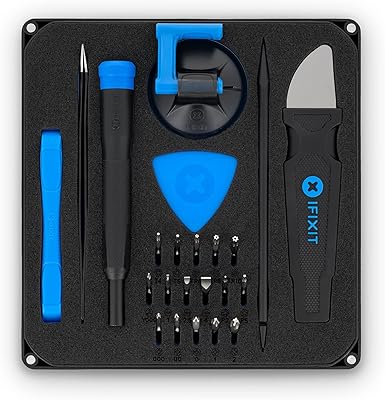
iFixit Essential Electronics Toolkit
84%
93%
Bit Quality
71%
Bit Variety
74%
Driver Ergonomics
91%
Case & Organization
78%
Opening Tools
More
Chord Electronics Mojo 2
81%
96%
Sound Quality
88%
Portability & Form Factor
94%
IEM Compatibility
83%
Build Quality
91%
Input Versatility
More
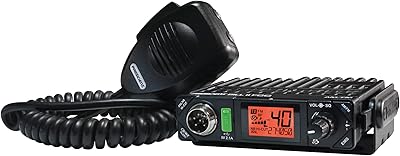
President Bill CB Radio
80%
83%
Audio Receive Quality
78%
Transmit Clarity
86%
Noise Filtering
71%
Squelch Performance
74%
Display Readability
More
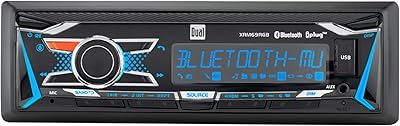
Dual Electronics XRM69RGB Single DIN Car Stereo
73%
88%
Value for Money
91%
Ease of Installation
74%
Bluetooth Reliability
67%
Sound Quality
61%
Hands-Free Call Quality
More
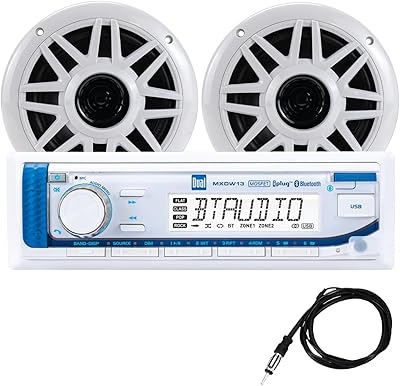
Dual Electronics MXP152W Marine Media Receiver Bundle
74%
88%
Value for Money
84%
Bluetooth Connectivity
71%
Marine Durability
67%
Sound Quality
76%
Ease of Installation
More
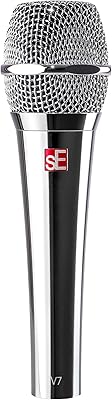
SE Electronics V7 Chrome
84%
94%
Feedback Rejection
92%
Build Quality & Durability
88%
Aesthetic Appeal
89%
Vocal Clarity & Crispness
86%
Handling Noise Reduction
More
Dual Electronics MXD140B Marine Radio
85%
89%
Bluetooth Connectivity
92%
Value for Money
83%
Durability & Build Quality
81%
Sound Quality
85%
Ease of Use
More
Sporty's E6B Electronic Flight Computer
79%
96%
FAA Exam Compliance
91%
Calculation Accuracy
88%
Feature Breadth
67%
Ease of Learning
74%
Build Quality
More
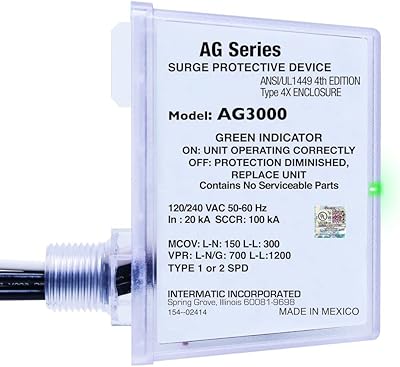
Intermatic AG3000 HVAC Surge Protective Device
82%
88%
Surge Protection Effectiveness
91%
TPMOV Technology Reliability
84%
Build Quality & Enclosure
86%
Ease of Installation
73%
LED Status Indicator
More

FAQ

That really depends on your comfort level with line-voltage wiring. This dusk-to-dawn switch connects via wire leads rather than a plug-in socket, which means you are working directly with the electrical wiring inside a fixture or junction box. If you have done basic fixture wiring before, it is manageable. If not, having a licensed electrician handle the hookup is the safer call.

It works with both. The Intermatic EK4236S Electronic Photocontrol was specifically engineered to be compatible with modern LED drivers as well as traditional HID fixtures, and it is tested under LED driver loads per NEMA 410. So whether you are upgrading an older system or installing fresh LED fixtures, this photocontrol should handle either without issue.

No, this particular unit is not a twist-lock style — it connects via wire leads and uses a stem-and-swivel mount rather than a plug-in NEMA socket. If your fixture needs a direct twist-lock replacement, you would want to look at a different Intermatic model designed for that mounting style.

The sensitivity threshold is fixed at the factory at approximately 1.5 footcandles, which is a typical dusk light level. There is no manual adjustment dial or app control. For most outdoor applications this works fine, but if you are in an area with a lot of competing artificial light nearby, that fixed threshold can occasionally cause inconsistent triggering.

The unit is designed to fail in the on position, which means if something goes wrong internally, your connected lights stay on rather than going dark. For security and safety lighting, that is the preferred failure behavior — a dark parking lot or building exterior is a bigger problem than lights that stay on a bit longer than intended.

That is exactly what the swivel mount is designed for. You can angle the sensor head away from the fixture and toward an open area of sky where it will read natural ambient light accurately. Pointing the sensor toward the fixture or a reflective wall surface is a common installation mistake that causes erratic on/off behavior.

Yes, it is built with outdoor exposure in mind. The circuit board has a conformal coating that protects the electronics from moisture and temperature swings, and it carries UL and CSA certifications for outdoor use. That said, the plastic housing is functional rather than heavy-duty, so extremely severe or fully exposed installations may benefit from added fixture protection.

It can run multiple fixtures as long as the combined load stays within the unit's rated capacity. At 277VAC it handles a substantial wattage, so running two or three LED fixtures off a single photocontrol is generally feasible. Just add up your fixture wattages before wiring to make sure you stay within the rated limits.

It comes up in a small number of reviews but does not appear to be a widespread pattern. The majority of buyers report the unit working correctly right out of the box. If you do receive a non-functional unit, the best course of action is to contact the retailer for a replacement, since the warranty documentation on the product listing is somewhat vague about the claims process.

Intermatic targets a service life of 10 to 20 years and rates the unit for more than 10,000 switching cycles — but it is worth keeping in mind those are manufacturer-stated targets tested under controlled conditions. Real-world lifespan depends on installation quality, local voltage conditions, and environmental exposure. Based on buyer feedback, units that are installed correctly and protected from direct weather exposure tend to perform reliably over multiple years, though verifying a decade-long claim from reviews alone is not really possible.