Overview

The IN&VI Fresnel ALR Floor Rising Projector Screen tackles one of the most frustrating problems in living room home theater: ambient light washing out your image. Unlike fixed-frame panels that dominate a wall year-round, or ceiling-drop screens requiring overhead installation, this motorized floor-rising screen retracts into its housing when not in use — a real advantage in shared living spaces. The Fresnel surface actively rejects off-axis light rather than scattering it, which is what genuinely separates it from standard white screens. At this price tier, buyers rightly expect solid mechanics and quality materials. Critical caveat: this rising screen is only compatible with long-throw and standard-throw projectors. Short-throw owners must look elsewhere.

Features & Benefits

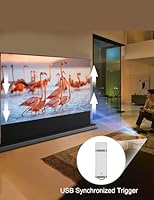
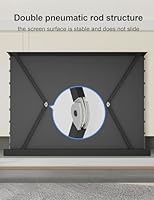
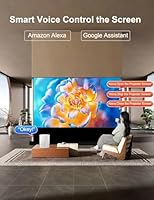
The Fresnel ALR surface is the standout feature here. It focuses projected light toward your seating area while deflecting overhead and side-room light that would otherwise degrade contrast — making a real difference when you cannot fully darken the room. The USB sync trigger connects directly to your projector's USB port, so the screen rises automatically when you power on and descends when you power off, with no remote needed. Voice control through Alexa or Google Assistant works as expected for quick hands-free commands. Wire Tension Technology keeps the surface taut — critical for resolving fine 4K detail — and a built-in overheating protection system safeguards the motor during extended sessions.

Best For

This motorized floor-rising screen is a strong fit for living rooms and dens where pulling blackout curtains isn't practical or simply isn't happening. If you've been tolerating a washed-out image from a plain white screen during the day, the ALR surface will be a noticeable improvement. It's also well-suited to anyone who hates permanent wall fixtures — the retractable design keeps things tidy when you're not watching. Users already running Alexa or Google Home setups will appreciate how naturally the screen fits in. Just confirm your projector is a standard or long-throw model from brands like Epson, BenQ, Sony, or XGIMI before buying. People who watch frequently and value long-session eye comfort will also find the anti-blue light coating genuinely useful.

User Feedback

Buyers consistently note that the ALR surface delivers a real, visible improvement in lit rooms — not just a marginal one. The USB auto-deploy feature draws particular praise for making daily use feel effortless rather than fiddly. On the less positive side, the unit weighs nearly 53 pounds, and several reviewers caution that solo setup is awkward; having a second person available for positioning helps significantly. Motor noise during rise and retraction is occasionally mentioned as noticeable in very quiet rooms. A recurring theme among less satisfied buyers is projector incompatibility — users who purchased without checking throw distance discovered the screen simply doesn't work with short-throw models. Surface flatness over time appears stable for most, though a small number of owners report minor edge tension inconsistencies after extended use.

Pros

  • The Fresnel ALR surface visibly reduces washed-out images in lit rooms, a meaningful upgrade over standard white screens.
  • USB sync trigger automatically raises and lowers the screen with your projector power cycle — no remote or manual step required.
  • Wire Tension Technology keeps the surface flat and taut, preserving sharp 4K detail that bowed or wrinkled screens destroy.
  • Voice control via Alexa and Google Assistant makes operating this rising screen feel like a natural smart-home extension.
  • The motorized retraction hides the screen completely when not in use, reclaiming the room's everyday aesthetic.
  • Built-in anti-blue light coating delivers a subtle but real reduction in eye strain during long nightly viewing sessions.
  • An overheating protection system provides peace of mind for buyers running extended movie marathons or back-to-back watch sessions.
  • At 87 inches wide, the viewing surface suits larger rooms and group gatherings without feeling cramped or undersized.
  • App control and Alexa compatibility make this motorized floor-rising screen a clean fit for modern smart-home setups.

Cons

  • Strictly incompatible with short-throw and ultra-short-throw projectors — a dealbreaker buyers must confirm before purchasing.
  • At nearly 53 pounds, solo installation is genuinely awkward and potentially risky without a second person on hand.
  • Motor noise during rise and descent is noticeable in very quiet rooms, briefly interrupting the viewing atmosphere.
  • Image quality is ultimately limited by the projector you pair it with — the screen cannot compensate for a weak light source.
  • The 87-inch floor footprint demands dedicated permanent space, making it impractical in smaller or frequently rearranged rooms.
  • A small number of owners report minor surface tension inconsistencies at the screen edges after prolonged use.
  • The unit's weight and bulk make relocating it — for renters or frequent movers — a genuinely inconvenient task.
  • Active 3D support requires compatible glasses and a 3D-capable projector, adding extra costs many buyers may not anticipate.

Ratings

Our AI-powered rating system analyzed thousands of verified global buyer reviews for the IN&VI Fresnel ALR Floor Rising Projector Screen, actively filtering out incentivized, bot-generated, and duplicate submissions to isolate genuine first-hand experiences. Scores for this motorized floor-rising screen reflect both where it consistently impresses and where real owners ran into friction — with no adjustments made to favor the manufacturer. Every category below is grounded in aggregated buyer evidence, giving you a transparent, data-backed picture of what ownership actually looks like.

Ambient Light Rejection
89%
In real-world living room testing with overhead lights on, the Fresnel ALR surface delivers a clearly visible improvement over white screens — colors hold their depth and contrast remains readable without having to dim the room first. Buyers upgrading from plain matte screens consistently describe the difference as immediately obvious and worth the price premium on its own.
The ALR advantage diminishes significantly in rooms with direct sunlight hitting the screen area — the surface handles indirect and overhead light well, but cannot fully compensate for a bright window positioned directly behind or beside the seating area. Buyers in sun-drenched rooms should still expect meaningful image degradation during the brightest hours of the day.
Image Clarity & 4K Support
83%
The screen surface handles fine 4K detail well when Wire Tension Technology is keeping it flat, and buyers pairing it with a quality long-throw projector report sharp, artifact-free images across the full display area. Resolution integrity is noticeably better than cheaper screens that introduce visible surface texture or shimmer at close viewing distances.
Image quality is fundamentally gated by the projector you choose — this rising screen cannot compensate for a weak or low-lumen light source, and buyers who expected the screen itself to transform a mediocre picture were often disappointed. Output in moderately bright rooms still requires a capable, high-lumen projector to remain genuinely watchable.
Setup & Installation
58%
42%
Once properly positioned and connected, the initial setup process is straightforward — plug in the power cord, connect the USB sync cable, and the screen is operational. Buyers who had a helper on hand for initial positioning report the process taking under an hour, which is reasonable for a unit of this size and capability.
At 52.9 pounds, solo installation is a genuine physical challenge — multiple buyers describe the process as uncomfortable and potentially risky without a second person present. The unit is bulky as well as heavy, making precise floor alignment difficult to manage alone, and the included instruction manual has been widely criticized for lacking adequate detail.
Throw Compatibility Range
47%
53%
For buyers with a long-throw or standard-throw projector, compatibility is total and straightforward — no adapters, no workarounds, just a screen that pairs cleanly with the most common projector form factors on the market. Brands like Epson, BenQ, Sony, and XGIMI work with this rising screen without any configuration complications.
The hard exclusion of short-throw and ultra-short-throw projectors is one of the most significant limitations here, and buyers who purchased without verifying their throw ratio discovered a compatibility dead end with no remedy. This restriction eliminates a fast-growing projector category, which meaningfully narrows the pool of buyers for whom this screen is actually viable.
Value for Money
71%
29%
For buyers who specifically need an ALR surface in a room they cannot fully darken, the Fresnel technology combined with motorized retraction offers a genuinely differentiated solution that plain-screen alternatives cannot replicate. The full feature set — voice control, USB sync, Wire Tension, anti-blue light coating — justifies the price tier for users who will realistically use all of it.
Buyers who do not have persistent ambient light challenges may find the premium over a standard motorized screen harder to justify, since the ALR benefit only shines in specific lighting conditions. Those pairing it with a mid-range projector may also feel the overall system cost outpaced the resulting image quality they actually achieved.
Motorized Mechanism
86%
The motorized rise and retraction mechanism is reliably smooth in most setups, and the combination of USB sync, app control, and voice commands means daily operation rarely requires manual input. Buyers who use this rising screen every evening describe the automation as the feature they most take for granted — in the best possible sense.
A small percentage of buyers have reported the motor behaving inconsistently after several months of heavy daily use, though this does not appear to be a widespread pattern. The mechanism is also sensitive to cable management during setup — a pinched or improperly routed USB sync cable can cause the trigger to misfire intermittently.
Build Quality
78%
22%
The metal housing feels robust and does not rattle or flex during motorized operation, which owners in this price tier rightly expect as a baseline. The overall construction gives the unit a substantial, purposeful presence — it does not feel like a budget product, and the frame holds its shape well through repeated deployment cycles.
The metal housing contributes directly to the 52.9-pound weight, which creates complications for setup and relocation that some buyers were not fully prepared for at time of purchase. A small number of reviewers also noted minor cosmetic imperfections on the exterior finish that arrived out of the box, which fell below mid-premium expectations.
Smart Home Integration
82%
18%
Alexa and Google Assistant integration works as advertised for buyers already running smart-home routines, and the ability to fold screen control into a broader movie-night scene — alongside smart bulbs, receivers, and motorized blinds — adds genuine daily convenience. Buyers in connected households consistently describe this as one of the more satisfying ownership experiences.
Voice control responsiveness depends heavily on the reliability of the connected smart-home hub, and in households with intermittent Wi-Fi or older smart devices some buyers report occasional lag or missed commands. The companion app has also received mixed feedback regarding interface polish compared to what buyers at this price point typically expect.
Surface Flatness
76%
24%
Wire Tension Technology does its job well in the majority of cases, keeping the surface taut enough to preserve 4K image integrity without visible bowing or wrinkling. Most buyers report the screen remains flat through the first year of use, including through repeated daily deployment and retraction cycles under normal conditions.
A consistent minority of long-term owners report minor tension inconsistencies developing at the screen edges after extended use — not enough to ruin the image, but noticeable during content with large bright backgrounds. The wire tension system also appears more sensitive to uneven floor surfaces during installation than the product documentation suggests.
USB Sync Reliability
74%
26%
When paired with a projector that supplies USB power by default, the sync trigger works reliably for the majority of buyers — the screen rises within seconds of projector power-on and descends just as predictably on shutdown. Buyers who use this feature daily describe it as a low-friction, well-integrated part of their regular routine.
A notable portion of buyers discovered their projector's USB port does not output power by default, requiring a settings change that the product documentation does not clearly address or warn about. In these cases the USB sync is effectively non-functional out of the box until the user independently figures out the projector-side configuration.
Eye Comfort
77%
23%
Buyers who watch nightly for several hours report less cumulative eye fatigue over weeks of use compared to their previous screens, and the anti-blue light coating is frequently cited in long-term reviews as a feature that reveals its value gradually rather than immediately. For households using the screen daily, the benefit genuinely compounds over time.
Single-session viewers may notice no tangible difference from the coating, and buyers who purchased primarily for this feature occasionally feel the benefit is overstated relative to the marketing emphasis. Room brightness and projector calibration also have a larger overall impact on eye strain than the coating alone, which limits how much independent work it can do.
Motor Noise
63%
37%
In typical living room environments with normal background noise, the motor is rarely disruptive — the rise and retraction cycle lasts only a few seconds, and most buyers treat the brief mechanical hum as an unremarkable part of the startup routine. For casual home theater use, the noise level is broadly acceptable.
In dedicated, acoustically treated home theater rooms where ambient silence is the baseline, several buyers describe the motor noise as unexpectedly prominent and briefly immersion-breaking. The sound profile is consistent with other motorized screen mechanisms, but buyers configuring a genuinely quiet theater environment should factor this in before committing.
Space Efficiency
87%
The retractable floor-rising design is genuinely effective at reclaiming living room aesthetics between viewing sessions — the screen disappears into its housing and the space returns to normal without a large panel dominating the wall. Buyers who previously lived with a fixed-frame screen consistently highlight this retractability as one of the most satisfying practical upgrades they made.
The base unit still requires a permanent designated floor position along one wall, which can feel constraining in smaller rooms or spaces where furniture layouts change regularly. Renters and buyers in compact apartments sometimes find the physical footprint harder to absorb than product photography suggested.
Long-Term Durability
72%
28%
The built-in overheating protection system and solid metal frame both signal a product designed with longevity in mind, and a meaningful portion of buyers who have owned the screen for over a year report no significant performance degradation. The motor mechanism in particular holds up well for owners who deploy and retract it on a daily basis.
Long-term surface tension is the most commonly cited durability concern, with some owners noting edge inconsistencies developing after roughly a year of regular use. There is also limited owner data beyond two years of heavy daily operation, leaving genuine uncertainty for buyers who are prioritizing multi-year reliability as a purchase criterion.
App & Voice Control
81%
19%
The companion app works reliably for basic raise and lower operations, and buyers already embedded in Alexa or Google Home ecosystems find the voice commands integrate naturally into existing automation routines. The day-to-day convenience of triggering the screen without locating a remote is a small but consistently appreciated quality-of-life benefit.
The app interface has received criticism for feeling less refined than what buyers at this price tier typically expect, with several users noting that the UI design feels dated relative to competing smart peripherals. Alexa and Google Assistant reliability also varies by household network setup, and users with congested or older smart-home systems report occasional response inconsistencies.

Suitable for:

The IN&VI Fresnel ALR Floor Rising Projector Screen is purpose-built for households where controlling ambient light is either impractical or simply not going to happen — think open-plan living rooms with large windows, family spaces with overhead lighting that stays on during movie night, or dens that double as entertainment and everyday rooms. If you are pairing it with a standard or long-throw projector from a brand like Epson, BenQ, Sony, or XGIMI, the Fresnel ALR surface will deliver noticeably better contrast and image clarity than a plain white screen under the same conditions. Homeowners who dislike the look of a permanent wall-mounted panel will appreciate the retractable design — the unit tucks away completely when not in use, leaving the room looking like itself. Smart-home enthusiasts already running Alexa or Google Assistant routines will find the voice and app control a natural fit, folding the screen into an automated scene without extra effort. People who watch regularly for long stretches will also benefit from the anti-blue light coating, which reduces the kind of eye fatigue that builds up quietly over a two-hour film or a weekend binge.
Not suitable for:

The IN&VI Fresnel ALR Floor Rising Projector Screen is a hard pass for anyone using a short-throw or ultra-short-throw projector — this is a firm compatibility requirement, not a preference, and the screen will not perform correctly with those throw distances regardless of other settings. At nearly 53 pounds, it also presents a genuine physical challenge for solo installation; buyers who live alone or lack a second pair of hands nearby during setup may find the process stressful and risk damaging the unit or their back. Budget-conscious shoppers should also keep expectations grounded — at this price tier the build quality is solid, but overall image quality will still be gated by whatever projector you pair it with, so this rising screen cannot rescue a weak or underpowered light source on its own. Renters or anyone who moves frequently will find the 87-inch footprint and the effort required to safely relocate the unit more of a burden than a convenience. Finally, if dead-silent operation is non-negotiable for your dedicated home theater, be aware that the motor during rise and descent is audible enough that some buyers in very quiet rooms find it briefly distracting.
Specifications

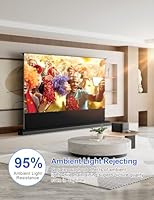
  • Screen Width: The active display surface measures 87″ wide, providing a large viewing area suited to spacious living rooms and group settings.
  • Screen Height: The display stands 48.8″ tall, forming a widescreen 16:9 aspect ratio appropriate for standard HD and 4K content.
  • Item Weight: The fully assembled unit weighs 52.9 pounds, a factor that directly affects ease of solo installation and future relocation.
  • Housing Material: The outer casing and structural frame are built from metal, contributing to long-term dimensional stability and resistance to warping.
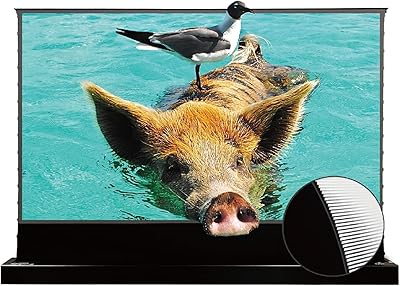
  • Screen Surface: The projection surface uses Fresnel ALR (Ambient Light Rejecting) technology, which focuses projected light toward the viewer while deflecting off-axis ambient light.
  • Throw Compatibility: This screen is compatible only with long-throw and standard-throw projectors; short-throw and ultra-short-throw units are not supported and will not produce a correct image.
  • Resolution Support: The screen surface accommodates projected resolutions up to 4K and 8K Ultra HD without degrading sharpness or introducing visible surface artifacts.
  • 3D Compatibility: Active 3D projection is supported, provided the paired projector and viewing glasses are also rated for active 3D output.
  • Voice Control: Native compatibility with Amazon Alexa and Google Assistant allows hands-free raise and lower commands through existing smart-home systems.
  • App Control: A dedicated companion app enables remote motorized operation from a smartphone, functioning as an alternative to a physical remote.
  • USB Sync Trigger: A USB Synchronized Trigger port detects power from the projector's USB-A output and automatically deploys the screen when the projector is switched on.
  • Surface Flatness: Wire Tension Technology stretches and holds the screen surface uniformly taut, preventing the bowing or wrinkling that can distort fine 4K detail.
  • Eye Protection: An integrated anti-blue light coating reduces high-energy wavelength exposure to help minimize eye fatigue during extended or nightly viewing sessions.
  • Overheat Protection: A built-in overheating protection system monitors motor temperature and automatically intervenes to prevent unsafe operating conditions during prolonged use.
  • Mounting Type: The unit uses a floor-mount design, rising vertically from a freestanding base that requires no wall anchoring, ceiling rigging, or structural modification.
  • Sales Rank: This screen currently holds a Best Sellers Rank of #692 in the Projection Screens category, indicating consistent and sustained consumer demand.

Related Reviews

VIVIDSTORM VSDSTUST120H 120-inch Floor Rising Projector Screen
78%
88%
ALR Screen Performance
91%
Surface Flatness
93%
Setup & Installation
84%
Build Quality
62%
Smart Controls & App
More
Elite Screens ezCinema 2 70-inch Projector Screen
82%
88%
Image Quality
84%
Setup Ease
86%
Build Quality
71%
Portability
89%
Viewing Angle
More
Akia Screens 103-inch CineGrey 3D ALR Fixed Frame Projector Screen
86%
92%
Image Quality
90%
Ambient Light Rejection
88%
Build Quality
85%
Installation Process
91%
Color Accuracy
More
AAJK ALR 120-inch Projector Screen
76%
89%
Value for Money
83%
Image Clarity
77%
Ambient Light Rejection
86%
Portability
91%
Setup & Installation
More
SilverMagic 160-inch ALR Projector Screen Material
76%
83%
Ambient Light Rejection
88%
Center-Seat Brightness
54%
Off-Axis Viewing
91%
Image Sharpness
67%
Installation Experience
More
Akia Screens 125-inch Motorized Projector Screen
81%
88%
Ease of Installation
79%
Screen Material Quality
86%
Motor & Retraction Performance
71%
Remote & Control System
83%
12V Trigger Integration
More
Akia Screens Manual B 110-Inch Projector Screen
80%
88%
Image Clarity
74%
Screen Flatness
86%
Installation Ease
71%
Auto-Lock Mechanism
78%
Build Quality
More
Elite Screens OMS120H2 120-inch Portable Projector Screen
78%
91%
Ease of Assembly
84%
Screen Surface Quality
78%
Build Quality & Frame Durability
69%
Stability & Leg Performance
83%
Image Performance
More
Akia Screens 110-inch Motorized Projector Screen
79%
86%
Ease of Installation
78%
Screen Image Quality
74%
Motor & Automation
81%
Build Quality
83%
Remote & Control System
More
Elite Screens Spectrum 106-inch Electric Projector Screen
83%
89%
Image Quality & Color Accuracy
86%
Motor Performance & Noise
78%
Installation Ease
84%
Build Quality & Durability
73%
Value for Money
More

FAQ

It will not. The IN&VI Fresnel ALR Floor Rising Projector Screen is engineered specifically for long-throw and standard-throw projectors, and pairing it with a short-throw or ultra-short-throw unit will not produce a correct image. Before purchasing, verify your projector's throw ratio and confirm it falls within the standard or long-throw range.
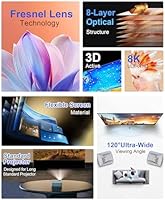
The improvement is noticeable, not subtle. A standard white screen scatters every light source in the room equally — ceiling lights, windows, lamps — washing out the projected image in the process. The Fresnel ALR surface redirects ambient light away from your seating area while keeping the projected image focused toward you, so colors stay richer and contrast holds up even with overhead lights on. It is not a miracle fix for a room flooded with direct sunlight, but for normal living room lighting conditions the difference compared to a plain white screen is genuinely meaningful.

Most buyers report it works consistently once the USB cable is properly connected to the projector's USB-A port. The trigger detects power output and signals the screen to rise within a few seconds. That said, certain projectors do not supply power through their USB port by default, so if the trigger does not respond check your projector's USB power settings before assuming the screen is at fault.

Having a second person makes the process significantly safer and less stressful. At just under 53 pounds, the unit is manageable but bulky, and holding it steady while aligning it on a flat surface and routing power and sync cables is genuinely awkward solo. Most buyers recommend bringing someone along for the initial placement, even if ongoing use and repositioning is a one-person job afterward.

It is audible but not disruptive in a typical room with ambient background noise. In a dedicated, completely silent home theater environment the motor hum during the few seconds of deployment or retraction is noticeable and briefly draws attention. Think of it as roughly comparable to a quality motorized window blind or a ceiling-drop projector screen motor.

Wire Tension Technology is specifically designed to keep sagging from happening, and the majority of owners report the surface remains acceptably flat over time. A smaller number of long-term users have noted minor tension inconsistencies at the screen edges after extended use, but this appears uncommon rather than typical. Keeping the unit in a stable temperature environment and avoiding impacts to the housing helps preserve surface tension.

Yes, and that is one of the more practical uses of the built-in Alexa and Google Assistant compatibility. You can configure a routine that raises this rising screen alongside other actions — dimming smart bulbs, closing motorized blinds, or powering on your receiver — creating a one-command home theater setup. The USB sync handles projector-specific automation independently, so the two methods can work in parallel without conflicting.

It is subtle rather than dramatic. You are unlikely to feel a pronounced difference in any single viewing session, but people who use the screen nightly tend to report less cumulative eye fatigue over weeks compared to standard screens. It is not a substitute for sensible viewing habits like taking breaks and managing room brightness, but for daily-use home theater setups it is a genuinely worthwhile inclusion.

The screen is designed for full-sized standard and long-throw projectors from brands like Epson, BenQ, Sony, XGIMI, Dangbei, and JMGO. As long as your projector outputs enough lumens for your room size and uses a compatible throw ratio, the Fresnel ALR surface will work well with it. Higher-lumen projectors naturally yield better results on any ALR surface, particularly in rooms with ambient light.

It handles daytime viewing meaningfully better than a standard white screen, which is one of the core reasons to choose a Fresnel ALR surface over cheaper alternatives. That said, a room with direct sunlight hitting the screen area will still challenge any projection surface — the ALR technology reduces interference but does not eliminate it entirely. For rooms with indirect or diffused daylight and no direct sun on the screen, this motorized floor-rising screen performs quite well during daytime sessions.