Overview

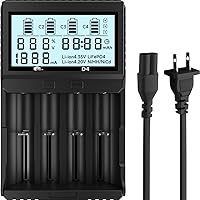
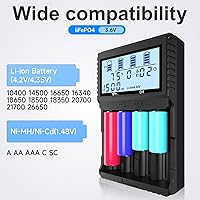
The IMREN D4 4-Bay Battery Charger Tester is a mid-range cylindrical cell charger built for hobbyists who cycle through a lot of batteries — flashlight collectors, vapers, and power tool users keeping a drawer full of 18650s and 21700s. Released in early 2023 by Hunan Aimeiren New Energy under the IMREN brand, it handles an unusually wide range of formats, from compact 10340 cells all the way up to chunky 26650s. It also auto-detects battery chemistry, switching between Li-ion and Ni-MH/Ni-CD without any manual input. A car adapter is included, which is a genuinely useful touch for anyone who regularly charges on the road.

Features & Benefits

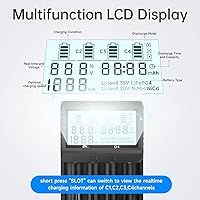
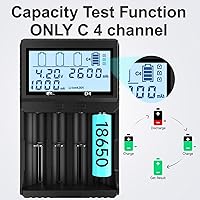
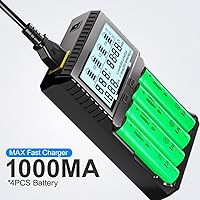
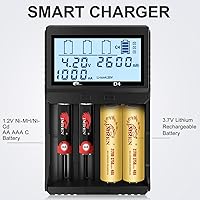
The standout feature of this battery charger and tester is the C4 capacity testing mode, which fully charges a cell, then discharges it at a constant 500 mA, and reports the actual mAh reading on screen — handy for culling weak or aging cells from your collection. The backlit LCD independently tracks voltage, charge percentage, capacity added, and elapsed time for each of the four slots, so you always know what is happening. Each slot runs at 1000 mA, meaning four 3000 mAh cells can be topped up in around three hours. The charger also supports multiple voltage profiles — 4.2 V, 4.35 V, and 3.6 V for various Li-ion types, plus 1.48 V for Ni-MH and Ni-CD cells.

Best For

This 4-bay charger makes the most sense for hobbyists sitting on a pile of cylindrical cells in mixed condition — specifically anyone who needs to figure out which 18650s are still pulling their weight and which ones should be retired. Flashlight enthusiasts, vapers, and ham radio operators who juggle multiple formats will appreciate not needing a different charger for every cell type. The included car adapter is a real bonus for long-distance drivers or anyone who works out of a truck. Beginners will also find it approachable since chemistry detection is automatic — you drop in a cell and the charger handles the rest. It is less suited to users who need lab-grade accuracy from their testing.

User Feedback

Across roughly 156 ratings, the IMREN D4 sits at 4.1 out of 5 stars — a score that reflects genuine usefulness tempered by a few real frustrations. On the positive side, buyers consistently praise the clear LCD readout, the breadth of compatible battery sizes, and the convenience of the car adapter for travel. Where complaints cluster is around the capacity testing function: many buyers assume all four slots can run the test, only to learn it is C4-slot exclusive. A few users also note that mAh readings can differ noticeably from those produced by dedicated analyzers. Build quality gets mixed marks — nothing catastrophic, but not quite as sturdy as Nitecore or Xtar options sitting at a comparable price point.

Pros

  • Supports an exceptionally wide range of cylindrical cell formats, from tiny 10340s up to 26650 and 21700 sizes.
  • Automatic chemistry detection switches between Li-ion and Ni-MH/Ni-CD without any manual configuration.
  • The backlit LCD independently displays voltage, percentage, capacity added, and time for each slot.
  • Four independent 1000 mA channels mean you can charge four 3000 mAh cells in roughly three hours.
  • Handles three Li-ion voltage profiles — 4.2 V, 4.35 V, and 3.6 V — covering standard, high-voltage, and LiFePO4 cells.
  • Included car adapter makes this 4-bay charger genuinely useful for road trips and vehicle-based charging.
  • C4 capacity test mode gives a practical way to identify weak or aging cells without buying separate equipment.
  • Automatic current selection reduces the risk of overcharging by adjusting the rate to suit each inserted battery.
  • Compact and lightweight at under 9 ounces, making it easy to pack or store on a workbench.

Cons

  • Capacity testing is locked to the C4 slot only — a significant limitation most buyers discover only after purchase.
  • Reported mAh readings can drift noticeably from results produced by dedicated battery analyzers.
  • Build quality feels a notch below comparable chargers from Nitecore or Xtar at a similar price point.
  • No individual slot current adjustment — every channel is fixed at 1000 mA with no lower-rate option for sensitive cells.
  • The 30-second screen timeout, while energy-efficient, can be annoying when monitoring a long charging session.
  • User manual is sparse and offers little guidance for first-time users unfamiliar with capacity testing procedures.
  • No USB output port, so the IMREN D4 cannot double as a power bank for other devices.
  • Only one slot supports capacity testing, meaning sorting a large batch of cells is a slow, one-at-a-time process.

Ratings

The scores below for the IMREN D4 4-Bay Battery Charger Tester were generated by our AI rating engine after analyzing verified purchase reviews from buyers worldwide, with spam, bot-submitted, and incentivized feedback actively filtered out. Each category reflects a genuine synthesis of what real users praised and what frustrated them — no cherry-picking, no inflated averages. Where the charger earns strong marks and where it falls short are both represented here with equal transparency.

Battery Compatibility
91%
Users consistently single out the sheer breadth of supported formats as a standout strength. Hobbyists with mixed collections — 18650s for flashlights, 21700s for vape mods, and old AA Ni-MH cells for remotes — appreciate being able to run everything through a single device without adapters or guesswork.
A small number of users report that very short cells occasionally make inconsistent contact with the spring terminals, requiring a repositioning. It is a minor inconvenience rather than a dealbreaker, but worth noting for anyone using a lot of smaller-format cells like 10340s or 10440s.
Ease of Use
86%
The automatic chemistry detection is the headline convenience feature here — drop in a Li-ion or Ni-MH cell and the charger figures out the rest. Beginners in particular appreciate that there are no menus to navigate just to start a basic charge, which lowers the barrier to entry considerably.
Activating the C4 capacity test requires a specific two-button hold sequence that is not intuitive and is only briefly described in a sparse manual. Several buyers mention needing to look up the procedure online after missing it entirely on first use.
Display & Readability
83%
The backlit LCD draws consistent praise for showing per-slot data — voltage, percentage, elapsed time, and mAh added — all at once without needing to cycle through a menu. Users who monitor charging sessions closely find it genuinely informative compared to simpler LED-only chargers.
The 30-second backlight timeout irritates users who like to keep an eye on progress from across a desk or workbench, since a glance from a few feet away often finds a dark screen. There is no way to extend or disable the timeout, which feels like an oversight on a device aimed at engaged hobbyists.
Capacity Testing
61%
39%
For buyers who simply want a rough way to sort a batch of cells — identifying the clearly dead ones from the still-usable ones — the C4 test does the job without requiring a separate piece of equipment. It is a useful triage tool that adds real value for anyone managing a large collection of secondhand or aging cells.
The single-slot limitation is a recurring frustration: most buyers assume all four channels can test, and discovering that only C4 supports it feels like a bait-and-switch. On top of that, the mAh readings frequently diverge from results produced by dedicated analyzers, so the numbers should be treated as approximate indicators rather than accurate measurements.
Charging Speed
78%
22%
Running four 3000 mAh cells to full in roughly three hours is a reasonable throughput for an everyday hobby charger, and users who previously owned single-slot or lower-current chargers notice a meaningful improvement in how quickly they can cycle through a full set of spares.
The fixed 1000 mA charge rate with no option to step down to 500 mA or lower is a limitation for users who prefer slower, gentler charges for older or higher-capacity cells. Competing chargers in the same price range often offer selectable current, which gives more control over battery longevity.
Build Quality
67%
33%
For the price, the unit feels acceptably solid in hand and the slot rails hold cells securely during normal desktop use. Users report no immediate issues with the contacts or the housing in short-term use, and the overall footprint is compact enough to sit neatly on a workbench or nightstand.
Buyers who have previously owned Nitecore or Xtar chargers consistently describe the plastic housing and slot mechanism as feeling a step below those brands. A handful of longer-term owners report contact degradation or fitment loosening after several months of daily use, suggesting durability may be a concern over time.
Value for Money
74%
26%
For buyers who need a capable everyday 4-bay charger and see the capacity testing feature as a bonus rather than a primary requirement, this battery charger and tester represents fair value. The broad format support and included car adapter mean you are getting a genuinely versatile tool without paying a premium.
When buyers compare it directly against similarly priced options from more established brands, the narrower feature set — particularly the single-slot testing limitation and fixed charge current — makes the value proposition feel tighter. If capacity testing across all four bays is a priority, the price gap to a proper 4-channel analyzer is worth considering.
Car Adapter Utility
82%
18%
The included DC 12 V car adapter receives genuine appreciation from users who frequently travel or work out of vehicles. Truck drivers and overlanders in particular mention it as a deciding factor in their purchase, since having a capable multi-bay charger that works off a cigarette lighter socket is not a given at this price.
Some users note that the car adapter cable is on the shorter side, which can be awkward depending on where the accessory socket is positioned in a vehicle. There are also occasional reports of the adapter running warm during extended charging sessions, though no safety incidents have been documented in the reviewed feedback.
Chemistry Auto-Detection
84%
Buyers who mix Li-ion and Ni-MH cells in the same session find the automatic detection genuinely reliable — the charger correctly identifies chemistry across slots without cross-channel confusion. This is especially appreciated by users transitioning from older chargers that required manual chemistry selection via a switch or menu.
A small subset of users report occasional misidentification with certain LiFePO4 cells, where the charger defaults to a standard Li-ion profile rather than the 3.6 V LiFePO4 setting. This is not a widespread complaint but is worth verifying if LiFePO4 cells make up a significant portion of your collection.
Setup & Documentation
58%
42%
Basic charging requires zero setup — plug in, insert cells, and the unit starts automatically. For users who only ever need the standard charging function, the out-of-box experience is genuinely plug-and-play with no configuration required.
The included manual is widely described as thin and poorly translated, covering the basics but skipping over important details like the exact capacity test activation sequence and the meaning of each screen readout. Users wanting to get the most out of the IMREN D4 typically end up piecing together instructions from forum posts and video reviews.
Slot Independence
88%
Each of the four channels operates fully independently, meaning a completed charge in one slot does not affect or pause the others. Users who insert cells at different times — filling slots as batteries are pulled from devices throughout the day — find this especially practical.
Because each slot runs at a fixed 1000 mA regardless of cell state, there is no trickle or maintenance mode to switch into once a cell reaches full charge. Most users rely on the automatic shutoff rather than leaving cells on the charger long-term, which is the right habit, but the charger offers no explicit indication that it has entered a safe standby state.
Portability
76%
24%
At under 9 oz and with a compact footprint, the IMREN D4 travels reasonably well for a 4-bay charger. Users who pack it for camping trips or long road hauls note that it fits comfortably in a gear bag alongside the car adapter without taking up significant space.
The unit has no hard case or protective sleeve in the box, and the slot rails are exposed during transport. A few users mention that the spring contacts can get snagged on bag contents, and the lack of any carrying solution feels like a missed opportunity given how the car adapter pitches this as a travel-friendly charger.

Suitable for:

The IMREN D4 4-Bay Battery Charger Tester is a solid pick for hobbyists who regularly work with cylindrical rechargeable cells and want one device that handles the everyday charging workload plus a bit of basic diagnostics. Flashlight collectors, vape enthusiasts, and ham radio operators sitting on a mixed pile of 18650s, 21700s, and legacy Ni-MH cells will find the automatic chemistry detection and broad format support genuinely convenient — no fumbling with settings each time you swap cell types. The built-in capacity test on the C4 slot is a useful bonus for anyone trying to triage a batch of older or secondhand cells to figure out which ones are still worth keeping. Truck drivers and frequent travelers will also appreciate the included car adapter, since it means the charger is useful far from a wall outlet. Beginners who are just getting into the hobby and want something approachable without a steep learning curve will find this 4-bay charger friendly enough to use straight out of the box.

Not suitable for:

The IMREN D4 4-Bay Battery Charger Tester is not the right tool for anyone who needs precise, repeatable battery capacity measurements for technical or professional purposes. The capacity testing function is restricted to a single slot — the C4 channel only — which will frustrate buyers who expect to run simultaneous tests across all four bays; that expectation is reasonable given the product name, but the hardware simply does not support it. Users who need tight accuracy in mAh readings should be aware that the figures this charger reports can deviate from results produced by dedicated battery analyzers, so it is not a substitute for proper diagnostic equipment. If you are already invested in a brand ecosystem like Nitecore or Xtar and value that tier of build quality and firmware polish, this battery charger and tester may feel a step below in terms of fit, finish, and long-term reliability. Anyone charging only standard AA or AAA Ni-MH cells for household devices would also be overpaying for features they will never use.

Specifications

  • Brand: Manufactured by Hunan Aimeiren New Energy Co., Ltd. and sold under the IMREN brand.
  • Model: The model designation is D4, representing the 4-channel version in IMREN's charger lineup.
  • Dimensions: The charger body measures 6.49″ deep by 4.13″ wide by 1.1″ tall.
  • Weight: The unit weighs 8.9 oz, making it light enough to pack in a travel bag without much bulk.
  • Slot Count: Four fully independent charging channels allow simultaneous charging of up to four cylindrical cells at once.
  • Charge Current: Each slot delivers a fixed charge current of 1000 mA, with no user-adjustable lower-current option.
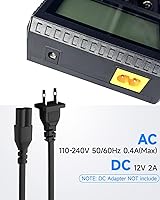
  • Input Power: Accepts AC input from 110–240 V at 50/60 Hz, and also supports DC 12 V charging via the included car adapter.
  • Output Voltages: Supports four output voltage profiles: 4.2 V (standard Li-ion), 4.35 V (high-voltage Li-ion), 3.6 V (LiFePO4), and 1.48 V (Ni-MH/Ni-CD).
  • Chemistries: Compatible with IMR, Li-ion, LiFePO4, Ni-MH, and Ni-CD battery chemistries, with automatic detection requiring no manual switching.
  • Cell Formats: Supports a broad range of cylindrical sizes including 18650, 21700, 20700, 26650, and many smaller formats down to 10340.
  • NiMH/NiCD Sizes: Also charges standard consumer cell sizes including AA, AAA, AAAA, A, C, and SC format Ni-MH and Ni-CD batteries.
  • Display: A backlit LCD screen shows voltage, charge percentage, capacity added (mAh), and elapsed time independently for each slot.
  • Backlight Timeout: The screen backlight automatically dims after 30 seconds of inactivity to reduce power consumption.
  • Capacity Testing: The C4 slot supports a charge-then-discharge capacity test at a constant 500 mA, displaying the measured mAh result on screen.
  • Test Limitation: Capacity testing is only available on the C4 channel; the other three slots function as standard chargers with no testing capability.
  • In the Box: The package includes the charger unit, one AC power cable, one DC 12 V car adapter, and a user manual.
  • Availability: The IMREN D4 first became available for purchase in April 2023.

Related Reviews
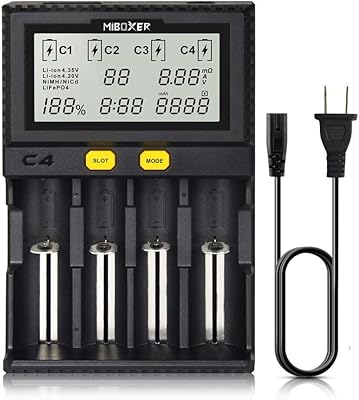
MiBOXER C4 4-Bay Battery Charger
86%
88%
Charging Performance
91%
Usability & Ergonomics
89%
Battery Compatibility
85%
Build Quality
93%
Display & Visuals
More
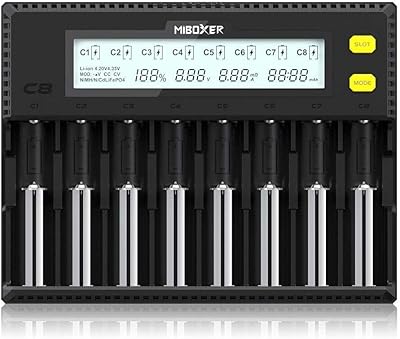
MiBOXER C8 8-Bay Battery Charger
82%
88%
Charging Performance
91%
Battery Compatibility
93%
LCD Display Clarity
86%
Internal Resistance Measurement
89%
Safety Features
More
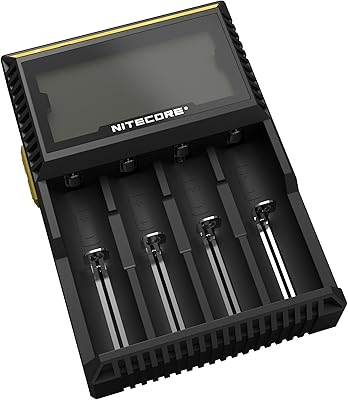
Nitecore Digicharger D4 4-Bay Battery Charger
75%
93%
Independent Slot Performance
88%
LCD Display Clarity
91%
Battery Compatibility
86%
Build Quality
89%
Safety Features
More
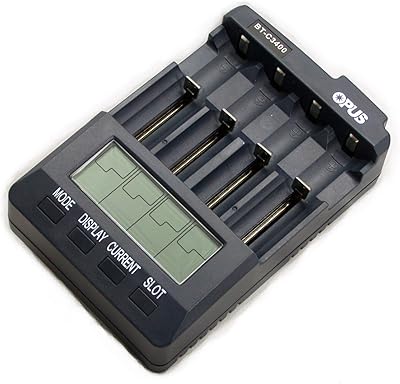
Opus C3400 4-Channel Battery Charger Analyzer
79%
93%
Measurement Accuracy
91%
Multi-Channel Independence
89%
Chemistry Compatibility
88%
Capacity Test Reliability
82%
Internal Resistance Testing
More
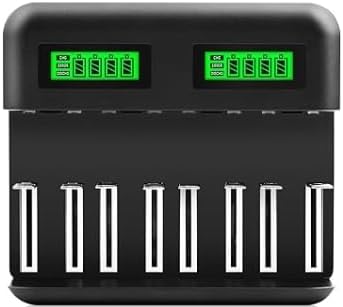
Intelligence 8 Bay Universal Battery Charger
86%
90%
Charging Speed
88%
Usability
93%
Safety Features
85%
Display Clarity
87%
Build Quality
More
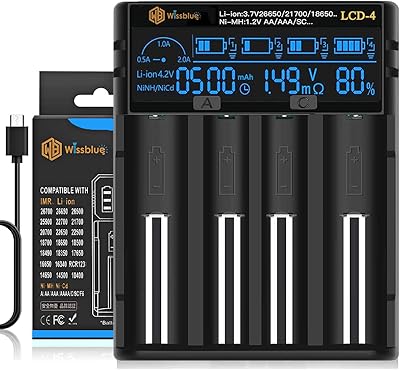
WISSBLUE LCD-4 4-Slot 18650 Battery Charger
81%
88%
LCD Display Quality
86%
Charging Speed
91%
Battery Compatibility
83%
Build Quality
67%
Capacity Reading Accuracy
More
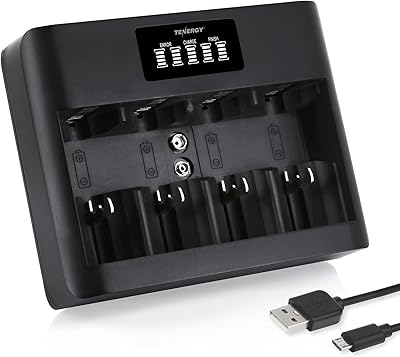
Tenergy TN486U 5-Bay Universal Battery Charger
80%
91%
Versatility
88%
USB Connectivity
84%
LCD Display
87%
Safety Features
58%
Charging Speed
More
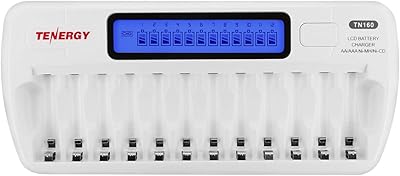
Tenergy TN160 12-Bay AA/AAA Battery Charger
83%
91%
Charging Reliability
58%
Battery Compatibility
83%
Per-Slot Display Clarity
86%
Refresh & Conditioning Function
88%
Build Quality & Durability
More
EBL 12+2 Bay LCD Rechargeable Battery Charger
87%
91%
Charging Performance
92%
Value for Money
88%
Ease of Use
87%
Display Quality
85%
Build Quality
More
BONAI MY-C006 16-Bay AA/AAA Battery Charger
81%
93%
Slot Flexibility
88%
LED Indicator Clarity
91%
Charging Capacity
61%
Charge Speed
67%
Build Quality
More

FAQ

No, and this is probably the most important thing to know before buying. The capacity testing function only works on the C4 slot — that is the fourth channel on the right. The other three slots charge normally but cannot run the discharge-and-measure test. If you need to test multiple cells, you will have to do them one at a time in C4.

They are a useful ballpark, but not lab-grade. At this price point, the readings can drift by a noticeable margin compared to what a dedicated battery analyzer would report. Think of the capacity test as a relative tool — great for comparing cells against each other or spotting a clearly degraded cell, but not something to rely on for precise measurements.

Yes, 21700 cells are fully supported across all four slots. The charger also handles the closely related 20700 format, along with larger 26650 cells and many smaller cylindrical sizes. The slot rails are wide enough to accommodate the slightly fatter diameter of 21700s without any issues.

No. The charger detects battery chemistry automatically and selects the appropriate termination voltage on its own. That covers both Li-ion variants (including LiFePO4 and high-voltage 4.35 V cells) and Ni-MH/Ni-CD cells. You just drop in a battery and it takes care of the rest, which makes it beginner-friendly.

Yes. Each slot operates independently, so you can have a Li-ion 18650 in slot one, a Ni-MH AA in slot two, and so on simultaneously. The charger handles each channel separately, applying the correct voltage profile for whatever chemistry it detects in that slot.

Insert your battery into the C4 channel, then press and hold both the SLOT and MODE buttons together for about two seconds until the display flashes. After roughly five seconds it will enter capacity analysis mode automatically. The charger will first fully charge the cell, then discharge it at 500 mA, and finally display the measured capacity on screen once the cycle is complete.

Yes, a DC 12 V car adapter is included in the box. You plug it into a standard 12 V cigarette lighter or accessory socket and it powers the charger normally. This is a handy feature if you spend time on the road and need to cycle cells between uses.

For typical 3000 mAh 18650 cells starting from near-empty, expect roughly three hours when all four slots are in use. The charge current is fixed at 1000 mA per slot, so charging time will scale up or down depending on the actual capacity of the cells you are using.

Honestly, not quite. The IMREN D4 is a solid, functional charger for the price, but users who have handled Nitecore or Xtar products in the same tier tend to notice a slight difference in the feel of the plastic housing and the smoothness of the slot rails. It holds up fine for regular home use, but it does not have the same premium feel as those established brands.

This 4-bay charger works with both flat-top and button-top 18650 cells. The spring-loaded contacts in each slot are designed to make reliable contact with either type, which is important since many quality aftermarket 18650s come in the flat-top configuration.