Overview

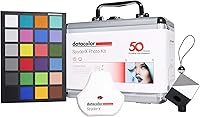
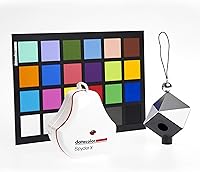
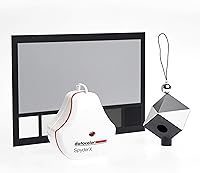
The Datacolor SpyderX Photo Kit Color Calibration Kit is a three-piece color management bundle built for photographers and videographers who can't afford to guess at color accuracy. It combines a display calibrator, a 24-patch color reference card, and a 3D exposure cube into one portable system. Each tool handles a distinct part of the color chain: your monitor, your camera's color response, and your RAW white balance. Unlike single-tool solutions, this calibration kit addresses the full pipeline from capture to screen, making it equally useful in a controlled studio or on a location shoot where lighting conditions shift constantly.
Features & Benefits

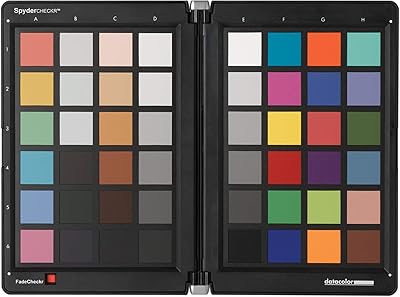
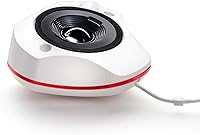
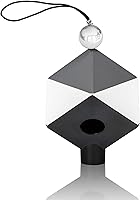
The SpyderX Elite calibrator uses a lens-based optical sensor rather than a filter wheel, which cuts profiling time significantly and produces tighter delta-E readings on most modern displays. The Spyder Checkr 24 card is where things get practical for batch editing: shoot a reference frame, run it through the software, and you get HSL presets ready to apply across an entire session in Lightroom or Capture One. The Spyder Cube adds a layer of precision a flat gray card can never match — its geometry captures a specular highlight, neutral gray, and true black simultaneously, giving your RAW conversions a reliable anchor. The whole system packs small enough to live in a camera bag.

Best For

This three-piece color toolkit makes the most sense for portrait and commercial photographers who regularly deliver large image series and need every frame to match. Videographers will find value too, particularly anyone who has delivered a grade only to find it looks completely different on a client's uncalibrated display. Hybrid shooters get something rare here: one unified workflow covering both stills and video rather than juggling separate tools. It's also a practical step up for advanced amateurs who have outgrown a simple gray card but aren't ready to invest in a lab-grade color system. Small studios managing multiple monitors or the occasional projector will get direct use out of every piece in the bundle.

User Feedback

Among verified buyers, the most consistent praise centers on how noticeably the monitor calibration improves color consistency after the first profile — many report the process takes under five minutes. The Spyder Cube also draws appreciation from users who previously relied on gray cards, with several noting that having a true black reference changes how they handle shadow recovery in RAW editing. On the critical side, a portion of users flag the software as having a steeper learning curve than expected, and a few have raised questions about ongoing subscription requirements. Value perception is generally positive when buying the SpyderX Photo Kit as a bundle, though some users note that individual components can be sourced separately for less if you don't need the full set.

Pros

  • The lens-based SpyderX Elite calibrator produces noticeably tighter color accuracy on modern displays compared to older filter-wheel designs.
  • Generating HSL presets from the Spyder Checkr 24 card can cut batch color correction time dramatically across large shooting sessions.
  • The Spyder Cube captures a true specular highlight and deep black in one frame, giving RAW editors a reliable reference that flat cards cannot replicate.
  • The entire kit packs into a compact form factor light enough to bring on location shoots without adding significant bag weight.
  • One software ecosystem ties monitor profiling, camera color matching, and RAW white balance into a connected workflow.
  • Compatible with photo, video, and projector calibration, making it practical for studios that work across multiple output types.
  • Buying the SpyderX Photo Kit as a bundle typically costs less than purchasing each component individually at standard retail prices.
  • A 4.5-star rating across more than 175 verified buyers suggests consistent real-world satisfaction, not just early enthusiasm.
  • Calibration profiles generated by the SpyderX Elite have shown solid stability over weeks of use according to repeat user reports.

Cons

  • The Datacolor software has a steeper learning curve than many buyers expect, particularly for first-time calibration kit users.
  • Some users have raised concerns about software subscription requirements that were not clearly communicated at the point of purchase.
  • The Spyder Checkr 24 offers only 24 color patches, which may feel limiting to colorists accustomed to more comprehensive reference charts.
  • Calibration results can vary depending on the age and panel type of the monitor being profiled, with older displays showing less dramatic improvements.
  • Buying the full bundle is unnecessary if you already own one or two of the included components and only need a single piece.
  • The kit targets an intermediate-to-advanced audience, so photographers still developing their editing fundamentals may not use it to its full potential.
  • On-location use of the display calibrator requires a laptop and a reliable power source, which adds setup friction in fast-moving shoot environments.
  • Customer support response times for software licensing issues have drawn occasional criticism in user reviews.

Ratings

The Datacolor SpyderX Photo Kit Color Calibration Kit has been evaluated by our AI system after analyzing verified global buyer reviews, actively filtering out incentivized submissions, duplicate accounts, and bot-generated feedback to surface only genuine user experiences. Scores reflect a balanced synthesis of both the strongest praise and the most persistent pain points reported by real photographers, videographers, and studio professionals worldwide. What you see here is an honest picture — the standout strengths and the genuine frustrations, weighted equally.
Monitor Calibration Accuracy
91%
The lens-based sensor in the SpyderX Elite consistently delivers tighter delta-E readings than older filter-wheel designs, and users working across wide-gamut displays report that skin tones and gradients finally look predictable from screen to print. For portrait and commercial photographers, this level of display accuracy translates directly into fewer correction rounds with clients.
A small portion of users with aging TN or VA panels note that the improvements, while real, are less dramatic than expected, and a handful of reviewers on budget ultrawide monitors found the profiling results slightly inconsistent between calibration sessions.
Calibration Speed
88%
Most users complete a full monitor profile in under five minutes, which is a meaningful improvement over previous Spyder generations that could run twice as long. For busy freelancers who calibrate multiple monitors in a single session, this efficiency compounds quickly.
A few users running older or underpowered laptops report that the software itself loads slowly and can make the overall process feel longer than advertised, even if the sensor measurement phase is genuinely fast.
Color Chart Usability
83%
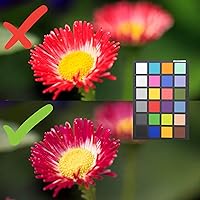
The Spyder Checkr 24 is praised for how naturally it slots into a shoot workflow — place it in the first frame, shoot, and the software handles the rest by generating ready-to-apply HSL presets for Lightroom or Capture One. Batch correction across large portrait sessions becomes much more consistent as a result.
With only 24 patches, colorists accustomed to more expansive reference charts like the X-Rite ColorChecker Passport may find the coverage limiting, particularly when trying to match unusual or highly saturated color palettes across different camera bodies.
Spyder Cube Performance
86%
Users who upgrade from a flat gray card to the Spyder Cube consistently describe it as a significant step forward — the ability to capture a true black point and a specular highlight in the same frame removes guesswork from RAW shadow recovery and white balance in a way a single-tone card never could.
The Cube is a physical object that needs to be placed carefully within the frame at the right angle to catch the specular highlight accurately, and a few outdoor shooters note it can be awkward to position correctly in fast-changing natural light conditions.
Software Experience
63%
37%
When the software works as intended, it ties all three tools together into a coherent pipeline that experienced users appreciate — ICC profile management, HSL preset generation, and calibration scheduling are all accessible from one interface without needing third-party tools.
The software draws the most criticism of any aspect of this three-piece color toolkit, with recurring complaints about a steep learning curve for first-time users, occasional crashes on certain OS versions, and ambiguity around what features are included versus what requires an upgraded license tier.
Value for Money
77%
23%
Buyers who need all three components and are starting from scratch generally consider the bundle a fair deal compared to sourcing each piece separately at individual retail prices, especially given that the SpyderX Elite alone commands a substantial price on its own.
Users who already own one or two of the included tools feel the bundle pricing does not offer enough of a discount to justify the overlap, and a few reviewers argue that competing all-in-one solutions at similar price points offer more software polish for the investment.
Build Quality
82%
18%
The SpyderX Elite calibrator feels solid and well-constructed, and the Spyder Cube's matte and gloss surfaces hold up well to regular handling in both studio and field conditions. The overall physical quality of the bundle reads as premium rather than plasticky or fragile.
The Spyder Checkr 24 card's protective sleeve is considered adequate but not especially robust — some users who travel frequently report the card showing minor scuff marks after repeated packing and unpacking, which could theoretically affect patch accuracy over a long period.
Portability
84%
At 2.4 pounds packaged and a compact footprint, the SpyderX Photo Kit fits comfortably in a standard camera bag alongside a laptop and lenses, making it practical to bring to client locations without dedicating a separate case to it.
The retail box is not a carry case, so users who want a dedicated storage solution for all three tools on the road need to source their own pouch or organizer, which is a minor but recurring point of friction mentioned in reviews.
Workflow Compatibility
85%
The SpyderX Photo Kit integrates well with the two dominant editing platforms — Adobe Lightroom and Capture One — and the projector calibration capability gives it flexibility that purely monitor-focused calibrators lack, which studio owners and educators find genuinely useful.
Users working outside the Adobe and Capture One ecosystems, such as those editing in DaVinci Resolve or Affinity Photo, report that the preset and profile export options are more limited, requiring manual workarounds to get the full benefit of the calibration data.
Long-Term Calibration Stability
79%
21%
Reviewers who have used the SpyderX Elite for six months or more generally report that profiles hold their accuracy reasonably well between calibration sessions, with noticeable drift only appearing after three to four weeks under normal working conditions, which aligns with industry expectations.
A smaller segment of users in environments with significant ambient temperature swings or high-altitude locations report that calibration stability degrades faster than expected, requiring more frequent recalibration to maintain the accuracy levels that initially impressed them.
Setup & Onboarding
68%
32%
The physical setup for all three tools is intuitive — each piece has a clear purpose and the hardware itself requires no complicated assembly or configuration before use, which experienced photographers find refreshingly straightforward.
The software onboarding experience is where setup friction builds, particularly for users activating the Spyder Checkr 24 component, where connecting the hardware workflow to preset generation in Lightroom requires following steps that the included documentation does not explain clearly enough for first-timers.
RAW Conversion Support
81%
19%
The combination of the Spyder Cube and the calibration software gives RAW shooters a solid anchor for white balance and exposure decisions at the conversion stage, reducing the need for manual corrections on every individual file in a large batch.
The benefit is most apparent when the Cube is used consistently on every shoot — users who deploy it irregularly report less predictable results, and the software does not offer much guidance on best practices for integrating cube reference frames into different RAW processors.
Customer Support
61%
39%
Datacolor does maintain a support infrastructure with documentation and a help desk, and some users have reported successful resolutions to software licensing issues after reaching out directly to the company.
Response times draw recurring criticism, particularly for software activation problems, and several reviewers describe a frustrating loop of automated replies before reaching a human agent — which becomes especially aggravating when a paid shoot is waiting on a functional calibration profile.

Suitable for:

The Datacolor SpyderX Photo Kit Color Calibration Kit is built for photographers and videographers who treat color accuracy as a professional requirement, not an afterthought. Portrait and commercial photographers shooting large sessions will get the most immediate return: the ability to generate HSL presets from a single reference frame and apply them across hundreds of images is a genuine time-saver. Videographers who have ever handed off a grade only to watch it fall apart on a client's display will appreciate having a properly profiled monitor backed by a verifiable ICC profile. Hybrid shooters benefit from the rare convenience of a single bundle that handles both stills and video calibration without requiring separate toolsets. Freelancers managing more than one monitor, or anyone who occasionally calibrates a projector for client presentations, will find every piece of this three-piece toolkit earns its place.
Not suitable for:

The Datacolor SpyderX Photo Kit Color Calibration Kit is not the right call for casual photographers who shoot for personal enjoyment and edit on a consumer laptop without color-critical expectations. If your workflow doesn't involve delivering work to clients, printing at professional labs, or matching footage across multiple cameras, the full bundle may offer more infrastructure than you will realistically use. Beginners who are still building core skills in exposure and composition are unlikely to feel the payoff from precise delta-E improvements on their display. The software learning curve is real, and users who are not comfortable spending time in calibration and color management interfaces may find the process frustrating rather than rewarding. If budget is a constraint, buying a standalone display calibrator and a basic gray card covers most everyday needs for a fraction of the investment this kit requires.
Specifications

  • Bundle Contents: The kit includes three components: the SpyderX Elite display calibrator, the Spyder Checkr 24 color reference card, and the Spyder Cube 3D exposure reference tool.
  • Calibrator Type: The SpyderX Elite uses a lens-based optical sensor design rather than a traditional filter wheel, enabling faster and more accurate display profiling.
  • Color Patches: The Spyder Checkr 24 reference card contains 24 individual color patches covering a range of hues, neutrals, and skin tones.
  • Cube References: The Spyder Cube simultaneously captures three critical exposure references: a specular highlight, a neutral gray, and a true black point.
  • Software Output: The Datacolor software generates HSL presets for batch color correction and ICC profiles for accurate monitor calibration.
  • Compatible Workflows: The SpyderX Photo Kit supports photo editing, video production, and projector calibration workflows within a single software environment.
  • Package Dimensions: The retail package measures 10.6 x 5.8 x 8.7 inches, making it compact enough to store in a standard camera bag or carry-on luggage.
  • Package Weight: The complete packaged kit weighs 2.4 pounds, keeping the total transport load light for location shooters.
  • Manufacturer: The SpyderX Photo Kit is designed and manufactured by Datacolor, a company specializing in color management hardware and software solutions.
  • Model Number: The official manufacturer model number for this bundle is SXPK050, which can be used for warranty registration and support inquiries.
  • ASIN: The Amazon Standard Identification Number for this product is B088BWC87P, useful for locating the exact listing or verifying authenticity.
  • Market Position: This kit ranks at number 64 in the Photographic Light Meter Color Calibration Charts category on Amazon, reflecting strong sustained demand.
  • User Rating: The product holds a 4.5 out of 5 star rating based on 175 verified Amazon ratings as of the time of publication.
  • Release Date: The SpyderX Photo Kit was first made available for purchase on May 20, 2020.
  • Software Compatibility: The Datacolor software integrates with widely used photo editing platforms including Adobe Lightroom and Capture One for preset application and profile management.

Related Reviews

Datacolor Spyder Checkr Color Calibration Tool
86%
93%
Color Accuracy
88%
Ease of Use
90%
Build Quality
85%
Software Integration
92%
Durability
More
DEPTHLAN 25cm LED Photo Light Box
76%
91%
Ease of Setup
84%
Lighting Quality
78%
Dimming Control
67%
Interior Size & Usability
73%
Backdrop Variety & Quality
More
FOSITAN 32×32 Inch Bi-Color Dimmable Photo Light Box Kit
84%
88%
Lighting Performance
93%
Ease of Setup
85%
Portability
81%
Build Quality
90%
Color Accuracy
More
IGK Color Bright One Step Bleach & Color Kit ICE BREAKER - Cool Blonde, 4 Oz
83%
88%
Lightening Effectiveness
92%
Ease of Use
85%
Hair Texture Compatibility
76%
Moisture Retention
79%
Nourishment & Hydration
More
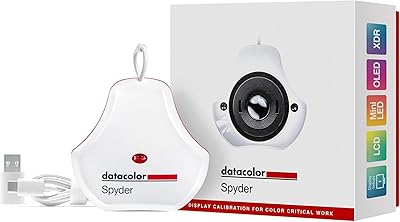
Datacolor Spyder 2024 Monitor Calibrator
77%
84%
Calibration Accuracy
91%
Ease of Setup
88%
Display Compatibility
83%
Ambient Light Sensor
77%
Software Experience
More
COLOR WOW Volumizing VIPs Kit
83%
88%
Volume Boost
85%
Frizz Control
92%
Heat Protection
72%
Longevity of Results
81%
Shine and Gloss
More
Libeauty Lash Lift and Color Kit
85%
87%
Ease of Use
92%
Effectiveness of Lash Lift
81%
Effectiveness of Brow Tint
90%
Skin Sensitivity Compatibility
75%
Longevity of Results
More
Gelish Xpress Dip Color Kit
86%
88%
Ease of Use
91%
Durability
86%
Vibrancy of Colors
90%
Long-Lasting Finish
85%
Application Process
More
Color Analysis Draping Kit Essential
83%
88%
Ease of Use
91%
Effectiveness of Color Analysis
85%
Value for Money
70%
Clarity of Instructions
76%
Suitability for Beginners
More
SAVILAND 36 Colors Gel Paint Kit
87%
94%
Color Variety
88%
Ease of Use
91%
Brush Quality
87%
Longevity of Wear
80%
Gel Consistency
More

FAQ

You can absolutely use each piece on its own. The SpyderX Elite calibrator works independently to profile your monitor, the Spyder Checkr 24 functions as a standalone color reference card during a shoot, and the Spyder Cube can be placed in any scene for a white balance and exposure reference without connecting to the other tools. That said, the Datacolor software is designed to tie all three into a unified workflow if you want the full pipeline.

Most users report the full profiling process takes around five minutes or less, which is noticeably faster than older filter-wheel calibrators. The lens-based sensor reads display patches quickly, and the software walks you through the steps without much manual input required.

Yes, the Datacolor SpyderX software supports both macOS and Windows. It is worth checking the Datacolor website for the most current OS version compatibility before installing, as major operating system updates occasionally require software patches.

The Spyder Checkr 24 is compatible with both Adobe Lightroom and Capture One, and Datacolor provides tools to generate color correction profiles for both platforms. If you work across multiple editing applications, you can create separate presets for each without needing any additional hardware.

A common recommendation among color professionals is to recalibrate every two to four weeks under normal working conditions. Monitor panels drift gradually over time, and environmental factors like ambient light changes can also affect perceived accuracy. If you are doing color-critical commercial work, leaning toward the shorter end of that range is a safe habit.

The software license that comes bundled with this three-piece color toolkit is included with the hardware purchase, but Datacolor has historically offered optional subscription tiers for expanded features. Some users have flagged confusion around this, so it is worth reviewing the current licensing terms on Datacolor's website at the time you buy to know exactly what is included and what, if anything, costs extra down the road.

The Spyder Cube works well in video contexts too. You can place it in a test frame at the beginning of a scene to capture your white balance and exposure references, then use that frame during color grading to set your blacks and neutrals accurately. It is a small but effective tool for any shooter who needs a reliable on-set reference.

The SpyderX Elite can be used for projector calibration in addition to standard desktop and laptop displays. This makes the Datacolor SpyderX Photo Kit Color Calibration Kit particularly useful for photographers or studios that do client projection presentations and want consistent color from screen to projected image.
Datacolor does sell the Spyder Checkr 24 and the Spyder Cube separately, so if you already have a display calibrator you are satisfied with, you can pick up just the pieces you are missing. The bundle pricing is generally more favorable when you need all three, but there is no obligation to buy the full set.

Color reference cards do degrade with heavy use and exposure to direct sunlight over time, which is why keeping the card in its protective sleeve and out of direct UV exposure between uses is important. Under reasonable handling conditions, the card should maintain reliable accuracy for a few years, though serious users who shoot volume daily may want to replace it eventually to ensure patches remain within spec.

Where to Buy