Overview

The ID-COOLING ZOOMFLOW 280 XT LITE AIO Cooler sits firmly in the budget-to-mid-range tier, and it makes no pretense about that. What it does offer is a clean white design that feels intentional rather than an afterthought — a good fit for builders putting together a light-themed rig. Compatibility is one of its stronger selling points, with support for Intel LGA1700 and AMD AM4/AM5 baked in, so it works with most modern builds right out of the box. The ARGB pump head gives it a bit of visual personality. Realistically, this is a solid day-to-day performer, not something you'd choose if heavy overclocking is on the agenda.

Features & Benefits

Going from a 240mm to a 280mm radiator might not sound significant on paper, but that extra surface area gives this 280mm AIO noticeably more thermal headroom when your CPU is under sustained load. The dual 140mm PWM fans can push up to 76.8 CFM, which is respectable — though at full 2200 RPM, they are audibly present. PWM control helps here; under lighter workloads the fans dial back considerably, keeping things quiet. The 5V 3-pin ARGB connector syncs with most mainstream motherboard ecosystems including Asus Aura, MSI Mystic Light, and Gigabyte RGB Fusion. One honest note: the pump head is polycarbonate, which looks fine but won't feel premium if you're used to handling metal-bodied coolers.

Best For

This white AIO cooler is a natural fit for anyone building around a white, silver, or neutral color scheme — it looks cohesive in a way that black coolers simply can't in those builds. Performance-wise, it's well-matched to mid-range CPUs like the Ryzen 5 or Core i5 class of processors, where it handles daily workloads, gaming sessions, and light creative tasks without complaint. If you're buying your first AIO, the installation process is fairly approachable and the socket support list covers AM4, AM5, and LGA1700 without needing adapter kits. Cases with 280mm radiator clearance are a must — double-check your chassis specs before ordering.

User Feedback

Owners of the ZOOMFLOW 280 XT LITE tend to agree on a few things: at its price point, the thermal numbers are genuinely competitive, and the white finish photographs well in build showcase posts. On the flip side, fan noise at full RPM comes up repeatedly — it's not silent under heavy load, and the stated 0.6 dB noise figure is almost certainly a best-case measurement at minimum speed. Some users have noted minor headaches with mounting hardware fitting snugly in certain cases. ARGB sync is generally reliable, though a handful of users report inconsistent lighting on less common motherboard brands. Long-term impressions are mixed but mostly positive.

Pros

  • The 280mm radiator gives it a clear thermal advantage over 240mm AIOs at a similar price point.
  • All-white colorway is cohesive and well-matched for light-themed builds without extra modification.
  • Supports AM4, AM5, LGA1700, and LGA1200 out of the box — no separate adapter kits needed.
  • PWM fan control keeps noise reasonable during everyday tasks and light gaming sessions.
  • ARGB pump head syncs reliably with Asus Aura, MSI Mystic Light, and Gigabyte RGB Fusion.
  • Delivers competitive temperatures for mid-range CPUs at a price that undercuts most major-brand alternatives.
  • Tubing length and flexibility work well in standard mid-tower layouts without routing headaches.
  • Closed-loop design means zero maintenance — no refilling, bleeding, or monitoring required.
  • Most users report stable, leak-free operation well past the six-month mark.
  • Strong value-per-dollar ratio for builders who want liquid cooling aesthetics without a flagship budget.

Cons

  • Fan noise at maximum RPM is noticeably loud — the 0.6 dB spec is not representative of real-world load conditions.
  • The polycarbonate pump head feels lightweight and cheap compared to metal-bodied coolers in the same class.
  • ARGB sync can be unreliable on less common motherboard brands, with no controller included as a fallback.
  • Pre-applied thermal paste from the factory is inconsistently applied on some units, prompting users to reapply.
  • Mounting hardware can be fiddly in compact mid-tower cases, requiring extra patience during installation.
  • Only the pump head features ARGB — the fans have no lighting, which can look unbalanced in heavily lit builds.
  • Long-term durability data beyond twelve months is limited, making multi-year reliability harder to assess confidently.
  • The white finish on the pump head is prone to showing fingerprints and may yellow slightly in sustained high-heat environments over time.
  • Instruction manual lacks clarity for certain socket configurations, which can slow down first-time installers.
  • This white AIO cooler struggles with high-TDP processors above 65W under sustained all-core loads.

Ratings

The scores below reflect what real buyers worldwide are actually saying about the ID-COOLING ZOOMFLOW 280 XT LITE AIO Cooler — compiled by AI after analyzing verified purchase reviews and actively filtering out incentivized, bot-generated, and low-credibility submissions. The result is an honest picture of where this cooler genuinely delivers for the money and where it falls short of expectations. Both the wins and the friction points are represented without spin.
Thermal Performance
78%
22%
For mid-range CPUs like the Ryzen 5 7600X or Core i5-13600K, users report comfortably low idle and load temperatures that beat most air tower alternatives at this price. The 280mm radiator gives it a clear edge over 240mm units in sustained workloads like video rendering or long gaming sessions.
Under prolonged all-core stress testing or with higher-TDP chips, thermal performance starts to plateau noticeably. Users pushing 65W-plus processors at full tilt found temperatures creeping into less comfortable territory, confirming this is not an overclocking-focused cooler.
Fan Noise at Load
61%
39%
At low to moderate RPM, the dual 140mm fans are genuinely unobtrusive — most users report not noticing them during light gaming or web browsing. PWM control means the fans only ramp up when your CPU demands it, which keeps casual use sessions quiet.
Push the fans toward their 2200 RPM ceiling and the noise becomes hard to ignore, especially in an open or mid-tower case. The listed 0.6 dB noise figure is almost certainly measured at minimum speed and bears little resemblance to real-world full-load acoustics, which frustrated several buyers who expected near-silent operation.
Build Quality
66%
34%
The overall assembly feels solid enough for daily use, and the white finish on the radiator and tubing holds up visually over time. Most users had no structural complaints after months of ownership, suggesting the unit is durable enough for its intended market tier.
The polycarbonate pump head is the most obvious corner that was cut. It looks acceptable in photos but feels noticeably lightweight compared to metal-bodied alternatives — a detail that stands out if you handle premium coolers regularly. It does not inspire long-term confidence at the same level as the rest of the unit.
ARGB Lighting Quality
74%
26%
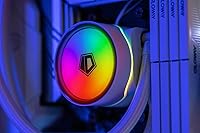
The pump head ARGB effect is clean and diffused, producing an even glow rather than harsh hotspots. For a cooler at this price point, the lighting output is genuinely competitive with options costing significantly more, and it photographs well in build showcase setups.
A subset of users noted inconsistent or flickering lighting on less common motherboard brands outside the major Asus, MSI, and Gigabyte ecosystems. The ARGB implementation on the fans themselves is absent — only the pump head lights up — which can look slightly unbalanced against other ARGB components in the same build.
ARGB Sync Compatibility
71%
29%
The 5V 3-pin header works reliably with Asus Aura Sync, MSI Mystic Light, and Gigabyte RGB Fusion on most tested boards, letting users fold it into their existing lighting profile without extra software or controllers. Setup on compatible boards takes minutes.
Compatibility outside those three major brands is a gamble. Several users on ASRock and lesser-known boards reported the sync either not registering or defaulting to a static color. There is no bundled controller or remote fallback, so if sync fails on your board, your options are limited.
Installation Experience
69%
31%
The included mounting hardware covers a wide range of sockets, and the bracket system is logically laid out with reasonably clear instructions. First-time AIO builders generally found the process manageable without needing tutorial videos, which is a meaningful win for this product category.
A recurring complaint involves the mounting screws not sitting flush in certain smaller mid-tower cases, requiring some patience and occasional repositioning. A few users also noted that the pre-applied thermal paste is applied unevenly from the factory, prompting them to clean and reapply their own for peace of mind.
Socket Compatibility
88%
Out-of-the-box support for AM4, AM5, LGA1700, LGA1200, and older Intel sockets is genuinely broad for a cooler at this price. Buyers upgrading from older platforms or planning future CPU swaps within the same socket generation get real longevity from that compatibility range.
No meaningful negatives here for most buyers — the only edge case is that LGA2066 HEDT support is listed but rarely tested in user reviews, so confidence there is lower. Everything else in the compatibility list has been widely confirmed by real-world installs.
Value for Money
83%
This is where the ZOOMFLOW 280 XT LITE earns most of its goodwill. Buyers consistently note that the combination of a 280mm radiator, ARGB pump, white aesthetic, and broad socket support at this price bracket is difficult to match from established brands. It over-delivers on visible features relative to cost.
The value equation holds up only if your expectations are calibrated to the budget tier. Users who compared it directly to mid-range coolers from Corsair or NZXT on pure build quality and acoustics came away less impressed, suggesting the value perception depends heavily on what you're comparing it against.
Aesthetic Design
81%
19%
The all-white colorway is cohesive and well-executed — the radiator, fans, tubing, and pump head all share the same finish without mismatched shades. For builders assembling a white or Arctic-themed PC, this cooler slots in naturally without needing paint or custom parts.
The aesthetic appeal is largely skin-deep. The white plastic on the pump head can yellow slightly over time in high-heat environments, based on a small number of longer-term owner reports. It is also a fingerprint magnet during installation, which is a minor but noticeable annoyance.
Pump Noise
73%
27%
The pump operates quietly during standard desktop use — most users report not being able to distinguish it from ambient case noise. During light gaming and productivity work, the system as a whole maintains a low acoustic profile that most buyers found acceptable.
Some owners noted a faint but perceptible hum from the pump under certain idle conditions, particularly in very quiet environments or open-bench setups. A smaller number reported slightly louder pump operation after several months of use, though it is unclear whether this reflects normal wear or isolated unit variance.
Fan Airflow Efficiency
76%
24%
At 76.8 CFM, the dual 140mm fans move a meaningful volume of air across the radiator, particularly effective at mid-range RPMs where the noise-to-airflow ratio is most favorable. Users running moderately demanding workloads get good heat dissipation without needing to max out the fan curve.
The airflow efficiency gains over budget 240mm coolers are real but modest in practice. If your case airflow is already restricted or you are working with a high-TDP chip, the incremental benefit of the 280mm configuration is less impactful than the specification gap might suggest.
Tubing Flexibility & Routing
72%
28%
The tubing length is sufficient for most mid-tower layouts, and the braided sleeve gives it a cleaner look than bare rubber tubes at this price tier. Users generally found routing straightforward without the tubing kinking or pulling the radiator out of position.
The tubing is slightly stiffer than expected, which makes routing in compact cases or unusual radiator mounting positions more challenging. A couple of users with smaller ITX-adjacent cases noted the rigidity caused minor alignment tension on the pump head over time.
Long-Term Reliability
67%
33%
The majority of owners reporting back after six to twelve months of use found no leaks, pump failures, or performance degradation. For a closed-loop AIO at this price, that baseline reliability record is reassuring and consistent with expectations for the category.
Long-term data beyond twelve months is sparse in the user review pool, so confidence in multi-year durability is lower than for established brands with longer track records. The polycarbonate pump block is the component most commonly cited as a potential weak point under sustained heat exposure over years of use.
Packaging & Included Accessories
63%
37%
Everything needed for installation across supported sockets is included in the box, and the packaging is protective enough that most units arrive without damage. Users appreciated not needing to source separate brackets for AM5 or LGA1700, which is not always a given at this price.
The instruction manual is functional but sparse, with diagrams that are ambiguous for certain socket configurations. The bundled thermal paste is adequate but not high-performance, and a notable number of reviewers chose to replace it with their own compound before completing the install.

Suitable for:

The ID-COOLING ZOOMFLOW 280 XT LITE AIO Cooler is a strong fit for builders who are assembling a white or light-themed PC and do not want to compromise the aesthetic by dropping in a black cooler. It is equally well-suited to anyone running a mid-range CPU — think Ryzen 5 or Ryzen 7 on AM4 or AM5, or a Core i5 or Core i7 on LGA1700 — who wants meaningfully better thermal headroom than a tower air cooler without spending flagship money. First-time AIO buyers will appreciate the broad socket support, which eliminates the need to hunt down separate mounting adapters for current-gen platforms. If your case can fit a 280mm radiator and you are running a typical daily-use workload like gaming, light content creation, or general productivity, this 280mm AIO will handle it comfortably. It also makes sense for anyone who wants ARGB lighting that syncs with major motherboard ecosystems without paying a brand premium for the privilege.
Not suitable for:

The ID-COOLING ZOOMFLOW 280 XT LITE AIO Cooler is not the right call for enthusiasts who plan to push their CPU hard through manual overclocking or sustained all-core workloads — at that level of heat output, its thermal ceiling becomes a real constraint. Buyers who prioritize near-silent operation at all times should also look elsewhere; the fans are tolerable at moderate speeds, but under load they are audibly present in ways the spec sheet does not honestly reflect. If you are particular about premium build materials, the polycarbonate pump head will likely disappoint you — it is not a dealbreaker, but it does feel out of place if the rest of your build uses metal-accented components. Those running non-standard motherboard brands outside Asus, MSI, and Gigabyte may find ARGB sync unreliable, and without a bundled controller there is no easy workaround. Finally, anyone in a compact case that cannot accommodate a 280mm radiator needs to look at 120mm or 240mm alternatives regardless of price.
Specifications

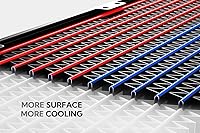
  • Radiator Size: The cooler uses a 280mm radiator, providing more thermal surface area than standard 240mm units for better heat dissipation under sustained CPU load.
  • Radiator Dimensions: The radiator measures 10.87″ in length, 4.72″ in width, and 1.06″ in thickness, fitting standard 280mm case mounts in most mid-tower and full-tower enclosures.
  • Fan Configuration: Two 140mm PWM fans are included, running at speeds between approximately 600 and 2200 RPM depending on thermal demand from the CPU.
  • Max Airflow: At peak RPM, each fan contributes to a combined maximum airflow rating of 76.8 CFM across the radiator surface.
  • PWM Control: Fan speed is regulated via 4-pin PWM headers, allowing the motherboard or fan controller to automatically adjust speed based on real-time CPU temperature.
  • ARGB Lighting: The pump head features addressable RGB lighting powered through a 5V 3-pin ARGB header, compatible with major motherboard lighting ecosystems including Asus Aura Sync, MSI Mystic Light, and Gigabyte RGB Fusion.
  • Pump Head Material: The pump head housing is constructed from polycarbonate plastic, which keeps weight low but is less premium in feel compared to metal-bodied alternatives in higher price tiers.
  • Cooling Method: This is a closed-loop all-in-one liquid cooler — the pump, tubing, radiator, and coolant are factory-sealed and require no maintenance or refilling over the product's lifespan.
  • Intel Compatibility: The cooler supports Intel LGA115X (1150, 1151, 1155, 1156), LGA1200, LGA1700, LGA2011, and LGA2066 sockets with included mounting hardware.
  • AMD Compatibility: AMD socket support covers AM4 and AM5, making it compatible with Ryzen 3000 through Ryzen 7000 series processors without requiring a separate mounting kit.
  • Total Weight: The complete cooler assembly — including radiator, fans, pump, and tubing — weighs approximately 5.25 pounds, typical for a 280mm AIO class unit.
  • Color Variant: This unit ships exclusively in a white colorway, covering the radiator frame, fan blades, tubing sleeve, and pump head housing for use in light-themed builds.
  • ARGB Voltage: The ARGB lighting circuit operates at 5V, which is the current standard for addressable RGB headers found on modern consumer motherboards.
  • Power Connector: The fans use standard 4-pin PWM connectors for speed control, while the ARGB lighting uses a separate 3-pin 5V header for sync and color control.
  • Thermal Paste: Thermal paste is pre-applied to the copper cold plate at the factory, though users with prior AIO experience often choose to clean and reapply their own compound for optimized contact.
  • Tubing: The pump-to-radiator tubing is braided-sleeved in white, providing a cleaner visual finish than bare rubber while offering standard flexibility for mid-tower routing.
  • Manufacturer: The cooler is designed and sold by ID-COOLING, a manufacturer specializing in CPU cooling solutions across budget to mid-range market segments.
  • Product Category: As of its sales rank data, this cooler places within the top 700 units in the Water Cooling Systems category on Amazon, indicating a meaningful level of sales volume for its tier.

Related Reviews
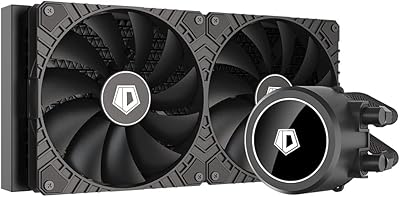
ID-COOLING FROSTFLOW X 280 AIO CPU Cooler
86%
92%
Cooling Performance
87%
Noise Level
75%
Ease of Installation
84%
Aesthetics (LED Lighting)
90%
Compatibility
More
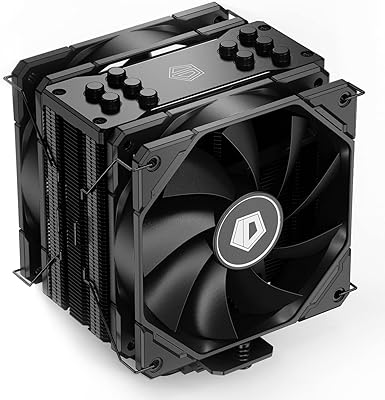
ID-COOLING SE-225-XT CPU Cooler
85%
88%
Cooling Performance
91%
Noise Level
85%
Build Quality
89%
Compatibility
80%
Ease of Installation
More
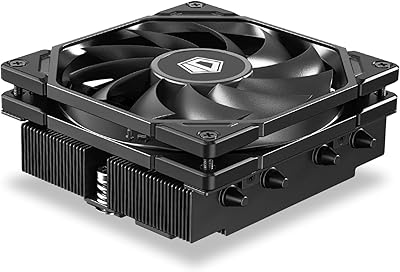
ID-COOLING IS-47-XT Low Profile CPU Cooler
83%
85%
Cooling Performance
90%
Noise Level
88%
Build Quality
72%
Installation Ease
95%
Compatibility with Small Builds
More
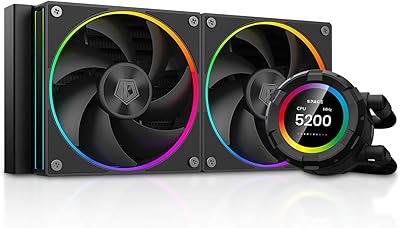
ID-COOLING IS-40-XT Black Low Profile CPU Cooler
87%
86%
Cooling Performance
92%
Noise Level
89%
Ease of Installation
94%
Size/Footprint
87%
Build Quality
More
ID-COOLING SL240 CPU Liquid Cooler
88%
91%
Cooling Performance
93%
Noise Level
88%
Customization Options (LCD & RGB)
84%
Installation Ease
89%
Build Quality
More
ID-COOLING IS-55 Low Profile CPU Cooler
79%
72%
Thermal Performance
84%
Noise Level
81%
Build Quality
83%
Ease of Installation
88%
RAM Compatibility
More
ID-COOLING FROZN A410 ARGB CPU Cooler
81%
83%
Thermal Performance
74%
Noise Level
91%
Value for Money
78%
Build Quality
89%
Ease of Installation
More
ID-COOLING FROZN A620 Dual-Tower Air CPU Cooler
81%
83%
Thermal Performance
81%
Noise Level
91%
Value for Money
67%
Installation Experience
84%
Build Quality
More
ID-COOLING FROZN A400 Black CPU Cooler
85%
85%
Cooling Performance
90%
Noise Level
88%
Ease of Installation
91%
Size and Compatibility
86%
Build Quality
More
ID-COOLING FROZN A410 GDL CPU Cooler
88%
93%
Cooling Performance
91%
Noise Level
88%
Build Quality
89%
Ease of Installation
85%
Compatibility
More

FAQ

It depends on your specific case — you need to check that your chassis supports a 280mm radiator mount, which is less universal than 240mm. Most modern mid-towers list 280mm support in their specs, but always verify your case's radiator clearance before ordering. The radiator itself measures 10.87″ in length, so that is the critical dimension to check against your case manual.

Yes, AM5 support is included out of the box with no separate adapter needed. The mounting hardware in the box covers AM5 directly alongside AM4, LGA1700, and older Intel sockets, so you should not need to source anything extra.

Honestly, louder than the spec sheet implies. The listed noise figure is almost certainly measured at minimum fan speed, which is not representative of real-world use. Under heavy CPU load when fans ramp toward their 2200 RPM ceiling, the unit is audibly present — not obnoxiously loud, but noticeable in a quiet room. During light tasks and gaming at moderate settings, it is much more subdued.

If you are on Asus, MSI, or Gigabyte, sync works reliably via the 5V 3-pin ARGB header using their respective software — Aura Sync, Mystic Light, and RGB Fusion. For less common boards, results are more variable. There is no bundled controller or remote, so if your board does not cooperate, your options for lighting control are limited without third-party hardware.

Thermal paste is pre-applied to the cold plate from the factory. It works fine for most users, but the application consistency is not always even between units. If you are particular about contact quality or are cooling a high-end CPU, it is worth wiping it off and applying a quality compound like Thermal Grizzly Kryonaut or Arctic MX-6 yourself.

It is manageable for a first-timer, though not perfectly foolproof. The bracket system covers a wide range of sockets and the steps are logical, but the instruction manual has some ambiguous diagrams for certain socket configurations. Watching a 280mm AIO installation video for your specific socket beforehand will save you time and confusion. Most users complete the install without major issues.

For everyday workloads — gaming, productivity, casual content creation — yes, it handles mid-range CPUs in that class comfortably. If you are running sustained all-core workloads or pushing manual overclocks, it starts to show its limits. Think of it as a strong match for stock or light-boost configurations, but not ideal for aggressive voltage-up scenarios.

Only the pump head has ARGB lighting — the 140mm fans are plain white with no RGB elements. This is worth knowing before you buy, since in a heavily lit build the unlit fans can look a bit plain compared to the glowing pump. It is not a dealbreaker, but it is a detail worth setting expectations around.

For mid-range CPUs, this 280mm AIO will generally outperform a same-price tower air cooler in sustained thermal performance, particularly under longer workloads where the larger radiator surface maintains lower temps over time. The trade-off is complexity — air coolers have zero failure points, while any AIO carries a small pump and seal longevity risk. If aesthetics and thermal headroom matter to you, the AIO wins; if simplicity and proven reliability are the priority, a quality tower cooler is not a bad choice.

Based on available user feedback, the majority of owners report no issues after six to twelve months of use — no leaks, no pump failures, no performance drop. Multi-year data is thinner, as is common with value-tier AIOs that have not been on the market as long as flagship brands. The polycarbonate pump head is the component most users cite as a potential long-term concern, but in practice it has not been a widespread failure point. Treat it as a mid-range product with appropriate expectations and you should be fine.