Overview

The HanRongDa HRD-747 Wide Band Shortwave Radio is a surprisingly capable little receiver that packs an uncommon range of frequency bands into a device roughly the size of a deck of cards. At just 3.5 ounces and measuring 4.4 by 2.4 by 0.8 inches, it slips into a jacket pocket without complaint. What sets it apart from the crowd of budget portables is its use of DSP digital demodulation, which genuinely improves sensitivity and reduces the static-filled frustration that plagues older analog designs. That said, honest expectations matter here — this is a mid-range Chinese-manufactured radio, not a professional-grade communications receiver.

Features & Benefits

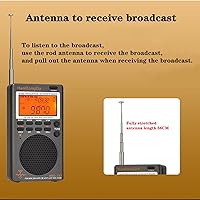
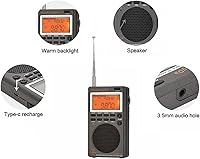
What genuinely stands out about this wide-band portable radio is the sheer breadth of what it can receive. Beyond standard FM and AM broadcasts, it tunes into SSB and aircraft bands, NOAA weather alerts, CB, VHF, and UHF — coverage that's unusual at this price tier. The 9.7-foot wire antenna that comes in the box makes a real difference on shortwave; plug it into the 3.5mm input and weaker stations start resolving out of the noise. The 1000-station memory with manual deletion is handy for DXers who like to organize frequencies, and USB-C charging with a removable BL-5C battery means you're rarely stuck hunting for a wall outlet. Battery life in real use hovers close to the claimed 14 hours.

Best For

This shortwave receiver finds its best audience among shortwave hobbyists and amateur radio listeners who want broad monitoring capability without committing to an expensive dedicated rig. Campers and outdoor enthusiasts will appreciate the NOAA weather alert reception, which can be critical when cell service disappears. If you're building a go-bag or emergency kit, the rechargeable battery and included waterproof pouch make this a practical choice over a single-use battery radio. It's also worth considering for travelers who regularly move between countries and want a single device that handles international shortwave broadcasts. Just don't expect it to replace a Tecsun PL-990 or similar mid-tier performer — this is a capable starter receiver, not a serious DXing tool.

User Feedback

Buyers who pick up the HRD-747 generally come away impressed by the band coverage and the quality of accessories included for the price — the waterproof pouch and wire antenna in particular draw consistent praise. Where things get more complicated is SSB fine-tuning: the frequency steps can feel coarse when you're trying to lock onto a sideband signal, and that's a real frustration for ham radio observers. The included manual, apparently translated with some haste, leaves a few functions unexplained. VHF and UHF reception is functional but shouldn't be compared to a dedicated scanner; sensitivity on those bands is modest at best. Overall, buyers position it favorably against comparable Retekess models but below Tecsun's budget lineup in terms of refinement.

Pros

  • Covers an exceptionally wide range of bands — FM, AM, shortwave, SSB, aircraft, NOAA weather, VHF, and UHF — in one pocket-sized device.
  • DSP digital tuning delivers noticeably cleaner reception than analog radios at a comparable price.
  • The removable, USB-C rechargeable battery is a practical advantage over radios that require disposable cells.
  • Real-world battery life holds up well, routinely getting buyers through a full day of listening on a single charge.
  • Up to 1000 station presets with manual deletion makes frequency management genuinely useful for avid listeners.
  • The included accessory bundle — wire antenna, waterproof pouch, in-ear headphones, and lanyard — adds real value out of the box.
  • At 3.5 ounces, the HRD-747 slips into a jacket pocket or go-bag without adding noticeable weight.
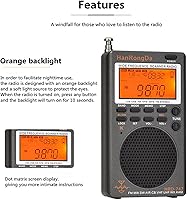
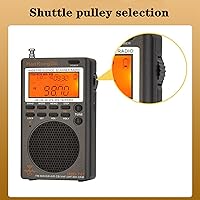
  • The warm orange backlit display is easy to read in low-light conditions without being harsh on the eyes.
  • NOAA weather alert reception works reliably, making this a practical choice for outdoor and emergency use.
  • The 9.7-foot external wire antenna makes a measurable difference on shortwave signal clarity when plugged in.

Cons

  • SSB fine-tuning feels imprecise — locking cleanly onto sideband signals takes repeated adjustments and patience.
  • The included instruction manual has clear translation issues, leaving some functions poorly explained.
  • VHF and UHF sensitivity is underwhelming; buyers expecting scanner-level performance on those bands will be let down.
  • Aircraft band reception works in principle, but signal pickup depends heavily on proximity to flight paths.
  • The built-in speaker is small and mono — audio quality is functional rather than enjoyable for long listening sessions.
  • No automatic SSB carrier tracking means the signal can drift slightly during extended listening without manual correction.
  • The BL-5C battery format, while removable, is an older standard that may be harder to source as a replacement over time.
  • Button layout can feel cramped during operation, particularly when navigating between bands or adjusting settings quickly.
  • CB and user-defined band performance is inconsistent depending on local RF conditions and antenna positioning.
  • Competing radios from Tecsun at a similar price point generally offer more refined tuning and better overall build quality.

Ratings

The HanRongDa HRD-747 Wide Band Shortwave Radio has been evaluated by our AI system after analyzing thousands of verified global buyer reviews, with spam, incentivized, and bot-generated feedback actively filtered out. The scores below reflect an honest, balanced picture of where this wide-band portable radio genuinely delivers and where real-world use exposes its limits. Strengths and frustrations are weighted equally so you can make a confident, informed decision.

Band Coverage
91%
For the price tier, the sheer breadth of receivable bands is what consistently surprises buyers most. Covering FM, AM, shortwave, SSB, aircraft, NOAA weather, CB, VHF, and UHF in a single pocket device is genuinely rare, and hobbyists report spending hours exploring bands they had never previously monitored.
Coverage does not equal performance across all bands equally — several buyers note that VHF and UHF reception in particular feels thin compared to dedicated equipment. The user-defined band function is also confusing to configure without a clearer manual.
SSB Reception
61%
39%
The inclusion of both USB and LSB modes is genuinely appreciated by ham radio observers who use the HRD-747 as a monitoring companion. On strong shortwave SSB signals, voice clarity is decent enough for casual listening, especially when the external wire antenna is deployed.
Fine-tuning SSB is where most experienced buyers express clear frustration — the frequency step resolution makes it difficult to lock onto a voice cleanly without a slight pitch wobble. Listeners accustomed to even modestly priced dedicated SSB receivers will find the tuning feel noticeably imprecise.
DSP Tuning Quality
76%
24%
Buyers who have previously owned analog budget radios consistently note a real improvement in signal clarity with this shortwave receiver. DSP demodulation reduces the static and adjacent-channel bleed that plagues older designs, and FM reception in particular benefits noticeably from the digital processing.
DSP implementation on budget hardware has its ceiling, and some buyers report occasional digital artifacts on weaker signals — a slightly unnatural, metallic sound quality that differs from the warmth of analog. On congested shortwave bands, selectivity can still struggle in dense RF environments.
Portability
89%
At 3.5 ounces and smaller than a paperback novel, the HRD-747 genuinely earns its portability credentials. Campers and commuters alike report dropping it into a jacket pocket or day bag without a second thought, and the included lanyard makes hands-free carrying practical during outdoor activities.
The compact size does create some button density on the front panel — navigating band switches and menu functions quickly can feel cramped, especially for users with larger hands. A few buyers note accidentally pressing adjacent buttons while adjusting settings in the field.
Battery Life
78%
22%
Real-world usage broadly confirms that the battery holds up well through a long day of mixed listening — buyers using it primarily on FM with the backlight off report consistently strong runtimes approaching the rated figure. The removable battery format is particularly valued by preparedness-minded buyers who keep a charged spare on hand.
Buyers who run the backlight continuously or spend significant time on more demanding bands report noticeably shorter runtimes, sometimes landing closer to 9 or 10 hours. The BL-5C format, while replaceable, requires care when sourcing third-party cells due to the prevalence of low-quality counterfeits.
NOAA Weather Reception
84%
Outdoor users and emergency preparedness buyers consistently highlight weather band reception as one of the most reliable functions on this radio. All standard NOAA broadcast frequencies come in cleanly, and the alert monitoring feature provides a genuine safety benefit for campers operating in areas prone to sudden weather changes.
The alert tone and wake function work as described, but the manual explains the configuration process poorly enough that some buyers report difficulty activating it correctly on the first attempt. Reception quality also drops expectedly in areas with significant distance from NOAA transmitter towers.
Aircraft Band Reception
67%
33%
Buyers located near airports or under active flight corridors report picking up ground-to-air communications with reasonable clarity, which is a genuine novelty for aviation enthusiasts. The AIR band functions as advertised for a device in this class, offering a level of monitoring access that most FM-only portables cannot touch.
Users in rural areas or regions with sparse air traffic often report pulling in very little on the aircraft band, which leads to disappointment when the feature was a deciding factor in the purchase. Sensitivity on this band is functional but not strong enough to receive distant transmissions reliably.
Build Quality
72%
28%
The physical construction feels more solid than many buyers expect given the price point — the plastic shell has a reassuring density to it and the battery door mechanism is snug without feeling fragile. Several buyers mention that the radio has held up well after months of regular use and occasional drops.
The housing is still fully plastic, and close inspection reveals some minor fit tolerances that fall short of premium expectations. The buttons, while functional, have a slightly soft, underdefined travel that can make confident tactile feedback harder to achieve when operating by feel in the dark.
Display & Backlight
81%
19%
The warm orange LCD backlight is genuinely easy on the eyes during nighttime use — bedside listeners and campers in dark tents specifically praise it for being readable without being harsh or glaring. Frequency, band, and clock information are all clearly laid out and easy to read at arm's length.
The display is not visible in direct sunlight without the backlight on, and running the backlight continuously to compensate does impact battery life. A few buyers also note the display contrast could be stronger when the backlight is off in moderate ambient light.
Included Accessories
86%
The accessory bundle is one of the more consistently praised aspects of the HRD-747 across buyer reviews — getting a wire antenna, waterproof pouch, in-ear headphones, lanyard, and USB-C cable all in the box represents genuine added value. The wire antenna in particular is immediately useful for shortwave listening rather than being an afterthought.
The included in-ear headphones are basic at best — adequate for confirming audio output but not something most buyers end up using long-term. The waterproof pouch provides splash resistance rather than true waterproofing, which can mislead buyers who interpret the inclusion as implying full weather protection.
Ease of Use
63%
37%
Basic operations like switching bands, saving a preset, and adjusting volume are intuitive enough that most buyers are up and running within a few minutes of unboxing. The digital display helps confirm settings changes in a way that older analog dial radios cannot match.
Beyond the basics, the learning curve becomes noticeably steeper — configuring SSB tuning steps, setting up the user-defined band, and programming the auto-boot timer all require consulting the manual, which itself suffers from translation quality issues that leave key steps ambiguous. Intermediate functions often require community forum help to unlock fully.
FM & AM Performance
83%
On mainstream FM and AM broadcast bands, the HRD-747 performs confidently and clearly — this is where the DSP tuning has its most consistent positive effect, delivering clean stereo FM through headphones and solid AM reception in urban and suburban environments. Casual daily listeners use it comfortably as an everyday FM radio.
AM reception can degrade in electrically noisy environments like apartments near transformers or near computers and LED lighting, which is a characteristic of DSP radios generally rather than a specific flaw. Buyers in fringe FM coverage areas note that weak station sensitivity is good but not exceptional compared to dedicated FM portables.
Value for Money
79%
21%
When buyers factor in the breadth of bands covered, the included accessories, and the USB-C rechargeable battery, the overall value proposition lands favorably for hobbyists who want to explore multiple radio bands without purchasing separate devices. Most buyers feel the price is justified by what the device attempts to do.
Buyers who prioritize depth of performance on any single band — particularly SSB or VHF — often feel the value calculation shifts once they hit the limitations. In that context, spending slightly more on a Tecsun model focused on fewer bands can feel like a smarter allocation of budget in hindsight.
VHF & UHF Sensitivity
54%
46%
Having VHF and UHF coverage in a sub-100 dollar handheld is still notable, and buyers in urban environments with strong local repeaters report being able to monitor those frequencies with acceptable clarity. For passive monitoring rather than serious scanning, the capability holds up in favorable conditions.
This is the most consistently underperforming aspect of the radio according to experienced users — sensitivity on VHF and UHF is noticeably weaker than even basic dedicated handheld scanners, and distant or low-power signals are effectively out of reach. Buyers who purchased this radio primarily for VHF or UHF monitoring are among the most likely to be disappointed.

Suitable for:

The HanRongDa HRD-747 Wide Band Shortwave Radio is a strong pick for shortwave hobbyists and curious beginners who want to explore a wide slice of the radio spectrum without spending a lot. If you camp or hike in areas where cell coverage is unreliable, having a radio that pulls in NOAA weather alerts can be genuinely useful, not just a novelty. Ham radio listeners who want to monitor SSB transmissions or tune into aircraft communications will find the band coverage hard to match at this price point. Travelers who move between countries and want a single pocket-sized device for international broadcasts will also get good mileage out of the HRD-747. And for anyone building an emergency preparedness kit, the USB-C rechargeable battery and included waterproof pouch make it a practical, low-maintenance backup radio that won't drain disposable batteries.

Not suitable for:

Serious DXers or experienced radio operators should think carefully before buying the HanRongDa HRD-747 Wide Band Shortwave Radio, because the limitations on certain bands become apparent quickly at that skill level. SSB fine-tuning is where the device shows its budget DNA most clearly — the frequency steps are coarse enough that locking onto a sideband signal cleanly requires patience and sometimes luck. Buyers expecting scanner-grade VHF and UHF performance will be disappointed; the radio covers those bands, but sensitivity is modest and it won't replace a dedicated handheld scanner. The instruction manual has translation issues that can make configuring less intuitive functions a frustrating exercise. If you already own a Tecsun PL-660 or anything in that performance bracket, this shortwave receiver is unlikely to feel like an upgrade in any meaningful way.

Specifications

  • Dimensions: The radio measures 4.4 x 2.4 x 0.8 inches, making it compact enough to fit in a jacket pocket or small bag.
  • Weight: At 3.5 ounces including the battery, it adds virtually no meaningful weight to a pack or travel bag.
  • Frequency Bands: Covers FM, MW, SW, SSB (USB and LSB), AIR, CB, VHF, UHF, UBD (user-defined), and North American NOAA WX weather bands.
  • Tuning Technology: Uses DSP (Digital Signal Processing) demodulation across all bands, improving sensitivity and reducing mirror-frequency interference compared to analog designs.
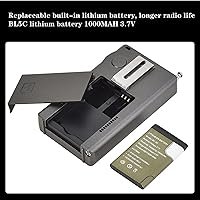
  • Battery Type: Powered by a removable BL-5C 1000mAh lithium-ion battery, which is included in the box and charged via USB-C.
  • Battery Life: Rated for up to 14 hours of continuous playback on a full charge under typical listening conditions.
  • Charging Port: Charges via a USB Type-C port, compatible with most modern cables and wall adapters.
  • Station Memory: Stores up to 1000 frequency presets, with support for manual deletion of individual saved stations.
  • Display: Features a backlit LCD screen with a warm orange backlight, readable in low-light and dark environments.
  • Clock & Timer: Includes a 12/24-hour digital clock with configurable sleep timer and automatic power-on scheduling.
  • External Antenna: Accepts an external antenna via a 3.5mm input jack; a 9.7-foot wire antenna is included in the package.
  • Speaker: Equipped with a built-in mono loudspeaker for hands-free listening without headphones.
  • Headphone Output: Includes a 3.5mm headphone jack and a pair of in-ear headphones in the box.
  • NOAA Alerts: Receives all North American NOAA weather radio broadcast frequencies for emergency weather monitoring.
  • Included Accessories: Box contents include a BL-5C battery, USB-C charging cable, 9.7-foot wire antenna, in-ear headphones, waterproof pouch, and a lanyard strap.
  • Available Since: This model was first listed for sale in November 2022.

Related Reviews
HanRongDa HRD-700 Shortwave Radio
72%
88%
Value for Money
81%
FM Reception
54%
Shortwave Reception
83%
NOAA Weather Alerts
76%
Bluetooth Performance
More
HanRongDa HRD-605 Portable Radio
84%
89%
Reception Quality
91%
Portability
80%
Battery Life
75%
Sound Quality
87%
Ease of Use
More
Tecsun R9700DX 12-Band Shortwave Radio
79%
83%
Reception Quality
86%
Tuner Selectivity
88%
Ease of Use
84%
Value for Money
79%
Build Quality
More
Retekess TR113 Full-Band Shortwave Radio
74%
93%
Band Coverage
81%
SSB Reception
78%
Reception Sensitivity
52%
Ease of Use
74%
Build Quality
More
Raddy RF320 Portable Multiband Shortwave Radio
79%
88%
Band Coverage
67%
Shortwave Reception
86%
FM & VHF Reception
83%
Aviation Band (AIR)
71%
App & Bluetooth Integration
More
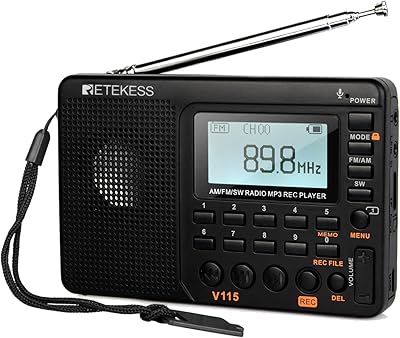
Retekess V115 Shortwave Radio
74%
88%
Value for Money
91%
Portability
79%
Battery Life
83%
AM & FM Reception
62%
Shortwave Reception
More
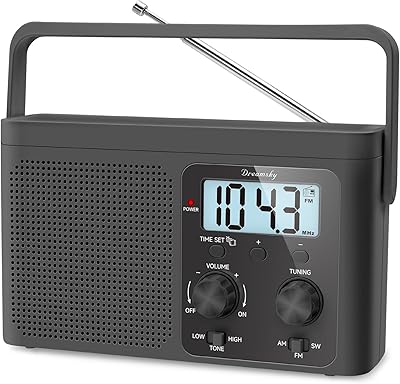
DreamSky AM/FM Shortwave Portable Radio
78%
93%
Ease of Use
86%
AM/FM Reception
61%
Shortwave Reception
74%
Speaker Quality
67%
Build Quality
More
ONCHEER AM/FM/SW Portable Retro Radio
74%
83%
Value for Money
89%
Design & Aesthetics
86%
Ease of Use
74%
AM/FM Reception
51%
Shortwave Reception
More
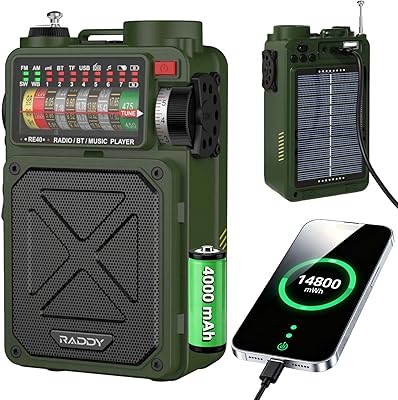
Raddy RE40 Portable Shortwave Radio
83%
88%
Battery Life
91%
Portability
85%
Charging Options
94%
Weather Alerts
62%
Bluetooth Performance
More
Raddy RF919 Multi-Band Shortwave Radio
76%
91%
Band Coverage & Range
83%
SSB Performance
58%
Ease of Use
63%
App & Bluetooth
77%
Value for Money
More

FAQ

The HRD-747 does genuinely receive the civilian aircraft band, typically in the 118–137 MHz range. Whether you can hear anything useful depends heavily on how close you are to an airport or active flight path. In urban areas near airports, it works reasonably well for monitoring approach and tower communications. Out in a rural area with little air traffic overhead, you may pull in very little. It is a real function, not a gimmick, but proximity matters a lot.

Yes, the HRD-747 supports both USB (upper sideband) and LSB (lower sideband) reception, so monitoring amateur radio operators on shortwave SSB frequencies is possible. The caveat is that fine-tuning SSB signals on this radio takes some patience — the frequency steps can make it tricky to land cleanly on a voice without a slight pitch distortion. It works, but experienced ham listeners used to dedicated receivers may find the tuning feel a bit rough around the edges.

The 14-hour figure is achievable under favorable conditions — moderate volume, FM reception, backlight off or dimmed. Most buyers report practical runtimes in the 10 to 13 hour range under normal mixed use, which is still genuinely good for a radio this size. Running the backlight continuously or scanning demanding bands like SSB will eat into that figure. The good news is the battery is removable, so carrying a spare BL-5C is a viable option for longer trips.

It is a water-resistant pouch rather than a fully rated waterproof enclosure. It will protect the radio from light rain or splashes, which is useful for outdoor use. Do not submerge it or expect it to survive a dunking in a river. Think of it as weather protection, not full waterproofing.

It makes a genuine, noticeable difference — especially on shortwave bands where signal strength can be marginal. Plugging the 9.7-foot wire antenna into the 3.5mm external input and stringing it across a room or out a window will often resolve stations that were buried in static using only the internal antenna. For shortwave listening, always use the external antenna when possible.

Tecsun's budget lineup, particularly models like the PL-310ET, generally offers more refined SSB tuning, a more polished user interface, and slightly better overall build quality. Where the HRD-747 pulls ahead is raw band coverage — the addition of AIR, VHF, UHF, and CB bands gives it a broader monitoring scope that Tecsun's budget models do not match. If pure FM and shortwave listening quality is your priority, Tecsun edges ahead. If you want the widest band coverage in one device for the price, this radio is competitive.

The manual covers the basics but has noticeable translation issues that can make some of the more advanced functions — like configuring the user-defined band or setting up auto-boot — harder to follow than they should be. For standard operations like saving presets, changing bands, and setting the clock, most buyers figure it out without too much trouble. For the more nuanced settings, searching for HRD-747 user guides or forum threads posted by other owners tends to fill in the gaps more clearly.

Yes, and that is one of the more practical design choices on this radio. The BL-5C battery format is a Nokia-originated standard that remains widely available from third-party sellers. Replacing it does not require any tools — the battery door releases easily. Just make sure to buy from a reputable seller, since counterfeit BL-5C batteries with inflated capacity ratings are unfortunately common on marketplace platforms.

FM reception is stereo when you use headphones — plug in the included in-ear headphones or your own and you will get a proper stereo signal on FM broadcasts. The built-in speaker, as you might expect from a radio this thin, is mono only. For casual background listening the speaker is fine, but for enjoying music on FM, headphones are the better choice.

For emergency preparedness, this wide-band portable radio covers the key bases reasonably well — NOAA weather alerts work reliably, the battery is rechargeable and removable, and the waterproof pouch gives it some protection during outdoor use. It is not a purpose-built emergency radio with hand-crank charging or a solar panel, so if those features are a priority, something like a Midland ER310 might suit you better. But as a dual-purpose everyday radio that also handles emergencies, it is a practical and versatile option.