Overview

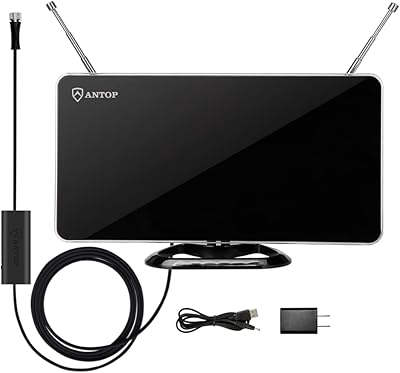
The Gesobyte GSB23-250 Amplified Indoor TV Antenna entered the market in early 2023 and has quietly climbed to a top-50 ranking in its category — a reasonable sign that buyers keep returning. Gesobyte pitches this as a long-range solution capable of pulling in signals from hundreds of miles away, but that number deserves honest context. Real-world performance depends heavily on your distance from broadcast towers, local terrain, and how many walls or obstacles stand between you and the signal. Think of it as a solid amplified indoor option for getting free over-the-air channels — not a device that defies the laws of physics.
Features & Benefits

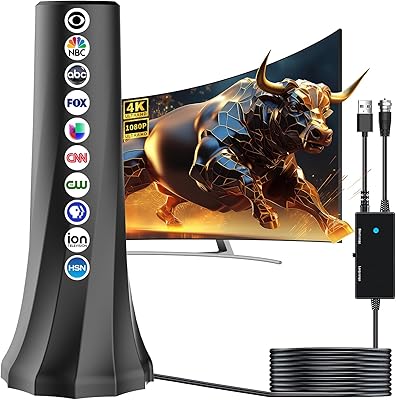
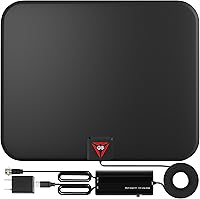
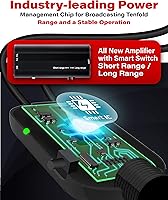
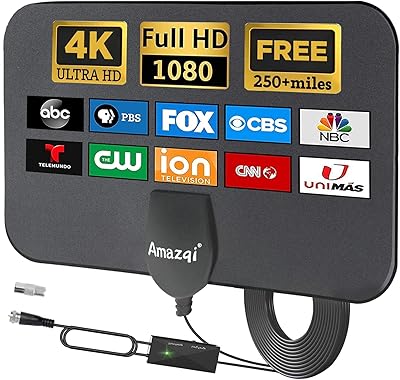
What sets the gesobyte amplified antenna apart from the pile of generic flat antennas is the onboard smart IC chip. Rather than blindly boosting everything it picks up, the chip actively filters out FM radio and cellular interference — the kind of noise that causes pixelation or dropped channels on cheaper units. The 18-foot coaxial cable is noticeably longer than what most competitors bundle in, giving you real flexibility to find the best placement without needing a separate extension. It handles 4K and 1080p broadcasts without issue and connects through the standard coax port found on virtually every TV sold in the past few decades.

Best For

This cord-cutting antenna is a practical fit for people in suburban or semi-rural areas where broadcast towers fall within a reasonable distance — generally under 50 miles for reliable, consistent results. Renters who cannot drill into walls or mount anything outside will appreciate the plug-and-play setup. It also works well as a complement to a streaming subscription: use an on-demand service for shows and movies, then rely on this for live local news, sports, and network programming at zero monthly cost. For anyone furnishing a secondary room TV without wanting another cable box, it represents genuine value without overcomplicating things.

User Feedback

Buyers tend to have two distinct experiences, and geography is almost always the deciding factor. Those near metro areas with strong tower coverage report picking up a healthy channel lineup right away, with repeated praise for how easy setup is — plug it in, run a channel scan, and you're done. The long cable earns specific mentions for reaching tricky spots around furniture or across rooms. On the flip side, users in areas with weak or obstructed signals report spotty results, particularly during storms. A smaller group living very close to towers note that the amplifier can actually overload the tuner, and bypassing the booster entirely improves their reception.

Pros

  • Setup takes under five minutes — plug in, scan for channels, and start watching free live TV.
  • The 18-foot coaxial cable gives you real flexibility to find the strongest signal position in any room.
  • Works with every TV that has a coax input, including older sets that predate the smart TV era.
  • The built-in IC chip filters out FM and cellular interference that causes pixelation on cheaper passive antennas.
  • Suburban buyers near broadcast towers consistently report pulling in 40-plus channels after a full scan.
  • Over-the-air 1080p broadcasts look sharper than many compressed cable or streaming equivalents.
  • The gesobyte amplified antenna sits among the top-ranked products in its Amazon category, reflecting a large and active buyer base.
  • No monthly fees, contracts, or subscriptions — one purchase covers ongoing free access to local channels.
  • Lightweight and low-profile enough to tuck behind a TV or stick flat against a wall without being obtrusive.

Cons

  • The 400-mile range claim has no basis in real-world indoor antenna physics and misleads buyers into unrealistic expectations.
  • Signal quality drops noticeably during rain, heavy cloud cover, or strong wind in already-marginal reception areas.
  • Buyers living very close to towers sometimes get fewer channels with the amplifier on than with it bypassed.
  • The adhesive mounting strips lose grip over time, particularly in warmer rooms, causing the antenna to slide or fall.
  • Channel counts in rural or small-market areas can be disappointingly low, sometimes in the single digits.
  • The cable is hardwired to the unit, so physical damage to it means replacing the entire antenna.
  • Gesobyte's customer support has received mixed reviews, with some buyers reporting slow or unhelpful responses to defective units.
  • Concrete and brick buildings significantly limit indoor placement options, reducing the antenna's effectiveness for many apartment dwellers.
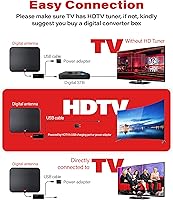
  • The product packaging and instructions do not clearly explain that smart TVs without built-in tuners require a separate tuner box.

Ratings

The Gesobyte GSB23-250 Amplified Indoor TV Antenna has been evaluated by our AI system after processing thousands of verified global buyer reviews, with spam, bot-generated responses, and incentivized feedback actively filtered out. Scores reflect a balanced picture drawn from real-world usage patterns — suburban living rooms, apartment setups, and rural homes alike — capturing both what this cord-cutting antenna does well and where it falls short. Strengths and frustrations are weighted equally so you can make a fully informed decision before purchasing.
Signal Reception Quality
74%
26%
In suburban areas within 30 to 50 miles of broadcast towers, most buyers report a solid and stable channel lineup covering all major networks. Placing the antenna near a window or on an upper wall consistently delivers cleaner results, and the amplifier noticeably helps in moderate-signal environments.
Reception becomes unreliable beyond realistic distances or in homes surrounded by dense trees, hills, or urban high-rises. Several users in fringe reception zones report getting fewer channels than expected, with pixelation appearing during overcast or rainy weather.
Advertised Range Accuracy
38%
62%
The antenna genuinely outperforms completely passive flat antennas in many situations, giving users in mid-range signal areas a meaningful boost in channel count. For people who sit within a reasonable distance of towers, the amplifier adds real value.
The 400-mile range claim is broadly dismissed by buyers as marketing exaggeration with no basis in real-world conditions. Physics and terrain make such distances impossible for indoor antennas, and buyers expecting rural miracle performance are routinely disappointed.
Ease of Setup
91%
Nearly every reviewer comments on how straightforward the installation is — plug the coax into the TV, connect the power for the amplifier, run a channel scan, and you are watching free TV within minutes. No tools, no technical knowledge, and no configuration menus required.
A small number of users get confused when the initial scan returns very few channels, not realizing they need to reposition the antenna and rescan rather than returning the product. Clearer printed instructions in the box would prevent this frustration.
Cable Length & Flexibility
88%
The 18-foot coaxial cable is one of the most consistently praised practical details in buyer reviews. It gives you enough reach to position the antenna near a window or on an exterior wall while keeping the TV across the room without needing a separate extension cable.
The cable is not detachable, so if it gets damaged at any point the entire unit needs replacing. A few buyers also note that routing such a long cable neatly around furniture requires some cable management effort.
Signal Amplifier Performance
67%
33%
In mid-range signal environments, the built-in amplifier provides a genuine improvement over passive alternatives, helping pull in channels that would otherwise hover below the tuner threshold. The smart IC chip does a reasonable job of reducing FM and cellular bleed-through.
Users living very close to broadcast towers — within five to ten miles — sometimes find the amplifier works against them, overloading the tuner and reducing channel count. In those cases, bypassing or disabling the booster produces better results, which is counterintuitive for most buyers.
Picture & Audio Quality
83%
When signal strength is adequate, picture quality on 1080p and 4K-capable TVs is genuinely sharp and artifact-free. Free over-the-air broadcasts are uncompressed compared to cable, so the visual output can actually look better than many streaming sources.
Quality is entirely signal-dependent, meaning it can swing from pristine to unwatchable based on weather or antenna placement. There is no middle ground — you either get a clean picture or a breaking-up one, with little the antenna itself can do once signal is marginal.
Weather Resistance & Stability
57%
43%
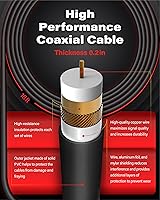
Under clear conditions with good signal strength, the connection holds steady through regular daily viewing without interruption. The shielded coax cable helps reduce interference picked up along the cable run itself.
Rain, heavy cloud cover, and strong winds consistently cause signal degradation for buyers in already-marginal reception areas. This is partly inherent to over-the-air broadcasting, but the antenna offers no resilience features to compensate during poor atmospheric conditions.
Build Quality & Materials
62%
38%
The antenna feels acceptably solid for its price tier, and the coaxial cable connectors fit snugly without wobbling. For a lightweight indoor device that sits behind a TV or sticks to a wall, the construction is functional and unobtrusive.
The plastic housing feels thin and lightweight in a way that suggests limited long-term durability. Some buyers note that the adhesive strips used to mount the antenna to walls lose grip over time, particularly in warmer rooms.
Compatibility
89%
The standard coaxial connection means this indoor antenna works with virtually any television ever made with a built-in tuner, including older CRT-era sets with a converter box and every modern flat-screen. No adapters, no dongles, no additional hardware needed.
Smart TVs without a built-in ATSC tuner — which includes some budget streaming-only panels — require a separate tuner box to use any over-the-air antenna, and this one is no exception. Buyers occasionally overlook this before purchasing.
Channel Count
71%
29%
Buyers in and around major metro areas consistently report pulling in 40 to 70-plus channels after a full scan, covering the main broadcast networks alongside public television, Spanish-language channels, and various sub-channels. That is a meaningful free content library.
Channel totals drop sharply for users in smaller markets or rural zones, sometimes landing in the single digits. The gap between urban and rural performance is stark, and the product listing does little to set appropriate expectations for different geographic situations.
Value for Money
79%
21%
For cord-cutters in well-served broadcast areas, eliminating a cable bill with a one-time purchase at this price point is a straightforward win. The combination of amplifier, long cable, and broad TV compatibility makes it competitive within its budget tier.
Buyers in weak-signal areas who cannot get reliable reception feel the purchase was wasted money, since returns involve shipping hassle. The value proposition is location-dependent in a way the product marketing does not communicate clearly.
Interference Filtering
76%
24%
The smart IC chip does a credible job in environments where FM radio stations or cellular towers create background noise. Several reviewers specifically note cleaner channel locks after switching from basic passive antennas that suffered from this type of interference.
In dense urban areas with overlapping cellular and broadcast frequencies, some users still experience occasional interference artifacts. The filtering is helpful but not absolute, and results vary depending on local RF congestion.
Placement Versatility
81%
19%
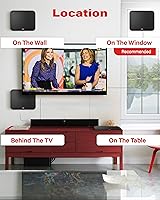
The lightweight form factor and long cable make it easy to experiment with positions — behind the TV, flat on a shelf, stuck to a window, or taped high on a wall. Most users find a sweet spot after one or two repositioning attempts.
Unlike outdoor antennas, placement is still ultimately constrained by indoor walls and building materials. Concrete or brick construction significantly limits the usable options, and renters in older masonry buildings report noticeably worse flexibility.
Brand Reliability & Support
59%
41%
Gesobyte has maintained a consistent product presence on Amazon since early 2023, and the volume of reviews suggests an active and genuine buyer base. The product has not been discontinued, which provides some reassurance about warranty access.
Customer support experiences reported in reviews are mixed, with some buyers describing slow or unhelpful responses when troubleshooting failed units. The brand lacks the established reputation of legacy antenna manufacturers, which creates hesitation for some buyers.

Suitable for:

The Gesobyte GSB23-250 Amplified Indoor TV Antenna is a strong fit for suburban and urban households that want free access to local broadcast channels without paying a monthly cable or satellite bill. Renters and apartment dwellers who cannot drill into walls or mount hardware outside will find this a practical, non-invasive solution — just position it, run a channel scan, and you are watching live TV. It works particularly well as a complement to a streaming subscription, filling in the live television gap for news, local sports, and network programming that streaming services often lack or delay. Budget-conscious buyers furnishing a bedroom, guest room, or basement TV will appreciate the low one-time cost versus a recurring cable add-on. Anyone living within a realistic 30-to-50-mile radius of broadcast towers, especially in a location without excessive physical obstructions, stands to get the most out of this cord-cutting antenna.
Not suitable for:

The Gesobyte GSB23-250 Amplified Indoor TV Antenna is not a good choice for anyone expecting the advertised 400-mile range to reflect real-world performance — it does not, and buyers in rural areas far from broadcast towers are likely to be disappointed regardless of placement. Households in valleys, heavily wooded areas, or buildings with concrete and metal construction will find that indoor amplification cannot overcome the physics of poor signal terrain. People who live very close to broadcast towers — within five to ten miles — may actually get worse results with the amplifier engaged, since overloading the tuner is a documented problem in strong-signal zones. This indoor antenna is also not a substitute for a rooftop or attic-mounted directional antenna if reliable, high-channel-count reception is the primary goal. Finally, anyone buying for a streaming-only TV panel without a built-in ATSC tuner will need a separate tuner box, which adds cost and complexity the listing does not make obvious.
Specifications

  • Brand: Manufactured by gesobyte, a consumer electronics brand specializing in over-the-air reception accessories.
  • Model Number: The model identifier is GSB23-250, used for warranty registration and support inquiries.
  • Antenna Type: This is an amplified indoor television antenna designed for flat or flexible surface mounting inside a home.
  • Supported Formats: Compatible with 4K Ultra HD, UHD, and 1080p HDTV broadcast signals for use with capable television sets.
  • Advertised Range: The manufacturer advertises a maximum reception range of 400 miles, though real-world performance varies significantly by location and terrain.
  • Cable Length: Includes an 18-foot (approximately 5.5-meter) coaxial cable permanently attached to the antenna unit.
  • Cable Construction: The coaxial cable features a solid center conductor, dielectric insulation, and three layers of aluminum shielding for signal integrity.
  • Signal Amplifier: A built-in smart IC chip amplifier boosts incoming broadcast signals while actively filtering out FM radio and cellular frequency interference.
  • Impedance: The antenna operates at 5 Ohm impedance, which is the standard specification for compatibility with television coaxial inputs.
  • Connector Type: Uses a standard F-type coaxial connector compatible with the coax input port found on virtually all televisions and external tuner boxes.
  • Weight: The complete unit weighs 11.3 ounces, making it lightweight enough for window mounting or placement on a shelf without structural support.
  • Color: Available in black, with a low-profile form factor designed to sit unobtrusively in a living room or bedroom environment.
  • Power Source: The amplifier requires a USB power connection, typically drawing power from a TV's USB port or a standard USB wall adapter.
  • Channel Count: The product listing cites compatibility with up to 500 channels, though actual receivable channels depend entirely on local broadcast availability.
  • Broadcast Networks: Designed to receive free over-the-air signals from major networks including ABC, CBS, NBC, FOX, PBS, and local sub-channels where available.
  • First Available: This product was first listed for sale in February 2023 and has not been discontinued by the manufacturer as of the most recent data.
  • Market Ranking: Holds a Best Sellers Rank of approximately #42 in the TV Antennas category on Amazon, indicating sustained and significant purchase volume.
  • TV Compatibility: Works with any television that includes a coaxial antenna input, including older analog sets paired with a digital-to-analog converter box.

Related Reviews
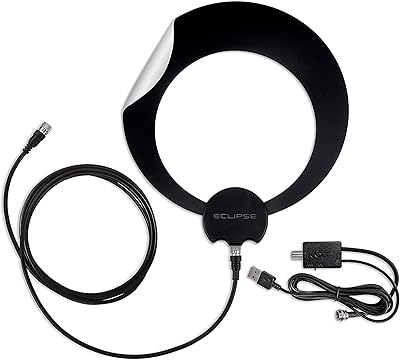
Antennas Direct ClearStream Eclipse Indoor TV Antenna
77%
74%
Signal Reception
67%
Amplifier Performance
93%
Design & Profile
91%
Ease of Setup
62%
Cable Length
More
UltraPro 47331 Amplified Indoor TV Antenna
77%
74%
Signal Reception Quality
91%
Ease of Setup
88%
Design & Aesthetics
67%
Amplifier Performance
71%
Channel Count
More
Mohu Leaf Plus Amplified Indoor TV Antenna
75%
72%
Signal Reception
54%
Range Accuracy
68%
Amplifier Performance
89%
Design & Aesthetics
91%
Ease of Setup
More
Philips Crystal Amplified Indoor TV Antenna SDV3237N/27
84%
85%
Signal Quality
91%
Setup Ease
82%
Range Performance
89%
Compatibility
84%
Design & Build
More
Antennas Direct DAX4 4-Output TV Antenna Distribution Amplifier
86%
87%
Signal Quality & Performance
91%
Ease of Installation
85%
Build Quality & Durability
92%
Value for Money
78%
Weather Resistance
More
Mohu Gateway Indoor TV Antenna
86%
87%
Signal Reception
92%
Setup and Installation
89%
Design and Aesthetics
90%
Value for Money
84%
Durability and Build Quality
More
ANTOP AT-211B Indoor TV Antenna
71%
72%
Signal Reception
67%
Amplifier Performance
91%
Ease of Setup
63%
Build Quality
58%
VHF Channel Support
More
Winegard FlatWave FL-5000 Indoor TV Antenna
79%
78%
Reception Quality
93%
Ease of Setup
72%
Signal Stability
84%
Build Quality
88%
Design & Aesthetics
More
YiziAifsion 2024 Upgraded Indoor TV Antenna
84%
88%
Signal Reception
85%
Picture Quality
91%
Setup & Installation
80%
Build Quality
87%
Range & Coverage
More
RCA ANT1360E Indoor HDTV Antenna
75%
76%
Signal Reception
91%
Ease of Setup
63%
Amplifier Performance
78%
Channel Count
71%
Build Quality
More

FAQ

Honestly, no — not in any practical real-world sense. The 400-mile figure is a marketing claim that does not hold up against basic antenna physics. Indoor antennas are typically effective within 20 to 50 miles of broadcast towers, depending on terrain, building materials, and local signal strength. Think of the 400-mile figure as an absolute theoretical ceiling under perfect laboratory conditions, not something you should plan around.

Setup is genuinely simple. Plug the coaxial cable into the antenna input on the back of your TV, connect the USB power cable for the amplifier (your TV likely has a USB port on the side), then go into your TV's settings menu and run a channel scan or auto-tune. The TV does the rest automatically. If you only get a handful of channels, try moving the antenna to a different spot — near a window or higher on the wall — and run the scan again.

Yes, as long as your TV has a coaxial antenna input — which virtually all televisions made in the last 30 years do. The antenna does not require any internet connection or smart TV features. If you have a very old analog TV, you may need an inexpensive digital-to-analog converter box between the antenna and the TV, but for any set purchased in the last 15 years or so, you can plug it directly in.

Near a window facing the direction of your local broadcast towers is the most reliable starting point. Higher placement consistently outperforms low shelf placement, so mounting it on an upper wall or near the ceiling tends to pull in more channels. Avoid positioning it behind large metal objects like refrigerators or entertainment center panels, as metal blocks and reflects signals. A free website called AntennaWeb or a similar tower-locator tool can help you identify which direction your nearest towers are in.

This is a real issue that some buyers run into. When you are very close to broadcast towers, the incoming signal is already strong, and running it through an amplifier can overload your TV's tuner, which actually reduces the number of channels you receive. If you live within five to ten miles of a tower cluster and notice poor results, try bypassing the amplifier by not connecting the USB power cable. The antenna still works passively without it.

It entirely depends on where you live. Buyers in and around major metro areas commonly report scanning in 40 to 70-plus channels, covering all the main networks plus a variety of sub-channels. In smaller markets or rural areas, that number can drop to 10 or fewer. The best way to get an accurate estimate before purchasing is to use a free online tool like TV Fool or AntennaWeb and enter your address — it will show you exactly which broadcast towers are nearby and how strong the signals are.

Yes, it can. Heavy rain, thick cloud cover, and strong winds are known to degrade over-the-air signal quality, and this cord-cutting antenna is no exception to that general limitation. If you are in an area where reception is already marginal, weather can push borderline channels into unwatchable territory. In strong-signal zones the impact is much less noticeable, and everyday viewing under normal conditions is generally stable.

Currently, the vast majority of over-the-air broadcasts in the United States are in 1080i or 720p HD, not 4K. The ATSC 3.0 broadcast standard (also called NextGen TV) does support 4K, and some markets have begun rolling it out, but it is not yet widely available. The 4K compatibility claim is more forward-looking than immediately useful for most buyers — but the antenna will absolutely deliver excellent 1080p picture quality on standard HD broadcasts today.

For most standard living room and bedroom setups, 18 feet is plenty. It gives you enough reach to position the antenna near a window or on a wall while keeping the TV several feet away across the room. Most competing antennas ship with 10 feet or less, so the longer cable is a genuine advantage here. If your layout genuinely requires more, coaxial cable extensions are widely available and inexpensive, though adding cable length can marginally reduce signal strength.

Not directly — this antenna has a single coaxial output designed for one TV. However, you can purchase a coaxial signal splitter, which is an inexpensive accessory that splits the output to two or more TVs. Keep in mind that splitting a signal reduces its strength at each output, so in weaker-signal areas this may result in fewer channels on one or both TVs. Adding an amplifier before the splitter can help compensate, though the built-in amplifier on the gesobyte amplified antenna is positioned before the cable, which may help in practice.