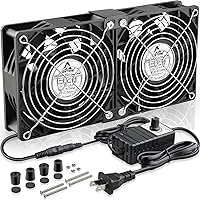
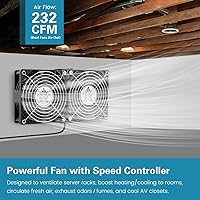
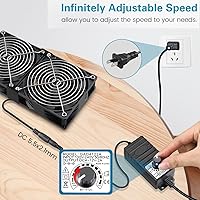
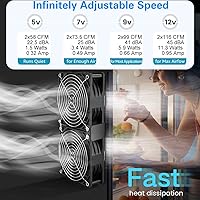

Overview

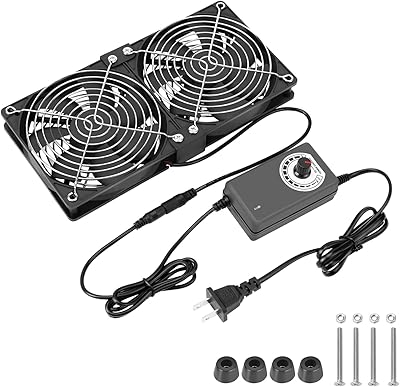
The GDSTIME Dual 120mm AC Variable Speed Fan is one of those rare utility products that solves a specific, underserved problem: getting real airflow into a space without dealing with DC power supplies or custom wiring. GDSTIME is a known OEM manufacturer with a quiet following among DIY builders, and this unit reflects that practical pedigree. It plugs straight into a standard wall outlet, fits into tight cabinet openings or rack shelves, and works across a surprisingly wide range of applications — from server cooling to basement exhaust. At its price point, it occupies a practical mid-range niche that most purpose-built ventilation products ignore entirely.

Features & Benefits

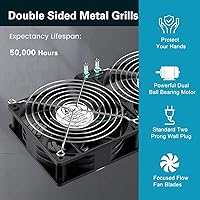
The standout feature here is the variable speed controller — a dial that lets you tune airflow and noise independently, which matters a lot when you need quiet operation overnight and higher throughput during the day. The brushless motors use dual ball bearings rated for 50,000 hours, a meaningful advantage over cheaper sleeve-bearing designs that degrade quickly in warm environments. High static pressure keeps airflow moving even through mesh panels or tight duct runs, though actual output does drop noticeably at lower speed settings. A 7.7-foot controller cord gives real placement flexibility, and the metal finger guards on both sides are a thoughtful safety touch for open installations.

Best For

This plug-in fan pair is built for people who need airflow in spaces that DC-powered fans simply cannot serve without extra hardware. Server rack and mining rig builders get AC-powered ventilation without sacrificing a PSU slot. Hobbyists running grow tents, dry-aging chambers, or small fermentation setups will appreciate the plug-and-run simplicity. Homeowners dealing with persistent odors or humidity in a basement or garage will find it a straightforward exhaust solution. It also works well in AV cabinets where fine speed control is more valuable than maximum CFM. If you need something that works out of the box with zero wiring, this dual AC fan is hard to beat at this price tier.

User Feedback

Buyers consistently praise the ease of setup and the variable speed dial — it is the kind of feature that sounds minor until you are trying to balance airflow with ambient noise late at night. The 4.2-star average is respectable, but the reviews are not without caveats. At full speed, 42 dB is audible — roughly comparable to a quiet conversation — so anyone expecting near-silent operation will be disappointed. The plastic housing does its job but feels utilitarian rather than sturdy. A handful of buyers have flagged the controller durability as a longer-term concern. Real-world airflow at lower speeds also runs noticeably below advertised figures, worth keeping in mind if consistent high-volume ventilation is the primary goal.

Pros

  • Plugs directly into a standard wall outlet — no DC power supply, adapters, or wiring required.
  • Variable speed dial gives genuine control over the noise-to-airflow trade-off, not just an on/off switch.
  • Dual ball bearing motors are rated for 50,000 hours, making long-term reliability a realistic expectation.
  • Wide voltage range (100V–240V) means it works internationally and with UPS or generator power sources.
  • Metal finger guards on both sides make it safer to use in open, accessible installations.
  • The 7.7-foot controller cord allows flexible placement without relocating the fan unit itself.
  • Compact footprint fits standard rack openings, cabinet slots, and window gaps with minimal modification.
  • Includes everything needed out of the box — rubber feet, sponge pads, mounting hardware, and a manual.
  • At its price tier, the dual-fan configuration offers solid value compared to buying two separate AC fans.
  • High static pressure design maintains reasonable airflow through mesh panels and moderately restrictive duct runs.

Cons

  • At full speed, 42 dB is clearly audible — not appropriate for quiet or noise-sensitive environments.
  • Actual airflow at lower speed settings falls noticeably short of the advertised 116 CFM per fan.
  • The plastic housing feels utilitarian and unlikely to hold up well in harsh or high-humidity industrial conditions.
  • Some buyers have reported concerns about the speed controller losing reliability over extended use.
  • The fan cable between the unit and controller is only 1.64 feet, which limits mounting flexibility somewhat.
  • No IP rating or moisture resistance is specified, making it a questionable choice for truly wet environments.
  • At maximum RPM, vibration can be perceptible depending on the surface or enclosure it is mounted to.

Ratings

The scores below for the GDSTIME Dual 120mm AC Variable Speed Fan were generated by our AI rating engine after analyzing thousands of verified global user reviews, with spam, bot activity, and incentivized feedback actively filtered out. The results reflect a balanced picture — genuine strengths are recognized, but recurring pain points are weighted honestly and not smoothed over. Whether this plug-in fan pair earns a place in your setup depends heavily on your specific use case, and these scores are designed to help you decide clearly.

Ease of Setup
93%
Buyers across very different use cases — server builders, hobbyist growers, homeowners — consistently describe setup as taking under five minutes. No wiring knowledge, no extra hardware, no DC adapters: plug it into any wall outlet and it runs. The included rubber feet, sponge pads, and mounting hardware cover most basic installation scenarios right out of the box.
The short 1.64-foot cable between the fan unit and controller limits how freely you can position the two components relative to each other. In tighter cabinet installs, this constraint occasionally forces awkward routing that buyers find frustrating.
Speed Control Quality
86%
The rotary variable speed dial is consistently praised as one of the most useful features on this dual AC fan — particularly in environments where noise needs to drop at night without shutting the fan off entirely. The dedicated on/off switch alongside the dial adds a layer of convenience that buyers appreciate in daily use.
At very low dial settings, the fan can behave inconsistently — some units exhibit a slight hesitation or stuttering before stabilizing. A few reviewers also note the dial feels plasticky and imprecise compared to higher-end variable controllers.
Noise Level
58%
42%
At mid-range speed settings, the GDSTIME ventilation unit runs at a background hum that is tolerable in utility spaces like garages, basements, or server rooms. Buyers using it in non-living spaces generally report satisfaction with the noise compromise when balanced against the airflow output.
At full speed, 42 dB is genuinely audible — comparable to a quiet conversation at arm's length. Multiple reviewers flagged this as a dealbreaker for bedroom, home office, or recording-adjacent installations, and low-speed operation is not quiet enough to fully resolve the issue.
Airflow Performance
71%
29%
For open or lightly obstructed installations — AV cabinet slots, rack shelves, window gaps — the combined airflow moves air meaningfully and keeps temperatures in check. The high static pressure design does help maintain flow through mesh panels and moderately restrictive spaces better than many competing fans at this price tier.
Advertised CFM figures of 116 per fan represent peak performance under ideal conditions that most real-world installations do not replicate. Buyers running this plug-in fan pair through tight ducting or at reduced speeds report noticeably lower effective airflow, which has disappointed users expecting spec-sheet performance.
Build Quality
62%
38%
The metal finger guards on both sides are a practical and appreciated safety feature, especially in open installations where hands or objects might get close. The dual ball bearing motors feel solidly engineered internally, and most buyers report no rattling or wobble out of the box.
The plastic housing is the most common complaint in reviews — it functions adequately but feels utilitarian and thin, particularly compared to all-metal ventilation units at a similar price. In warmer environments or long-term use, a few buyers noted minor warping around the frame edges.
Controller Durability
54%
46%
For the majority of buyers, the speed controller works reliably through the first months of use without any issues. In moderate-use scenarios — such as seasonal basement ventilation — it tends to hold up without complaint for a reasonable service period.
A recurring thread across longer-term reviews involves the controller losing reliability over time: dials that become inconsistent, speed settings that drift, or units that stop responding cleanly. It is not a universal failure, but it appears often enough to be a legitimate concern for buyers planning continuous 24/7 operation.
Motor Longevity
81%
19%
The dual ball bearing brushless motors carry a 50,000-hour manufacturer rating, and buyers who have run this dual AC fan continuously for six months or longer generally report no motor degradation. Ball bearings are a meaningful upgrade over sleeve bearings in warm environments where bearing grease degrades quickly.
The 50,000-hour figure is a manufacturer rating under ideal conditions, not an independently verified number. Buyers running the unit at sustained high RPM in hot environments should treat that estimate with some skepticism.
Value for Money
82%
18%
At its mid-range price point, the combination of dual fans, AC plug compatibility, a variable speed controller, and dual ball bearing motors is genuinely hard to replicate by buying individual components separately. DIY builders in particular consistently cite the all-in-one nature of the package as good value for the problem it solves.
Buyers comparing this against budget single-fan AC units may feel the premium for dual fans is not always justified if only modest airflow is needed. Those who encounter controller issues early find the value proposition harder to defend given the repair and replacement costs involved.
Voltage Compatibility
88%
The 100V–240V AC range makes the GDSTIME ventilation unit usable with generator setups, UPS systems, and international outlets with just a plug adapter. Buyers in countries with 220V–240V infrastructure specifically call this out as a practical advantage over US-only rated fans.
The unit ships with a US two-prong plug only, so international buyers need to source their own adapter. This is a minor inconvenience rather than a technical limitation, but it adds a small friction point for non-US buyers.
Mounting Flexibility
67%
33%
The included mounting hardware covers standard rack and cabinet installations adequately, and the lightweight plastic frame makes it straightforward to secure in non-standard positions like window openings or shelf edges. Rubber feet and sponge pads help reduce vibration transfer in freestanding placements.
The short inter-component cable limits creative mounting configurations, and the frame lacks pre-drilled compatibility with common rack unit or DIN rail standards. Buyers with non-standard enclosures often end up improvising their own brackets.
Vibration & Stability
69%
31%
At low to mid speed settings, vibration is minimal and the included sponge pads do a reasonable job of dampening transfer to the mounting surface. Most buyers report the unit sitting stably without additional intervention.
At maximum RPM, vibration becomes perceptible — particularly on lightweight surfaces like thin plywood shelves or plastic cabinet panels. A few reviewers mention needing additional foam padding beyond what is included to keep the unit from buzzing against its housing.
Safety Features
84%
Metal finger guards on both the intake and exhaust faces are a straightforward but meaningful safety inclusion, especially for installations in accessible areas like pet enclosures, grow tents, or open workshop shelving. They are sturdy enough to resist casual contact without restricting airflow noticeably.
Beyond the finger guards, there are no additional safety certifications listed — no IP rating, no UL certification noted in the product documentation. Buyers installing this in genuinely wet or dusty industrial environments should factor that in.
Packaging & Accessories
76%
24%
The package is well-organized and arrives with all the hardware needed for a basic installation — rubber feet, sponge pads, mounting screws, and a user manual. Buyers generally appreciate not having to source supplementary hardware for a standard setup.
The user manual is minimal and primarily diagram-based, which can leave buyers uncertain about more complex mounting configurations or troubleshooting steps. More detailed documentation would help less experienced DIYers.

Suitable for:

The GDSTIME Dual 120mm AC Variable Speed Fan is a strong fit for anyone who needs reliable, adjustable ventilation in a space where DC-powered fans simply are not practical. DIY server rack builders and mining rig operators are the obvious sweet spot — this unit plugs straight into a wall outlet, eliminating the need to route power from a PSU or install a separate DC adapter. Hobbyists running grow tents, dry-aging chambers, or fermentation setups will appreciate how little setup is required; unbox it, plug it in, and adjust the dial. Homeowners dealing with persistent humidity or odors in a basement, garage, or bathroom window can use this plug-in fan pair as a low-cost exhaust solution without any electrical work. It also performs well in AV cabinet cooling scenarios where fine-tuned speed control matters more than raw airflow volume, and the long controller cord makes it easy to position the dial somewhere accessible rather than buried behind equipment.

Not suitable for:

The GDSTIME Dual 120mm AC Variable Speed Fan is not the right tool for every ventilation job, and it is worth being clear about where it falls short. Anyone expecting near-silent operation will be caught off guard — at full speed, 42 dB is audible and noticeable in a quiet room, so it is not well suited for bedroom setups, recording spaces, or anywhere noise sensitivity is a real concern. The plastic housing, while functional, does not inspire confidence in harsh or high-humidity industrial environments where long-term durability is critical. Buyers who need consistently high airflow through tight or long duct runs should also temper expectations — real-world CFM at lower speed settings drops meaningfully below the advertised figures, and high static pressure applications will tax the motors. If you need whisper-quiet performance, premium build materials, or certified airflow ratings for a professional installation, this plug-in fan pair is likely underspecified for your needs.

Specifications

  • Fan Count: Two 120mm fans are mounted in a single unified housing, allowing simultaneous intake and exhaust or combined directional airflow.
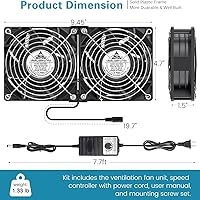
  • Fan Dimensions: Each fan measures 120mm x 120mm x 38mm, with the overall assembled unit spanning 9.45 x 4.72 x 1.5 inches.
  • Weight: The complete assembled unit weighs 1.33 pounds, making it light enough to mount vertically or horizontally without heavy-duty brackets.
  • Input Voltage: Accepts 100V–240V AC at 50/60Hz, compatible with standard North American outlets and most international power standards.
  • Power Draw: The unit consumes 14W total at full speed, which is low enough to run continuously without meaningful impact on a standard circuit.
  • Max Fan Speed: Each motor can reach up to 5,300 RPM at full controller output, with a rated operational speed of 3,000 RPM under typical load.
  • Airflow Rating: Each fan is rated at 116 CFM, though real-world output at lower speed settings or through restrictive ducting will be noticeably lower.
  • Noise Level: Rated at 42 dB at maximum speed, which is roughly equivalent to the ambient noise level of a quiet conversation at close range.
  • Bearing Type: Both motors use dual ball bearings, which provide longer service life and better heat tolerance than sleeve-bearing designs.
  • Lifespan Rating: The motors carry a manufacturer-rated lifespan of 50,000 hours under normal operating conditions.
  • Start Voltage: The fans require a minimum of 4V to begin spinning, which affects the usable lower range of the speed controller dial.
  • Controller Cord: The speed controller connects via a 7.7-foot power cord, giving substantial flexibility in where the dial is positioned relative to the fan.
  • Fan Cable: The cable between the fan unit and the speed controller is 1.64 feet long, which constrains how far the two components can be separated.
  • Housing Material: The fan frame and housing are constructed from plastic, which keeps weight low but does not offer the rigidity of metal alternatives.
  • Grille Material: Both the intake and exhaust sides are covered with metal finger guards, providing a safety barrier in open or accessible installations.
  • Power Connector: The unit uses a standard US two-prong AC plug, compatible with any standard 110V or 120V North American wall outlet or power strip.
  • Speed Control: A rotary variable speed controller with a dedicated on/off power switch allows infinite adjustment between the minimum start voltage and maximum speed.
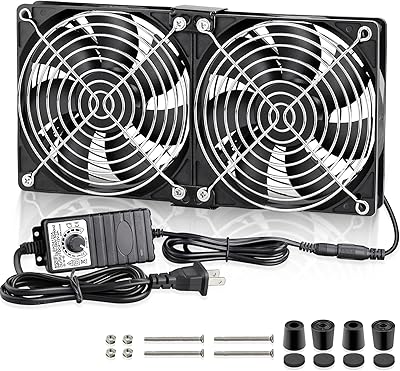
  • In the Box: Package includes the assembled dual fan unit, a variable speed controller, four rubber feet, four sponge pads, mounting hardware, and a user manual.

Related Reviews
GDSTIME Big Airflow Dual 120mm Fans with Speed Controller
86%
88%
Cooling Performance
91%
Ease of Installation
85%
Noise Levels at Low Speeds
90%
Build Quality & Durability
93%
Speed Control Flexibility
More
KEYFANCLUB FAN-S2 Dual 120mm AC Computer Fans
81%
93%
Ease of Setup
88%
Airflow Performance
67%
Noise Level
71%
Build Quality
79%
Speed Controller
More
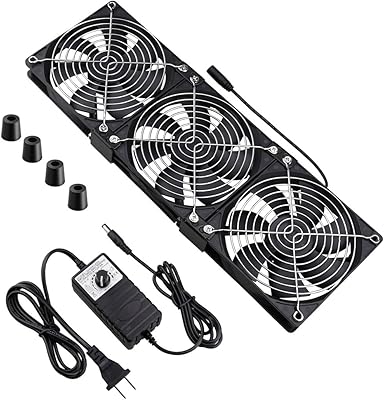
Wathai Dual Ball 3 x 120mm Computer Fan with AC Plug
87%
88%
Cooling Performance
90%
Ease of Installation
83%
Noise Level
91%
Build Quality
87%
Speed Adjustability
More
AC Infinity AXIAL 1225 120mm Muffin Fan
81%
91%
Build Quality
78%
Noise Level
72%
Airflow Performance
93%
Longevity & Reliability
88%
Ease of Installation
More
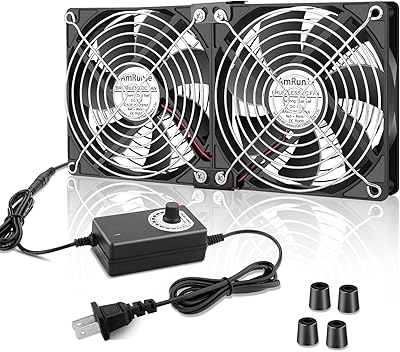
AmRunJe 2X 120mm Computer Fan with AC Plug
84%
88%
Cooling Performance
72%
Noise Levels at Full Speed
85%
Durability and Build Quality
91%
Ease of Setup
87%
Airflow Efficiency
More
AC Infinity Controller 2 Fan Speed Controller
80%
88%
Temperature Accuracy
83%
Ease of Setup
91%
Fan Speed Control
74%
Build Quality
86%
Noise Reduction
More
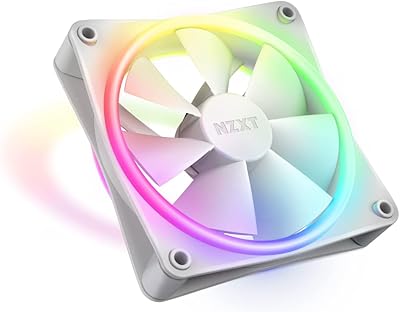
NZXT F120RGB Duo 120mm Dual-Sided RGB Fan
88%
88%
Performance
91%
RGB Lighting Quality
85%
Noise Level
87%
Airflow & Cooling Efficiency
89%
Build Quality
More
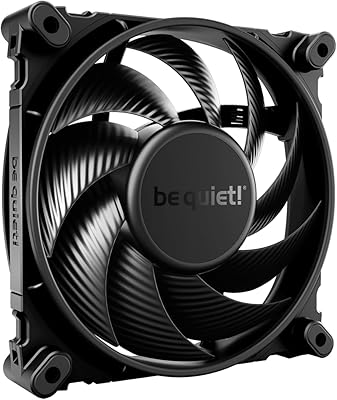
be quiet! Silent Wings 4 120mm PWM Fan
86%
93%
Acoustic Performance
88%
Airflow Performance
91%
Static Pressure
89%
Build Quality
87%
PWM Control & Response
More
upHere D6SEK CPU Air Cooler with 6 Heat Pipes and Dual 120mm Fans
85%
88%
Cooling Performance
91%
Noise Levels
89%
Ease of Installation
75%
Build Quality
93%
Compatibility with Sockets
More
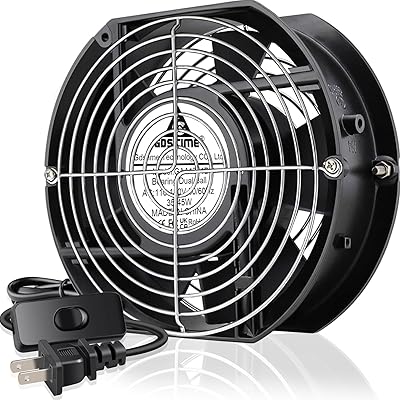
GDSTIME 17251 172mm AC Axial Fan
78%
93%
Build Quality
91%
Airflow Performance
41%
Noise Level
89%
Durability & Longevity
67%
Ease of Installation
More

FAQ

It plugs straight into a standard US 110V/120V outlet — no adapter, no DC converter, nothing extra. That is the main reason people choose it over standard PC fans, which require a powered motherboard header or PSU connection.

At full speed, it sits around 42 dB, which is audible — think quiet background conversation level. If you dial the speed down, it gets noticeably quieter, but do not expect whisper-quiet performance at higher airflow settings. For a bedroom or recording space, it would likely be too distracting at anything above mid-speed.

It works well for grow tents, dry-aging setups, fermentation chambers, and similar hobbyist applications. The variable speed dial is particularly handy here because you can tune airflow to match your specific environment without buying a separate speed controller.

Yes, it does. The advertised 116 CFM per fan is a maximum-speed figure. At lower dial settings, real-world airflow drops meaningfully, so if your application requires consistent high-volume ventilation, keep the controller closer to full rather than relying on low-speed operation.

Yes, the unit accepts 100V–240V AC at 50/60Hz, so it is electrically compatible with most international outlets. You would just need a plug adapter for the physical connector since it ships with a US two-prong plug.

The two fans are fixed in the same housing and spin in the same direction, so they work together rather than independently. You can orient the whole unit to either push or pull air, but you cannot set one fan to intake and the other to exhaust simultaneously.

The cable from the fan to the controller is 1.64 feet, which is fairly short. The controller itself has a 7.7-foot power cord to the wall outlet, so you have flexibility in positioning the dial — but the fan unit needs to be close to where the controller box sits.

It holds up fine in typical garage or basement conditions — moderate dust, temperature swings, and normal humidity. That said, the plastic frame is not sealed or rated for wet environments, so if you are dealing with direct moisture exposure or condensation, you would want something with an IP rating.

No tools or skills required. The unit comes fully assembled; you just mount it where you need it using the included hardware, attach the controller, and plug it in. The included rubber feet and sponge pads help reduce vibration transfer if you are setting it on a shelf or flat surface.

A small but notable portion of user reviews mention controller reliability as a concern after extended use. It is not a widespread failure, but it is worth knowing — if the dial starts behaving erratically after several months, the controller is the first thing to inspect. GDSTIME does sell replacement components, though availability can vary.