Overview

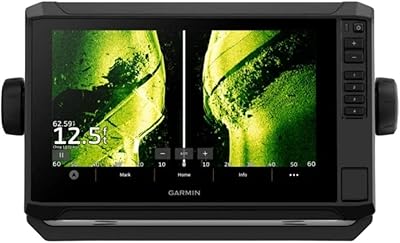
The Garmin ECHOMAP UHD2 73sv 7-inch Chartplotter sits comfortably in the mid-to-premium tier of freshwater fishing navigation, where Garmin has built a well-earned reputation over decades. This chartplotter is part of the ECHOMAP UHD2 family — a lineup designed to balance touchscreen usability with serious on-water functionality. One thing to know before you buy: no transducer is included, which catches plenty of first-time buyers off guard and adds to the total cost. The real draw here is the built-in Navionics+ mapping, which makes this Garmin unit particularly compelling for freshwater anglers who want accurate lake charts and sonar-sharing capability right out of the box.
Features & Benefits

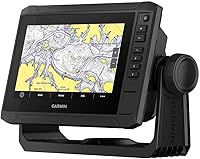
The 7-inch touchscreen stays readable on a sun-drenched deck — a real concern for anyone who has squinted at a washed-out display mid-cast. The ECHOMAP UHD2 73sv covers more than 18,000 U.S. lakes with up to 1-foot contours, which matters when you are hunting drop-offs and submerged structure on unfamiliar water. Wi-Fi lets you share sonar data and waypoints wirelessly with a second compatible unit, useful when fishing with a partner on the same boat. If you run a Garmin Force trolling motor, the integration is a genuine highlight — set routes, control speed, and monitor battery status directly from the screen. Both surface and flush mount options are supported, keeping installation flexible across different boat setups.

Best For

This chartplotter is built squarely for freshwater structure fishing — anglers who rely on precise contour maps to locate drop-offs, points, and submerged cover on unfamiliar lakes. If you are already running Garmin marine gear, particularly a Force trolling motor, the wireless integration makes this unit worth serious consideration on its own. It is also a strong step-up choice for anyone moving off a basic handheld GPS who wants a proper touchscreen experience without a steep learning curve. Worth noting: the inland mapping focus means saltwater or offshore boaters would be better served by a different platform entirely. Also budget for a transducer separately, since none comes in the box.

User Feedback

Across 260-plus verified ratings, the ECHOMAP UHD2 73sv holds a 4.7-star average, and the praise is consistent: buyers repeatedly call out map accuracy and brightness as standout strengths, with most reporting a straightforward setup experience. The most common criticism targets the TN display — off-axis viewing angles cause color shift and contrast loss, a real disadvantage against IPS-panel competitors at similar price points. Several buyers also express frustration over the missing transducer, feeling the omission is not clearly communicated upfront. Wi-Fi connectivity earns mixed feedback — reliable for most, but a handful report occasional pairing hiccups. A few long-term owners flag the Navionics+ renewal fee as an ongoing cost worth factoring into the overall value equation.

Pros

  • Built-in Navionics+ inland maps cover more than 18,000 U.S. lakes with up to 1-foot depth contours — genuinely useful for structure fishing.
  • The 7-inch touchscreen stays readable in direct sunlight, which is one of the most practically important features on any marine display.
  • Setup is straightforward; most buyers report getting on the water without consulting a manual more than once.
  • Wireless sonar and waypoint sharing with a second compatible unit is a real advantage for tournament fishing partners.
  • Force trolling motor integration lets you control speed, follow routes, and check battery life directly from the screen.
  • Flexible mounting options — surface or flush mount — make it adaptable to a wide range of boat console layouts.
  • At roughly 4.6 pounds, this Garmin unit is light enough for smaller aluminum or fiberglass boats without stressing the mount.
  • Holds a 4.7-star average across 260-plus verified ratings, reflecting consistent satisfaction among real freshwater anglers.
  • The tilt/swivel quick-release cradle included in the box makes it easy to remove the unit when leaving the boat at a ramp.
  • Garmin ecosystem compatibility means this chartplotter grows with you if you add more Garmin marine devices over time.

Cons

  • No transducer is included, which surprises many buyers and adds significant cost before the unit is fully functional.
  • TN display technology means off-axis viewing angles are noticeably poor — a real drawback on shared or wider consoles.
  • Navionics+ map data requires a paid renewal subscription to stay current, creating an ongoing cost that is easy to overlook initially.
  • Wi-Fi pairing between units works well for most buyers but draws consistent complaints from a small but recurring group about connection reliability.
  • The inland-only map coverage makes this chartplotter a poor investment for anyone who fishes tidal, coastal, or offshore waters.
  • At this price tier, the absence of an IPS display feels like a meaningful spec compromise compared to some competing units.
  • Buyers who want a plug-and-play fish finder will need to separately research transducer compatibility before completing their purchase.
  • The Force trolling motor integration, while genuinely useful, only benefits anglers who own that specific Garmin motor — it adds no value otherwise.

Ratings

The scores below reflect an AI-driven analysis of verified buyer reviews for the Garmin ECHOMAP UHD2 73sv 7-inch Chartplotter, with spam, incentivized, and bot-generated feedback actively filtered out to ensure the results represent genuine ownership experiences. Both the standout strengths and the real frustrations surfaced by freshwater anglers are transparently reflected in every category. This is what actual users think after months on the water — not a manufacturer summary.

Map Accuracy & Coverage
93%
Buyers consistently describe the built-in Navionics+ inland charts as the unit's most compelling attribute. The up to 1-foot depth contours on well-mapped lakes are detailed enough to identify drop-offs, submerged humps, and ledges that older or lower-resolution charts simply miss — a meaningful advantage when targeting structure-oriented species like bass or walleye.
A subset of anglers fishing smaller or more obscure lakes note that contour data quality varies significantly by body of water. Some regional lakes have noticeably less detail than major fisheries, which can be disappointing for buyers who assumed full coverage depth across all 18,000-plus listed lakes.
Display Brightness
88%
In direct sunlight — the exact condition where most fishing displays fail — the screen remains legible and usable according to the large majority of buyers. Anglers fishing open water on clear days report they can read charts and sonar returns without shading the screen or squinting, which is the practical test that matters most.
While brightness holds up outdoors, the TN panel shows its limits when ambient light shifts dramatically, such as moving from direct sun into shaded coves. A handful of users note the screen looks slightly washed out under certain indirect lighting conditions compared to IPS-based competitors at similar price points.
Viewing Angles
61%
39%
When viewed straight on from the helm position, the display looks clean and color-accurate for chart reading and sonar interpretation. Anglers who position the unit directly in their line of sight at the console rarely flag viewing angle as an issue during normal fishing operation.
This is the most consistently cited hardware limitation in user reviews. The TN display loses contrast and color fidelity noticeably when viewed from even moderate off-axis angles — a real problem on wider consoles shared by two anglers or when the unit is mounted slightly to one side of the operator's natural sightline.
Ease of Setup
91%
Buyers across skill levels describe the installation and initial configuration process as surprisingly approachable. The tilt/swivel quick-release cradle simplifies surface mounting, and the on-screen setup wizard walks through the core configuration steps without requiring repeated reference to printed documentation.
Flush mount installation requires cutting a panel opening with precision, which intimidates some first-time installers who expected a simpler process. A few buyers also report that pairing the unit with other Garmin devices during initial setup took more troubleshooting than anticipated, particularly when adding a transducer purchased separately.
Wi-Fi Connectivity
74%
26%
For most buyers who use the Wi-Fi feature to share sonar and waypoints between two ECHOMAP UHD2 units on the same boat, the connection works reliably once established. Tournament anglers running dual setups specifically praise this feature as a practical time-saver compared to manually syncing locations at the dock.
A recurring thread in critical reviews involves inconsistent Wi-Fi pairing — some units require reconnection after power cycling, and a handful of users report the connection dropping unexpectedly mid-session. It is not a widespread issue, but it appears often enough in the feedback to be more than isolated incidents.
Trolling Motor Integration
83%
Anglers who fish with a Garmin Force trolling motor describe the wireless integration as a genuine workflow improvement. Being able to set a route on the chartplotter and have the motor follow it autonomously while you focus on fishing — or check battery status without walking to the bow — is consistently highlighted as a feature that justifies the platform investment.
The integration value is entirely conditional on owning a Garmin Force motor, which is itself a premium product. Buyers who hoped the integration might extend to Minn Kota, MotorGuide, or other popular trolling motor brands are disappointed to discover it is a closed, Garmin-only ecosystem feature.
Touchscreen Responsiveness
82%
18%
Under normal dry or lightly wet conditions, the touchscreen registers input accurately and responds at a speed that does not feel laggy during chart panning or menu navigation. Most buyers have no complaints about touch performance during typical on-water use.
Wet-glove use is hit or miss depending on glove thickness and material, and a small number of buyers report reduced responsiveness in cold, wet weather when fingers have been in the water. This is a common limitation of capacitive marine touchscreens rather than a defect specific to this unit.
Value for Money
69%
31%
Buyers who fully utilize the Navionics+ mapping, Wi-Fi sharing, and Force motor integration tend to feel the price is justified given the depth of ecosystem functionality. For anglers upgrading from a basic handheld or older fixed-mount unit, the jump in capability feels significant relative to cost.
The missing transducer is the single biggest value objection in user reviews — paying a premium price and still needing to budget separately for sonar hardware stings, especially for first-time chartplotter buyers who expected a more complete package. The Navionics+ renewal subscription adds another layer of ongoing cost that is easy to overlook at purchase time.
Build Quality & Durability
86%
The physical construction feels solid and purpose-built for marine environments. Buyers who have used the unit across multiple seasons report no significant issues with button degradation, housing integrity, or connector corrosion under normal freshwater fishing conditions.
A small number of buyers express concern about long-term display durability under heavy UV exposure without the protective cover in place. The cover itself is praised for being included in the box, but users note it needs to be used consistently to protect the touchscreen finish over time.
Menu & Interface Design
79%
21%
Garmin's interface logic is well-regarded among anglers who have used other Garmin devices, with a consistent menu structure that makes finding settings and features intuitive after a short learning period. Most buyers report feeling comfortable navigating core functions within the first full day of use.
Buyers coming from competing platforms like Humminbird or Lowrance describe a learning curve specific to Garmin's menu hierarchy, particularly when configuring sonar settings after adding a transducer. A few power users also note that some advanced features are buried several menus deep in a way that feels unnecessarily complex.
Chart Rendering Speed
81%
19%
Panning and zooming across the Navionics+ charts is smooth enough that buyers rarely mention lag as a concern during normal navigation. The processor handles redrawing the map at different zoom levels without the noticeable pause that plagued older-generation chartplotters from multiple brands.
At very high zoom levels on detailed contour maps, a brief rendering delay is occasionally noticeable — a minor issue for most users but one that becomes more apparent when quickly scanning structure in an unfamiliar area and expecting instant visual feedback.
Mounting Flexibility
87%
The combination of surface and flush mount compatibility, paired with the included quick-release tilt/swivel cradle, gives this unit genuine installation versatility across jon boats, aluminum fishing boats, and fiberglass bass boats. Buyers appreciate being able to remove and re-secure the unit quickly when leaving a boat unattended at a public ramp.
The quick-release mechanism, while convenient, introduces a small amount of play or rattle at high speeds on rough water for some users. A handful of buyers recommend adding a secondary retention method on choppy water conditions to prevent the unit from vibrating loose from the cradle.
Sonar Performance
78%
22%
When paired with a compatible GT-series transducer, the UHD2 sonar engine delivers sharp, well-defined returns that experienced anglers describe as a noticeable improvement over standard-definition fish finders. ClearVü and SideVü imagery in particular draws praise for structural detail near bottom transitions.
Since no transducer ships with this configuration, actual sonar performance is entirely dependent on which transducer the buyer pairs with the unit and at what additional cost. Buyers who chose budget third-party transducers to save money report significantly diminished sonar quality compared to the GT-series options Garmin recommends.
Software & Firmware Updates
76%
24%
Garmin has a reasonable track record for pushing firmware updates that address bugs and occasionally add functionality. Several buyers note that updates resolved early connectivity issues and improved trolling motor integration stability over the first year of ownership.
The update process requires either a Wi-Fi connection or a microSD card transfer depending on the update type, which some users find less convenient than expected. A few buyers also report that post-update behavior occasionally introduced new minor bugs — a frustration common across connected marine electronics from most major brands.

Suitable for:

The Garmin ECHOMAP UHD2 73sv 7-inch Chartplotter is purpose-built for freshwater anglers who spend their time on structure-heavy lakes and need reliable, detailed contour mapping to find fish consistently. If you chase bass, walleye, or crappie on unfamiliar water, the built-in Navionics+ inland charts with up to 1-foot depth contours give you a meaningful edge over anglers relying on generic GPS units. Boaters already running Garmin gear — particularly those with a Force trolling motor — will find the wireless integration genuinely useful for hands-free route-following and battery monitoring without a separate app or cable. It also makes sense for anyone upgrading from a basic handheld GPS who wants a proper fixed-mount touchscreen experience without months of trial-and-error learning. For tournament anglers or fishing partners who run two units on one boat, the Wi-Fi sonar and waypoint sharing between compatible ECHOMAP UHD2 devices adds real practical value on competition day.
Not suitable for:

The Garmin ECHOMAP UHD2 73sv 7-inch Chartplotter is not the right call for saltwater or coastal boaters — the built-in mapping is focused entirely on U.S. inland lakes, so offshore or bay fishermen would need a platform with appropriate marine charts instead. Budget-conscious buyers should also be aware that the purchase price does not cover everything needed to use sonar: a compatible transducer must be purchased separately, which adds meaningful cost on top of an already premium price point. Anglers who prioritize wide viewing angles on a shared console will likely be frustrated by the TN display, which loses contrast and color accuracy when viewed from off-axis — IPS-screen competitors perform noticeably better in that specific scenario. If you are a kayak or canoe angler looking for a portable, battery-efficient solution, the size and fixed-mount design may not suit a minimalist setup. Finally, buyers who want a complete all-in-one fish finder without managing multiple component purchases or ecosystem compatibility requirements may find a bundled unit from a competing brand a more practical starting point.

Specifications

  • Screen Size: The display measures 7 inches diagonally, offering enough real estate to read charts and sonar data clearly while mounted on a boat console.
  • Display Type: The unit uses a WVGA TN (twisted nematic) touchscreen panel, which delivers strong brightness in direct sunlight but has narrower off-axis viewing angles compared to IPS alternatives.
  • Resolution: The WVGA display resolution provides adequate detail for chart rendering and sonar overlays in typical freshwater fishing conditions.
  • Touchscreen: The capacitive touchscreen supports direct finger input for panning charts, adjusting settings, and navigating menus without needing physical buttons.
  • Built-in Maps: Garmin Navionics+ U.S. Inland mapping is pre-loaded, covering more than 18,000 lakes with depth contours at up to 1-foot resolution.
  • Connectivity: Built-in Wi-Fi enables wireless sharing of sonar data, waypoints, and routes between two compatible ECHOMAP UHD2 chartplotters on the same vessel.
  • Trolling Motor: Wireless integration with the Garmin Force trolling motor allows route creation, speed control, and battery level monitoring directly from the screen.
  • Mounting Options: The unit supports both surface mount and flush mount installation, with a tilt/swivel quick-release cradle included in the box.
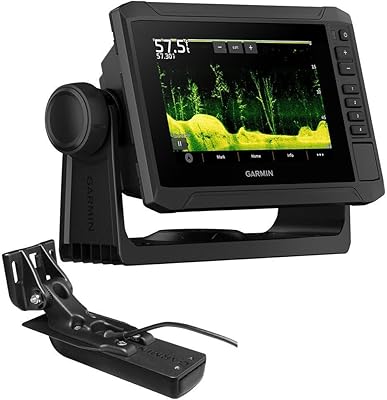
  • Transducer: No transducer is included with this configuration; a compatible transducer must be purchased separately to enable sonar functionality.
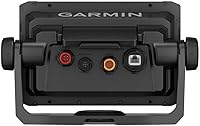
  • Included Cables: A 12-pin sounder to 8-pin transducer cable and a power cable are both included in the box to support installation and future transducer pairing.
  • Power Source: The unit is powered externally via the boat's battery system using the included power cable; it does not run on internal batteries.
  • Dimensions: The unit measures 8.6 x 5.6 x 3.2 inches, making it compact enough for smaller boat consoles without occupying excessive panel space.
  • Weight: At 4.58 pounds, the chartplotter is light enough for installation on aluminum fishing boats, jon boats, and smaller fiberglass vessels.
  • Model Number: The official Garmin model number for this unit is 010-02684-00, which is useful for confirming accessory and transducer compatibility.
  • ASIN: The Amazon Standard Identification Number for this product is B0BV7G7XSF, corresponding to the no-transducer configuration of the ECHOMAP UHD2 73sv.
  • Brand: Manufactured by Garmin, a company with decades of experience producing marine GPS and sonar electronics trusted by both recreational and professional anglers.
  • Availability Date: This product was first made available for purchase in February 2023, making it a relatively recent generation within the ECHOMAP lineup.
  • Sales Rank: The unit holds a top-2 ranking in the Marine GPS Units and Chartplotters category on Amazon, reflecting strong and consistent buyer demand.
  • User Rating: It carries a 4.7-out-of-5-star average rating based on more than 260 verified customer reviews at the time of this writing.
  • Protective Cover: A protective cover is included in the box to shield the touchscreen display when the unit is not in use or during transport.

Related Reviews
Garmin ECHOMAP UHD2 94sv 9″ Chartplotter
82%
93%
Display Quality
91%
Sonar Performance
86%
Touchscreen Responsiveness
83%
Chart Accuracy
67%
Ease of Setup
More
Garmin ECHOMAP UHD2 63sv
86%
91%
Sonar Performance
88%
Ease of Use
89%
Display Quality
84%
Wi-Fi Connectivity
87%
Setup and Installation
More
Garmin ECHOMAP UHD2 74sv with GT54 Transducer
84%
91%
Display Quality
88%
Sonar Performance
83%
Ease of Use
72%
Setup Process
85%
Wi-Fi Connectivity
More
Garmin RV 795 7-Inch GPS Navigator
75%
91%
Screen Clarity
83%
RV-Specific Routing
86%
Campground Database
72%
Value for Money
84%
Ease of Setup
More
Garmin ECHOMAP UHD2 93sv with GT56 Transducer, 9″ Touchscreen
87%
94%
Display Quality
88%
Sonar Performance
91%
Ease of Use
90%
Map Accuracy
89%
Wi-Fi and Connectivity
More
Geimrsy GY-S75-1 7.7-inch Portable Teleprompter
73%
81%
Value for Money
88%
Portability & Form Factor
84%
Ease of Setup
67%
Beam Splitter Glass Quality
63%
Remote Control Functionality
More
LONCEVON L1098A 10.1-inch Portable Monitor
70%
88%
Input Versatility
83%
Value for Money
86%
Ease of Setup
47%
Display Resolution
58%
Build Quality
More
Hosyond 7-inch TFT LCD Portable Monitor
71%
83%
Value for Money
86%
Setup & Connectivity
61%
Display Quality
54%
Build Quality
88%
Portability & Size
More
Garmin fēnix 7 Sapphire Solar
88%
94%
Battery Life
91%
Build Quality & Durability
89%
Fitness & Health Tracking
90%
GPS & Navigation Accuracy
87%
Display Quality
More
EasyAcc 7-inch Portable Foldable Travel Fan
81%
91%
Battery Life
88%
Noise Level
93%
Portability & Form Factor
62%
Airflow Strength
84%
Speed Control & Usability
More

FAQ

No transducer is included — this is the without-transducer configuration, which is worth understanding before you complete your purchase. You will need to buy a compatible transducer separately to use any sonar or fish-finding features. The box does include a 12-pin sounder to 8-pin transducer cable, so you are set up for the connection once you have the transducer in hand.

The unit is compatible with Garmin's GT-series transducers, including options that support traditional 2D sonar, ClearVü, and SideVü scanning. The GT54UHD-TM is a popular pairing for anglers who want the full ultra high-definition sonar capability the UHD2 platform supports. Always check Garmin's compatibility chart before buying, since connector types vary across transducer families.

Technically the unit will function on saltwater, but the built-in Navionics+ maps are focused entirely on U.S. inland lakes and are not suited for navigating coastal, tidal, or offshore environments. If your fishing takes you into bays, inlets, or open ocean, you would be better served by a unit with appropriate coastal or offshore chart coverage. This one is really optimized for freshwater use.

It holds up well in most real-world conditions — the display is marketed as sunlight-readable and buyers generally agree it delivers on that promise. The TN panel achieves solid brightness levels that keep the screen usable on bright days. The trade-off is viewing angle: if you are looking at the screen from the side rather than straight on, contrast and color shift noticeably, which is a known characteristic of TN technology rather than a defect.

Yes, if you own a Garmin Force trolling motor, the two devices pair wirelessly and give you motor control — speed, steering, route-following — right from the chartplotter screen. You can also monitor your trolling motor battery level from the same interface, which is genuinely useful during a long day on the water. This integration only works with Garmin Force motors specifically, not third-party brands.

The unit ships with Navionics+ inland maps pre-loaded and active, covering more than 18,000 U.S. lakes with high-resolution depth contours. The initial map data is included, but keeping it updated with the latest chart revisions requires a paid Navionics+ renewal subscription after the first year. It is worth factoring that recurring cost into your long-term ownership math, especially if accurate contour data is critical to how you fish.

Yes, that is one of the more practical features here. Two compatible ECHOMAP UHD2 chartplotters connected over Wi-Fi can share live sonar data, waypoints, and routes wirelessly between them. This is particularly useful in tournament scenarios or when two anglers on the same boat want access to the same information simultaneously without running extra cables.

Most buyers describe it as straightforward, especially for anyone who has mounted a fixed-display fish finder before. The included tilt/swivel quick-release cradle covers surface mounting without any special tools, and the flush mount option just requires cutting a panel opening to the right dimensions. Wiring the power cable to your boat's battery is the step most people spend the most time on, but the documentation covers it clearly.

Wet fingers generally work fine — capacitive screens on marine devices are typically tuned to handle moisture better than a typical smartphone screen. Heavy gloves are more hit or miss depending on glove material; thin fishing gloves usually work, but thick insulated gloves may not register reliably. Most users do not report this as a significant issue during normal fishing conditions.

Both are strong platforms, and the right choice depends heavily on which ecosystem you are already invested in. The ECHOMAP UHD2 73sv has a clear advantage if you run a Garmin Force trolling motor or other Garmin devices, since the integration is tight and adds real value. The Humminbird Helix line is often noted for its IPS display, which offers better off-axis viewing angles — a meaningful difference if your screen placement is not directly in front of the helm. Map quality is competitive on both sides, so ecosystem compatibility and display type are usually the deciding factors.