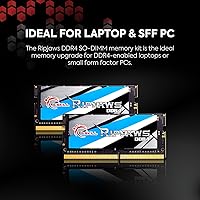
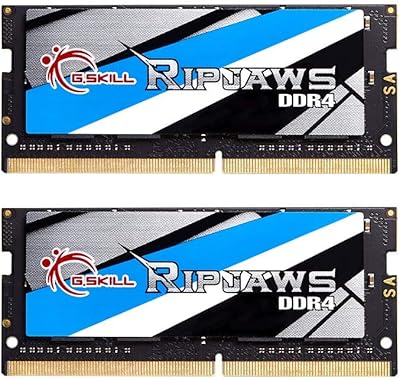
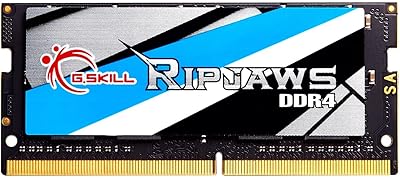
Overview

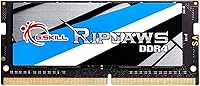
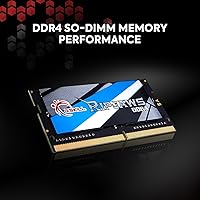
The G.SKILL Ripjaws DDR4 SO-DIMM 16GB Laptop RAM is a straightforward, no-nonsense upgrade for anyone whose notebook is struggling under the weight of modern workloads. G.SKILL has built a solid reputation over the years — respected by PC builders and everyday users who just want memory that works. This particular module ships as a single 16GB stick, meaning it runs in single-channel mode out of the box, but it also leaves your second slot open for a future upgrade. At DDR4-3200 speeds, it sits comfortably in the sweet spot for current laptops, and the 1.2V operating voltage keeps heat and power draw in check — a genuine plus for battery-powered machines.

Features & Benefits

Running at 3200 MT/s with CL22 latency, this Ripjaws SO-DIMM is not built for overclocking bragging rights — and that is entirely fine. In practice, the jump from a slower stock module like DDR4-2666 means snappier application launches and smoother multitasking, even if the gap is modest on paper. Because it ships with a standard JEDEC SPD profile, the stick boots at its rated speed without touching the BIOS. No profiles to enable, no timings to manually set. The 260-pin SO-DIMM form factor covers the vast majority of modern notebooks, and the unbuffered, non-ECC design ensures broad consumer compatibility. It is plug-in-and-go, by deliberate design.

Best For

This 16GB DDR4 module makes the most sense for people upgrading a budget or mid-range laptop that shipped with just 8GB — often in a single-channel setup that bottlenecks even light workloads. Students juggling dozens of browser tabs, remote workers running video calls alongside productivity suites, and hobbyist creators doing light photo or video editing will all appreciate the extra headroom. It also fits compact NUC-style systems and other small form factor PCs that accept SO-DIMMs. What it is not is a choice for enthusiasts chasing peak bandwidth — no RGB, no aggressive profiles, no matched dual-channel kit included. If reliability over flash is your goal, it fits the brief well.

User Feedback

Across a meaningful number of ratings, this Ripjaws SO-DIMM earns consistently high marks. The most common praise centers on effortless installation — owners report that laptops across a wide range of brands recognize the stick immediately without any manual configuration. Stability over extended use is another frequent positive. That said, a handful of buyers have encountered compatibility issues on older AMD platforms or certain OEM machines with restrictive memory configurations — worth checking G.SKILL's QVL tool before purchasing. The no-frills packaging, just the module in a simple plastic tray, draws the occasional comment, though most buyers see it as a sensible cost-conscious choice rather than a concern.

Pros

  • Installs in minutes with no BIOS changes needed — the JEDEC profile handles everything automatically.
  • DDR4-3200 speed is a genuine step up over the slower stock modules many mid-range laptops ship with.
  • The 1.2V operating voltage keeps power draw low, which matters on a battery-powered notebook.
  • Leaves the second SO-DIMM slot open, giving you a clear path to dual-channel upgrade later.
  • G.SKILL is a well-established name with a track record for consistent quality control.
  • Broad compatibility with modern 260-pin notebooks means it works across a wide range of machines.
  • No-frills packaging keeps costs focused on the module itself, not the box it comes in.
  • Stable long-term performance — real-world owners report no issues after months of daily use.
  • A sensible choice for tight budgets that still want a reputable brand rather than an unknown generic.

Cons

  • Single-stick configuration runs in single-channel mode, which limits memory bandwidth compared to a matched pair.
  • CL22 latency is not particularly tight — buyers prioritizing low-latency performance have better options.
  • No XMP or overclocking profile included, so there is no headroom for speed tuning beyond rated specs.
  • Compatibility with older AMD platforms or locked OEM laptops is not guaranteed — verification is required.
  • 16GB may feel limiting sooner than expected for users whose workloads grow toward video production or virtualization.
  • The module carries no heat spreader, which is unlikely to matter in practice but may concern some buyers.
  • Sold as a single stick only, so achieving dual-channel requires sourcing a second matching module separately.
  • No bundled warranty documentation in the box — you need to register or verify coverage through G.SKILL directly.

Ratings

Our AI-powered scoring for the G.SKILL Ripjaws DDR4 SO-DIMM 16GB Laptop RAM was built by systematically analyzing verified purchaser reviews from multiple global markets, with spam, incentivized, and bot-generated feedback actively filtered out. Scores reflect the genuine consensus across thousands of real ownership experiences — strengths and frustrations weighted equally. Where buyers largely agreed, scores are decisive; where opinions split, that tension is honestly reflected in the breakdown below.

Ease of Installation
93%
The overwhelming majority of buyers describe installation as genuinely effortless — seat the module, close the panel, power on. The JEDEC SPD profile means the system recognizes it at full rated speed immediately, with no BIOS intervention required. For first-time upgraders, this kind of plug-and-play reliability is a significant confidence boost.
A small number of users on locked-down OEM laptops found the system booted slowly or threw a memory warning on first startup, requiring a BIOS reset to clear. These cases are rare but worth noting for anyone upgrading a branded corporate machine.
System Stability
91%
Long-term stability is one of the most praised traits of this Ripjaws SO-DIMM. Buyers running the module for six months to over a year report zero crashes, no memory errors, and consistent performance across workloads ranging from heavy browser sessions to light video editing.
A handful of users on older AMD-based platforms reported occasional boot failures or instability, particularly when mixing this stick with existing non-matching modules. The issue appears platform-specific rather than a defect in the module itself.
Real-World Performance
84%
Users coming from 8GB single-channel configurations notice a clear improvement in day-to-day responsiveness — applications load faster, switching between tasks feels noticeably lighter, and the system holds up better under sustained multitasking pressure. For productivity-focused users, the upgrade feels worthwhile.
Buyers with more demanding expectations — particularly gamers or those doing memory-bandwidth-heavy work like large dataset processing — found the single-channel limitation and CL22 latency left headroom on the table compared to a matched dual-channel kit at tighter timings.
Compatibility Range
78%
22%
This 16GB DDR4 module works cleanly across a broad range of modern Intel-based laptops and compact systems, with most buyers reporting immediate recognition and stable operation. Its standard 260-pin SO-DIMM design and unbuffered, non-ECC spec cover the vast majority of consumer notebook platforms.
Compatibility is not universal. Users with older AMD platforms, certain Lenovo ThinkPad generations, and some OEM-locked systems reported issues that required firmware updates or were simply unresolvable. G.SKILL's QVL tool is essential reading before purchasing if your machine is outside the Intel mainstream.
Value for Money
88%
At its price point, this Ripjaws SO-DIMM offers a compelling combination of brand credibility, DDR4-3200 speed, and reliable day-to-day behavior. Buyers consistently feel they received a fair deal — especially those upgrading older machines that shipped with slower or lower-capacity RAM.
Shoppers aware of the broader market note that competing generic or lesser-known brands sometimes undercut this module significantly. For pure budget buyers, the G.SKILL name commands a small premium that not everyone feels is necessary for a straightforward laptop upgrade.
Memory Speed & Bandwidth
79%
21%
Running at DDR4-3200, this laptop memory stick sits at the practical upper limit of what most consumer notebooks can officially support. Users notice the benefit most in workloads that involve rapid context-switching, background processes, and browser-intensive tasks where memory throughput matters.
The CL22-22-22-52 timing profile is on the looser end of the DDR4-3200 spec, and a single-channel configuration cannot take full advantage of the available bandwidth. For users expecting enthusiast-grade performance, this module is closer to capable than cutting-edge.
Power Efficiency
87%
Operating at 1.2V, the module runs notably cool inside compact laptop chassis where thermal headroom is limited. Buyers using this stick in thin-and-light notebooks report no heat-related throttling attributable to the RAM, and the low voltage profile is genuinely kind to battery longevity during unplugged sessions.
There is no way to independently verify power savings without testing instrumentation most users do not have, so the real-world battery impact is difficult for buyers to quantify in practice. It is a quiet benefit rather than a dramatic one.
Build & Physical Quality
82%
18%
The module is constructed solidly with no reports of PCB flex, damaged contacts, or defects out of the box. For a component that lives inside a sealed chassis and is never seen again after installation, the build quality is exactly what it needs to be — reliable, not flashy.
The absence of a heat spreader is a design choice that will not matter under normal use, but some buyers feel it looks less premium than desktop RAM equivalents. This is cosmetic rather than functional, but worth noting for those who care about what sits inside their machine.
Packaging & Unboxing
74%
26%
Most buyers take a pragmatic view of the no-frills plastic tray packaging — it protects the module adequately and avoids inflating the price with unnecessary presentation. For a component upgrade ordered online, function over form is a reasonable trade-off.
Buyers who purchased as gifts or who simply expect more from a branded product found the sparse packaging underwhelming. There is no documentation, warranty card, or installation guide included, which can leave first-time RAM upgraders without any printed guidance.
Upgrade Path Flexibility
81%
19%
Buying a single 16GB stick is a deliberate strategy for many users — it occupies one slot, leaves the second slot free, and creates a clear path to 32GB dual-channel by adding a matching stick later. This approach lets buyers spread the cost of a full upgrade over time.
The upgrade path only works cleanly if the second stick is closely matched in speed and timings. G.SKILL advises against mixing kits, which means users who want to eventually go dual-channel need to either buy a second identical module or start fresh with a matched pair — adding some inconvenience to future planning.
Brand Reliability
89%
G.SKILL carries genuine credibility in the memory market, and buyers frequently cite the brand name as a deciding factor. Knowing the module comes from a manufacturer with a long track record in quality control gives users confidence that it will perform consistently over a multi-year lifespan.
Brand reputation does not fully insulate against the occasional bad unit, and a small number of buyers received DOA modules. G.SKILL's warranty support process resolves most cases, but the RMA experience has drawn mixed feedback in terms of turnaround speed.
Documentation & Support
63%
37%
G.SKILL's online resources — particularly the QVL database and RAM Configurator tool — are genuinely useful for verifying compatibility before purchase. For buyers who do their research ahead of time, there is enough online support to answer most common questions.
The in-box experience offers virtually no documentation, and customer support responsiveness has been inconsistent based on buyer reports. Users who run into compatibility issues or need RMA support sometimes find the process slower and less communicative than they hoped.
Physical Fit & Form Factor
92%
The 260-pin SO-DIMM form factor slots cleanly into virtually every modern notebook and compatible compact PC without physical fitment issues. Buyers upgrading a wide variety of machines — from budget Acer and Asus laptops to higher-end Dell XPS models — report a perfect physical fit every time.
The SO-DIMM form factor is inherently non-universal — it cannot be used in desktop motherboards with standard DIMM slots, and any buyer who orders this for the wrong type of machine will need to return it. This is a user error risk rather than a product flaw, but it does surface in reviews.

Suitable for:

The G.SKILL Ripjaws DDR4 SO-DIMM 16GB Laptop RAM is a strong fit for anyone whose notebook shipped with a modest 8GB stick and has started to feel the pinch of everyday multitasking. Students running multiple browser tabs alongside note-taking apps, remote workers toggling between video calls and office software, and hobbyist creators doing light photo editing or video rendering will all find 16GB gives them meaningful breathing room. It also appeals to small form factor PC builders — Intel NUC users and similar compact setups — who need a reliable SO-DIMM without hunting for exotic specs. Because it runs at DDR4-3200 with a standard JEDEC profile, there is zero configuration required; you seat the module, boot the machine, and get on with your day. For buyers who want a trusted brand name and solid build quality without spending extra on flashy features they will never use, this hits the right balance.

Not suitable for:

The G.SKILL Ripjaws DDR4 SO-DIMM 16GB Laptop RAM is not the right choice for every buyer, and it is worth being upfront about where it falls short. Enthusiasts chasing peak memory bandwidth for gaming or memory-intensive rendering workloads should note that a single-stick configuration runs in single-channel mode, which measurably limits throughput compared to a matched dual-channel kit. If your workflow genuinely hammers memory bandwidth — think large Lightroom catalogs, 4K video timelines, or competitive gaming at high framerates — you will likely want to pair two modules instead of relying on this one alone. Users with older AMD-based laptops or certain locked-down OEM systems should also do their homework first, since compatibility is not universal; checking G.SKILL's official QVL database before buying is a smart precaution. Finally, anyone whose laptop has soldered RAM with no upgradeable slot will find this stick completely irrelevant to their situation.

Specifications

  • Capacity: This module provides 16GB of total memory in a single SO-DIMM stick configuration.
  • Memory Type: It uses DDR4 SDRAM technology in the SO-DIMM form factor designed for notebooks and compact systems.
  • Speed Rating: The module is rated at 3200 MT/s (DDR4-3200), which represents a solid mid-to-upper tier for current laptop memory.
  • Latency Timings: Primary timings are set at CL22-22-22-52, which are standard for DDR4-3200 JEDEC-compliant modules at this speed grade.
  • Operating Voltage: The module runs at 1.2V, keeping power consumption and heat generation low relative to higher-voltage memory types.
  • Pin Configuration: It uses the 260-pin SO-DIMM interface, which is the standard connector for DDR4 laptop memory worldwide.
  • ECC Support: This module is Non-ECC, meaning it does not include error-correcting code functionality, consistent with mainstream consumer laptop use.
  • Buffer Type: The module is unbuffered (UDIMM), which is the correct type for standard consumer notebooks and small form factor PCs.
  • SPD Profile: It ships with a JEDEC default SPD profile, allowing it to boot at rated speed without any manual BIOS configuration.
  • Channel Support: As a single module, it operates in single-channel mode by default, but supports dual-channel when paired with a second compatible stick.
  • Dimensions: The module measures 3.94 x 1.18 x 0.2 inches, which is standard for the SO-DIMM form factor.
  • Weight: The module weighs 0.6 ounces, reflecting its compact, lightweight construction with no heat spreader.
  • Model Number: The official G.SKILL model identifier for this module is F4-3200C22S-16GRS.
  • Series: This stick belongs to the Ripjaws DDR4 SO-DIMM product line, G.SKILL's mainstream notebook memory family.
  • Compatible Devices: Designed for use in laptops, notebooks, and small form factor PCs such as Intel NUC systems that accept DDR4 SO-DIMMs.
  • Heat Spreader: No external heat spreader is included; the module relies on passive airflow within the laptop chassis for thermal management.
  • Release Date: This module was first made available in September 2020 and remains an active product in G.SKILL's catalog.
  • Manufacturer: Manufactured by G.SKILL International, a Taiwan-based company with a long-standing reputation in enthusiast and consumer memory markets.

Related Reviews

G.SKILL Ripjaws DDR4 SO-DIMM 16GB Laptop RAM
82%
92%
Installation Ease
89%
Stability & Reliability
86%
Value for Money
77%
Compatibility
74%
Real-World Performance
More
G.SKILL Ripjaws 16GB DDR4 SO-DIMM RAM
81%
83%
Compatibility
93%
Installation Ease
78%
Performance Gain
88%
Value for Money
91%
Reliability & Stability
More
G.SKILL Ripjaws DDR5 SO-DIMM 16GB 5600MT/s RAM
88%
94%
Performance Boost
88%
Energy Efficiency
91%
Installation Ease
93%
Speed (5600MT/s)
86%
Build Quality
More
G.SKILL Ripjaws DDR5 16GB SO-DIMM 4800MT/s RAM
86%
92%
Performance
88%
Ease of Installation
90%
Compatibility with Intel XMP
85%
Power Efficiency
91%
Multitasking Capability
More
G.SKILL Ripjaws DDR4 32GB SO-DIMM Laptop RAM
85%
91%
Installation Experience
88%
Compatibility Range
86%
Dual-Channel Performance
93%
Long-Term Reliability
84%
Value for Money
More
G.SKILL AEGIS 16GB DDR4 3200MHz Desktop RAM
78%
91%
Value for Money
88%
Installation Ease
83%
Gaming Performance
86%
System Stability
79%
Motherboard Compatibility
More
G.SKILL AEGIS 16GB DDR4 Desktop RAM
76%
89%
Value for Money
94%
Installation Ease
91%
System Stability
78%
Performance for Everyday Use
63%
Gaming Performance
More
G.SKILL Trident Z Neo 16GB DDR4 RAM
88%
93%
XMP Compatibility
91%
Platform Performance
94%
Stability & Reliability
89%
Thermal Performance
86%
Build & Heatspreader Quality
More
G.SKILL Ripjaws V 16GB DDR4 Memory Kit
80%
88%
Performance at Rated Speed
84%
Installation & Setup
57%
Platform Compatibility
63%
Value for Money
82%
Thermal Management
More
G.SKILL Ripjaws DDR5 SO-DIMM 32GB Laptop RAM
81%
92%
Installation Ease
88%
BIOS Compatibility
87%
Multitasking Performance
86%
Performance at Rated Speed
84%
Value for Money
More

FAQ

Yes, in the vast majority of cases it will. The module ships with a standard JEDEC SPD profile, so your system will read its rated speed automatically on first boot. You should not need to touch the BIOS at all.

You can absolutely use it as a single-stick upgrade — many people do exactly that. Just be aware that one stick runs in single-channel mode, which is slightly less efficient than dual-channel. If maximum memory bandwidth matters to your workload, adding a second matching stick later will noticeably improve throughput.

The safest approach is to check G.SKILL's official QVL (Qualified Vendor List) or use their online RAM Configurator tool, where you can search by laptop model. Broad compatibility is strong across modern Intel and AMD platforms, but niche OEM systems or older AMD notebooks occasionally have stricter memory requirements worth verifying first.

For most people, yes. Browsing with many tabs open, video calls, office applications, light photo editing, and even casual video rendering all run comfortably with 16GB. If you are doing heavy 4K video editing or running multiple virtual machines simultaneously, you may eventually want more, but for everyday and prosumer workloads 16GB is a practical sweet spot.

CL22 refers to the number of clock cycles the memory waits before responding to a read command. It is on the looser end for DDR4-3200, but in real-world daily use the difference between CL22 and tighter timings like CL16 is rarely perceptible outside of very specific benchmarks. For productivity and general computing, it is a non-issue.

Not particularly. The 1.2V operating voltage is the standard low-power spec for DDR4, and SO-DIMMs sit inside a laptop chassis with limited airflow by design. Without a heat spreader the module relies on passive cooling, but DDR4 SO-DIMMs at these speeds generate minimal heat and thermal problems from this stick alone would be very unusual.

Possibly, but it requires caution. Mixing memory from different manufacturers or with different speed and timing profiles can cause instability. If your existing 8GB stick is DDR4-3200 with matching specs, it may work, but G.SKILL explicitly recommends against mixing kits. The safest route is to replace the existing stick entirely with this one, or purchase a matched dual-channel kit from the start.

No. Modern MacBooks use proprietary memory that is soldered directly onto the logic board and cannot be upgraded with third-party SO-DIMMs. This module is designed for Windows-based laptops and compatible small form factor PCs with user-accessible memory slots.

G.SKILL typically backs their memory with a limited lifetime warranty, though the specific terms and registration process are managed through their official website. The retail packaging is minimal, so it is worth registering your purchase directly with G.SKILL after buying to ensure your warranty coverage is on record.

No, not in a standard desktop setup. Desktop motherboards use full-size DIMM slots, which require a different and longer form factor. This is a SO-DIMM, built specifically for laptops and compact systems like Intel NUC mini PCs that use the smaller 260-pin slot. Putting it in a desktop is physically not possible without an adapter, which is not a supported use case.