Overview

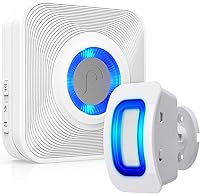
The Fosmon WaveLink Wireless Motion Sensor Door Chime is a straightforward entry-alert system built around a passive infrared sensor paired with a plug-in receiver — no electrician required, no wall fishing, no tools beyond a screwdriver at most. The sensor runs on AAA batteries, so you can mount it above a doorway, aim it at a driveway, or position it near a mailbox in minutes. It has been on the market since late 2016 and carries thousands of verified buyer reviews behind it, which gives it real credibility for a device at this price level. The compact white-and-blue housing is low-profile enough to blend into most rooms or storefronts without drawing attention.
Features & Benefits

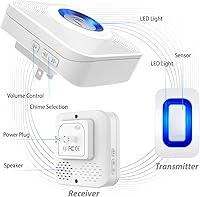
The range is where this entry alert system earns its keep — the sensor can communicate with the receiver across 500 feet, which is enough to cover a long driveway or a detached garage without signal drop. You get 58 ringtone choices running from pleasant melodies to a plain buzzer, so whether you want something polished for a shop or discreet for a home hallway, there is a setting that fits. The receiver flashes an LED every time the sensor fires, giving you a visual cue that does not depend on hearing the chime. And if your needs grow, one receiver can work with up to 10 sensors simultaneously.

Best For

This wireless door chime makes the most sense for anyone who needs an entry alert without running wire. Small shop owners get an obvious benefit — a clean way to know a customer has come in while you are working in the back. Renters are equally well served since the system removes cleanly without leaving a mark. Families keeping tabs on an elderly relative have found it useful as a low-key movement monitor inside the home. It is also a practical pick for hearing-impaired users, who can rely entirely on the LED flash. Long driveways and back gates are another natural fit, given the range.

User Feedback

Most buyers come away satisfied, with quick setup and consistent signal range earning the most praise. The LED indicator gets specific mentions from users who depend on it in noisy workplaces. The honest downsides? False triggers are a recurring theme for anyone mounting the sensor outdoors — passing animals or a breeze through foliage can set it off more than you would want. Battery life is another sticking point; in busy locations where the sensor fires constantly, replacements come around faster than expected. A few users also found the chime quieter than expected in large, open rooms despite the volume being turned up fully. Worth knowing before you commit.

Pros

  • No wiring required — the sensor runs on batteries and mounts in minutes without any tools or drilling.
  • The 500-foot range easily covers long driveways, detached garages, and multi-room home setups.
  • 58 ringtone options mean you can match the tone to a quiet home or a lively retail environment.
  • The LED flash on the receiver provides a silent visual alert that is genuinely useful for hearing-impaired users.
  • One receiver can link to up to 10 sensors, making it easy to expand coverage across multiple entry points over time.
  • Five volume levels give you real control, from a soft bedroom chime to something audible in a noisy back office.
  • Setup takes only a few minutes, and the pairing process is straightforward enough that no manual is really needed.
  • The compact design blends into most walls and doorframes without looking like an eyesore.
  • Thousands of real buyer reviews since 2016 back up its reputation for consistent day-to-day performance.

Cons

  • Outdoor use can lead to frequent false triggers from animals, wind, or passing vehicles.
  • Batteries in high-traffic locations need replacing more often than most buyers anticipate.
  • The maximum chime volume falls short in large, open rooms despite being set to the highest level.
  • No smart-home connectivity — there is no app, no Wi-Fi, and no integration with voice assistants.
  • Batteries are not included in the box, which means you cannot test it right out of the packaging.
  • The plastic build feels functional rather than durable, and may not hold up well in damp or exposed locations.
  • The sensor range of 16.5 feet is limiting if you need to cover a very wide or deep entryway.
  • No rechargeable battery option exists, so ongoing battery costs add up in busy environments.

Ratings

The scores below reflect an AI-driven analysis of thousands of verified global buyer reviews for the Fosmon WaveLink Wireless Motion Sensor Door Chime, with spam, bot-generated, and incentivized submissions actively filtered out before any scoring was applied. The result is an honest, balanced snapshot of where this entry alert system genuinely delivers and where real users have run into friction. Both the strengths and the recurring pain points are represented transparently in every category.

Ease of Setup
91%
Buyers consistently describe the pairing process as one of the fastest they have experienced with any wireless alert system. Renters and first-time users in particular appreciate that no tools, wiring, or technical knowledge are required to get the sensor and receiver communicating within minutes.
A small number of users report that the receiver occasionally loses its pairing after a power outage, requiring them to go through the setup process again. This is a minor but recurring frustration for people who rely on it in locations with unstable power.
Wireless Range
84%
For most home and small-business scenarios, the transmission range proves more than adequate — covering detached garages, long residential driveways, and back-of-store setups without noticeable dropouts. Users monitoring distant gates or mailboxes frequently highlight this as the system's strongest practical asset.
The advertised 500-foot figure assumes open-air conditions, and real-world performance inside buildings with thick walls or metal structures falls noticeably short. Users in older brick homes or metal-frame commercial buildings report the effective range drops considerably.
Motion Detection Accuracy
67%
33%
In controlled indoor environments — a shop doorway, a hallway, or an interior office entrance — the sensor catches genuine movement reliably and consistently throughout the day. The 110-degree detection arc means it handles wide entryways without requiring precise aiming.
Outdoor deployment is where accuracy becomes a real problem. Animals, wind-blown foliage, and passing vehicles regularly trigger false alerts, and this is one of the most common complaints across verified buyer feedback. For strictly outdoor use, the false-trigger rate can make the system feel unreliable.
Volume & Audibility
71%
29%
At mid-to-upper volume settings, the chime carries well through a standard residential floor plan or a small retail space, and the five-level adjustment gives users genuine flexibility to match their environment. Shop owners working in back rooms consistently report hearing it clearly during business hours.
In large open spaces — an open-plan warehouse, a big-box storage area, or a multi-floor home — the maximum volume does not travel as far as many buyers expect. Several reviewers note that the top setting sounds quieter than the spec implies, particularly in rooms with high ceilings or ambient noise.
LED Visual Alert
88%
The LED flash on the receiver is one of the most praised features among hearing-impaired users and people working in loud environments. It functions independently of the chime, meaning you can silence the audio entirely while still getting a clear, immediate visual cue every time the sensor fires.
The LED is only visible when you are in direct line of sight of the receiver, so it offers no help if the receiver is plugged in around a corner or in an adjacent room. There is no way to increase flash brightness or duration, which limits its usefulness in brightly lit retail settings.
Ringtone Variety
83%
Fifty-eight tone options is a genuinely useful range for a device at this price point, and buyers setting this up in professional environments appreciate being able to select something neutral and unobtrusive rather than a generic electronic beep. Switching tones is quick and does not require re-pairing.
While the quantity of options is impressive, the audio quality of some tones is noticeably compressed or thin-sounding on the built-in speaker. A handful of reviewers note that certain melodies sound distorted at higher volumes, which narrows the practical selection in louder environments.
Battery Life
58%
42%
In low-to-moderate traffic situations — a residential front door that triggers a dozen times a day — a fresh set of AAA batteries can last several months without issue. For casual home use, most buyers find the battery drain entirely manageable.
High-traffic deployments are where battery life becomes a genuine ongoing cost. Busy shop entrances or outdoor locations with frequent false triggers can drain a set of batteries within weeks, and since batteries are not included in the box, first-time buyers have to budget for this from day one.
Multi-Sensor Expandability
82%
18%
The ability to pair up to 10 sensors to a single receiver is a meaningful practical advantage that buyers running small businesses or monitoring multiple home entry points use actively. Reviews from users who have built out three- or four-sensor setups consistently report stable performance across all zones.
The system does not differentiate between sensors on the receiver — every trigger plays the same selected chime regardless of which sensor fired. Buyers hoping to assign unique tones to specific entry points to identify the source of an alert will find this limitation frustrating in multi-zone setups.
Build Quality
63%
37%
The unit feels appropriately solid for a plastic-housed device in this price range, and the receiver in particular has a clean, unobtrusive finish that does not look out of place in a home or boutique retail setting. The mounting hardware included is functional and holds the sensor firmly in place.
The plastic housing is not ruggedized in any meaningful way, and several buyers who exposed the sensor to outdoor conditions report discoloration, brittleness, or seal failure within a year. For anything beyond sheltered indoor or covered-porch installation, the construction is a genuine durability concern.
Value for Money
86%
For a battery-operated wireless alert system with this range, this many ringtones, and multi-sensor support, the price-to-feature ratio is strong compared to most competing options in the same category. First-time buyers consistently express surprise at how much functionality they get for the cost.
The value equation weakens slightly when you factor in ongoing battery costs in high-use scenarios and the lack of any weatherproofing, which means outdoor buyers may end up replacing the sensor sooner than expected. It is an excellent value for indoor use, but less so for demanding outdoor applications.
Receiver Design
77%
23%
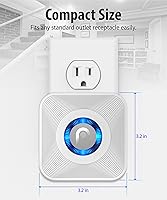
The plug-in receiver is compact enough to fit into a standard wall outlet without blocking adjacent sockets, and the white-and-blue color scheme is neutral enough to blend into most home and office decors without drawing attention. The LED and speaker placement are practical and intuitive.
Because the receiver is mains-powered, it is fixed to wherever you have a free outlet — you cannot move it freely around a room the way you might a battery-powered unit. Buyers with limited outlet placement options sometimes find this restricts where they can position the receiver for best coverage.
Instruction Clarity
74%
26%
The included documentation covers the core pairing and volume-adjustment steps clearly enough that the majority of buyers get up and running without consulting any external resources. The process is short and logical for anyone comfortable with basic electronics.
Instructions for more advanced use cases — such as pairing multiple sensors in a specific sequence, or troubleshooting a dropped connection — are thin and leave some users searching online forums for answers. Non-technical buyers occasionally report confusion when something does not pair as expected on the first attempt.
False Trigger Rate
52%
48%
In controlled indoor environments with minimal background movement, the sensor behaves predictably and fires only when a person genuinely enters the detection zone. Buyers using it purely indoors with no pets or drafts rarely mention false alerts as an issue.
This is one of the most consistently reported pain points in outdoor and semi-outdoor installations. Heat sources, air currents, and moving animals regularly trigger the sensor, and there is no sensitivity adjustment available to compensate. For buyers who need outdoor reliability, the false-trigger rate is a serious functional limitation.

Suitable for:

The Fosmon WaveLink Wireless Motion Sensor Door Chime is a strong fit for anyone who needs a reliable entry alert without the hassle or cost of hardwired installation. Small shop and boutique owners get a practical way to know when a customer walks in while they are working in a back room or stockroom, and the range is generous enough to cover most retail floor plans comfortably. Renters are an especially natural audience here — the sensor mounts without drilling and the whole system comes down cleanly when you move out. Homeowners with long driveways, detached garages, or side gates that are out of direct sightlines will appreciate being notified the moment someone approaches. Caregivers looking for a low-key way to monitor an elderly family member moving around the home overnight will find the silent LED alert on the receiver particularly useful. And for hearing-impaired users specifically, having both an audible chime and a visual flash on the receiver makes this entry alert system more accessible than most options in this category.
Not suitable for:

The Fosmon WaveLink Wireless Motion Sensor Door Chime is not the right pick for everyone, and it is worth being clear about where it falls short. If you plan to mount the sensor fully outdoors in a high-traffic area — near a busy street, a yard with pets, or a windy garden — false triggers are a genuine and recurring issue that can make the chime feel unreliable or just plain annoying over time. This is also not a smart-home device; there is no app, no smartphone notification, no connectivity with Alexa or Google Home, so buyers expecting any kind of digital integration will be disappointed. The chime volume, while adjustable, has limits in truly large or open spaces, so if you need the alert to carry across a warehouse or a sprawling open-plan office, this system may not cut it. Battery-dependent sensors also mean ongoing maintenance costs, particularly in busy locations where the sensor fires dozens of times a day. Finally, buyers looking for a premium, weatherproof outdoor security solution should look at dedicated systems rather than this entry-level chime.
Specifications

  • Wireless Range: The sensor transmits signals to the receiver across a maximum distance of 500 ft (approximately 150 m) in open-air conditions.
  • Detection Angle: The passive infrared sensor covers a 110-degree horizontal arc, reducing blind spots across wide doorways and entryways.
  • Detection Distance: The sensor reliably detects motion from up to 16.5 ft (5 m) away under typical indoor or sheltered outdoor conditions.
  • Ringtones: The receiver offers 58 selectable alert tones, ranging from musical melodies to a simple electronic buzz.
  • Volume Control: The receiver includes 5 discrete volume levels, allowing adjustment from a near-silent setting to a chime audible in a busy environment.
  • Visual Alert: An LED indicator on the receiver flashes each time the sensor is triggered, providing a silent visual notification independent of the chime.
  • Receiver Power: The plug-in receiver operates on standard 110V AC power and does not require batteries.
  • Sensor Power: The motion sensor is powered by AAA alkaline batteries, which are not included in the box.
  • Pairing Capacity: Each receiver supports pairing with up to 10 individual sensors, and each sensor can be linked to up to 10 receivers simultaneously.
  • Dimensions: The unit measures 6.4 x 4.8 x 3.3 inches and weighs 8 ounces, making it compact enough for most door frames and wall spaces.
  • Material: Both the sensor housing and the receiver casing are constructed from plastic in a white-and-blue color scheme.
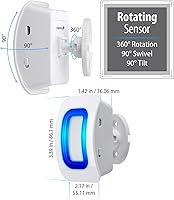
  • Mounting: The sensor attaches without in-wall wiring and can be installed using the included mounting hardware in a matter of minutes.
  • Compatibility: The system is designed to work with standard motion-detector devices and does not require any proprietary hub or app.
  • Smart Integration: The chime system operates on its own radio frequency and has no Wi-Fi, Bluetooth, or smart-home platform connectivity.
  • Model Number: This unit is manufactured by Fosmon under model number 51005HOM and carries ASIN B01MYQ6WN4.
  • Package Contents: Each package includes one plug-in receiver and one wireless motion sensor; no batteries or additional accessories are included.

Related Reviews
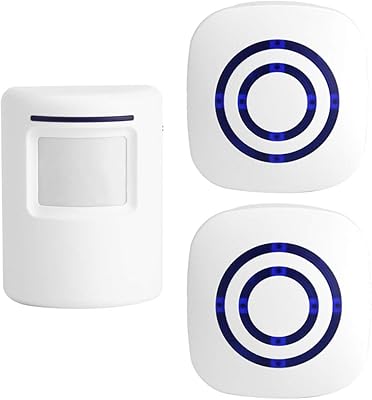
Actpe Wireless Motion Sensor Driveway Chime
69%
93%
Ease of Setup
88%
Value for Money
76%
Detection Reliability
81%
Wireless Range
61%
Battery Life
More
AIDA Door Alarm Wireless Ring Chime Sensor
86%
94%
Ease of Installation
89%
Chime Volume
83%
Battery Life
88%
Sensor Range
86%
Build Quality
More
1byone Wireless Driveway Motion Sensor Alarm
71%
91%
Ease of Setup
67%
Wireless Range
63%
Detection Accuracy
88%
Alert Volume & Clarity
71%
Build Quality
More
Qualirey Driveway Alarm Wireless Motion Sensor System
86%
92%
Value for Money
94%
Ease of Installation
89%
Range of Detection
88%
Weather Resistance
85%
Alert Customization
More
Enegg Wireless Driveway Motion Sensor Alarm

69%
93%
Ease of Setup
81%
Wireless Range
74%
Detection Reliability
63%
Sound Quality
79%
Volume Output
More
HTZSAFE 808A Wireless Driveway Alarm System
76%
83%
Wireless Transmission Range
91%
Ease of Installation
72%
Motion Detection Accuracy
61%
Battery Life
68%
Receiver Alert Volume
More
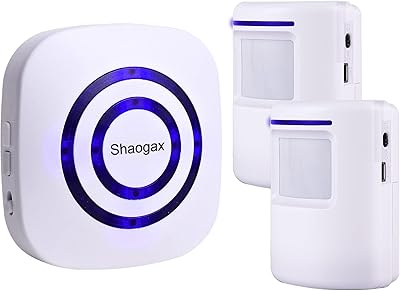
Shaogax Wireless Motion Sensor Driveway Alarm System
71%
91%
Ease of Setup
83%
Wireless Range
88%
Alert Customization
58%
False Alert Rate
61%
Build Quality
More
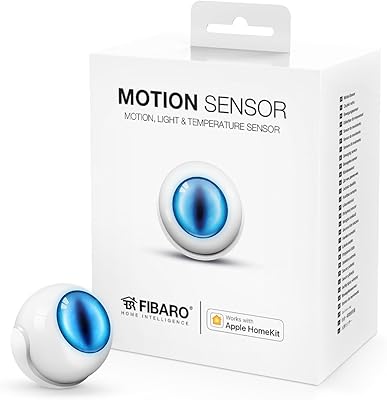
Fibaro Motion Sensor
86%
91%
Motion Detection Accuracy
85%
Battery Life
88%
HomeKit Integration
93%
Ease of Installation
89%
Design and Size
More
eufy Security Motion Sensor
85%
90%
Detection Accuracy
95%
Ease of Installation
93%
Battery Life
87%
Sensitivity Adjustment
89%
App & Notification System
More
Shelly BLU Motion Bluetooth Motion Sensor
74%
78%
Ease of Setup
81%
Motion Detection Accuracy
67%
Indoor Range
84%
Battery Life
76%
Lux Sensor Usefulness
More

FAQ

Honestly, setup is about as simple as it gets. You plug the receiver into a wall outlet, mount the sensor where you want it using the included hardware, and follow the brief pairing steps. Most people have it working in under ten minutes without needing anything beyond a screwdriver for the bracket.

The stated range is 500 feet in open conditions, which is enough to cover most residential driveways and detached garages. Keep in mind that walls, metal structures, and interference from other wireless devices can reduce the practical range, so results in heavily built-up areas may vary.

Yes, and this is one of the more useful aspects of the system. A single receiver can be paired with up to 10 sensors, so you can monitor a front door, a back gate, and a driveway all from one unit. Each zone triggers the same receiver, though you cannot set different chimes for different sensors on all firmware versions.

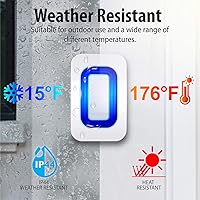
The sensor can be mounted in sheltered outdoor locations like a covered porch or under an eave, but it is not rated as fully weatherproof. Prolonged exposure to rain or extreme temperature swings can shorten its lifespan. If full outdoor exposure is your situation, look for a unit with an explicit IP weather rating.

That depends heavily on how often the sensor fires. In a quiet residential setting it can go several months on a fresh set of AAAs. In a busy shop or a high-traffic outdoor spot, expect to replace them much more frequently — some users report needing fresh batteries every few weeks in those conditions.

The receiver has an LED indicator that flashes every time the sensor picks up motion, so you do not need to hear anything to be alerted. Several hearing-impaired users specifically mention the LED as the reason they chose this entry alert system. If you need something more powerful, like a bed shaker or a strobe, you would need a different product category entirely.

At the higher volume settings most people can hear it clearly from an adjacent room or a back office in a small shop. In large open spaces or across multiple floors, a few users find the top volume insufficient. If your home or workspace is particularly large, it is worth pairing a second receiver in another area of the building.

This is a real limitation worth knowing upfront. The passive infrared sensor responds to heat and movement, so pets, wildlife, and even vehicles passing near the detection zone can set it off. Positioning matters a lot here — angling the sensor away from areas with frequent non-human activity helps reduce nuisance alerts significantly.

Yes, a single sensor can be paired with up to 10 receivers at the same time. This makes it practical to place receivers in a kitchen, a workshop, and a bedroom so you catch the alert no matter where you are in the building.

No, this is a standalone radio-frequency system with no app, no Wi-Fi, and no compatibility with platforms like Alexa, Google Home, or Apple HomeKit. If smartphone notifications or smart-home integration are important to you, this motion-sensor chime is not designed for that use case and you should look at a connected security system instead.