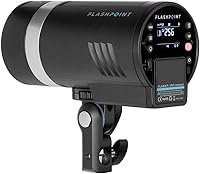
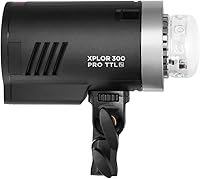
Overview

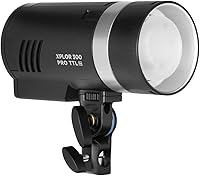
The Flashpoint XPLOR 300 Pro Monolight is Adorama's branded version of the Godox AD300Pro — same internals, different badge, and that is not a bad thing. What you get is a compact, cylindrical battery-powered strobe that punches well above its weight class for location shooters. The build feels solid without being bulky; at just over 1.4 kg, it is light enough to mount on a travel stand without anxiety. Corded studio heads with comparable output are heavier and demand a wall outlet. The R2 wireless ecosystem ties everything together, letting you control this portable monolight remotely from up to 100 meters away.

Features & Benefits

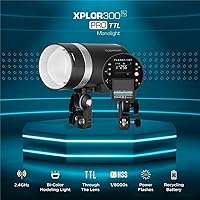
At 300Ws with a recycle time as fast as 0.01 seconds, this portable monolight keeps up during fast-paced portrait sessions or event coverage where missing a shot is not an option. The High Speed Sync capability — up to 1/8000s — is a real advantage outdoors, letting you shoot wide open in harsh midday sun without fighting ambient light. TTL support spans Canon, Nikon, Sony, Fujifilm, and more, so it works with most existing kits without extra hassle. The bi-color LED modeling lamp runs from 3000K to 6000K across ten levels, which is genuinely useful for video work. Worth noting: HSS requires a compatible R2 trigger, which is sold separately.

Best For

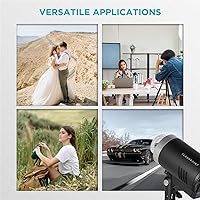
Wedding photographers will find the XPLOR 300 Pro particularly well-suited to their workflow — cord-free, fast-recycling, and light enough to stay on a boom arm all day without issue. Outdoor portrait shooters benefit most from the HSS capability, which opens creative options that corded heads simply cannot match in the field. Travel photographers appreciate that the whole unit fits into a carry-on-friendly case at under 1.5 kg. Studio beginners building a wireless multi-light setup will find the R2 system affordable to grow over time. Videographers may also get genuine mileage from the variable modeling lamp, though demanding video work may still call for a dedicated continuous source.

User Feedback

Buyers have settled on a 4.4-star rating, and reading through the reviews, that score feels earned rather than inflated. Most praise centers on build quality, snappy recycle speed, and the reliability of R2 wireless triggering under real shooting conditions. Where criticism does appear, two themes repeat: fan noise at higher power settings can be distracting in quiet environments, and the lack of a built-in neutral density option frustrates some videographers. A handful of users also mention a learning curve with the LCD menu and custom function navigation — not a dealbreaker, but not immediately intuitive. Overall, owners consistently feel they got strong performance compared to heavier corded alternatives at the same wattage.

Pros

  • Cord-free 300Ws output covers most location portrait and event scenarios without hunting for a power outlet.
  • HSS up to 1/8000s lets outdoor shooters use wide apertures in direct sunlight — something corded heads cannot offer on location.
  • At under 1.5 kg, this portable monolight travels as carry-on luggage without demanding a dedicated equipment case.
  • Up to 320 full-power flashes per charge comfortably covers a half-day session without reaching for a spare battery.
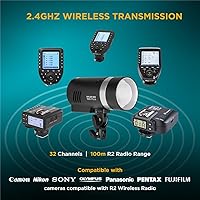
  • The R2 wireless system supports 32 channels and works reliably at up to 100 meters — solid for multi-light outdoor setups.
  • Bi-color LED modeling lamp ranging from 3000K to 6000K adds genuine utility for hybrid photo-video shooters.
  • Full TTL support spans Canon, Nikon, Sony, Fujifilm, Olympus, Panasonic, and Pentax — broad enough to fit most existing kits.
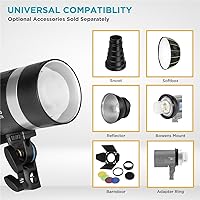
  • Bowens S-mount compatibility opens access to a wide and affordable modifier ecosystem without proprietary adapters.
  • Color temperature stability at 5600K ± 75K in stable mode keeps white balance consistent across a full shoot.
  • Adorama-backed warranty and U.S. customer support add meaningful peace of mind over buying the equivalent grey-market unit.

Cons

  • The R2 trigger required for HSS is sold separately — a cost many buyers do not budget for until after checkout.
  • Fan noise at high power settings is audible enough to disrupt on-set audio recording in quiet environments.
  • Battery performance drops noticeably in cold weather, which is a real concern for outdoor winter event photographers.
  • TTL consistency on Sony and Fujifilm bodies lags behind Canon and Nikon in high-contrast or mixed-light scenes.
  • The LCD menu and custom function navigation have a steeper learning curve than the simple button layout implies.
  • Output power drops measurably in HSS mode, limiting its effectiveness when you need both high shutter speed and maximum light.
  • The cylindrical body does not seat cleanly on all light stands and may require an additional spigot adapter to position correctly.
  • No built-in optical or electronic ND option makes power reduction less flexible for bright-ambient video shooting.
  • Proprietary battery chemistry means spare cells are an added expense, and third-party alternatives have inconsistent reliability reviews.
  • At full power, recycle time stretches to 1.5 seconds — manageable for portraits, but limiting during fast-moving editorial or sports scenarios.

Ratings

The Flashpoint XPLOR 300 Pro Monolight has been scored across 13 performance categories by our AI system, which processed verified buyer reviews from multiple global markets while actively filtering out incentivized, spam, and bot-generated submissions. The scores reflect where this battery-powered strobe genuinely delivers and where real photographers have run into friction — no category was softened to protect the overall impression.

Output Power & Consistency
88%
At 300Ws, this battery-powered strobe handles outdoor portrait sessions and small wedding receptions without feeling underpowered. Buyers frequently note that color temperature stays stable across power levels, which makes post-processing faster and more predictable when shooting a full event.
A handful of users point out that pushing the unit to full power repeatedly in a short window causes the cooling fan to ramp up noticeably, and a few reported very slight output fluctuations during extended high-power bursts — not a dealbreaker, but worth knowing if consistency under sustained load is critical.
Recycle Speed
91%
The near-instant recycle at lower power settings is one of the most praised aspects across buyer reviews. Wedding photographers in particular highlight that they rarely miss a candid moment waiting for the light to ready itself, which is the kind of real-world reliability that builds trust in a strobe quickly.
At full 300Ws output, recycle time stretches toward the 1.5-second ceiling, which is acceptable but not exceptional compared to larger packs. Shooters who habitually blast full power for safety headroom may find themselves occasionally waiting in fast-moving scenes.
HSS Performance
86%
Being able to shoot at 1/8000s opens up genuine creative latitude outdoors — overpowering bright midday sun with a wide-open aperture is something corded monolights cannot offer without a generator. Buyers who switched from speedlights specifically for this feature report that the XPLOR 300 Pro handles HSS reliably across supported camera brands.
HSS requires a compatible R2 trigger that is sold separately, and several buyers were caught off guard by this — it should be budgeted for upfront. There is also a measurable power drop in HSS mode compared to standard sync, which some photographers find limiting when they need both high shutter speed and maximum output simultaneously.
TTL Accuracy
79%
21%
TTL exposure is reliable enough for run-and-gun situations like receptions or street portraits where dialing in manual power is not practical. Canon and Nikon users report the most consistent results, with the system reading mixed lighting environments reasonably well without requiring constant compensation dialing.
Sony and Fujifilm users occasionally report TTL exposures that drift more than expected between shots in high-contrast scenes. It is accurate enough for event work but not the kind of set-it-and-forget-it precision that studio shooters doing commercial work would want to depend on without a manual override nearby.
Battery Life
83%
Up to 320 full-power flashes per charge is enough to cover most half-day portrait or wedding sessions without reaching for the charger. Buyers who shoot at mid-power settings — which is typical for most location portraits — consistently report the battery lasting through a full day of work comfortably.
Battery performance degrades more noticeably in cold weather, which outdoor shooters in northern climates flag as a genuine concern during winter events. The proprietary battery design also means carrying spares adds cost, and off-brand replacement cells have received mixed reliability reports from the community.
Wireless Reliability
87%
The R2 2.4G system with 32 channels and a 100-meter range performs well in real-world multi-light setups, including outdoor ceremonies where the trigger and light may be far apart. Buyers running two or three lights simultaneously report clean triggering without misfires across the supported channel range.
In crowded environments with heavy 2.4G radio interference — like large indoor venues with many wireless devices — a small number of users have noted occasional missed triggers. It is not a frequent complaint, but photographers working in RF-dense environments may want to test channel selection before an important shoot.
Portability & Weight
92%
At 1.4 kg including the battery, this is genuinely lightweight for a 300Ws monolight. Travel photographers report checking the included case as a personal item or fitting it into a roller carry-on alongside other gear, which is a practical advantage over bulkier battery pack systems with separate heads.
The cylindrical form factor, while compact, does not mount as intuitively on all light stand spigots as a traditional monolight head would. A few users note the unit sits at an awkward angle on cheaper stands, requiring an additional adapter to position it correctly — a minor but recurring point in setup-focused reviews.
Build Quality
84%
The plastic and metal composite construction feels solid without being cheap, and buyers who have used it for a year or more generally report no structural issues from regular transport and field use. The battery compartment latch and flash tube seat both receive specific praise for feeling well-engineered rather than fragile.
The outer shell does pick up scratches and scuffs with normal use, and a few buyers who purchased the unit expecting a premium metal body were underwhelmed by the plastic housing. It is durable rather than luxurious, which is the right trade-off for a portable strobe at this price tier.
LED Modeling Lamp
76%
24%
The bi-color LED ranging from 3000K to 6000K is a genuinely useful feature, especially for hybrid shooters who also record video. Being able to dial the color temperature to match tungsten or daylight sources on the fly saves setup time and reduces the need for additional continuous lights in small productions.
The LED output is not bright enough to serve as a primary light source for video in anything but a dark room, so videographers with serious output demands will still need dedicated continuous fixtures. A few buyers also note that the ten-level adjustment steps feel coarse, with no fine-tuning between stops.
Ease of Use & Menu Navigation
68%
32%
For basic TTL and manual operation, the LCD panel and button layout are straightforward enough that most photographers figure out the essentials within a session or two. The screen is readable in daylight, which is more than can be said for some competing units with dim displays.
Accessing custom functions and fine-tuning group settings takes meaningful time to learn, and the manual is not always clear on the logic behind certain menu hierarchies. Buyers who previously used simpler speedlight-based systems report a steeper-than-expected learning curve before they feel fully confident operating it on a live shoot.
Fan Noise
58%
42%
At low to mid power settings, the cooling fan is quiet enough that it genuinely does not interfere with ambient sound recording or quiet studio environments. For photographers shooting stills without audio concerns, fan noise is essentially a non-issue during normal use.
At high power or during rapid burst sequences, the fan becomes audibly intrusive — multiple videographers and podcast photographers report that on-camera microphones and nearby boom mics pick it up clearly. This is the single most consistent complaint in one-star and two-star reviews, and it is an honest limitation that buyers relying on clean ambient audio should take seriously.
Value for Money
82%
18%
Given that this is fundamentally the same hardware as the Godox AD300Pro — a unit with a strong global reputation — buyers who purchase through Adorama get a one-year warranty and responsive U.S.-based customer support, which adds tangible value beyond the hardware itself. The feature-to-price ratio is consistently cited as a key reason for purchase.
Once you factor in the cost of the R2 trigger, an extra battery, and any modifiers, the total investment climbs noticeably above the base unit price. Buyers who assumed the trigger was included have left frustrated reviews, and the overall system cost is something that should be calculated upfront rather than discovered after checkout.
Modifier Compatibility
73%
27%
The Bowens S-mount compatibility opens the unit up to a wide ecosystem of affordable softboxes, octaboxes, and beauty dishes without requiring proprietary adapters. Photographers who already own Bowens-mount modifiers can put this strobe to work immediately without additional spending.
The cylindrical body means the flash tube sits deeper in the modifier than on traditional dome-head monolights, which can slightly alter the expected light spread in some softboxes. A few architectural and product photographers note that this affects how evenly their larger modifiers fill, though for most portrait and event work it is not a significant issue.

Suitable for:

The Flashpoint XPLOR 300 Pro Monolight is purpose-built for photographers who spend most of their time working away from a wall outlet. Wedding and event photographers will get the most out of it — the cord-free design, fast recycle, and TTL automation mean less time managing gear and more time chasing moments. Outdoor portrait shooters benefit specifically from the HSS capability, which lets you shoot wide open in full sun without fighting blown highlights or reaching for an ND filter. Travel photographers who count every gram in their kit will appreciate that the entire unit comes in under 1.5 kg, making it genuinely carry-on friendly. Photographers who are new to multi-light setups will also find the R2 wireless ecosystem an affordable foundation to grow from, since adding a second or third light later is straightforward without buying into a proprietary and expensive system.

Not suitable for:

The Flashpoint XPLOR 300 Pro Monolight has real limitations that make it the wrong call for certain buyers, and it is worth being direct about them. If you record video with on-set audio — interviews, documentary work, quiet studio productions — the fan noise at higher power settings is a genuine problem that no firmware update will fix. Photographers who need 600Ws or more to overpower bright sun through large modifiers will hit the ceiling of what 300Ws can do, and this strobe is not designed to compete with high-output pack systems. Commercial studio photographers who demand precise, repeatable TTL accuracy across hundreds of identical frames will find that manual-heavy workflows expose some inconsistency at the TTL layer. Buyers on a tight system budget should also know that HSS functionality requires a compatible R2 trigger sold separately — the out-of-box cost is higher than the unit price alone suggests. Finally, anyone expecting a premium metal-bodied build akin to higher-end European studio flash brands will find the plastic composite housing a disappointment, even if it is functionally durable.

Specifications

  • Output Power: Delivers 300 watt-seconds of flash output, adjustable in 1/3-stop increments across a 3-stop range in manual mode.
  • Recycle Time: Recycles in approximately 0.01 to 1.5 seconds depending on power level, with faster times at lower output settings.
  • Sync Speed: Supports High Speed Sync up to 1/8000s, plus first-curtain and second-curtain sync modes for standard flash operation.
  • Flash Duration: Flash duration ranges from 1/220s at full power to 1/11490s at minimum power, allowing for motion-freezing capability at low settings.
  • Guide Number: Rated at a guide number of 62 m / 203 ft at ISO 100 using the built-in reflector.
  • Color Temperature: Standard color temperature is 5600K ± 200K, with a stable color mode that holds output to 5600K ± 75K throughout the session.
  • Modeling Lamp: Built-in bi-color LED modeling lamp is adjustable from 3000K to 6000K across 10 brightness levels for continuous light use.
  • Battery: Powered by an integrated 14.4V / 2600mAh / 37.44Wh lithium-ion battery pack, rated for up to 320 full-power flashes per charge.
  • Wireless System: Uses the R2 2.4G wireless protocol with 32 selectable channels and a reception range of approximately 328 ft / 100 m.
  • TTL Compatibility: Full TTL support is available for Canon, Nikon, Sony, Fujifilm, Olympus, Panasonic, and Pentax camera systems via R2 trigger.
  • Delay Flash: Built-in delay flash feature allows a configurable delay between trigger signal and flash firing, adjustable from 0.01 to 30 seconds.
  • Weight: Unit weighs 1.4 kg (3 lbs 1 oz) with the battery installed, making it practical for travel stands and location use.
  • Dimensions: Body measures 19 × 9.8 × 8.7 cm (7.5 × 3.8 × 3.4 in), with a cylindrical form factor designed for compact packing.
  • Mount Type: Features a Bowens S-mount modifier interface, compatible with the broad ecosystem of third-party and first-party Bowens-compatible accessories.
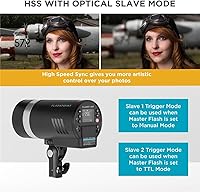
  • Optical Slave: Includes two optical slave modes: Slave 1 for manual master flash triggers, and Slave 2 for TTL master flash environments.
  • Cooling: Active cooling fan engages automatically to manage heat during extended high-power use; fan noise is audible in quiet environments.
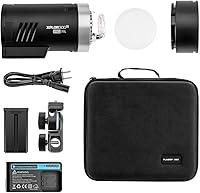
  • In the Box: Package includes the monolight unit, rechargeable lithium battery, flashtube, battery charger with cord, reflector and cap, and a compartment carry case.
  • Warranty: Covered by a one-year limited warranty provided by Flashpoint (Adorama), with U.S.-based customer support.

Related Reviews
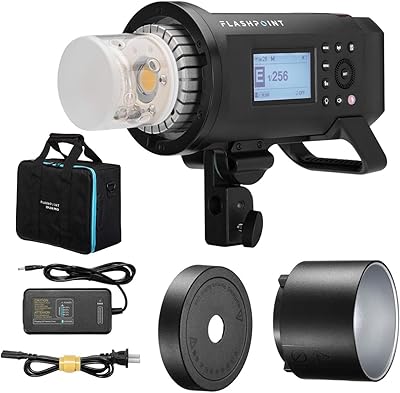
Flashpoint XPLOR 600 PRO TTL Strobe Monolight
81%
88%
Output Power & Consistency
91%
High-Speed Sync Performance
76%
TTL Accuracy
79%
Battery Life (Real-World)
84%
Build Quality & Durability
More
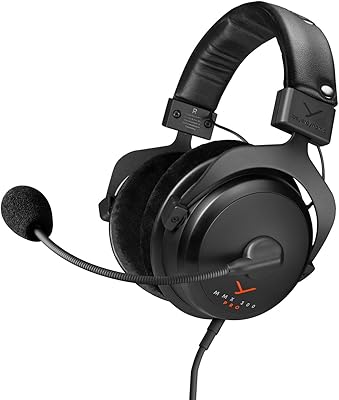
beyerdynamic MMX 300 PRO Gaming Headset

85%
94%
Sound Quality
90%
Microphone Clarity
88%
Comfort for Long Sessions
91%
Build Quality and Durability
87%
Value for Money
More
Ubiquiti UniFi Dream Machine Pro Security Gateway
79%
93%
Reliability & Uptime
89%
Management Interface (UniFi App)
54%
Setup & Initial Configuration
91%
Throughput & Network Performance
88%
WAN Redundancy & Failover
More
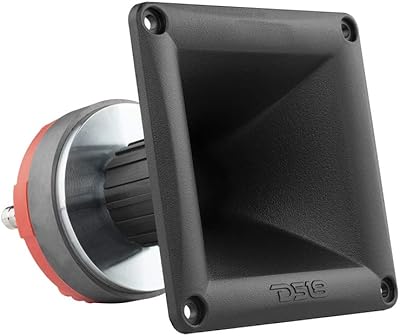
DS18 PRO-DR1PK44 Compression Driver with PRO-H44/BK Horn
86%
96%
High-Frequency Loudness
93%
Sensitivity & Efficiency
88%
Vocal Clarity & Naturalism
86%
Build Quality & Materials
81%
Installation Versatility
More
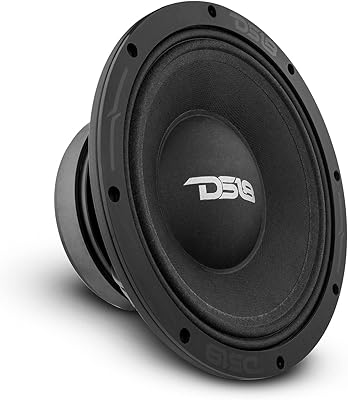
DS18 PRO-ZXI10MBASS 10-inch Mid-Bass Loudspeaker

82%
91%
Build Quality
88%
Sound Performance
93%
Sensitivity & Efficiency
86%
Power Handling
89%
Value for Money
More
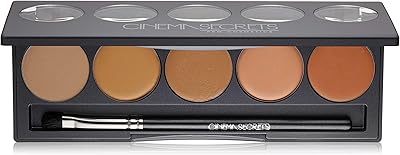
Cinema Secrets Pro Cosmetics Ultimate Corrector 5-In-1 Pro Palette No.1
86%
91%
Effectiveness for Color Correction
88%
Blendability
84%
Coverage Customization
85%
Longevity of Wear
93%
Suitability for All Skin Tones
More
Apple MacBook Pro 14-inch M1 Pro Laptop
84%
96%
Raw Performance
88%
Battery Life
94%
Display Quality
91%
Thermal Management
93%
Build Quality
More
Cinema Secrets Pro Cosmetics Ultimate Foundation 5-In-1 Pro Palette 500A
88%
93%
Coverage & Pigmentation
85%
Skin Compatibility (Sensitive Skin)
88%
Ease of Application
90%
Longevity & Wear
91%
Versatility (Contouring & Concealing)
More
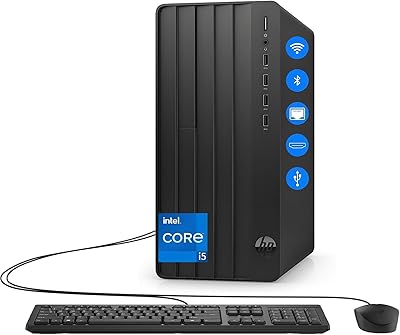
HP Pro Tower 290 G9 Desktop (i5-12500, 32GB RAM, 1TB SSD)
81%
96%
Multitasking Capability
91%
Value for Money
88%
Port Selection
84%
Thermal & Acoustic Performance
93%
Boot Speed & Storage
More
UTILYZE Radiant Pro
UTILYZE Radiant Pro
87%
94%
Cleansing Effectiveness
91%
Exfoliation Quality
88%
Skin Comfort
85%
Build Quality
82%
Battery Life
More

FAQ

Yes, and this catches a lot of buyers off guard. The unit has a built-in R2 receiver, but to trigger it wirelessly from your camera — and especially to use TTL or HSS — you need a compatible R2 transmitter, which is sold separately. Budget for that before you check out, because without it you are limited to optical slave or a physical sync cable.

Essentially, yes. The Flashpoint XPLOR 300 Pro Monolight is Adorama's branded version of the Godox AD300Pro — same internal hardware, same R2 wireless system, different badge. The main practical difference is that the Flashpoint version comes with Adorama's U.S.-based warranty support, which some buyers find reassuring compared to dealing with grey-market imports.

At full power you are rated for up to 320 flashes, but most photographers shoot somewhere between 1/2 and full power in practice, which pushes that number higher. Realistically, you should comfortably cover a 3 to 4 hour portrait session on a single charge. Cold weather will reduce capacity noticeably, so carrying a spare battery is a smart move for winter outdoor work.

Yes, and that is one of its strongest use cases. With HSS enabled you can shoot at shutter speeds up to 1/8000s, which lets you overpower ambient light and shoot wide open in bright conditions. Keep in mind that HSS does reduce effective flash output compared to standard sync, so extremely harsh midday sun with a large softbox may push the limits of what 300Ws can do.

It depends on your use case. For still photography, the fan noise is a non-issue — you will barely notice it. For video work or any situation where a microphone is nearby, the fan at higher power settings is loud enough to be picked up clearly on recordings. Multiple video-oriented buyers have flagged this as a dealbreaker for quiet on-camera audio situations, so take that seriously if sound matters in your work.

It uses a Bowens S-mount, which is one of the most widely supported modifier mounts in the industry. Softboxes, octaboxes, beauty dishes, grids, and snoots from most major brands — including inexpensive third-party options — will fit without any adapter. This is a genuine advantage over systems that use proprietary mounts and lock you into one brand's accessory ecosystem.

It works, but it is not as consistent as it is with Canon or Nikon. Sony users report that in high-contrast or mixed-lighting environments, the TTL metering drifts more between shots and requires more manual compensation dialing. For fast event work it is usable, but Sony shooters who rely heavily on TTL accuracy for commercial work may want to factor in extra time for exposure checks.

The bi-color LED modeling lamp is a useful bonus for video, adjustable from 3000K to 6000K across ten steps, and it does work for close-range interviews or supplemental fill light in controlled environments. That said, it is not bright enough to serve as a primary light source for most video productions. If continuous light is your main use case rather than a secondary one, you would be better served by a dedicated LED panel alongside this strobe.

The basic TTL and manual operation is straightforward and most photographers get comfortable within a session or two. The LCD screen is readable and the core controls are logically placed. Where things get less intuitive is in the custom functions menu — adjusting group behavior, delay flash settings, and sync modes takes some time to map out mentally. Reading the manual before your first important shoot is genuinely worth the half hour it takes.

It fits most standard light stands via the included spigot, but the cylindrical body design means it can sit at an awkward angle on cheaper stands without a secondary locking mechanism. Several users have noted that a proper tilt adapter or a stand with a more secure head makes a meaningful difference in stability and positioning flexibility. For outdoor location work especially, a quality stand is worth the investment.

Where to Buy