ELECFREAKS BBC micro:bit V2.2


Overview
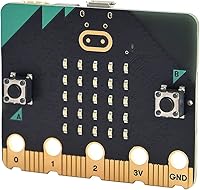
The ELECFREAKS BBC micro:bit V2.2 is a pocket-sized programmable computer built specifically for education, hitting a sweet spot between capability and accessibility. Sold by ELECFREAKS, a well-known partner in the micro:bit accessory ecosystem, this coding starter board brings real computing hardware to classrooms and bedrooms without a steep learning curve. It is small enough to hold in one hand, yet it carries a respectable set of sensors, wireless radios, and input options. One important thing to flag before buying: the USB cable and battery holder are not included in the box, so budget for those separately.
Features & Benefits
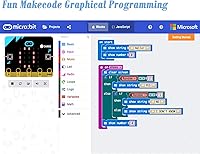
The 5x5 LED grid is more useful than it sounds — students quickly learn to scroll text, display icons, and build simple games with it. Beyond that, the V2.2 board added a built-in speaker and microphone, which opens the door to sound-reactive projects without extra wiring. The onboard accelerometer and compass let you build tilt controls or a working compass app in minutes. Bluetooth and 2.4 GHz radio support allow two boards to communicate wirelessly, making classroom group projects noticeably more engaging. Three coding environments — MakeCode blocks, MicroPython, and Scratch extensions — mean learners at almost any level can get started right away.
Best For
This coding starter board is an obvious pick for students aged roughly 8 and up who are just beginning to explore programming. It fits equally well into structured classroom settings, since it aligns with official BBC micro:bit curriculum resources, and into informal home learning. Parents who want a hands-on STEM activity that steers kids away from passive screen time will find it earns its place quickly. Hobbyists interested in small IoT or sensor experiments will also get solid mileage from it. If you already own ELECFREAKS accessories like the Cutebot or Nezha kits, this board slots in as a natural companion.
User Feedback
Buyers consistently rate this micro:bit board highly, with praise centering on how fast kids and beginners get their first project running. Teachers in particular appreciate the near-zero setup friction — plug it in and start coding from a browser tab. On the downside, missing accessories are the most common frustration: arriving without a USB cable or battery holder catches buyers off guard, especially when purchased as a gift. A handful of reviewers also noted mild confusion over whether they were receiving an official BBC product or an ELECFREAKS-branded variant. Durability, to its credit, rarely raises concerns even after extended classroom use.
Pros
- Built-in speaker and microphone unlock sound-reactive projects without any extra wiring or hardware.
- The 5x5 LED grid gives beginners immediate, satisfying visual feedback from their very first program.
- Browser-based coding means no software installation — kids can start within minutes on any computer.
- Bluetooth and 2.4 GHz radio support make two-board classroom experiments surprisingly easy to set up.
- Supports MakeCode, MicroPython, and Scratch, so learners can grow through multiple skill levels on the same board.
- The V2.2 board is an official BBC micro:bit unit, which matters for schools requiring curriculum-aligned hardware.
- Accelerometer and compass open up motion-controlled and navigation-based project ideas for more curious students.
- Durable enough for regular classroom use — educators report units lasting well over a year without hardware issues.
- Compact and light enough to carry anywhere, making take-home projects and portable demos genuinely practical.
- Extensive official documentation and community resources mean help is easy to find for teachers and students alike.
Cons
- USB cable and battery holder are not included, which catches many buyers off guard — especially gift purchasers.
- The LED display is single-color red only, with no support for color output or higher-resolution graphics.
- ELECFREAKS branding on packaging causes confusion about whether this is a genuine official BBC product.
- No native Wi-Fi means internet-connected projects require purchasing an additional expansion module separately.
- The onboard temperature sensor reads processor heat, not room temperature — a limitation that surprises new users.
- Advanced learners outgrow this coding starter board relatively quickly compared to platforms like Arduino or Raspberry Pi.
- Edge connector pins are exposed and can bend under rough handling, with no protective case included in the box.
- MicroPython documentation lags behind MakeCode resources, creating an inconsistent experience for text-based coders.
- Compatibility between this board and older V1 expansion accessories is not guaranteed, leading to occasional frustration.
Ratings
The ELECFREAKS BBC micro:bit V2.2 earns a strong overall reception across verified buyer communities worldwide, and the scores below reflect an AI-assisted analysis of that feedback — filtered for spam, incentivized reviews, and bot activity. Strengths in educational usability and hardware value come through clearly, but so do the recurring frustrations around missing accessories and branding clarity. Both sides of the picture are represented honestly here.
Ease of Getting Started
Educational Value
Build Quality & Durability
Sensor & Hardware Capability
Wireless Communication
Coding Environment Compatibility
Value for Money
LED Display Usability
Expansion & Accessory Ecosystem
Packaging & Unboxing Experience
Branding & Product Clarity
Setup & Documentation
Portability & Form Factor
Power Options
Suitable for:
The ELECFREAKS BBC micro:bit V2.2 is purpose-built for anyone stepping into coding for the first time, and it shows. Primary and secondary school students aged 8 and up get the most out of it — the browser-based MakeCode editor means no complicated software setup, and the built-in sensors give them something tangible to interact with from the very first session. Teachers will appreciate how tightly this board aligns with official BBC micro:bit curriculum resources, making it a genuinely low-effort classroom tool rather than a project that requires hours of lesson planning from scratch. Parents who want a hands-on STEM activity that competes with screen time will find this coding starter board holds a child's attention in a way that worksheets simply do not. Hobbyists on a budget who want to experiment with wireless communication, motion sensing, or small IoT builds will also get solid value here, especially if they plan to expand the setup with compatible accessories like the ELECFREAKS Cutebot or Nezha kits.
Not suitable for:
The ELECFREAKS BBC micro:bit V2.2 is not the right choice for buyers expecting a complete, ready-to-run kit straight out of the box — the USB cable and battery holder are both sold separately, which is a real inconvenience if you are buying this as a gift for a child. Older students or hobbyists who have already worked through introductory coding concepts will likely hit the ceiling of this platform within a few months; its 5x5 LED display, single-color output, and absence of native Wi-Fi make it a poor fit for intermediate or advanced projects. Anyone hoping to connect it to the internet directly for IoT work will need an additional Wi-Fi expansion module, adding both cost and complexity. Buyers who need precise ambient temperature readings should also look elsewhere, since the onboard sensor measures processor temperature rather than room temperature. If you are shopping for a more experienced maker who already owns a Raspberry Pi or Arduino setup, this V2.2 board offers little that their existing hardware does not already cover.
Specifications
- Dimensions: The board measures 2.05 x 1.65 x 0.46 inches, making it small enough to fit in a child's palm.
- Weight: At just 0.634 ounces, the board is light enough to embed in wearable or portable student projects.
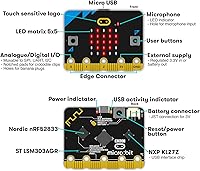
- Processor: Powered by an ARM Cortex-M4 processor on the Nordic nRF52833 chip, providing reliable performance for educational coding tasks.
- LED Display: A 5x5 grid of 25 individually programmable red LEDs serves as the primary visual output interface.
- Audio: An integrated speaker and microphone are built directly onto the board, enabling sound output and microphone input without external components.
- Connectivity: The board supports Bluetooth 5.0 and a 2.4 GHz proprietary radio protocol for wireless communication between devices.
- Sensors: Onboard sensors include a 3-axis accelerometer, digital compass, light sensor, and a temperature sensor that reads processor heat.
- Input Controls: Two physical programmable buttons (A and B) and a capacitive touch-sensitive logo provide multiple input options for interactive projects.
- USB Interface: A Micro USB port handles both programming via a connected computer and power delivery when a battery holder is not in use.
- Power Source: The board can be powered via Micro USB or an external battery holder (AAA type), though the battery holder is sold separately.
- Coding Environments: Compatible with Microsoft MakeCode block editor, MicroPython, and Scratch extensions, supporting learners from beginner to intermediate level.
- Operating System: Runs on a FreeRTOS-based embedded operating system suited for the low-level, real-time demands of microcontroller projects.
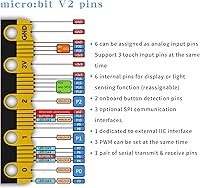
- Edge Connector: A 25-pin edge connector along the bottom provides access to GPIO pins, power, and ground for attaching external components and expansion boards.
- Manufacturer: Produced and sold by EF ELECFREAKS, a hardware accessory partner within the official BBC micro:bit ecosystem.
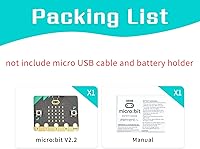
- Box Contents: The package contains the board only — a USB cable and battery holder are not included and must be purchased separately.
- ASIN: The Amazon product identifier for this specific listing is B0B2836JNC.
Related Reviews
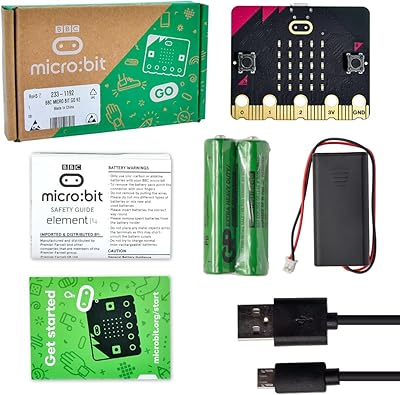
Keyestudio Micro:bit V2 Go Kit
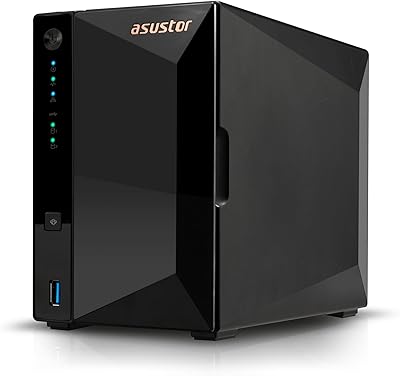
Asustor Drivestor 2 Pro Gen2 2-Bay NAS
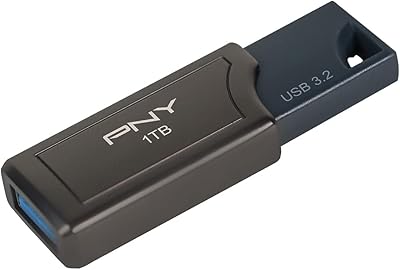
PNY Pro Elite V2 1TB Flash Drive
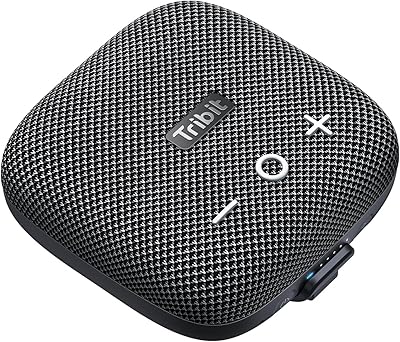
Tribit StormBox Micro 2 Portable Bluetooth Speaker
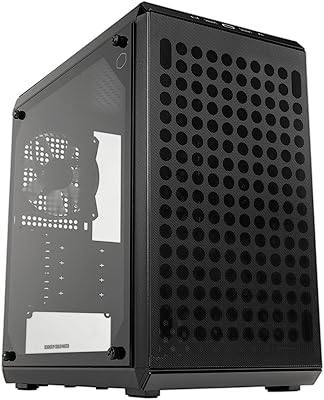
Cooler Master Q300L V2 Micro-ATX Tower Case
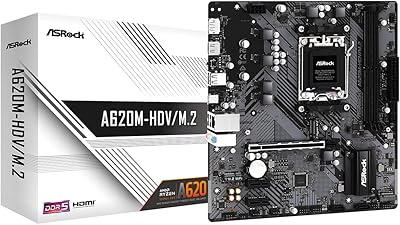
ASRock A620M-HDVM.2 Micro-ATX AM5 Motherboard

Kind Science Micro Exfoliant+ 2oz Face Scrub
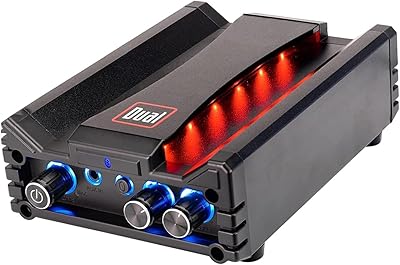
Dual Electronics DBTMA100 Bluetooth Amplifier

Epicuren Discovery Micro-Derm Ultra-Refining Scrub 2.5oz