Overview

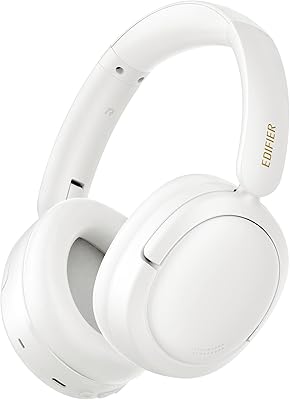
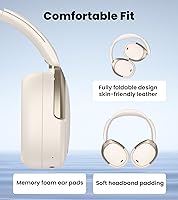
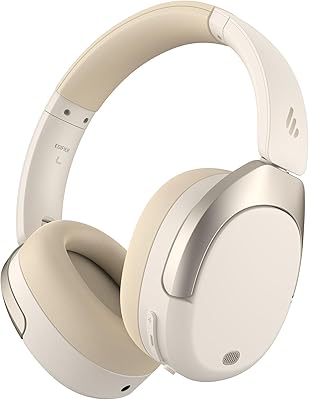
The Edifier W80 Over-Ear Headphones arrive at a moment when the mid-range ANC market is more crowded than ever, yet they stand out by packing features typically reserved for pricier options. Released in late 2024, the W80 takes aim at commuters, remote workers, and casual listeners who want genuine hi-res wireless audio without the premium brand tax. The build is mostly plastic, kept light at just under 1.3 pounds, with memory foam ear pads wrapped in soft leather and a foldable hinge that makes tossing them in a bag genuinely convenient. The Ivory colorway looks clean and understated.

Features & Benefits

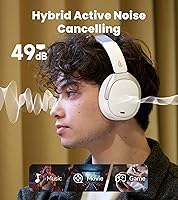
The hybrid ANC system uses both feedforward and feedback microphones to tackle ambient noise — in practice, that means steady drone reduction on public transit or in open offices, though it won't match what dedicated flagship models deliver. What genuinely earns attention is LDAC codec support, which enables hi-res wireless audio at high bitrates; finding that at this price tier is uncommon. Battery life is a real strength — you can realistically go several commuting days without reaching for the charger, and a quick 15-minute top-up recovers a meaningful chunk of playback time. Bluetooth 5.4 with dual-device multipoint rounds out a technically well-stocked package.

Best For

These Edifier cans suit the daily commuter who wants background noise reduced without babysitting a charging cable every night. Remote workers juggling video calls across a laptop and phone will appreciate both the multipoint connection and the AI-assisted mic filtering, which handles moderately noisy environments with reasonable reliability. Budget-conscious audiophiles who care about fidelity but can't justify flagship prices should pay close attention to the LDAC support — it's a real differentiator in this segment. Frequent travelers will find the foldable design practical, and the included 3.5mm cable adds flexibility for flights or older gym equipment with wired-only jacks.

User Feedback

With a 4.2-star average across just over a hundred ratings, early reception for this over-ear set is encouraging but still forming. Buyers consistently praise battery endurance and the overall value relative to what the spec sheet delivers. The criticisms are predictable and worth noting: some users find the noise cancellation less aggressive than higher-end Sony or Bose options, which is fair given the price gap. A handful of reviewers flag clamp force and long-session comfort as areas to monitor, and app reliability has surfaced occasionally. Since the W80 only launched in late 2024, the review pool is still modest — impressions may shift as more owners weigh in over time.

Pros

  • LDAC support for hi-res wireless audio is genuinely rare and valuable at this price point.
  • Battery life is exceptional — you can realistically go multiple days of heavy use between charges.
  • A quick 15-minute charge recovers a substantial amount of playback time, which is practical for rushed mornings.
  • Hybrid ANC handles steady ambient drone like AC units and transit noise effectively.
  • Multipoint Bluetooth lets you stay connected to a phone and laptop simultaneously without manual re-pairing.
  • The foldable design is compact enough to slip into a smaller bag or carry-on without a dedicated case.
  • Memory foam ear pads with leather wrapping provide a comfortable initial fit for most users.
  • AI-assisted mic filtering produces clear enough call audio in moderately noisy environments.
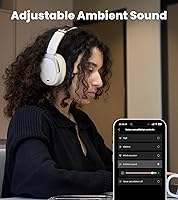
  • Ambient Sound Mode is adjustable through the app, giving real control over how much outside noise you let in.
  • The inclusion of a 3.5mm wired cable adds flexibility for situations where Bluetooth is not an option.

Cons

  • ANC performance, while decent, falls noticeably short of flagship Sony and Bose models in very loud environments.
  • App stability has been flagged by some users, with occasional connectivity or update issues reported.
  • Clamp force may feel tight during extended wear, particularly for users with larger heads.
  • The all-plastic construction feels functional but lacks the premium durability of metal-reinforced competitors.
  • With a still-limited number of ratings, long-term reliability data is not yet well established.
  • Mic quality struggles in very loud outdoor settings, which matters if you frequently take calls outside.
  • No premium carrying case is included, which is a minor but noticeable omission given the foldable design.
  • SBC is the fallback codec when LDAC is unavailable, with no aptX support for Android devices that lack LDAC.

Ratings

The scores below for the Edifier W80 Over-Ear Headphones were generated by our AI system after analyzing verified buyer reviews from multiple global markets, with spam, bot-submitted, and incentivized feedback actively filtered out before scoring. Each category reflects the full picture — what real owners consistently praised and where recurring frustrations surfaced — so you can make a genuinely informed decision rather than a guess.

Value for Money
91%
Among the most consistent praise across early reviews is just how much the W80 delivers relative to its asking price. LDAC support, hybrid ANC, and a multi-day battery in a single package at this tier is genuinely difficult to match, and buyers who came from older budget headphones frequently express surprise at the feature density.
A small number of reviewers feel the plastic construction undermines the value equation slightly, expecting more premium materials at this price point. Those upgrading from truly entry-level headphones will be satisfied, but buyers stepping down from flagship models may feel the gap in fit and finish more acutely.
Battery Life
93%
Battery endurance is the single most praised attribute across verified reviews — commuters and remote workers repeatedly mention going multiple days of heavy use without needing to charge. The fast charge feature earns particular appreciation; a short morning top-up delivering hours of playback is the kind of practical detail that resonates in daily routines.
Battery life with ANC enabled is noticeably shorter than the headline figure, which a portion of buyers only discover after purchase. It is still above average for the category with ANC on, but buyers who assumed the top-line number applied to all modes have occasionally expressed mild disappointment.
ANC Performance
71%
29%
For commuting on trains and buses, or tuning out an open-plan office, the hybrid ANC does a competent job attenuating consistent low-frequency background noise. Users who have not owned premium ANC headphones before tend to rate this aspect highly, finding it effective enough to meaningfully improve focus in everyday noisy environments.
Buyers who have previously used Sony WH-1000XM5 or Bose QC45 class headphones consistently note the gap in depth and transparency of noise cancellation. Sudden sounds, higher-pitched voices nearby, and loud street environments pass through more noticeably than flagship alternatives, and the -49dB figure should be understood as a manufacturer ceiling rather than a guaranteed real-world result.
Audio Quality
83%
With LDAC active on a compatible Android device and a hi-res audio source, the W80 delivers a noticeably rich and detailed sound that genuinely stands apart from most competition at this price. The titanium-coated driver produces a warm, full-bodied signature with solid bass presence that casual listeners and music enthusiasts both tend to enjoy.
Critical listeners note that the sound profile leans toward a consumer-friendly bass emphasis rather than a neutral or reference tuning, which is a trade-off depending on your taste. Without LDAC — on iOS or lower-bitrate streams — the quality advantage narrows considerably and the headphones sound more like capable but unremarkable budget wireless cans.
Call Quality
73%
27%
In a home office, quiet café, or low-noise indoor environment, the AI-assisted microphone filtering keeps voice clear and intelligible on the other end of the call. Remote workers on regular video meetings report that colleagues rarely comment negatively on audio quality in these controlled settings.
In genuinely loud outdoor environments — busy streets, crowded transit, or loud open offices — background noise bleeds through more than users would hope, and the single-mic setup has limitations that multi-mic systems in pricier headphones handle more gracefully. A handful of reviewers specifically mentioned this as a recurring issue during outdoor commute calls.
Comfort & Fit
69%
31%
For short to medium listening sessions up to about two hours, the memory foam ear pads and relatively light overall weight make the W80 easy to wear without fatigue. The spacious ear cup design accommodates a wide range of ear sizes well, and most first-time wearers find the initial fit pleasant and non-fatiguing.
Clamp force is the most cited comfort complaint among longer-session users, with several reviewers noting that the headband pressure becomes noticeable after two to three hours of continuous wear. Users with larger heads in particular flag this as a recurring issue, and the leather-style ear pad material can trap heat during warmer conditions or physical activity.
Build Quality
67%
33%
The foldable hinge mechanism feels solid enough for daily use and the silent hinge design does reduce the creaking and vibration noise that plagues cheaper folding headphones. Overall assembly feels consistent and not flimsy, which matters for a product expected to survive a daily bag-toss-and-grab commuting routine.
The predominantly plastic construction is noticeable compared to metal-reinforced competitors, and a subset of buyers feel it signals a compromise on long-term durability. There are no egregious quality control complaints in early reviews, but the build simply does not convey the same confidence as headphones with more premium material choices.
App Experience
61%
39%
The companion app gives meaningful control over ambient sound levels and provides a more granular listening experience than the on-ear controls alone allow. For users who actively tune their audio environment — switching between full ANC, ambient modes, and EQ presets throughout the day — having app support adds real convenience.
App stability has surfaced as a recurring criticism, with some users reporting connection drops between the app and headphones, slow loading, or settings not saving reliably across sessions. It is functional enough for most users, but it does not feel as polished as the apps from Sony or Jabra at higher price points.
Connectivity & Multipoint
86%
Bluetooth 5.4 pairing is fast and the connection holds up reliably across typical real-world distances — moving around a home or office without drops is the norm rather than the exception. The dual-device multipoint feature works as expected, routing calls and audio between a phone and laptop without requiring manual intervention in most switching scenarios.
A small number of users have noted occasional lag or audio stutter when first connecting or switching between devices, though this appears to resolve on its own rather than requiring a full re-pair. There are also no reports of aptX support, which limits the codec options for users whose devices do not support LDAC.
Noise Isolation (Passive)
77%
23%
Even with ANC switched off, the over-ear fit and memory foam ear pads provide a decent physical seal that reduces ambient sound meaningfully — useful for wired use on a plane or in any situation where you want to save battery. Commuters report that the passive isolation alone is enough to take the edge off noisy environments during lighter listening sessions.
Passive isolation is not exceptional by over-ear standards; it falls behind closed-back studio headphones or headphones with a tighter clamp. Users hoping to block out very loud environments without using ANC may find the passive seal insufficient, particularly if the fit is slightly loose due to head shape or ear placement.
Portability & Design
82%
18%
The foldable form factor and sub-1.3-pound weight make these a genuinely travel-friendly option that fits into a smaller backpack or day bag without needing a dedicated hard case. The Ivory colorway is clean and restrained, and the overall aesthetic reads as modern without being ostentatious.
No premium hard or semi-hard carrying case is included in the box, which is a noticeable omission for headphones marketed partly at travelers. The folded footprint is compact but still requires some care in an unstructured bag to avoid scuffs, and the lack of a pouch or case feels like a small but real cut corner.
Codec & Wireless Fidelity
84%
LDAC availability at this price is a standout technical detail that audiophiles searching in this segment will notice and appreciate. When conditions are right — a compatible Android device, a high-bitrate audio source, and a strong Bluetooth signal — the wireless audio quality punches well above what the price would normally suggest.
iOS users get no LDAC benefit and are locked to SBC, which significantly narrows the audio quality advantage. The absence of aptX also limits options for Android users on older devices, meaning the impressive codec story only fully materializes for a specific subset of the buying audience.
Fast Charging
88%
The fast charge implementation is practical and well-calibrated for real use — a quick plug-in while making breakfast or getting dressed in the morning translates into meaningful hours of listening, which removes the anxiety of starting the day with a half-depleted battery. Buyers consistently highlight this as a feature that earns its keep in daily routines.
The fast charge is USB-C only and requires the supplied cable or a compatible third-party cable, which is not a real limitation for most modern users but worth noting for anyone still relying on older charging setups. There is no wireless charging support, which is a minor but nonzero omission at this price tier.
Ambient Sound Mode
76%
24%
The ability to dial in exactly how much external sound passes through — rather than just toggling a fixed transparency mode — gives the W80 a practical edge for users who need situational awareness in varying environments, from a busy station to a quiet library. App control over this setting is more flexible than button-only implementations on competing models.
At lower ambient sound settings the mode introduces a faint processing artifact that sensitive listeners may find slightly unnatural compared to simply removing the headphones. The ambient mode also functions less naturally than the transparency modes on Apple AirPods Max or Sony's higher-end lineup, where passthrough audio sounds closer to unaided hearing.

Suitable for:

The Edifier W80 Over-Ear Headphones are a strong match for anyone who spends significant time commuting by train or bus and wants reliable background noise reduction without draining the battery mid-week. Remote workers who hop between video calls on a laptop and messages on a phone will find the dual-device multipoint connection genuinely useful day-to-day. If you care about audio quality and have been eyeing LDAC support but balked at the cost of Sony or Sennheiser flagships, the W80 makes that technology accessible at a fraction of the price. Frequent travelers will also appreciate the foldable build — it slips into a bag without drama, and the included 3.5mm cable keeps you covered on flights with wired seat-back systems. In short, this over-ear set rewards practical, everyday users who want a well-rounded feature set and long battery life over outright best-in-class performance in any single area.

Not suitable for:

The Edifier W80 Over-Ear Headphones are not the right call for anyone who needs the deepest, most aggressive noise cancellation available — if you work in genuinely loud industrial settings or are highly sensitive to ambient sound, the ANC here will likely feel insufficient compared to what Sony WH-1000XM5 or Bose QC45 deliver. Audiophiles with resolving home setups who plan to use these primarily at a desk may also find the 30-ohm dynamic driver less nuanced than dedicated wired cans at a similar price. The app, while functional, has drawn occasional criticism for stability, so power users who rely heavily on EQ customization or firmware updates may find the experience inconsistent. Long-session comfort, particularly clamp force, is worth considering for people with larger heads or those who wear headphones for four-plus hours at a stretch. Finally, buyers expecting premium build materials should note that the W80 is largely plastic — it feels solid enough, but it does not have the metal-reinforced hinge or premium finish of more expensive competitors.

Specifications

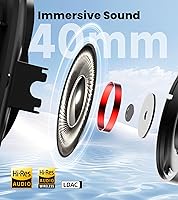
  • Driver: Each ear cup uses a 40mm dynamic driver with a titanium-coated diaphragm designed to handle bass, midrange, and high-frequency detail within a single unit.
  • ANC Type: Hybrid active noise cancellation combines feedforward and feedback microphones to reduce ambient sound, with a manufacturer-rated attenuation of up to -49dB.
  • Audio Codecs: Supported wireless codecs include LDAC for hi-res audio transmission and SBC as the standard fallback; aptX is not supported.
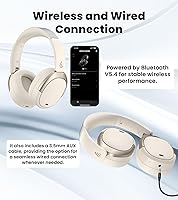
  • Bluetooth: Bluetooth version 5.4 provides the wireless connection, offering improved stability and lower latency compared to earlier Bluetooth generations.
  • Battery Life: Wireless playback lasts up to 65 hours with ANC disabled, or approximately 40 hours with ANC active during continuous use.
  • Fast Charging: A 15-minute charge via USB-C delivers roughly 10 additional hours of playback, making a brief top-up meaningful in practice.
  • Charging Port: The headphones charge via a USB-C port, which is the current standard and compatible with most modern charging cables and adapters.
  • Multipoint: Dual-device multipoint connection allows the headphones to maintain active Bluetooth pairing with two source devices simultaneously.
  • Microphone: A single built-in microphone uses AI-based environmental noise cancellation (ENC) to isolate voice during calls and filter background sound.
  • Ear Pads: The over-ear cups are cushioned with memory foam and wrapped in a soft leather-like material intended to reduce pressure during extended wear.
  • Weight: The headset weighs approximately 1.28 pounds (about 580g), placing it in the lighter range for full-size over-ear headphones with ANC.
  • Impedance: Driver impedance is rated at 30 Ohms, which is compatible with standard consumer source devices without requiring a dedicated headphone amplifier.
  • Wired Option: A 3.5mm AUX cable is included in the box, allowing passive wired listening when the battery is depleted or Bluetooth is unavailable.
  • App Support: The companion app provides access to ambient sound level adjustment and other settings; it is available for both iOS and Android devices.
  • Form Factor: The headphones use a foldable over-ear design with a silent hinge mechanism intended to reduce vibration noise during folding and transport.
  • Compatibility: The W80 is compatible with smartphones, laptops, desktop computers, tablets, televisions, and gaming consoles via Bluetooth or the included 3.5mm cable.
  • Package Contents: The retail box includes the headphones, a 3.5mm AUX audio cable, a USB-C charging cable, and a printed user manual.
  • Dimensions: Packaged dimensions are approximately 9.25 x 7.83 x 2.87 inches, giving a sense of the carrying footprint when folded.

Related Reviews
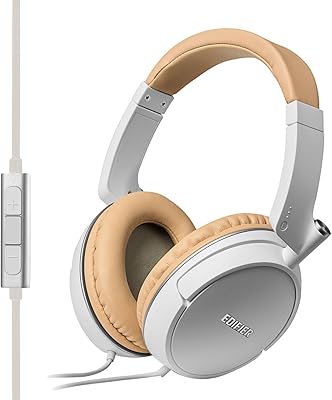
Edifier P841 Over-Ear Headphones
83%
85%
Sound Quality
90%
Comfort & Fit
70%
Build Quality
82%
Noise Isolation
88%
Ease of Use (In-Line Controls)
More
Edifier W600BT Wireless Over-Ear Headphones
84%
85%
Sound Clarity
88%
Comfort for Extended Use
91%
Battery Life
80%
Build Quality
72%
Noise Isolation
More
Edifier W830NB
Edifier W830NB
79%
83%
Sound Quality
71%
Active Noise Cancellation
94%
Battery Life
91%
Fast Charging
68%
Call Quality & Microphone
More
Edifier W800BT SE
Edifier W800BT SE
80%
93%
Battery Life
84%
Call Quality & Mic Performance
78%
Sound Quality
81%
Comfort & Fit
67%
Build Quality
More
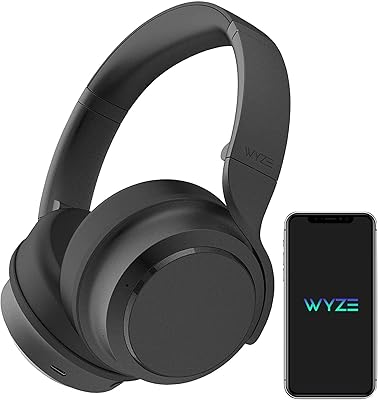
Linsoul Kiwi Ears Division Over-Ear Headphones
86%
92%
Sound Quality
89%
Comfort for Extended Use
75%
Noise Isolation
88%
Build Quality
85%
Ease of Use
More
Kiwi Ears Altruva
Kiwi Ears Altruva
81%
91%
Sound Quality
93%
Soundstage & Imaging
88%
Build Quality
74%
Comfort & Fit
89%
Driver Performance
More
Nothing Ear (Open) Open-Ear Earbuds
79%
91%
Wearing Comfort
83%
Workout Stability
74%
Sound Quality
77%
Call Quality
49%
Sound Leakage
More
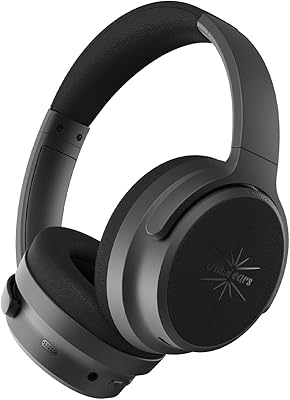
Wyze Headphones WNCH1 Noise Cancelling Bluetooth Over-Ear Headphones
83%
87%
Noise Cancellation
91%
Battery Life
85%
Comfort for Extended Use
78%
Bluetooth Connectivity
65%
Microphone Quality
More
Kiwi Ears Ardor
Kiwi Ears Ardor
78%
88%
Sound Quality
67%
Active Noise Cancellation
93%
Battery Life
61%
Build Quality
82%
Comfort & Fit
More
Kiwi Ears Aventus
Kiwi Ears Aventus
77%
83%
Sound Quality
71%
Active Noise Cancellation
78%
Battery Life
81%
Build Quality
77%
Comfort & Fit
More

FAQ

It depends on your source. If your phone or device supports LDAC — most modern Android flagships do — and you are streaming from a hi-res audio service like Tidal or Amazon Music HD, you will get noticeably more detail compared to standard Bluetooth. For Spotify or Apple Music at typical streaming quality, the difference is far less obvious. It is a genuinely useful feature if you have the right ecosystem around it.

The Edifier W80 Over-Ear Headphones handle constant low-frequency rumble — train engines, HVAC systems, road noise in a car — reasonably well. Where it falls short compared to premium competitors is in handling sudden or higher-pitched sounds, like announcements or conversations nearby. It is solid for the price, but if you are coming from a Sony WH-1000XM5 or Bose QC45, you will notice the difference.

Yes. The multipoint connection lets you stay paired to two Bluetooth devices simultaneously. In practice, audio routes to whichever device is actively playing, and an incoming call on your phone will typically interrupt laptop audio automatically. It works well for the common work-from-home scenario of monitoring both.

From empty, a full charge takes roughly two hours via USB-C. The fast charge feature is the more practical perk — a 15-minute plug-in when you are getting ready in the morning will get you through most of a workday, which is genuinely useful.

For most people, the memory foam and leather wrap feel comfortable for one to two hours without issue. A handful of users have flagged that the clamp force feels firm over longer sessions, especially for those with larger heads. If you plan to wear these for four-plus hours at a stretch, it is worth factoring that in — comfort is somewhat personal, but it is a recurring enough mention in early feedback to be worth noting.

The headphones work perfectly well with iPhones via Bluetooth, but iOS does not support the LDAC codec. Apple devices will connect using SBC instead, which is still functional for everyday listening — you just will not get the hi-res wireless audio benefit unless you are on an Android device that supports LDAC.

You can absolutely use these without the app. Basic playback, ANC, and call functions all work through the on-ear controls. The app adds value if you want to fine-tune the ambient sound level or access EQ settings, but it is optional. That said, some users have reported occasional app stability issues, so do not make it a deciding factor.

In a quiet home office or a moderately busy café, the AI noise filtering does a solid job of keeping your voice clear and reducing background noise. In genuinely loud environments — a crowded street, a loud open-plan office — it can struggle, and the person on the other end may notice ambient sound bleeding through. It is not a professional-grade mic, but it is more than adequate for typical remote work calls.

Yes, the included 3.5mm cable lets you switch to a fully passive wired connection. Keep in mind that ANC will not function in wired mode since it requires the internal battery, but you will still get the passive isolation from the over-ear fit, which is decent on its own.

The W80 has a meaningful edge in battery life and codec support, particularly LDAC, which the Sony WH-CH720N does not offer. The Sony is lighter and arguably has a more refined ANC tuning for its size. Audio character differs too — the W80 leans slightly warmer with its titanium-coated driver, while the Sony tends toward a more balanced signature. Neither is a clear winner for every use case, but if LDAC and battery endurance are priorities, the W80 makes a strong argument.