


Overview

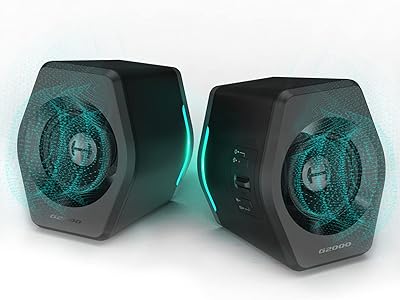
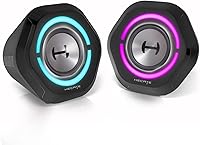
The Edifier Hecate G1000 sits in an interesting spot in the desktop speaker market — not a throwaway USB pair, but not trying to compete with serious audiophile hardware either. Edifier has been making speakers long enough to know what budget-to-mid-range buyers actually want, and this gaming speaker set reflects that. You get RGB lighting, multiple input options, and touch controls, all packed into a compact 2.0 stereo form factor that won't eat up your desk. For a product launched in early 2023, it holds up well and benefits from the brand credibility that no-name alternatives simply can't offer.

Features & Benefits

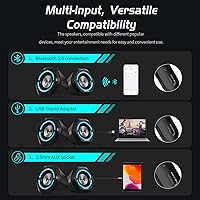
The three input options are probably the most practical selling point here. You can connect via Bluetooth 5.3 for your phone or tablet, plug in via USB for a dedicated sound card signal, or run a standard 3.5mm cable — whichever fits your current setup. The Bluetooth connection is fast and stable enough for casual use. At 10W peak with 2.5-inch full-range drivers, these desktop speakers get genuinely loud for their size. The 60dB signal-to-noise ratio keeps audio reasonably clean. Tapping the touch control panel to adjust volume feels noticeably more polished than the plastic knobs found on cheaper competitors.

Best For

This gaming speaker set makes the most sense for people who want their desk to look the part without committing to a large 2.1 system. Gamers chasing that RGB-lit aesthetic on a budget will appreciate the 12 lighting patterns, which are customizable enough to match most setups. Students and remote workers who bounce between a laptop, a phone, and a desktop throughout the day will find multi-source switching genuinely useful rather than just a spec-sheet talking point. If you already own a solid subwoofer elsewhere and just need clean, versatile stereo output from a trusted audio brand, the Hecate G1000 is a natural fit.

User Feedback

Across more than 600 ratings, the Hecate G1000 holds a 4.4-star average, and the pattern in reviews is fairly consistent. Most buyers are happy with the volume output relative to the speaker size — that tends to surprise people expecting thin, tinny sound. The RGB build quality gets mentioned positively too, with smooth transitions rather than the cheap flickering some budget speakers produce. Bass is limited, which is honestly just physics — 2.5-inch drivers have a ceiling, and anyone expecting deep low-end should add a subwoofer. A smaller group of users ran into USB audio conflicts on certain PCs where onboard sound interfered, so it's worth checking your system settings before assuming a fault.

Pros

  • Bluetooth 5.3 pairs quickly and stays stable for everyday desktop and phone use.
  • Three input types — Bluetooth, USB, and 3.5mm — mean almost any device connects without adapters.
  • RGB lighting looks genuinely polished, with smooth transitions rather than cheap flickering.
  • Touch controls feel premium for the price tier and reduce desk cable clutter noticeably.
  • Volume output surprises most buyers given how compact the enclosures actually are.
  • Edifier brand backing provides confidence that no-name alternatives simply cannot offer.
  • Compact footprint fits comfortably on tight desks without forcing awkward speaker placement.
  • Audio clarity in the mid-range is solid for gaming dialogue, calls, and casual music listening.
  • Metal-and-plastic build feels sturdy and does not rattle or flex at higher volume levels.
  • Works with a wide range of devices including smartphones, tablets, laptops, desktops, and TVs.

Cons

  • Bass is noticeably thin without an external subwoofer — a real limitation for bass-heavy content.
  • USB input can conflict with onboard PC audio drivers, requiring manual settings adjustments on some systems.
  • No software or app means RGB patterns cannot be synced with other peripherals on your desk.
  • Touch controls occasionally register unintended inputs when brushing past the speaker accidentally.
  • No visual indicator shows which input source is currently active, causing confusion in low-light conditions.
  • Bluetooth does not support multi-device memory, so switching paired sources adds minor friction daily.
  • Power cable is fixed and non-detachable, limiting placement flexibility relative to wall outlets.
  • Upper volume levels introduce a faint background hiss noticeable in quiet listening environments.
  • Plastic panels attract fingerprints and show minor surface scuffs after regular handling.
  • No mounting options available, so vertical or wall-mounted placement is not possible.

Ratings

The Edifier Hecate G1000 has been put through its paces by buyers across multiple markets, and our AI-driven scoring model has processed verified purchase reviews worldwide — actively filtering out incentivized, bot-generated, and low-signal feedback — to produce the ratings below. Scores reflect what real users consistently experienced over time, not just first-impression enthusiasm. Both the genuine strengths and the recurring frustrations are represented here transparently, so you can make an informed call before buying.

Sound Clarity
83%
Most buyers were genuinely impressed by how clean the audio output sounds for the speaker's physical size. Dialogue in games and videos comes through with good definition, and mid-range frequencies — voices, guitar, synths — hold up well at moderate listening volumes without distortion creeping in.
At higher volumes, some users noticed a slight harshness in the upper mids that becomes fatiguing during long sessions. It is not a dealbreaker, but buyers used to better-tuned speakers in this size class may find the treble a touch aggressive.
Bass Performance
61%
39%
For casual gaming background music and YouTube content, the low-end presence is adequate and avoids the completely hollow sound that plagues cheaper compact speakers. Users who keep volume at moderate levels generally find the bass acceptable for everyday listening.
The 2.5-inch drivers have a hard physical ceiling on low-frequency reproduction, and reviewers who game with bass-heavy soundtracks noticed this quickly. Without a dedicated subwoofer alongside these desktop speakers, bass-driven genres like EDM or action game audio feel noticeably thin.
Volume Output
88%
This is one of the most consistently praised aspects across the review pool. Buyers in medium-sized rooms reported that the 10W peak output fills the space comfortably without needing to push the speakers to maximum, which is a real advantage for a unit this compact.
A small number of users in larger rooms or open-plan spaces found the upper volume limit fell short of their needs. At maximum output, a faint background hiss was noted by a few sensitive listeners, though this was not a widespread complaint.
Bluetooth Connectivity
86%
Pairing via Bluetooth 5.3 is consistently described as fast and reliable. Users who switch between a phone for music and a laptop for work found the reconnection process smooth, with very few reports of dropouts during standard desktop use at close range.
Bluetooth range is limited to typical desktop proximity — walking to another room breaks the connection on some units. A handful of reviewers also noted that the speaker does not remember multiple paired devices simultaneously, which adds minor friction for multi-device households.
USB Audio Performance
67%
33%
When it works correctly, the USB sound card input is a practical alternative to the 3.5mm jack, delivering clean digital audio without needing a separate DAC. Users who plugged directly into a USB port on a desktop PC generally reported clean, interference-free playback.
This is the most documented pain point in the review pool. A meaningful minority of users experienced conflicts between the Hecate G1000 USB input and existing onboard audio drivers, requiring manual workarounds in Windows audio settings. It is solvable, but not the plug-and-play experience buyers expect.
RGB Lighting Quality
89%
The lighting is a genuine highlight for buyers who care about desk aesthetics. The 12 patterns transition smoothly rather than flickering, and the build quality of the lighting diffusion panel looks more premium than the price would suggest. Several reviewers specifically called it out as a reason they chose this over competitors.
There is no dedicated software to control the RGB patterns from a PC, which limits customization to cycling through presets manually. Users who wanted to sync lighting with other RGB peripherals were disappointed to find no ecosystem integration available.
Build Quality
81%
19%
The metal-and-plastic hybrid construction feels solid for the category. The cabinet does not flex or rattle when tapped, and the connection ports feel securely mounted — small details that matter when you are plugging and unplugging cables regularly on a busy desk.
The plastic used on certain exterior panels shows fingerprints and minor scuffs easily, which bothered detail-conscious buyers after a few weeks of use. A few reviewers also felt the speaker grille material looked slightly cheaper up close than in product photos.
Touch Controls
78%
22%
Having a touch-sensitive control surface instead of a physical dial is a genuine usability upgrade at this price tier. Tapping to adjust volume or switch inputs is responsive and works without needing to reposition the speaker, which keeps the desk workflow uninterrupted.
Some users found the touch sensitivity slightly inconsistent — occasional unintentional input changes when brushing past the speaker. There is also no tactile feedback, so in a dark room you are relying entirely on muscle memory to hit the right control zone.
Multi-Input Versatility
84%
Having three distinct input methods on a single compact unit is practically useful for mixed-device users. A student switching from phone music to laptop lectures to a desktop gaming session can do so without swapping cables or re-pairing anything — each input just works.
Switching between inputs requires cycling through them manually, and there is no visual indicator showing which input is currently active. In a dimly lit setup, this caused confusion for some users who were not sure which source was live.
Value for Money
82%
18%
For a speaker set that includes Bluetooth 5.3, three input types, RGB lighting, and touch controls from an established audio brand, buyers broadly agree the pricing feels justified. The Edifier name carries real weight compared to unbranded alternatives at a similar price.
Buyers who primarily care about pure audio performance may feel the cost reflects the feature set more than the sound quality alone. If RGB and connectivity options are irrelevant to your use case, there are simpler speakers that deliver comparable audio for less.
Setup & Ease of Use
91%
Out of the box, these desktop speakers are ready to use in minutes. The included connecting cable between the two units is long enough for most desk widths, and the USB and AUX connections work without any driver installation in most cases on both Windows and Mac.
The USB audio driver conflict mentioned by some users does introduce setup friction in specific PC configurations. First-time buyers who are not comfortable navigating audio settings may find the troubleshooting process frustrating without clearer guidance in the manual.
Cable Management
74%
26%
The touch controls reduce the need for a separate volume controller taking up desk space, and the relatively short power footprint of each speaker makes placement straightforward on tight desks. The speaker interconnect cable length is practical for side-by-side or slightly separated placement.
The power cable is fixed and non-detachable, which limits placement flexibility near outlets. Users with cable-managed desks noted that routing the interconnect cable between speakers neatly requires some effort, particularly if the speakers are positioned far apart.
Compatibility Range
87%
The breadth of compatible devices is a real plus — phones, tablets, laptops, desktops, televisions, and projectors are all supported through the three input options. This makes the speaker set genuinely useful in multiple rooms or use-case scenarios beyond just PC gaming.
Smart device integration is absent — there is no app, no voice assistant support, and no smart home connectivity. For users who have moved toward an app-controlled audio ecosystem, this speaker set sits firmly outside that world.
Desk Footprint
88%
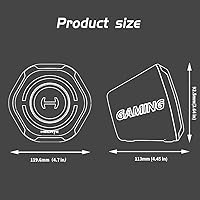
At 4.7 by 4.4 by 3.6 inches per unit, these speakers occupy minimal desk real estate. Buyers with compact workstation setups — especially those who have rejected 2.1 systems purely for space reasons — consistently praised how unobtrusive the physical presence is day-to-day.
Because both units need to sit on the desk surface and connect via cable, users with very narrow desks still need to plan placement carefully. There is no mounting option, so vertical surface attachment for space savings is not possible.

Suitable for:

The Edifier Hecate G1000 is a strong match for anyone building or upgrading a gaming or work-from-home desk setup where space, versatility, and aesthetics all matter. Gamers who want their desk to look cohesive — with RGB lighting that actually holds up visually rather than flickering like a cheap afterthought — will find this gaming speaker set hits the mark without demanding a premium outlay. Students who move between a phone for music, a laptop for lectures, and a desktop for everything else will genuinely appreciate having three usable input options in one compact unit rather than constantly swapping cables or re-pairing devices. Remote workers who share a small home office space will value the minimal desk footprint and the clean touch controls that keep the setup feeling tidy. If you already own a subwoofer or simply do not need deep bass from your speakers, these desktop speakers slot comfortably into that role as a clear, reliable stereo pair from a brand with a real track record in audio.

Not suitable for:

The Edifier Hecate G1000 is not the right call for buyers whose primary concern is audio performance above all else, particularly those who listen to bass-heavy music genres or want immersive low-end in action games or films. The 2.5-inch drivers are physically constrained, and no amount of DSP tuning changes that reality — if you need serious bass, you need a subwoofer or a larger speaker system. Audiophiles or even enthusiast-level listeners accustomed to bookshelf speakers with dedicated tweeters and woofers will find the sound profile too limited for critical listening. Anyone running a complex PC audio setup should also be aware that the USB input has a documented history of conflicting with certain onboard audio drivers, which may require manual intervention to resolve. Users who want app-controlled lighting, ecosystem integration with other RGB peripherals, or smart home compatibility will find these desktop speakers completely outside that world — there is no software, no app, and no third-party integration of any kind.

Specifications

  • Peak Power: The speakers deliver 10W of peak output power, split across the stereo pair for a 2.0 channel configuration.
  • Driver Size: Each speaker uses a 2.5-inch full-range dynamic driver responsible for handling the entire audible frequency spectrum.
  • Connectivity: Three input methods are supported: Bluetooth 5.3 for wireless pairing, a USB sound card input, and a standard 3.5mm AUX jack.
  • Bluetooth Version: Bluetooth 5.3 provides a more stable and efficient wireless connection compared to older Bluetooth standards common in this price range.
  • Signal-to-Noise Ratio: The rated signal-to-noise ratio is 60dB, indicating reasonably clean audio output with minimal background noise under normal listening conditions.
  • RGB Lighting: Twelve distinct RGB ambient lighting patterns are built into the speakers, cycled and controlled directly via the onboard touch panel.
  • Control Method: All volume adjustments and input switching are handled through a capacitive touch panel located on one of the speaker units.
  • Dimensions: Each speaker unit measures 4.7″ deep by 4.4″ wide by 3.6″ tall, making it compact enough for tight desktop environments.
  • Weight: The combined unit weight is approximately 0.96 kg (2.12 lbs), keeping the overall setup lightweight and easy to reposition on a desk.
  • Materials: The cabinet is constructed from a combination of metal and plastic, providing a balance of rigidity and manageable weight.
  • Power Source: The speakers are powered via a corded electric connection and are not battery-operated, requiring a constant power outlet for use.
  • Audio Channel: The system operates in a 2.0 stereo configuration with no dedicated subwoofer unit included or integrated.
  • Compatible Devices: The speaker set is compatible with desktops, laptops, smartphones, tablets, televisions, and projectors across all three input methods.
  • Color: The speakers are available in black, featuring a dark finish that suits most neutral or dark-themed gaming and work desk setups.
  • Indoor Use: These speakers are rated for indoor use only and carry no water resistance or weatherproofing of any kind.
  • Included Accessories: The package includes a speaker interconnect cable for linking the two units together, with no additional accessories bundled in the box.
  • Warranty: Edifier provides a limited warranty with the product; buyers should confirm the specific duration and terms through the retailer or Edifier directly.
  • Model Identifier: The official model name is Edifier HECATE G1000, and the Amazon ASIN for this product is B0BWN8F16H.

Related Reviews
Edifier S3000MKII
Edifier S3000MKII
88%
94%
Sound Accuracy
91%
Bass Performance
93%
Treble Clarity
88%
Wireless Connectivity
90%
Build Quality
More
Edifier TWS NB2
Edifier TWS NB2
85%
87%
Noise Cancellation Effectiveness
90%
Sound Quality
85%
Call Clarity
88%
Battery Life
82%
Comfort and Fit
More
Edifier H650 Headphones
83%
87%
Sound Quality
91%
Portability
79%
Comfort
85%
Build Quality
73%
Durability
More
Edifier NeoBuds Pro
Edifier NeoBuds Pro
86%
94%
Sound Quality
91%
Noise Cancellation
89%
Battery Life
87%
Comfort & Fit
78%
Bluetooth Connectivity
More
Edifier T5 Powered Subwoofer
86%
94%
Bass Performance
88%
Build Quality
85%
Ease of Setup
89%
Energy Efficiency
91%
Sound Clarity
More
Edifier W855BT Bluetooth Headphones
85%
87%
Sound Quality
93%
Battery Life
89%
Comfort and Fit
84%
Build Quality
91%
Ease of Use
More
Edifier M60 Multimedia Speaker
88%
94%
Sound Quality
91%
Bass Performance
88%
Connectivity Options
87%
Design & Aesthetics
89%
Setup & Installation
More
Edifier W80 Over-Ear Headphones
86%
88%
Sound Quality
91%
Noise Cancelling Effectiveness
94%
Battery Life
85%
Comfort & Fit
89%
Call Clarity
More
Edifier G2000
Edifier G2000
78%
78%
Sound Quality
71%
Bass Performance
86%
Build Quality
73%
EQ Modes
83%
Connectivity & Inputs
More
Edifier P841 Over-Ear Headphones
83%
85%
Sound Quality
90%
Comfort & Fit
70%
Build Quality
82%
Noise Isolation
88%
Ease of Use (In-Line Controls)
More

FAQ

Yes, as long as your console has a 3.5mm headphone output or a USB port you can use for audio, this gaming speaker set will connect without any issue. The 3.5mm AUX input is the most straightforward option for most console setups.

You can have both connected simultaneously — for example, your PC via USB or AUX and your phone via Bluetooth — but the speakers will only play one active source at a time. Switching between them requires cycling through inputs using the touch panel, which takes just a tap or two.

For most users on Windows and Mac, the USB sound card input works without installing any additional drivers. That said, a minority of Windows users have reported that the USB audio can conflict with existing onboard sound drivers, which may require manually setting the speaker as the default audio device in Windows sound settings.

You cycle through the 12 available lighting patterns using the touch control panel on the speaker itself. There is no companion app or PC software involved, so customization is limited to whatever patterns the hardware supports out of the box.

Yes, you can cycle through the lighting patterns until the lights turn off entirely. It is a straightforward process using the touch panel, so you are not forced to keep the RGB active during work hours or movie watching.

For casual listening — background music, podcasts, game audio, video calls — the bass is adequate and will not sound hollow. If you regularly listen to bass-heavy genres like hip-hop, EDM, or electronic music and want to feel the low end, a small desktop subwoofer would genuinely improve the experience.

In typical desktop use, the Bluetooth connection is stable and consistent within the same room. Moving to an adjacent room or passing through walls will likely drop the signal, so these desktop speakers are best treated as a close-range wireless option rather than a whole-room audio solution.

The touch panel is generally responsive and accurate, though a small number of users have noted that brushing past the speaker accidentally can trigger an input change. It is not a frequent issue, but if your speakers sit in a high-traffic area of your desk, it is worth being aware of.

The box includes a speaker interconnect cable to link the two units together. For a standard desk where both speakers sit side by side or slightly apart, the included cable length is sufficient for most users, though those with particularly wide desk arrangements have occasionally found it a tight fit.

No, there is no companion app or PC software for the Hecate G1000. What you see is what you get — volume and input control via the touch panel, RGB cycling via the same panel, and no EQ adjustment options. If sound tuning is important to you, you would need to apply EQ through your operating system or a third-party audio application.