Overview

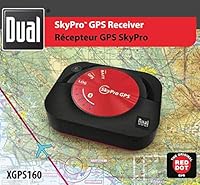
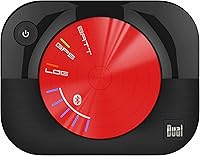
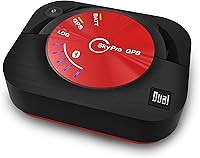
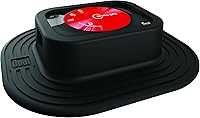
The Dual Electronics XGPS160 Bluetooth GPS Receiver is a compact, puck-shaped device built for anyone whose tablet, laptop, or smartphone needs a real GPS signal boost — or simply lacks one entirely. Dual Electronics has long had roots in car audio and navigation hardware, and this receiver reflects that practical, no-frills engineering DNA. It sits at a mid-range price point that signals a serious tool rather than an impulse buy. Slip it in a jacket pocket, stick it on a dashboard, or clip it to a backpack strap — the portable puck design adapts effortlessly to almost any scenario where reliable positioning matters.
Features & Benefits

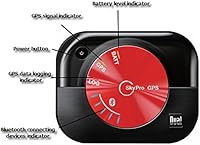
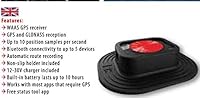
The headline spec here is WAAS-assisted accuracy — the receiver locks onto correction signals from ground stations alongside standard satellites, which in practice means your position is typically within about 2.5 meters. For most navigation tasks, that's tight enough to matter. This external GPS receiver connects to up to five devices simultaneously over Bluetooth, which is genuinely useful on a boat or in a small aircraft cockpit where two people might be running separate apps. Battery life comfortably covers a full day of hiking or a long cross-country drive, and the included accessories — car charger, non-slip pad, and adjustable strap — mean you're ready to deploy it almost anywhere. App support spans iOS, Android, and PC, though each app must explicitly support external GPS input for this to work.

Best For

The XGPS160 has the clearest following among general aviation pilots who use Electronic Flight Bag apps like ForeFlight or Garmin Pilot on Wi-Fi-only iPads. Those apps are built to accept external GPS, and the WAAS accuracy meets the positioning standards many pilots expect. Beyond aviation, it's a solid pick for boaters and kayakers running chartplotter apps on tablets without cellular data plans, and for overlanders or road trippers who've opted for a Wi-Fi-only tablet to save on data costs. Hikers who want GPS independence from cell towers will also find it reliable in open terrain. Laptop users doing light field mapping or fleet work round out the main use cases.

User Feedback

Buyers tend to praise how quickly this Bluetooth GPS puck locks onto satellites in open sky — cold start times are frequently called out as a real strength compared to cheaper alternatives. Pilots in particular appreciate the multi-device pairing, since it lets a copilot run a backup app without a second receiver. That said, Android users have reported inconsistent pairing behavior, especially after major OS updates, and it's worth knowing that Dual Electronics doesn't always push quick firmware fixes. A handful of buyers have noted the non-slip pad loses its grip over time. On the upside, several pilots mention it holds its own against pricier aviation-grade receivers for recreational flying — a notable value point given the price gap.

Pros

  • WAAS accuracy puts your position within roughly 2.5 meters, which is meaningfully better than standard GPS-only receivers.
  • Connects up to five devices simultaneously over Bluetooth — genuinely useful in cockpit or boat environments.
  • Ten hours of battery life covers a full day of flying, hiking, or driving without needing a recharge.
  • Cold satellite acquisition is fast and reliable in open-sky conditions, which users consistently highlight.
  • Works across iOS, Android, and PC, giving it real cross-platform flexibility.
  • Comes with a solid accessory kit including a car charger, non-slip pad, and adjustable strap right out of the box.
  • At its price point, it competes favorably against aviation-grade receivers that cost significantly more.
  • The compact puck form factor fits in a jacket pocket and mounts cleanly on a dashboard or cockpit glare shield.
  • Position updates can reach up to four times per second, useful for fast-moving applications like aviation.
  • A one-year parts and labor warranty backs the purchase with at least basic protection.

Cons

  • Bluetooth pairing on Android devices is unreliable for a notable number of users, especially after OS updates.
  • App compatibility is not automatic — your navigation app must explicitly support external GPS input or this receiver is useless.
  • The non-slip pad loses its adhesion over time, leaving you without a reliable mounting solution.
  • No built-in display or audio output means it's entirely dependent on a connected device to be useful.
  • Firmware updates are infrequent, leaving known Bluetooth bugs unresolved for extended periods.
  • Build quality feels utilitarian rather than robust — not ideal for consistently harsh or wet environments.
  • Only one position update per second by default; the faster rate requires manual configuration in supported apps.
  • No multi-constellation support beyond GPS and WAAS, which limits performance compared to newer receivers that also use GLONASS or Galileo.
  • The Bluetooth range can be shorter than expected in real-world conditions, restricting where you can place the puck relative to your device.

Ratings

Our AI-generated scores for the Dual Electronics XGPS160 Bluetooth GPS Receiver are built by analyzing thousands of verified global user reviews, with spam, bot-submitted, and incentivized feedback actively filtered out before scoring. Each category reflects the honest distribution of real buyer experiences — including the frustrations — so you get a transparent picture of where this external GPS receiver genuinely excels and where it falls short.
GPS Accuracy
88%
Users consistently praise the WAAS-assisted positioning in open-sky conditions, noting how noticeably tighter the fix is compared to basic GPS-only alternatives. Pilots and boaters in particular highlight that the roughly 2.5-meter accuracy is reliable enough for serious navigation apps like ForeFlight and marine chartplotters.
In dense urban environments or under heavy tree cover, accuracy degrades more than some buyers expect. A handful of users also note that the single-constellation GPS-only chipset falls behind newer multi-constellation receivers that pull in GLONASS or Galileo signals.
Bluetooth Stability
61%
39%
On iOS devices — especially iPads used in aviation — pairing is generally described as straightforward, and the connection holds reliably once established in a stable environment. Pilots running ForeFlight in a cockpit often report trouble-free sessions over multiple flights.
Android users face a notably different experience, with pairing dropouts and reconnection failures reported frequently, especially after major OS updates. The lack of timely firmware patches from Dual Electronics means these issues can linger for months without a fix.
Signal Acquisition Speed
86%
Cold start times earn consistent praise across user groups — most report a satellite lock within 30 to 60 seconds in open sky, which beats several competing receivers in the same price tier. Hikers and overlanders appreciate not having to wait around while the device hunts for a signal.
In partially obstructed environments like parking garages or dense forest, acquisition can stretch noticeably longer, which frustrates users who expect the same speed indoors or under canopy as they get in open terrain.
Multi-Device Support
91%
The ability to feed GPS data to five devices simultaneously stands out as a genuine differentiator, and users in shared navigation environments love it. Pilots with a copilot running a backup EFB app, and boat crews splitting duties across two tablets, specifically call this feature out as a deciding factor in their purchase.
While the five-device ceiling is generous, a few users note that adding more than two or three active connections can occasionally introduce minor latency, particularly on older Bluetooth hardware. This is rarely a dealbreaker but worth knowing for high-frequency update use cases.
Battery Life
83%
Ten hours of continuous runtime is enough to cover a full hiking day, a long cross-country drive, or several back-to-back flight legs without reaching for the charger. Users who plugged it into the included car charger for road trips report it essentially runs indefinitely, which is a practical advantage on long journeys.
The 3-hour recharge time is acceptable but not fast, and a small number of users report their battery capacity degrading noticeably after 12 to 18 months of regular use, which is a concern for those who rely on it daily.
App Compatibility
72%
28%
For aviation and marine navigation apps — the primary audience — compatibility is broad and well-documented. ForeFlight, Garmin Pilot, iNavX, and similar purpose-built apps integrate cleanly, and users in those communities rarely run into support issues.
Buyers expecting this to work with Google Maps, Waze, or other mainstream consumer apps are in for a disappointment — those apps simply do not accept external GPS input on mobile. This incompatibility catches a meaningful subset of buyers off guard and drives a disproportionate share of negative reviews.
Build Quality
63%
37%
The compact puck shape is sturdy enough for everyday transport and survives being tossed in a flight bag or backpack without issue. The overall footprint and modest weight make it genuinely portable rather than just technically so.
The plastic housing feels utilitarian rather than premium, and several users describe it as feeling fragile relative to the price point. It is not rated for water resistance, which is a meaningful gap for a device marketed to boaters and outdoor users.
Included Accessories
74%
26%
The out-of-the-box kit is practical and well-considered — a car charger, USB cable, adjustable strap, and non-slip pad cover the majority of common mounting scenarios without requiring an immediate trip to buy extras. Pilots especially appreciate having a dashboard-ready pad in the box.
The non-slip pad draws consistent complaints about losing grip over time, particularly in hot vehicle interiors where the gel surface degrades faster. The adjustable strap is functional but basic, and users looking for a more secure cockpit mount will likely need to purchase a third-party solution.
Ease of Setup
79%
21%
On iOS, initial setup is quick — the receiver shows up in Bluetooth settings, pairs within seconds, and compatible apps detect it automatically. Most iOS users describe being up and running in under five minutes, even without consulting the manual.
The experience on Android and Windows PC is less consistent, with some users spending considerable time troubleshooting before achieving a stable connection. There is no dedicated companion app to assist with pairing or firmware management, which leaves less technical users without a clear path when something goes wrong.
Portability
89%
At roughly the size of a hockey puck and light enough to forget is in your pocket, this external GPS receiver is genuinely easy to carry anywhere. Hikers and travelers who have tried bulkier dedicated GPS units immediately notice and appreciate the size difference.
The weight of 11.3 ounces, while compact by GPS standards, is heavier than some users expect from a device this small, and a few ultralight hikers specifically flag it as more than they want to carry on long trips.
Value for Money
77%
23%
Compared to aviation-grade GPS accessories from Garmin or Bad Elf at significantly higher prices, the XGPS160 offers competitive WAAS accuracy at a lower entry cost — a trade-off that recreational pilots and casual mariners consistently describe as worthwhile. For the use cases it handles well, the pricing feels appropriate.
For users who run into the Android Bluetooth issues or discover their apps are incompatible, the value proposition collapses quickly. Buyers who need a reliable Android-friendly receiver or who want multi-constellation support can find newer alternatives for similar money.
Durability Over Time
58%
42%
In moderate, controlled use — primarily in vehicles and cockpits — the device holds up well over the first year, with most users reporting no hardware failures within the warranty period. The lack of moving parts reduces mechanical failure risk.
Beyond the first year, reports of Bluetooth reliability degrading and battery capacity dropping off become more frequent. The non-IP-rated housing and deteriorating mounting accessories suggest this is a mid-life device rather than a long-term investment for heavy users.
Update Rate Performance
71%
29%
The ability to push up to four position updates per second — when an app supports it — makes a noticeable difference for fast-moving applications like aviation, where a one-second-old position fix can mean being off by hundreds of feet at cruising speed.
The default one-update-per-second rate is adequate but not impressive, and many users never configure the higher rate because the option is buried in app settings rather than a dedicated device interface. Buyers expecting this to be automatic may never benefit from the faster mode.

Suitable for:

The Dual Electronics XGPS160 Bluetooth GPS Receiver was practically built for pilots who fly with a Wi-Fi-only iPad running ForeFlight, Garmin Pilot, or a similar Electronic Flight Bag app — it delivers the WAAS-grade accuracy those apps are designed to use, at a fraction of the cost of dedicated aviation GPS hardware. Boaters and kayakers who rely on tablet-based chartplotters but lack a cellular data plan will get the same benefit: accurate, satellite-sourced positioning that doesn't depend on a cell tower being nearby. Road trippers and overlanders who chose a Wi-Fi-only tablet to cut monthly costs will find this puck closes that GPS gap instantly. Hikers and trail runners operating in remote terrain, where cell signal is unreliable or nonexistent, also land squarely in the sweet spot. The ability to connect up to five devices simultaneously makes it especially practical for shared cockpits, boat helms, or any situation where two people are navigating in parallel.
Not suitable for:

The Dual Electronics XGPS160 Bluetooth GPS Receiver is not the right tool for anyone who expects a simple plug-and-play experience on Android — Bluetooth pairing has proven temperamental for a notable share of Android users, particularly after OS updates, and that's a real frustration if you're not comfortable troubleshooting connectivity settings. Casual smartphone users who just want better maps around town should also look elsewhere; most modern smartphones already have perfectly adequate built-in GPS, and paying a mid-range price to add a second receiver on top of that makes little practical sense. If your navigation app doesn't explicitly support external GPS input, this receiver won't help at all — that's a crucial compatibility check buyers sometimes skip. Those looking for ruggedized, purpose-built hardware for professional surveying or precision fieldwork will likely find the accuracy ceiling here falls short of specialized equipment. Finally, anyone expecting the build quality and accessory durability of a premium product may come away slightly underwhelmed.
Specifications

  • Brand: Manufactured by Namsung America, Inc. and sold under the Dual Electronics brand.
  • Model: The exact model designation is XGPS160.
  • GPS Accuracy: Achieves positioning accuracy within ±2.5 meters CEP using WAAS/SBAS satellite augmentation.
  • Bluetooth: Connects wirelessly via Bluetooth to up to 5 devices simultaneously.
  • Battery Life: Delivers up to 10 hours of continuous operation on a full charge.
  • Recharge Time: Fully recharges from empty in approximately 3 hours via USB.
  • Battery Capacity: Internal lithium battery rated at 1,400 mAh.
  • Dimensions: Measures 2.24″ wide by 2.24″ deep by 0.75″ tall in its compact puck form.
  • Weight: Weighs 11.3 ounces including the internal battery.
  • Max Speed: Rated to track movement at speeds up to 1,150 mph, covering aviation use cases.
  • Max Altitude: Operational ceiling reaches up to 65,600 ft above sea level.
  • Update Rate: Outputs position data once per second by default, with supported apps able to access up to 4 updates per second.
  • Compatible OS: Works with iOS, Android, and Windows PC devices running compatible navigation applications.
  • Power Input: Accepts 12–30V DC via the included car charger for continuous in-vehicle or in-aircraft use.
  • Mounting: Includes a non-slip pad for dashboard or surface placement; an adjustable strap is also included for portable attachment.
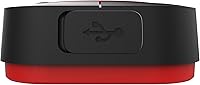
  • In the Box: Package includes the GPS receiver, USB charging cable, 12–30V car charger, non-slip pad, and adjustable strap.
  • Warranty: Covered by a 1-year manufacturer warranty including parts and labor.
  • Satellite System: Receives standard GPS signals enhanced by WAAS/SBAS ground-based correction stations.

Related Reviews
Dual Electronics DBTMA100 Micro 2 Channel Bluetooth Amplifier
88%
95%
Bluetooth Connectivity
91%
Audio Clarity
87%
Build Quality
94%
Ease of Setup
78%
Power Output
More
Dual DM720 7-Inch Double-DIN Mechless Receiver with Bluetooth
84%
89%
Ease of Installation
91%
Bluetooth Performance
75%
Display Quality
80%
Sound Quality
77%
Usability of Touchscreen
More
August MR285 Bluetooth Transmitter Receiver
78%
83%
Ease of Setup
76%
Bluetooth Connectivity Stability
78%
NFC Pairing Performance
79%
Audio Quality
72%
Latency Performance
More
Bushnell D-Tour GPS Receiver
86%
88%
Performance
91%
Battery Life
94%
Portability
86%
Ease of Use
87%
Tracking Accuracy
More
Dual Electronics MXP152W Marine Media Receiver Bundle
74%
88%
Value for Money
84%
Bluetooth Connectivity
71%
Marine Durability
67%
Sound Quality
76%
Ease of Installation
More
1Mii DS220 Bluetooth Receiver
78%
88%
Sound Quality
81%
Wireless Range & Stability
74%
Codec Support & Negotiation
91%
Output Versatility
86%
OLED Display & Interface
More
Xvive P3 Bluetooth XLR Receiver
86%
88%
Audio Quality
94%
Ease of Use
80%
Range Performance
85%
Battery Life
82%
Build Quality
More
Citreal Marine Bluetooth Stereo Receiver
74%
76%
Water Resistance
83%
Bluetooth Performance
81%
Ease of Installation
61%
Sound Quality
79%
AM/FM Reception
More
VOXXBASS Bluetooth Marine Radio Receiver
86%
92%
Durability and Waterproofing
87%
Sound Quality
90%
Bluetooth Connectivity
75%
Ease of Installation
85%
Compatibility with Devices
More
Dual Electronics MXD140B Marine Radio
85%
89%
Bluetooth Connectivity
92%
Value for Money
83%
Durability & Build Quality
81%
Sound Quality
85%
Ease of Use
More

FAQ

Yes, and that is honestly one of the strongest use cases for this receiver. ForeFlight explicitly supports external GPS input, so once you pair it over Bluetooth, the app will use the XGPS160 as its position source instead of relying on Wi-Fi positioning. Many pilots use exactly this setup.

In plain terms, 2.5 meters CEP means roughly half of your position fixes will land within about 8 feet of your true location. For road navigation, marine chartplotting, hiking trails, and even recreational aviation, that is more than adequate. It is noticeably better than a basic GPS-only receiver, thanks to the WAAS augmentation pulling in correction data from ground stations.

Yes. The receiver supports up to five simultaneous Bluetooth connections, so running it on two Apple devices at once is no problem. This is particularly useful on a boat or in a cockpit where two people need live position data on separate screens.

Possibly. Android users have reported Bluetooth pairing problems more frequently than iOS users, and the issue tends to resurface after major Android OS updates. It is not universal, but it is common enough to be worth knowing upfront. If you are primarily an Android user, check whether your specific device and OS version has reported issues before buying.

Unfortunately, no. Google Maps and Waze on mobile do not support external GPS receivers — they are locked to the device's built-in location system. This receiver only works with apps that explicitly allow an external GPS source, which is a relatively specific list that includes aviation and marine navigation apps but excludes most consumer mapping apps.

In open sky with a clear view overhead, most users report a lock within 30 to 60 seconds. If you have used it recently in the same area, it can be even faster. Dense urban canyons or heavy tree cover will slow things down, but that is true of any GPS receiver.

Yes. The included 12–30V car charger lets you run the receiver continuously without drawing on the internal battery, which is handy for long drives or keeping it mounted in a vehicle full-time. It also works in aircraft with a compatible 12V or 28V power outlet.

It works well initially, but several users have noted the pad loses its grip after repeated repositioning or exposure to heat — a common complaint with gel-style mounting pads in general. Rinsing it with water and letting it dry can temporarily restore the tackiness, but over time you may want to look at a small aftermarket mount.

The receiver is rated for standard Bluetooth range, but real-world results vary. In an open car or cockpit, keeping the device within a few feet of your tablet or phone is generally fine. Placing it in a bag several rows away or through a metal partition can cause dropout. Shorter distances consistently perform better.

No. The GPS positioning itself is entirely satellite-based and works with no data connection at all. However, most navigation apps need pre-downloaded maps or an internet connection to display map tiles, so the app experience may vary offline even if the position data is live and accurate.

Where to Buy