Overview

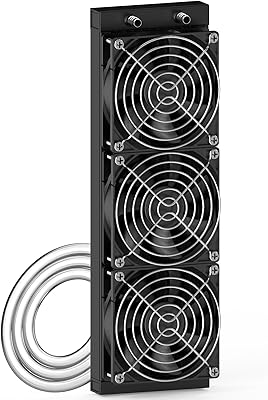
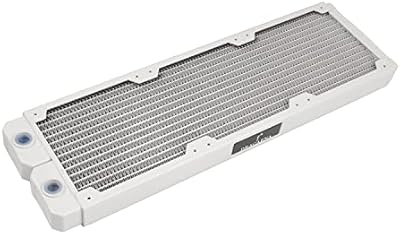
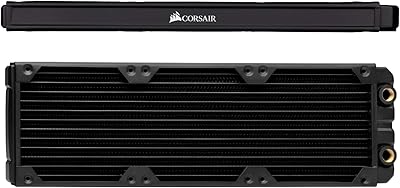
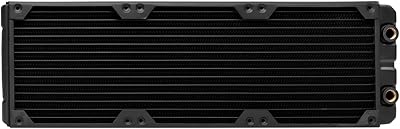
The DIYhz 240mm Aluminum Water Cooling Radiator is a straightforward, budget-conscious option for anyone stepping into custom liquid cooling for the first time. Built around an aluminum body with copper fin construction and a matte black oxidized finish, it punches above its price class in terms of materials. The 12-pipe internal layout is a genuine differentiator at this tier — most comparably priced rads use fewer channels. It also crosses over nicely into light industrial territory: laser engravers, variable frequency drives, and similar equipment respond well to this kind of liquid-to-air heat exchange. Just go in with calibrated expectations — this is a solid entry-level rad, not a premium enthusiast unit.
Features & Benefits

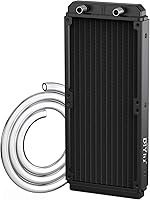
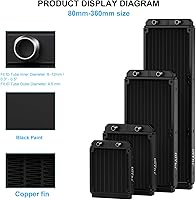
The 12-pipe channel design distributes coolant flow across a wider cross-section than you might expect at this price, which helps move heat out more consistently under load. Copper fins are bonded to the aluminum core, and that combination matters — copper transfers heat quickly while aluminum sheds it efficiently into the airflow. The black oxidation coating adds a small but real boost to radiant heat loss compared to bare aluminum. It runs on DC 12V, so connecting it to a standard fan controller or motherboard header is painless. One thing to know upfront: fans are not included, so budget for a pair of 120mm units separately before you place the order.

Best For

This aluminum radiator makes the most sense for two fairly distinct audiences. The first is the first-time loop builder — someone who wants to experience custom water cooling without committing serious money to high-end components. It fits most mid-tower cases comfortably and pairs well with any 120mm fans you already own. The second group is makers and workshop tinkerers: people running laser engravers, CNC spindles, or small industrial drives that generate moderate heat and need a compact liquid-to-air solution. If you are chasing serious overclocking headroom or building a loop around a high-TDP flagship chip, this 240mm liquid cooler is probably not the ceiling you need.

User Feedback

Buyers who pick up this DIYhz cooling rad generally come away satisfied when their expectations are set correctly. The most consistent praise lands on build quality for the price — people note it feels solid and the finish looks clean straight out of the box. On thermal performance, the consensus is that it handles low-to-moderate heat loads well, with some users reporting temperature drops in the 10 to 15 degree Celsius range on modest CPU setups. Complaints tend to cluster around tube barb tolerances — a handful of buyers replaced the stock fittings for a better seal — plus occasional minor misalignment on fan mounting holes. Buyers running high-heat rigs offer noticeably more cautious verdicts.

Pros

  • Copper fin construction improves heat transfer noticeably compared to all-aluminum alternatives at this price
  • The 12-pipe internal layout distributes coolant flow more evenly than cheaper single-channel designs
  • Black oxidation coating gives it a clean, understated look that fits most builds
  • Compact dimensions work in most mid-tower cases without major clearance headaches
  • DC 12V operation plugs straight into standard fan headers — no adapter needed
  • Genuinely versatile: handles PC CPU loops, VGA cooling, and light industrial applications alike
  • Lightweight at around 240g, which reduces stress on fittings and mounting points
  • Solid value for a first custom loop or a low-stakes workshop cooling project

Cons

  • Fans are not included, which adds to the true cost and surprises buyers who miss the fine print
  • Tube barb tolerances are inconsistent — some units need aftermarket fittings to seal reliably
  • Fan screw hole alignment is off on some units, requiring minor drilling or workarounds
  • Thermal performance drops noticeably under sustained high-heat loads, limiting its ceiling
  • No documentation or installation guide is included in the box
  • Build-to-build quality control appears uneven based on user reports
  • Not thick enough to satisfy enthusiasts who need serious heat dissipation headroom
  • The aluminum core can react with certain coolants, so fluid compatibility needs careful attention

Ratings

The scores below for the DIYhz 240mm Aluminum Water Cooling Radiator were generated by our AI system after analyzing verified purchase reviews from buyers worldwide, with spam, bot activity, and incentivized feedback actively filtered out before scoring. Each category reflects what real users experienced across a range of setups — from first-time PC loops to laser engraver cooling rigs — and both the genuine strengths and the honest frustrations are factored in equally.
Value for Money
88%
For the price tier this aluminum radiator occupies, buyers consistently report feeling they got more than they paid for. The copper fin construction and 12-pipe layout are features typically associated with pricier units, and first-time loop builders especially appreciate not having to break the bank to get started.
The value calculation shifts if you factor in the cost of replacement barb fittings, which a notable portion of buyers end up purchasing. Once you add fans and potentially new fittings, the total spend edges closer to mid-range territory.
Thermal Performance
71%
29%
For low-to-moderate heat loads — mainstream CPUs at stock or mild OC, laser engravers, small industrial drives — this 240mm liquid cooler keeps temperatures in a comfortable range. Several buyers reported coolant-to-ambient deltas that were respectable for the price, with drops of 10 to 15 degrees Celsius cited on modest setups.
Push it with a high-TDP processor under sustained load and the limitations become apparent fairly quickly. The 30mm thickness and fin density simply do not have enough thermal mass to keep pace with aggressive overclocking scenarios, and temperatures creep up noticeably compared to thicker enthusiast-grade alternatives.
Build Quality
79%
21%
The physical construction feels solid for the price — the aluminum body has no flex, the black oxidized finish is even and clean, and the copper fins are consistently bonded without visible gaps on most units. Buyers handling it for the first time often note it feels more substantial than expected.
Quality control is not perfectly consistent across production batches. Some buyers received units with slightly misaligned fan screw holes or minor surface blemishes on the coating, which points to tolerances that are acceptable but not tightly controlled.
Fitment & Compatibility
74%
26%
The standard 240mm dual-120mm footprint drops into mid-tower and full-tower cases without drama, and the DC 12V requirement means any standard fan header or pump controller handles it without adapters. Workshop users cooling laser heads and VFDs appreciate how little fuss the electrical side involves.
Fan mounting hole alignment is a recurring complaint, with some units requiring minor drilling or creative shimming to get fans seated flush. This is a minor inconvenience for experienced builders but genuinely frustrating for newcomers who expect a straightforward bolt-on install.
Tube Barb Quality
58%
42%
The barbs are functional out of the box for low-pressure, low-flow loops, and buyers running casual setups report no leaks when tubing is properly clamped. For a basic beginner loop running distilled water at moderate flow, most users get away without replacing them.
A meaningful number of buyers flagged inconsistent sealing on the stock barbs, with weeping or slow drips appearing around fittings during leak testing. Several users proactively replaced them with aftermarket barbs before ever filling the loop, treating the stock ones as temporary placeholders.
Ease of Installation
76%
24%
The radiator itself mounts intuitively for anyone who has built a PC before — the form factor is standard and the connection points are where you expect them. Experienced builders report getting it seated and plumbed in well within an hour alongside the rest of their loop components.
No installation guide is included in the box, which leaves absolute beginners without a starting point. Combined with the fan screw alignment issues some units have, the install experience can turn into a frustrating trial-and-error session for first-timers.
Coolant Compatibility
63%
37%
The radiator works well with coolants specifically formulated for mixed-metal systems, and buyers using purpose-blended PC coolants with corrosion inhibitors report no signs of degradation or discoloration even after extended use. For straightforward distilled water plus inhibitor setups, it holds up fine.
The copper-and-aluminum combination creates real galvanic corrosion risk if the wrong coolant is used, and the product ships with no guidance on fluid compatibility. Buyers who default to generic automotive antifreeze or incompatible coolant blends risk accelerating corrosion inside the core.
Noise Profile
81%
19%
The radiator itself generates no noise — it is a passive component — and with a quality pair of 120mm fans running at moderate RPM, the overall acoustic signature of the loop stays impressively quiet. Buyers using low-noise fan models report a near-silent system under everyday workloads.
Because fans are not included, the final noise level is entirely dependent on what the buyer pairs with this rad. Cheap high-RPM fans can make the whole setup sound rough, and there is no acoustic dampening built into the mounting points to absorb fan vibration.
Footprint & Sizing
84%
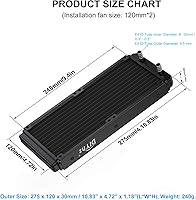
At roughly 275mm by 120mm and only 30mm thick, this DIYhz cooling rad fits without clearance fights in the vast majority of mid-tower cases. Workshop users mounting it outside a case for industrial cooling applications find the compact dimensions easy to work with on a bench or in an enclosure.
The 30mm thickness, while convenient for tight installs, is also the reason the thermal headroom is limited. Buyers who later upgrade to higher-TDP components often find themselves wishing they had gone with a 45mm or 60mm thick radiator from the start.
Finish & Aesthetics
77%
23%
The flat black oxidized coating looks clean and intentional rather than cheap, and it integrates naturally into dark-themed builds without standing out awkwardly. Maker and workshop users who leave the radiator visible appreciate that it does not look out of place in a professional setting.
The coating is not scratch-resistant enough to handle rough handling during installation without showing marks, and a small percentage of buyers reported minor paint inconsistencies on arrival. It looks good when installed and static, but it is not a premium anodized finish by any measure.
Flow Restriction
69%
31%
The 12-pipe layout distributes flow across enough parallel channels that most standard PC pumps push coolant through without working particularly hard. Buyers running moderately sized pumps report smooth, unrestricted circulation throughout their loops.
The stock barb diameter and internal channel sizing are not optimized for high-flow setups, and buyers using more powerful pumps occasionally note that the fittings become a minor bottleneck. Upgrading to larger-diameter aftermarket barbs is the usual fix but adds cost and effort.
Versatility of Use
86%
Few radiators at this price point are genuinely useful in both PC and light industrial contexts, but this aluminum radiator earns solid marks here. Laser engraver owners, CNC hobbyists, and small-scale industrial users have all reported satisfactory results cooling their equipment with this unit.
The versatility has a ceiling — it is suited for moderate and predictable heat loads across those applications, not demanding or variable industrial environments. Users who underestimate their cooling requirements and buy this for a high-output machine tend to be disappointed.

Suitable for:

The DIYhz 240mm Aluminum Water Cooling Radiator is a smart pick for first-time custom loop builders who want to learn the ropes without spending heavily on a radiator they may upgrade later. It fits naturally into mid-tower and larger cases, and its DC 12V operation means anyone with a standard motherboard fan header or basic controller can wire it up without extra hardware. Beyond PC builds, this aluminum radiator genuinely earns its place in maker and workshop settings — laser engraver owners, hobbyists running CNC spindles, and anyone cooling a small variable frequency drive will find it a practical, low-cost liquid-to-air solution. If you already have a pair of 120mm fans sitting around, the total investment stays very low, making it an easy recommendation for budget-conscious tinkerers. It also works well as a secondary or supplemental radiator in a larger loop where the thermal load on this unit stays moderate.
Not suitable for:

The DIYhz 240mm Aluminum Water Cooling Radiator is not the right tool if you are pushing a high-TDP processor hard or chasing meaningful overclocking headroom on a modern flagship chip. At that level, the 12-pipe aluminum core simply does not have the thermal capacity to keep pace, and you will likely find temperatures creeping up under sustained load. Serious enthusiasts building a flagship single-radiator loop should look at thicker, higher-fin-density options from established cooling brands. The stock tube barbs have also drawn enough complaints about sealing consistency that buyers planning a high-pressure or high-flow loop may want to factor in the cost of replacement fittings. Finally, anyone who does not already own 120mm fans needs to add that cost to their budget — the radiator ships without fans, which catches some buyers off guard.

Specifications

  • Dimensions: The radiator measures 275mm long, 120mm wide, and 30mm thick, making it a standard dual-120mm footprint that fits most mid-tower and larger PC cases.
  • Weight: At approximately 240g, this aluminum radiator is light enough to mount without putting significant stress on fittings or case brackets.
  • Body Material: The main core and housing are constructed from aluminum, which balances weight, cost, and adequate thermal conductivity for entry-level cooling loads.
  • Fin Material: Internal fins are made from pure copper, which transfers heat from the coolant into the airflow more efficiently than aluminum fins alone.
  • Surface Treatment: An oxidation-based black paint coating is applied to the exterior, which slightly improves radiant heat loss compared to bare unpainted aluminum.
  • Internal Pipes: The radiator uses a 12-pipe channel layout to distribute coolant across the core and increase the contact surface area for heat exchange.
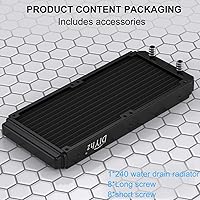
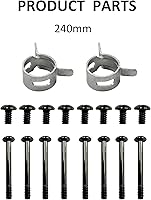
  • Fan Mounting: Two 120mm fans can be mounted to the radiator face using standard screw positions; fans are not included and must be purchased separately.
  • Operating Voltage: The unit is rated for DC 12V operation, which is directly compatible with standard PC fan headers, pump controllers, and 12V power supplies.
  • Wattage: Rated at 109.5W, which reflects the maximum thermal load the unit is designed to handle under normal operating conditions.
  • Power Connector: The radiator uses an 8-pin power connector configuration for its integrated components and pump compatibility.
  • Tube Quantity: Twelve coolant tubes run through the core, each contributing to the overall flow distribution and heat dissipation performance.
  • Compatible Uses: Designed for use in CPU water cooling loops, GPU liquid cooling setups, laser head cooling systems, and light industrial variable frequency drive cooling.
  • Brand: Manufactured and sold under the DIYhz brand, which focuses on affordable components for DIY electronics and cooling projects.
  • Model Number: The official model identifier for this unit is 10474, as listed by the manufacturer.
  • UPC: The product UPC is 788703768020, which can be used to verify the listing when purchasing from third-party sellers.

Related Reviews

Clyxgs 360mm Aluminum Water Cooling Radiator
72%
71%
Thermal Performance
78%
Build Quality
63%
Fan Noise Level
74%
Compatibility & Fit
83%
Value for Money
More
Dracaena.io 360mm Copper Water Cooling Radiator
86%
94%
Cooling Performance
91%
Build Quality
85%
Ease of Installation
88%
Aesthetics
89%
Durability
More
Dracaena Osprey 240mm Liquid Cooling Radiator
75%
78%
Thermal Performance
83%
Build Quality
81%
Port & Fitting Quality
86%
Case Compatibility
84%
Fan Compatibility
More
Corsair Hydro X Series XR5 420mm Water Cooling Radiator
86%
92%
Cooling Performance
94%
Build Quality
88%
Ease of Installation
91%
Thermal Efficiency
74%
Compatibility with Cases
More
be quiet! Pure Loop 3 LX 240mm Cooler

82%
88%
Thermal Performance
86%
Acoustic Performance
91%
Build Quality
93%
Lighting & Aesthetics
67%
ARGB Software Compatibility
More
be quiet! Pure Loop 2 240mm AIO Water Cooling System
86%
89%
Performance Under Load
92%
Noise Level
88%
Installation Ease
65%
ARGB Lighting Sync
90%
Build Quality
More
Corsair Hydro X XR5 360mm Radiator
83%
92%
Thermal Performance
94%
Build Quality
91%
Leak Resistance
78%
Installation Experience
83%
Material & Metal Compatibility
More
Davidoff Cool Water Eau de Toilette 1oz
84%
85%
Fragrance Longevity
91%
Scent Freshness
89%
Versatility for Daily Wear
75%
Scent Strength (Intensity)
80%
Packaging Design
More
Thermaltake P1000 Pastel White Water Cooling Solution
87%
88%
Cooling Performance
92%
Environmental Impact
89%
Aesthetic Appeal
85%
Ease of Use
90%
Viscosity & Flow
More
Davidoff Cool Water Eau de Toilette 275ml

84%
88%
Scent Quality
85%
Longevity
92%
Versatility
90%
Fragrance Freshness
78%
Packaging Design
More

FAQ

No, fans are not included. You will need to source two 120mm fans separately. This catches a lot of first-time buyers off guard, so factor that into your total budget before ordering.

It is designed for standard 120mm fans, and you mount two of them side by side across the face of the radiator. Most 120mm fans with a standard 4-hole mounting pattern will fit.

It is compatible with common barb-style fittings, but the stock barbs that come with the unit have drawn some complaints about inconsistent tolerances. If you are building a loop with higher flow rates or pressure, it is worth checking the barb size against your tubing and potentially replacing them with aftermarket fittings for a more reliable seal.

Yes, and it actually works quite well for that application. Laser engravers and similar equipment that run liquid cooling circuits produce moderate, steady heat loads that this aluminum radiator handles comfortably. Just make sure your pump and tubing are sized appropriately for the fittings.

Because the core is aluminum with copper fins, you need to be careful about coolant chemistry. Mixing dissimilar metals in a loop can cause galvanic corrosion over time. Use a coolant specifically formulated for mixed-metal systems, or distilled water with a corrosion inhibitor designed for aluminum and copper compatibility.

Honestly, it depends on the CPU and how hard you push it. For a mainstream processor running at stock speeds or mild overclocks, this rad handles it fine. For a high-TDP flagship chip under heavy load or aggressive overclocking, you will likely want something thicker with a higher fin density.

It uses a standard 240mm dual-120mm mounting footprint, so it drops into most mid-tower and full-tower cases without much trouble. The only hiccup some users have reported is minor misalignment on the fan screw holes, which occasionally requires a small adjustment to get the fans seated flush.

No printed instructions are included in the box. For most experienced builders that is not a problem, but if you are new to water cooling, you will want to reference online guides for your specific setup before starting the build.

Absolutely — that is actually one of the better use cases for this unit. Adding it as a supplemental rad in a loop where another radiator handles the primary heat load keeps the thermal demand on this cooler well within its comfort zone and extends its useful life.

Before filling with coolant, always do a leak test using distilled water or air pressure. Run the pump, check every fitting junction carefully, and let it sit for at least 30 to 60 minutes. If you spot weeping or drips around the barbs, tighten them or swap in aftermarket fittings before proceeding with your actual coolant.