Overview

The Thermaltake P1000 1000ml Pastel Water Cooling Solution sits comfortably in the mid-range of the custom loop coolant market — not budget-tier, but well below exotic specialty pricing. Thermaltake has been deep in the PC cooling space for years, and that track record lends this product genuine credibility rather than just brand packaging. The 1000ml bottle is well-sized for a typical custom loop fill, usually leaving a useful amount for topping off after you bleed the system. Keep expectations grounded, though: the P1000 solution is a functional fluid first, and the pastel color is the bonus — not the centerpiece.
Features & Benefits

What immediately stands out about this pastel coolant is the updated formula, specifically the inclusion of a surface tension optimizer — a practical engineering touch that reduces the chance of airlocks during the initial fill. Anyone who has spent an hour burping a stubborn loop will appreciate that more than any color claim. Viscosity runs noticeably lower than many competing coolants at typical operating temperatures, which means your pump exerts less effort to maintain flow. The anti-corrosion package covers copper, aluminum, and nickel-plated fittings without requiring separate additives. It is also non-flammable and fully biodegradable, which simplifies responsible disposal when maintenance time comes around.

Best For

This Thermaltake fluid is the right call for builders who want a ready-to-use solution without measuring out distilled water, inhibitors, and biocides separately. It particularly shines in mixed-metal loops — copper fittings, aluminum radiators, nickel-plated waterblocks — where reliable built-in corrosion protection matters far more than most first-time builders realize. Aesthetic-focused rigs benefit too; the white pastel diffuses cleanly under soft or neutral lighting without looking garish. For those who drain and refill on a regular maintenance schedule, the biodegradable formula is a practical bonus when responsibly disposing of old coolant rather than just pouring it down the drain.

User Feedback

Across more than 600 ratings, the aggregate score sits at 4.6 out of 5, and the feedback breaks down in a way that feels honest rather than inflated. The most consistent praise focuses on color stability — buyers report the white pastel holds its look over months without separating or fading noticeably. Anti-airlock performance during initial fills also gets repeated mentions, backing up the formula claim. The real caveat worth knowing: pastel coolants broadly carry a residue reputation, and the P1000 is not fully exempt — several users report light staining when loops were not flushed properly beforehand. Soft tubing compatibility is also worth verifying against your specific build before purchasing.

Pros

  • Pre-mixed and ready to pour straight into your loop — no measuring or additive sourcing required.
  • The surface tension optimizer genuinely reduces airlock headaches during the initial fill process.
  • Lower viscosity than most competing coolants at operating temperatures means your pump runs more efficiently.
  • Comprehensive anti-corrosion protection works across copper, aluminum, and nickel-plated components out of the box.
  • The white pastel produces a clean, diffused look that photographs exceptionally well in build showcases.
  • Non-flammable formula adds a layer of safety during filling and in the rare event of a leak.
  • Biodegradable and non-bioaccumulative materials make annual drain-and-refill disposal far less of a hassle.
  • The 1000ml volume typically covers a full loop fill with enough left over to top off after bleeding.
  • Available in five color variants, so you can stay consistent with this pastel coolant across different build themes.
  • Strong 4.6-star rating across hundreds of real buyer reviews suggests reliability well beyond just marketing claims.

Cons

  • Pastel coolants inherently carry a higher residue risk than clear fluids, and this Thermaltake fluid is no exception if your loop is not pre-flushed.
  • Soft tubing compatibility is not guaranteed — certain PVC and rubber tubing types may react poorly over time.
  • The opaque formula makes it impossible to visually spot early contamination or particulate buildup inside your loop.
  • Color longevity, while generally praised, is still tied to regular loop maintenance intervals and is not indefinite.
  • Offers no meaningful benefit for closed-loop AIO coolers, making it irrelevant for a large segment of PC builders.
  • Mid-range pricing is noticeably higher than a DIY distilled-water-plus-inhibitor setup for cost-conscious builders.
  • The 1000ml single bottle may be insufficient for very large dual-radiator or multi-component loops without buying a second bottle.
  • Limited guidance is provided on tubing compatibility, leaving builders to research potential interactions on their own.

Ratings

Our editorial AI analyzed hundreds of verified global buyer reviews for the Thermaltake P1000 1000ml Pastel Water Cooling Solution, actively filtering out incentivized, duplicate, and bot-generated submissions to ensure the scores below reflect genuine hands-on experience. Each category is scored independently, balancing what real builders praised most with the friction points that came up repeatedly across different loop configurations. You will find both the strengths and the honest shortcomings transparently represented here — no padding, no spin.

Anti-Corrosion Performance
91%
Builders running mixed-metal loops — copper blocks paired with aluminum radiators — consistently report no visible corrosion or discoloration on fittings after a full annual cycle. The out-of-the-box inhibitor coverage removes a major maintenance anxiety for builders who do not want to research and source separate additive kits.
A small number of users running especially long loops with older, pre-used components noted that the inhibitors can be taxed more quickly than expected, suggesting a shorter refresh interval for aged hardware. No coolant is a substitute for a clean loop to begin with.
Airlock Prevention
86%
The surface tension optimizer in the formula makes a noticeable real-world difference during the initial bleed process — many builders report getting air out of their loops faster than with standard clear coolants. For complex loop configurations with multiple bends and tight radiator channels, this translates to less time tilting and tapping the case.
The improvement is meaningful but not magical: very large or unusually complex loop configurations may still require extended bleeding sessions. A handful of users with particularly tight radiator fins noted that airlocks still formed initially, just cleared faster than usual.
Flow & Viscosity
89%
Running noticeably thinner than most competing pastel coolants at both cool and operating temperatures means pumps — especially lower-wattage models — move the fluid more efficiently without straining. Builders upgrading from thicker opaque fluids often cite quieter pump operation as an immediate benefit they did not fully anticipate.
The viscosity advantage over clear distilled-water setups is smaller and may not be perceptible in high-powered pump configurations where flow is already well within comfort margins. Those running entry-level pumps will benefit most; high-end pump owners may find the difference academic.
Color Consistency
88%
The white pastel holds up impressively over a standard annual maintenance cycle without going yellow, separating, or developing a murky haze — a problem that plagued earlier pastel coolant generations. Under soft diffused lighting or neutral RGB, the color reads cleanly and photographs extremely well in build showcases.
Color longevity beyond twelve months is less consistent and highly dependent on loop cleanliness, water quality, and how well the system was flushed before filling. Users who went longer than a year without a refresh reported gradual dullness rather than a dramatic color shift, but it was noticeable.
Residue & Cleanliness
69%
31%
When loops are properly prepared with a pre-flush using distilled water, most builders report very little visible residue buildup on waterblock windows or reservoir walls over a typical maintenance cycle. The lower viscosity also helps the fluid drain more completely during annual flushes, leaving less behind.
This is the category where the pastel coolant trade-off is most real: users who skipped or rushed the pre-flush step reported noticeable white residue on acrylic parts and GPU waterblock inlets. Opaque fluids simply carry an inherent residue risk that clear coolants do not, and the P1000 solution is no exception to that category-wide limitation.
Ease of Use
93%
Being fully pre-mixed is a genuine convenience win — there is no measuring, no separate biocide sourcing, and no guesswork about inhibitor ratios. Builders new to custom loops in particular find the pour-and-go experience removes one significant variable from an already complex first-time build.
The pre-mixed format means you cannot adjust concentration if you want slightly more anti-freeze protection for an unusually cold environment. For experienced builders who already have a trusted DIY formula dialed in, the fixed formulation offers no flexibility.
Tubing Compatibility
67%
33%
Compatibility with rigid tubing — acrylic, PETG, glass — is consistently reported as trouble-free, and most builders using these materials encounter no swelling, discoloration, or degradation. Hard-tubing builds represent a large portion of the builder community, and this coolant serves them well.
Soft tubing compatibility is the clear weak spot, with a meaningful minority of reviews flagging plasticizer interaction concerns with certain PVC and rubber tubing formulations. Thermaltake does not publish a comprehensive tubing compatibility list, which leaves builders in softer-tubing setups having to rely on community testing rather than official guidance.
Value for Money
78%
22%
Relative to ultra-premium specialty coolants at significantly higher price points, this Thermaltake fluid delivers competitive performance with a trusted brand behind it. The 1000ml volume is generous enough that most buyers get full loop coverage plus a top-off supply, extracting good value per milliliter.
Against a well-mixed DIY distilled-water-plus-inhibitor setup, the cost per fill is noticeably higher for what is, chemically speaking, a convenience premium. Budget-conscious builders who are comfortable with the DIY approach will find the value proposition harder to justify purely on performance grounds.
Bottle Design & Sizing
84%
The tall, slim bottle design pours cleanly into most reservoir fill ports without needing a funnel, and the 1000ml capacity is almost perfectly calibrated for a single standard loop fill. Several buyers specifically mention the slight excess over a single fill as a smart design choice, leaving enough to top off after bleeding.
The bottle lacks a precision pour spout or any kind of flow control mechanism, which makes slow, controlled filling into narrow reservoir openings slightly awkward. A flip-cap or nozzle attachment would have been a small but meaningful usability improvement.
Environmental Profile
88%
Biodegradable and non-bioaccumulative materials mean annual loop drain-and-refresh cycles do not require special chemical disposal procedures in most regions. For builders who perform regular maintenance and dispose of multiple liters per year, this is a genuine practical benefit beyond just marketing language.
The biodegradable claim, while accurate, is not independently third-party certified in any documentation visible to buyers, which makes verification difficult for those who want documented environmental standards rather than brand assertions alone.
Safety Profile
92%
Non-flammable classification is a meaningful safety attribute, especially in high-wattage builds where coolant leaks near VRM or GPU power delivery zones are a real risk scenario. Paired with the biodegradable formulation, cleanup after a minor leak is far less hazardous than with synthetic alternatives.
Even non-flammable coolants pose a serious short-circuit risk to powered electronics, so the safety advantage is most relevant post-incident cleanup rather than leak prevention itself. The packaging does not include detailed first-aid or spill handling instructions beyond the basics.
Color Variant Range
83%
Offering five distinct pastel shades within the same formula line means builders can color-match across a themed build without switching brands or worrying about formula incompatibility if they ever want to refresh with a different shade. The five options cover the most popular aesthetic palettes in the enthusiast build community.
The pastel range, while cohesive, does not include darker saturated tones like black, deep purple, or navy that some builders actively want. Those chasing bolder or darker aesthetics will need to look at a different product line entirely.
Long-Term Stability
81%
19%
Most users who report back after six to twelve months describe stable performance with no pump noise changes, no visible sediment in the reservoir, and consistent coolant color throughout. That level of stability over a standard maintenance cycle is what builders reasonably expect and this coolant generally delivers.
There is limited community data on performance beyond the twelve-month mark with this specific formula, making it harder to assess how it holds up in longer-run scenarios where some builders stretch maintenance intervals. The opaque color also makes it impossible to visually monitor fluid clarity as a stability indicator.
Maintenance Friendliness
76%
24%
Draining the fluid is straightforward and the lower viscosity means the loop empties more completely than with thicker opaque coolants, leaving less residual fluid in radiator fins and block channels. Builders on a once-a-year maintenance rhythm find the process clean and predictable when the loop was initially set up correctly.
Because the color is opaque, it is genuinely difficult to assess mid-cycle whether the coolant is still performing well or beginning to degrade — you cannot simply look at the reservoir and judge clarity. This pushes builders toward calendar-based replacement rather than condition-based, which can feel wasteful if the fluid is actually still clean.

Suitable for:

The Thermaltake P1000 1000ml Pastel Water Cooling Solution is best matched to enthusiast PC builders who are running custom open-loop water cooling systems and want a pre-mixed, ready-to-pour fluid without the hassle of sourcing and measuring distilled water, corrosion inhibitors, and biocides separately. It is particularly well-suited to builders working with mixed-metal loops — copper cold plates, aluminum radiators, nickel-plated fittings — where out-of-the-box corrosion protection is a genuine requirement rather than a nice-to-have. Builders who prioritize aesthetics alongside performance will find the opaque white pastel color a strong fit for clean, monochrome, or soft-RGB builds where translucent coolants would look flat or underwhelming. If you drain and refill your loop on a yearly maintenance schedule, the biodegradable formula makes responsible disposal straightforward. This coolant also makes sense for anyone upgrading from a basic distilled-water setup who wants a more tested, brand-backed solution without jumping to ultra-premium specialty fluids.
Not suitable for:

The Thermaltake P1000 1000ml Pastel Water Cooling Solution is not the right pick for builders running all-in-one closed-loop coolers, since those systems are sealed and never require a separate coolant fill. Anyone prioritizing a fully transparent or crystal-clear aesthetic should look elsewhere entirely — the opaque pastel formulation is by design non-transparent, and no amount of dilution will make it clear. Builders using soft tubing materials like certain PVC or rubber compounds should verify compatibility before committing, as a subset of users have flagged potential interaction issues that could affect tubing longevity. If you rarely or never perform loop maintenance and expect a set-and-forget coolant to last several years without flushing, pastel coolants as a category carry a higher residue risk than clear fluids, and this product is no exception. Those on a strict budget who are comfortable mixing their own distilled-water-plus-inhibitor solution may also find the cost hard to justify relative to a DIY approach.
Specifications

  • Brand: Manufactured by Thermaltake, a brand with an established presence in the PC water cooling and chassis market.
  • Model Number: The official model identifier is CL-W246-OS00WT-A, specific to the white pastel color variant.
  • Volume: Each bottle contains 1000ml of pre-mixed cooling fluid, sufficient for a typical single custom loop fill.
  • Color: White pastel finish is fully opaque and non-transparent, producing a diffused appearance rather than a clear or tinted look.
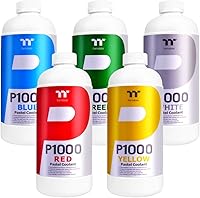
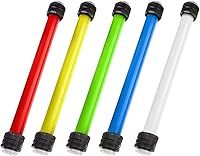
  • Color Variants: Available in five pastel shades: Red, Blue, White, Green, and Yellow, all sharing the same base formula.
  • Viscosity: Viscosity is 26.4% lower than competing coolants at 20°C and 25.8% lower at 40°C, supporting improved pump efficiency at operating temperatures.
  • Airlock Prevention: Includes a liquid surface tension optimizer in the formula that actively reduces the likelihood of airlocks forming during the initial fill.
  • Anti-Corrosion: Built-in anti-corrosion additives protect copper, aluminum, and nickel-plated metal components throughout the entire cooling loop.
  • Anti-Freeze: The formula includes anti-freeze protection, providing a buffer against freezing in environments where ambient temperatures drop significantly.
  • Flammability: Rated non-flammable, reducing safety risks during filling, maintenance, or in the event of an accidental coolant leak.
  • Environmental: Made with biodegradable, non-bioaccumulative materials, making disposal easier and reducing environmental impact compared to synthetic coolant alternatives.
  • Mix Type: Sold as a fully pre-mixed, ready-to-use solution requiring no dilution with distilled water or addition of separate inhibitors.
  • Compatible Devices: Designed specifically for use in custom water cooling loops in desktop PC builds; not intended for closed-loop AIO systems.
  • Bottle Dimensions: The bottle measures 3.3″ in length, 3.3″ in width, and 8.7″ in height, fitting standard storage and transport cases.
  • Item Weight: The filled bottle weighs approximately 2.4 pounds, reflecting the full 1000ml fluid volume plus packaging.

Related Reviews
DIYhz 240mm Aluminum Water Cooling Radiator
76%
88%
Value for Money
71%
Thermal Performance
79%
Build Quality
74%
Fitment & Compatibility
58%
Tube Barb Quality
More
Holy Natural Rose Water 1000mL
88%
89%
Effectiveness as a Toner
91%
Skin Hydration
93%
Gentleness on Sensitive Skin
75%
Fragrance and Scent
88%
Packaging and Bottle Design
More
Clyxgs 360mm Aluminum Water Cooling Radiator
72%
71%
Thermal Performance
78%
Build Quality
63%
Fan Noise Level
74%
Compatibility & Fit
83%
Value for Money
More
Thermaltake Pacific C360 Copper Radiator
81%
93%
Build Quality
84%
Thermal Performance
91%
Leak Resistance
67%
Fan Compatibility
78%
Value for Money
More
Davidoff Cool Water Eau de Toilette 1oz
84%
85%
Fragrance Longevity
91%
Scent Freshness
89%
Versatility for Daily Wear
75%
Scent Strength (Intensity)
80%
Packaging Design
More
Davidoff Cool Water Eau de Toilette 200mL
86%
82%
Scent Longevity
88%
Fragrance Profile Balance
90%
Versatility for Day-to-Night Wear
89%
Value for Money
85%
Freshness and Cleanliness
More
Dracaena.io 360mm Copper Water Cooling Radiator
86%
94%
Cooling Performance
91%
Build Quality
85%
Ease of Installation
88%
Aesthetics
89%
Durability
More
Davidoff Cool Water Eau de Toilette 275ml
84%
88%
Scent Quality
85%
Longevity
92%
Versatility
90%
Fragrance Freshness
78%
Packaging Design
More
Thermaltake T1000 Pure Clear Transparent Coolant 1000ml
84%
88%
Performance & Cooling Effectiveness
80%
Ease of Use & Handling
90%
Visual Appeal & Clarity
92%
Corrosion & Freeze Protection
85%
Compatibility with Materials
More
Milk Makeup Cooling Water Jelly Tint 0.16oz
78%
67%
Color Payoff
58%
Wear Longevity
89%
Texture & Application
84%
Dual-Use Versatility
91%
Cooling Sensation
More

FAQ

It is fully pre-mixed and requires no dilution whatsoever. You pour it directly into your reservoir without adding distilled water or any separate corrosion inhibitors. That convenience is one of the main practical advantages over a DIY distilled-water setup.

This is a legitimate concern with any pastel coolant, and it is worth being upfront: opaque fluids carry a higher residue risk than clear ones. The P1000 solution is formulated to minimize this, but users who skip a proper loop flush before filling have reported some mild staining. Thoroughly flushing your loop with distilled water before adding this coolant significantly reduces the risk.

Most users report stable color over the course of a standard annual maintenance cycle, which is the realistic benchmark to use. Color longevity beyond 12 months is not guaranteed and depends heavily on loop cleanliness, water quality, and operating temperatures. Treating this like any other consumable coolant and refreshing it annually is the safest approach.

For a typical single-radiator custom loop with one or two blocks, 1000ml is usually sufficient and often leaves a useful amount for topping off after bleeding. Larger setups — dual 360mm radiators, multiple blocks, long tubing runs — may require a second bottle. Estimating your loop volume before ordering is always a good idea.

Yes, the built-in anti-corrosion additives are specifically designed to protect mixed-metal environments covering copper, aluminum, and nickel-plated components. That said, mixing copper and aluminum in any cooling loop can still accelerate galvanic corrosion over time regardless of coolant quality, so annual loop inspection is always recommended.

Mixing coolants from different brands is generally not recommended, even if they appear similar. Incompatible additives can react, causing deposits, color changes, or reduced corrosion protection. If you are switching from another coolant, drain and flush the loop thoroughly with distilled water first before adding this fluid.

The formula is non-flammable, which removes one of the bigger risks associated with coolant leaks near electrical components. It is also biodegradable, so cleanup is less hazardous than with synthetic alternatives. That said, any coolant leak near powered hardware is a serious concern regardless of the fluid used, so acting quickly to power down and dry the system is critical.

Some users have reported compatibility concerns with certain soft tubing materials, so this is genuinely worth checking before you commit. Hard tubing such as acrylic or PETG tends to be more consistently compatible. If you are using soft tubing, cross-reference your specific tubing brand and material against known compatibility reports before filling.

The optimizer lowers the surface tension of the fluid, which helps it flow into tight spaces and around air pockets more effectively during the initial fill. In practical terms, it means fewer trapped air bubbles and a shorter bleeding process. Builders who have dealt with stubborn airlocks in previous builds tend to notice the difference most.

An annual drain and refill is the standard recommendation for any pastel coolant, including this one. Opaque fluids are harder to visually inspect for early signs of contamination compared to clear fluids, which makes sticking to a regular maintenance schedule more important. Checking fittings and blocks for residue buildup at each annual flush is a good habit to build.

Where to Buy