Dahszhi 300m Dual Beam Infrared Detector


Overview
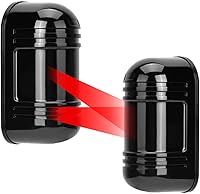
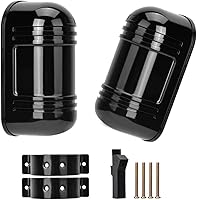
The Dahszhi 300m Dual Beam Infrared Detector is built around a simple idea: two towers, one transmitter and one receiver, that face each other and form an invisible line across a yard, driveway, or hallway. Mount them at opposite ends of the area you want to watch, and they create a beam path that triggers an alarm signal the moment something solid breaks through. It is worth knowing upfront that this is not a standalone alarm box you can just plug in and forget. You will need a compatible alarm host already in place, since this unit's job is purely detection. Indoors it can stretch across large rooms or long hallways, while outdoors it is rated for shorter, more realistic distances along a fence or property edge.
Features & Benefits
What stands out about this beam detector is the dual-beam setup, which requires both beams to be blocked at once before it sounds off. That single design choice cuts down on the kind of nuisance alerts you get from a stray bird, a falling leaf, or a cat wandering through. The lensed optics are meant to keep that beam steady even in rain, snow, or fog, and the unit automatically adjusts its transmit power based on conditions outside, which should help it last longer without burning through components. Response time lands somewhere between fifty and seven hundred milliseconds, fast enough to catch someone walking briskly through the line. An NO/NC relay output gives installers flexibility when wiring it into whatever panel they are already running, and the built-in laser alignment takes some guesswork out of setup.
Best For
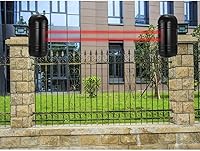
This perimeter sensor makes the most sense for homeowners who want a real layer of protection around a yard, driveway, or back gate rather than relying on a doorbell camera alone. Small business owners watching over a back entrance or loading dock get similar value, since the long indoor range covers wide spaces without needing multiple units. Schools and other institutional buildings with sprawling outdoor grounds are another natural fit, where a single beam line can monitor a fence run or open field. It also suits DIY security enthusiasts who already run a compatible alarm panel and want to expand coverage themselves. It is less suited to renters or anyone without an existing alarm host, since this dual-beam alarm depends entirely on that connection to actually do anything when triggered.
User Feedback
Real-world impressions of this beam detector tend to land on a few consistent points. People setting it up for the first time often mention that the laser-assist alignment makes pointing the two units at each other far less frustrating than expected, which matters since accurate aim is the whole game here. That said, some installers caution that getting the angle exactly right still takes patience, especially over longer outdoor runs. Owners in rainy or snowy regions seem genuinely pleased with how few false triggers they get compared to older single-beam setups they have used before. On the downside, a handful of buyers felt the included instructions could be clearer for someone wiring this into an alarm panel for the very first time, leaving some trial and error in the early setup.
Pros
- Dual-beam logic means both lines must be broken before it triggers, cutting nuisance alarms
- Lensed optics help the beam stay reliable through rain, snow, or light fog
- Auto-adjusting transmit power should extend the life of the internal components over time
- Built-in laser alignment makes pointing the two towers at each other noticeably easier
- Wide temperature range means it can handle harsh winters and hot summers alike
- NO/NC relay output gives installers flexibility when wiring into different alarm panels
- Long indoor range covers large rooms or hallways without needing a second unit
- Response speed is quick enough to catch someone walking briskly through the beam
Cons
- Requires a separate alarm host, so it cannot function as a standalone security device
- Getting the beam angle exactly right over longer outdoor distances takes real patience
- No formal weatherproof rating is listed, so heavy storms remain a bit of an unknown
- Included instructions could be clearer for someone wiring an alarm panel for the first time
- No app, smartphone notifications, or wireless connectivity of any kind
- Outdoor range tops out well below the indoor figure, so plan placement carefully
- Installation leans technical, which may discourage buyers without basic electrical experience
- Permanent wall mounting makes it a poor fit for renters or frequent movers
Ratings
Our scores for the Dahszhi 300m Dual Beam Infrared Detector are generated by AI after analyzing verified user reviews from buyers worldwide, with spam, bots, and incentivized feedback filtered out before anything gets tallied. The breakdown below reflects both the strengths people consistently praise and the friction points that show up again and again, so you get a realistic picture rather than a polished sales pitch.
False Alarm Resistance
Installation Ease
Outdoor Weather Performance
Indoor Range Reliability
Outdoor Range Reliability
Response Speed
Build Durability
Power Flexibility
Compatibility with Alarm Systems
Instruction Clarity
Value for Money
Compact Footprint
Suitable for:
The Dahszhi 300m Dual Beam Infrared Detector fits best with homeowners who already have, or plan to install, a compatible alarm panel and want a real perimeter line rather than just a camera pointed at the yard. It works well for covering a driveway, a side gate, or a stretch of fence where you want to know the moment someone crosses, not just see them after the fact. Small business owners watching a loading dock or back entrance get similar value, since the indoor range is long enough to span large storage areas or hallways without needing extra hardware. It also suits schools or institutional properties with wide outdoor grounds that need a single, reliable detection line rather than a patchwork of cameras. DIY security enthusiasts who enjoy wiring their own panels and tuning sensitivity will likely appreciate the control this kind of beam setup gives them.
Not suitable for:
Anyone hoping for a plug-and-play, standalone alarm should look elsewhere, since the Dahszhi 300m Dual Beam Infrared Detector only functions as part of a larger system with its own host panel. Renters or people who move frequently may find the wall-mounted, aligned-beam design more permanent than they want, especially given the care needed to position both units correctly. Buyers expecting smartphone alerts, app integration, or any kind of wireless connectivity will be disappointed, as this is a wired, old-school detection component rather than a smart-home gadget. It is also not the right pick for someone uncomfortable with basic electrical wiring or beam alignment, since setup leans more technical than a typical motion sensor. Finally, anyone without an existing compatible alarm system should budget for that piece separately before buying this.
Specifications
- Beam Count: The unit uses 2 infrared beams that must both be interrupted at the same time to trigger an alarm signal.
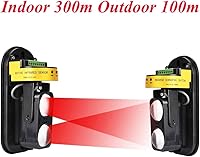
- Outdoor Range: Outdoor installation distance reaches up to 60m between the transmitter and receiver.
- Indoor Range: Indoor installation distance reaches up to 300m, suitable for long hallways or large open rooms.
- Detection Mode: The alarm only fires when both beams are blocked simultaneously, which helps filter out single, brief obstructions.
- Response Speed: Response time ranges from 50 to 700 milliseconds depending on conditions and adjustment settings.
- Relay Output: The system uses an NO/NC relay contact output for wiring into a compatible alarm panel.
- Operating Temperature: The detector is rated to function between -25C and 55C.
- Operating Humidity: Humidity tolerance is rated between 5% and 95% relative humidity.
- Power Supply: Power input accepts DC 13.8 to 24V or AC 11 to 18V.
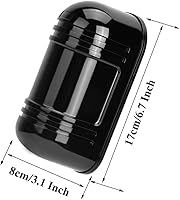
- Dimensions: Each unit measures 3.1″ x 3.1″ x 6.7″.
- Weight: The product weighs 1.57 pounds.
- Mounting Type: The detector is designed for wall mount installation at opposite points along the desired beam path.
- Alignment System: A built-in laser alignment feature is included to assist with pointing the transmitter and receiver at each other.
- Package Contents: The package includes one transmitter, one receiver, mounting screws, and an instruction manual.
- Optical Source: The beams are generated using an infrared digital pulse signal.
- Contact Rating: The relay contact is rated for AC/DC 30V at a maximum of 0.5A.
Related Reviews
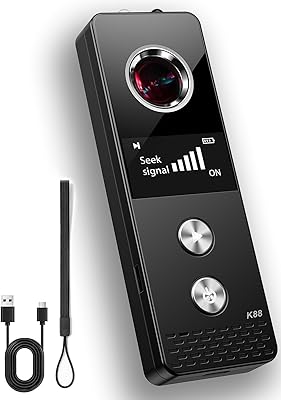
HUYNL K88 Hidden Camera and Bug Detector

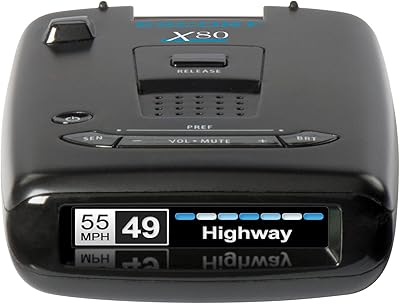
Escort X80 Radar Detector
Mic-Lock Frequency Detector RF Signal Finder
XpacEbank GPS Car Radar Detector
TOWODE Motion Detector Alarm with Remote

HP 250 Dual Mouse

Sonos Beam Gen 1 Soundbar
RØDE Wireless ME Dual