Overview

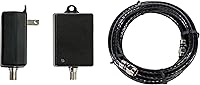
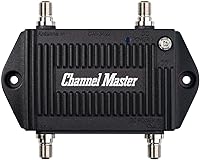
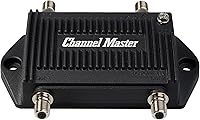
The Channel Master CM-3422 2-Port Antenna Amplifier solves a problem most cord-cutters hit eventually: you have one solid OTA antenna signal but two TVs that need it, and a plain passive splitter quietly kills your reception. This distribution amplifier handles both jobs in one box — splitting the signal and actively boosting each output to compensate for the loss. Channel Master has been in the antenna business for decades, and that experience shows in the design. The housing is all-metal and weather-sealed, so it can live in an attic, on a roof, or indoors equally well. If you already have a working antenna setup and simply need to reach a second room without degrading either TV's picture, this is the right tool for the job.
Features & Benefits

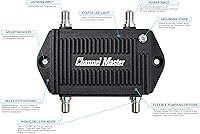
The 11.5 dB of gain per output is the key number to understand here. When you split an antenna signal two ways, you inherently lose signal strength — typically around 3.5 dB from the split itself, plus additional cable loss. This antenna signal booster adds enough headroom to recover that loss and then some, which translates to a more stable picture and fewer pixelation moments during marginal conditions. The built-in LTE filter is a real-world bonus for anyone living near cell towers, blocking the interference that can scramble specific channels. One underappreciated detail: if the power goes out, the CM-3422 still passes the raw antenna signal through to your TVs passively. That kind of passive fallback is genuinely uncommon in this category.

Best For

This distribution amplifier is the right fit for cord-cutters who already have a working attic or rooftop antenna and need to extend that signal to a second TV in another room — especially when a cheap passive splitter has already let them down. It makes particular sense in suburban or rural fringe areas, where signal margins are tight and any uncompensated loss shows up immediately as dropped channels. The powder-coated metal housing means you can mount it outdoors or in an unfinished attic without worrying about weather damage. It is also a solid pick for anyone in a city where nearby cell towers cause interference on certain channels. Just note: this only works with OTA antennas, not cable or satellite.

User Feedback

With a 4.4-out-of-5 rating across more than 1,400 reviews, buyer satisfaction skews positive but not without nuance. The most consistent praise centers on channel recovery — people who lost stations after installing a passive splitter report getting them back once they switched to the CM-3422. The LTE filtering also draws appreciation from urban buyers who had previously given up on certain channels. On the critical side, a meaningful number of buyers in genuinely weak-signal areas find that 11.5 dB of gain is not enough on its own and wish they had added a dedicated pre-amplifier at the antenna first. The power adapter brick is also a minor complaint — bulkier than expected and sometimes awkward to place near an outlet. Build quality, though, draws almost universal approval.

Pros

  • Actively compensates for split-related signal loss, so both TVs receive a stable, reliable picture.
  • The built-in LTE filter is a practical fix for viewers who have been losing channels to cellular interference.
  • Passive signal backup means your antenna still works during a power outage, which most competing units cannot claim.
  • All-metal, powder-coated housing feels built to last and holds up in outdoor or attic installations without extra protection.
  • Replaces a passive splitter entirely, keeping the installation clean and reducing the number of devices on the line.
  • Works with virtually any non-amplified OTA antenna, making it easy to drop into an existing setup.
  • A 4.4-out-of-5 rating across more than 1,400 buyers suggests this is not a product that over-promises and under-delivers.
  • Channel Master has decades of OTA experience behind this design, which shows in the thoughtful feature set.

Cons

  • Only covers two output ports, so anyone needing to reach three or more TVs will need a different unit.
  • The power adapter brick is bulkier than expected and can be awkward to position near a wall outlet.
  • In genuinely weak-signal fringe areas, the 11.5 dB gain may not be sufficient without adding a separate pre-amplifier upstream at the antenna.
  • Strictly incompatible with cable TV and satellite systems, which can catch buyers off guard if they skim the product details.
  • Requires a powered outlet nearby, which can complicate attic or outdoor roof installations where outlets are not always close.
  • No adjustable gain control, so there is no way to fine-tune output if the boosted signal is too strong for a particular setup.
  • The physical footprint is on the larger side for a distribution amplifier, which may matter in tight installation spaces.

Ratings

The scores below reflect an AI-driven analysis of verified global buyer reviews for the Channel Master CM-3422 2-Port Antenna Amplifier, with spam, incentivized, and bot-generated feedback actively filtered out before scoring. Every category captures what real users experienced after installation — not what the product claims on the box. Both the standout strengths and the genuine frustrations are represented transparently so you can make a fully informed decision.

Signal Recovery
88%
The most consistently praised outcome across hundreds of reviews is straightforward: channels that disappeared after a passive splitter came back. Buyers in suburban setups with moderate-length cable runs report stable, locked signals on channels they had written off as unreachable from a second room.
In deep fringe areas where the incoming signal was already marginal on a single TV, the 11.5 dB of gain per output does not always close the gap. Those users often discover they needed a dedicated antenna-mounted pre-amplifier first, which adds cost and complexity they had not planned for.
LTE Interference Filtering
91%
Urban and dense-suburban buyers who had been losing specific channels to cellular interference describe the built-in LTE filter as a genuine fix rather than a marketing feature. Several reviewers near major cell installations noted channels that had been unwatchable for months became reliably stable almost immediately after swapping in this antenna signal booster.
The filter is fixed, not adjustable, so users whose interference issues stem from non-LTE sources — such as amateur radio or FM band overlap — will not see the same benefit. It solves one well-defined problem very well, but it is not a universal interference cure.
Build Quality
93%
The all-metal, powder-coated housing draws near-universal praise, particularly from buyers who have dealt with brittle plastic splitters cracking in attic heat or outdoor conditions. The unit feels substantially constructed, and reviewers who installed it outdoors years ago report zero signs of corrosion or housing degradation.
The physical size is noticeably larger than basic passive splitters, which can be a minor inconvenience in tight installation spaces like cramped junction boxes or shallow attic rafters. A small number of buyers also found the F-connector ports slightly stiff during initial coax attachment.
Passive Signal Backup
86%
The ability to continue passing antenna signal to both TVs during a power outage is a feature most buyers discover after purchase — and then treat as a meaningful bonus. For households in storm-prone areas, keeping local news and emergency broadcasts accessible without power is a practical, real-world benefit that competitors in this category rarely offer.
The passive throughput does not carry the amplified signal — just the raw antenna feed — so picture quality on weak channels may drop noticeably when the unit loses power. Buyers in fringe areas who depend on the active gain may find the backup mode insufficient to hold their most distant channels.
Ease of Installation
79%
21%
The core installation process is approachable for anyone comfortable connecting coaxial cables. It drops in exactly where a passive splitter would sit, using the same standard F-type connectors, and most DIY-comfortable buyers report being up and running in under 30 minutes without any special tools or prior experience.
The power inserter adds a step that a passive splitter does not require, and finding a convenient outlet near the installation point — especially in an attic or exterior wall mount — can turn a quick job into a more involved one. A handful of reviewers flagged the instruction sheet as sparse on detail for complete beginners.
Power Adapter Design
54%
46%
The included power inserter does its job reliably and the wide AC input range of 110 to 240 volts means it will work anywhere in the world without an adapter. Long-term reliability reports for the power supply itself are generally positive with no widespread failure patterns noted in the review base.
Multiple buyers across different markets describe the power brick as surprisingly bulky and awkward to position, particularly behind entertainment centers or in utility rooms with limited outlet clearance. Unlike a compact wall-wart, it takes up meaningful space and the cable length may not always reach the nearest outlet comfortably.
Value for Money
76%
24%
For buyers who were already resigned to buying a passive splitter plus a separate antenna amplifier, the CM-3422 consolidates both functions at a price that tends to work out cheaper than buying two separate quality components. Reviewers who frame it that way consistently feel the spend was justified.
Buyers who compare it purely against a basic passive splitter — which costs a fraction of the price — sometimes feel the premium is hard to justify unless their signal situation truly demands active amplification. Those in strong-signal urban areas close to broadcast towers often question whether they needed this level of solution at all.
Channel Count Improvement
77%
23%
A solid portion of reviewers report adding one to several channels after installation, particularly on UHF frequencies that are more susceptible to signal loss across cable runs and splits. For households that watch a varied mix of local and sub-channels, those additions represent real, daily-use value.
A minority of buyers report no change in channel count, typically in areas where the signal was already strong enough that splitting losses were not the limiting factor. Managing expectations here matters — this is a distribution and loss-compensation device, not a range-extending amplifier.
Pixelation Reduction
81%
19%
Buyers who were experiencing intermittent pixelation and audio drop-outs on specific channels — particularly on the second TV further from the antenna — describe noticeably cleaner playback after installation. The improvement tends to be most obvious during marginal weather conditions that push a weak signal below the decoding threshold.
Pixelation caused by multipath interference or a poorly aimed antenna is not something this distribution amplifier addresses. A few buyers who expected it to fix all picture quality issues found that their real problem was antenna orientation, and the amplifier made no difference in those cases.
Outdoor Durability
89%
The weather-sealed powder-coated aluminum housing holds up well in real outdoor conditions. Reviewers who have had units mounted on exterior walls and roof structures through multiple winters report no rust, no housing deformation, and no signal degradation attributable to physical wear on the enclosure.
While the amplifier body is outdoor-rated, the power inserter and its connections are not, which means the indoor power supply component still needs protection from the elements. Buyers who did not plan for this split installation requirement sometimes find it adds unexpected complexity to an otherwise outdoor-friendly unit.
LTE Filter Selectivity
83%
The filter is specifically tuned to the frequency bands used by 4G and 5G cellular networks, which is exactly the right target for the majority of OTA interference complaints in modern environments. Reviewers near cell installations report it handles both older LTE and more recent mid-band 5G interference effectively.
Because the filter is fixed and non-adjustable, users in unusual interference environments — such as proximity to paging systems or specific broadcast transmitters — may find it either over-filters or under-filters their particular situation. There is no way to tune it to a specific problem frequency.
Compatibility Range
68%
32%
The CM-3422 works with essentially any passive OTA antenna regardless of brand, age, or design — flat indoor panels, directional Yagis, and omnidirectional outdoor units all connect without issue. Buyers appreciate that there is no proprietary ecosystem lock-in and that their existing antenna investment is fully preserved.
The strict incompatibility with cable TV and satellite systems catches some buyers off guard, particularly those who misread the product listing and assumed broader compatibility. The product does exactly what it says, but the category can attract buyers who are not fully clear on the distinction between OTA and pay-TV infrastructure.
Noise Figure Performance
74%
26%
In practical terms, the amplifier adds gain without introducing the audible or visible noise artifacts that cheaper amplifiers often produce. Buyers who monitor signal quality through their TV tuner menus generally report that signal-to-noise ratios remain healthy across the output ports.
Technically informed buyers note that the noise figure specification is not prominently published, which makes direct comparison with competing amplifiers harder to do. In very high-gain scenarios where the amplifier is working near its limits, some users observe marginally softer performance on the weakest incoming signals.
Brand Reliability
87%
Channel Master has been producing antenna equipment for decades and carries a strong reputation among cord-cutting communities for standing behind their products. Buyers who have owned multiple Channel Master products over the years tend to purchase this distribution amplifier with a higher baseline of confidence than they would a lesser-known brand.
Warranty support experiences in the review base are mixed, with some buyers reporting efficient resolution and others describing slow response times. The brand reputation is strong, but post-purchase support consistency does not quite match the hardware quality reputation the company has built over time.

Suitable for:

The Channel Master CM-3422 2-Port Antenna Amplifier is purpose-built for cord-cutters who have already invested in a quality rooftop or attic antenna and now need to feed that signal to a second TV without watching their channel count shrink. It is an especially smart buy for households in suburban or rural fringe areas, where the signal coming off the antenna is decent but not so strong that splitting it in two goes unnoticed — in those situations, the active gain really does make a measurable difference. Urban viewers who live near dense clusters of cell towers will also find genuine value here, since the built-in LTE filter tackles interference that a standard passive splitter would never address. DIY installers who want a clean, single-device solution will appreciate that this distribution amplifier replaces the splitter entirely rather than stacking on top of it. The outdoor-rated metal housing makes it equally at home bolted to a roof mast or tucked in a dusty attic, without needing an additional weatherproof enclosure.
Not suitable for:

The Channel Master CM-3422 2-Port Antenna Amplifier is simply the wrong tool if your signal source is cable TV or a satellite dish — it is designed exclusively for over-the-air antennas, and plugging it into any other system will not produce useful results. Buyers in genuinely weak-signal areas, such as deep rural locations far from broadcast towers, should also temper expectations: 11.5 dB of gain per output is solid for compensating split-related loss, but it is not a substitute for a dedicated high-gain pre-amplifier mounted directly at the antenna. If you need to distribute a signal to three or more televisions, this antenna signal booster only covers two outputs, so you would need a different model from the same product family. Renters or apartment dwellers who rely on small indoor antennas are unlikely to see dramatic improvements, since the limiting factor there is usually antenna placement and building materials rather than signal distribution loss. Finally, anyone expecting a plug-and-play indoor device with a compact footprint may be caught off guard by the relatively large power adapter and the overall size of the unit.
Specifications

  • Brand: Manufactured by Channel Master, a company with decades of experience producing over-the-air antenna equipment for the North American market.
  • Model Number: This unit carries the model designation CM-3422, which sits in the middle of Channel Master's distribution amplifier lineup.
  • Output Ports: The device provides two coaxial output ports, allowing a single antenna signal to be distributed to two separate televisions simultaneously.
  • Gain Per Output: Each output delivers 11.5 dB of active gain, which is sufficient to offset typical two-way split loss plus moderate coaxial cable run loss.
  • LTE Filter: A built-in LTE filter is integrated into the signal path to block interference from cellular frequencies before it reaches connected televisions.
  • Passive Backup: During a power outage, the unit continues to pass the raw antenna signal to connected TVs without amplification, requiring no active power to do so.
  • Housing Material: The outer enclosure is constructed from aluminum with a powder-coat finish, providing corrosion resistance suitable for outdoor and attic installations.
  • Weatherproofing: The housing is weather-sealed and rated for outdoor use, eliminating the need for a separate protective enclosure when mounted externally.
  • Mounting Type: The unit is designed for surface mounting and is compatible with standard mast or wall-mount configurations using the included hardware.
  • Input Voltage: The amplifier operates on 13.2 volts DC, supplied through a power inserter that ships with the unit.
  • AC Compatibility: The included power supply accepts AC input between 110 and 240 volts, making it compatible with standard North American wall outlets.
  • Supply Current: The unit draws 200 milliamps of current during normal amplified operation.
  • Dimensions: The amplifier body measures 8 x 4.5 x 2.25 inches, which is a relatively substantial footprint compared to smaller indoor-only distribution devices.
  • Weight: The unit weighs 8.8 ounces, reflecting its solid all-metal construction rather than the lightweight plastic used in budget alternatives.
  • Antenna Compatibility: This distribution amplifier is designed exclusively for use with non-amplified over-the-air antennas and is not compatible with cable TV or satellite systems.
  • Certifications: The CM-3422 is FCC certified and meets applicable international safety standards for consumer electronics.
  • Connector Type: All input and output connections use standard F-type coaxial connectors, which are the industry norm for OTA antenna installations.
  • Best Sellers Rank: The unit ranks number 61 in the TV Antennas category on Amazon, indicating sustained demand relative to the broader market.

Related Reviews

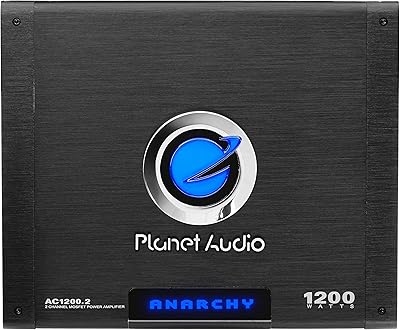
Planet Audio AC1200.2 2-Channel Car Amplifier
72%
84%
Value for Money
67%
Power Output
88%
Ease of Installation
71%
Sound Quality
58%
Thermal Performance
More
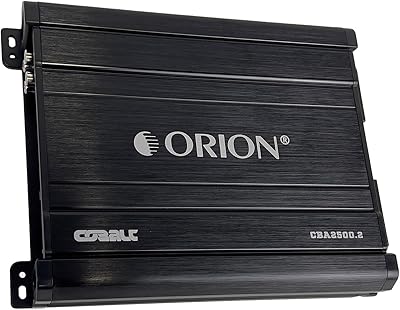
Orion CBA2500.2 2-Channel Car Amplifier
73%
82%
Value for Money
63%
Power Output
67%
Build Quality
88%
Ease of Installation
71%
Sound Quality
More
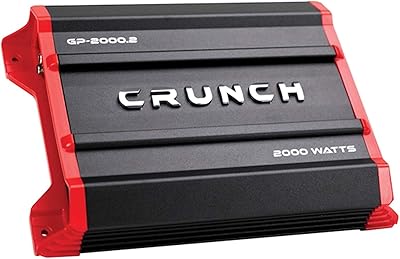
Crunch GP-2000.2 2-Channel Car Amplifier
71%
88%
Value for Money
83%
Ease of Installation
61%
Power Output
58%
Build Quality
54%
Heat Management
More
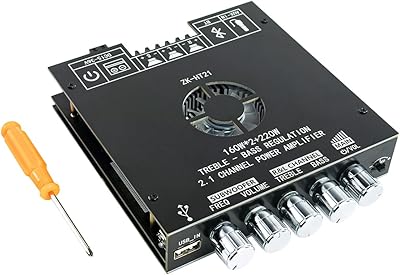
Hosyond TDA7498E 2.1 Channel Bluetooth Amplifier Board 160W×2+220W
73%
88%
Value for Money
76%
Power Output & Headroom
83%
Bluetooth Connectivity
79%
Build & Component Quality
62%
Thermal Management
More
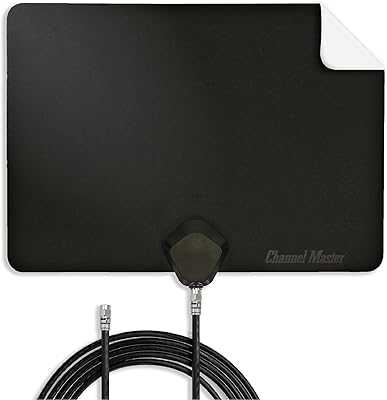
Channel Master FLATenna 35-Mile Indoor TV Antenna
78%
74%
Signal Reception
83%
Value for Money
89%
Ease of Setup
88%
Design & Aesthetics
69%
Mounting & Placement
More
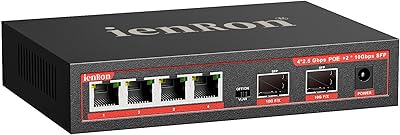
ienRon 6-Port 2.5Gb PoE Switch with 2-Port 10Gb SFP+
85%
86%
Performance
91%
Ease of Setup
88%
PoE Power Delivery
84%
Build Quality
93%
Fanless Operation
More
Onkyo M-5010 2-Channel Power Amplifier
78%
88%
Audio Clarity
91%
Build Quality
93%
Noise Floor
84%
Power Delivery
71%
Value for Money
More
Channel Master Omni+ 50 Omnidirectional TV Antenna
80%
78%
Signal Reception Quality
83%
360-Degree Omnidirectional Coverage
81%
Build Quality & Durability
86%
Installation Experience
88%
RV & Mobile Use
More
Rockville RPA5 2-Channel Power Amplifier
78%
88%
Value for Money
76%
Power Output & Headroom
67%
Build Quality & Construction
79%
Cooling & Thermal Management
91%
Connectivity & I/O Flexibility
More
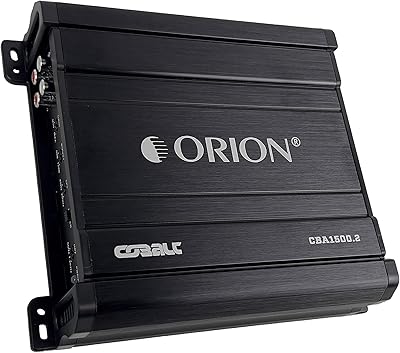
Orion Cobalt 2-Channel Car Amplifier
73%
81%
Value for Money
84%
Ease of Installation
73%
Sound Quality
78%
Bass Performance
58%
Build Quality
More

FAQ

In most cases, yes. The whole point of this distribution amplifier is to offset the signal loss that a passive two-way splitter introduces. If you were close to the edge of a reliable signal before splitting, actively boosting each output by 11.5 dB typically recovers those borderline channels. That said, if your original signal was already very weak, you may also want a pre-amplifier mounted at the antenna itself.

No, and this is worth being clear about before you buy. The Channel Master CM-3422 2-Port Antenna Amplifier is engineered specifically for over-the-air broadcast antennas. Connecting it to a cable or satellite line will not work as intended, and you risk not getting any useful signal at all from those sources.
It means that if the power goes out, your TVs do not go dark just because the amplifier loses power. The unit lets the raw antenna signal pass through to both outputs on its own, without needing electricity. You lose the active gain, so picture quality may drop slightly, but you will still receive channels as long as your antenna is working. That is a genuinely uncommon feature in this category.

It is rated for outdoor use on its own — no extra enclosure required. The powder-coated aluminum housing is designed to resist moisture and corrosion, so you can mount it on a roof mast or the exterior of a building without worrying about rain or humidity damaging it. Just make sure the power inserter and its associated wiring connections are kept in a dry indoor location.

Very likely, yes. The built-in LTE filter is specifically designed to block interference from cellular frequencies, which are a known culprit for disrupting over-the-air reception on certain channels — especially in urban and suburban areas dense with 4G and 5G towers. Many buyers in that situation report a noticeable improvement after switching to this antenna signal booster.

It depends on how far and how weak the signal is. For moderate fringe areas, 11.5 dB is typically enough to handle the losses from splitting and a reasonable cable run. But if you are in a deep rural location where even a single TV struggles to hold a signal, you will likely need a dedicated high-gain pre-amplifier installed at the antenna before the signal even reaches this unit. Think of the CM-3422 as a distribution tool, not a long-range reception booster.

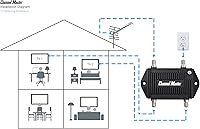
Most people with basic DIY comfort can handle this themselves. It uses standard F-type coaxial connectors, the same type found on virtually every antenna and cable connection in a home. You disconnect the cable from your existing splitter, connect the antenna line to the input on this unit, run coax from each output to each TV, and plug in the power inserter. The main challenge is routing cable through walls or ceilings if your TVs are in different rooms.

It is not a tiny wall-wart style adapter. Several buyers have flagged it as larger than expected, and it does need to be plugged into a standard outlet somewhere along the cable run. If you are mounting the amplifier in an attic or outdoors, you will need to plan where that power inserter sits indoors near an available outlet. It is not a dealbreaker, but it is worth factoring into your installation plan before you start drilling holes.

Channel Master specifies this for use with non-amplified, passive antennas. Stacking active amplification devices in series — such as connecting an already-amplified antenna to this distribution amplifier — risks over-amplification, which can actually degrade picture quality or cause signal overload. If you already own an amplified antenna, check with Channel Master before combining them.

Technically you can, but it is not ideal. Adding a passive splitter to one of the outputs will introduce further signal loss on that branch, which may or may not be acceptable depending on your local signal strength. Channel Master makes 4-port and 8-port versions in the same product family that are purpose-built for feeding more televisions, and those are a cleaner solution than trying to cascade splits off a 2-port unit.

Where to Buy